Striped Bass Fishing in Arkansas
For many anglers, the thought of wrestling with a powerful, hard-fighting striped bass is the ultimate dream. But the reality can often be frustrating: finding these elusive giants in Arkansas's vast lakes can feel like searching for a needle in a haystack, and once you hook one, knowing how to land it is another challenge entirely. This comprehensive guide is here to demystify striped bass fishing in the Natural State, helping you understand their habits, find the best spots, and master the techniques to bring those trophy stripers to your boat.
Understanding Arkansas Striped Bass
Striped bass, often simply called "stripers," are a magnificent species that have carved out a special niche in Arkansas's angling scene. They're not native to our landlocked state, but through careful stocking programs, they've become one of the most sought-after game fish, known for their incredible power and size. If you've ever hooked one, you know the adrenaline rush they provide – they fight with a tenacity that can truly test your gear and your grit.
The Allure of the Striper
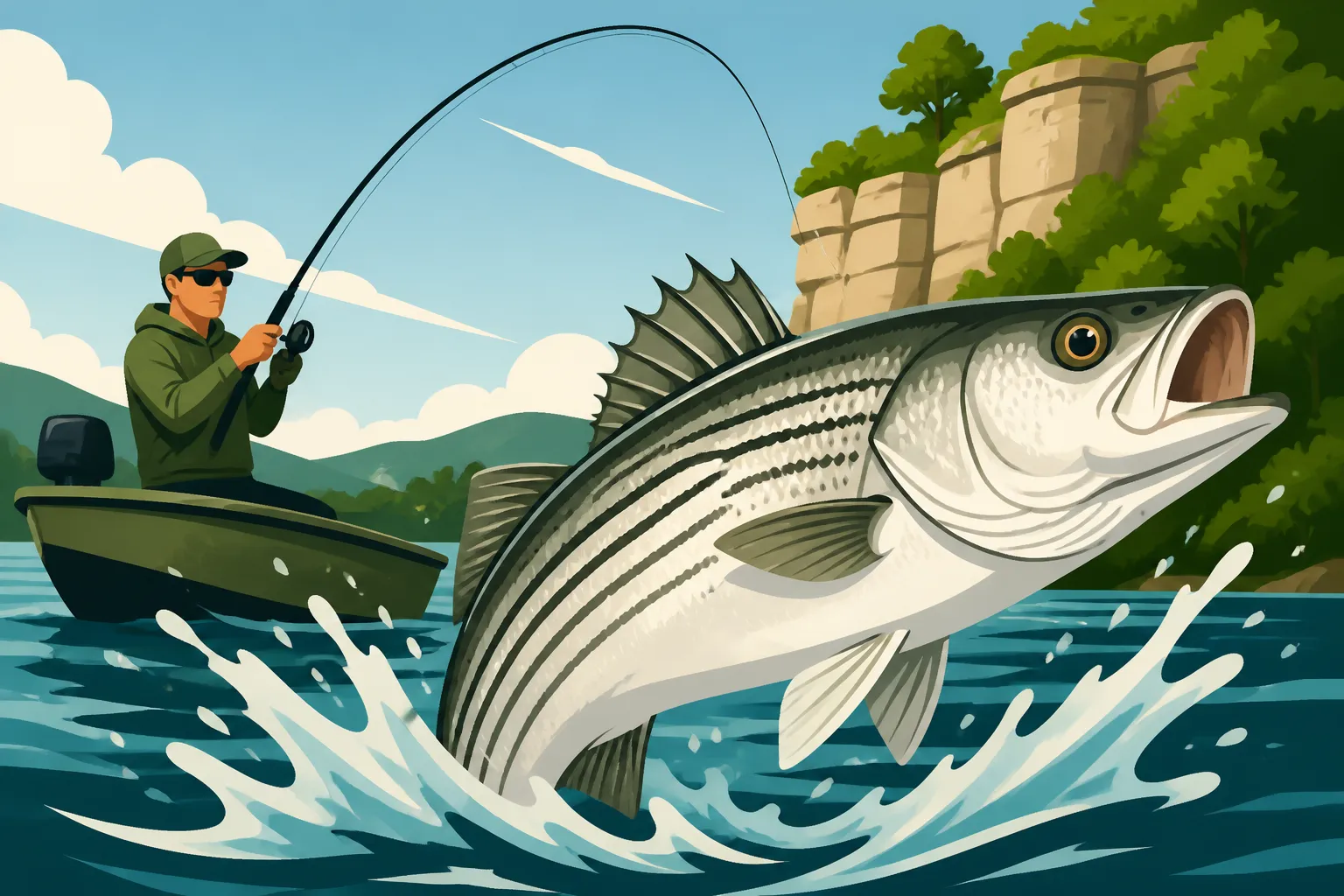
What makes striped bass so captivating for anglers across Arkansas? Well, first and foremost, it's their sheer size and strength. These fish can grow incredibly large, often pushing past the 40-pound mark in our trophy lakes, with some giants nearing the state record. Imagine reeling in a fish that's longer than your arm and pulls like a freight train – that's the striper experience! This potential for a true trophy catch keeps countless anglers coming back, hour after hour, patiently waiting for that tell-tale strike.
Beyond their impressive stature, stripers are also a fascinating species to pursue due to their schooling nature and predatory instincts. They often hunt in packs, herding baitfish in open water, which can create explosive surface activity during feeding frenzies. Witnessing a school of stripers blowing up on shad at dawn is an unforgettable sight, a raw display of nature's power. It’s this combination of brute force and thrilling action that sets them apart from almost any other freshwater fish you can target in our state.
Furthermore, the challenge of consistently finding and catching these open-water pelagic predators is a significant draw. Unlike bass that might stick to obvious cover, stripers roam vast expanses, following bait and temperature gradients. This requires a different approach, often relying on advanced electronics and a keen understanding of their seasonal movements. Successfully decoding their patterns and landing a big striper feels like a genuine accomplishment, a testament to skill and persistence.
Identifying Striped Bass
Before you can target stripers, it's important to know what you're looking for, especially since they can sometimes be confused with their smaller cousins, white bass or hybrid stripers. True striped bass are characterized by their long, streamlined bodies with distinct, dark horizontal stripes running from head to tail. What's key to look for is that on a pure striper, these stripes are usually solid and unbroken, often extending all the way to the tail. They tend to have a more elongated, torpedo-like shape compared to the deeper body of a white bass.
Another good indicator is the number of stripes and their continuity. Striped bass typically have seven or eight prominent stripes, and at least some of these (often the ones above the lateral line) will be continuous and not broken or disjointed. Their dorsal fins are also distinctly separated. Pay attention to these details when you land a fish; proper identification is crucial for adhering to Arkansas Fish Size and Daily Limits and other regulations, as limits can vary between species.
Hybrid stripers, a cross between a striped bass and a white bass, are also present in some Arkansas waters and can be tricky to distinguish. Hybrids often have broken or mottled stripes, or stripes that are less uniform, and they typically don't grow as large as purebred stripers. However, they still put up an incredible fight! Learning these subtle differences will not only help you identify your catch accurately but also deepen your appreciation for the unique characteristics of each species.
Where Stripers Thrive in Arkansas
While striped bass have been stocked in several Arkansas lakes over the years, a few bodies of water have truly emerged as powerhouse destinations for these magnificent fish. These are typically large, deep impoundments with abundant forage, particularly gizzard and threadfin shad, which form the primary diet of a growing striper. The key is finding lakes that offer the right combination of cool, oxygenated water in the deeper sections, especially during the hot summer months, alongside expansive open water for them to roam and hunt.
The major hydroelectric reservoirs built by the Corps of Engineers are prime examples of these ideal striper habitats. Their vastness provides ample room for these pelagic predators, and the constant flow and depth help maintain suitable conditions year-round. These lakes are also often characterized by deep, clear waters, which influence striper behavior and fishing techniques. Understanding these environmental factors is crucial to predicting where stripers will hold at different times of the year.
Specifically, anglers consistently flock to the northern and western regions of the state where these large reservoirs dominate the landscape. These areas have developed a reputation, attracting both local and out-of-state anglers hoping to land a trophy. While stripers might occasionally be found in other waters, the designated "trophy striper" lakes are where you'll find the most consistent action for truly giant fish.
Top Arkansas Lakes for Striped Bass
When it comes to chasing striped bass in Arkansas, certain lakes stand head and shoulders above the rest. These aren't just good striper lakes; they're legendary, offering anglers the chance to hook into truly monstrous fish and experience the fight of a lifetime. Each has its own character, but they all share the common thread of holding healthy populations of big, aggressive stripers.
Norfork Lake: The Striper Mecca
If there's one lake in Arkansas synonymous with trophy striped bass, it's Norfork Lake. Nestled in the Ozark Mountains, right on the Arkansas-Missouri border, this sprawling reservoir is renowned globally for its incredible striper fishery. It’s not uncommon to hear tales of 40-, 50-, and even 60-pound class stripers being hauled from its depths. For serious striper anglers, Norfork Lake's Reputation for Trophy Striped Bass Fishing is well-deserved, making it a bucket-list destination.
Norfork's deep, clear waters, coupled with an abundant supply of gizzard and threadfin shad, create the perfect environment for stripers to grow to epic proportions. The lake's irregular shoreline, numerous coves, and vast main lake expanses provide endless opportunities for these powerful predators to roam. Anglers often spend days, or even weeks, mapping out baitfish schools and striper movements, understanding that patience and persistence are key to cracking Norfork's code.
Whether you're trolling massive artificial baits, deploying live gizzard shad on downriggers, or casting topwater lures at dawn, Norfork offers a diverse array of tactics to pursue these giants. The fishing can be challenging, but the reward of landing a personal best striper from Norfork is an experience many anglers cherish forever. You can definitely learn a lot from Striped Bass Fishing at Arkansas's Norfork Lake before you head out.
Lake Ouachita: Western Arkansas Giant Stripers
Moving to western Arkansas, Lake Ouachita provides another exceptional striper fishing experience. As Arkansas's largest lake located entirely within the state, Ouachita is famous for its crystal-clear water and picturesque forested shores, but beneath the surface lies a thriving population of large striped bass. While perhaps not as widely publicized for trophy stripers as Norfork, it consistently produces big fish and offers fantastic action, particularly for those targeting them with live bait.
Lake Ouachita's numerous islands, humps, and deep channels provide excellent structure for stripers to ambush bait. Like Norfork, its clear water makes for thrilling topwater action when schools of stripers push shad to the surface, especially during the cooler months. Many anglers favor drifting or slow-trolling live bait, such as shad or bream, in the deeper sections of the lake, especially around submerged timber and points. The sheer size of Ouachita means there’s plenty of water to explore, and finding the right pattern can lead to incredible days on the water.
The experience of fishing Ouachita is truly something special, combining pristine natural beauty with the thrill of chasing big game fish. The fact that it's surrounded by the Ouachita National Forest means less development and more natural habitat, creating an immersive outdoor adventure. If you're looking for a beautiful setting and hard-fighting stripers in a slightly different environment than the Ozarks, Lake Ouachita is an outstanding choice.
Lake Hamilton: Hot Springs' Exciting Striper Action
Right in the heart of Hot Springs, Arkansas, Lake Hamilton offers a unique urban striper fishery that consistently surprises anglers with its productivity. Despite being a highly developed lake with bustling activity, Lake Hamilton holds a robust population of striped bass that provide exciting opportunities, especially for those who enjoy night fishing. Its accessibility and consistent action make it a popular choice for both locals and visitors to the Hot Springs area.
The dynamics of Lake Hamilton's striper fishery are often tied to its deep channels and the presence of shad. Many anglers focus on the main lake channels and points, especially those with good deep-water access. Night fishing under lights is a particularly effective tactic here, as stripers are drawn to the congregations of baitfish attracted to the illumination. This technique provides a unique and often productive way to target these powerful fish, offering a different challenge than daytime pursuits.
For those vacationing in Hot Springs, Lake Hamilton presents a convenient way to get a taste of Striped Bass Fishing at Arkansas's Lake Hamilton. You can be enjoying the amenities of the city one moment and be hooked into a powerful striper the next. Its combination of accessibility and quality fishing makes it a noteworthy spot on the Arkansas striper map.
Bull Shoals Lake: Northern Border Opportunities
While perhaps not as famous for its stripers as its neighbor Norfork, Bull Shoals Lake, also straddling the Arkansas-Missouri border, offers excellent opportunities for striped bass. This massive, deep, and clear reservoir is more widely known for its exceptional bass and crappie fishing, but it also supports a healthy population of stripers that can grow to impressive sizes, particularly in the lower, deeper sections of the lake.
Bull Shoals shares many characteristics with Norfork that make it suitable for stripers, including deep, cool waters and abundant baitfish. Anglers often find success targeting stripers in the main lake channels, especially near points, humps, and submerged timber. Trolling large crankbaits or presenting live shad are common and effective methods here. The sheer size of Bull Shoals means there's always new water to explore, and patience often pays off with a strong striper fight.
For anglers who enjoy a multi-species approach, Bull Shoals offers the chance to target stripers alongside other popular game fish. It's a fantastic lake for a diverse fishing trip, and while the striper fishing might require a bit more searching than on Norfork, the rewards can be equally thrilling. It’s another great option among the Best Striper Lakes in Arkansas.
Essential Gear and Tackle for Stripers
Chasing striped bass is not a job for light tackle. These are powerful, often massive fish that will test every component of your setup, from your rod tip to your knots. Having the right gear isn't just about making the catch; it's about minimizing break-offs, ensuring a fair fight, and ultimately increasing your chances of success and enjoyment on the water. Don't skimp on quality when it comes to striper fishing!
Rods, Reels, and Line for the Fight
When selecting a rod for striped bass, think power and backbone. You'll want a medium-heavy to heavy-action casting or spinning rod, typically in the 7 to 8-foot range. The longer length helps with casting heavier baits, controlling a fighting fish, and absorbing sudden runs. A good quality graphite or composite blank will provide the necessary strength and sensitivity to detect subtle bites while handling the brute force of a large striper. Many anglers prefer specialized striper rods designed for trolling or casting large baits, offering the perfect balance of flexibility and lifting power.
For reels, a high-capacity baitcasting reel or a robust spinning reel is essential. You need a reel that can hold a significant amount of line, as stripers are known for their long, powerful runs. Look for reels with a smooth, reliable drag system – this is paramount for fighting big fish without breaking your line or pulling hooks. Gear ratios can vary; some prefer faster retrieves for working artificials, while others opt for a slower, more powerful retrieve for winching in big fish from deep water. Durability and corrosion resistance are also key considerations, especially for reels that will see a lot of use.
Line choice is critical. Braided line is a popular choice for striper fishing due to its incredible strength-to-diameter ratio, zero stretch for maximum sensitivity, and superior casting distance. Many anglers opt for 30 to 65-pound test braided line, depending on the size of fish they're targeting and the amount of cover. A fluorocarbon leader of 20 to 50-pound test is often tied to the braid, offering excellent abrasion resistance and low visibility in clear Arkansas waters. The combination provides strength, sensitivity, and a stealthy presentation, a winning setup that you can easily assemble with quality components found on platforms like Amazon.
Must-Have Lures and Baits
Striped bass are voracious predators, and their diet primarily consists of shad, so baits and lures that mimic these forage fish are incredibly effective. When it comes to live bait, gizzard shad are king. Anglers often spend time catching their own fresh shad with cast nets, as nothing beats a lively baitfish for enticing a reluctant striper. Presenting live shad on a free line, a downrigger, or suspended under a balloon can be incredibly productive, especially when the stripers are deep or finicky.
For artificial lures, a diverse arsenal is your best friend. Large lipped crankbaits that dive to different depths are excellent for trolling, mimicking wounded baitfish. Sassy Shads, swimbaits, and other soft plastics rigged on heavy jig heads can be deadly when jigged vertically or cast to schooling fish. Topwater plugs, like Spooks or poppers, provide exhilarating surface strikes during low-light conditions when stripers are actively chasing bait near the surface. These are some of the most exciting bites you'll ever experience, and a quality topwater lure is a must-have in your tackle box.
Additionally, spoons, bucktail jigs, and even large inline spinners can be effective, particularly when stripers are suspended in deep water. The key is to have a variety of options to match the forage, water conditions, and the stripers' mood. Don't forget heavy-duty swivels, snap-swivels, and a selection of appropriate hooks (often 5/0 to 8/0 circle or J-hooks for live bait) to ensure your terminal tackle is up to the task of battling these powerful fish. You can find a vast selection of these lures and essential terminal tackle with reliable reviews on Amazon, making it easy to stock up for your next trip.
Electronics and Accessories
Modern electronics have revolutionized striped bass fishing, transforming it from a guessing game into a more precise science. A good fish finder or sonar unit is arguably the most important piece of equipment after your rod and reel. These units allow you to identify baitfish schools, locate suspended stripers, and map out underwater structure like humps, points, and old river channels. High-definition side-imaging and down-imaging capabilities can give you a photographic view of the bottom and fish hiding near it, greatly increasing your efficiency.
A reliable GPS unit, often integrated into your fish finder, is also crucial. It allows you to mark productive waypoints, track your trolling paths, and navigate safely across large bodies of water, especially during early morning or late evening low-light conditions. Being able to return to a spot where you found fish or marked bait can be the difference between a successful day and a frustrating one. This technology helps you build a detailed log of fishing patterns over time.
Beyond electronics, a few other accessories are indispensable for striper fishing. A sturdy net with a large hoop and deep basket is essential for landing big fish – trying to hand-land a thrashing 40-pound striper is a recipe for disaster. A set of fish grippers can also aid in handling, particularly for removing hooks. Keep a quality cooler filled with ice if you plan to keep your catch, as well as a tape measure and scale for documenting your trophy. A sharp filleting knife is also a good idea for processing your fish responsibly, and you can find a wide range of reliable options for these tools on Amazon.
Effective Striped Bass Fishing Techniques
Chasing striped bass requires a blend of traditional angling skills and modern technology. Because these fish are often found in open water, roaming in schools, the techniques used to target them are often very different from typical bass or crappie fishing. Adaptability is key, as what works one day might not work the next.
Trolling for Deep Water Stripers
Trolling is perhaps one of the most consistent and effective methods for locating and catching deep-water striped bass, especially in large reservoirs like Norfork or Bull Shoals. This technique involves dragging lures or baits behind a moving boat, allowing you to cover vast amounts of water and present your offerings at precise depths where stripers are feeding. It's a fantastic way to find scattered schools or to target fish holding along ledges and deep points.
When trolling, precise depth control is paramount. Many anglers use downriggers, which are specialized devices that use a heavy weight and a release clip to carry your lure down to a specific depth. Once a fish strikes, the line pops free from the clip, allowing you to fight the fish directly. Another popular method is using planer boards, which carry your lines out to the side of the boat, spreading your presentation and covering a wider swath of water without spooking fish directly under the boat. Often, anglers will deploy multiple rods with different lures at varying depths and distances, creating a spread that mimics a school of baitfish.
Lure selection for trolling typically includes large diving crankbaits, swimbaits, or umbrella rigs that imitate a school of shad. Pay close attention to your sonar to identify bait balls and suspended stripers, then adjust your trolling speed and lure depth to intercept them. Experiment with different speeds, turns, and lure colors until you find a pattern that triggers bites. Striped Bass Trolling Techniques can be very nuanced, but mastering them is incredibly rewarding.
Live Baiting Strategies
Live bait fishing is often considered the most effective way to catch truly large, trophy-sized striped bass. Nothing can quite replicate the natural movement and scent of a struggling baitfish, and stripers, being opportunistic predators, find it irresistible. The challenge often lies in acquiring and keeping a healthy supply of live bait, typically gizzard or threadfin shad, though sometimes large shiners or bream can also be effective.
One common technique is "freelining," where a live shad is simply cast out with minimal or no weight, allowing it to swim naturally near the surface or just below. This is deadly when stripers are actively chasing bait on top or are suspended at shallow depths. "Downlining" involves using a heavier weight (often a sliding sinker or a specialized downrigger ball) to present a live shad directly below the boat, at the same depth as suspended stripers or bait balls that you've identified on your sonar. This method is incredibly effective when fish are holding deep, perhaps near a thermocline during summer.
Another popular live baiting strategy, especially in areas with current or when fishing vertically, is "balloon fishing." Here, a live bait is suspended at a set depth below a balloon, which acts as a bobber and can be drifted across productive areas. No matter the method, presentation is key. Use appropriate circle hooks to ensure good hooksets and minimize harm to the fish, and allow the striper to take the bait fully before setting the hook. Keeping your bait lively is paramount, so a good bait tank with aeration is a crucial investment.
Artificial Lure Tactics
While live bait is often king, artificial lures can be incredibly exciting and effective, especially when stripers are actively feeding or when you're targeting them with a more aggressive approach. Learning to work a variety of artificials can make you a more versatile and successful striper angler.
Topwater lures, like large walking baits (e.g., Zara Spooks) or poppers, create exhilarating surface explosions when stripers smash them. These are best used during low-light conditions at dawn or dusk, or on cloudy days, when stripers are pushing bait to the surface. Cast them to visible boils or points, and work them with a steady retrieve, imparting a walk-the-dog or chugging action. The visual strike is truly unforgettable.
Spoons, like casting spoons or vertical jigging spoons, are fantastic for targeting suspended stripers in deep water. Drop them down to the depth you've marked fish on your sonar and retrieve them with a sharp jigging motion. The flash and flutter often trigger reaction strikes from aggressive fish. Similarly, large soft plastic swimbaits, rigged on heavy jig heads, can be cast and retrieved or jigged vertically. These imitate larger baitfish and have a seductive swimming action that stripers find hard to resist. Understanding Deep Water Striper Fishing Techniques often means getting comfortable with these types of lures.
Night Fishing for Stripers
Night fishing for striped bass is a popular and highly effective technique, particularly on lakes like Hamilton where the stripers are known to feed under the cover of darkness. The night offers several advantages: boat traffic is minimal, the air and water temperatures are cooler (especially in summer), and stripers often become more aggressive as they ambush baitfish attracted to artificial light.
One of the most common and productive night fishing methods involves using submersible lights, often green or white, which are deployed off the side or back of the boat. These lights attract zooplankton, which in turn attract baitfish (shad), and then the baitfish attract the stripers. Anglers will often anchor over a deep channel, hump, or point and wait for the ecosystem to gather around their lights. Once the stripers show up, live shad are typically freelined or downlined into the illuminated feeding zone.
Artificial lures can also be effective at night. Large jerkbaits, swimbaits, or even topwater lures (especially on moonlit nights) can draw strikes. The key is to work them slowly and deliberately, allowing the fish to locate them by their vibration and silhouette. Pay close attention to your sonar; you’ll often see stripers appearing as arcs on the screen as they move into the light cone. Night fishing requires proper safety precautions, including navigation lights, a spotlight, and always letting someone know your float plan.
Understanding Striper Behavior and Seasons
To consistently catch striped bass in Arkansas, you need to think like a striper. These are migratory, pelagic fish that are constantly on the move, driven by their search for comfortable water temperatures, oxygen, and most importantly, food. Their behavior shifts dramatically with the seasons, and understanding these patterns is crucial for success.
Seasonal Movements and Patterns
Spring: As water temperatures begin to rise in early spring, stripers become highly active and often move into shallower areas, especially creek arms and main lake points, chasing spawning baitfish. This can be a fantastic time for casting artificial lures like topwater plugs or large jerkbaits, as well as freelining live shad. The fish are often fat and aggressive after the cooler winter months, presenting some of the best opportunities for big catches.
Summer: Summer can be the most challenging season for striper fishing due to the heat. As the surface waters warm and oxygen levels deplete in deeper areas, stripers are forced to seek out "comfort zones"—specific depth ranges with cooler, oxygenated water. This often means they'll be suspended in the main lake channels or near the thermocline (the boundary between warm surface water and cold deep water). This is prime time for deep trolling with downriggers or downlining live bait. Night fishing also becomes very effective in summer, as cooler surface temperatures and baitfish congregation under lights draw stripers up.
Fall: As water temperatures begin to cool in the fall, stripers become increasingly active and aggressive. They often move back into shallower areas, particularly main lake points and humps, engaging in intense feeding frenzies as they fatten up for winter. This is a phenomenal time for casting topwater lures, spoons, and swimbaits, as well as trolling and live baiting. Fall Fishing Patterns for Bass and Crappie also often include stripers, as they chase the same abundant baitfish. The cooler weather and active fish make this one of the most popular seasons for striper anglers.
Winter: During the colder winter months, stripers tend to congregate in large schools in the deeper sections of the lake, often near dam areas or river channels. While they might be less active than in fall, they are still catchable. Vertical jigging spoons or large soft plastics over these deep schools can be very effective. Trolling deep-diving crankbaits or slow-trolling live bait in the coldest parts of the lake can also produce bites. Winter fishing often requires patience but can yield some truly massive fish that are less pressured.
Water Temperature and Oxygen Levels
Striped bass are highly sensitive to water temperature and dissolved oxygen (DO) levels, more so than many other freshwater species. They prefer cooler waters, typically in the 55-70°F range, and require adequate oxygen to thrive. Understanding these environmental factors is paramount for locating fish, especially during periods of extreme heat or cold.
In the summer, as surface temperatures soar, stripers will retreat to deeper water where the temperature is more stable. However, below a certain depth, lakes can develop an "anoxic" zone, meaning there's little to no oxygen. This creates a narrow band, often called the "oxygenated thermocline," where stripers will hold. Your fish finder's temperature gauge and a good understanding of thermal stratification are invaluable tools for identifying this critical depth. Targeting this zone with precise bait presentations is key to summer success.
Conversely, in winter, while the surface water is cold, the deeper water remains more stable. Stripers will often hold in these deeper, slightly warmer pockets. During spring and fall, as the lake "turns over" and mixes, oxygen and temperature become more uniform, allowing stripers to roam more freely across various depths. Paying attention to these subtle changes in the aquatic environment will give you a significant advantage in predicting where the fish will be.
Best Times of Day for Striper Action
Like many predatory fish, striped bass are often most active during periods of low light. This means dawn and dusk are prime times for striper fishing, especially for surface activity. As the sun rises or sets, the reduced light allows stripers to more effectively ambush baitfish that are moving into shallower areas. This is when you're most likely to witness those explosive topwater strikes that make striper fishing so thrilling.
However, the "best time" can vary significantly depending on the season and the specific technique you're employing. During the hot summer, night fishing can be incredibly productive, as the cooler temperatures and the congregation of baitfish under lights stimulate feeding. For deep-water trolling or downlining, mid-day can also be productive, as long as you're precisely targeting the thermocline or known striper holding areas.
Even overcast days can extend the productive periods throughout the day, as the cloud cover mimics low-light conditions. Ultimately, while early morning and late evening are generally consistent bets, being on the water and adapting to the conditions, coupled with diligent use of your electronics, will help you capitalize on whatever feeding windows the stripers present.
Arkansas Regulations for Striped Bass
Fishing for striped bass in Arkansas is an incredible experience, but it’s crucial to understand and adhere to the state’s fishing regulations. These rules are put in place by the Arkansas Game and Fish Commission (AGFC) to protect our fisheries, ensure sustainable populations, and provide fair opportunities for all anglers. Ignoring them can lead to significant penalties, so it's always best to be prepared and informed.
Licensing Requirements
Before you even think about casting a line for striped bass, you absolutely need to have the proper fishing license. In Arkansas, all resident anglers aged 16 and older are required to possess a valid fishing license. Non-residents, regardless of age, also need a license to fish in Arkansas waters, with the exception of specific free fishing events.
The most common license for residents is the Resident Annual Fishing License, but other options like 3-day licenses are available for shorter trips. Non-residents also have annual and short-term options. While striped bass don't typically require an additional permit like trout do in certain waters, always double-check the latest regulations to ensure you have all necessary endorsements. You can find comprehensive details on Arkansas Fishing License Rules and Costs and Nonresident Fishing License Rules for Arkansas to make sure you're properly covered before your trip. Getting your license online is often the easiest and most convenient way to comply.
Size and Daily Limits
Striped bass, being a prized game fish, often have specific size and daily limits that differ from other species. These limits are subject to change, so always consult the most current AGFC regulations before heading out. Typically, daily limits dictate how many fish of a certain species you can keep in a 24-hour period, and size limits specify a minimum (and sometimes maximum) length a fish must be to be legally retained.
For example, a common regulation might be a daily limit of 3 striped bass, with only one allowed to be over a certain length (e.g., 25 or 30 inches). These types of slot limits are designed to protect the trophy-sized fish and allow them to continue contributing to the fishery. It’s important to measure your fish accurately as soon as you catch it. If it doesn’t meet the minimum length, it must be immediately released unharmed.
Keeping track of your catch is your responsibility. If you're fishing for multiple days, understanding the difference between daily creel limits and potential possession limits (though Arkansas has changed its statewide possession limit rules) is vital. Make it a habit to check the AGFC's website or pick up a physical copy of the fishing regulations guide each year. This is not just a suggestion; it's a legal requirement to know and follow these rules.
The Importance of Conservation
Responsible angling practices are essential for preserving Arkansas's fantastic striped bass fishery for future generations. Stripers, especially the larger trophy fish, are slow-growing and can be vulnerable to overharvesting if not managed properly. Practicing catch-and-release, particularly for the biggest breeders, helps ensure that these fish continue to spawn and contribute to the population.
When practicing catch-and-release, handle stripers with care. These are powerful fish, and a proper release minimizes stress and injury. Use a large, soft-mesh net to land them, keep them in the water as much as possible, and use dehooking tools to remove hooks quickly. If you must remove the fish from the water for a quick photo, support its body horizontally and return it to the water swiftly, allowing it to swim off on its own power. Never hold a large striper vertically by its jaw, as this can damage its internal organs.
Additionally, responsible disposal of fishing line, lures, and other waste is critical. Litter not only detracts from the beauty of our lakes but can also harm wildlife. Let's all do our part to keep Arkansas's waters clean and healthy, so we can continue to enjoy the thrill of Trophy Striped Bass Fishing in Arkansas for years to come.
Tips for Success and Safety
Chasing striped bass in Arkansas is an adventure, but like any serious outdoor pursuit, it requires preparation and a healthy respect for the environment. These tips will help you maximize your success on the water and ensure everyone comes home safely.
Hiring a Guide
For anglers new to striped bass fishing in Arkansas, or those looking to maximize their chances of catching a trophy, hiring a professional fishing guide is often the best investment you can make. Local guides possess an intimate knowledge of the lakes, knowing the secret spots, current patterns, and the most effective techniques for the day. They spend hundreds of hours on the water, tracking fish movements and adapting to conditions, which is invaluable experience.
A good guide will not only put you on fish but also teach you the nuances of striper fishing – how to read your electronics, present baits correctly, and fight a powerful fish effectively. They provide all the necessary specialized gear, live bait, and often even clean your catch. It’s an immersive learning experience that can dramatically shorten your learning curve. If you're planning a trip to Norfork or Ouachita, consider booking a guide, especially for your first few outings. You can explore options for Arkansas Fishing Guides and Charters: The Complete Booking Guide to find the perfect fit for your trip.
Guides also ensure you're compliant with all local regulations and can offer insights into the biology and behavior of stripers that you won't find in a book. It’s an educational and efficient way to experience the best of Arkansas striper fishing, without the significant upfront investment in specialized equipment.
Safety on the Water
Safety should always be your top priority when fishing, especially on large, open bodies of water like Arkansas’s striper lakes. Weather conditions can change rapidly, and being prepared for anything is key. Always check the forecast before you go, and be ready to head for shore if storms or high winds develop. A good quality life jacket should be worn, especially by children, and kept readily accessible for all adults.
Ensure your boat is in good working order, with all required safety equipment on board – navigation lights, a horn or whistle, a fire extinguisher, and a throwable flotation device. Inform someone of your float plan, including where you're going and when you expect to return. This simple step can be a lifesaver if an emergency arises. Carrying a fully charged cell phone (in a waterproof bag) and a marine radio are also smart precautions.
Be mindful of other boaters, particularly jet skiers and recreational craft, especially on busy lakes during summer weekends. Operating your boat safely, maintaining a proper lookout, and adhering to navigation rules not only protects you and your passengers but also contributes to a positive experience for everyone on the water. When night fishing, extra caution is needed; ensure all lights are functional and maintain slower speeds.
Handling and Releasing Stripers
Landing a large striped bass is a thrilling moment, but how you handle the fish afterward is critical, whether you plan to keep it or release it. For fish you intend to keep, dispatch them quickly and humanely. Bleeding the fish immediately and placing it on ice will help preserve the meat quality.
For catch-and-release, which is encouraged for larger breeding fish, gentle handling is paramount. Avoid dragging the fish onto dry land or boat decks. Use a large, knotless rubberized landing net to bring the fish alongside the boat. If possible, keep the fish in the water while you remove the hook. If you must bring it aboard for a quick photo, handle it with wet hands, supporting its full body weight horizontally to avoid damaging its internal organs or spine. Never hold a large striper by its jaw vertically, as this can cause irreversible injury.
Use a dehooking tool to quickly remove the hook. If the fish is deeply hooked, cut the line as close to the hook as possible rather than tearing the hook out, as this can cause more damage. Allow the fish to recover by holding it upright in the water, facing into any current, until it can swim away strongly on its own. Your careful actions ensure these magnificent fish survive to fight another day, contributing to the health and longevity of Arkansas's striper fishery.
Preparing Your Catch
After a successful day of battling Arkansas stripers, there’s nothing quite like bringing home your hard-earned catch. Striped bass are not only powerful fighters but also provide excellent table fare, making the effort even more rewarding. Properly cleaning and preparing your striper ensures that the meat is delicious and ready for cooking.
Cleaning and Filleting Stripers
Cleaning a striped bass, especially a large one, requires a sharp filleting knife and a sturdy cleaning surface. Stripers have tough, medium-sized scales, so a good scaling tool can be helpful, although many anglers choose to fillet the fish and remove the skin entirely. The key is to work carefully and efficiently to preserve as much of the lean, white meat as possible.
Start by laying the fish on its side. Make a cut behind the pectoral fin, down to the backbone. Then, turn your knife parallel to the backbone and slice firmly along the spine, all the way to the tail. Flip the fillet over and carefully remove the skin by running your knife between the flesh and the skin, working from tail to head. Repeat on the other side. You'll be left with two boneless, skinless fillets.
One important consideration with stripers, especially larger ones, is the presence of a "red line" or bloodline down the center of each fillet. This dark red muscle tissue can sometimes have a stronger, oilier flavor. Many experienced anglers choose to trim this red line out completely for a milder, cleaner-tasting fillet. Simply run your knife down both sides of the red line and lift it out. After cleaning, rinse your fillets thoroughly in cold water and pat them dry.
Cooking Your Catch
Striped bass has a firm, white, flaky flesh with a mild, slightly sweet flavor, making it incredibly versatile in the kitchen. It holds up well to various cooking methods, whether you prefer baking, grilling, pan-frying, or broiling. The key is not to overcook it, as the meat can dry out quickly.
For a simple yet delicious preparation, try pan-frying your striper fillets. Lightly season the fillets with salt, pepper, and perhaps a dash of garlic powder or your favorite fish seasoning. Dredge them lightly in seasoned flour or cornmeal if you like a crispy crust. Heat some olive oil or butter in a skillet over medium-high heat and cook for 3-5 minutes per side, depending on thickness, until the fish is opaque and flakes easily. Serve with a squeeze of fresh lemon.
Grilling is another fantastic option, especially for larger, thicker fillets. Brush the fillets with olive oil and season them, then grill over medium-high heat for about 4-6 minutes per side. For a healthier approach, baking or broiling offers tender results. Place seasoned fillets on a baking sheet, perhaps with some fresh herbs and a pat of butter, and bake at 400°F (200°C) for 12-15 minutes, or broil for 5-8 minutes until cooked through. However you choose to prepare it, fresh Arkansas striped bass is a true culinary delight.
| Lake Name | Primary Striper Focus | Average Striper Size | Key Features for Stripers |
|---|---|---|---|
| Norfork Lake | Trophy size, high numbers | 15-40+ lbs | Deep, clear, abundant shad, complex structure, world-class |
| Lake Ouachita | Large fish, consistent | 10-30 lbs | Clear, deep, numerous islands, strong live bait fishery |
| Lake Hamilton | Accessible, good numbers | 5-20 lbs | Urban lake, popular for night fishing, consistent action |
| Bull Shoals Lake | Quality fish, diverse | 10-25 lbs | Massive, deep, good numbers, often targeted with other species |
Disclaimer
This article is for general informational purposes only and does not constitute professional advice. Laws, prices and regulations vary by location and change over time. Consult a qualified professional for guidance on your specific situation.