Striped Bass Trolling Techniques
It can feel incredibly daunting to consistently locate and catch those elusive, hard-fighting striped bass in Arkansas's vast lakes. They're often deep, constantly on the move, and frankly, a bit unpredictable if you're not approaching them with the right strategy. This guide dives deep into the art and science of trolling, a tried-and-true method that helps you cover more water, present your baits effectively, and ultimately, put more of these magnificent fish in your boat.
Why Trolling is Your Best Bet for Arkansas Stripers
Let's be honest, chasing striped bass can be a full-time job. They're nomadic, chasing baitfish across expansive reservoirs like Norfork Lake, Lake Ouachita, and Lake Hamilton. If you're just casting from one spot, you're relying heavily on luck. Trolling, however, shifts the odds dramatically in your favor by actively seeking out those roaming schools. It's a proactive approach that covers ground and presents your offerings in a way that big stripers find irresistible.
Covering More Water and Finding the Fish
One of the biggest advantages of trolling is its ability to systematically search large areas of water. Instead of waiting for the fish to come to you, you're taking the hunt directly to them. This is crucial for stripers, which often suspend in open water or move along structures, following baitfish like shad. By deploying multiple lines at varying depths and covering significant distances, you dramatically increase your chances of intercepting a school. It's like casting a wider net, both literally and figuratively, making your time on the water far more efficient.
Think about it: a single angler casting might cover a few hundred square feet of water in an hour. A boat trolling with multiple lines can cover acres, increasing the odds of finding those dense bait balls and the stripers lurking beneath them. This coverage also helps you pinpoint patterns—if you get a bite at a certain depth or near a specific type of structure, you can then focus your efforts there. It's a method of intelligent exploration that helps you decode the fish's movements.
Many experienced anglers on lakes such as Bull Shoals Lake swear by trolling during periods when stripers are scattered or in vast open water. Instead of idling around trying to spot fish on your sonar, you can keep lines in the water and let the boat do the work of finding the active feeders. This is especially useful when the fish aren't holding tight to any obvious structure, forcing you to search for them.
Presenting Baits Naturally at Depth
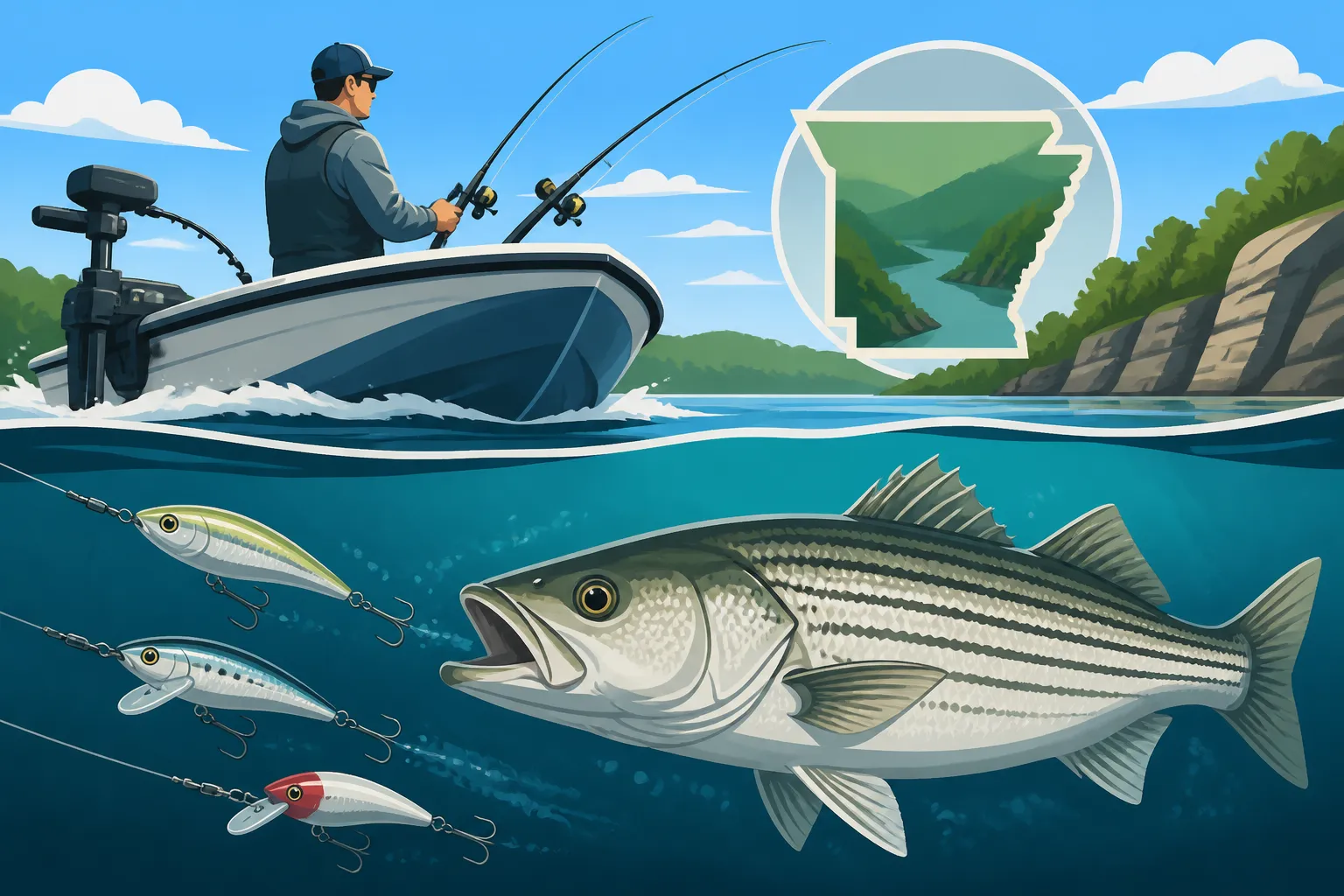
Striped bass are primarily sight feeders, and their predatory instincts are often triggered by erratic, natural-looking movements. When you troll, your baits or lures are pulled through the water in a continuous, lifelike motion that mimics swimming baitfish. This is particularly effective for presenting offerings at specific depths where stripers are known to hold, whether that's just below the surface or down in the thermocline. Traditional casting often limits how long your bait stays in the strike zone, but trolling ensures a prolonged, consistent presentation.
The steady pull of the boat also imparts a subtle, natural action to your lures, making them appear more like injured or fleeing baitfish. This presentation can be difficult to replicate with repeated casting and retrieving. Furthermore, trolling allows you to use a wider range of baits, from large swimbaits and deep-diving crankbaits to live shad, all presented at controlled speeds and depths that tempt even the most finicky stripers. When you understand the Arkansas Striped Bass Fishing Techniques, you'll see how crucial this natural presentation is.
For example, imagine a large school of threadfin shad moving through open water. A trolled umbrella rig or a long-bodied crankbait weaving through that school can perfectly imitate a larger predator fish, drawing aggressive strikes. The consistent movement also gives stripers more time to notice and track your lure, often leading to more committed bites rather than short strikes. This method truly gets your offering where the fish are and keeps it there.
The Efficiency of Multiple Lines
One of the greatest benefits of trolling, especially for larger species like striped bass, is the ability to deploy a spread of multiple lines. This isn't just about catching more fish; it's about rapidly identifying patterns. By running different lures, baits, colors, and depths simultaneously, you can quickly determine what the stripers are keying in on that particular day. This experimental approach is invaluable when the bite is tough or when conditions are changing.
Imagine having a spread of four or even six lines out, each with a different offering. One line might have a white bucktail, another a chartreuse crankbait, and yet another a live gizzard shad. If the chartreuse crankbait consistently gets hit at 30 feet, you've just unlocked a crucial piece of the puzzle. You can then adjust your other lines to match that successful presentation. This kind of real-time data collection is incredibly efficient and helps you adapt your strategy throughout the day.
However, running multiple lines requires careful planning to avoid tangles. Using different length lead cores, varying leader lengths, or employing devices like planer boards and downriggers helps create separation. This sophisticated setup not only prevents frustrating snarls but also allows you to cover a wider horizontal plane in addition to different depths, making your attack even more comprehensive when targeting Striped Bass Fishing at Arkansas's Norfork Lake.
Essential Gear for Successful Striper Trolling
Getting into striper trolling, especially for the big ones swimming in Arkansas waters, requires a bit more specialized gear than your average bass fishing setup. You're dealing with powerful fish, often at significant depths, and you need equipment that can handle the stress and strain. Investing in the right tools upfront will save you a lot of headaches and lost fish in the long run. Don't skimp on quality here; these fish will test your tackle.
Rods, Reels, and Line Selection
For serious striper trolling, you'll want stout rods that can handle the heavy drag of deep-diving lures or the resistance of a large fish. Look for medium-heavy to heavy power rods, typically 7 to 8.5 feet in length, with a moderate to fast action. This allows for both powerful hooksets and enough give to absorb the shock of a hard-fighting striper. Brands like Ugly Stik or Penn offer durable, affordable options that many seasoned anglers rely on. You might find a good selection of these on Amazon if you're looking to upgrade your gear.
Reels should be conventional baitcasting models, often referred to as "level wind" reels, known for their robust construction and line capacity. Look for reels in the 20 to 40-pound class, capable of holding 250-350 yards of 20-30 pound monofilament or braided line. Models from Ambassadeur or Penn Battle are popular choices. The smooth drag system is paramount, as a jerky drag can easily lead to a pulled hook or broken line when a big striper decides to make a run.
When it comes to line, a lot of anglers opt for 20-30 pound monofilament due to its stretch, which acts as a shock absorber. However, many pros are moving towards braided line of similar breaking strength (e.g., 50-65 pound test braid with a mono or fluorocarbon leader) because of its zero stretch, which provides superior sensitivity for detecting subtle bites and improved hook-setting power at depth. The specific type of line you choose will depend on your personal preference and the specific trolling system you're using, which we'll discuss next.
Downriggers, Planer Boards, and Lead Core Systems
These are the tools that allow you to precisely control the depth and spread of your lines.
- Downriggers: These are mechanical devices that use a heavy cannonball weight to carry your fishing line down to a specific depth. Your fishing line is clipped to a release mechanism on the downrigger cable, and when a fish strikes, the line pops free, allowing you to fight the fish directly. Downriggers are incredibly precise for targeting a thermocline or fish holding at a specific depth. They are a significant investment but essential for deep-water striper trolling, especially on lakes like Lake Ouachita where fish can be found 50+ feet down.
- Planer Boards: These buoyant boards pull your line away from the boat, allowing you to cover a much wider swath of water. They're especially useful for running multiple lines without tangles, as well as presenting baits in undisturbed water away from the boat's shadow and engine noise. Inline planer boards are popular for individual lines, while larger mast systems can run many lines off each side of the boat.
- Lead Core Line: This specialized line has a lead core wrapped in a braided sheath. Its weight causes it to sink, and anglers use a specific calculation (e.g., 5-7 feet of depth per "color" which is typically 10 yards of line) to estimate depth based on how many colors they let out. Lead core is less precise than downriggers but offers a simpler, more portable way to get lures deep without extra equipment. Many anglers will pair lead core with a fluorocarbon leader for stealth.
A common setup might involve a couple of downriggers to target specific deep zones, complemented by a few planer boards spreading lines out wide, and perhaps a lead core rod or two working intermediate depths. This "spread" allows for a comprehensive presentation across various depths and horizontal distances. Understanding Deep Water Striper Fishing Techniques is key to effectively deploying these tools.
| Trolling System | Primary Benefit | Depth Control | Spread Control | Best Use Case |
|---|---|---|---|---|
| Downriggers | Precision depth | Excellent | Low (directly behind boat) | Deep, suspended fish; targeting thermocline |
| Planer Boards | Wide spread | Low (surface to medium) | Excellent (away from boat) | Shallow to medium depths; spooky fish |
| Lead Core Line | Simplicity, moderate depth | Good (depth by color/speed) | Low (directly behind boat) | Moderate depths; covering wide range |
The Best Lures and Baits for Trolling Stripers
Choosing the right lure or bait is critical, and stripers can be finicky. The best choice often depends on the season, water temperature, and what the fish are feeding on. However, some staples consistently produce.
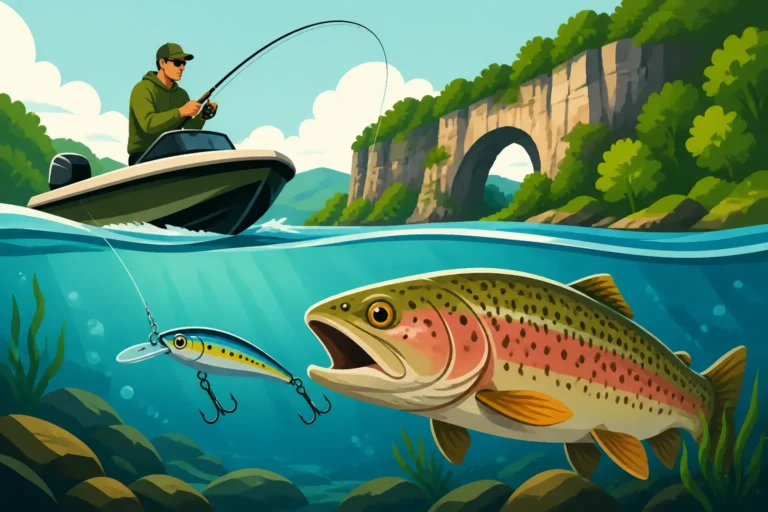
- Deep-Diving Crankbaits: Lures like the Rapala Deep Tail Dancer, Bandit Walleye Deep, or Strike King 6XD/10XD are excellent for reaching depths of 15-30 feet or more. Look for natural baitfish patterns (shad, chrome, bluegill) and bright colors like chartreuse or fire tiger, especially in stained water.
- Umbrella Rigs (Alabama Rigs): These rigs, often called "A-Rigs," mimic a school of baitfish. They consist of multiple wire arms with swimbait bodies or grubs attached, creating a very enticing school effect. They can be trolled with or without lead weights to achieve desired depths.
- Bucktail Jigs: When paired with a plastic grub trailer or a piece of cut bait, bucktail jigs are incredibly versatile. They can be trolled slowly or jigged and are particularly effective for mimicking shad.
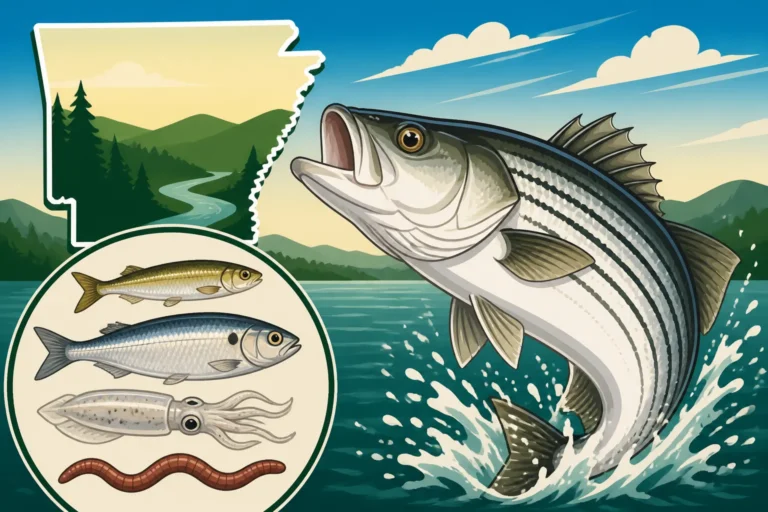
- Live Bait: There's arguably no more effective bait for stripers than live shad (threadfin or gizzard). Trolling live bait with a weighted line or a downrigger is a top tactic, especially for trophy fish. The natural action and scent are often irresistible.
- Swim Baits: Large soft plastic swimbaits, either weighted internally or on jig heads, are fantastic for stripers. They come in a huge array of colors and profiles, allowing you to match the local forage perfectly. You can easily find a great variety of these lure types on Amazon for your next outing.
Remember that presentation matters as much as the lure itself. Experiment with sizes, colors, and actions until you find what the stripers are hitting on that day. Don't be afraid to mix and match on your spread, as this is how you truly discover what works. Finding the Best Lures for Trolling Striped Bass can make or break your trip.
Mastering the Art of Trolling Speed and Depth
Trolling isn't just about dragging a lure behind a boat; it's a nuanced dance between speed, depth, and presentation. Get these factors right, and you're well on your way to consistent striper success. Get them wrong, and you might just be giving your lures an expensive boat ride. Understanding how to manipulate your speed and target specific depths is paramount to unlocking the striper bite in Arkansas's diverse waters.
Finding the Right Speed for Different Conditions
The "perfect" trolling speed is rarely static. It changes with the type of lure you're using, the water temperature, the activity level of the fish, and even the time of day. Generally, for stripers, you're looking at speeds between 2.0 to 4.0 miles per hour (mph).
- Slower Speeds (2.0-2.5 mph): These are often effective when using live bait or large, deep-diving crankbaits that need time to get down. Slower speeds can also be good in colder water or when stripers are less active, as it gives them more time to react to the bait. When trolling live shad on Lake Hamilton, for example, a slower speed allows the bait to swim more naturally and stay in the strike zone longer.
- Moderate Speeds (2.5-3.0 mph): This is often a good all-around speed for many lures, including umbrella rigs, bucktail jigs, and most crankbaits. It provides a natural swimming action without being too aggressive. This range is a good starting point for Striped Bass Trolling Techniques in most conditions.
- Faster Speeds (3.0-4.0+ mph): Sometimes, stripers are incredibly aggressive and will respond to a faster, more erratic presentation. This is particularly true in warmer water or when they are actively chasing bait. Fast trolling can be excellent for covering water quickly and triggering reaction strikes with slender spoons or faster-moving crankbaits.
Always pay attention to how your lures are performing at different speeds. Watch your rod tips for consistent vibration, indicating the lure is running correctly. If you're not getting bites, subtly adjust your speed up or down in small increments until you find the sweet spot. A GPS-enabled speedometer on your boat or fishfinder is invaluable for maintaining consistent speeds.
Adjusting Depth for Thermoclines and Fish Location
Stripers are highly sensitive to water temperature and dissolved oxygen, often congregating in a specific depth zone known as the "thermocline" during warmer months. This is the layer of water where temperature changes most rapidly, creating a distinct boundary. Finding the thermocline is like finding the striper superhighway. Your fishfinder will be your best friend here, showing you this layer as a distinct band on the screen.
In lakes like Norfork, stripers will often suspend directly in or just above the thermocline, feeding on baitfish that are also attracted to this oxygen-rich layer. Your goal is to get your baits precisely into this zone. This is where downriggers shine, allowing you to set your lures at an exact depth. If you don't have downriggers, lead core line or carefully weighted lures combined with varying speeds can also help you hit those deeper targets.
Throughout the day, and especially with changing light conditions or boat traffic, stripers might move up or down a few feet. Don't be afraid to adjust your depth. If you're marking fish on your sonar at 40 feet, but your lures are only running at 30, you're likely missing out. Similarly, in colder months, stripers might be shallower, or hugging the bottom in deeper water, so constant adjustment is key. Knowing How to Find Striped Bass in Deep Water is crucial for these adjustments.
Reading Your Electronics for Optimal Trolling
Your fishfinder and GPS are indispensable tools for successful striper trolling. They do more than just show you fish; they help you understand the underwater world and make informed decisions.
- Sonar (Fishfinder): Use your sonar to identify bait balls, individual stripers, and the crucial thermocline. Look for arches or dense marks that indicate fish. If you see baitfish clustered, the stripers are likely nearby. Pay attention to the depth at which you're marking fish and set your lures accordingly. High-quality units from brands like Garmin, Lowrance, or Humminbird offer incredible detail.
- GPS: Your GPS allows you to mark waypoints where you've caught fish, identify productive trolling paths, and maintain precise boat speed. If you catch a fish over a particular hump or along a submerged creek channel, mark it! Then, you can easily replicate that trolling pass. This is especially useful on large bodies of water like Lake Ouachita where countless structures exist.
- Mapping: Detailed lake maps (often integrated into your fishfinder/GPS unit or available as separate chips) show you contours, creek channels, humps, and points. These features are prime striper holding areas. Plan your trolling passes to intersect these structures, running your lines just over the tops of humps or along the edges of channels.
Don't just glance at your screen; interpret what it's telling you. If you're consistently marking fish at a certain depth but not getting bites, consider changing your lure, color, or even your trolling speed. Your electronics are providing you with a real-time underwater picture; learn to read it and react to it.
Strategic Trolling Patterns and Locations in Arkansas
You can have all the best gear and perfectly tuned depth, but if you're not trolling in the right places, you're still not going to be consistently successful. Striped bass, while nomadic, often relate to specific types of structure or areas where baitfish congregate. Understanding these patterns and locations on Arkansas's large reservoirs is key to putting your boat in the productive zones.
Trolling Main Lake Points and Humps
Main lake points and humps are classic striper haunts, especially in lakes like Norfork Lake and Lake Hamilton. These underwater features act as natural ambush points where stripers can intercept schools of baitfish moving from one area to another.
- Main Lake Points: When baitfish move along the main lake, they often get funneled around prominent points. Stripers will position themselves on the deeper sides or ends of these points, waiting to ambush. When trolling a main lake point, make several passes, varying your distance from the bank and your depth. Start by trolling parallel to the point, then make passes that cut across its tip. Pay close attention to your electronics for baitfish and striper marks, especially on the down-current side if there's any flow.
- Humps and Submerged Islands: These are underwater high spots that can be magnets for both baitfish and stripers. Trolling directly over the top of a hump, or better yet, along its edges, can be incredibly effective. Stripers will often sit on the deep-water side of a hump, ready to dart up and feed. Make sure your lures are running just above the top of the hump or along its sides to avoid snags while still being in the strike zone. Your detailed lake maps (like those found in Humminbird's LakeMaster or Garmin's LakeVü maps) will show you these contours, allowing you to plan precise trolling paths.
These areas are particularly productive during the mornings and evenings when baitfish are most active, but stripers can hold on them throughout the day, especially if there's a good thermocline or deep water nearby. Many anglers specifically seek out these structures for Norfork Lake's Reputation for Trophy Striped Bass Fishing.
Targeting Deep River Channels and Submerged Timber
Arkansas's reservoirs are often formed by damming rivers, leaving behind old river channels that wind through the lake bottom. These channels, particularly where they intersect with points or humps, are prime striper highways and holding areas. The deeper water of the channel offers cooler temperatures and more stable conditions, while the edges provide access to shallower feeding grounds.
- River Channel Edges: Trolling along the edges of these old river channels is a highly productive strategy. Stripers will often patrol these depth breaks, pushing baitfish against the sharper drops. Look for bends in the channel or areas where the channel narrows, as these are natural constriction points for bait movement. You might need to run some lines deeper to hug the channel bottom, while others run higher up the break.
- Submerged Timber: Many reservoirs, especially those like Lake Ouachita or DeGray Lake, have significant amounts of submerged timber from when the lakes were flooded. This timber provides excellent cover and ambush points for stripers, as well as holding large schools of baitfish. Trolling through timber can be risky due to snags, but if you can manage it (perhaps by running lures just above the treetops with downriggers or using heavy-duty snag-resistant baits), it can be incredibly rewarding. Focus on the edges of large timber stands or isolated submerged trees, as these often hold big fish.
Using your side-imaging sonar can be invaluable here to see how far the timber extends from the channel and to find paths through it without getting hung up. It really helps when looking for Where to Catch Trophy Striped Bass in Arkansas.
Open Water Trolling for Roaming Schools
While structure fishing is often effective, stripers are notorious for suspending in vast expanses of open water, especially when chasing schools of baitfish. This can be the most challenging scenario, but also one of the most rewarding if you find them.
- Finding Baitfish: The key to open water trolling is finding the bait. Use your sonar to look for large schools of shad. Where the bait is, the stripers are usually not far behind. Sometimes the bait will be tightly packed, appearing as dense clouds on your sonar; other times, it might be more scattered. Pay attention to how the stripers are relating to the bait—are they below it, in the middle of it, or chasing it from the sides?
- Grid Patterns and Zig-Zagging: When you locate a general area with bait and stripers, implement a methodical trolling pattern. A grid pattern involves making parallel passes over the area. Alternatively, zig-zagging can be effective, allowing your lures on the outside of the turn to speed up and "flare" while those on the inside slow down, creating an erratic action that can trigger strikes. This method helps you cover a wide area without missing potential fish.
- Adjusting for Wind and Current: Even in open water, wind and subtle currents can affect your boat speed and lure presentation. If you're trolling with the wind, you might need to increase your engine RPMs to maintain your desired speed. Conversely, trolling into the wind might require less throttle. Always monitor your GPS speed over ground (SOG) to ensure consistency.
Open water trolling can be a game of patience, but when you hit a school of actively feeding stripers, the action can be furious and fast. Don't be afraid to keep moving until your electronics light up with bait and fish. For more on seasonal movements, check out Arkansas Fishing Seasons Guide.
Advanced Trolling Tactics for Trophy Stripers
So, you've got the basics down, you're covering water, hitting your depths, and feeling confident. But what about those truly massive stripers, the ones that make your heart pound and your drag scream? Catching trophy stripers consistently requires refining your techniques, being adaptable, and sometimes, thinking a little outside the box. These advanced tactics can help you upgrade from catching fish to catching big fish.
Incorporating Live Bait into Your Trolling Spread
While artificial lures are incredibly effective, nothing truly beats the drawing power of a lively baitfish for trophy stripers. Live bait offers natural scent, movement, and vibration that artificials simply can't perfectly replicate.
- Gizzard Shad and Alewives: For large stripers, gizzard shad are often the bait of choice, especially on lakes like Norfork Lake. Their larger size appeals to bigger fish looking for a substantial meal. Alewives, where present, are also fantastic. The challenge is keeping them alive and frisky. A good bait tank with aeration and a circulation system is essential.
- Rigging for Trolling: When trolling live bait, you'll want to rig them to swim naturally. A common setup involves a single hook (like a Kahle hook or a circle hook) through the nose or upper lip, allowing the bait to swim freely. Some anglers also use a treble hook stinger in the back for short-striking fish.
- Depth Control: Live bait is most effective when presented at the exact depth of the stripers. Downriggers are ideal for this, allowing you to send your live shad down to 40, 50, or even 60 feet. You can also use a weighted trolling sinker (banana weights or egg sinkers ahead of a swivel and leader) to get the bait down, though it's less precise.
Trolling live bait typically requires slower speeds (1.5-2.5 mph) to allow the bait to swim naturally without spinning. Monitor your rod tips; a consistent thump indicates a healthy baitfish, while erratic movements or a dead stop could mean a fish has picked it up or your bait has died. Using live bait can significantly increase your chances of hooking into How Big Do Norfork Lake Stripers Get? and other impressive fish.
Adapting to Seasonal Striper Movements
Striped bass movements in Arkansas's lakes are highly seasonal, dictated by water temperature, oxygen levels, and baitfish availability. Being able to adapt your trolling strategy to these changes is a mark of an advanced angler.
- Spring (Pre-Spawn/Spawn): As water temperatures rise in spring, stripers become more active and often move shallower, particularly in areas near spawning grounds for baitfish. Trolling can be effective in creek channels, over submerged points, and around shallower flats at moderate depths. This is often the Best Month to Catch Striped Bass at Norfork Lake Arkansas.
- Summer (Deep and Thermocline Dependent): Summer is when stripers generally go deep, chasing the thermocline and the baitfish within it. This is prime time for downriggers and deep lead core trolling. Focus on main lake basins, deep humps, and the old river channels where the thermocline is well-defined. Night trolling can also be very effective in summer, as stripers will often move shallower to feed under the cover of darkness.
- Fall (Scattered and Active): As lake temperatures cool, the thermocline breaks up, and stripers become much more scattered. They're often very aggressive, feeding heavily to bulk up for winter. Trolling umbrella rigs, large crankbaits, and big swimbaits can be incredibly productive as stripers chase schools of bait across open water and over main lake structures.
- Winter (Deeper, Slower, but Still Hungry): In winter, stripers will often congregate in deep water, sometimes near river channels or dam structures, but they can still be caught trolling. Slower speeds, larger baits, and targeting very precise depths are key. Don't underestimate their willingness to bite, even in cold water.
Always consult local fishing reports and observe water temperatures to inform your seasonal strategy. The fish don't always read the calendar, so being flexible and observant is crucial for Arkansas Striped Bass Fishing Techniques.
Dealing with Multiple Hookups and Landing Big Fish
One of the most exciting, yet potentially chaotic, aspects of striper trolling is a multiple hookup. When a school of stripers charges your spread, it's not uncommon to have two, three, or even more rods go off at once. This requires teamwork and a clear plan.
- Immediate Action: The first person to grab a rod should reel steadily to keep the fish coming. Other anglers should immediately begin clearing lines, either by reeling in other active lines quickly or by pulling planer boards and downrigger cables out of the way to prevent tangles. Communication is key: "Fish on! Clear the port side!"
- Fighting the Fish: Big stripers fight hard, with powerful runs. Use your rod to absorb the shock and let the drag do its job. Don't try to horse the fish in; let it run when it wants to, and gain line when it's tired. Keep the rod tip up and apply steady pressure.
- Landing the Fish: For trophy-sized stripers, a large, rubberized landing net is ideal to protect both the fish and your hooks. If you're targeting truly massive fish (e.g., those over 20 pounds, potentially 40+ pounders on Norfork), consider using a gaff if you intend to keep the fish and are experienced with its use. Be ready for that final surge at the boat! Once in the net, try to quickly unhook, photograph, and either release or ice the fish.
Having a designated "net man" and clear roles for clearing lines beforehand can turn a potentially tangled mess into a smooth, successful operation. Prepare for the chaos, and you'll be able to enjoy the thrill of landing multiple trophy stripers.
Disclaimer
The information provided in this guide is for general informational purposes only. Fishing regulations, license requirements, and local conditions in Arkansas can change frequently. Always consult the latest official regulations from the Arkansas Game and Fish Commission before heading out on the water. Fishing can be inherently dangerous; please prioritize safety and wear appropriate personal flotation devices.