Crappie Fishing at Arkansas’s White River National Wildlife Refuge
Many anglers dream of catching slab crappie, but the thought of navigating the sprawling, intricate waters of a national wildlife refuge can feel incredibly daunting. It's not like your average open lake; the White River National Wildlife Refuge in Arkansas presents a unique, often confusing, environment with its vast cypress swamps, oxbow lakes, and dense submerged timber. This guide is here to untangle that complexity, offering clear, actionable insights into how to successfully target and catch crappie within this beautiful, yet challenging, fishing paradise.
Understanding the Refuge's Unique Habitat for Crappie
The White River National Wildlife Refuge isn't just another big body of water; it's an intricate tapestry of interconnected sloughs, bayous, and oxbow lakes, all heavily influenced by the mighty White River itself. This unique environment, characterized by its cypress and tupelo trees, submerged timber, and fluctuating water levels, creates a distinct habitat for crappie that demands a different approach than what you might use on a typical impoundment. Anglers often find themselves scratching their heads, wondering how to even begin deciphering where the crappie might be hiding in such a diverse and dynamic system.
The Allure of Timber-Filled Lakes
Crappie, both black and white, absolutely adore structure, and the White River National Wildlife Refuge is essentially a crappie's dream home. Its numerous timber-filled lakes are packed with standing dead trees, stumps, and submerged logs – prime real estate for these panfish. This dense cover provides excellent ambush points for feeding and crucial protection from predators, especially larger fish like bass and catfish. These areas aren't just random clusters of wood; they often form distinct patterns, channel edges, or pockets within the flooded timber that act as highways and holding zones for schools of crappie. Understanding how these timber fields are structured underwater, perhaps with the aid of good mapping software on a fish finder you might find on Amazon, can make all the difference. Many of the refuge's lakes, like some of those mentioned in Fish Species Found in Timber-Filled Refuge Lakes, are practically defined by their timber.
You see anglers out there, slowly picking apart these areas, almost like they're solving a puzzle. The crappie aren't usually suspended in open water here; they're almost always tucked right into that wood. Sometimes they're only inches from a cypress knee, other times deep within a sunken log pile. It’s this intimate relationship with the timber that makes fishing here so rewarding when you figure it out. It's not just about casting; it's about feeling for that subtle tap against a piece of wood, knowing that the crappie could be right there, perfectly camouflaged.
How Water Levels Impact Crappie Movement
One of the most significant factors influencing crappie behavior in the White River National Wildlife Refuge is the ever-changing water level. The refuge is a flood plain system, directly connected to the White River. When the river rises, it pushes water into the backwaters, oxbows, and sloughs, expanding the crappie's accessible habitat. Conversely, when the river falls, these areas can recede, concentrating fish in deeper channels or shrinking pockets of water. This ebb and flow means that a hot spot one week might be bone dry or completely unproductive the next, forcing anglers to constantly adapt.
During high water, crappie often spread out into newly flooded areas, moving into shallow cover like flooded brush, grass, and even cypress trees, seeking out new food sources and spawning grounds. This can make them harder to pinpoint but also opens up vast new fishing opportunities. Low water, however, tends to concentrate them in the main channels or deeper holes within the oxbows, making them easier to locate if you know where to look for those deeper pockets. A reliable depth finder is practically essential for navigating and finding these submerged features when the water drops. It's a dynamic environment where the fish are always on the move, and understanding the current river stages is crucial for planning your attack.
Prime Crappie Fishing Locations Within the Refuge
With over 160,000 acres, the White River National Wildlife Refuge is a massive area, and just saying "fish the refuge" is about as helpful as saying "fish the ocean." To find success, you need to zero in on the specific types of locations crappie favor within this sprawling landscape. This often means focusing on the many oxbow lakes and bayous that dot the refuge, as well as understanding the critical role that submerged timber, brush piles, and vegetation play in holding fish. Don't be fooled by the sheer size; the crappie tend to congregate in predictable patterns once you learn to read the water.
Navigating the Oxbow Lakes and Bayous
The refuge is famous for its intricate network of oxbow lakes, which are essentially crescent-shaped lakes formed in old river channels. These oxbows, like those mentioned in Best Crappie Fishing Spots in the White River National Wildlife Refuge, offer a distinct advantage for crappie anglers because they tend to be more stable than the direct river channels, providing consistent depth and ample cover. Many of these lakes, such as Peckerwood Lake, Post Lake, and Goose Lake, are renowned for their crappie populations. They are often deeper in the middle or along old river bends, and these deeper channels act as highways and holding areas for crappie, especially during cooler months or when water levels are low.
Accessing these oxbows can sometimes be a challenge, requiring small boats, kayaks, or even canoes, especially during lower water periods when traditional boat ramps might not be accessible. Once you're in, though, the fishing can be phenomenal. Look for areas where the old river channel meets the shallower, timbered flats. These transition zones are almost always productive. Pay close attention to any bends in the channel, submerged humps, or distinct drop-offs, as these are classic crappie ambush points. It's a different kind of navigation than open water, often requiring patience and a good eye for subtle changes in the landscape that hint at underwater structure.
Key Structures: Timber, Brush Piles, and Submerged Vegetation
Within the oxbows and bayous, the crappie's reliance on specific structures cannot be overstated. Standing timber, especially cypress and tupelo trees, acts like apartment buildings for crappie. They'll stack up around the bases of these trees, particularly if there's a slight drop-off nearby or a cluster of several trees together. Old, submerged log piles, often created by fallen trees or debris, are also magnets for crappie. These provide dense, intricate cover that baitfish hide in, and crappie are never far behind. Anglers often create their own brush piles, sinking bundles of cedar or discarded Christmas trees, but the refuge's natural timber is already a goldmine.
Beyond the hard structure, don't overlook submerged vegetation. While too much can be a hindrance, healthy patches of hydrilla, coontail, or lily pad stems can hold significant numbers of crappie, especially during warmer months or when they're seeking shade. These vegetated areas often provide cooler water and an abundance of insect life and small baitfish, making them attractive feeding grounds. When fishing these areas, precise lure placement is critical. You're not just casting; you're meticulously working your bait through gaps in the timber or along the edges of weed lines, trying to tickle a crappie's nose. For targeting crappie specifically in these kinds of environments, I'd suggest checking out Crappie Fishing Tips for Arkansas Timber Lakes.
Optimal Timing for Crappie Success
Crappie fishing in the White River National Wildlife Refuge isn't a year-round constant; it ebbs and flows with the seasons and the crappie's natural cycles. While you can catch them at any time of year, certain periods offer significantly better chances for high-volume catches, largely driven by water temperature and the crappie's spawning instincts. Understanding these seasonal patterns is paramount to planning a successful trip and knowing where and how to present your baits.
Spring Spawn: The Crappie Gold Rush
Spring is, without a doubt, the prime time for crappie fishing in the White River National Wildlife Refuge. As water temperatures begin to climb into the 50s and then the magical 60-68 degree Fahrenheit range, crappie move from their deeper wintering holes into shallower water to spawn. This is when they become incredibly concentrated and aggressive, making them much easier to locate and catch. The spawn typically occurs from late March through May, depending on how quickly the water warms up. If you're wondering When Do Crappie Spawn in Arkansas, the refuge follows similar patterns to other waters in the state.
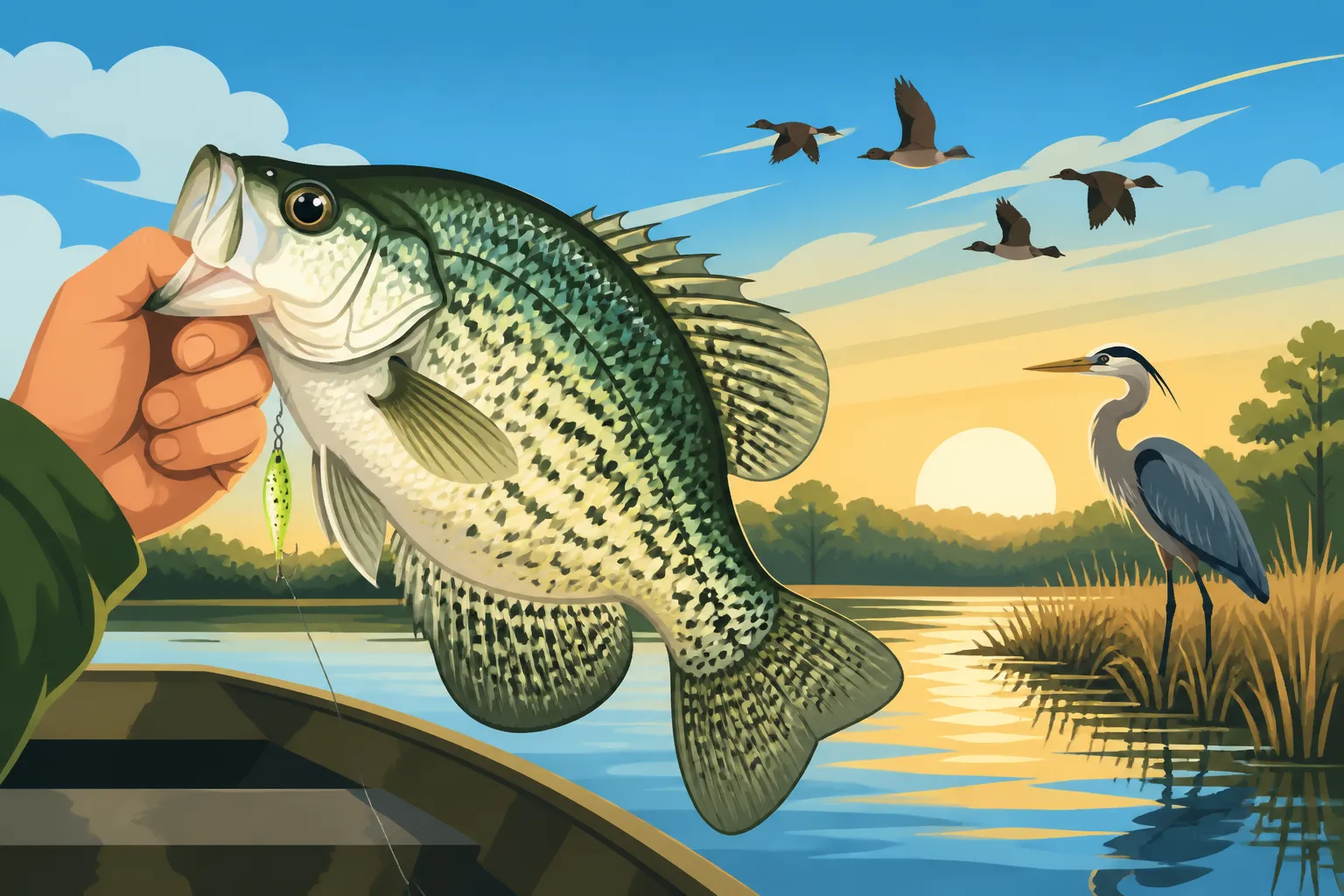
During this "crappie gold rush," you'll find both black and white crappie (and understanding Black Crappie vs White Crappie in Arkansas can help you refine your approach) in shallow areas, often in 1 to 5 feet of water, around flooded timber, cypress knees, lily pad fields, and brush piles. They'll be guarding nests or actively feeding, making them highly susceptible to jigs and minnows. This is the time when even novice anglers can experience fantastic success, as the fish are less wary and more numerous in accessible locations. Many anglers target visible cover, slowly working their baits around every piece of structure they can see.
Fall and Winter Patterns: Finding Deep Water Slabs
While spring gets all the glory, fall and winter fishing for crappie in the refuge can be incredibly rewarding, especially for those seeking larger, "slab" crappie. As water temperatures drop in the fall, crappie transition from their shallow summer haunts back to deeper water, often suspending over or near channel breaks, old creek beds, and deep timber. They're still schooling, but these schools become tighter and more predictable as the cold sets in. You might not catch as many fish as during the spawn, but the average size tends to increase.
In winter, crappie will hug deep structure, often found in the main oxbow channels or the deepest pockets within the timbered lakes. They become lethargic and less willing to chase, requiring a more subtle, vertical presentation. This is when patience pays off, often requiring sensitive rods and light line to detect the faint "thump" of a cold-water crappie. While it might be chilly out, the reward of a stringer of plump, cold-water crappie is well worth the effort. It's a different kind of fishing, a slower, more deliberate dance than the spring frenzy, but it can be immensely satisfying.
| Season | Water Temperature | Typical Depth | Crappie Behavior | Primary Locations | Recommended Baits/Techniques |
|---|---|---|---|---|---|
| Spring | 60-68°F (Spawning) | 1-5 feet | Spawning, aggressive, highly concentrated | Flooded timber, cypress knees, brush piles, lily pads | Small jigs (chartreuse, white), live minnows, slip bobbers |
| Summer | 75-85°F | 5-15 feet | Seeking shade and cooler water, less active | Deep timber, submerged brush, edges of vegetation, shaded areas | Small jigs (darker colors), live minnows (fished deeper), trolling |
| Fall | 55-70°F | 8-20 feet | Moving to deeper water, schooling up, feeding actively | Channel breaks, old creek beds, deep timber, structure | Trolling small crankbaits, vertical jigging, live minnows |
| Winter | 40-55°F | 15-30+ feet | Lethargic, tightly schooled, holding to deep structure | Deep channels, main oxbow bends, thick submerged timber | Vertical jigging (tiny jigs), dead sticking live minnows, sensitive electronics |
Effective Techniques and Baits for Refuge Crappie
Fishing the White River National Wildlife Refuge effectively requires a tailored approach. The dense cover, varying water levels, and species-specific habits of crappie mean that certain techniques and baits will consistently outperform others. It's not just about having the right gear, but knowing how to use it in this unique environment. Don't be afraid to experiment, but starting with proven methods will always put you ahead of the curve.
Jigging and Live Bait Strategies
When it comes to crappie in the refuge, a one-two punch of jigs and live minnows is often all you need. Jigs, particularly small hair jigs or soft plastic grub bodies in 1/32 to 1/8 ounce, are incredibly versatile. Colors like chartreuse, white, pink, and black-and-chartreuse are perennial favorites. The key to jigging in the refuge's timber-laden waters is a vertical presentation. Instead of casting and retrieving, anglers often use long poles (10-14 feet) to gently lower their jigs into pockets in the cover, around cypress knees, or along the edges of brush piles. This technique, often referred to as "spider rigging" when using multiple poles from a boat, allows you to meticulously work every piece of structure. For those new to the game, checking out Crappie Jigging Basics for Beginners can offer a fantastic starting point.
Live minnows, especially small feeder minnows, are often irresistible to crappie, particularly the larger "slabs." They can be fished effectively under a How to Slip Bobber Fish for Crappie, allowing you to suspend the minnow at a precise depth above or within the timber. Alternatively, many anglers "tightline" minnows, using a small sinker just above the hook to get the bait down, without a bobber, relying purely on the feel of the rod for bites. This is especially effective in deeper water or when crappie are very subtle with their bites. A good supply of fresh minnows, kept lively in an aerated bait bucket, can make or break your day. Remember, crappie are opportunistic feeders, and the natural action of a struggling minnow is often too much for them to resist.
Essential Gear for Timber Fishing
Successfully navigating and fishing the refuge's timber-filled waters demands specific gear that can withstand the abuse and get your bait to the fish. First and foremost, a sturdy yet sensitive rod is crucial. Many crappie anglers here favor longer jigging poles (10-14 feet) made of graphite for sensitivity, paired with small spinning reels spooled with 6-10 pound test monofilament or fluorocarbon line. Monofilament offers a bit more stretch, which can be forgiving when a crappie runs into a limb, while fluorocarbon offers less stretch and more sensitivity, which can be useful in detecting light bites. You might even find specialized crappie rods and reels available through retailers like Amazon.
Beyond the rod and reel, an electric trolling motor is practically indispensable. It allows for silent, precise boat positioning around timber and through tight bayous without spooking fish. A quality depth finder with GPS and mapping capabilities is also a huge asset, helping you identify submerged structure, old creek channels, and depth changes that are invisible from the surface. Many anglers use side-imaging or 360-degree sonar to "see" crappie schools hiding in the timber before they even drop a line. Don't forget essentials like a good pair of polarized sunglasses to cut glare and spot cover, a long-handled net, and plenty of extra jigs and hooks, because snags are an inevitable part of fishing dense timber.
Navigating Regulations and Conservation Efforts
Fishing in a national wildlife refuge comes with a unique set of rules and responsibilities. The White River National Wildlife Refuge is managed to protect its diverse ecosystems and wildlife, meaning anglers need to be extra diligent about understanding and adhering to specific regulations beyond general statewide Arkansas fishing laws. These rules are in place not to hinder your fun, but to ensure the long-term health of the fishery and the environment for everyone.
Understanding Refuge-Specific Crappie Limits
While statewide regulations provide a baseline, the White River National Wildlife Refuge often has its own specific rules regarding creel limits, length limits, and even fishing methods that can vary from the general Crappie Size and Daily Limit in Arkansas. These localized regulations are put in place by the U.S. Fish and Wildlife Service (USFWS), in conjunction with the Arkansas Game and Fish Commission (AGFC), to manage the refuge's unique fish populations sustainably. For instance, specific lakes or sections of the refuge might have different daily creel limits or minimum length requirements for crappie to ensure adequate spawning stock. It's not uncommon for limits to be stricter than statewide regulations to protect localized populations.
Before heading out, it is absolutely essential to check the latest refuge-specific fishing regulations. These can usually be found on the USFWS website for the White River NWR, or by picking up a physical brochure at the refuge headquarters or local tackle shops. Ignoring these rules, even unintentionally, can lead to significant penalties, including fines and the loss of fishing privileges. Always err on the side of caution, and if in doubt, release the fish or confirm the regulation. Knowing the rules for Minimum Size Limit for Keeping Crappie in Arkansas is a great start, but always double-check the refuge's specific guidance.
Respecting the Environment and Other Anglers
Fishing in a national wildlife refuge means being a steward of the environment. This means practicing catch-and-release with fish you don't intend to keep, properly disposing of all trash, and being mindful of wildlife. The refuge is home to countless species, and disturbing nesting birds, alligators, or other animals is not only disrespectful but often illegal. Always keep a respectful distance from wildlife and observe them from afar.
Furthermore, the refuge is a popular destination, and you'll likely encounter other anglers, hunters, and nature enthusiasts. Practicing good fishing etiquette is key. This includes maintaining a courteous distance from other boats, especially those actively fishing, and keeping noise levels down. Avoid cutting off other anglers, and if you see someone struggling, offer assistance. Remember, we all share these precious resources. By being considerate and environmentally conscious, you help ensure that the White River National Wildlife Refuge remains a pristine and productive fishing destination for generations to come.
Planning Your Crappie Fishing Trip to the Refuge
A successful crappie fishing trip to the White River National Wildlife Refuge isn't just about showing up with a rod and reel; it requires careful planning and preparation. Given the refuge's size and diverse conditions, thinking through logistics, access, and safety is just as important as knowing your crappie patterns. Taking the time to plan will ensure a more enjoyable and productive experience.
Access Points and Facilities
The White River National Wildlife Refuge offers numerous access points, but not all are suitable for all types of boats or water levels. The refuge maintains several public boat ramps, some of which are improved concrete ramps suitable for larger bass boats, while others might be primitive dirt ramps best suited for small johnboats, kayaks, or canoes. For example, popular access points like those near Clarendon or St. Charles offer relatively easy entry to the main river and some oxbows. However, accessing more remote areas, especially specific timber lakes or bayous, might require navigating smaller access roads or even hand-launching.
It's crucial to research your intended fishing area beforehand to determine the best access point for your vessel and the current water conditions. Information about boat ramps, water levels, and any closures can often be found on the USFWS refuge website or by calling the refuge headquarters. Additionally, some primitive campsites are available within the refuge for those planning multi-day trips, but services are often limited, so be prepared to be self-sufficient. There aren't many amenities once you're deep in the refuge, so pack everything you might need, from extra fuel to first aid. Consider what facilities are available when exploring Timber Lake Fishing Spots Inside the White River Refuge.
Safety Considerations and Preparation
The vast, wild nature of the White River National Wildlife Refuge means that safety should always be a top priority. Cell phone service can be spotty or non-existent in many areas, so don't rely on it for navigation or emergencies. Always inform someone of your float plan, including where you're going, your estimated return time, and who is with you. Carry a fully charged marine radio if possible, and a GPS device (separate from your phone) is highly recommended for navigation, especially in the maze-like timber and backwaters.
Weather in Arkansas can change rapidly, so be prepared for anything. Pack rain gear, extra layers of clothing, and plenty of water and snacks. Bug spray is practically a necessity, especially during warmer months. Remember that the refuge is home to venomous snakes, alligators, and other wildlife, so be aware of your surroundings and exercise caution, especially when wading or exploring on foot. Make sure your boat's safety equipment, including life jackets, fire extinguisher, and signaling devices, is all in working order. Being prepared isn't about expecting the worst; it's about being ready for anything, ensuring your crappie adventure in the White River National Wildlife Refuge is both successful and safe.
Disclaimer
This article is for general informational purposes only and does not constitute professional advice. Laws, prices and regulations vary by location and change over time. Consult a qualified professional for guidance on your specific situation.