Deep Water Striper Fishing Techniques
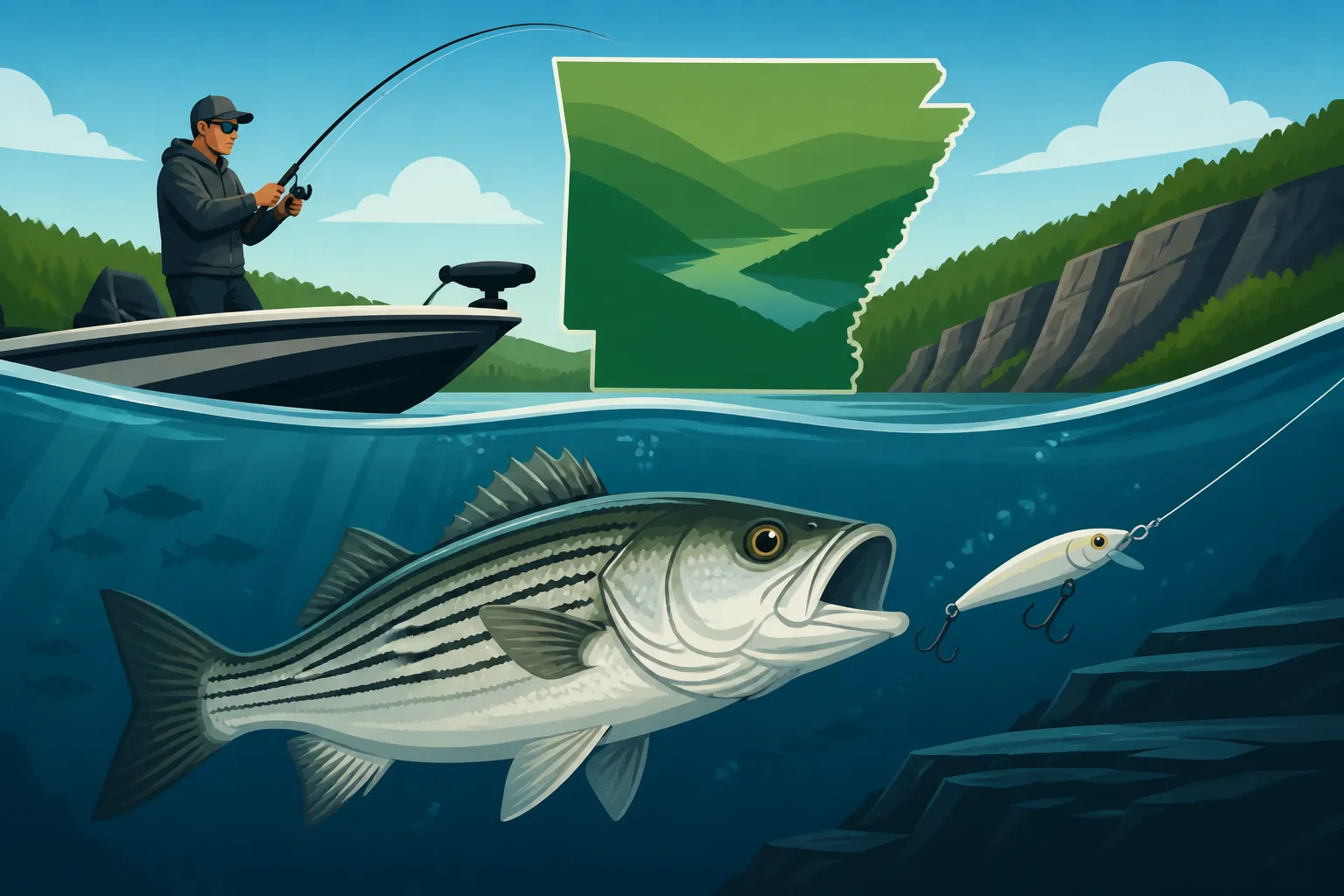
It’s a tale as old as time for any serious angler in Arkansas: one day, you’re seeing those powerful striped bass busting shad on the surface, a spectacular display of raw power. The next, they’ve seemingly vanished into the ether, leaving you wondering where those trophy fish have gone. The truth is, they haven't disappeared; they've simply done what stripers do when conditions dictate – they've gone deep. During the warm months, especially, these hard-fighting fish plunge to the cooler, more oxygenated depths, following vast schools of baitfish. Mastering the art of deep water striper fishing techniques isn't just a skill; it's a necessity for consistent success, transforming frustration into triumph. This comprehensive guide will arm you with the knowledge and tactics to unlock the hidden world of deepwater stripers, helping you find, hook, and land these elusive giants.
Understanding Deep Water Striper Behavior in Arkansas
To consistently catch striped bass in deep water, you first need to think like a striper. These are not shallow-water sunbathers; they are predators driven by instinct, primarily seeking comfort and food. Their deep-water movements are a direct response to environmental factors in Arkansas's vast reservoirs and impoundments.
Why Stripers Go Deep: Thermocline and Oxygen
The primary drivers for stripers heading to the depths are the thermocline and oxygen levels. Imagine a lake during summer: the sun heats the surface, creating a layer of warm water. Below this, there's a distinct boundary where the temperature drops rapidly – that's the thermocline. Even deeper, the water can become anoxic, meaning it lacks sufficient oxygen to support fish life. Stripers, being high-metabolism fish, need cooler, well-oxygenated water. They will often position themselves just above or within the thermocline, finding that perfect sweet spot where the water is cool enough for comfort but still rich in the oxygen they need to thrive.
This thermal stratification is most pronounced in large Arkansas reservoirs like Norfork Lake, Bull Shoals Lake, and Greers Ferry Lake during the summer and early fall. The depth of this critical zone can vary significantly from lake to lake, and even day to day, based on weather patterns, lake depth, and inflow. Anglers who regularly monitor water temperatures and understand these stratification patterns will have a significant advantage in pinpointing the most productive depths. Ignoring this crucial detail is often why anglers struggle when surface activity dies down.
Forage Fish Movements and Striper Location
Striped bass are constantly on the move, and their migrations are almost exclusively dictated by the whereabouts of their food source. In Arkansas, this largely means shad – gizzard shad and threadfin shad being the most prevalent. Just like the stripers, these forage fish also have specific preferences for water temperature and oxygen. When the surface waters become too warm, or predator pressure is high, baitfish schools will also retreat to the depths.
What you'll often see on your sonar is not just the stripers themselves, but massive "clouds" or "balls" of baitfish. These bait balls are essentially deep-water cafeterias for stripers. Savvy anglers know that finding these concentrated schools of shad is paramount to finding the stripers. The stripers will typically be positioned directly beneath, within, or around these bait masses, waiting for the opportune moment to strike. Understanding how Best Bait for Striped Bass in Arkansas move and react to environmental conditions is crucial for predicting where their predators will be lurking.
Impact of Water Temperature on Striper Activity
Beyond simply seeking comfort, water temperature directly influences a striper's metabolism and, by extension, its feeding behavior. While they tolerate a wide range of temperatures, there's an optimal zone where they are most active and aggressive. As temperatures push beyond this ideal range, either too hot or too cold, stripers can become lethargic and less inclined to chase baits.
During the peak of summer, when surface temperatures soar into the 80s and even 90s, stripers will seek out water in the 60s or low 70s. This often means holding at depths of 50 to 100 feet, or even deeper in some of Arkansas's deepest lakes. Conversely, in the dead of winter, while they still often hold deep, their activity slows considerably, requiring slower presentations and more patience. Monitoring real-time water temperature, either through your fishfinder or external thermometers, can help you dial in the exact depth and presentation that will trigger a bite.
Essential Gear for Deep Water Striper Fishing
Attempting to wrestle a 40-pound striper from 80 feet of water with inadequate gear is a recipe for heartbreak. Deep water striper fishing demands specialized equipment designed to withstand immense pressure and deliver powerful performance. Cutting corners here will inevitably lead to lost fish, broken lines, and a whole lot of frustration.
Rods, Reels, and Line for Heavy Duty Striper Fishing
For deep water striper fishing, your rod and reel setup needs to be robust. You're not just fighting the fish, but also the resistance of deep water, heavy weights, and potentially strong currents. Look for rods that are 7 to 8 feet long, with a medium-heavy to heavy power rating and a moderate-fast to fast action. Fiberglass or composite rods often preferred for their parabolic bend, which helps absorb shock and wear down big fish without snapping. Brands like Ugly Stik or St. Croix offer reliable options that can handle the abuse.
When it comes to reels, conventional level-wind reels are king. They offer superior cranking power, a smooth, powerful drag system, and ample line capacity. Models like the Penn Squall, Shimano Tekota, or Daiwa Saltist are popular choices among seasoned striper anglers. A reel that can hold at least 300-400 yards of 20-30lb monofilament or 50-80lb braided line is essential. The drag must be buttery smooth and capable of handling sustained runs from a powerful fish.
Your line choice is equally critical. Many anglers opt for braided line (50-80lb test) as their main line due to its incredible strength-to-diameter ratio, zero stretch for maximum sensitivity, and impressive longevity. However, braid can be more visible underwater, so it's almost always paired with a fluorocarbon leader (30-60lb test, 3-6 feet long) for invisibility and abrasion resistance. Another popular option is heavy monofilament (20-40lb test) which offers more stretch, acting as a shock absorber, and is often preferred for its ease of handling and knot tying. You can find a vast selection of these lines on Amazon, ensuring you're ready for any deep-water encounter.
Terminal Tackle: Weights, Hooks, and Leaders
Terminal tackle, though small, is what ultimately connects you to the fish, and it must be up to the task. Getting your baits to the desired depth requires significant weight. For trolling and downrigging, you'll be using torpedo-shaped or cannonball weights ranging from 2 ounces for lighter presentations to upwards of 32 ounces (2 pounds!) for extremely deep or fast trolling. Inline trolling sinkers, snap weights, and three-way swivels with dropper weights are also indispensable for precise depth control.
Hooks must be incredibly strong and razor-sharp. For live bait presentations, circle hooks (4/0 to 8/0) are highly recommended. They are designed to hook fish in the corner of the mouth, reducing gut-hooking and making catch-and-release much safer for the fish. When using artificial lures, ensure the treble hooks are heavy-duty and won't bend out under the strain of a large striper. Leader material, as mentioned, should be high-quality fluorocarbon, offering excellent abrasion resistance against toothy stripers and submerged structure, while remaining virtually invisible in clear deep waters.
Live Bait and Artificial Lures for Deep Water
When it comes to bait, fresh live bait is often unbeatable for deep water stripers, particularly in clear water lakes like Norfork and Bull Shoals. Gizzard shad, threadfin shad, and blueback herring are the preferred forage and will consistently draw strikes. Keeping these baits alive requires a well-aerated, properly sized baitwell. Many serious striper anglers invest in high-capacity baitwells with circulation systems to ensure their expensive bait remains lively and attractive.
For artificials, deep-diving crankbaits that can reach depths of 20-30 feet on their own (like the Bandit Walleye Deep or Rapala Deep Husky Jerk) are excellent for targeting the upper reaches of the thermocline or when stripers are slightly shallower. For true deep-water work, heavy metal spoons are king. Spoons like the Ben Parker Spoon or the Go-Go Spoon, weighing several ounces, can be vertically jigged directly over marked fish or slow-trolled with the aid of lead core or downriggers. Bucktail jigs in heavier weights can also be effective when worked slowly along the bottom or jigged through schools of baitfish. The key is to match the hatch and present something that mimics the natural forage the stripers are accustomed to eating in the depths.
Proven Techniques for Deep Water Stripers
Catching stripers in deep water isn't about blind luck; it's about employing precise techniques that get your bait or lure into the strike zone and keep it there. Each method has its time and place, and mastering a few will greatly increase your success rate.
Downrigging for Precise Depth Control
Downrigging is perhaps the most effective and precise method for targeting suspended stripers in deep water. It's a system that allows you to present your bait or lure at an exact depth, regardless of trolling speed. A downrigger uses a heavy cannonball weight (often 8-12 lbs) attached to a wire cable, which is lowered to your desired depth. Your fishing line, with its lure or live bait, is then attached to the downrigger cable via a release clip. When a fish strikes, the line pops free from the clip, allowing you to fight the fish directly without the weight.
The beauty of downrigging is its accuracy. If your sonar shows stripers at 70 feet, you can set your downrigger to 70 feet and know your offering is right in their face. This precision is invaluable on large reservoirs like Norfork Lake, where stripers can suspend in open water. Many anglers run multiple downriggers at different depths, or use "stackers" on a single downrigger cable to present two baits at different levels, maximizing their coverage. While the initial investment in a quality downrigger (from brands like Cannon or Scotty) can be substantial, the results often speak for themselves, making it a favorite for those serious about Norfork Lake's Reputation for Trophy Striped Bass Fishing.
Trolling with Planer Boards and Weighted Lines
While downriggers offer vertical precision, trolling with planer boards and weighted lines excels at covering vast expanses of water and presenting baits horizontally. Planer boards, like those from Off Shore Tackle, are floats that run out to the side of the boat, carrying your lines away from the boat's wake. This allows you to present baits in undisturbed water and greatly increases your trolling spread, making it easier to encounter widely scattered fish. While planer boards are often associated with shallower presentations, they can be used with weighted lines to achieve deeper depths without the need for downriggers.
For deep water, the key lies in the weighted lines themselves. Lead core line, a specialized fishing line with a lead core wrapped in a braided sheath, sinks at a predictable rate (typically 5-7 feet per "color" which is usually 10 yards) at a given trolling speed. By knowing how many colors you let out, you can estimate your depth. Another effective method involves using snap weights or inline trolling sinkers, which are clipped directly onto your main line at varying distances from your lure. These provide additional weight to drive your lure down, allowing you to reach significant depths. Combining these weighted line strategies with planer boards can be incredibly effective, especially for covering large areas to find active schools, a popular strategy for Striped Bass Trolling Techniques.
Vertical Jigging and Spooning Deep Structure
When stripers are tightly schooled and holding on specific deep-water structures – perhaps a submerged hump, a rocky point, or a creek channel bend – vertical jigging and spooning can be devastatingly effective. This technique is less about covering water and more about precision targeting of marked fish. Once you locate a tight school of stripers or a large bait ball with stripers underneath on your sonar, you position your boat directly over them.
Then, you drop heavy metal spoons (like a 4-8 oz Ben Parker Spoon or a large jigging spoon) or heavy bucktail jigs straight down into the school. The retrieve is typically a "lift-fall" or "rip-jig" action: a sharp upward sweep of the rod, followed by a controlled fall on a semi-slack line. Most strikes occur on the fall as the lure flutters enticingly. This method requires a good feel for your line and quick reflexes to detect subtle bites. It's particularly effective in winter when stripers are lethargic and less willing to chase, but it can work any time you find fish concentrated on structure.
Locating Deep Water Stripers: Sonar and Strategies
Finding deep water stripers is often the biggest challenge. They roam vast expanses, and without the right tools and strategies, it's like searching for a needle in a haystack. Modern electronics have revolutionized this aspect of striper fishing, turning guesswork into calculated hunts.
Interpreting Sonar: Arches, Bait Balls, and Structure
Your boat's fishfinder is your most crucial tool for deep water striper fishing. Understanding how to interpret what you see on the screen can make the difference between a successful trip and a frustrating one. Standard 2D sonar will show you "arches" that indicate fish. Stripers, being large fish, often show up as prominent, elongated arches. But don't just look for fish; look for their food. Large "clouds" or dense blobs on the screen indicate schools of baitfish, typically shad, and these are often surrounded by or holding stripers.
Beyond 2D, modern units from brands like Humminbird, Lowrance, and Garmin offer Down Imaging and Side Imaging. Down Imaging provides a photographic-like view directly beneath your boat, making it easier to distinguish structure from fish. Side Imaging (or Side Scan) is a game-changer, allowing you to scan vast areas (hundreds of feet to either side of your boat) for bait balls, submerged timber, humps, and ledges where stripers might be holding. Learning to adjust your gain, frequency, and scroll speed settings on your unit is essential to get the clearest picture of what's beneath you. It can be discouraging to see fish on the screen but not get bites, but often this is a matter of presentation or timing, not a lack of fish.
Mapping Apps and GPS for Spot-on-Spot Fishing
While sonar helps you see what's currently beneath the boat, detailed mapping applications and GPS are vital for understanding the layout of the lake and returning to productive spots. Apps like Navionics, C-MAP, or even your fishfinder's built-in mapping (like Garmin Quickdraw Contours) provide highly detailed topographical maps of the lake bottom. These maps show river channels, creek beds, humps, points, and old roadbeds – all prime striper habitat.
Before you even launch, you can study these maps to identify potential deep water structures where stripers might congregate. Once you find a productive spot on the water, mark it as a waypoint on your GPS. This allows you to make precise trolling passes over a specific contour or return to a school of fish you found earlier. Using your GPS track lines can also help you refine your trolling paths, ensuring you're hitting the most productive areas repeatedly. This spot-on-spot fishing precision is a key factor in consistent deep water success on lakes like Norfork Lake: One of Arkansas's Best Striped Bass Fisheries or Striper Fishing on Lake Hamilton in Hot Springs, Arkansas.
Understanding Hydroelectric Generation Schedules
For many of Arkansas's premier striper lakes, particularly those with hydroelectric dams like Norfork and Bull Shoals, understanding the generation schedules is absolutely paramount. When the dams are generating electricity, a strong current is created. This current acts like a conveyor belt for baitfish, pushing them through the system and often concentrating them in predictable areas. Stripers, being opportunistic predators, will position themselves to ambush this moving buffet.
The current also stimulates stripers, making them more active and aggressive. It's not uncommon for the bite to turn on like a switch when the generation starts. Conversely, slack water periods can make fishing much tougher, as bait and fish become more scattered. You can usually find generation schedules on the Southwestern Power Administration (SWPA) website or through the Arkansas Game and Fish Commission (AGFC) portal. Adjusting your fishing times and techniques to coincide with generation cycles can drastically improve your deep water striper fishing results, as this is often when the stripers are most willing to bite.
Seasonal Considerations and Best Times
While deep water striper fishing is often associated with the dog days of summer, these powerful fish utilize the depths throughout the year, albeit with different patterns. Understanding these seasonal shifts is key to consistent success.
Summer Stratification and Deep Water Haunts
Summer is undoubtedly the prime time for deep water striper fishing in Arkansas. As mentioned earlier, the intense heat causes thermal stratification in the lakes, forcing stripers to seek refuge in the cooler, oxygen-rich waters of the thermocline. This is when you'll find them suspended anywhere from 40 to 100+ feet deep, often following large schools of baitfish. Early mornings and late evenings might see stripers temporarily push shallower to feed, but for most of the day, they will be holding in their deep water haunts.
During this period, downrigging and weighted line trolling are incredibly effective for presenting baits at precise depths. Vertical jigging can also shine when fish are found tightly schooled on deep structure. Anglers targeting Summer Striper Fishing at Norfork Lake Arkansas or Best Depth for Striped Bass During Summer will spend most of their time watching their electronics, meticulously charting the thermocline and locating bait balls to determine the most productive fishing zone. The challenge is often not finding fish, but figuring out the exact depth and presentation that will trigger a strike from these temperature-sensitive predators.
Fall Turnover and Changing Depths
Fall brings a significant change to the deep water environment in Arkansas lakes: the fall turnover. As the surface waters cool with autumn temperatures, they become denser and sink, eventually mixing with the deeper, warmer water. This process can temporarily disrupt the thermal stratification and can sometimes scatter fish as oxygen levels equalize throughout the water column. For a short period during turnover, stripers might be harder to locate as they adjust to the changing conditions.
However, once turnover is complete, the entire water column becomes oxygenated, and stripers gain access to a wider range of depths. While they might push shallower as baitfish become more active in the cooling surface waters, they will still frequent deep structures. During this transition, keep an eye on your sonar for any concentrations of bait or fish, as their patterns can be less predictable than in the structured summer months. Trolling or live-baiting at various depths can help you quickly ascertain their preferred holding areas.
Winter Deep Water Patterns
Don't put away your deep water gear just because it's cold! Winter can offer some of the best opportunities for catching truly trophy-sized stripers in Arkansas. During the colder months, stripers often form large, dense schools and hold very deep, sometimes 80-150 feet or more, particularly in the deeper sections of reservoirs. Their metabolism slows down significantly, making them less active and more prone to slower, more deliberate presentations.
Vertical jigging with heavy spoons or bucktail jigs directly over these deep schools becomes incredibly effective. Slow trolling live bait, barely moving, can also entice lethargic giants. The key is patience and precision; you might not get as many bites as in warmer months, but the fish you do hook are often substantial. The lack of pleasure boaters and often calmer waters also make for a more serene, yet incredibly rewarding, fishing experience.
Troubleshooting Common Deep Water Challenges
Deep water striper fishing, while rewarding, comes with its own set of frustrations and challenges. From snagged lines to handling deep-caught fish, being prepared for these common issues will save you time, money, and potentially fish lives.
Dealing with Snags and Break-offs
The deep waters of Arkansas's lakes are often littered with submerged timber, rock piles, and other debris – prime habitat for baitfish and stripers, but also notorious for snagging lures. Losing expensive lures or valuable live bait rigs to snags is a universal frustration for deep water anglers. To mitigate this, always use strong knots and check your line regularly for abrasions. A heavy fluorocarbon leader also helps immensely against submerged structures.
When you do get snagged, resist the urge to just pull harder. Often, maneuvering your boat around the snag, sometimes directly over it, can change the angle and free your lure. Investing in a "snag saver" or "plug knocker" – a heavy device that slides down your line to dislodge snagged lures – can also save many valuable baits. Sometimes, however, you just have to break off, and that's the unfortunate reality of fishing deep water where big fish hide among obstacles.
Managing Line Twist and Tangles
Trolling multiple lines in deep water, especially with different types of weighted lines, can quickly lead to a tangled mess. Line twist, in particular, can be a nightmare, weakening your line and making it prone to frustrating knots. To combat this, use high-quality swivels at every connection point (lure to leader, leader to main line) to prevent line twist. Ball-bearing swivels are more expensive but offer superior performance.
Regularly check your lines for twist, especially if you're using artificial lures that spin. If you notice excessive twist, cut off a section of line and re-tie, or let your line trail behind the boat without a lure to "unwind" itself. Maintaining proper spacing between your trolling lines, using planer boards to spread them out, and being mindful of sharp turns can also help prevent costly tangles that waste precious fishing time. You can often find quality swivels and leader material in bulk on Amazon to keep you well-stocked.
Handling Deep-Caught Fish: Barotrauma
One of the most critical aspects of deep water striper fishing, especially for anglers who practice catch-and-release, is understanding and addressing barotrauma. When a fish is brought up rapidly from great depths, the gases in its swim bladder expand due to the decrease in pressure. This can cause severe internal damage, resulting in bulging eyes, a distended belly, or the stomach protruding from the mouth. A fish suffering from barotrauma cannot swim back down on its own and will often die.
To improve survival rates, consider using a "fizzing" or venting tool, which is a hypodermic needle used to carefully puncture the swim bladder and release the excess gas. Even better, especially for non-venting anglers, is a "release weight" or "descending device." This is a heavy weight that clips onto the fish's jaw and rapidly lowers it back to the depth from which it was caught, allowing the gases to recompress naturally. Always handle deep-caught fish gently, minimize their time out of the water, and be prepared to help them recover, ensuring the continued health of Arkansas's fantastic striper fisheries.
Disclaimer
Fishing regulations, license requirements, and local conditions can change. Always check the latest guidelines from the Arkansas Game and Fish Commission (AGFC) before heading out. This guide is for informational purposes only, and safe boating and fishing practices are paramount.