Catfish Species Found in Arkansas
If you've ever cast a line into an Arkansas lake or river, chances are you've either hooked a catfish or dreamed of landing one. These whiskered bottom-dwellers are a cornerstone of fishing culture here, but for many, the world of catfish can feel a bit overwhelming – are they all the same? What's the difference between a Channel cat and a Blue cat? This comprehensive guide is here to untangle the mysteries, helping you understand the diverse catfish species thriving in Arkansas, how to identify them, where to find them, and the best ways to bring them to the bank or boat.
The World of Arkansas Catfish: More Than Just a Whisker and a Bite
There's a reason why catfish are such a beloved target for anglers across Arkansas, from the seasoned veteran to the curious beginner. They're plentiful, they put up a fantastic fight, and let's be honest, they're absolutely delicious when prepared right. But to truly appreciate catfish fishing in the Natural State, it helps to dive a little deeper than just "catfish." There's a rich diversity, each species with its own unique characteristics and challenges.
Why Catfish Hold a Special Place in Arkansas Angling
For many Arkansans, fishing for catfish isn't just a pastime; it's a tradition. It evokes images of warm summer evenings, a lantern glowing by the water, the gentle hum of cicadas, and the sudden, exhilarating tug on the line. It's often one of the first fish a new angler catches, instilling that lifelong love for the sport. Unlike some other game fish that can be finicky, catfish often prove to be more cooperative, making them incredibly rewarding to pursue.
Beyond the thrill of the catch, catfish are an integral part of Arkansas's aquatic ecosystems. They are vital predators and scavengers, helping to keep our waters healthy and balanced. Their adaptability means you can find them in almost every type of water body across the state, from muddy river bottoms to deep, clear lake channels. This widespread availability, coupled with their reputation as excellent table fare, makes them a perennial favorite.
And let's not forget the community aspect. Catfish fishing often brings people together. Whether it's a family outing at a local pond or a group of friends setting trotlines on a major river, these trips create lasting memories. There's something inherently social about waiting for a bite, sharing stories, and then, if luck is on your side, sharing the bounty of a fresh fish fry. It’s a truly iconic part of the Arkansas outdoors experience.
Understanding the Catfish Family in the Natural State
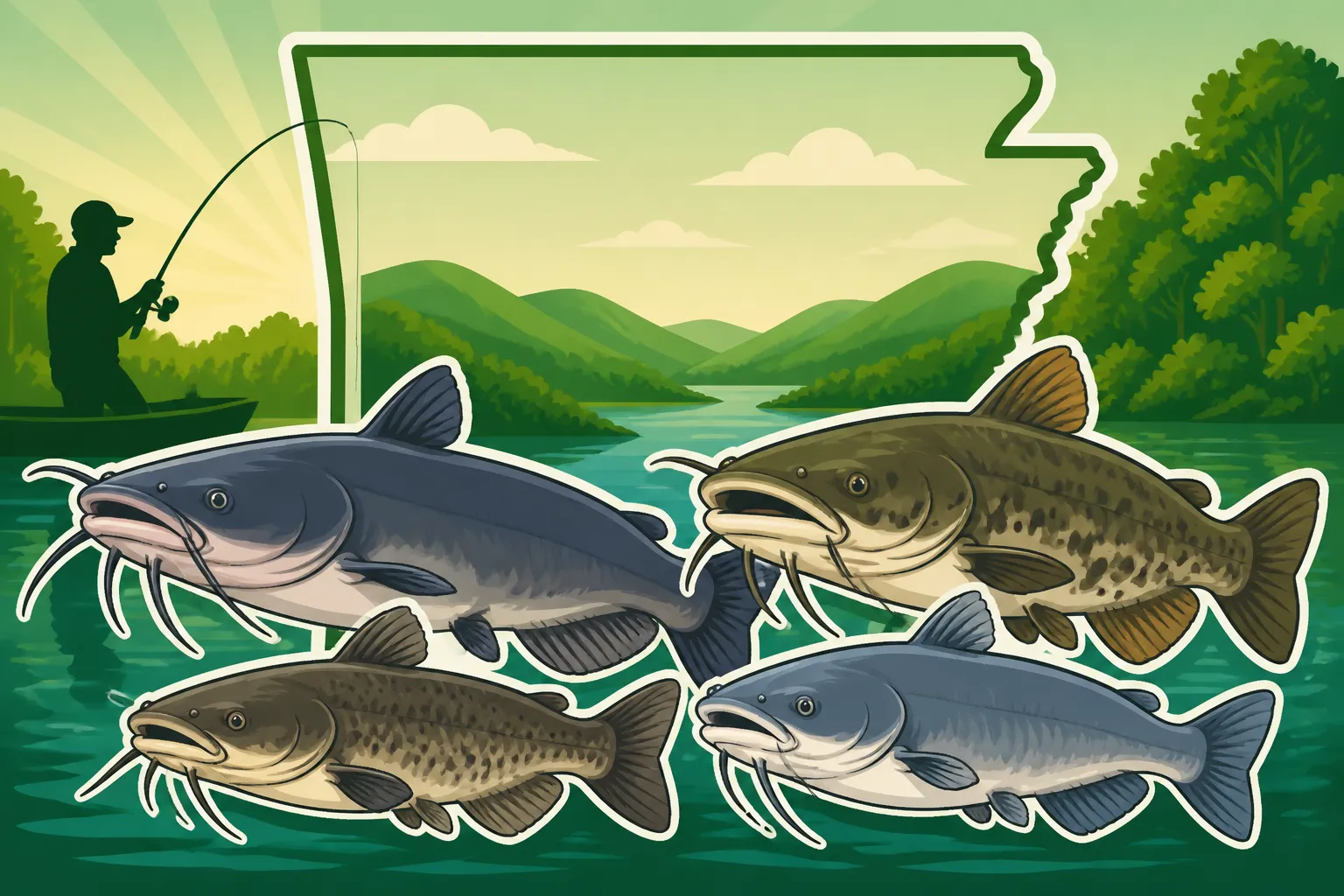
While "catfish" is a general term, Arkansas is home to several distinct species, each with its own preferred habitat, feeding habits, and physical traits. The "big three" – Channel, Blue, and Flathead – are by far the most popular and widely distributed, offering incredible opportunities for anglers. However, there are also smaller, less commonly targeted species like the various bullheads and madtoms that contribute to the state's rich aquatic biodiversity.
Recognizing these different species is not just an academic exercise; it's crucial for successful fishing. Knowing what kind of catfish you're targeting allows you to select the right bait, tackle, and location. For instance, a small piece of cut bait might work wonders for a Channel cat, but a Flathead often demands live bait. Understanding their differences also helps with respecting Arkansas Fish Size and Daily Limits which can vary by species and location.
In essence, while they all share the common "whisker" trait, each catfish species is a unique puzzle waiting to be solved. This guide will walk you through the specifics of each major player, giving you the knowledge you need to become a more effective and appreciative catfish angler in Arkansas. It's about deepening your connection with the water and the incredible creatures that call it home.
The Channel Catfish: Arkansas's Ubiquitous Angler Favorite
If you've ever caught a catfish in Arkansas, chances are it was a Channel Catfish. These are the workhorses of the catfish world, incredibly adaptable, found almost everywhere, and a blast to catch. They're often the first catfish species an angler encounters, providing many fond memories and delicious meals.
Identifying the Channel Catfish
The Channel Catfish (Ictalurus punctatus) is probably the most recognizable catfish in Arkansas. They typically have a sleek, slender body with a deeply forked tail, much like a swallow's tail. Their coloration can vary quite a bit depending on the water they live in, ranging from olive-brown to slate gray on their backs, fading to silvery-white on their bellies. A key identifying feature, especially on younger fish, are the small, dark spots scattered along their sides – hence "punctatus" in their scientific name, meaning "spotted." These spots can fade as the fish get older and larger.
They possess eight barbels around their mouth, which resemble whiskers and are used for sensing food in murky waters or low light. Their skin is smooth, devoid of scales, which is characteristic of all true catfish. While they don't grow as large as their Blue Catfish cousins, Channel cats can still reach impressive sizes, with large adults weighing into the double digits. However, most anglers catch them in the 1-5 pound range, which are perfect for a fish fry.
Their head is relatively small compared to their body, and their fins have sharp spines, so be careful when handling them! These spines, particularly on the pectoral and dorsal fins, can deliver a painful poke if you're not careful. Always use a good pair of fish grippers or a sturdy rag to handle them, especially when removing hooks.
Where to Find Channel Catfish Across Arkansas
The beauty of Channel Catfish is their incredible adaptability, meaning you can find them in nearly every water body across Arkansas. They thrive in a wide variety of habitats, from large rivers and major reservoirs to smaller lakes, ponds, and even slower-moving streams. They prefer areas with some current or moving water but can also be found in still, oxygenated waters.
Key locations where Channel Catfish are abundant include the Arkansas River, the lower White River, Lake Ouachita, Lake Maumelle, and countless smaller community ponds. They love structural cover, such as submerged timber, rock piles, old bridge pilings, and brush piles. During the day, they often retreat to deeper holes or under cover, becoming more active as dusk approaches and into the night. You'll often find them cruising the edges of channels, flats, and breaks where they can ambush prey or scavenge for food.
In smaller, private ponds, Channel Catfish are frequently stocked because they grow quickly and are relatively easy to catch. This makes them an excellent target for family fishing trips or for introducing kids to the joy of angling. No matter where you are in Arkansas, a good spot for Channel Catfish in Arkansas Lakes and Rivers is probably just a short drive away.
Best Techniques and Baits for Channel Catfish
Channel Catfish are opportunistic feeders, meaning they'll eat just about anything, which is fantastic news for anglers! This broad diet allows for a variety of effective techniques and baits. Their keen sense of smell, thanks to those barbels, makes strong-smelling baits particularly effective.
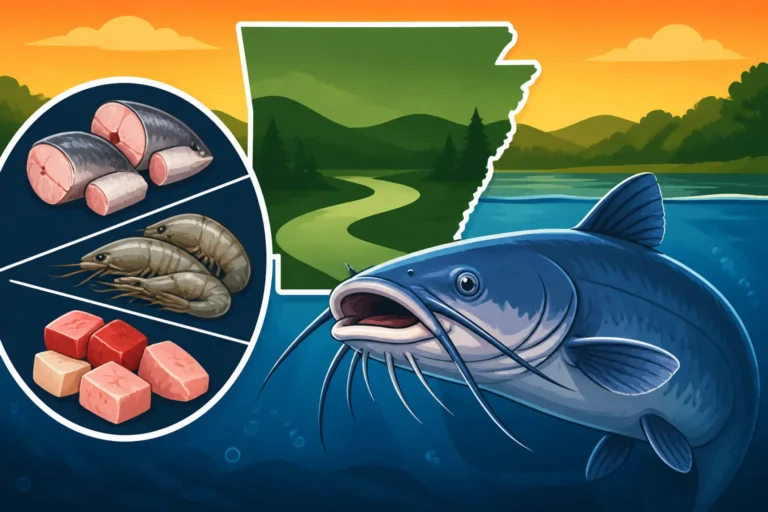
One of the most popular and effective baits is prepared "stink bait" or "dough bait," which you can find at any tackle shop, or even on Amazon. These baits are designed to disperse a powerful odor in the water, attracting hungry Channel cats from a distance. Another excellent option is cut bait, such as pieces of shad, sunfish, or even hot dogs. Chicken livers are an absolute classic for Channel cats – messy to handle, but undeniably effective! Worms, especially nightcrawlers, are also a go-to, particularly in ponds and smaller lakes.
For techniques, simple bottom fishing is king. A slip sinker rig with a hook allowed to rest on the bottom is often all you need. Cast your bait out, let it sink, and wait for that tell-tale tap or steady pull. You can also fish them effectively with bobbers, especially in shallower water or near cover. Jug fishing and Trotline Fishing Basics are also popular methods for targeting Channel cats, particularly in larger rivers where you can cover more ground and increase your chances of a catch. Experiment with different baits and depths until you find what they're hitting on that day!
Cooking and Eating Channel Catfish
When it comes to table fare, Channel Catfish are a true delicacy. Their white, flaky meat has a mild flavor that stands up well to various cooking methods. For many Arkansans, a fresh catfish fry is a quintessential culinary experience, especially after a successful day on the water.
The most common preparation involves skinning and filleting the fish, then coating the fillets in a seasoned cornmeal breading and deep-frying them until golden brown and crispy. Serve them with hushpuppies, coleslaw, and a squeeze of lemon, and you've got a meal fit for a king! Smaller Channel cats, those in the 1-2 pound range, tend to have the best flavor and texture, often being less "muddy" tasting than larger fish, though that can depend heavily on the water quality they came from.
Beyond frying, Channel Catfish fillets are also excellent grilled, baked, or blackened. You can marinate them in various sauces to add different flavor profiles. Some folks even smoke them for a unique, savory treat. Remember to always clean your fish properly soon after catching them to ensure the best taste and quality. The versatility of Channel Catfish in the kitchen is just one more reason why they're such a cherished part of Arkansas fishing.
The Blue Catfish: Giants of the Deep in Arkansas Waters
If you're dreaming of a truly monumental catch, something that will test your tackle and your muscles, then the Blue Catfish is your target. Arkansas is renowned for its trophy Blue Catfish, attracting anglers from all over seeking these impressive giants.
Identifying the Mighty Blue Catfish
The Blue Catfish (Ictalurus furcatus) is the largest species of catfish in North America, and Arkansas is home to some truly massive specimens. As their name suggests, they typically have a slate blue to silvery-gray coloration on their back and sides, fading to a white belly. Like Channel cats, they have a deeply forked tail, but this fork is usually even more pronounced on a Blue Cat.
One of the most crucial distinguishing features is the straight anal fin, which has 30-36 rays. This is a significant difference from the Channel Catfish, which has a rounded anal fin with fewer rays (typically 24-29). Additionally, Blue Catfish lack the distinct spots often found on Channel cats. Their head is also generally larger and more robust, especially on big trophy fish, reflecting their powerful build. They have the same eight barbels around their mouth as other catfish.
When you're dealing with a large fish, identifying it correctly is important, not just for bragging rights, but also for adhering to specific regulations that might apply to trophy fish. Blue Catfish can grow to incredible sizes; the Arkansas's State-Record Blue Catfish Weighed 116 Pounds, a testament to the potential in our waters. Imagine reeling in something like that! For more details, you can refer to How to Tell Channel, Blue, and Flathead Catfish Apart.
Prime Locations for Blue Catfish in Arkansas
Arkansas boasts some truly phenomenal waters for trophy Blue Catfish. These big fish prefer large, flowing rivers and vast reservoirs with deep channels and abundant forage. They are often found congregating in deeper holes, especially near current breaks, ledges, and submerged river channels.
The Arkansas River is, without a doubt, one of the premier destinations for Blue Catfish. The river's locks and dams create excellent deep holes and current seams where baitfish gather, attracting large numbers of Blues. Other top spots include the Mississippi River along Arkansas's eastern border, which holds some truly colossal fish. Major reservoirs like Lake Ouachita, Lake Dardanelle, and Millwood Lake also have thriving populations, particularly in their deeper, riverine sections.
These fish are often found near significant underwater structures like old bridge abutments, sunken barges, or pronounced drops-offs. They use these areas to ambush prey or to find shelter from strong currents. Understanding the topography of these big water bodies is key to consistently finding these giants, and a good fish finder can be an invaluable tool. For a broader look, check out Best Lakes in Arkansas for Trophy Catfish.
Targeting Trophy Blue Catfish: Strategies and Gear
Catching a trophy Blue Catfish is not for the faint of heart; it requires specialized gear, patience, and a solid strategy. These fish are powerful, and a big one will test every component of your tackle. Heavy-duty rods and reels are a must. Think sturdy medium-heavy to heavy action rods, paired with conventional or large spinning reels spooled with strong braided line – often 50-80 pound test or more.
Live bait is often the most effective for targeting large Blue Catfish. Fresh shad, carp, drum, or even smaller bluegill are excellent choices. The key is to use fresh, active bait that will attract the attention of a hungry predator. Cut bait, particularly large chunks of oily fish, can also be highly effective, especially when fished on the bottom in known catfish haunts. Setting up a Jug Fishing Basics for Catfish or trotline with large hooks and robust bait is another popular method for covering larger areas and increasing your chances of a monster strike.
When fishing for Blues, remember to anchor effectively or use a trolling motor to stay on your spot, especially in rivers with current. Focus on those deep channels, bends, and structure. Blue Catfish are often nocturnal, so Night Fishing Techniques for Catfish can be incredibly productive, but they can be caught throughout the day, especially in deeper, darker waters. Always be prepared for a long fight when that rod bends!
Culinary Delights: Preparing Blue Catfish
While Blue Catfish can grow to immense sizes, many anglers agree that the smaller to medium-sized fish (under 10-15 pounds) offer the best eating quality. The meat is firm, white, and mild, much like the Channel Catfish, making it equally versatile in the kitchen. Larger trophy fish, while exciting to catch, sometimes have a coarser texture and can accumulate more contaminants, so many anglers choose to release the truly massive ones to spawn and fight another day.
For smaller Blues, filleting and frying remain a top choice, just like Channel cats. The firm flesh holds up well to the frying process, resulting in crispy, delicious pieces. However, the thicker fillets from larger, but still edible, Blues lend themselves wonderfully to grilling, smoking, or baking. You can marinate them in various seasonings, brush them with butter and herbs, or even turn them into fish tacos.
When preparing any large fish, it's good practice to trim away any dark red meat or fatty areas, as these can sometimes contribute to a stronger, "fishier" taste. Properly cleaning and icing your catch immediately after landing it will also go a long way in ensuring the best flavor. So, whether you're frying up some smaller fillets or grilling a thick steak from a medium-sized Blue, you're in for a treat.
The Flathead Catfish: Arkansas's Ambush Predator
The Flathead Catfish stands apart from its Channel and Blue cousins. Known for its distinct appearance and predatory nature, this species offers a unique challenge and an exhilarating reward for the dedicated angler in Arkansas.
Identifying the Distinctive Flathead Catfish
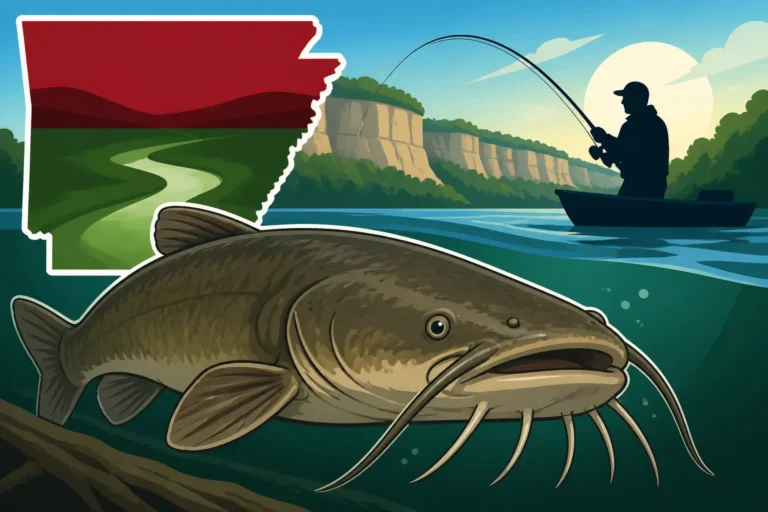
The Flathead Catfish (Pylodictis olivaris) is truly a unique creature among Arkansas's catfish. Its most striking feature, as its name suggests, is its broad, flattened head, giving it a somewhat menacing appearance. Unlike the deeply forked tails of Channel and Blue cats, the Flathead has a squarish or slightly rounded tail fin.
Their body coloration is also distinct, typically mottled with shades of yellow, brown, and olive, often with darker blotches. This camouflaged pattern helps them blend seamlessly into their preferred snag-laden habitats. Their eyes are relatively small, and their lower jaw protrudes, giving them an underbite look. Like other catfish, they have eight barbels, but they are often shorter and thicker. Their skin is smooth, without scales.
Flatheads can also grow to substantial sizes, though perhaps not quite as massive as the largest Blue Catfish. However, they are incredibly strong and muscular fish, offering a formidable fight. Identifying them correctly is usually quite easy due to their unique head and tail shape. Keep in mind their formidable appearance is matched by their power! For a clear comparison, refer to How to Tell Channel, Blue, and Flathead Catfish Apart.
Habitats and Hotspots for Flathead Catfish in Arkansas
Flathead Catfish are much pickier about their habitat than their Channel or Blue counterparts. They are ambush predators and prefer specific types of environments that allow them to lie in wait for unsuspecting prey. You'll typically find them in larger rivers and reservoirs with significant timber, rock piles, log jams, and deep, slow-moving pools. They love structure – the more cover, the better.
Prime Flathead waters in Arkansas include the Arkansas River, the White River, and sections of the Ouachita River. Large reservoirs like Lake Ouachita, Lake Dardanelle, and Millwood Lake also hold impressive populations, especially in their feeder creeks and riverine sections where extensive submerged timber provides ideal ambush points. They often associate with deep holes, undercut banks, and brush piles, especially during daylight hours.
Unlike Channels and Blues, Flatheads are less common in smaller ponds or fast-flowing streams. They are true bottom-dwellers that prefer to find a secluded hideout from which they can dart out and snatch a meal. Flathead Catfish in Arkansas Waters will often be found nestled deep within submerged trees or rock formations, making them a challenge to locate but incredibly rewarding to catch.
Mastering the Art of Flathead Catfishing
If you want to catch a Flathead, you need to think like a predator. Unlike the scavenger habits of Channel and Blue Catfish, Flatheads primarily feed on live fish. This means live bait is almost always the most effective choice. Common live baits include sunfish (bluegill, green sunfish), shad, or small carp. The bait needs to be lively and presented in a way that mimics natural prey.
Fishing for Flatheads often involves heavy tackle to contend with their size and the snag-infested environments they inhabit. Sturdy baitcasting reels spooled with heavy braided line (60-100 lb test) and powerful, medium-heavy to heavy action rods are essential. A stout circle hook, typically in sizes 5/0 to 10/0, is preferred, as it helps with hooking fish in the corner of the mouth, reducing gut-hooking, which is important for conservation.
Techniques often involve positioning your live bait near known Flathead hideouts – those deep log jams, underwater stumps, or rocky ledges. Catfish Bottom Fishing Techniques with a heavy sinker to keep the bait in place is common. Many anglers use heavy-duty anchor systems to hold their boat directly over or adjacent to structure. Bank anglers will often seek out deep river bends with visible timber. Be prepared for a powerful, often stubborn fight that will test your gear and your resolve!
Is Flathead Catfish a Good Meal?
Absolutely! Flathead Catfish are widely regarded as one of the best-eating freshwater fish, right up there with crappie and walleye. Their meat is firm, white, and has a very clean, mild flavor that many prefer even over Channel or Blue Catfish. This pristine taste comes from their diet of live fish, which tends to produce leaner, less "muddy" tasting flesh.
Like other catfish, smaller to medium-sized Flatheads (typically under 10-15 pounds) are often considered the best for the table. Their fillets are thick and meaty, making them incredibly versatile. Frying is, of course, a classic choice, yielding crispy, delicious pieces. However, Flathead fillets also shine when grilled, baked, broiled, or smoked. Their firm texture means they hold up well to robust cooking methods and can be used in a wide array of recipes, from fish sandwiches to stews.
When processing a Flathead, remove the skin and any dark or fatty areas, as with other catfish. Proper cleaning and chilling immediately after the catch will preserve the quality and flavor. So, if you manage to land a Flathead Catfish from Arkansas waters, you're not just getting a thrilling fight, you're also bringing home some of the finest eating fish the state has to offer. For more information on their size and eating qualities, check out Is Flathead Catfish Good to Eat?.
Lesser-Known Catfish Species: Beyond the Big Three
While the Channel, Blue, and Flathead Catfish dominate the angling headlines in Arkansas, the state's waters are home to a fascinating array of other catfish species. These often smaller, sometimes overlooked, cousins contribute significantly to the aquatic biodiversity and offer unique fishing experiences.
The Bullheads: Yellow, Black, and Brown
Arkansas is home to three species of bullhead catfish: the Yellow Bullhead (Ameiurus natalis), Black Bullhead (Ameiurus melas), and Brown Bullhead (Ameiurus nebulosus). These are generally smaller than the "big three," rarely exceeding a few pounds, but they are incredibly numerous and found in a wide variety of habitats. They are often seen as a perfect target for beginners and kids due to their abundance and eagerness to bite.
Bullheads are easily identified by their relatively stout bodies, slightly rounded tails (not deeply forked like Channels and Blues), and typically mottled or dark coloration. Yellow Bullheads tend to be yellowish-brown with pale barbels, while Black Bullheads are usually dark olive to black with dark barbels and a pale spot at the base of their tail fin. Brown Bullheads are typically brown to olive-green. All bullheads possess the characteristic eight barbels and smooth, scaleless skin.
These hardy fish thrive in slow-moving or stagnant waters, including muddy ponds, sluggish streams, and marshy areas where other fish might struggle. They are incredibly tolerant of low oxygen levels and poor water quality. For anglers, they offer consistent action, often biting readily on simple baits like worms, corn, or small pieces of hot dog. They are also quite tasty, especially the Yellow Bullhead, with firm, white meat that's excellent fried. They might not be trophy fish, but they provide endless fun.
The Madtoms: Small but Mighty Stream Dwellers
Madtoms are another fascinating group of catfish found in Arkansas, though they are much smaller and less commonly targeted by recreational anglers. These diminutive catfish belong to the genus Noturus and are often only a few inches long, resembling miniature versions of their larger cousins. Despite their size, they possess venomous spines in their pectoral fins, which can deliver a painful, though not dangerous, sting if handled carelessly.
Several species of madtoms inhabit Arkansas's clear, rocky streams and rivers, including the Slender Madtom, Frecklebelly Madtom, and Northern Madtom. They are typically nocturnal and feed on small aquatic insects and invertebrates. Their coloration usually helps them blend in with the gravel and detritus of the stream bottom. Anglers rarely target madtoms directly, but they are frequently encountered by those fishing for smallmouth bass or other stream species, often accidentally caught on small hooks and worms.
While not a sport fish in the traditional sense, madtoms play an important ecological role in their native stream systems. Their presence is often an indicator of good water quality, making them valuable members of Arkansas's aquatic communities. Encountering a madtom is a reminder of the incredible diversity that lies beneath the surface of our waters, far beyond the well-known game species.
Other Catfish Cousins to Encounter
Beyond the main species, Arkansas's waters might occasionally reveal other, less common catfish. These can include various species of "stonecats" or "tadpole madtoms" which are often even smaller and more secretive than the typical madtoms. They are generally found in specific ecological niches, often under rocks in clear, cool streams.
Some anglers, particularly those engaged in scientific surveys or highly specialized fishing, might encounter these rarer species. However, for the vast majority of recreational anglers, the primary focus will remain on the Channel, Blue, and Flathead Catfish, with bullheads providing additional sport in certain environments.
The important takeaway is that the "catfish family" in Arkansas is diverse and vibrant. Each species, regardless of its size or popularity, plays a role in the health and balance of our waterways. Recognizing this diversity enriches the fishing experience, turning every tug on the line into a potential learning opportunity about the wonderful aquatic life in the Natural State.
Understanding Catfish Behavior and Habitat Across Arkansas
To be a truly successful catfish angler in Arkansas, it's not enough to just know what kind of catfish you're after. You also need to understand when and where to find them. Catfish behavior is heavily influenced by seasons, water conditions, and the specific habitats available in our diverse lakes and rivers.
Seasonal Patterns and Catfish Movements
Catfish activity fluctuates significantly throughout the year, largely driven by water temperature and their spawning cycle. Understanding these seasonal patterns can dramatically increase your catch rates.
-
Spring (Pre-Spawn and Spawn): As water temperatures begin to rise in spring (typically from the mid-50s to low 70s Fahrenheit), catfish become incredibly active. This is the pre-spawn period, and they are feeding heavily to build up energy for spawning. Channel and Blue Catfish will move into shallower areas, flats, and creek channels, making them very accessible. Spawning usually occurs when water temperatures reach the mid-70s. During the spawn, male catfish guard nests in hollow logs, undercut banks, or rock crevices, and can be aggressive, though they may not be actively feeding. This can be a more challenging time to target them directly, but the pre-spawn bite is legendary.
-
Summer (Post-Spawn and Warm Water): Summer sees the warmest water temperatures, and catfish activity can become more concentrated in deeper, cooler areas, especially during the heat of the day. They often move to channels, river bends, and deep structure. Night fishing for catfish, particularly Channel and Blue cats, becomes incredibly popular and productive as fish move into shallower feeding grounds under the cover of darkness. Flatheads will continue to hunt live bait, often at night, seeking ambush points in cooler, oxygenated water. Best Time of Day to Catch Catfish is often dawn, dusk, or night in the summer.
-
Fall (Feeding Frenzy): As water temperatures start to cool down in the fall, catfish enter another feeding frenzy. They're trying to pack on weight for the upcoming winter, and this can lead to some truly epic fishing. They'll often move back into shallower areas during the day, following baitfish that are also feeding heavily. All three major species can be very active, and this is a prime time for targeting trophy fish that are bulking up.
-
Winter (Slow but Steady): Catfish metabolism slows down significantly in cold water, but they don't stop feeding entirely. They'll typically congregate in large schools in deep holes, major river channels, and reservoir basins, often near warmer springs or power plant discharges if available. The bite can be subtle, but if you find a winter aggregation, you can catch a lot of fish. Heavy baits presented slowly on the bottom are often the ticket. Don't be fooled into thinking Is Night Fishing Good for Catfish? in winter – usually daylight hours are better in the cold.
Preferred Habitats: From Rivers to Reservoirs
Arkansas's diverse geography offers a range of habitats, and catfish have adapted to thrive in most of them. Understanding these preferences is key to narrowing down your search.
-
Rivers (Arkansas, White, Mississippi, Ouachita): Rivers are prime catfish territory, especially for large Blue and Flathead Catfish. These fish gravitate towards deep river channels, current breaks, log jams, rock piles, and undercut banks. The confluence of smaller creeks with major rivers can also be hotspots, as these areas often concentrate baitfish. The current provides oxygen and moves food, making these dynamic environments incredibly productive. Look for major bends, scour holes, and areas downstream of islands or other obstructions.
-
Major Reservoirs (Ouachita, Dardanelle, Bull Shoals, Norfork): Arkansas's large impoundments offer vast expanses for catfish to roam. In reservoirs, catfish will often relate to the old river channels that were flooded, deep humps, main lake points, and submerged timber. Channel and Blue Catfish will use these deep structures, especially in summer, moving shallower during low-light conditions. Flatheads will still seek out dense cover in the deeper creek arms or in the main lake where timber persists. Points and transitions where shallow water drops off into deep water are often key areas.
-
Small Lakes and Ponds: While these smaller bodies of water might not hold trophy Blues or Flatheads, they are excellent for Channel Catfish and Bullheads. These fish will utilize brush piles, aquatic vegetation edges, deeper holes, and even open water. Community ponds across the state are often stocked with Channel Catfish, making them perfect, accessible spots for a quick trip. For new anglers, these smaller, less intimidating waters are ideal for learning the ropes.
Impact of Water Conditions on Catfish Activity
Catfish are quite resilient, but certain water conditions can either trigger a feeding spree or shut them down.
-
Water Temperature: As mentioned with seasonal patterns, temperature is perhaps the most significant factor. Catfish are cold-blooded, so their metabolism directly correlates with water temperature. Too cold, and they're sluggish; too warm, and they might seek deeper, cooler, more oxygenated water. The ideal feeding range varies by species but is generally in the 65-80°F range for active feeding.
-
Turbidity/Clarity: Catfish, with their incredible sense of smell and touch (via barbels), are well-suited to murky or turbid waters. In fact, many anglers find that slightly muddy or stained water can actually improve catfish bites, as it reduces visibility for prey and allows the catfish to use their superior sensory organs to their advantage. After heavy rains, when rivers might be running high and muddy, catfish can often be found concentrated along current breaks or in slower eddies where food washes in.
-
Current: In rivers, current is a critical factor. Catfish, especially Blues and Flatheads, will often position themselves just out of the main current flow, in eddies or behind structure, where they can expend less energy while waiting for food to be swept to them. Understanding how current moves bait and where fish position themselves in relation to it is vital. Too much current can make fishing difficult, while too little (stagnant) might mean lower oxygen levels in some areas.
-
Oxygen Levels: Like all fish, catfish need oxygen. In stagnant, hot water, oxygen levels can drop, making fish lethargic or causing them to seek out areas with better aeration, such as deeper water or near inflows. Paying attention to oxygen levels, especially in still water bodies during hot summer months, can help you find active fish.
By truly grasping these behavioral and environmental factors, you're not just casting a line into the water; you're making an informed decision, greatly increasing your chances of a successful and memorable catfish adventure in Arkansas.
Essential Gear and Conservation for Arkansas Catfish Anglers
Embarking on a catfish fishing adventure in Arkansas requires more than just knowing where the fish are and what they eat. Having the right gear, understanding ethical angling practices, and respecting local regulations are equally crucial for a successful and sustainable experience.
Recommended Rods, Reels, and Tackle for Different Catfish Species
The gear you choose will largely depend on the size and species of catfish you're targeting. Using the right tools makes the fight more manageable and increases your chances of landing that dream fish.
-
For Channel Catfish (and Bullheads): You don't need super heavy-duty gear for most Channel cats. A medium-action spinning or baitcasting rod, typically 6-7 feet long, paired with a reliable reel spooled with 10-20 lb monofilament or braided line, will handle most situations. For tackle, a simple slip sinker rig (with a 1/2 oz to 1 oz egg sinker), a swivel, and a 1/0 to 3/0 circle hook or J-hook is perfect. Many anglers find their go-to catfish hooks and pre-tied rigs on Amazon, making it easy to stock up. When fishing in ponds, a bobber rig with a smaller hook can be incredibly effective and fun.
-
For Blue Catfish: When targeting the giants of the deep, you need to step up your game significantly. Heavy-action baitcasting rods, often 7-9 feet in length, are preferred for their backbone and casting power. Pair these with robust conventional reels or large spinning reels designed for heavy drag and line capacity. Spool up with 50-80 lb braided line, or even heavier for true monsters. Your terminal tackle needs to match: large slip sinkers (2-8 oz, depending on current), heavy-duty swivels, and stout 5/0 to 10/0 circle hooks. You need gear that can withstand the incredible pulling power of a trophy Blue.
-
For Flathead Catfish: Flathead gear is similar to what you'd use for large Blue Catfish, leaning towards the heavy side due to the snags and structure they inhabit. A heavy-action baitcasting rod (7-8 feet) with a powerful reel and 60-100 lb braided line is essential. Because Flatheads primarily eat live bait, a sturdier, wide-gap circle hook (6/0 to 10/0) is critical for holding larger baits and ensuring a good hookset. Heavy sinkers are also needed to keep live bait in place against current. You'll want extra line and strong leaders to deal with their powerful runs into cover.
General Tackle Box Essentials: Regardless of species, a well-stocked catfish tackle box should include a variety of sinkers, swivels, hooks, leader material, a sharp pair of pliers or hook removers, and a good set of fish grippers or a thick rag for handling. Don't forget a sturdy landing net, especially for larger fish. A headlamp for night fishing and a good cooler with ice are also non-negotiable!
Ethical Angling and Conservation Practices
Being a responsible angler means more than just following the rules; it means adopting practices that ensure the health of our fisheries for generations to come.
-
Catch and Release (Especially for Trophy Fish): While catfish are excellent eating, consider practicing catch and release, especially for the very largest Blue and Flathead Catfish. These trophy fish are often the prime breeders in the population, and releasing them helps maintain strong genetics and healthy fish stocks. If you're going for a trophy photo, have your camera ready, minimize the time the fish is out of the water, and support its weight properly to avoid injury.
-
Proper Fish Handling: Always handle fish with care. Use wet hands to minimize damage to their protective slime coat, or use a damp towel or fish grippers. Avoid dragging fish on rough surfaces. When releasing, gently hold the fish upright in the water until it's ready to swim away under its own power.
-
Don't Waste Your Catch: If you do decide to keep fish for the table, only keep what you will eat. Respect daily limits and don't overharvest. Promptly clean and ice your catch to ensure the best quality and prevent spoilage. There's nothing worse than wasting a good fish.
-
Leave No Trace: Always pack out everything you pack in. This includes bait containers, fishing line, food wrappers, and any other trash. Our waterways are precious, and it's our collective responsibility to keep them clean for everyone to enjoy. Discarded fishing line, in particular, can be deadly to wildlife.
-
Respect Private Property: Always be aware of property boundaries and obtain permission if you're fishing on private land. Respect landowners and their property.
Understanding Regulations and Limits for Catfish
Arkansas, like all states, has specific regulations governing fishing, including those for catfish. These rules are in place to manage fish populations and ensure sustainable angling opportunities. Ignorance of the law is no excuse, and penalties can range from fines to loss of fishing privileges.
-
Fishing License: First and foremost, almost all anglers aged 16 and older need a valid Arkansas fishing license. There are different types for residents and non-residents, and various durations. Always check the current regulations or the Arkansas Game and Fish Commission (AGFC) website for exact requirements and to purchase your license. Even on guided trips, you often need your own license. Refer to Arkansas Fishing License Rules and Costs for detailed information.
-
Daily Limits and Length Limits: Catfish often have daily creel limits, and sometimes length limits, that vary by species and specific water bodies. For example, there might be a statewide daily limit for Channel Catfish, but a particular lake might have a more restrictive rule. Always consult the latest AGFC fishing guide for the specific water you are fishing. These limits help prevent overfishing and protect the breeding stock, especially of larger, more mature fish.
-
Legal Fishing Methods: Understand what fishing methods are legal for catfish in Arkansas. While rod and reel, trotlines, and jug lines are generally permitted, there might be restrictions on the number of lines, hooks per line, or specific areas where certain methods are prohibited. Methods like gigging or spearfishing for game fish (including catfish) are generally illegal.
-
Special Regulations: Be aware that some specific bodies of water in Arkansas may have special regulations that differ from statewide rules. These might include catch-and-release only zones, specific tackle restrictions, or different length and daily limits for certain species. Always check for any special regulations pertaining to your chosen fishing spot before you cast your line.
By arming yourself with the right gear and committing to ethical practices and regulatory compliance, you're not just preparing for a great day of fishing; you're contributing to the long-term health and enjoyment of Arkansas's incredible catfish resources. Happy fishing!
Disclaimer
This article is for general informational purposes only and does not constitute professional advice. Laws, prices and regulations vary by location and change over time. Consult a qualified professional for guidance on your specific situation.