Smallmouth Bass in Arkansas’s Ozark Streams
For many anglers, the thought of fishing for smallmouth bass in Arkansas conjures images of tranquil, clear-flowing Ozark streams, but the reality can sometimes feel overwhelming when you're faced with endless stretches of water and not a clue where to begin. It's tough to know which lures will entice these feisty bronzebacks or how to navigate the unique challenges these rivers present. This guide is designed to cut through that confusion, giving you the knowledge and confidence to successfully target smallmouth bass in the breathtaking waterways of the Arkansas Ozarks.
Understanding the Ozark Smallmouth Habitat
Arkansas's Ozark streams are truly special, offering some of the most pristine and productive smallmouth bass fisheries you'll find anywhere. But to consistently catch these hard-fighting fish, you first need to understand the environment they call home. It's not just about clear water; it's about the entire ecosystem working in harmony. If you approach these waters with a generic "bass fishing" mindset, you'll likely struggle because smallmouth in these streams have specific preferences that differ greatly from their lake-dwelling cousins.
The Anatomy of a Smallmouth Stream: Pools, Riffles, and Runs
Every Ozark stream, from the grand Buffalo River to the more intimate Crooked Creek, is a mosaic of different water features, each playing a crucial role in the smallmouth bass's life. Think of it like a neighborhood with different amenities. You have your deep, slow-moving pools, which are often the equivalent of a smallmouth's living room and dining room. These are typically found at the bends in the river or below significant drops, providing deeper water where fish can feel secure and find larger prey. They offer respite from strong currents and are key holding areas, especially during colder months or when fish are stressed. Anglers often find success by casting towards submerged logs, rock piles, or undercut banks within these pools.
Then there are the riffles, those shallow, turbulent stretches where the water tumbles over rocks and gravel. These are like the stream's grocery store, oxygenating the water and dislodging insects and small baitfish, making food readily available. Smallmouth won't usually hold in the middle of a fast riffle, but they'll position themselves just downstream, in the slightly calmer water, ready to ambush anything that floats by. It's a classic ambush point, and often where the most aggressive fish will be found. Finally, you have the runs, which are intermediate stretches of moving water, deeper and less turbulent than riffles but still with a noticeable current. These are often transition zones, pathways smallmouth use to move between pools and feeding areas. Understanding how these features connect and where smallmouth prefer to hold in each is foundational to successful stream fishing.
Water Quality and Its Impact on Smallmouth Populations
The crystal-clear water that defines Ozark streams isn't just pretty; it's vital for smallmouth bass. These fish thrive in cool, clean, well-oxygenated water, often with a slightly rocky or gravel bottom. Poor water quality, whether from agricultural runoff, sedimentation, or pollution, can devastate smallmouth populations by reducing oxygen levels, destroying spawning beds, or making their food sources scarce. This is why you'll often find the most robust smallmouth populations in relatively undeveloped areas, where natural filtration systems are still intact.
Anglers often get frustrated when they visit a "known" smallmouth stream only to find the fishing slow, and sometimes, the water quality is the silent culprit. Heavy rains can temporarily muddy streams, making it harder for smallmouth to hunt by sight and pushing them into deeper, calmer pockets. Conversely, prolonged droughts can lead to dangerously low water levels and elevated temperatures, stressing the fish and making them lethargic. Knowing the recent weather patterns and understanding how they affect water clarity and temperature is crucial for planning your trip. The more pristine the water, the happier and healthier the smallmouth, which translates to better fishing opportunities. Always look for clear, cool flows.
Structure and Cover: Where Smallmouth Hide
Smallmouth bass are ambush predators, and like any good ambush predator, they rely heavily on structure and cover to conceal themselves and surprise their prey. In Ozark streams, this means rocks, lots of rocks! Boulders, gravel beds, rock ledges, and even scattered smaller stones create the perfect hideouts. These provide current breaks, allowing smallmouth to conserve energy while waiting for food to drift past. They also offer protection from larger predators and the sun's intense rays. Submerged timber – fallen trees, logjams, or root wads – also serves as excellent cover, especially in slower-moving pools.
Think about how you'd hide if you were a smallmouth. You'd want something to break the current, offer shade, and give you a quick escape route. That's exactly where they'll be. When you're working a stretch of stream, don't just cast into open water. Target the edges of large boulders, the shady side of a submerged log, or the seams where fast water meets slow water around a rock pile. Often, the best spots are deceptively small, holding only one or two fish, but they'll be aggressive ones. Ignoring these subtle pieces of structure is a common mistake that can lead to a frustrating day.
Key Characteristics of Arkansas Smallmouth Bass
Once you understand their habitat, it's time to get acquainted with the fish themselves. Smallmouth bass are a distinct species with unique behaviors and characteristics that set them apart from their largemouth cousins. Knowing these traits will help you identify them, understand their feeding patterns, and appreciate the fight they put up. For many, the smallmouth is the undisputed king of stream fishing, and for good reason!
Identifying the Ozark Bronzeback
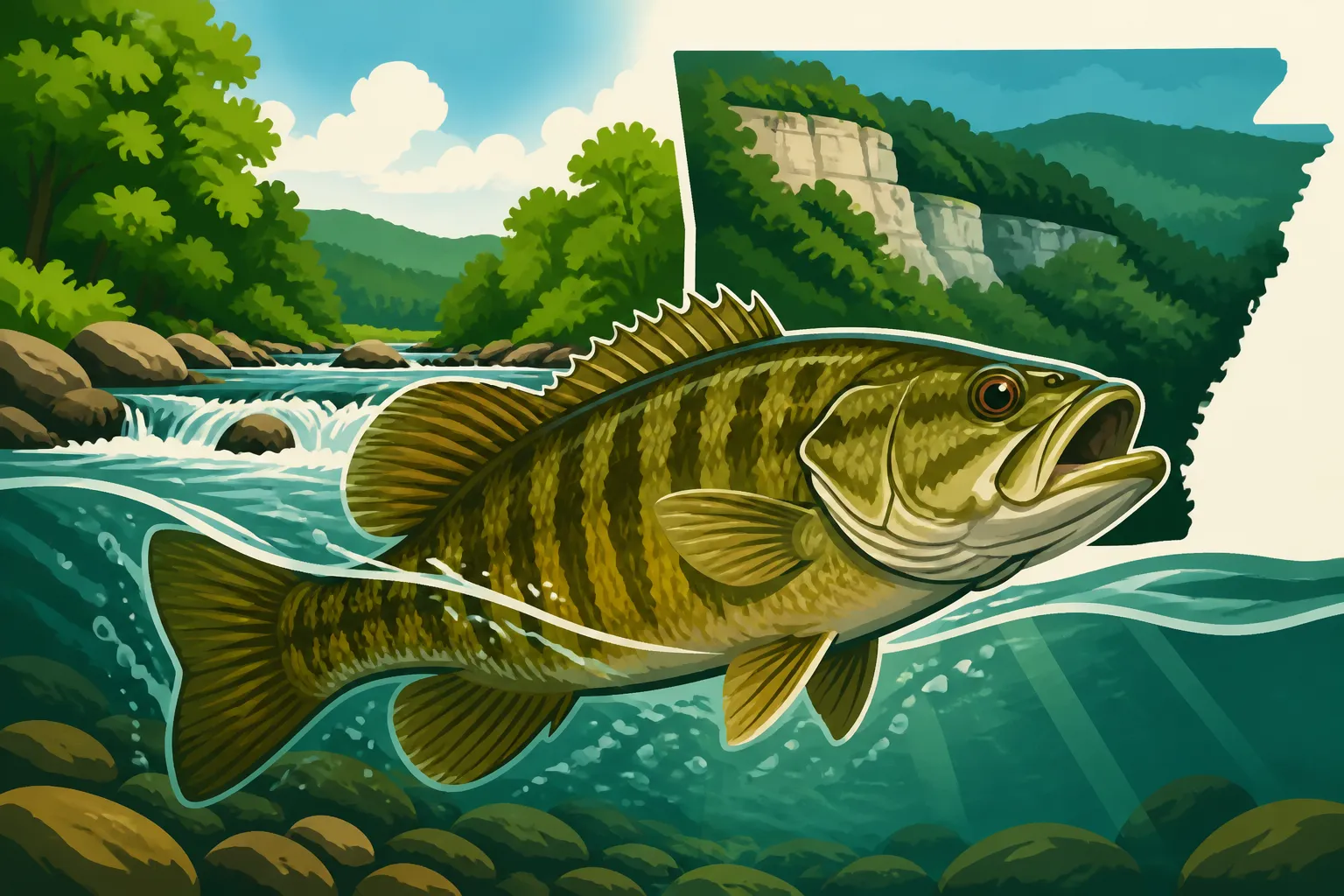
Distinguishing a smallmouth bass from a largemouth or even a spotted bass can sometimes be tricky, especially for beginners or in varied lighting conditions. The "Ozark Bronzeback" moniker comes from their typically bronze, brownish-gold, or olive-green coloration, often with vertical bars or blotches along their sides, which helps them camouflage against rocky riverbeds. Their most distinctive feature, and the easiest way to tell them apart from a largemouth, is their mouth. When closed, the corner of the smallmouth's jaw does not extend past the middle of its eye. A largemouth, as the name suggests, has a mouth that extends well past the eye.
Smallmouth also tend to have red eyes and a more streamlined, torpedo-shaped body compared to the bulkier largemouth. Their dorsal fin is less deeply notched than a largemouth's. When you hook one, there's no mistaking their energy – they're known for powerful runs and acrobatic jumps, often putting up a fight far greater than their size suggests. Take a moment to observe the fish before releasing it; noticing these details will not only help you identify your catch but also deepen your appreciation for these magnificent fish. If you're curious to learn more about identifying specific species, check out How to Identify a Smallmouth Bass.
Behavior and Feeding Habits
Smallmouth bass are opportunistic predators with a diverse diet that changes depending on the season and available forage. In Ozark streams, their primary food sources include crayfish, hellgrammites, various aquatic insects, and smaller baitfish like minnows and darters. They are highly attuned to their environment, actively hunting in current seams, around submerged rocks, and along undercut banks. They tend to be more active feeders in slightly cooler water than largemouth bass, which is why they thrive in the fresh, flowing waters of the Ozarks.
Their feeding behavior is often aggressive and explosive. They'll dart out from cover, snatch prey, and quickly retreat. This aggressive nature is what makes them so much fun to catch on artificial lures. Understanding their diet can greatly influence your lure selection. For example, if you know a stream has a high crayfish population, a small crankbait or soft plastic designed to imitate a crayfish can be incredibly effective. In contrast, if you observe a lot of insect activity, a topwater bug or a subtle jig could be the ticket. They are sight feeders, so clear water is generally preferred, which is why bright, erratic lures often trigger reaction strikes.
Size, Growth, and Trophy Potential
While smallmouth bass might not reach the sheer weight of a trophy largemouth, an Ozark stream smallmouth is still a highly prized catch. Their size and growth rates are influenced by factors like water temperature, food availability, and genetics. In many Arkansas Ozark streams, a smallmouth measuring 14-18 inches is considered a fantastic catch, with fish pushing over 20 inches being truly exceptional and often referred to as "trophy" fish. It takes a considerable amount of time for a smallmouth to reach these larger sizes in a stream environment, making their capture even more rewarding.
The good news is that Arkansas manages its smallmouth fisheries carefully to promote healthy populations and trophy potential. Regulations, such as minimum length limits and daily creel limits, are in place to ensure these fish have a chance to grow. For instance, you should be aware of the Smallmouth bass limit on Arkansas's moving waters is 2 fish and that there is a Minimum length for smallmouth bass on flowing waters in Arkansas. Consistently catching larger smallmouth often means venturing into more remote stretches of river or fishing during specific times of the year when they are most active. While you might not land a giant on every cast, the chance to battle a hefty bronzeback is always present in these special waters.
Essential Gear and Techniques for Stream Smallmouth
Fishing for smallmouth in Ozark streams isn't like casting a worm into a pond. It requires a slightly different approach, both in terms of the gear you use and the techniques you employ. Getting this right can mean the difference between a frustrating day of snagging and a memorable experience with plenty of bent rods. Don't worry, you don't need a boatload of expensive equipment, but a few key items will make a world of difference.
Rods, Reels, and Line Selection
For most stream smallmouth fishing, a medium-light to medium-power spinning rod, between 6'6" and 7' long, is a versatile choice. This setup provides enough sensitivity to feel subtle bites but enough backbone to handle strong runs and cast lighter lures accurately. A fast action tip is ideal, allowing for quick hook sets. Pair this with a lightweight spinning reel in the 1000 to 2500 size range, spooled with 6-8 pound monofilament or fluorocarbon line. Monofilament offers a bit more stretch, which can be forgiving when a smallmouth makes a sudden lunge, while fluorocarbon offers greater sensitivity and is nearly invisible underwater.
Many anglers, myself included, have found braided line to be fantastic in these rocky environments, especially if you're prone to snags. A 10-15 pound braided line, tied to a 6-8 pound fluorocarbon leader, gives you the best of both worlds: casting distance and strength from the braid, and stealth from the fluorocarbon. Remember, accuracy is key in stream fishing. You'll often be casting into tight pockets or around specific pieces of cover, so a balanced setup that you can cast precisely is more valuable than brute strength. For those who enjoy a challenge, a light fly rod can also be incredibly effective for smallmouth, especially with poppers and streamers. You can find a good selection of quality rods and reels on platforms like Amazon, offering options for every budget.
Top Lures and Baits for Ozark Smallmouth
Smallmouth bass are notorious for their aggression, and they respond well to a variety of artificial lures. If I had to pick three categories to start with, they would be jigs, small crankbaits, and topwater lures. Jigs, especially those mimicking crayfish or minnows, are incredibly versatile. Grubs, tubes, and Ned Rigs (often found in a diverse array on Amazon) in natural colors like green pumpkin, brown, or black, are deadly when worked along the bottom near structure. Smallmouth are particularly fond of crayfish, so anything that imitates one, either in color or action, is usually a winner.
Small crankbaits, especially those with a tight wobble and a diving depth of 3-6 feet, are excellent for covering water and eliciting reaction strikes. Colors that mimic baitfish or crayfish are solid choices. Finally, nothing beats the excitement of a topwater strike! Poppers, walking baits, and prop baits can be incredibly effective, especially during low-light conditions or when fish are actively feeding on the surface. Don't forget small spinnerbaits and inline spinners, which are also very effective, particularly in areas with a bit more current. When it comes to choosing the Best Bait for Smallmouth Bass in Rocky Streams, versatility and matching the hatch (or the crayfish!) are your best bets.
Wading vs. Kayaking: Accessing Prime Water
Accessing smallmouth in Ozark streams often means getting wet. The two primary methods are wading or using a small, maneuverable watercraft like a kayak or canoe. Wading offers unmatched stealth and allows you to fish specific pockets thoroughly. You can feel the bottom, understand the current, and precisely place your casts. Good quality wading boots with felt or sticky rubber soles are essential for navigating slippery rocks safely. A sturdy wading staff can also be a lifesaver, providing balance in swift currents. Always check water levels before wading, as high flows can make it dangerous.
Kayaks and canoes, on the other hand, allow you to cover more water efficiently, especially on longer floats, and carry more gear. They're excellent for exploring stretches of river that are difficult to access by foot. Many of these Ozark streams have numerous access points for float trips, like those mentioned in Caddo River Fishing Access Points in Arkansas or Little Missouri River Fishing Spots in Arkansas. A stable fishing kayak can be a game-changer, allowing you to stand and cast, or to reach those otherwise inaccessible deep pools. Whichever method you choose, always prioritize safety, wear a personal flotation device, and be mindful of private property along the riverbanks.
Prime Ozark Streams for Smallmouth Bass
Arkansas is blessed with a network of incredible rivers that are practically tailor-made for smallmouth bass. While many focus on the well-known names, there are plenty of hidden gems waiting to be discovered. Knowing where to go is half the battle, especially if you're traveling a distance to fish.
Renowned Smallmouth Fisheries: Buffalo, Crooked Creek, and Current River
When people talk about smallmouth fishing in Arkansas, the Buffalo National River is almost always at the top of the list. Flowing free and wild, the Buffalo offers mile after mile of pristine smallmouth habitat. Its clear waters, abundant rock structure, and healthy insect and crayfish populations make it a legendary fishery. You can find incredible fishing along its entire length, from the upper reaches with smaller, feisty fish to the wider, deeper lower sections where larger smallmouth lurk. Float trips are popular here, often extending several days.
Crooked Creek, another iconic Ozark stream, lives up to its name with its winding bends and numerous pools and riffles. It's often considered a premier smallmouth stream, known for producing good numbers of quality fish. It's generally more accessible for wading in many areas, though some stretches require a small boat or kayak. The Current River, particularly its headwaters and upper stretches in Arkansas, also provides excellent smallmouth opportunities, often overlooked by those who focus on the more famous trout tailwaters. These rivers truly embody the essence of Ozark smallmouth fishing and are fantastic places to begin your adventure. For a broader look at river options, check out Arkansas's Best Rivers for Trout, Bass, and Catfish.
Hidden Gems and Lesser-Known Spots
While the big names draw a crowd, Arkansas's Ozarks are full of lesser-known streams that can offer incredible smallmouth action without the pressure. Rivers like the Little Missouri (especially its upper reaches) and the Cossatot (known for its challenging whitewater, but also its incredible fishing in calmer sections) hold robust smallmouth populations. These streams often require a bit more effort to access, sometimes involving a hike or navigating more remote terrain, but the reward is often worth it: less crowded waters and aggressive, unpressured fish.
Exploring smaller tributaries and feeder creeks can also lead to surprising discoveries. Many of these streams, while not as grand as the Buffalo, offer intimate fishing experiences and fantastic populations of smaller, but incredibly fun-to-catch, smallmouth. The key to finding these hidden gems is doing your research, studying maps (topographic maps are your friend!), and being willing to explore. Sometimes, the best fishing spots aren't listed in guidebooks but are found through persistence and a sense of adventure. Just be sure to always respect private land and access points. Another excellent but challenging option is to explore Cossatot River Fishing Guide in Arkansas for a wilderness experience.
Navigating Access Points and Regulations
Before you even tie on your first lure, it's crucial to understand how to legally access these streams and what rules govern your fishing activities. Many Ozark streams flow through a mix of public and private land. While you typically have the right to float navigable waterways, accessing the river or wading from the banks often requires permission if it's private property. Public access points, such as those found at state parks, national forest lands, or designated wildlife management areas, are your safest bet. Always look for official signage.
Arkansas has specific regulations for smallmouth bass, including size and daily limits, which are designed to protect and enhance these valuable fisheries. It's your responsibility as an angler to know and follow these rules. You can find comprehensive information in the Arkansas Fishing Regulations Guide and specifically about Arkansas Fish Size and Daily Limits. Always carry your fishing license – both resident and Nonresident Annual Fishing License Cost in Arkansas or Resident Annual Fishing License Cost in Arkansas are required for most anglers – and a copy of the current regulations. Ignorance of the law is no excuse, and wardens regularly patrol these popular fishing areas.
Conservation and Responsible Angling Practices
The beauty and productivity of Arkansas's Ozark smallmouth streams are not accidental; they are a result of natural processes and, increasingly, dedicated conservation efforts. As anglers, we have a vital role to play in preserving these precious resources for future generations. Responsible angling isn't just a suggestion; it's a necessity.
Catch and Release Best Practices
Many dedicated smallmouth anglers practice catch and release, especially for larger, trophy-sized fish. These larger fish are often the prime spawners, contributing significantly to the population's health. If you choose to release a fish (and I strongly encourage you to do so for all but a few smaller, harvestable ones), handle it with care. Minimize its time out of the water; a quick photo is fine, but get it back quickly. Use wet hands to avoid removing the fish's protective slime coat. If a fish is deeply hooked, cut the line as close to the hook as possible rather than trying to rip the hook out.
Supporting organizations that work to conserve and protect these river systems is also a critical part of responsible angling. Whether it's volunteering for a cleanup day or simply being mindful of your footprint, every little bit helps. Remember, the goal is not just to catch fish today, but to ensure that these incredible fisheries remain vibrant for years to come. For instance, regulations like Why smallmouth bass must be over 12 inches to keep are specifically designed to protect these crucial breeding fish.
Protecting Stream Ecosystems
Our actions on and off the water directly impact the health of Ozark stream ecosystems. Litter, even small pieces, can have devastating effects on wildlife and water quality. Always pack out everything you pack in, and if you see litter left by others, consider picking it up if you can safely do so. Be mindful of your footsteps when wading; unnecessary stirring of the streambed can disrupt insect larvae and dislodge small baitfish, impacting the smallmouth's food chain.
Avoid disturbing stream banks, which play a crucial role in preventing erosion and filtering runoff. If you're using a kayak or canoe, avoid dragging it unnecessarily over sensitive areas. Invasive species are another huge threat. Always clean your boots, waders, and equipment thoroughly between different waterways to prevent the spread of unwanted plants, animals, or pathogens. A little bit of diligence goes a long way in keeping these natural treasures healthy.
Understanding Arkansas Smallmouth Regulations
It's impossible to overstate the importance of knowing and abiding by current fishing regulations. These rules are not arbitrary; they are based on scientific data and designed to ensure sustainable fish populations. Arkansas has specific rules for smallmouth bass in its streams, including limits on the number of fish you can keep per day (creel limits) and minimum size requirements. These can sometimes vary by specific water bodies, so always double-check the current Arkansas Game and Fish Commission regulations before you head out.
For example, on most of Arkansas's moving waters, the daily limit for smallmouth bass is two fish, and they must be at least 12 inches long. This means any smallmouth under 12 inches, or any caught after you've reached your two-fish limit, must be immediately and carefully released. Failure to adhere to these regulations can result in significant penalties, fines, and even the loss of your fishing privileges. Remember, these regulations protect the very resource we cherish, ensuring there are plenty of bronzebacks for everyone to enjoy for years to come.
| Stream Feature | Description | Smallmouth Behavior | Angling Tip |
|---|---|---|---|
| Pools | Deeper, slower-moving sections, often at bends or below riffles. | Holding areas, seeking depth, cover (logs, boulders), and shade. Less active. | Target submerged structure with jigs, slow-retrieved crankbaits. |
| Riffles | Shallow, turbulent water over rocks and gravel; highly oxygenated. | Feeding lanes, ambushing dislodged prey. Fish position downstream of current. | Cast small crankbaits or spinners just downstream of the turbulence. |
| Runs | Moderate current, deeper than riffles but shallower than pools. Transition zones. | Moving between feeding and resting areas, active hunting. | Cover water with small crankbaits or spinnerbaits; work edges of current seams. |
| Current Seams | Where fast water meets slow water around structure. | Prime ambush points, less energy expended to hold position. | Cast parallel to the seam, letting your lure drift into the slower water. |
| Undercut Banks | Eroded banks forming an overhang, offering shade and hidden pockets. | Excellent cover, especially in warmer months. | Carefully pitch jigs or soft plastics under the bank. |
Seasonal Considerations for Smallmouth Fishing
Just like any other game fish, smallmouth bass behavior in Arkansas's Ozark streams is heavily influenced by the changing seasons. What works in spring might not be effective in summer, and understanding these shifts will dramatically improve your success rate. Being in tune with nature's rhythm is key to becoming a truly adaptable angler. Knowing the Best Time of Year to Fish in Arkansas is crucial for smallmouth success.
Spring: Pre-Spawn and Spawn Patterns
Spring is arguably one of the most exciting times to target smallmouth bass in Ozark streams. As water temperatures begin to rise from their winter lows, smallmouth become increasingly active, moving out of their deep wintering holes and into shallower areas in preparation for the spawn. This "pre-spawn" period is characterized by aggressive feeding as they pack on energy for reproduction. They'll be looking for protein-rich meals, making jigs, crankbaits, and even larger spinnerbaits very effective. Look for them in transitional areas between deep pools and shallower spawning flats.
Once water temperatures consistently reach the mid-50s to low-60s Fahrenheit, smallmouth will begin to spawn. They prefer clean, gravelly bottoms, often in shallower sections near current breaks. During the spawn, male smallmouth become very protective of their nests, making them highly susceptible to lures that intrude on their territory. While easy to catch, it's generally recommended to practice extreme catch and release during this sensitive period to avoid disrupting their reproductive cycle. If you target bedding fish, quickly release them to ensure they return to guard their eggs.
Summer: Low Water and Warm Temps
Summer in the Ozarks can bring challenges to stream smallmouth fishing. Lower water levels are common due to less rainfall and increased evaporation, and water temperatures can climb, especially in shallower stretches. Smallmouth during this time tend to become more lethargic during the brightest, hottest parts of the day. They'll seek refuge in deeper pools, under heavy shade, or in areas with strong current or spring flows that provide cooler, more oxygenated water. This is when fishing early in the morning, late in the evening, or even after dark can be most productive.
When the sun is high, focus your efforts on those deeper holes, targeting submerged logs, large boulders, and undercut banks that offer maximum shade and cover. Slower presentations with jigs, Ned Rigs, or even live bait (where permitted) can be more effective than fast-moving lures. Topwater action can still be fantastic during dawn and dusk. Be mindful of the fish's stress levels in warmer water; handle them quickly and release them gently to ensure their survival.
Fall: Feeding Frenzy Before Winter
As the crisp autumn air arrives and water temperatures begin to drop, Ozark smallmouth bass kick into high gear, often initiating a "feeding frenzy" in preparation for the lean winter months. This can be another phenomenal time to fish. They become incredibly aggressive, actively chasing down baitfish and crayfish. They'll often move into shallower areas during the day, particularly on sunny afternoons, to feed before retreating to deeper water at night.
During the fall, covering water efficiently with crankbaits, spinnerbaits, and even larger topwater lures (especially on warmer days) can be highly effective. Look for them concentrated in specific areas where baitfish are schooling or crayfish are abundant. The cooler water revitalizes their fighting spirit, and you can expect some truly memorable battles. As water temperatures continue to drop into late fall, they'll gradually transition back to deeper pools, but the pre-winter feeding binge provides an excellent window of opportunity for enthusiastic anglers.
Disclaimer
This article is for general informational purposes only and does not constitute professional advice. Laws, prices and regulations vary by location and change over time. Consult a qualified professional for guidance on your specific situation.