Best Month to Catch Striped Bass at Norfork Lake Arkansas
For many anglers, the dream of hooking into a monstrous striped bass on Norfork Lake is a powerful one, but knowing exactly when to embark on that quest can feel like cracking a secret code. You might spend countless hours on the water during the "wrong" time, leaving you frustrated and empty-handed. This comprehensive guide is dedicated to demystifying the seasonal rhythms of Norfork Lake's striped bass, pinpointing the absolute best months for success and offering insights into how to approach this magnificent fishery year-round.
The Undisputed Prime Seasons for Norfork Lake Stripers
When we talk about the "best month" for catching striped bass on Norfork Lake, it’s rarely just one single month that stands head and shoulders above the rest. Instead, Norfork offers two distinct, extended windows of opportunity that are widely considered prime time for targeting these powerful fish, particularly for those looking to land a trophy. These periods are characterized by cooler water temperatures, abundant baitfish activity, and stripers that are more accessible and aggressive.
Why Spring is a Striper Angler's Dream (March-May)
If you have to pick a single season, many seasoned Norfork Lake striper anglers will point to spring as the ultimate sweet spot. As the long, cold grip of winter finally loosens and water temperatures begin to steadily climb from the low 40s into the 50s and 60s, a dramatic transformation occurs beneath the surface. The baitfish, primarily threadfin and gizzard shad, start to move out of their deep winter haunts and congregate in shallower coves and creek arms. This movement is a clarion call for the striped bass, which follow suit, pushing into these same areas to feed aggressively in preparation for their pseudo-spawn.
March, April, and into early May offer incredible opportunities. You'll find stripers chasing shad on the surface during low-light conditions, creating explosive topwater action that gets any angler's heart pounding. Imagine casting a big pencil popper or a walk-the-dog lure into a school of erupting fish as the sun barely clears the tree line—it’s pure magic. As the day progresses, these fish might retreat to slightly deeper water, but they're still often found within 20-40 feet, making them accessible to a variety of techniques. Trolling with large crankbaits or live bait on planer boards becomes incredibly effective as stripers cruise the ledges and main lake points. For anglers looking to really understand the yearly patterns, diving into the specifics of the Norfork Lake Striped Bass Season can provide even more context.
Fall's Frenzy: A Close Second (September-November)
Just as invigorating, and arguably just as productive, is the fall season, typically from mid-September through November. After the intense heat of summer, the gradual cooling of Norfork's waters revitalizes the entire ecosystem. The baitfish once again become highly active, often schooling tightly in large balls in the backs of creeks and along main lake points. The striped bass respond to this abundance by engaging in what's often referred to as a "feeding frenzy," bulking up for the leaner winter months ahead.
This time of year is fantastic for both numbers and size. You'll frequently encounter stripers schooling up, especially in the major arms of the lake like the Big Creek and Bennett's Bayou areas. Casting jigs, swimbaits, or even larger spoons into these schools can yield multiple hookups. Live bait, particularly gizzard shad, fished on downlines or freelines, becomes incredibly potent as the stripers become less wary in their pursuit of food. Early mornings and late afternoons are prime for surface activity, but aggressive feeding can occur throughout the day, particularly on cloudy or overcast days. Many anglers plan entire vacations around this fall window, knowing it provides some of the best chances for a trophy. If you're wondering How Big Do Norfork Lake Stripers Get?, the fall run is often when some of the biggest are landed.
Navigating the Challenges and Opportunities of Other Seasons
While spring and fall often steal the spotlight, Norfork Lake offers year-round opportunities for striped bass if you understand their behavior and adapt your tactics. It's not always easy, and sometimes it requires specialized gear and a lot of patience, but the rewards can be incredible.
Summer's Deep Dive: Finding Stripers in the Heat (June-August)
When summer hits Norfork Lake, the surface water temperatures soar, and the lake stratifies, forming a distinct thermocline. This invisible layer is where the cooler, oxygenated water sits, and it’s precisely where the striped bass will retreat. Finding them becomes a game of depth and precision. Typically, they'll hold in the 60- to 100-foot range, often deeper, especially near the dam or major river channels.
Trolling with downriggers or lead core line is the name of the game during summer. You'll be dropping live bait—big gizzard shad are preferred—or large diving crankbaits to the precise depth where the fish are holding. This isn't a casting game; it's a sophisticated hunt using your electronics to mark bait and stripers. Night fishing also becomes exceptionally productive in summer, as stripers will move shallower under the cover of darkness to feed. Anglers often drift or anchor with submersible lights to attract baitfish, which in turn draws in the stripers. For more specific insights into these warmer months, check out our guide on Summer Striper Fishing at Norfork Lake Arkansas. It's a challenging time, no doubt, but successful summer striper fishing on Norfork often yields some of the heaviest fish of the year, as they've had months to feed and grow.
Winter's Wager: Cold Water Rewards (December-February)
Winter fishing on Norfork Lake for striped bass is definitely not for the faint of heart. The weather can be unpredictable, and biting winds can make for a bone-chilling experience. However, for those willing to brave the elements, winter can be incredibly rewarding. The entire lake’s water column often becomes isothermal, meaning temperatures are relatively uniform from top to bottom, or at least lack the stratification of summer.
Stripers tend to school up very tightly in winter, often holding in deep water, but sometimes pushing shallower if conditions allow. They are less active, but still need to feed. Vertical jigging with heavy spoons or large jigging baits directly over marked schools is a common and effective technique. Another excellent method is slow trolling live bait, especially large gizzard shad, using minimal weight to keep the bait just above the fish you see on your sonar. The bite can be subtle, but when a big striper takes the bait, it's unmistakable. Anglers also find success fishing near the mouths of major creeks and points, especially during warming trends. While the bite might be slower, the fish you do catch are often robust and healthy.
Essential Strategies and Gear for Norfork Stripers
Successfully targeting striped bass on Norfork Lake, regardless of the season, requires a combination of the right techniques, appropriate gear, and an understanding of the lake's unique characteristics. These fish are powerful and intelligent, and they demand respect from anglers.
Mastering Live Bait and Trolling Techniques
For many serious striper anglers on Norfork, live bait is king. Gizzard shad and threadfin shad are the primary forage for striped bass, and presenting these natural baits effectively can dramatically increase your hookup ratio. Getting quality live bait can sometimes be a challenge, requiring cast nets or even buying them from local bait shops. However, the effort is well worth it. You can fish live bait on freelines, often with a balloon to keep it near the surface, or on downlines (a weighted line to present bait deeper). Using specialized bait tanks to keep your shad lively throughout the day is crucial. For more in-depth advice on what to use, check out our guide on Best Live Bait for Striped Bass.
Trolling is another cornerstone technique, especially when stripers are spread out or holding at specific depths.
- Planer boards allow you to spread multiple lines out wide from the boat, covering a broader area and presenting baits or lures away from the boat's shadow. This is particularly effective in spring and fall when stripers are shallower.
- Downriggers are essential for targeting deep-holding stripers in summer or winter. These devices use heavy weights to send your line and lure/bait down to a precise depth, which you monitor with your sonar.
- Lead core line achieves similar depth to downriggers but without the bulky equipment, relying on the weight of the line itself and boat speed to reach desired depths.
Choosing the right lures is also important. Large crankbaits, swimbaits, jerkbaits, and heavy jigging spoons (like a 2 oz. Striper Spoon from Cotton Cordell or a similar flutter spoon) are all effective depending on the season and depth. Having a selection of these on hand will prepare you for varying conditions. You can often find a wide variety of these specialized lures and tackle on popular online retailers like Amazon, making it convenient to stock up before your trip.
Understanding Norfork's Unique Characteristics
Norfork Lake is a stunning, deep, clear-water reservoir nestled in the Ozark Mountains. Its clarity means that stripers can be wary, especially in shallower water or during bright daylight hours. This often necessitates longer fluorocarbon leaders and careful bait presentation. The lake's extensive timber (submerged trees) in many of its creek arms and coves also provides excellent ambush points for stripers and can be challenging for navigation and retrieving snagged lures.
Effective electronics, specifically a high-quality sonar unit with side-imaging or down-imaging, are invaluable tools on Norfork. Being able to mark bait balls, identify submerged timber, and spot individual stripers or schools is key to success. Understanding the lake's topography—its deep channels, points, humps, and coves—is also crucial. While the lake has distinct areas, stripers are highly mobile, often following baitfish over long distances. Anglers interested in more general strategies might find our comprehensive guide on Arkansas Striped Bass Fishing Techniques helpful in refining their approach.
Planning Your Trip for Maximum Striper Success
A successful striper trip to Norfork Lake involves more than just showing up with a rod and reel. Thoughtful planning, tapping into local expertise, and understanding the regulatory landscape will significantly enhance your experience and your chances of success.
Consulting Local Knowledge and Guides
One of the absolute best investments you can make, especially if you're new to Norfork Lake or targeting stripers, is to hire a local fishing guide. These seasoned pros spend hundreds of days on the water each year and possess an intimate knowledge of the lake's ever-changing patterns, current hot spots, and the most effective techniques. They can teach you the nuances of trolling, live bait presentation, and how to read your electronics effectively. Guides often have specialized boats and gear, and they’ll put you directly on the fish, often saving you days of trial and error.
Even if you don't book a full guided trip, chatting with local bait shop owners, resort staff, or other anglers at boat ramps can provide invaluable, up-to-the-minute intel on what's biting and where. Places like Gene's Trout & Tackle or the Norfork Lake Marina are often great sources of information. They can provide advice on everything from current water levels to the best color of jig to use. This local knowledge is often the difference between a good trip and a great one. While this article focuses on the "best month," the Trophy Striped Bass Fishing in Arkansas guide highlights the unique opportunities that dedicated local guides can provide.
License and Regulation Reminders
Before you even think about dropping a line in Norfork Lake, ensure you have all the necessary licenses and understand the current regulations. All anglers aged 16 and older need a valid Arkansas fishing license. If you're a resident, the annual license is quite affordable, but non-residents will need to purchase a specific non-resident license. There are also options for 3-day or 7-day trip licenses which can be perfect for visitors. You can often purchase these online through the Arkansas Game and Fish Commission website, at local sporting goods stores, or even at some local marinas and bait shops. It's always a good idea to check the most current regulations, as bag limits, length limits, and other rules can change periodically. You can find comprehensive details about this in our full guide on Arkansas Fishing License Rules and Costs.
Always be aware of the daily creel limits for striped bass on Norfork Lake. Currently, the daily limit is six striped bass, with only one allowed to be 25 inches or longer. These regulations are in place to help manage the fishery and ensure healthy populations for future generations of anglers. Ignoring these rules can lead to significant penalties, so it's always better to be informed. Carrying a tape measure is essential to ensure you are compliant with the length limits. Many anglers purchase measuring devices directly from Amazon or local tackle shops to ensure accuracy.
Seasonal Striper Fishing Opportunities on Norfork Lake
To give you a clearer picture, here's a table summarizing the general opportunities and techniques by season for striped bass on Norfork Lake. Remember, fishing is always dependent on specific weather patterns and fish behavior, but this provides a good baseline.
| Season | Best Months | Water Temperature (F) | Primary Depths | Key Techniques | Expected Activity & Size |
|---|---|---|---|---|---|
| Spring | March-May | 50-68 | 10-40 ft | Topwater, Planer Board Trolling, Live Bait (Freeline/Downline) | Excellent; aggressive feeding, potential for trophy fish, good numbers |
| Summer | June-August | 70-85 (Surface) | 60-100+ ft (Thermocline) | Downrigger Trolling (Live Bait/Lures), Night Fishing | Challenging but rewarding; deeper fish, good size, night bites |
| Fall | Sep-November | 60-75 | 15-50 ft | Live Bait (Downline/Freeline), Jigging Spoons, Topwater | Excellent; aggressive feeding, schooling fish, good numbers & size |
| Winter | Dec-February | 40-55 | 40-80+ ft | Vertical Jigging, Slow Trolling Live Bait | Slower bite, but potential for large, concentrated fish |
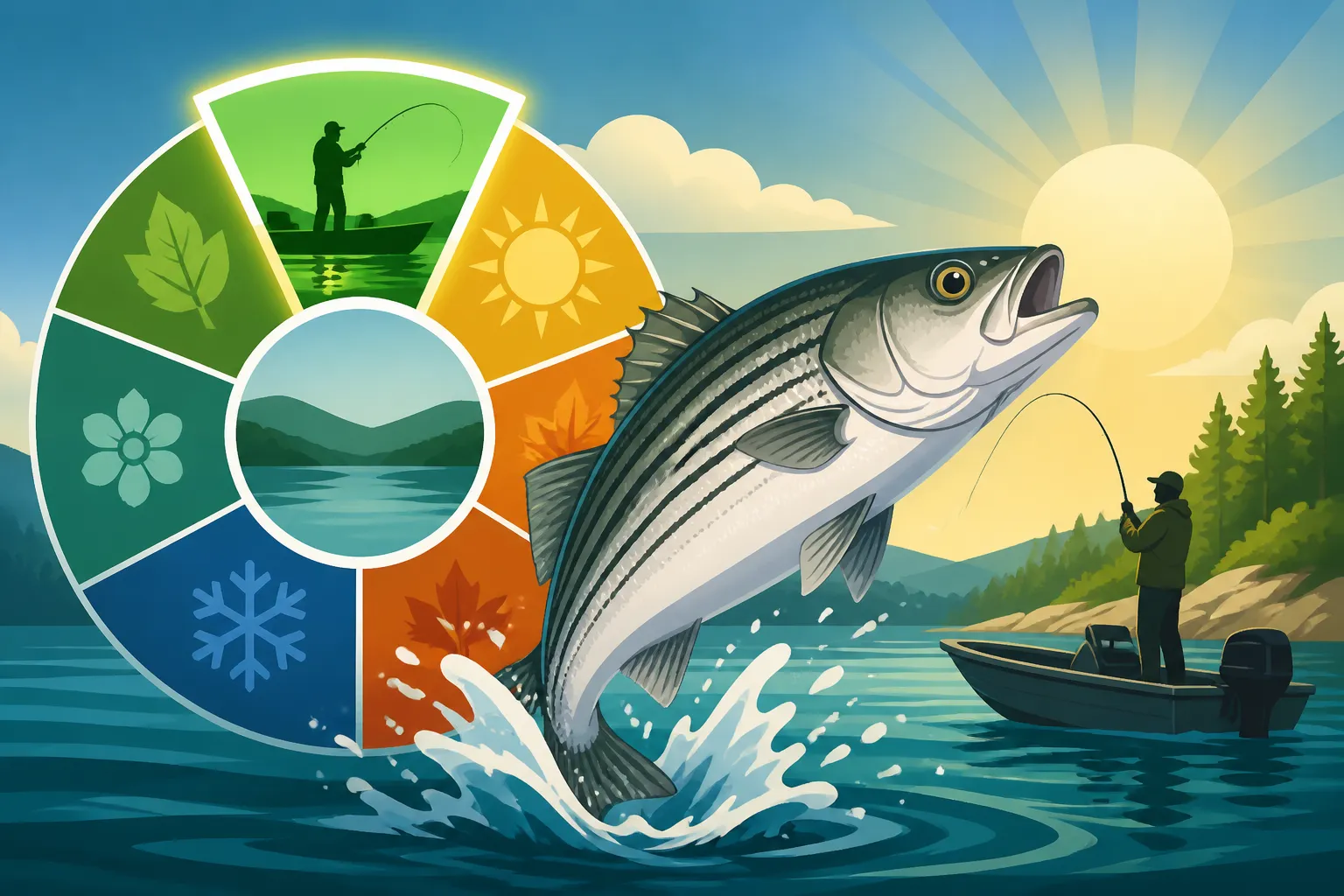
This table highlights that while spring and fall are the best months to catch striped bass at Norfork Lake Arkansas due to overall accessibility and aggression, every season holds its own unique charm and potential for a memorable catch if you adjust your approach. For example, during the Free Fishing Weekend in Arkansas, which typically occurs in early June, Norfork Lake stripers are likely to be deep, requiring specific techniques, but it's a great time to try fishing without a license (though a trout permit would still be needed for trout).
Disclaimer
Please note that fishing conditions, regulations, and fish behavior can change rapidly. Always consult the latest regulations from the Arkansas Game and Fish Commission before your trip. The information provided here is for general guidance and informational purposes only, and should not be considered professional fishing advice.