Arkansas Striped Bass Fishing Techniques
There’s a unique thrill that comes with hooking into an Arkansas striped bass. These powerful, hard-fighting fish are absolute beasts, capable of stripping line off your reel like a freight train, and they provide an unforgettable angling experience. But let's be real, consistently catching them isn't always a walk in the park. Their nomadic nature and preference for deep, open water can make them incredibly challenging to locate and entice. If you've spent countless hours on the water, scanning your sonar, and still come up empty-handed, you're not alone. This comprehensive guide is designed to arm you with the knowledge and proven techniques to conquer the mighty Arkansas striped bass.
Understanding Arkansas Striped Bass
Before we dive into the nitty-gritty of catching these incredible fish, it’s crucial to understand what makes them tick. Striped bass are unique in Arkansas, primarily found in our massive reservoirs, and they behave quite differently from the largemouth or smallmouth you might be used to chasing.
The Striped Bass Lifecycle and Behavior
Striped bass, often simply called "stripers" by anglers, are truly fascinating creatures. Originally a saltwater fish, they adapted incredibly well to freshwater environments after being stocked in landlocked reservoirs across the country, including right here in Arkansas. Unlike their ocean-dwelling cousins, our freshwater stripers don't undertake massive ocean migrations, but they are still highly migratory within their lake systems. They're constantly on the move, chasing baitfish schools, seeking out comfortable water temperatures, and generally covering vast amounts of water.
What makes them such a challenge, and simultaneously so much fun to catch, is their schooling behavior and predatory nature. Stripers are apex predators in our lakes, and they hunt in packs. When you find one, there's a good chance you've found a whole school. They feed aggressively, often driving schools of shad to the surface in what's known as a "boil" or "bust," creating an electrifying fishing experience. Understanding their movements – typically related to baitfish, thermoclines (layers of water with different temperatures), and dissolved oxygen levels – is paramount to consistent success.
Prime Striped Bass Habitats in Arkansas
Arkansas is blessed with some truly outstanding waters for striped bass fishing. When you're talking stripers, you're primarily talking about our large, clear, deep reservoirs. These lakes offer the vast open water and abundant baitfish that stripers crave.
Leading the charge is without a doubt Norfork Lake: One of Arkansas's Best Striped Bass Fisheries. This majestic lake, nestled in the Ozark Mountains, is legendary for its trophy stripers, with fish regularly exceeding 30 or even 40 pounds. The deep, clear waters and extensive creek channels provide ideal habitat. Another fantastic destination is Striper Fishing on Lake Hamilton in Hot Springs, Arkansas. While perhaps not as known for pure trophy size as Norfork, Lake Hamilton offers excellent numbers and a vibrant guide community. Greers Ferry Lake is another top contender, offering a mix of size and quantity.
When searching these lakes, focus on main lake points, submerged humps, deep creek channels, and the main lake basin. Stripers often suspend over deep water, following schools of shad, and will frequently congregate near the dam areas or in the mouths of major creeks, especially during cooler months or when power generation creates current.
Identifying Striped Bass vs. White Bass
It’s a common mistake, especially for newer anglers, to confuse a striped bass with its smaller cousin, the white bass. Both are excellent fighting fish and often school together, but they are distinct species with different size potentials and, sometimes, different regulations. Knowing the difference is important, especially when it comes to Arkansas Fish Size and Daily Limits.
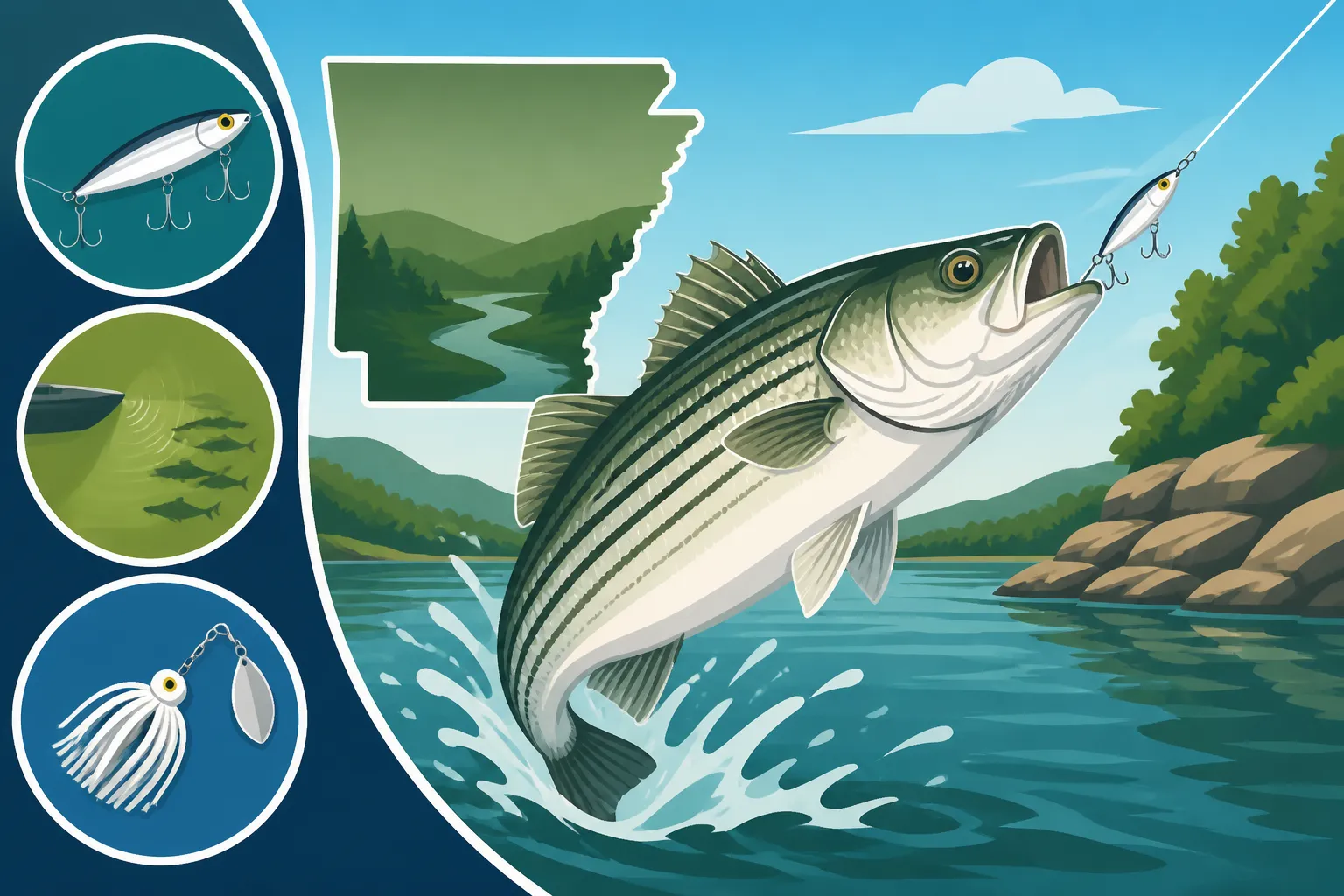
The easiest way to tell them apart is by looking at their stripes. A true striped bass will have unbroken, distinct horizontal stripes running from behind its gill plate all the way to its tail. These stripes are typically dark and prominent. White bass, on the other hand, usually have broken or faint stripes, especially on their lower body. The white bass is also generally a much smaller fish, typically topping out around 2-3 pounds, though some can reach 4-5 pounds. Stripers, as we know, can easily grow to be 10 times that size or more! A hybrid striper, also known as a "Wiper," which is a cross between a striped bass and a white bass, will typically have broken stripes but a more football-shaped body and a larger size than a pure white bass. Always double-check your catch against the current Arkansas Game and Fish Commission (AGFC) regulations to be certain.
Essential Gear for Striped Bass Success
Tackling a fish that can easily weigh as much as a small child requires specialized gear. You wouldn’t bring a butter knife to a sword fight, and you shouldn’t bring ultralight tackle when chasing trophy stripers. Investing in the right equipment is crucial for both landing these powerful fish and ensuring you don't lose that fish of a lifetime.
Rod and Reel Selection for Stripers
When it comes to rods, think heavy-duty. A medium-heavy to heavy action rod, typically between 7 and 8 feet in length, is ideal. This length provides leverage for long casts and the backbone needed to absorb the powerful runs of a striper. For live bait or trolling, a longer, more parabolic rod (meaning it bends more evenly throughout its length) can be beneficial for soaking up shock. Brands like Ugly Stik or Penn offer excellent, durable options that can stand up to the abuse.
Reel choice depends on your preferred technique. For casting lures or free-lining live bait, a reliable baitcasting reel with a good drag system is excellent. Look for models from companies like Abu Garcia or Shimano, designed for saltwater or heavy freshwater use, that can hold at least 200 yards of 20-pound test line. If you prefer spinning reels, opt for larger models (size 5000 or 6000) that offer ample line capacity and a smooth, powerful drag. Remember, when a big striper takes off, your drag is your best friend. A sticky or weak drag will lead to heartbreak. Many anglers find quality reels on Amazon that fit these specifications perfectly.
Line, Leaders, and Terminal Tackle
Line choice is critical. Braided line has become the go-to for many striper anglers due to its incredible strength-to-diameter ratio, lack of stretch, and sensitivity. A 30-50 pound braided main line is a solid choice. Brands like PowerPro or Sufix are popular and reliable. The lack of stretch in braid means you'll feel every bump and subtle bite, and it provides immense power for setting hooks.
However, braid is visible in clear water, so a fluorocarbon leader is essential. Fluorocarbon is nearly invisible underwater and highly abrasion-resistant, which is important when fighting fish around structure. A 20-30 pound fluorocarbon leader, typically 3-6 feet long, connected to your main line with a strong knot like an Albright or FG knot, will provide that stealth and protection.
Terminal tackle includes swivels, hooks, and sinkers. Use heavy-duty barrel or ball-bearing swivels (size 3/0 to 5/0) to prevent line twist, especially when trolling or using spinning baits. For hooks, wide gap circle hooks (2/0 to 7/0 depending on bait size) are popular for live bait, as they are safer for the fish and often result in better hookups in the corner of the mouth. Treble hooks are common on many artificial lures, but consider replacing them with stronger, sharper hooks for stripers. For sinkers, egg sinkers or barrel sinkers in various weights (1/2 oz to 2 oz or more) are used for bottom fishing or controlled depth presentations. Always opt for quality components to prevent failures.
Sonar and Electronics: Your Underwater Eyes
In the world of striped bass fishing, your boat's electronics are as important as your rod and reel. Stripers are often suspended in the water column or hugging deep structure, making them nearly impossible to find without good sonar. Think of your fish finder as your underwater eyes, allowing you to see baitfish schools, individual stripers, and the contours of the lake bottom.
Modern units from brands like Garmin, Lowrance, and Humminbird offer a suite of technologies that are game-changers. 2D sonar is your bread and butter, showing you arches (fish) and bait balls, as well as the bottom. Down Imaging (or DownScan) provides photo-like images directly below your boat, making it easier to distinguish fish from structure or see the tight schools of shad that stripers feast on. Side Imaging (or SideScan) is invaluable for sweeping wide areas to either side of your boat, locating schools of fish or interesting underwater features you might otherwise motor right over. Many seasoned striper anglers won't even leave the dock without a reliable fish finder and a solid understanding of how to use it. Learning to interpret these readings, identifying what baitfish look like versus stripers, and recognizing changes in the thermocline will drastically improve your success.
Top Techniques for Arkansas Striped Bass
Striped bass fishing is a diverse discipline, offering a variety of techniques that can be effective depending on the season, water conditions, and the mood of the fish. Mastering a few of these will put you in a much better position to put those hard-fighting stripers in your boat.
Trolling for Striped Bass
Trolling is perhaps one of the most consistent ways to catch striped bass, especially in large reservoirs like Norfork or Greers Ferry. It allows you to cover vast amounts of water and present your lures or baits at precise depths where stripers are feeding. Striped Bass Trolling Techniques often involve specialized gear to get baits down deep.
Downriggers are mechanical devices that allow you to deploy a heavy cannonball weight to a precise depth, with your fishing line clipped to a release mechanism. When a fish bites, the line releases from the clip, and you fight the fish directly. This is ideal for targeting suspended stripers in the thermocline.
Planer boards are used to spread multiple lines out to the sides of the boat, covering a wider swath of water. This is particularly effective when fish are shallower or scattered.
Umbrella rigs and Alabama rigs are assemblies of multiple wires with teasers or small swimbaits, designed to mimic a school of baitfish. These are often trolled behind planer boards or directly behind the boat with additional weight to get them to depth. Deep-diving crankbaits are also deadly when trolled, with models like those from Bandit or Strike King often reaching depths of 20-30 feet on their own. Pay close attention to your boat speed; typically, 2-4 miles per hour is a good starting point, but let the fish tell you what they prefer. Using quality trolling motor batteries, often found on Amazon, can make a full day of trolling much more manageable.
Live Bait Fishing Strategies
When stripers are finicky or holding deep, nothing beats fresh live bait. Shad, whether threadfin or gizzard, are the natural forage for stripers in Arkansas and are incredibly effective. Bluegill or sunfish can also be good, especially for larger stripers. The challenge often lies in catching and keeping your bait alive. A good bait tank with aeration is a non-negotiable item for live bait enthusiasts.
Free-lining is a simple yet deadly technique where you simply hook a live shad through the nose or back and cast it out with little to no weight, letting it swim naturally. This is fantastic when stripers are breaking the surface or are just below.
Balloon fishing involves attaching a balloon a set distance up your line, allowing the live bait to swim at a specific depth or drift over structure.
For deeper presentations, slip sinker rigs are common. A sinker slides freely on your main line down to a swivel, below which you have a fluorocarbon leader and your hook. This allows the fish to pick up the bait without feeling the weight of the sinker. Deploying multiple lines at different depths until you find where the fish are holding is a common and effective strategy.
Artificial Lure Tactics
While live bait and trolling are consistent producers, nothing quite compares to the excitement of a striper smashing an artificial lure. When stripers are actively feeding, especially during boils or near the surface, artificials can be incredibly effective.
Topwater plugs like Heddon Spooks or Zara Poppers are exhilarating when stripers are busting shad on the surface. Walking-the-dog or chugging retrieves can draw violent strikes.
Jerkbaits (like Smithwick Rattlin' Rogues or Rapala X-Raps) are fantastic for suspending fish, especially in cooler water. A twitch-twitch-pause retrieve can be irresistible.
Spoons, such as the Hopkins Shorty or Sassy Shad spoons, are excellent for vertical jigging over deep-suspended schools. Drop them down, snap them up, and let them flutter back down.
Swimbaits and soft plastics (like those from Zoom or Keitech) rigged on jig heads or as part of an Alabama rig are versatile and can imitate shad perfectly. Varying your retrieve speed and depth is key. Don't be afraid to experiment with colors; white, chrome, chartreuse, and natural shad patterns are perennial favorites. Many anglers stock up on these versatile lures through Amazon for convenience.
Vertical Jigging and Spooning
When stripers are tightly schooled and holding deep, especially around humps, ledges, or deep channels, vertical jigging and spooning become incredibly effective. This technique involves positioning your boat directly over a school of fish that you've located on your sonar and dropping a heavy lure straight down to them.
Heavy spoons, typically 1-3 ounces, are perfect for this. Their metallic flash and erratic flutter on the fall can trigger aggressive reaction strikes. The technique is straightforward: drop the spoon to the depth where you see fish, then sharply lift your rod tip (jigging it up) and let it fall back on a semi-slack line. Most strikes will occur as the spoon flutters down. Sometimes a more subtle jigging motion, gently lifting and dropping the spoon, is all it takes.
Heavy jigs rigged with large soft plastic paddle tails or bucktails can also be very productive. Again, the idea is to mimic a struggling baitfish dropping through the water column. The key to success here is precision. Your sonar will tell you exactly where the fish are, and it's up to you to put your lure right in their strike zone. This method is particularly effective during the colder months when stripers are less active and less likely to chase fast-moving baits.
Seasonal Patterns and Prime Times
Striped bass behavior is heavily dictated by the seasons and corresponding water temperatures. What works in spring might be entirely ineffective in summer. Understanding these seasonal shifts is crucial for developing a winning strategy on Arkansas's waters.
Spring Striper Fishing (Pre-Spawn/Spawn)
As winter gives way to spring, rising water temperatures kick-start the striper bite. In Arkansas, stripers generally don't have a successful natural spawn, but they still undertake "spawning runs" up rivers and into tributary arms of reservoirs. During this pre-spawn and pseudo-spawn period, typically March through May, stripers become highly active and can be found in shallower coves and creek channels, feeding aggressively.
They're often shallower than other times of the year, making them more accessible to casting. Look for them cruising near main lake points and humps close to deep water access. Topwater plugs can be explosive in the mornings and evenings, and jerkbaits fished over points can be deadly. Live bait, free-lined or under a balloon, is also a go-to. As the water warms, you'll see them push further up the arms of the lake, often following schools of baitfish. This is a fantastic time for action, but be ready for some intense fights as these fish are incredibly strong after the winter slump.
Summer Deep Water Tactics
Arkansas summers get hot, and so does the water in our reservoirs. As temperatures climb, stripers retreat to the cooler, more oxygenated waters of the thermocline, usually found in the main lake basin. This is when Deep Water Striper Fishing Techniques become essential.
During the summer months, stripers will primarily be found suspending over deep water, often 30-60 feet down, following vast schools of threadfin shad. Your sonar is absolutely critical here. Trolling with downriggers becomes the primary method, allowing you to present umbrella rigs, deep-diving crankbaits, or live bait at precise depths. Early mornings and late evenings are still the most productive times, as stripers might venture slightly shallower or break the surface briefly to feed. Night fishing can also be incredibly effective during summer, with stripers often coming up higher in the water column as darkness provides cover. Look for them around main lake points or humps that drop into deep water, especially near the dam.
Fall Feeding Frenzies
Fall is arguably one of the most exciting times to target Arkansas striped bass. As water temperatures begin to cool, the stripers become incredibly active and aggressive, feeding heavily in preparation for winter. This is often when you'll encounter those legendary "boils" or "busts."
As the water cools, baitfish will move from the main lake basin into creek arms and coves, and the stripers will follow them. You'll often find them chasing shad to the surface in explosive feeding frenzies. When this happens, cast topwater plugs, lipless crankbaits, or swimbaits directly into the melee for instant action. If they're not breaking the surface, focus on trolling deep-diving crankbaits or using live bait over humps and points in the major creek arms. The fall bite can last well into late autumn, offering some of the best fishing opportunities of the year. This is particularly true for Best Season to Catch Big Striped Bass at Norfork Lake Arkansas.
Winter Strategies (Deeper, Slower)
Don't put your rods away when winter arrives! While the fishing pace generally slows down, winter can produce some of the largest stripers of the year. The key is to adjust your tactics to the colder water and the fish's more lethargic metabolism.
Stripers will typically school up tightly in winter, often holding in the deepest parts of the lake or congregating around structure like deep points, channels, or near the dam. They're still feeding, but less frequently and often require a slower, more deliberate presentation. Live bait is king in winter. Large gizzard shad, slowly presented on a free-line or a weighted rig, can be incredibly effective. Vertical jigging with heavy spoons or blade baits directly over deep-suspended schools (located with your sonar) is also a strong technique. Focus on warmer days, especially those following a cold front, or look for periods of stable weather. While not as active as in spring or fall, winter stripers offer the chance for truly trophy-sized fish for patient and persistent anglers.
Locating Stripers on Arkansas Reservoirs
Finding striped bass is often the hardest part of catching them. Unlike some other species that relate tightly to visible cover, stripers are open-water predators. This means you need to learn to "read" the water and your electronics effectively.
Interpreting Sonar Readings
Your fish finder is your most critical tool for locating stripers. Learning to effectively interpret its readings is an art form that comes with practice.
Bait balls: Stripers are almost always found near baitfish. On your sonar, baitfish will show up as dense clouds or masses of small dots, often high in the water column or hugging the bottom. When you see a large, tightly packed bait ball, especially with larger arches lurking around or beneath it, you’re in the right zone.
Stripers: Stripers themselves will appear as large, distinct arches on your 2D sonar. They're often found suspending above or within bait balls. On Down Imaging, they might look like distinct, elongated shapes. Learn to differentiate these large returns from smaller fish or debris. The size of the arch often corresponds to the size of the fish – a longer, thicker arch usually means a bigger fish.
Thermocline: Understanding the thermocline (the layer where warm surface water meets cooler, deeper water) is vital, especially in summer. This appears as a distinct band on your sonar. Stripers will often hold just above, below, or within this zone, as it provides optimal temperature and oxygen levels. Ignoring your sonar is like fishing blind; paying attention to it is like having X-ray vision into the underwater world.
Targeting Key Structures
While stripers are open-water fish, they do relate to structure, especially when not actively chasing bait. Understanding where to look can save you hours of aimless searching.
Creek channels and river beds: These underwater highways are used by baitfish and stripers alike. Look for channels that snake through flats or connect to the main lake basin. Stripers will often hold on the edges or bends of these channels.
Points and humps: Main lake points and submerged humps that rise up from deep water are classic striper ambush spots. Baitfish will often congregate around these features, and stripers will patrol their edges, waiting for an easy meal.
Ledges and drop-offs: Any sharp change in bottom contour can hold fish. These ledges provide an excellent place for stripers to stage and ambush bait moving shallower or deeper.
Dam walls: The dam itself, particularly the outflow areas, can be a major draw for stripers due to cooler water, current, and concentrations of baitfish. However, be mindful of safe boating practices and specific regulations around dam structures. Focusing your efforts on these high-percentage areas, rather than just drifting aimlessly, will greatly improve your chances of success. Many of Arkansas Fishing Rules for Lakes, Rivers and Tailwaters often apply to these specific structures.
Reading the Water and Weather
Beyond your electronics, paying attention to the natural environment can provide crucial clues about where stripers are and what they're doing.
Wind: A steady wind blowing into a main lake point or bank can stack up baitfish, creating a feeding opportunity for stripers. However, excessively strong winds can make boat control and fishing difficult.
Current: While most Arkansas reservoirs don't have strong natural currents, those near power generation dams (like Beaver Dam on Beaver Lake, or the dam on Norfork) can create current that positions fish and bait. Stripers often face into the current, waiting for food to come to them.
Water temperature: As discussed, water temperature is perhaps the most significant factor influencing striper movement and activity. Knowing the ideal temperature ranges for different seasons will guide your search.
Water clarity: While stripers aren't as sensitive to clarity as some other species, excessively muddy water after heavy rains can push them deeper or make them less active. Clearer water often means they'll be holding a bit deeper or closer to structure.
Bird activity: Don't ignore the birds! Gulls and terns diving into the water are often a dead giveaway that stripers are driving baitfish to the surface. These "bird plays" are some of the most exciting opportunities you'll get, so always keep an eye on the sky.
Safety, Regulations, and Conservation
Fishing for powerful striped bass, often in large boats on expansive lakes, requires a strong commitment to safety and a deep understanding of local regulations. Responsible angling also means practicing conservation to ensure these incredible fisheries remain healthy for future generations.
Essential Safety Gear and Practices
Before you ever leave the dock, ensure your boat is equipped with all the necessary safety gear. This includes personal flotation devices (PFDs) for everyone on board – and everyone should be wearing them, especially when underway. A first-aid kit, fire extinguisher, distress signals (flares or an air horn), and a throwable flotation device are all non-negotiable.
Beyond gear, practicing safe habits is paramount. Always check the weather forecast before heading out and be prepared to cut your trip short if conditions deteriorate. Large lakes can become dangerous very quickly with strong winds or thunderstorms. Inform someone of your float plan – where you're going and when you expect to return. Stay hydrated, especially during long summer days, and always operate your boat safely and responsibly. Fishing for stripers can involve high speeds while searching for boils or long hours trolling; vigilance is key.
Understanding Arkansas Striped Bass Regulations
It’s your responsibility as an angler to know and follow the current Arkansas Fishing Regulations Guide. Regulations can change, so always consult the latest guide published by the Arkansas Game and Fish Commission (AGFC) before you go.
For striped bass, pay close attention to daily limits (how many fish you can keep per day) and any size limits (minimum or slot limits) that may be in place for specific lakes. For example, some lakes might have a specific number of fish over a certain length that you are allowed to keep. While most recreational striper fishing doesn't require a separate permit beyond your standard fishing license, remember that you do need an Arkansas Fishing License Rules and Costs to fish legally. This applies whether you're a resident or need a Nonresident Annual Fishing License Cost in Arkansas. Violating regulations can result in hefty fines and even loss of fishing privileges, so always err on the side of caution.
Responsible Catch and Release Practices
While many anglers enjoy harvesting stripers for their delicious meat, practicing responsible catch and release is vital for the sustainability of the fishery, especially for those trophy-sized fish.
If you plan to release a fish:
- Minimize fight time: Use appropriate tackle to land the fish as quickly as possible, reducing its stress and exhaustion.
- Handle with care: Support the fish horizontally, especially large ones, to protect internal organs. Avoid holding them vertically by the jaw.
- Wet hands: Always wet your hands before touching the fish to protect its delicate slime coat, which is crucial for disease prevention.
- Quick release: If keeping the fish out of the water for a photo, do so quickly – just long enough for a good shot – and then release it immediately.
- Revival: For an exhausted fish, hold it gently in the water, facing into any current, until it regains its strength and swims away on its own.
- Barbless hooks: Consider using barbless hooks or crimping down the barbs on your hooks to make hook removal easier and less damaging to the fish.
These practices ensure that the fish you release have the best chance of survival, contributing to a thriving striped bass population for years to come.
Advanced Tips and Tricks
Even with the right gear and techniques, there are always little nuances that can make a big difference in your striper fishing success. These advanced tips come from years of experience on the water and can help you elevate your game.
The Importance of Fresh Bait
When live bait fishing, the quality of your bait is paramount. A fresh, lively shad or bluegill is infinitely more attractive to a striper than a sluggish or dying one. This means investing in a high-quality bait well with strong aeration and recirculation is not a luxury, but a necessity.
Keep your bait well clean, and ensure you have enough water volume for the number of baitfish you're carrying. Adding a small amount of rock salt or commercial bait-keeping additives can help reduce stress on the bait. Change the water periodically if it starts to get dirty. If your bait is dying quickly, check your oxygen levels, water temperature, and ammonia buildup. Sometimes, simply having too many baitfish in too small a space is the culprit. A lively baitfish will actively swim away from predators, triggering that natural instinct in a striper. A dead or dying one just looks like an easy meal that might be too good to be true.
Adjusting to Changing Conditions
Stripers are creatures of habit, but their habits can change rapidly with external conditions. The ability to adapt your strategy on the fly is a hallmark of a successful striper angler.
From sunny to cloudy: On bright, sunny days, stripers often dive deeper to escape the light. On cloudy days, they might come shallower and be more active throughout the day. Adjust your depth accordingly.
Calm to windy: Calm, flat water can make stripers wary. A little chop on the water surface breaks up the light and can make them more comfortable moving shallower and feeding more aggressively. Wind can also stack baitfish. Conversely, if it gets too windy, consider moving to a more protected cove or fishing a deep-water technique where boat control is less impacted.
Hot to cold: Sudden cold fronts can shut down the bite, making fish lethargic. Slow down your presentation, use smaller baits, and focus on deep, stable areas. Warming trends, especially in spring, can ignite the bite. Always be ready to change lures, depths, or locations based on how the fish are reacting (or not reacting) to your initial approach.
Patience and Persistence
Let's face it, striped bass fishing can sometimes be a grind. There will be days when the fish are simply not cooperating, or you can’t seem to locate them. This is where patience and persistence become your most valuable assets.
Don't get discouraged if you spend hours scanning and trolling without a bite. Keep moving, keep searching, and trust your electronics. It only takes one school of actively feeding stripers to turn a slow day into an epic one. These are nomadic fish, and they can literally move miles in a few hours. If one area isn't producing, don't be afraid to pull up stakes and try a completely different part of the lake. Experiment with different depths, different lure colors, or different retrieves. The anglers who consistently catch big stripers aren't necessarily the luckiest; they're often the most persistent and the most willing to adapt until they crack the code for that particular day.
Comparing Top Arkansas Striper Lakes
To help you plan your next adventure, here's a quick look at some of Arkansas's premier striped bass destinations:
| Lake Name | Key Features | Primary Techniques | Trophy Potential | Accessibility |
|---|---|---|---|---|
| Norfork Lake | Deep, clear water, extensive creek channels, abundant shad. | Trolling, Live Bait (shad), Jigging. | Excellent (40lb+) | Good |
| Lake Hamilton | Deep, clear water, good forage base, thermal refuge. | Trolling, Live Bait (shad), Night Fishing. | Good (20-30lb) | Excellent |
| Greers Ferry Lake | Deep, clear water, diverse structure, robust baitfish. | Trolling, Live Bait (shad), Casting Lures. | Very Good (30lb+) | Good |
Disclaimer
Please remember that fishing regulations, conditions, and fish behavior can change. Always consult the latest Arkansas Game and Fish Commission (AGFC) regulations before heading out. The information provided in this guide is for general informational purposes only and should not be considered legal or professional advice. Stay safe and have fun on the water!