Best Lures for Trolling Striped Bass
There's nothing quite like the thrill of chasing trophy striped bass across Arkansas's vast, clear lakes, but it can be incredibly frustrating to spend hours trolling only to come up empty-handed. You've got your boat, your gear, and the perfect day, yet the stripers seem to be playing hard to get. Knowing which lures to use, and more importantly, how to present them effectively when trolling, can make all the difference between a disappointing day and a cooler full of fish stories. This guide is dedicated to helping you unlock the secrets of selecting and deploying the best lures for trolling striped bass in the natural state's incredible fisheries.
Understanding Striped Bass Behavior When Trolling
Trolling for striped bass isn't just about putting a lure in the water and hoping for the best. It's about understanding the habits of these magnificent fish, their preferred habitats, and what triggers them to strike. Stripers are apex predators that often roam in schools, constantly searching for baitfish. When you're out on a sprawling body of water like Norfork Lake or Lake Hamilton, covering vast distances is key, and that's precisely where trolling shines.
Why Trolling is Effective for Stripers
Striped bass, especially the larger ones, are often found suspended in the water column, patrolling open waters or holding over deep structure. They follow schools of baitfish like shad and herring, which can move quickly and cover a lot of ground. Trolling allows you to mimic this natural pursuit, dragging your lures through different depths and across wide areas, effectively putting your bait in front of more fish. It's a proactive approach that helps you locate scattered fish or pinpoint schools that might otherwise be missed by stationary fishing. Imagine a school of stripers on the hunt; your trolled lure is simply another "fish" trying to keep up with their meal.
This technique is particularly useful on Arkansas's large reservoirs where stripers have ample room to roam. Instead of waiting for the fish to come to you, you're actively seeking them out, presenting an irresistible meal right in their cruising path. For more general insights into how these powerful fish behave, check out our guide on Arkansas Striped Bass Fishing Techniques.
Key Factors Influencing Lure Choice
Selecting the right lure isn't a one-size-fits-all situation; it's a dynamic decision influenced by several critical factors. First, consider the depth where the stripers are holding. Are they near the surface chasing bait, or are they deep in the thermocline? Your lure choice will dictate how effectively you can reach that strike zone. Second, water temperature plays a huge role. Cooler water often means stripers are less active and might prefer a slower presentation or a larger, more appealing bait. Warmer water can make them more aggressive, leading to strikes on faster-moving lures.
Third, forage availability is paramount. What are the stripers primarily eating in that particular lake or river? If they're gorging on threadfin shad, then a lure that closely imitates a threadfin in size, profile, and color will be far more effective. Finally, the time of year brings seasonal patterns that influence depth, aggression, and forage. Spring might see stripers shallower during the spawn, while summer often pushes them deeper into cooler, oxygenated water. Keeping these factors in mind will empower you to make smarter lure choices on the water.
The Best Lures for Trolling Striped Bass in Arkansas Waters
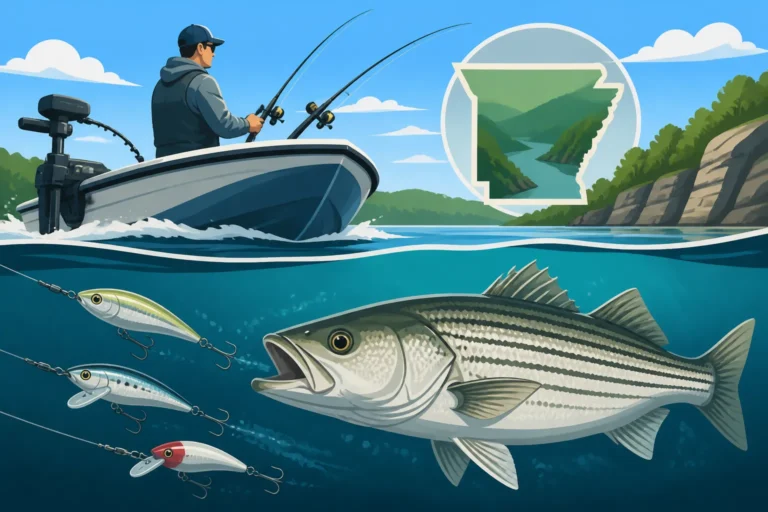
When it comes to outfitting your tackle box for trolling striped bass in Arkansas, you'll want a versatile array of lures that can handle various depths, water conditions, and fish moods. From the classic deep-divers to innovative multi-lure rigs, each type offers a distinct advantage in specific scenarios.
Deep-Diving Crankbaits
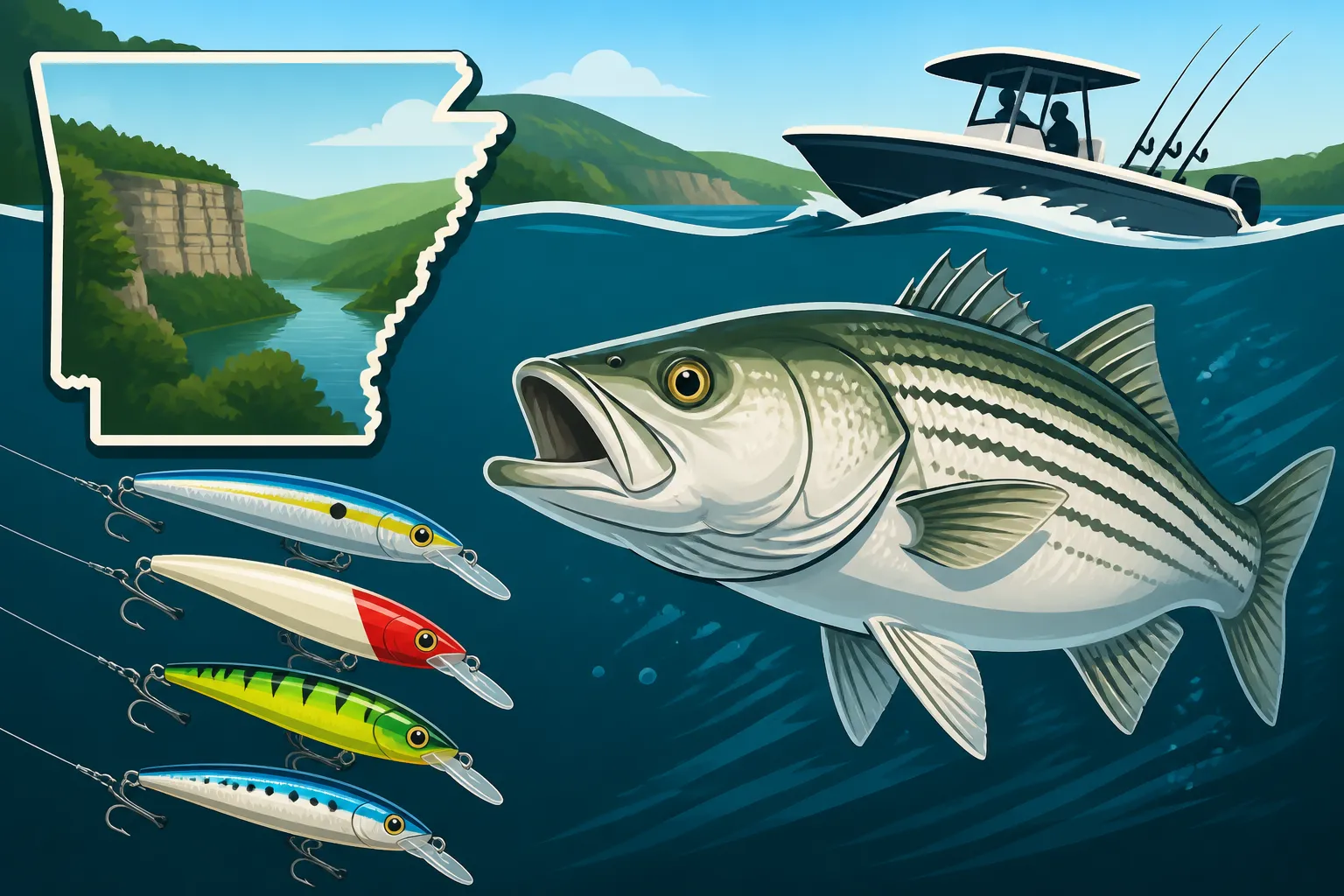
Deep-diving crankbaits are absolute workhorses for trolling stripers, especially when fish are suspended or hugging structure in deeper water. These lures are designed with a large bill that allows them to dive aggressively to significant depths when pulled through the water. They come in a multitude of shapes, sizes, and colors, each with a unique swimming action.
For clear water bodies like Bull Shoals Lake, natural baitfish patterns such as chrome with blue backs, shad, or pearl can be incredibly effective. When the water has a bit more stain, or on cloudy days, bolder colors like chartreuse, firetiger, or bright orange can grab a striper's attention from a distance. Brands like the Bomber Long A or Rapala Deep Dive series are staples in many striper anglers' arsenals. They often feature strong hooks and durable bodies to withstand the powerful strikes of a large striped bass. Remember to match the lure's diving depth to the depth where you're marking fish on your sonar. You can find a great selection of these on Amazon, often bundled in useful multi-packs.
Umbrella Rigs and Alabama Rigs
If you want to mimic a school of baitfish, an umbrella rig or an Alabama rig is your best friend. These innovative setups consist of a main wire or frame from which multiple individual lures or swimbaits dangle, creating the illusion of a small school of panicked baitfish. Trolling these rigs allows you to present several "fish" at once, significantly increasing your chances of getting a strike, especially when stripers are actively busting bait schools.
Umbrella rigs typically feature a central main lure that looks like a larger baitfish, surrounded by smaller "teaser" baits. Alabama rigs, popularized for bass fishing, have also proven highly effective for stripers. They usually have five wires, each ending with a small jig head dressed with a paddle tail swimbait. The key is to select jig head weights and swimbait sizes that combine to give the rig the desired depth and action. For instance, using heavier jig heads on the bottom lures and lighter ones on top can give the school a more natural, staggered look. Look for sturdy rigs with strong snaps, as a hungry striper hitting multiple baits can put immense strain on the tackle.
Sassy Shads and Other Soft Plastics
Soft plastic swimbaits, often referred to as "Sassy Shads" regardless of brand, are incredibly versatile and effective for trolling stripers. Their natural swimming action and soft, pliable texture make them highly appealing to predatory fish. They can be rigged in numerous ways, giving you flexibility to adjust to conditions.
Typically, soft plastics are rigged on a weighted jig head. The weight of the jig head determines the diving depth and the speed at which the lure can be trolled. Lighter jig heads work well for shallower trolling or when used in conjunction with planer boards to spread out your lines. Heavier jig heads get your lure down faster for deeper presentations. Colors like white, pearl, chartreuse, and natural shad patterns are consistently productive. You can troll these individually, in tandem rigs, or as part of an umbrella or Alabama rig. Many anglers purchase these in bulk from retailers, including those available on Amazon, to ensure they always have a fresh supply. Their soft bodies are often shredded by aggressive stripers, so always have plenty on hand.
Live Bait Rigs with Planer Boards and Downriggers
While this article focuses on lures, it's impossible to discuss effective trolling for striped bass without acknowledging the power of live bait, often presented using similar trolling methods. Sometimes, especially when fish are finicky or under heavy pressure, nothing beats the real thing. Common live baits for Arkansas stripers include gizzard shad, threadfin shad, and herring.
To troll live bait effectively, anglers often employ specialized gear. Planer boards are devices that float on the surface and pull your line away from the boat, allowing you to cover a wider swath of water and present baits to fish that might be spooked by the boat's motor. Downriggers are mechanical devices that use a heavy ball to carry your line and bait down to a precise, controlled depth. Once the desired depth is reached, the line is released from a clip, allowing the bait to swim freely at that specific depth. This combination of live bait and controlled depth/spread can be deadly for deep-holding or cautious stripers. Knowing the Best Bait for Striped Bass in Arkansas can further enhance your success with these techniques.
| Lure Type | Ideal Conditions | Pros | Cons |
|---|---|---|---|
| Deep-Diving Crankbaits | Deep-suspended fish, over structure, varied depths | Excellent depth control, realistic action, durable, wide color range | Can get snagged easily, specific models for certain depths |
| Umbrella/Alabama Rigs | Schooling fish, open water, mimicking bait balls | Mimics schools effectively, high hook-up ratio, great visual appeal | Can be heavy and cumbersome, requires heavier tackle, not subtle |
| Soft Plastics (Sassy Shads) | Versatile, varying depths, subtle action needed | Natural feel and action, cost-effective, easily rigged, versatile | Less durable, frequent bait changes needed |
| Live Bait Rigs | Finicky fish, clear water, specific forage | Most natural presentation, often triggers strikes when all else fails | Requires live bait maintenance, more complex rigging, can be costly |
Trolling Techniques and Gear for Arkansas Stripers
Mastering the art of trolling for striped bass involves more than just selecting the right lure; it's also about employing the correct techniques and utilizing specialized gear to maximize your efficiency and effectiveness on the water. Without proper technique, even the best lures might fail to entice a strike.
Essential Trolling Gear
Trolling for striped bass demands robust equipment capable of handling powerful fish and heavy lures. Your rods should be medium-heavy to heavy action, typically 7 to 8 feet long, with a moderate bend to absorb the shock of a strike and prevent hooks from pulling out. Reels need ample line capacity and a smooth, strong drag system. Conventional reels are popular for their cranking power and line counter capabilities, which are crucial for replicating successful depth presentations.
For line, a braided mainline (30-60 lb test) is often favored for its strength, sensitivity, and minimal stretch, which provides direct contact with your lure. Some anglers then use a fluorocarbon leader (20-40 lb test) for abrasion resistance and invisibility. As mentioned, planer boards are invaluable for spreading your lines, allowing you to cover a wider area and avoid spooking fish directly under the boat. For precise depth control, particularly when stripers are holding deep, downriggers or lead core line are essential. Downriggers allow you to present a lure at a specific depth and then release it upon a strike, while lead core line's color-coded segments help you estimate how deep your lure is running based on how many "colors" you have out. To learn more about how different setups influence presentation, consider our guide on Deep Water Striper Fishing Techniques.
Speed and Depth Control
These two elements are arguably the most critical aspects of successful trolling for striped bass. Your trolling speed directly impacts the action of your lure and its diving depth. Generally, speeds between 2.5 to 4.0 miles per hour are common for stripers, but this can vary based on lure type, water temperature, and fish activity. Experimentation is key – sometimes a subtle increase or decrease in speed can trigger a bite. Pay attention to how your lure is performing in the water at different speeds; most lures have an optimal speed range.
Depth control is paramount, as stripers will often be concentrated at a specific depth. Your boat's fish finder (sonar) is your most important tool here. Use it to locate baitfish schools and the stripers feeding on them. Once you identify the depth where fish are present, use your downriggers, lead core line, or the natural diving depth of your crankbaits to position your lures precisely in that strike zone. GPS is also invaluable for marking productive trolling passes and replicating them. Don't be afraid to make slight depth adjustments – a few feet up or down can sometimes make all the difference. For advanced tactics on navigating these waters, check out Striped Bass Trolling Techniques.
Reading the Water
Experienced anglers often talk about "reading the water," and this skill is incredibly important for trolling success. It's about observing subtle clues that indicate where stripers might be feeding or holding. Look for surface activity: diving birds often signal baitfish being pushed to the surface by predatory fish, including stripers. Keep an eye out for actual fish busting the surface, which is a clear sign of active feeding.
Your electronics are also crucial for reading what's happening beneath the surface. Beyond identifying fish and bait, look for temperature breaks or thermoclines, which are layers of water at different temperatures. Stripers often congregate around these breaks, especially in summer, as they offer cooler, oxygen-rich water. Submerged points, humps, and creek channels also serve as highways and ambush points for stripers, so trolling over or alongside these structures can be highly productive. Remember that the clearer waters of lakes like Bull Shoals and Norfork can make reading the water a more visual exercise, so keep those eyes peeled!
Local Hotspots and Seasonal Considerations for Trolling Stripers
Arkansas is blessed with some truly incredible lakes for striped bass, offering fantastic opportunities for trolling. Knowing where to go and understanding how the seasons impact striper behavior can significantly improve your chances of success.
Top Arkansas Lakes for Trolling
When you're rigging up for a serious striper trolling expedition, there are a few Arkansas lakes that immediately come to mind. Norfork Lake is arguably the state's most famous striper fishery, known for producing massive, trophy-sized fish. Its deep, clear waters and abundant forage make it a prime location for trolling deep-diving crankbaits, umbrella rigs, and live bait on downriggers. Many anglers target the main lake channels and creek mouths, especially in areas with known baitfish concentrations. If you’re looking for a monster, Norfork Lake's Reputation for Trophy Striped Bass Fishing is legendary.
Another fantastic option is Lake Hamilton in Hot Springs. While perhaps not as renowned for trophy fish as Norfork, Lake Hamilton offers excellent opportunities for consistent striper action, often producing good numbers of hard-fighting fish. The lake's varied topography, from deep channels to coves and points, provides diverse habitats for stripers. Trolling here can be highly effective, especially with smaller crankbaits or soft plastics rigged behind planer boards. Our guide on Striper Fishing on Lake Hamilton in Hot Springs, Arkansas offers more detailed insights for this popular destination. Other notable lakes include Bull Shoals Lake, which borders Missouri and also boasts a healthy striper population, particularly in its lower end, and Lake Ouachita, Arkansas's largest lake, which offers its own striper challenges and rewards.
Seasonal Strategies for Trolling Stripers
The time of year dramatically influences where stripers will be found and what lures they’ll respond to.
- Spring: As water temperatures begin to warm, stripers will often move shallower, following baitfish into creek arms and coves. This is a great time for trolling shallower-running crankbaits or soft plastics in the upper water column. They're often recovering from the colder months and starting to feed more actively.
- Summer: This is when stripers typically go deep in many Arkansas lakes. The surface waters become too warm and oxygen-depleted, forcing fish to seek cooler, more comfortable depths, often below the thermocline. This is prime time for downriggers, lead core line, and heavy umbrella rigs to get your lures down to 30-60 feet or even deeper. Early morning and late evening can see them briefly move shallower to feed. For a deep dive into this period, refer to Summer Striper Fishing at Norfork Lake Arkansas.
- Fall: As water temperatures cool, stripers become incredibly active. They'll often move back into shallower to mid-depth ranges, aggressively feeding to build up reserves for winter. This can be one of the best times for trolling, as fish are often found scattered and on the move. Crankbaits, umbrella rigs, and even topwater lures (if you're pulling them fast enough) can be effective.
- Winter: Stripers will generally remain in deeper water during the colder months, though they may school up very tightly. Slower trolling speeds and vertical jigging become more effective, but trolling deep-diving crankbaits or heavy umbrella rigs can still produce, especially on warmer winter days or during a warming trend. For a more precise understanding of when these fish are most active, read our article on the Best Season to Catch Big Striped Bass at Norfork Lake Arkansas. Each season presents its own unique challenge and opportunity for the dedicated striper angler.
Disclaimer
Fishing conditions and regulations in Arkansas can change. Always consult the latest Arkansas Game and Fish Commission regulations before heading out. This guide is for informational purposes only and does not guarantee fishing success.