Trout Fly Fishing Basics for Tailwaters
There's nothing quite like the subtle tug on your fly line, the shimmer of a rainbow trout breaking the surface, or the deep fight of a brown trout in the cold, clear waters of an Arkansas tailwater. But for many anglers, the world of fly fishing, especially on these unique rivers, can feel incredibly intimidating. From choosing the right fly to understanding delicate presentations, it often feels like there's a secret language to learn. This comprehensive guide is here to demystify trout fly fishing on Arkansas's renowned tailwaters, breaking down the basics so you can confidently step into the current and start enjoying this truly rewarding pursuit.
The Unique World of Arkansas Tailwaters for Fly Fishing
Arkansas is truly blessed with some of the finest trout fishing in the country, and much of that comes down to its incredible tailwater fisheries. These aren't just any rivers; they are ecosystems shaped by the deliberate release of cold water from the bottom of large dams, creating ideal, year-round conditions for trout that wouldn't otherwise thrive in our warmer southern climate. Understanding what makes these waters special is the first step to successful fly fishing.
Understanding Tailwater Characteristics
Tailwaters, by definition, are the sections of river immediately downstream from a dam. In Arkansas, we're talking about legendary spots like the White River below Bull Shoals Dam and Norfork Dam, or the Little Red River below Greers Ferry Dam. The water released from the bottom of these reservoirs is consistently cold, usually in the 40-50 degree Fahrenheit range, which is absolutely crucial for trout survival and growth. This constant cold temperature means trout can be active and caught all year long, making these fisheries incredibly productive even in the heat of summer.
However, this stable cold water also comes with its own set of challenges and unique features. The flow can change dramatically, sometimes within hours, as hydropower generation dictates water releases. One minute you might be wading comfortably, the next the water could be chest-deep and roaring. These fluctuating flows affect everything from where trout hold to what insects are available for them to eat, and in turn, what flies you should be presenting. It means paying close attention to generation schedules, often available online, or local conditions when you arrive at the river.
Why Arkansas Tailwaters are Premier Trout Fisheries
Arkansas’s tailwaters, particularly the White River, have earned a global reputation as premier trout fisheries. It’s not just the cold water, but the abundance of aquatic insect life and forage fish that allows trout to grow large and healthy. You'll find a mix of rainbow, brown, cutthroat, and brook trout in these waters. The White River, in particular, is famous for its monster brown trout, some reaching truly legendary sizes. These rivers consistently produce trophy fish, drawing anglers from all over the world.
The sheer volume of fish is another factor. Thanks to regular stocking programs by the Arkansas Game and Fish Commission, these rivers are teeming with trout. This means that while landing a trophy takes skill and patience, catching plenty of fish is a common experience, even for beginners. The rich ecosystem, combined with careful management, ensures a sustainable and thriving trout population, creating an unparalleled fly-fishing experience that keeps anglers coming back year after year. For those interested in the specifics, checking the Arkansas Fishing Regulations Guide is always a good idea before heading out.
Flow Rates and Their Impact on Fishing
The fluctuating flow rates on Arkansas tailwaters are perhaps the single most important factor influencing your fly fishing strategy. When the generators are off and the water is low, wading is generally easier, and trout tend to concentrate in deeper channels, holes, and around submerged structure. This is often the prime time for nymphing or dry fly fishing, as the slower currents allow for more delicate presentations and easier detection of subtle bites.
Conversely, when generators are running and water levels are high, wading becomes dangerous or impossible, and fishing from a boat or from specific bank access points becomes necessary. The increased current disperses fish, but also washes a lot of food downstream. Trout will often move to slower seams, eddies, and shallower banks to avoid the main current and ambush passing prey. This is often an excellent time for throwing larger nymphs or streamers, which imitate the baitfish or larger insects that get dislodged in higher flows. Knowing the typical generation schedules for rivers like the White River can give you a significant edge, helping you plan your day for the best conditions for your preferred fishing style.
Gearing Up: Essential Fly Fishing Equipment for Tailwaters
Stepping into a fly shop can be overwhelming with all the specialized gear. While you don't need the most expensive setup to get started, having the right basic equipment tailored for Arkansas's tailwaters will make your experience much more enjoyable and successful. Think of it as investing in comfort and capability.
Rods, Reels, and Lines: Choosing Your Setup
For Arkansas tailwaters, a 9-foot, 5-weight fly rod is a fantastic all-around choice. It’s versatile enough to handle delicate dry fly presentations, cast a range of nymphs with indicators, and even throw smaller streamers. If you plan to specifically target larger brown trout with bigger streamers or fish in very high flows, a 6-weight or even a 7-weight rod might be more appropriate, offering more backbone to cast heavier flies and fight larger fish. Brands like Orvis, Redington, and Fenwick offer excellent rods at various price points, many of which you can find on Amazon.
Your fly reel primarily acts as a line storage device and a drag system for fighting fish. A good quality reel with a smooth, reliable drag is important, especially when a big brown trout decides to make a run. Ensure the reel is balanced with your chosen rod. As for fly line, a weight-forward floating line is the standard choice for most tailwater applications. However, if you plan to do a lot of streamer fishing, particularly in deeper, faster water, a sink-tip or full sinking line can be incredibly effective at getting your fly down to where the fish are holding.
Waders, Boots, and Layering for Comfort
Wading safely and comfortably is paramount in cold tailwater rivers. Chest waders are a must, keeping you dry and warm in the chilly water. Breathable waders, typically made from Gore-Tex or similar materials, are highly recommended as they prevent you from overheating when hiking to spots, while still providing insulation. Neoprene waders are warmer but less breathable, better suited for extremely cold conditions or for those who don't move around as much.
Wading boots should be comfortable, provide excellent ankle support, and have soles that grip slippery riverbeds. Felt soles offer superior grip on wet rocks, but rubber soles are more versatile for hiking and are less likely to spread invasive species. Many anglers now prefer rubber soles with studs for the best of both worlds. Don't forget wading socks, which are thicker than regular socks and provide extra cushioning and warmth. Layering your clothing underneath your waders is also key. Start with moisture-wicking base layers, add a fleece or wool mid-layer for warmth, and then your waders. This system allows you to adapt to changing weather conditions throughout the day, which can be quite variable on the river.
The Essential Tackle Box: Leaders, Tippets, and Tools
Your tackle box, or rather, your vest or chest pack, needs to hold an array of crucial small items. Leaders are tapered lines that connect your fly line to your tippet, gradually reducing in thickness. A 7.5-foot or 9-foot leader with a 4X or 5X fluorocarbon tippet is a good starting point for most Arkansas tailwaters. Tippet is the final, thinnest section of line that you tie your fly to, and you’ll need various sizes (from 3X down to 6X) to match your fly size and target species. Fluorocarbon is excellent because it’s nearly invisible underwater and sinks, which is often an advantage for nymphing.
Beyond lines, you'll need a few essential tools:
- Hemostats or forceps: For safely removing hooks from fish.
- Nippers: Small clippers for trimming line.
- Indicator: A small float that shows you when a fish bites your subsurface nymph.
- Split shot: Small weights to help nymphs sink faster.
- Net: A rubber or "ghost" net is best for handling fish safely and minimizing damage to their slime coat.
- Fly boxes: To organize your precious flies.
- Sunscreen, bug spray, and polarized sunglasses: For comfort and safety.
Having a well-stocked and organized setup means you can adapt to different conditions and keep fishing efficiently.
Mastering Fly Selection for Arkansas Tailwaters
One of the biggest mysteries for new fly anglers is knowing which fly to tie on. While it can seem complex, successful fly selection often boils down to understanding what insects and baitfish are naturally present in the river and matching them as closely as possible. Arkansas tailwaters have a consistent food base, making fly choice a bit more predictable than freestone streams.
Nymphs: The Subsurface Powerhouses
The vast majority of a trout's diet comes from subsurface insects, making nymphs absolutely critical for consistent success on tailwaters. These flies imitate the larval and immature stages of aquatic insects like midges, caddis, and mayflies, which spend most of their lives crawling on the river bottom or drifting in the current. Key nymph patterns for Arkansas include:
- Zebra Midge: This tiny, segmented fly (often in black, red, or olive) imitates the ubiquitous midge larva and pupa. It’s a year-round producer, especially in smaller sizes (18-24).
- Pheasant Tail Nymph: A classic mayfly imitation, effective in sizes 12-20. The natural fibers and slim profile make it incredibly versatile.
- Hare's Ear Nymph: Another staple, imitating a variety of mayflies and caddis larvae. It has a buggy, lifelike appearance.
- Caddis Larva/Pupa: Patterns like the LaFontaine's Sparkle Pupa or various caddis green rock worms are excellent when caddis are active.
Nymphing typically involves a strike indicator positioned on your leader, with one or two weighted nymphs suspended below it. The indicator shows subtle takes, and split shot can be added to get your flies down to the fish quickly. Understanding Trout Fishing Below Bull Shoals Dam on the White River or Norfork Tailwater Trout Rules and Season can give you insights into specific local patterns that are performing well.
Streamers: Imitating Baitfish and Larger Prey
When trout are aggressively feeding on baitfish, sculpins, or other larger prey, streamers are your go-to flies. These flies are designed to imitate larger food sources and often provoke a more aggressive strike from bigger trout. Streamer fishing can be incredibly exciting, as the takes are usually violent and unmistakable.
Popular streamer patterns for Arkansas tailwaters include:
- Woolly Bugger: An absolute classic, effective in black, olive, brown, and white. It imitates everything from baitfish to leeches.
- Sculpin Patterns: Flies like the Sculpzilla or the Drunk & Disorderly imitate the bottom-dwelling sculpin, a favorite meal for large brown trout.
- Clouser Minnow: Originally a saltwater fly, the Clouser Minnow (in olive/white or chartreuse/white) is incredibly effective at imitating baitfish in clear freshwater.
- Game Changer: More complex, articulated streamers like the Game Changer offer incredible swimming action, enticing even wary trophy trout.
Streamer fishing often involves casting across or downstream and stripping the fly back in erratic motions, mimicking a fleeing baitfish. This technique can be especially effective during higher flows or when targeting trophy brown trout.
Dry Flies: When Trout Look Up
While nymphs account for the majority of a trout's diet, the sight of a trout rising to a dry fly on the surface is arguably the most exciting experience in fly fishing. Dry flies imitate adult insects that are either emerging from the water or have fallen onto the surface. On Arkansas tailwaters, dry fly opportunities are often dictated by hatches, but even without a major hatch, opportunistic feeders can be tempted.
Common dry fly patterns include:
- Elk Hair Caddis: A highly buoyant and visible fly that imitates adult caddisflies.
- Parachute Adams: A general mayfly imitation that's effective when a variety of mayflies are on the water.
- Blue-Winged Olive (BWO): A small mayfly that often hatches on cloudy or rainy days, especially in cooler months.
- Griffith's Gnat: A tiny midge imitation that can fool picky trout sipping midges on the surface.
- Terrestrials: During warmer months, ants, hoppers, and beetles can fall into the water and become easy meals.
Dry fly fishing requires a delicate touch, precise casting, and a keen eye to detect subtle rises and takes. A drag-free drift is critical, meaning your fly needs to float naturally with the current, without being pulled unnaturally by your fly line.
Emergency Flies and Local Favorites
It's always smart to have a few "emergency" flies on hand, or patterns that are known local favorites. Think of them as your secret weapons when nothing else seems to work. On the White River, for instance, a pink San Juan Worm or an egg pattern can sometimes be deadly, especially after heavy rains or during spawning seasons, as they imitate dislodged aquatic worms or trout eggs. Small, bright ' attractor' nymphs like a Squirmy Wormy in various colors can also surprisingly effective when trout are being finicky.
Many local fly shops, such as those in Cotter or Mountain View, will have a "what's hot" board showing the flies currently catching fish. Don't be shy about asking guides or experienced local anglers for their go-to patterns. Sometimes a simple change to a slightly different color or size of a familiar pattern can make all the difference. When stocking up for your next trip, a quick search on Amazon can often reveal great deals on these local favorites, ensuring you're well-prepared for any situation the river throws at you.
Getting Your Fly in the Water: Basic Casting and Presentation
Learning to cast a fly rod can feel like trying to crack a secret code, but with a little practice and understanding of the fundamental mechanics, you'll be making smooth, accurate casts in no time. The goal isn't necessarily distance, but rather accuracy and presentation—getting your fly to the fish in a natural way.
The Fundamental Forward and Backward Cast
The basic fly cast is often called the pickup and laydown or the forward and backward cast. It's essentially about controlling the unrolling loop of your fly line. Here's a simplified breakdown:
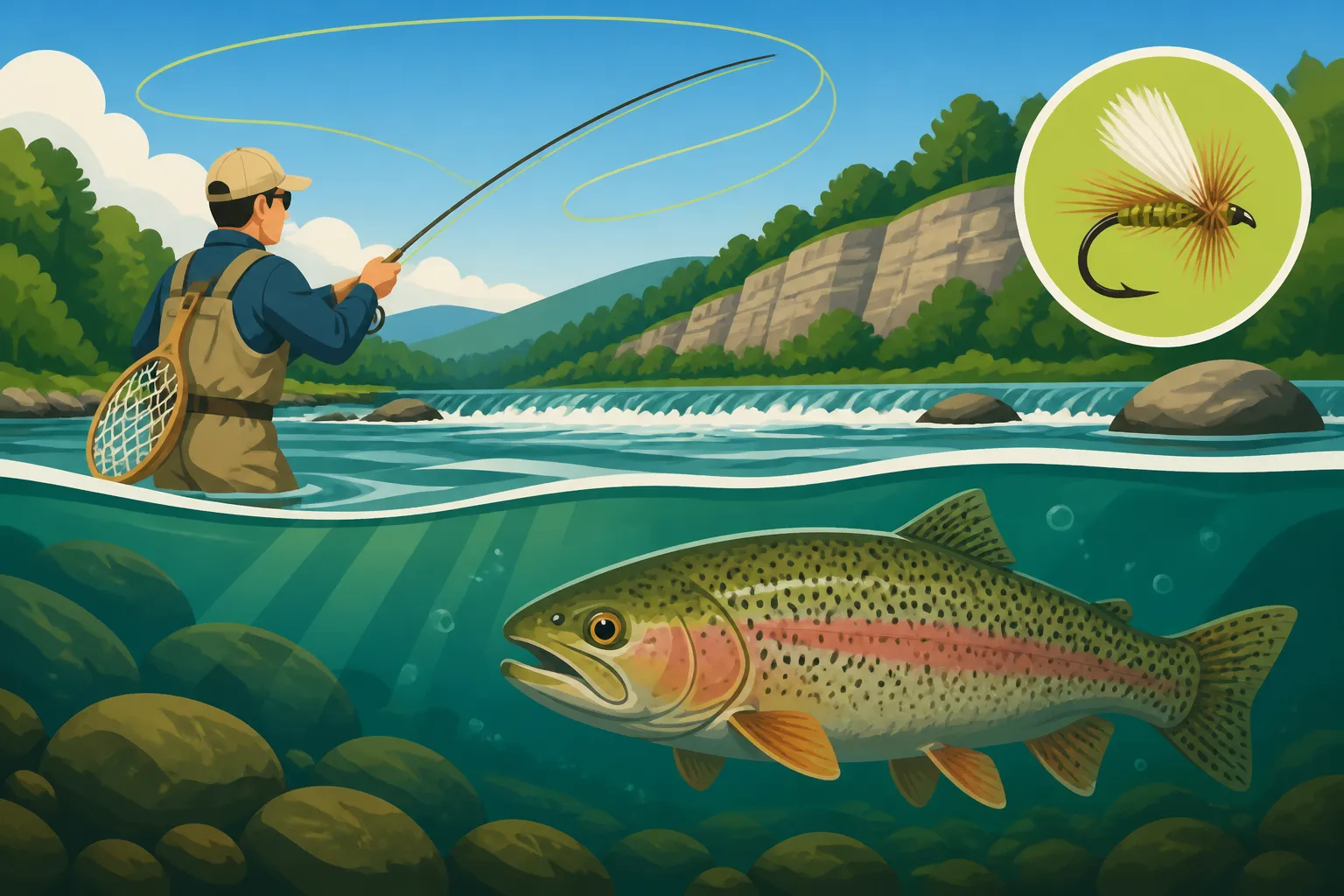
- The Pickup: With some line out on the water, smoothly accelerate your rod tip upwards and slightly backward, stopping abruptly at about the 1 o'clock position. This should "lift" the line off the water and send it unrolling behind you in a tight loop. Avoid "snapping" or jerking the rod.
- The Pause: As the line unrolls behind you, you need to pause and wait for the loop to fully extend. The length of this pause depends on how much line you have out; more line means a longer pause.
- The Forward Stroke: Once the line is fully extended behind you, smoothly accelerate your rod tip forward, stopping abruptly at about the 10 or 11 o'clock position. This sends the loop unrolling forward.
- The Laydown: As the line unrolls and approaches your target, you can slightly drop your rod tip to allow the leader and fly to gently settle on the water.
The key to a good cast is smooth acceleration and abrupt stops, creating tight, efficient loops. Think of your arm as a hinge, with your wrist providing the snap. Practice this motion repeatedly on grass or in a local park, focusing on forming clean, tight loops.
Mastering the Roll Cast for Tight Spaces
Often on tailwaters, you'll find yourself fishing in spots with overgrown banks, trees behind you, or other obstructions that make a traditional back cast impossible. This is where the roll cast becomes an invaluable tool. It allows you to cast your line forward without needing any room behind you.
Here's how to execute a basic roll cast:
- Line Setup: With your line and leader mostly straight out in front of you on the water, raise your rod tip slowly until your line forms a "D" loop directly beside or slightly behind you. Your rod tip should be high, and the line should form a slight curve leading back towards you.
- The Forward Stroke: Once the D-loop is formed and the weight of the line is felt, smoothly and powerfully push the rod tip forward and slightly downward, aiming for your target. The line will "roll" forward off the water and extend towards your target.
- Follow Through: Allow the rod to follow through naturally towards your target, letting the line unfurl smoothly.
The roll cast is a fantastic way to fish pockets and seams close to the bank on rivers like the Spring River or even the high-banked sections of the White River. Mastering this cast will open up many more fishing opportunities in challenging environments.
Achieving a Drag-Free Drift: The Key to Success
Perhaps more important than how far you can cast is how naturally you can present your fly. This is known as achieving a drag-free drift, and it's absolutely crucial for convincing wary trout to eat your fly. "Drag" occurs when your fly line, leader, or tippet is pulled by different current speeds on the surface, causing your fly to move unnaturally fast or in an unnatural direction compared to the current where the fish is holding.
To achieve a drag-free drift:
- Slack Line: After your cast, try to introduce a bit of slack into your line immediately. This can be done with a slight "reach cast" (where you extend your rod arm upstream after the forward cast) or by making a slight mend.
- Mending the Line: As your fly drifts downstream, watch your fly line carefully. If it starts to bow or pull, make a "mend." This involves lifting a section of your fly line off the water and flipping it upstream (or sometimes downstream) to realign it with the current your fly is in. This effectively "restarts" your drift, keeping the fly moving naturally.
- Stacking Casts: For complex currents, experienced anglers use "stacking" casts or "parachute" casts, which intentionally pile line onto the water to allow for a longer, undisturbed drift.
A natural, drag-free drift makes your fly look like genuine food floating downstream, increasing your chances of a strike. When you're fishing with nymphs and an indicator, watch the indicator. If it's speeding up or slowing down unnaturally, it's likely dragging. When dry fly fishing, observe the fly itself. If it's skating or being pulled, you're experiencing drag. Practice with a simple dry fly in a current, focusing solely on keeping it floating naturally. It’s a skill that takes time to develop but is ultimately what separates consistent fly anglers from occasional ones. For more specific guidance on different techniques, consider researching resources like Fly Fishing Techniques for Beginners.
Reading the Water and Decoding Trout Behavior
You can have the best gear and cast like a pro, but if you're not putting your fly where the fish are, you won't catch much. Learning to "read the water" means understanding where trout are likely to hold, feed, and rest, and then tailoring your approach to those spots.
Identifying Prime Trout Lies
Trout, especially in tailwaters, are constantly making efficiency calculations. They want to expend the least amount of energy to get the most amount of food. This means they often congregate in areas that offer a combination of food delivery, current breaks, and shelter. These areas are called "lies."
- Current Seams: Where fast water meets slow water (e.g., behind a large rock, along the edge of a riffle), trout will sit in the slower water, waiting for food to drift past in the faster current. These are prime feeding lies.
- Eddies and Backcurrents: Swirling pockets of water where currents slow down or even reverse. Trout love these areas as they offer respite from strong flows and often collect drifting food.
- Deep Pools and Runs: Deeper water provides cover from predators and can hold large numbers of fish, especially during bright sunlight or cold weather. Trout will often hold near the bottom in these spots.
- Structure: Submerged logs, boulders, undercut banks, and even bridge pilings offer current breaks and hiding spots. Trout will often hold tight to these features.
- Oxygenated Water: Riffles and rapids, while fast, introduce oxygen into the water. Trout will often sit at the tailout of a riffle, where the current begins to slow, picking off food.
Remember that a trout's preferred lie can change throughout the day and with different flow rates. In low water, they might be more spread out or in deeper holes; in high water, they'll seek out the slower edges and eddies.
Understanding Current Seams and Eddies
Current seams and eddies are critical features in any moving water, but they are particularly pronounced and important in tailwaters with fluctuating flows. A current seam is essentially an invisible line where two different speeds of water meet. Imagine a distinct line of bubbles or foam on the surface – that's often a telltale sign of a seam. Trout will position themselves just outside the main current, in the slower water, allowing them to conserve energy while food-laden faster water rushes by within easy striking distance. Casting your fly into the faster water upstream of the seam and letting it drift naturally into the slower water where the fish are waiting is a highly effective tactic.
Eddies are areas where the current actually reverses or swirls, creating a pocket of relatively calm water. These are like natural "restaurants" for trout, collecting debris, stunned insects, and small baitfish that get swept into the slower-moving water. Large eddies can hold multiple fish, from small rainbows to trophy browns. When fishing an eddy, consider casting your fly upstream of the eddy, allowing it to get caught in the swirling currents and drift naturally around the edges, or directly into the heart of the eddy itself. The key is to present your fly as naturally as possible within these diverse current zones.
Seasonal Trout Behavior in Tailwaters
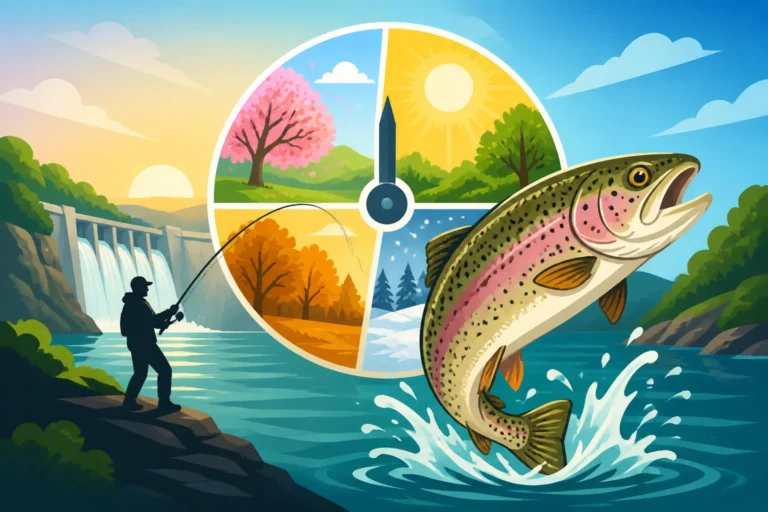
Unlike many freestone streams that have distinct "seasons" for trout activity, Arkansas's tailwaters offer excellent fishing year-round thanks to their consistent cold water temperatures. However, trout behavior still shifts subtly with the seasons, mainly influenced by air temperature, insect hatches, and spawning cycles.
- Spring: As water temperatures slowly rise from winter lows (but still remain cold), insect activity increases. Caddis and mayfly hatches can become more prolific, leading to good dry fly fishing. Trout are often very active, feeding heavily after the leaner winter months.
- Summer: Even with hot air temperatures, the deep-release cold water keeps tailwaters prime. Early mornings and late evenings are often best for dry flies or topwater action. During the day, trout will retreat to deeper, cooler water, making nymphing and streamer fishing more effective. Focusing on Summer Trout Fishing on the Norfork Tailwater in Arkansas might be a good idea for planning a trip.
- Fall: Many anglers consider fall to be prime time for trophy brown trout. As brown trout approach their spawning season (late fall/early winter), they become more aggressive and will readily chase large streamers. Mayfly hatches can also be strong on overcast days.
- Winter: Don't count out winter! While hatches are minimal, trout are still actively feeding subsurface. Midges are often the dominant food source, making small nymph patterns very effective. Trout will often congregate in deeper, slower pools, conserving energy. Winter Trout Fishing on the Norfork Tailwater in Arkansas can be surprisingly productive for those willing to brave the cold.
Understanding these seasonal nuances will help you choose the right flies and techniques, maximizing your chances of success no matter when you decide to hit the river.
Safety and Etiquette on Arkansas's Tailwater Rivers
Fly fishing on tailwaters is an incredibly rewarding experience, but it's crucial to prioritize safety and practice good etiquette to ensure a positive experience for everyone and to protect these valuable resources. The dynamic nature of these rivers demands respect and awareness.
Wading Safety and River Awareness
Safety is paramount when wading in tailwaters. The fluctuating flow rates mean that a spot that was easily wadeable an hour ago could become dangerously deep and swift. Always check the dam generation schedules before you head out, and pay close attention to the water level and current speed while you're fishing. Websites for the Army Corps of Engineers or specific dam pages (e.g., Bull Shoals, Norfork, Greers Ferry) usually provide real-time or scheduled generation information.
Here are critical wading safety tips:
- Wear a wading belt: This isn't just for comfort; it can prevent your waders from filling completely with water if you fall, which can be incredibly dangerous.
- Use a wading staff: A sturdy staff provides a third point of contact, helping you maintain balance in strong currents and probe the riverbed for slippery rocks or sudden drop-offs.
- Shuffle your feet: Don't pick up your feet when wading. Instead, shuffle them to maintain contact with the bottom and avoid tripping or slipping.
- Know your limits: Don't wade in water that is too deep or too fast for your comfort and skill level. If in doubt, don't go.
- Buddy system: Whenever possible, wade with a partner. If you fall or get into trouble, having someone nearby can be a lifesaver.
- Be aware of your surroundings: Watch for approaching changes in current, floating debris, and other boat traffic. These tailwaters are often popular, and awareness helps prevent accidents.
These simple precautions can make the difference between a great day on the water and a dangerous situation.
Practicing Catch and Release Effectively
Many anglers on Arkansas's tailwaters practice catch and release, especially for the larger, older brown trout that contribute so much to the trophy fishery. Even if you plan to keep a few fish for dinner (always check the specific Trout Limits on the Norfork Tailwater in Arkansas or Bull Shoals Tailwater Trout Rules in Arkansas for specific regulations, including those like What Size Trout Must You Release on the Norfork Arkansas Tailwater), handling fish properly is vital for their survival and the health of the fishery.
Key principles for effective catch and release:
- Minimize handling: The less you handle a fish, the better. Try to keep the fish in the water as much as possible.
- Wet hands: Always wet your hands before touching a fish. Dry hands can remove the fish's protective slime coat, making it susceptible to disease.
- Use a rubber net: Rubber or "ghost" nets are much gentler on a fish's fins and slime coat than traditional nylon nets.
- Barbless hooks: Pinching down the barbs on your hooks makes removal much easier and causes less damage to the fish. Many fly anglers exclusively use barbless hooks.
- Quick hook removal: Use hemostats or forceps to quickly and gently remove the hook. If the hook is deeply swallowed, cut the leader as close to the hook as possible. Don't try to rip it out.
- Support the fish: When lifting a fish for a quick photo, support its weight horizontally, ideally with one hand under its belly and the other gently gripping the tail. Never hold a fish by its jaw vertically unless it's a very small fish, as this can damage internal organs.
- Revive gently: If a fish seems sluggish, hold it gently in the current, facing upstream, until it can swim away under its own power. Don't "pump" it back and forth.
By following these guidelines, you contribute to the sustainability of Arkansas's amazing trout fisheries for generations to come.
Respecting Fellow Anglers and the Environment
Part of being a good angler is showing respect for your fellow enthusiasts and the environment that provides us with these incredible opportunities. Arkansas tailwaters can be popular, especially during peak seasons or when specific hatches are occurring.
- Give space: Always give other anglers plenty of space. A good rule of thumb is to stay at least a cast length away from the nearest angler, often more, especially if you're both wading. If you're drifting in a boat, give wading anglers a wide berth.
- Avoid loud noises: Keep conversations and music at a respectful volume. Loud noises can spook fish and disrupt the peaceful experience for others.
- Leave no trace: Pack out everything you pack in. This includes all trash, broken line, and discarded leader material. Ideally, leave the river cleaner than you found it.
- Respect private property: Be aware of property lines and access points. Stick to public access areas unless you have permission to cross private land.
- Be courteous: A simple nod or "hello" goes a long way. If you see someone struggling, offer a polite suggestion or assistance (if appropriate). We're all out there to enjoy the river.
- Know local rules: Beyond fish limits, be aware of any specific regulations for certain sections of the river, such as "catch-and-release only" zones or specific gear restrictions. The Arkansas Fishing Regulations Guide will have these details.
By being mindful of those around you and the natural beauty of the tailwaters, you help create a welcoming and sustainable environment for all who love to fish.
Arkansas Tailwater Trout Species and Regulations
Arkansas's cold-water tailwaters are unique ecosystems supporting a vibrant population of trout species. While rainbows are the most common, you'll also find some truly magnificent brown trout, along with cutthroat and brook trout. Each species has its own characteristics and often, specific regulations you need to be aware of.
Rainbow Trout: The Most Common Catch
Rainbow trout are the most widely stocked and commonly caught trout species in Arkansas tailwaters. Known for their vibrant pink or red stripe along their sides and speckled bodies, rainbows are eager biters and put up a spirited fight. They adapt well to the tailwater environment and thrive on a diet of insects, crustaceans, and small baitfish.
You'll find rainbow trout throughout the White River, Norfork River, and Little Red River. They are often less selective than brown trout, making them a great target for beginners. They'll readily take nymphs, small streamers, and dry flies during a hatch. While regulations can vary by specific river section, generally the daily limit for rainbow trout is five, but always consult the Arkansas Fishing Regulations Guide for the most up-to-date information, including size limits and any special restrictions for particular sections of river. They grow to respectable sizes in Arkansas, with many anglers routinely catching fish in the 12-18 inch range, and larger ones not uncommon.
Brown Trout: The Elusive Trophy
For many fly anglers, the brown trout is the ultimate prize in Arkansas tailwaters. These magnificent fish are known for their golden-brown bodies adorned with dark spots, often ringed with a lighter halo, and a sometimes aggressive, wary nature. Brown trout grow to enormous sizes in the White River, with fish over 20 pounds caught annually, making it a world-renowned trophy fishery.
Brown trout are more predatory than rainbows, often preferring larger meals like baitfish (like the Ozark minnow or sculpin) and crayfish, especially as they get larger. This makes streamer fishing a highly effective technique for targeting them, particularly during lower light conditions or during their pre-spawn aggression in the fall. They can be incredibly wary and require a more delicate and precise presentation, especially in clear, low water. Specific sections of the White River are managed for trophy brown trout, often with stricter catch-and-release rules for larger fish. Always be familiar with these specific rules to help conserve this incredible resource.
Cutthroat and Brook Trout: Occasional Surprises
While not as abundant as rainbows and browns, cutthroat trout and brook trout are also present in some Arkansas tailwaters, offering an exciting bonus for the discerning angler. Cutthroat trout are recognizable by the distinct orange or red slash marks found under their jaw, resembling a "cut" throat. They can be a bit more selective in their feeding habits and often prefer colder, cleaner water.
Brook trout, a beautiful native char, are less common in the main tailwater flows but might be found in colder tributary streams that feed into the main rivers, or in specific stocked areas. They are characterized by their worm-like markings on their back (vermiculations) and vibrant red spots often surrounded by blue halos on their sides. Catching one of these smaller, but beautiful fish is often a special treat. Again, specific regulations for these less common species might exist, so always refer to the official AGFC regulations or local signage.
| Trout Species | Common Size Range (Arkansas) | Primary Diet | Best Techniques | Key Identifiers |
|---|---|---|---|---|
| Rainbow Trout | 10-20 inches (up to 10+ lbs) | Insects, Crustaceans, Small Baitfish | Nymphing, Dry Flies, Small Streamers | Pink/red stripe, Black spots, Forked tail |
| Brown Trout | 15-25 inches (up to 20+ lbs) | Baitfish, Crayfish, Large Insects | Streamers, Nymphing | Golden-brown, Dark spots with light halos, Squarish tail |
| Cutthroat Trout | 10-18 inches | Insects, Small Baitfish | Nymphing, Dry Flies | Red/orange slash under jaw, Fine black spots |
| Brook Trout | 6-12 inches | Insects, Small Baitfish | Nymphing, Dry Flies | Vermiculations on back, Red spots with blue halos |
Disclaimer
Please remember that fishing regulations, costs, and availability of licenses can change. Always check the current Arkansas Game and Fish Commission (AGFC) regulations before planning your trip. The information provided here is for general guidance and informational purposes only.