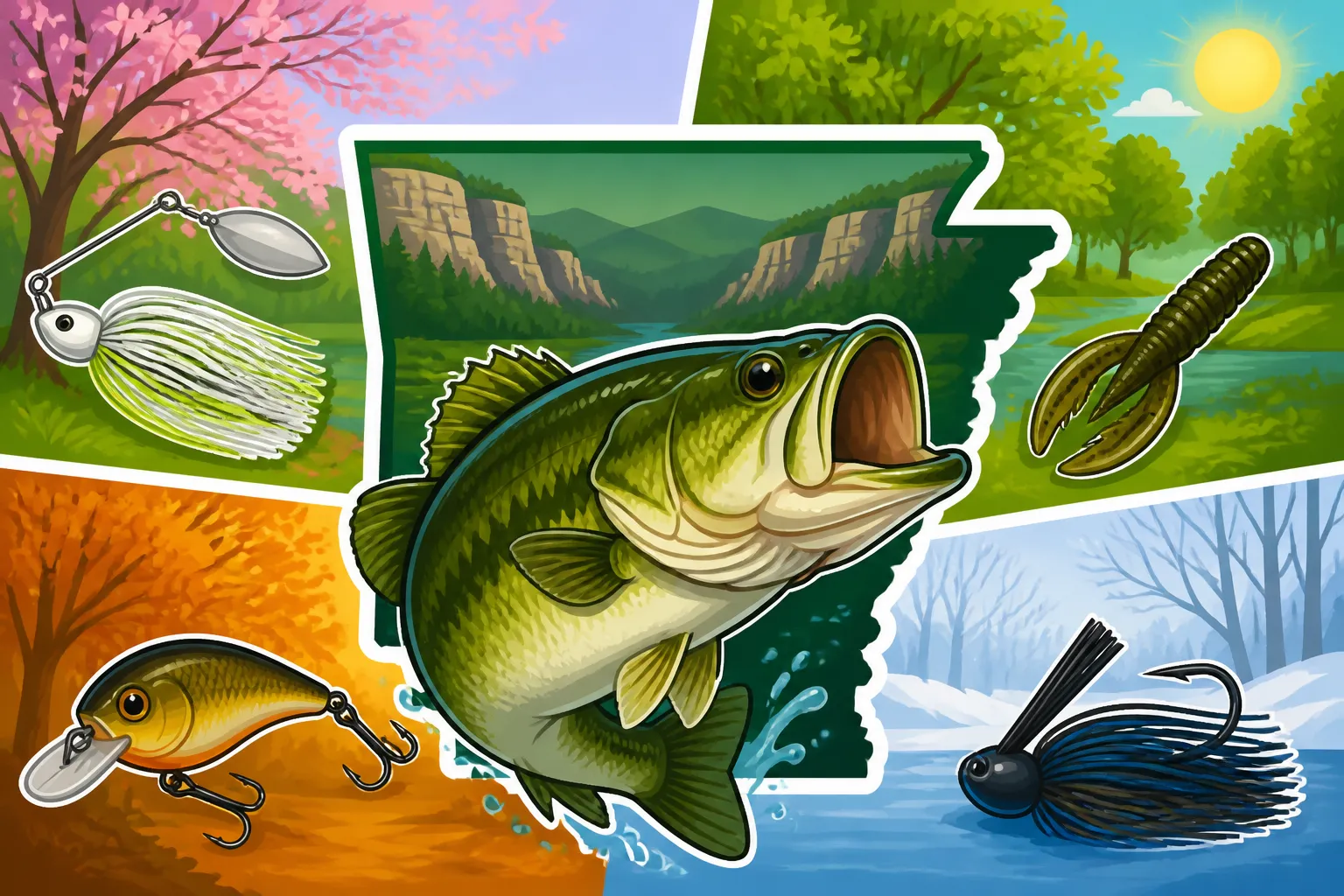
Best Bait for Bass by Season
One of the most common frustrations anglers face, especially when hitting the beautiful waters of Arkansas, is figuring out what bait to throw when. It feels like you've got a tackle box overflowing with options, but the bass just aren't biting, and you're left scratching your head. The truth is, bass behavior, and therefore their preferences for certain baits, changes dramatically with the seasons, driven largely by water temperature, forage availability, and their own biological clocks. This guide is going to break down the best baits for bass fishing in Arkansas, season by season, so you can spend less time guessing and more time reeling in those lunker largemouths, smallmouths, and Kentuckys.
Spring: Awakening and the Spawn
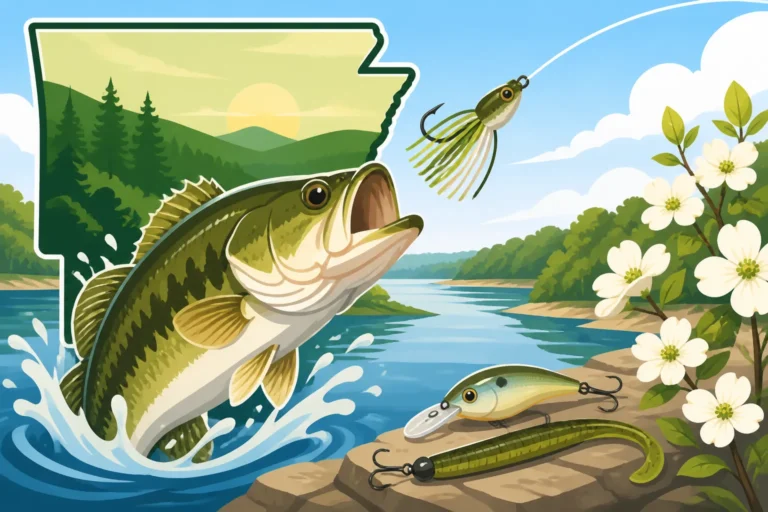
Spring in Arkansas is a magical time for bass fishing. The waters start warming up, the trees bud, and the bass become incredibly active as they move from their deep wintering holes to shallower spawning grounds. This is a period of intense feeding, reproduction, and defense, which makes them susceptible to a variety of baits. Understanding the different phases of spring—pre-spawn, spawn, and post-spawn—is key to choosing the right lure. If you're looking for a deeper dive into this season, check out our guide on Arkansas Bass Spawn Fishing Guide.
Pre-Spawn Bass Baits
As winter's chill loosens its grip, the water temperatures slowly creep up from the high 40s into the 50s. Bass are starting to wake up, moving from their deep haunts towards the mouths of coves and creek channels, looking for easy meals to bulk up before the energy-intensive spawn. They’re hungry and aggressive, but still a bit sluggish in colder water.
During this pre-spawn phase, slower-moving baits that imitate larger forage are often incredibly effective. Lipless crankbaits, like a ½-ounce in a shad pattern, are fantastic for covering water and triggering reaction strikes, especially when fished near rocky points or submerged grass lines. You can rip them through the grass, let them fall, and repeat, mimicking a fleeing baitfish. Another highly productive option is a jerkbait. These suspending lures can be twitched and paused, staying in the strike zone for extended periods, which is crucial when bass are still a bit lethargic in colder water. Imagine a jerkbait hanging perfectly still for several seconds right in front of a staging bass—it’s often too much for them to resist. Also, consider jigs with a stout hook. A ½-ounce jig paired with a bulky soft plastic trailer that displaces a lot of water can be flipped or pitched into cover like laydowns or brush piles where bass might be staging. The slow fall and subtle action can entice a wary pre-spawn bass to strike, especially on lakes like Beaver Lake or Greers Ferry. For more on this critical period, read about Pre-Spawn Bass Fishing Patterns.
Spawning Bass Baits
Once water temperatures climb into the mid-50s to low 60s, it's game on for the spawn. Bass move onto shallow flats, protected coves, and quiet pockets, often near some type of cover like stumps, docks, or lily pads, to build their nests. During this time, male bass are guarding the nests, and females are either laying eggs or recovering nearby. They're not necessarily feeding out of hunger, but rather out of aggression and protection.
The key here is to annoy them. Soft plastics are your best friend. A Texas-rigged lizard, creature bait, or even a classic plastic worm can be pitched right onto the bed. The bass will often pick it up and move it off the bed out of instinct, giving you a chance to set the hook. Green pumpkin and watermelon seed are go-to colors. Some anglers even use light-colored worms to help them see the bait on the bed. Another highly effective tactic is a jig or a shaky head, slowly dragged across the bed or hopped near protective cover. These baits imitate potential predators or intruders, triggering a defensive strike. Topwater frogs or rats can also be productive in areas with heavy vegetation, as bass will aggressively defend their nests from anything perceived as a threat from above. Keep a keen eye out for any disturbance in the water or lighter spots on the bottom where a bed might be.
Post-Spawn Bass Baits
After the arduous process of spawning, bass are often exhausted and a bit sluggish. The females, especially, need time to recover and will typically move to slightly deeper water, often suspending near cover or structure. The males, having guarded the nests, are also on the move, though sometimes they linger a bit longer. Water temperatures usually range from the mid-60s to low 70s.
This is a transition period, and bass might be scattered. Reaction baits that cover water are excellent for finding these post-spawn fish. Spinnerbaits, especially those with willow leaf blades for speed, or a Colorado/Indiana blade combo for more thump, are great choices, particularly around scattered grass or wood. Shallow-running crankbaits can also shine, deflecting off cover and drawing strikes from bass that are slowly recovering. Many anglers find success with a senko or other stick baits, fished weightless or with a light Texas rig. The slow, tantalizing fall of a weightless senko is often irresistible to a wary, recovering bass. It's subtle, natural, and doesn't require a lot of energy for the bass to commit. Look for bass relating to offshore structure like humps or ledges, or simply cruising along points. Our guide on Post-Spawn Bass Fishing Patterns offers more insights into this tricky time.
Summer: Heat, Depth, and Dawn Patrol
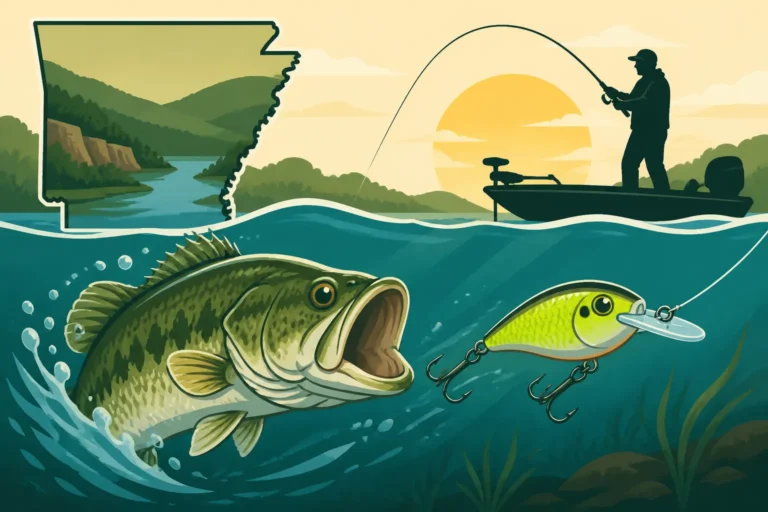
Summer in Arkansas brings long, hot days and rising water temperatures, often climbing into the 80s and sometimes even higher in shallower areas. This changes bass behavior significantly. They become less active during the bright, middle-of-the-day heat, preferring to seek refuge in deeper, cooler water or dense, shady cover. The key to summer bass fishing is understanding these movements and targeting them during their active periods.
Deep Water & Night Fishing Baits
When the sun is high and bright, bass retreat to the depths. This means you need baits that can get down to them. Large deep-diving crankbaits are absolute workhorses, especially in lakes like Lake Ouachita or Norfork Lake. Choose crankbaits that are rated to dive to 15-25 feet or even deeper, depending on the thermocline. Colors that mimic shad or crawfish are generally effective. Trolling these baits over humps, ledges, or main lake points can be incredibly productive. Another staple for deep-water bass is a football jig, often paired with a craw-style trailer. These jigs are designed to maintain bottom contact, which is crucial when fishing rocky or irregular bottoms. They mimic crawfish, a primary forage for bass in many Arkansas lakes. Carolina rigs are also phenomenal for covering deep structure. A lizard or straight-tail worm on a Carolina rig allows the bait to float tantalizingly above the bottom, often drawing strikes from bass that might ignore a bait directly on the bottom.
Don't forget about night fishing! The cooler temperatures and reduced light make bass much more active in the shallows after dark. Large, dark-colored spinnerbaits, buzzbaits, or even big plastic worms can be deadly. The thumping, vibrating action of these baits helps bass locate them in the dark, and they often hit with incredible aggression. For specific summer strategies, check out Summer Bass Fishing Patterns.
Topwater and Reaction Baits for Low Light
While the mid-day sun pushes bass deep, the low light conditions of early morning, late evening, and cloudy days can bring bass shallow and make them incredibly aggressive. This is prime time for topwater action, which is arguably the most exciting way to catch bass.
Buzzbaits, prop baits, walking baits (like a Heddon Super Spook), and poppers are all excellent choices. When using a walking bait, learn to "walk the dog"—a retrieve that makes the lure zigzag side-to-side, imitating a distressed baitfish. Buzzbaits are fantastic for covering a lot of water quickly over shallow flats or along grass lines, creating a commotion that calls bass up from below. Poppers are great for more precise casts around docks, stumps, or lily pads, allowing you to create splashing and gurgling sounds that mimic feeding baitfish. Even during the day, if you find areas with dense overhead cover like matted vegetation or thick lily pads, a frog can be incredibly effective. The bass will often explode through the mat to ambush the frog. These baits appeal to the bass's instinct to ambush, making for thrilling strikes. Finding quality topwater baits, including a variety of colors and sizes, is easy on platforms like Amazon. Our guide Best Lures for Topwater Bass Fishing dives deeper into these exciting techniques.
Fall: Feeding Frenzy and Migration
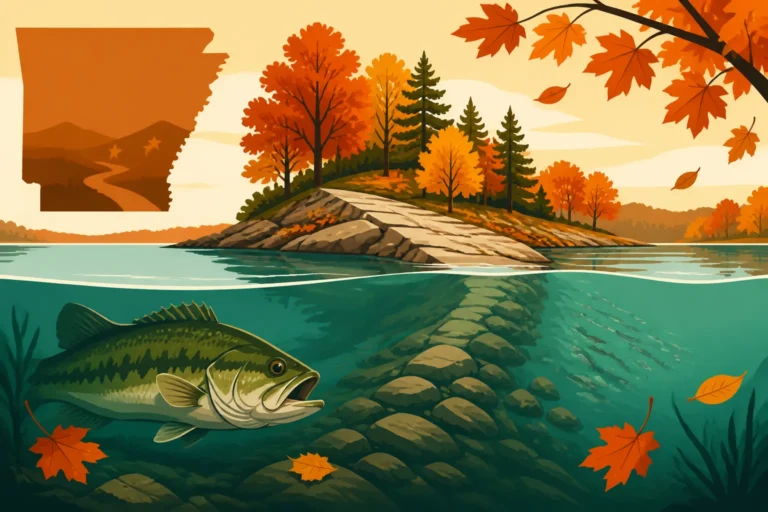
As the scorching summer heat gives way to cooler autumn temperatures, Arkansas's lakes and rivers undergo a significant transformation. The water begins to cool, and bass sense the impending winter, triggering a major feeding spree. This "fall turnover" can initially make fishing tough, but once the water stabilizes, bass become incredibly active, chasing baitfish in preparation for the leaner winter months.
Chasing Baitfish with Fast Movers
Fall is all about the shad. As water temperatures drop into the 60s and 50s, baitfish schools become incredibly active, often congregating in shallow pockets, creek arms, and on main lake points. Bass follow these schools closely, creating explosive feeding frenzies. This is the time to throw fast-moving, reaction-style baits that imitate fleeing baitfish.
Crankbaits are kings in the fall. Medium-diving crankbaits in shad patterns (chrome, blue back, or pearl) are excellent for covering points, humps, and the edges of creek channels. Vary your retrieve speed, occasionally banging the crankbait off submerged timber or rocks to trigger a strike. Spinnerbaits are also incredibly effective, especially in areas with stained water or around woody cover. Use tandem blade models with willow leaf blades for maximum flash and a faster retrieve. Try throwing them along rocky banks or submerged hydrilla beds. For an added edge, consider adding a soft plastic swimbait trailer to your spinnerbait for extra bulk and action. Even jigs, when fished aggressively through submerged grass or around schooling bait, can be effective. This is a time of year where bass will often strike out of pure instinct. You can find a huge array of these baits on Amazon, making it easy to stock up for the season. For more about this season's patterns, read up on Fall Fishing Patterns for Bass and Crappie.
Slower Presentations for Cooler Water
While the early fall sees aggressive feeding, as the season progresses and water temperatures drop further into the 50s, bass might become a bit less frantic. They're still feeding, but perhaps not chasing as far or as fast. This is when a slightly slower presentation can be more effective, especially for wary or larger bass.
Jigs, particularly football jigs or stand-up jigs, paired with a crawfish or creature trailer, become a go-to. Fish these slowly along deep ledges, channel swings, or rocky transitions. The subtle action of the trailer and the slow hop of the jig can mimic a crawfish crawling along the bottom, which is a prime target for bass looking for a substantial meal without expending too much energy. Blade baits, like Silver Buddies or Rattle Traps, are also excellent choices for vertical jigging on these deeper structures. Drop them to the bottom, rip them up a few feet, and let them fall back on a semi-slack line; this erratic action can trigger strikes from suspended bass. On days with a light chop or overcast skies, jerkbaits can still shine, especially those with a suspending action. Work them with longer pauses between twitches, giving the bass ample time to eye the lure before committing. Remember, even in cooler water, bass are still eating, but they might need a bit more convincing.
Winter: Slow and Deep
Winter fishing for bass in Arkansas can be challenging, but it can also be incredibly rewarding if you understand how bass behave in cold water. When water temperatures dip into the 40s and low 50s, bass become very lethargic. Their metabolism slows down significantly, and they conserve energy. They will still eat, but they won't chase a bait very far, and they often prefer a slow, easy meal.
Vertical Presentations for Suspended Bass
In winter, bass will often suspend in deeper water, sometimes over structure like humps or old creek channels, and sometimes just out in open water following schools of baitfish. They might be holding at a specific depth for warmth or comfort. Vertical presentations are key to targeting these fish.
Spoons, especially slab spoons or jigging spoons, are highly effective. Drop them directly over suspended bass (which you can often locate with good electronics), jig them aggressively a few times, and then let them flutter back down. The flash and erratic fall can imitate a dying baitfish, a tempting target for a cold, hungry bass. Another excellent option is a dropshot rig. This allows you to present a small, subtle plastic bait (like a finesse worm or small minnow imitation) at a precise depth, directly in the bass's strike zone. The bait hovers enticingly, allowing even a sluggish bass to take its time inspecting and eventually taking the offering. Finesse jigs, too, can be presented vertically or hopped slowly along the bottom in deep water, often triggering strikes from bass that are reluctant to chase. Think small, subtle, and slow. If you're struggling to locate them, remember that bass often move to slightly shallower, sun-warmed north-facing banks on bluebird days. Our article on Winter Fishing Patterns on Arkansas Reservoirs provides a lot more information on this season.
Finesse and Patience for Cold Water Bass
Patience is not just a virtue; it's a necessity for winter bass fishing. You're not going to get a lot of bites, but the bites you do get often come from larger, healthier fish. Slow-moving, subtle baits are paramount.
Shakey head jigs, tipped with a small finesse worm, are exceptional. Cast them out, let them sink to the bottom, and then shake your rod tip subtly, making the worm quiver and dance in place. The key is to barely move the bait. A Texas-rigged soft plastic worm or creature bait, fished very slowly along the bottom, can also be productive. Use the lightest weight possible to maintain bottom contact and ensure a slow, natural fall. Sometimes, simply dragging the bait along the bottom, letting it bump into cover, is enough to get a reaction strike. Blade baits, while effective for aggressive rips in the fall, can also be slow-rolled or "dead-sticked" in winter. Cast it out, let it sink, and retrieve it just fast enough to make the blades barely flutter, or simply let it sit on the bottom and twitch it occasionally. Remember, bass are trying to conserve energy, so make it easy for them. Choosing the right line weight for trout fly fishing, for example, is critical for finesse presentations.
Seasonal Bass Bait Summary
To help you quickly reference the best bait options for bass throughout the year in Arkansas, here’s a handy table summarizing our recommendations:
| Season | Water Temperature Range | Primary Bass Behavior | Recommended Bait Types | Key Considerations |
|---|---|---|---|---|
| Spring | 50-70°F (10-21°C) | Pre-spawn, Spawn, Post-spawn | Lipless/Suspending Jerkbaits, Jigs, Soft Plastics (Lizards, Worms), Spinnerbaits, Shallow Crankbaits, Topwater Frogs | Cover water initially, then focus on spawning beds, then reaction baits for recovering fish. |
| Summer | 70-90°F (21-32°C) | Deep seeking, Low light active | Deep-Diving Crankbaits, Football Jigs, Carolina Rigs, Topwater (Buzzbaits, Poppers, Walkers, Frogs), Large Soft Plastics | Target deeper water during day, shallow in low light/night. |
| Fall | 50-70°F (10-21°C) | Feeding frenzy, Baitfish chase | Medium-Diving Crankbaits, Spinnerbaits, Jigs, Blade Baits, Jerkbaits (late fall) | Follow baitfish, aggressive retrieves, slower finesse as temps drop. |
| Winter | 35-50°F (2-10°C) | Deep & Lethargic | Jigging Spoons, Dropshot Rigs, Finesse Jigs, Shakey Heads, Slow-Rolled Blade Baits | Vertical presentations, ultra-slow retrieves, extreme patience. |
Adapting to Conditions: More Than Just the Calendar
While seasons provide a great framework, successful bass fishing in Arkansas often comes down to adapting to real-time conditions. A sudden cold front in spring or an unusually warm stretch in winter can throw off predictable patterns. Always pay attention to the specific water temperature, clarity, and weather patterns on the day you're fishing.
For instance, if you're fishing a tailwater like the Norfork or White River, even in summer, the water coming from the dam will be significantly colder, potentially mimicking spring or fall conditions. You might still need a Do you need a trout permit to keep trout in Arkansas? in these waters, but the bass behavior will be influenced by that cold flow. Similarly, a heavy rain can muddy up a creek arm, making visual baits less effective and scent-based or vibrating baits more appealing.
Also, consider the type of water you're fishing. Large, deep reservoirs like Bull Shoals or Greers Ferry will often hold bass in deeper water for longer periods, even during the "shoulder" seasons of spring and fall. Smaller, shallower ponds or rivers might see bass movements compressed into shorter windows. Knowing the general patterns in Arkansas Fishing Rules for Lakes, Rivers and Tailwaters can help you refine your bait choices.
Finally, don't be afraid to experiment! While these recommendations are a solid starting point, bass can be finicky. Sometimes, a bright pink worm will outfish a natural green pumpkin on a particular day. Keep a variety of baits on hand and be willing to switch things up if what you're throwing isn't producing. Getting your gear ready, whether it's checking your line or making sure your hooks are sharp, is crucial. You can find a huge variety of tackle and supplies on Amazon, from the latest deep-diving crankbaits to classic plastic worms. And if you're ever in doubt about the legalities, our guide to Arkansas Fishing License Rules and Costs is a great resource.
The more time you spend on the water, observing and experimenting, the better you’ll become at truly understanding what the bass want.
Disclaimer
This article is for general informational purposes only and does not constitute professional advice. Laws, prices and regulations vary by location and change over time. Consult a qualified professional for guidance on your specific situation.