How to Fish a Crankbait for Bass
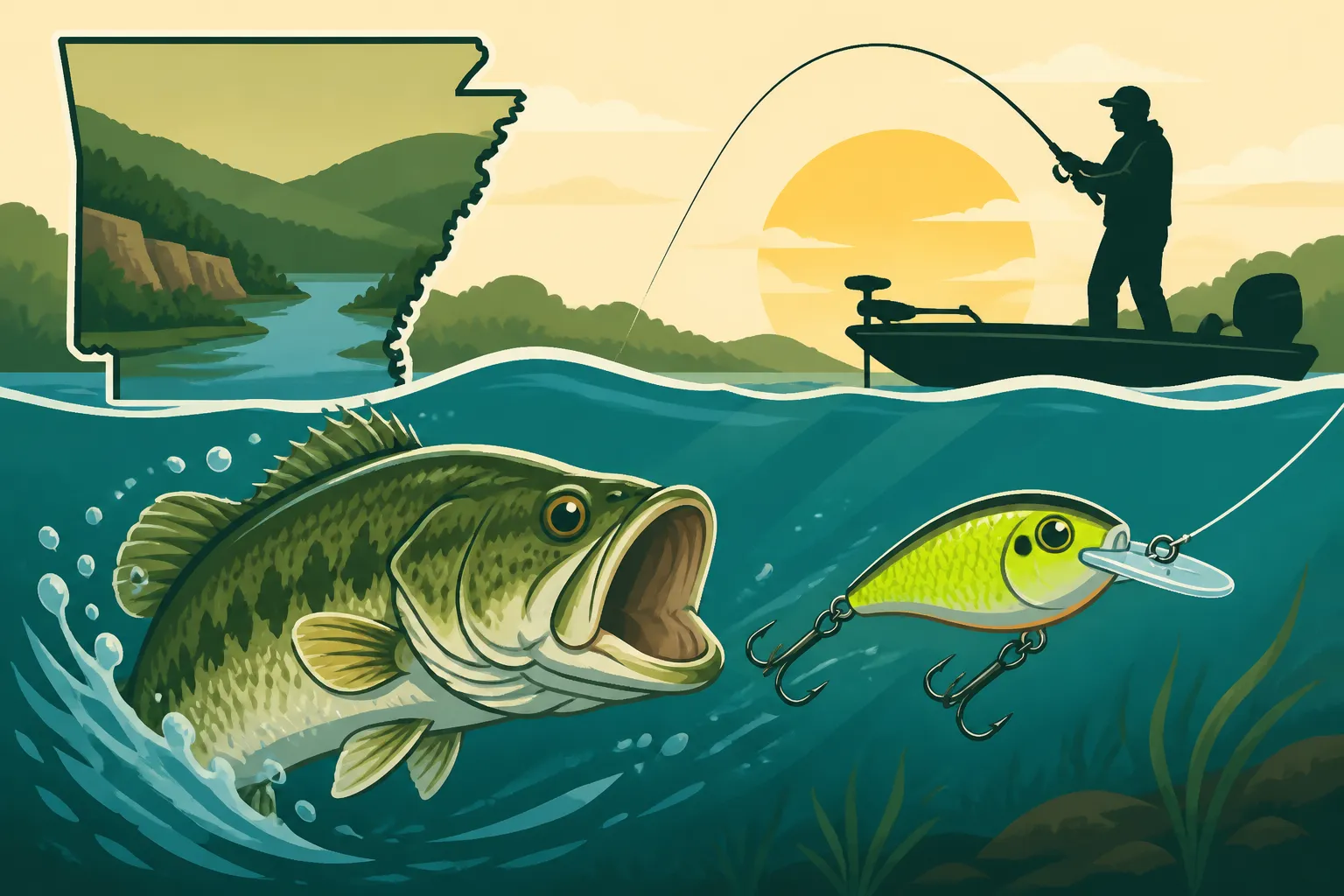
For many bass anglers here in Arkansas, mastering the crankbait can feel like trying to solve a Rubik's Cube blindfolded. You see pros on TV hauling in giants with them, but when you tie one on, it often feels like you're just dragging a piece of plastic through the water with no rhyme or reason. It's frustrating to invest in beautiful lures only to have them sit unused in your tackle box because you just can't seem to make them work. This guide is here to untangle that frustration and help you understand how to effectively fish a crankbait for bass in Arkansas waters, transforming those forgotten lures into your next secret weapon.
Understanding Crankbaits: The Basics of These Bass Magnets
Crankbaits are one of the most versatile and effective lures for bass fishing, especially when you're trying to cover a lot of water quickly or target fish holding at specific depths. They're designed to mimic baitfish, crayfish, or other aquatic critters, and their erratic, wobbling action can trigger aggressive strikes from hungry bass. But not all crankbaits are created equal, and knowing the differences is your first step to success.
Different Types of Crankbaits and Their Action
When you walk into any tackle shop, or even browse fishing gear on Amazon, you'll see a dizzying array of crankbaits. They come in various shapes, sizes, and colors, but the most significant difference lies in their bill (or lip) and how it dictates their diving depth and action. Understanding these core types is crucial for choosing the right tool for the job.
First, you have your lipless crankbaits. These are often referred to as "rattle baits" due to the internal BBs or weights that create a loud, distinctive sound as they're retrieved. Lipless crankbaits don't have a diving lip, so their depth is entirely controlled by retrieve speed and how long you let them sink. They're fantastic for covering large areas, especially over submerged grass beds or across shallow flats. Their tight wobble and vibrating action can draw strikes from aggressive bass, even in stained water. Think of them as a search bait, allowing you to quickly determine if bass are active in an area.
Next, there are squarebill crankbaits. These lures are easily identifiable by their short, flat, square-shaped bills. This unique bill design helps them deflect off cover like rocks, stumps, and laydowns without getting hung up as often as other crankbaits. Squarebills are typically shallow-diving, generally running from just a few inches to about six feet deep. They excel in tight, cover-rich areas, making them perfect for fishing around flooded timber in places like Lake Ouachita or along rocky banks on the Arkansas River. Their erratic action after deflecting off an object often triggers a reaction strike from bass that are ambush predators.
Finally, we have the various lipped crankbaits, which can be further broken down into medium-divers and deep-divers. These crankbaits have a more traditional, round or pointed bill that extends from the front of the lure. The longer and wider the bill, typically the deeper the crankbait will dive. Medium-divers might hit depths of 6-12 feet, while deep-divers can plunge to 20 feet or more. These are your workhorses for targeting bass holding on offshore structure, ledges, humps, and points. The aggressive wobble and deep-diving capabilities of these lures make them indispensable for probing deeper water, especially as you explore how to fish deep structure for bass in Arkansas's larger reservoirs like Bull Shoals Lake or Greers Ferry Lake. They literally "crank" down to depth, and the longer the cast, the deeper they often go.
Choosing the Right Crankbait for Arkansas Waters
With so many options, how do you pick the right one for a specific fishing trip in Arkansas? It boils down to a few key factors: depth, color, and whether to use rattles.
Depth is paramount. Before you even tie on a crankbait, you need to have a good idea of the depth the bass are holding. Are they shallow, cruising the banks? Are they suspended over a creek channel, or are they hugging the bottom on a deep ledge? If you're fishing a 10-foot deep flat, a deep-diving crankbait designed for 20 feet will just dig into the bottom, collecting debris and frustrating you. Conversely, a shallow squarebill won't reach bass holding at 15 feet. Always choose a crankbait that is rated to dive slightly deeper than the target depth. This allows it to "dig" into the bottom or contact cover, which is often when strikes occur.
Color selection can feel overwhelming, but a good rule of thumb is to "match the hatch" – meaning, match the colors of the baitfish or forage prevalent in the water you're fishing. In clearer waters, natural baitfish patterns like shad, perch, or bluegill can be highly effective. If you're fishing waters with a lot of crayfish, choose browns, reds, or oranges. In stained or muddy water, brighter colors like chartreuse, fire tiger, or even fluorescent oranges can stand out better and attract attention. Sometimes, though, a "reaction color" that doesn't mimic anything specific, but rather irritates the bass into striking, can be the ticket. Don't be afraid to experiment, especially on cloudy days or in low light conditions.
Rattles are another consideration. Many crankbaits come equipped with internal rattles that create noise. This noise can be a huge advantage in stained or murky water, helping bass locate your lure. It can also be effective in clear water when bass are aggressive, drawing them in from a distance. However, in super clear water or when fishing pressure is high, a "silent" crankbait (one without rattles) can sometimes be more effective. Bass can become conditioned to loud, rattling lures, making a subtle, silent approach more appealing. Pay attention to the conditions and the mood of the fish.
| Crankbait Type | Typical Diving Depth | Ideal Conditions/Action | Best For |
|---|---|---|---|
| Lipless | All depths (retrieve dependent) | Fast retrieve, vibrating | Covering flats, grass beds, schooling fish |
| Squarebill | 0-6 feet | Deflecting off cover, erratic wobble | Shallow timber, rocky banks, stumps |
| Medium-Diver | 6-12 feet | Steady retrieve, pronounced wobble | Offshore humps, points, ledges, creek channels |
| Deep-Diver | 12-25+ feet | Aggressive dive, wide wobble | Deep ledges, main lake points, thermocline |
Mastering the Retrieve: Techniques for Enticing Arkansas Bass
A crankbait is only as good as the retrieve you give it. Simply casting it out and reeling it straight in will catch some fish, but to consistently entice those Arkansas bass, you need to understand the nuances of presentation. It's all about making the lure look alive and irresistible.
The Art of Contact and Deflection
This is where the magic truly happens with crankbaits, especially squarebills and medium-divers. Bass are ambush predators, and they often react violently to something fleeing or bumping into cover. The key is to purposefully cast your crankbait so it makes contact with something.
Imagine you're fishing a submerged rock pile on Lake Hamilton. Instead of casting just over it or around it, aim to cast into it. As your crankbait bumps, scrapes, and grinds its way through the rocks, its action becomes highly erratic and unpredictable. This sudden change in direction or speed often triggers an immediate strike. The same principle applies to fishing around stumps, laydowns, or even the subtle contours of a creek channel. The squarebill's design, for instance, allows it to "crawl" over wood and rock with fewer snags than other lures. You'll feel the lure deflect, then often, the very next second, you'll feel the thud of a bass.
This contact and deflection technique also works incredibly well when fishing points for bass in fall. As bass move to feed on shad pushing into coves, they often hold tight to the points. Running a crankbait right along the contours of a point, letting it bounce off rocks or hit small changes in depth, can be incredibly effective. Don't be afraid to feel your lure hitting bottom or bumping into things; that's exactly what you want it to do. If you're not making contact with anything, you're likely not fishing where the bass are holding or you're not using the right diving depth.
Varying Your Retrieve Speed and Cadence
While contact is crucial, the speed and rhythm of your retrieve can be just as important. Bass don't always want the same presentation, and adapting your retrieve can make all the difference.
One of the most common and effective retrieves is a simple steady retrieve. This is often best for lipless crankbaits over grass or when bass are actively chasing baitfish. Just cast it out and reel it in at a consistent pace. But even with a steady retrieve, you can vary the speed slightly. Sometimes a fast retrieve is needed to trigger a reaction from highly active fish, while a slower, more deliberate retrieve might be better for lethargic bass.
Then there's the stop-and-go or burn and pause retrieve. This is a fantastic technique that adds a lot of life to your crankbait. You might reel it in quickly for a few cranks, then pause for a second, letting the lure float up or sink slightly before resuming your retrieve. That momentary pause, when the lure becomes vulnerable, is often when a bass will pounce. This is particularly effective with buoyant crankbaits that rise slowly when paused, mimicking a wounded baitfish.
For deeper diving crankbaits, a technique called "grinding" or "plowing" the bottom can be deadly. You're purposefully retrieving the lure fast enough to keep it in constant contact with the bottom, kicking up puffs of sediment. This imitates a crayfish scurrying along the bottom or a baitfish digging for food, making it an easy target for bass. When you're trying to fish deep structure for bass, keeping that lure in the strike zone and making it look like an easy meal is paramount. Experiment with how quickly you reel, how long you pause, and how much slack you give the line. Sometimes, the slightest alteration can be the key to unlocking a bite.
Gear Up for Success: Rods, Reels, and Lines for Crankbait Fishing
Just like you wouldn't use a screwdriver to hammer a nail, you shouldn't use just any fishing gear for crankbaiting. Having the right tools specifically designed for crankbait fishing will dramatically improve your success, reduce fatigue, and help you land more fish. It's not just about having a pretty rod; it's about matching the components to the technique.
Rod Selection: The Importance of Modulus and Action
When it comes to crankbait rods, there are a few key characteristics to look for. You want a rod that is typically medium to medium-heavy power with a moderate or moderate-fast action.
Why moderate action? Unlike jig or worm fishing where you want a fast or extra-fast tip to feel subtle bites and set the hook hard, crankbait fishing benefits from a more parabolic bend in the rod. This means the rod flexes further down into the blank. This "softer" action serves several crucial purposes:
- Better Casting: It helps load the rod more effectively, allowing you to cast heavier crankbaits further and with less effort.
- Lure Action: It allows the crankbait to work more freely, giving it its intended wobble and action without being stifled by a stiff rod.
- Hook Setting: Bass often hit crankbaits hard, and a moderate action rod acts as a shock absorber. It prevents you from pulling the trebles out of the fish's mouth on the hookset and provides a little "give" during the fight, reducing the chance of hooks tearing out, especially with the multiple trebles on a crankbait.
- Deflection: When your crankbait deflects off cover, a moderate action rod helps the lure bounce off more naturally without getting hung up.
Look for rods made specifically for crankbaiting, often labeled as "crankbait rods." Brands like Lew's, Fenwick, or St. Croix offer excellent options across various price points. A 7-foot to 7-foot 6-inch rod is a versatile length for most crankbait applications, offering a good balance of casting distance and control.
Reel Ratios and Line Choices for Optimal Performance
Your reel and line choices are just as critical as your rod. They complete the system that allows you to effectively present and retrieve your crankbaits.
For reels, you'll generally want a baitcasting reel with a moderate gear ratio. Something in the 5.1:1 to 6.4:1 range is ideal for most crankbaiting. Why not a super-fast reel? Slower gear ratios help you maintain a consistent retrieve speed, which is crucial for crankbaits. It also prevents you from inadvertently reeling too fast and pulling the crankbait out of the strike zone or making it run too high. For deep-diving crankbaits, a slower gear ratio (like 5.1:1) also provides more torque, making it easier to pull those high-resistance lures through the water all day long without excessive arm fatigue. However, a slightly faster 7.1:1 reel can be useful for squarebills where quick bursts and fast retrieves around cover are beneficial.
When it comes to line, your choices typically come down to monofilament, fluorocarbon, or a combination with braided line.
- Monofilament (Mono): This is a classic choice for crankbaiting due to its stretch. The stretch acts as an additional shock absorber, further preventing hooks from tearing out, especially on a hard-hitting fish. It also has good buoyancy, which can be an advantage when you want your crankbait to rise slowly during pauses. A 10-17 pound test mono is a good starting point.
- Fluorocarbon: Many pros prefer fluorocarbon for crankbaiting. It has less stretch than mono, which gives you more feel for what your crankbait is doing and any subtle bites. Critically, fluorocarbon sinks, which can help your crankbait achieve its maximum diving depth. It's also virtually invisible underwater, a huge plus in clear waters. Use 10-15 pound test fluorocarbon for most applications. You can find excellent spools on Amazon, often with various test strengths.
- Braid to Fluorocarbon Leader: Some anglers opt for braided line as their main line (20-30 pound test) for its incredible sensitivity and strength, then tie on a 10-15 foot fluorocarbon leader (10-17 pound test). This gives you the best of both worlds: the sensitivity and casting distance of braid, combined with the invisibility and moderate stretch of fluorocarbon. This setup is particularly effective for how to fish a jig for bass or fishing in dense cover where strength is paramount.
No matter your choice, ensure your line is fresh and regularly checked for abrasions, especially after contacting rocks or wood.
Seasonal Strategies: When and Where to Throw Crankbaits in Arkansas
Understanding the seasonal movements and feeding patterns of bass is key to knowing when and where to deploy your crankbaits in Arkansas. Bass are creatures of habit, and their behavior changes significantly with water temperature and forage availability throughout the year.
Spring and Fall: Prime Time Crankbait Action
These two seasons are, without a doubt, the prime times for crankbait fishing in Arkansas. The bass are often active, feeding aggressively, and frequently found in predictable locations.
Spring is a magical time for crankbaits. As water temperatures begin to rise into the 50s and 60s, bass start moving from their deeper winter haunts towards shallower spawning areas. This is when pre-spawn bass fishing patterns really kick in. They are hungry and looking to bulk up before the arduous spawning process.
- Pre-Spawn (Water Temps 50-60°F): This is squarebill territory! Bass will stage on shallow points, secondary creeks, and rocky banks leading into spawning coves. Throwing a squarebill into shallow cover, allowing it to deflect off rocks and wood, can trigger explosive strikes. Lipless crankbaits are also deadly when bass are chasing shad in these transition areas. This is a great time to hit spots like Lake Monticello for some aggressive bass. The focus is often on covering water quickly to find active fish. You might also want to check out some of the Best Lures for Pre-Spawn Bass Fishing.
- Spawn (Water Temps 60-70°F): While crankbaits can catch bass during the spawn, it's generally not their most effective application, as bass are focused on nesting. However, lipless crankbaits fished quickly over shallow beds can provoke a territorial strike from a bedding male.
- Post-Spawn (Water Temps 70°F+): After the spawn, bass move into nearby cover to recover. This phase can be a bit trickier, but once they start feeding again, crankbaits shine. They'll often hold on deeper points or the edges of grass lines. Medium-diving crankbaits come into play here, targeting those slightly deeper staging areas before they move to their full summer patterns.
Fall is another fantastic season for crankbaits, often mirroring spring patterns as bass aggressively feed in preparation for winter. As water temperatures cool down, baitfish migrate into shallower pockets and creeks, and the bass follow them.
- Cooling Water (Water Temps 70-50°F): This is a time of year when bass school up and chase baitfish. Lipless crankbaits and squarebills excel in the backs of creeks and shallow flats where shad are abundant. Medium-diving crankbaits can be used on main lake points and humps as bass move back and forth between shallow and deep water. Focusing on how to fish points for bass in fall is crucial, as these structures act as highways for migrating bait. You might find incredible action at places like Norfork Lake or Beaver Lake.
Summer and Winter: Adjusting Your Approach
While spring and fall are prime, crankbaits certainly have their place in summer and winter, but your approach needs to be more refined.
Summer in Arkansas brings hot weather and often sees bass move to deeper, cooler water. This is when your deep-diving crankbaits become indispensable.
- Hot Water (Water Temps 80°F+): Bass will gravitate towards offshore structures, deep ledges, humps, and creek channels, often holding at or below the thermocline. This is the time to really put your deep-diving crankbaits to work. You're looking for subtle changes in depth, hard spots on the bottom, or submerged brush piles. Using your electronics to locate these features is crucial. Long casts are often necessary to allow your deep diver to reach its maximum depth and stay in the strike zone longer. This is a prime time for how to find bass in summer heat and explore offshore spots on lakes like Lake Ouachita or Bull Shoals. Consider the Best Lures for Summer Bass Fishing to round out your tackle box.
- Night Fishing: Don't forget about night fishing in the summer! Bass often move shallower after dark, and large, dark-colored crankbaits can be incredibly effective when retrieved slowly.
Winter presents the biggest challenge, but it's far from impossible to catch bass on crankbaits in Arkansas. Bass are generally lethargic, schooling tightly in deep water, and less willing to chase.
- Cold Water (Water Temps Below 50°F): Focus on slow-rolling deep-diving crankbaits, or even lipless crankbaits, in deep water. Bass will hold tight to main lake points, channel swings, and deep bluff walls. The key is an extremely slow retrieve, just barely moving the lure, mimicking a stunned or dying baitfish. You're not looking for a reaction strike as much as a subtle "eat." Often, a hard contact with cover might be the only thing that triggers a sluggish fish. After a cold front, bass can become even more inactive, so adjusting your approach to something very slow and methodical is key. Consider how to fish after a cold front for these conditions.
Ultimately, crankbaits are a powerful tool in any Arkansas angler's arsenal, capable of catching bass throughout the year. By understanding the different types, mastering your retrieve, using the right gear, and adapting to the seasons, you'll be well on your way to becoming a crankbait master. So grab a few of these versatile lures, maybe check out some options on Amazon, and get ready to feel that satisfying thump!
Disclaimer
This article is for general informational purposes only and does not constitute professional advice. Laws, prices and regulations vary by location and change over time. Consult a qualified professional for guidance on your specific situation.