Pre-Spawn Bass Fishing Patterns
The early spring can be a real head-scratcher for many bass anglers in Arkansas. You know the big females are getting ready to move up, but they're not quite on their beds yet, leaving you wondering where they're holding and what they'll actually bite. It's that tricky "pre-spawn" window where bass are transitioning, often hunkering down in staging areas before making their final push. This guide is designed to cut through the confusion, offering proven patterns and techniques to help you consistently find and catch those elusive, often giant, pre-spawn bass across the Natural State.
Understanding the Pre-Spawn Phase in Arkansas
The pre-spawn period is arguably one of the most exciting and frustrating times to chase bass in Arkansas. It's a critical window where these fish, especially the big females, are making their move from their deep winter haunts toward their shallow spawning grounds. Understanding this transition is key to unlocking consistent success.
Defining the Pre-Spawn Period
Think of the pre-spawn as bass staging for the main event. It's the period between late winter, when bass are still sluggish and holding deep, and the actual spawn, when they commit to their beds. This isn't a fixed calendar date but rather a phase driven primarily by environmental cues, especially water temperature and photoperiod (day length). In Arkansas, this can generally kick off in late February or early March in some southern lakes and extend into April or even May in the colder, northern reservoirs or higher elevations. During this time, bass are trying to bulk up, packing on weight in preparation for the energy-intensive act of spawning. This often means they're aggressively feeding, but they're also highly sensitive to changes. For a more detailed look at the timing, check out our guide on Best Time for Pre-Spawn Bass Fishing in Arkansas.
The Importance of Water Temperature
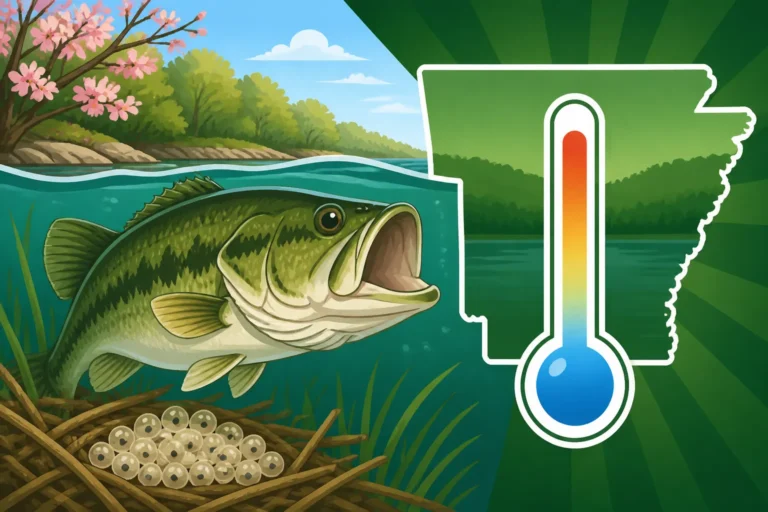
If there's one single factor that dictates pre-spawn bass activity, it's water temperature. Bass are cold-blooded creatures, and their metabolism, feeding activity, and movement are directly linked to the water around them. As the water begins to warm from the low 40s into the high 40s and then the 50s, bass start to become more active. The magic range for pre-spawn really kicks in when surface temperatures hit around 48-52 degrees Fahrenheit. Below that, they'll often be lethargic and tight to cover. Above 55 degrees, you're usually looking at the start of the actual spawn in many areas. Savvy anglers constantly monitor temperatures, often using digital thermometers or the readouts on their fish finders. A few degrees can make all the difference between a tough day and a banner one, especially on a sunny bank where the water warms up faster. Understanding Arkansas Bass Spawn Timing by Water Temperature is crucial for hitting this window just right.
Physiological Changes in Bass
During the pre-spawn, female bass undergo significant physiological changes. Their ovaries swell with eggs, sometimes making up a quarter of their total body weight! This is why you often see those incredibly fat, football-shaped bass during this time—they're just loaded with roe. This egg development drives an intense need to feed, making them vulnerable to anglers who present the right bait in the right place. Males also experience changes, moving up earlier to scout out and clean potential spawning areas. Both sexes are prioritizing feeding and staging. The females are typically larger and are looking for rich, protein-packed meals to fuel their reproductive cycle, while the males are more concerned with setting up shop and defending territory. This biological imperative to eat heavily makes them incredibly aggressive at times, but also sensitive to adverse conditions like cold fronts that can push them back to deeper water.
Key Factors Influencing Pre-Spawn Bass Behavior
Catching pre-spawn bass isn't just about showing up; it's about understanding the subtle nuances of their behavior during this dynamic period. Their movements and feeding patterns are heavily influenced by a combination of environmental factors.
Forage and Feeding Frenzies
As bass transition from their winter holding patterns, their primary objective, especially for the larger females, is to feed heavily. They are looking to pack on as much weight as possible before the exhausting process of spawning. This means they'll often be found near major forage areas. In many Arkansas lakes, this includes schools of shad, crawfish, or even smaller sunfish. When bass locate these baitfish schools, they can engage in what anglers call "feeding frenzies," making them highly susceptible to reaction baits. Look for areas where baitfish are abundant—creek channels, points, and even flats with subtle depth changes. These ambush points allow bass to conserve energy while waiting for an easy meal. During this time, a bass won't hesitate to devour a large shad imitation or a jig crawled along the bottom, mimicking a crawfish.
Cover and Structure Preferences
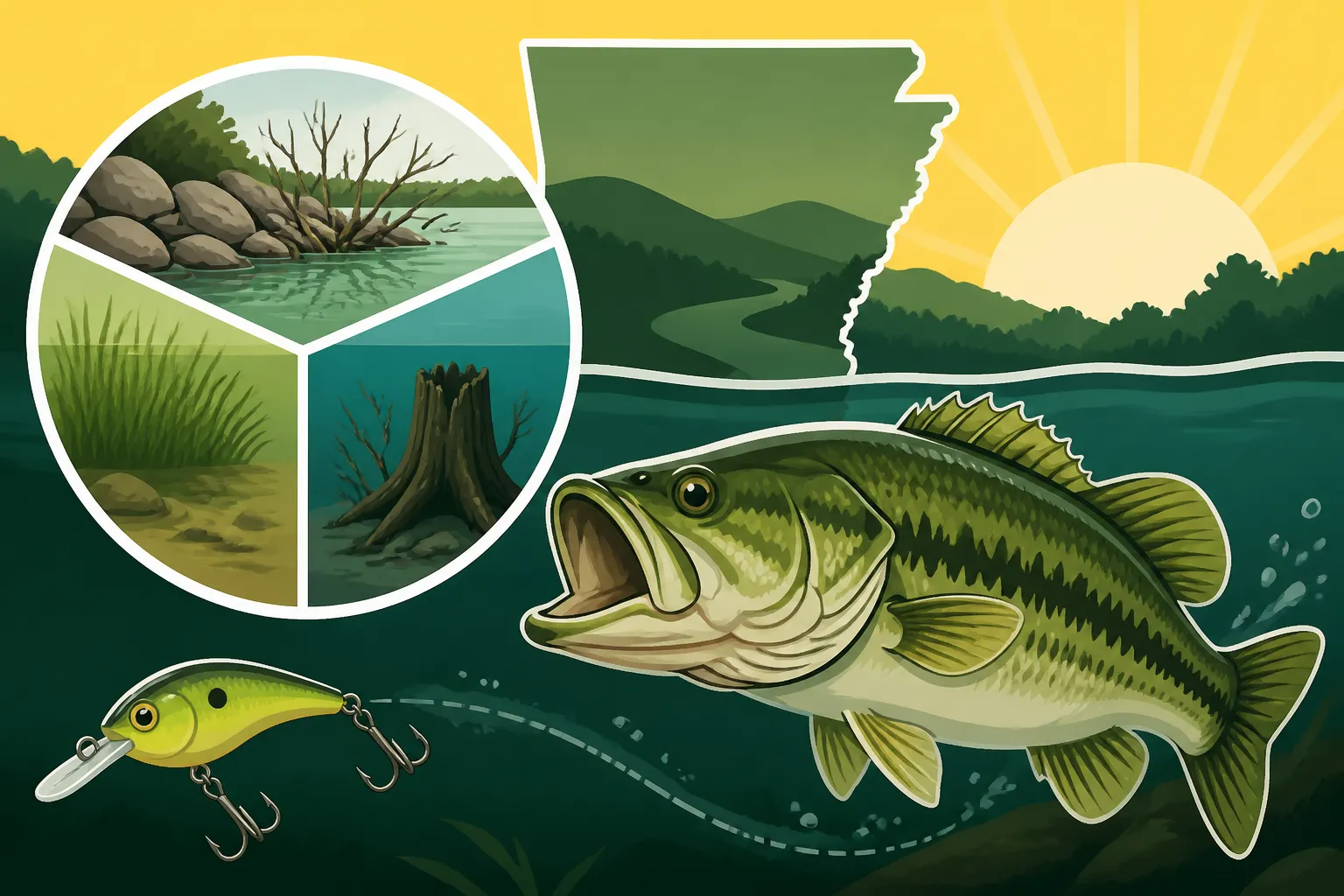
Pre-spawn bass are masters of efficiency. They're trying to move towards shallow spawning areas but aren't quite ready to commit, so they use available cover and structure as staging points. Think about submerged timber, brush piles, rock veins, secondary points, and old roadbeds in deeper water adjacent to spawning flats. These are their highways and pit stops. Bass will hold on the deeper side of these structures, often making short forays into shallower water to feed, especially on warmer, sunny days. As a general rule, look for the hardest cover or sharpest changes in depth nearest to the shallower spawning grounds. For instance, a rocky point that extends out into a creek channel near a large flat is an absolute magnet for pre-spawn bass. They can quickly retreat to deeper water if a cold front hits, or move up to feed when conditions are favorable.
Weather Patterns and Their Impact
Arkansas weather in the spring can be notoriously fickle, and bass respond dramatically to these shifts.
A warming trend, especially several consecutive days of sunshine and rising air temperatures, will push bass shallower. They'll move up points, into coves, and cruise flats, often suspending around cover. This is when reaction baits shine, as they become more aggressive. However, a sudden cold front, characterized by plummeting temperatures, clear skies, and high pressure, can send bass reeling back to deeper water. They'll often become much more lethargic and tight-lipped, burying themselves in dense cover or hovering near the bottom. During these post-front conditions, a slower, more subtle presentation is often required. It's a constant push and pull. Anglers who pay attention to daily forecasts and understand how these patterns affect water temperature will have a significant edge. Knowing when a front is approaching can even allow you to target them before it hits, when they often go on a massive feeding binge. This is a prime time to refer to Best Time of Year to Fish in Arkansas to align your trip with stable weather.
Top Lures and Baits for Pre-Spawn Bass
The aggressive nature of pre-spawn bass combined with their sometimes finicky disposition means you need a versatile tackle box. Here's a rundown of the go-to baits that seasoned Arkansas anglers rely on. You can find many of these essential items on Amazon, often with quick delivery, ensuring you're always prepared.
Reaction Baits for Aggressive Bass
When bass are in a feeding mood, especially during warming trends, reaction baits are your best friends. These lures are designed to provoke a strike, even if the bass isn't actively feeding.
- Spinnerbaits: A classic for a reason. Spinnerbaits, like those from Strike King or BOOYAH Bait Company, with tandem willow leaf or Colorado blades, are excellent for covering water and generating flash and vibration. They excel around shallow cover like submerged timber, brush, and along grass lines. A common strategy is to "slow roll" them along creek channel swings or over points. Try colors like chartreuse, white, or a combination of both in stained water, and more natural patterns in clear water.
- Lipless Crankbaits: The venerable Rat-L-Trap or Sébile lipless crankbaits are phenomenal for mimicking fleeing baitfish. They cast a mile, sink quickly, and produce a loud rattling sound that can call in bass from a distance. Rip them through grass, over shallow points, or along steep banks. The key is to vary your retrieve—yo-yoing, steady retrieve, or even stopping and starting can all be effective. Chrome, red craw, and shad patterns are typically hot producers. You can easily stock up on a variety of colors and weights on Amazon before your next trip.
- Jerkbaits: Long, slender jerkbaits like the Lucky Craft Pointer or the Megabass Vision 110 are deadly when bass are suspended near cover or staging on points. Their erratic darting action and seductive pause can trigger incredible strikes. The "rip, rip, pause" retrieve is a staple. Work them along the edges of channels, over brush piles, or along bluff walls. Clearer water often favors these baits, especially in shad or translucent colors.
Subtle Presentations for Finicky Fish
Not every pre-spawn day is a feeding frenzy, especially after a cold front or when bass are particularly pressured. This is when you need to slow down and offer a more subtle, less intrusive presentation.
- Jigs: A heavy jig, often paired with a craw-style trailer, is an absolute confidence bait for many pro anglers during pre-spawn. Black and blue, green pumpkin, and brown are staple colors. Flip or pitch jigs into heavy cover like submerged trees, brush piles, or rocky crevices. Crawl them slowly along the bottom on points and ledges. The slow fall and subtle action often tempt wary bass that won't chase a faster-moving bait. Vary your trailer size and profile to match the forage or the mood of the fish.
- Bladed Jigs (ChatterBaits): While they have a lot of vibration, bladed jigs like Z-Man's ChatterBait can also be worked slowly and deliberately. They offer a unique wobble and flash that can be very attractive to bass holding tight to cover. Fish them around docks, through sparse grass, or along the edges of brush piles. The vibration often helps bass locate them in murkier water, and the natural swimming action of a trailer can be irresistible. Consider pairing them with a fluke or swimbait trailer for added appeal.
- Crankbaits (Diving): Medium-diving crankbaits (diving 6-12 feet) in crawfish or shad patterns are excellent for fishing secondary points, channel banks, and the edges of flats. These baits are designed to deflect off cover, mimicking a struggling baitfish or crawfish. Brands like Berkley, Rapala, or Strike King offer a wide range of effective diving crankbaits. The key is to choose a crankbait that reaches the depth where the bass are holding and to actively "bounce" it off any structure you encounter.
Soft Plastics and Jigging Strategies
Soft plastics are incredibly versatile and can mimic a wide array of forage, making them indispensable during the pre-spawn. They are often fished on jigs or Texas rigs.
- Texas-Rigged Plastics: A classic for fishing heavy cover. Worms, creature baits (like Brush Hogs or Speed Worms), and craw imitations rigged on a Texas rig with a tungsten weight are perfect for flipping and pitching into brush, laydowns, or dense vegetation. The weedless presentation allows you to fish areas where other lures would snag. The slow, methodical retrieve is often what triggers bites from hesitant bass. Green pumpkin, black, and junebug are highly effective colors.
- Jigging Spoons: When bass are schooled up on deep points or channel swings, especially after a cold front, a jigging spoon can be deadly. Drop it down to the fish, then impart a sharp snap of the rod to make it flutter and fall like a dying baitfish. This is a highly effective technique for vertical presentations. Chrome or white spoons are typically best. For these specific, heavier baits, check out the wide selection on Amazon for different weights and finishes.
- Swimbaits: Paddle-tail swimbaits, either rigged on a jig head or as a Texas rig, are excellent for mimicking larger baitfish. Slow roll them over points, along creek channels, or through standing timber. They offer a natural swimming action that can entice larger females. Natural shad patterns are usually the most productive. Our guide on Best Lures for Pre-Spawn Bass Fishing offers even more specific recommendations.
| Lure Type | Best Conditions | Target Depths | Key Retrieve Actions | Pros | Cons |
|---|---|---|---|---|---|
| Spinnerbaits | Warming trends, stained water, shallow cover | 2-10 feet | Slow roll, constant retrieve | Covers water, good in cover, high vibration | Less effective in very clear/cold water |
| Lipless Crankbaits | Warming trends, windy conditions, grass flats | 3-15 feet | Rip & pause, steady retrieve, yo-yo | Casts far, noisy, triggers reaction strikes | Prone to snagging in heavy cover |
| Jerkbaits | Clear water, suspended fish, stable conditions | 4-10 feet (suspending) | Rip, rip, pause; twitch & wait | Enticing erratic action, good for finicky fish | Requires specific retrieve, line twist |
| Jigs (Football/Flipping) | Post-front, cold water, heavy cover, rocky bottom | 5-20 feet | Crawl, hop, subtle shake | Mimics crawfish, good for big bass | Slow fishing, easy to snag |
| Bladed Jigs | Stained water, wind, around cover | 3-12 feet | Steady retrieve, slow roll | High vibration, weedless, versatile | Can get hung up in very heavy cover |
| Diving Crankbaits | Rocky points, channel banks, deflect off structure | 6-15 feet | Steady retrieve, bottom contact | Excellent for probing structure, reaction | Depth specific, can snag |
| Texas Rigs | Heavy cover, brush, timber, dense grass | All depths | Pitch, flip, drag | Highly weedless, versatile for soft plastics | Slower presentation, less water coverage |
| Swimbaits | Clear water, imitating baitfish, subtle presentation | All depths | Slow roll, steady retrieve | Natural appearance, attracts big fish | Can be expensive, less weedless |
Effective Techniques for Locating and Catching Pre-Spawn Bass
Knowing the right lures is only half the battle; understanding how to use them and where to present them is what separates the consistently successful anglers from the rest. The key during pre-spawn is often patience and thoroughness.
Targeting Transition Areas and Pathways
Pre-spawn bass are on the move, but it's not a direct shot from winter haunts to spawning beds. They utilize "transition areas" as stops along their journey. These are typically creek and river channels, points, and humps that offer a gradient from deeper wintering holes to shallower spawning flats. Bass will stage on the deeper sides of these structures, often at the first significant depth change (e.g., where a flat drops into a channel). They'll move up and down this incline based on water temperature and light conditions. For example, on a sunny day, they might push up to the 5-foot mark on a point, but after a cold front, they'll slide back to 15-20 feet. Focus on fishing the entire depth range of these pathways. Use your electronics to find brush piles, rock formations, or standing timber along these routes—these are prime ambush points. In many of Arkansas's larger reservoirs, like Beaver Lake or Lake Ouachita, identifying these underwater pathways is crucial.
Slow Rolling and Power Fishing Approaches
The pre-spawn phase often calls for a blend of techniques, moving between "slow rolling" and "power fishing" depending on the conditions and the mood of the fish.
- Slow Rolling: This technique involves a slow, steady retrieve of a bait, often a spinnerbait, bladed jig, or swimbait, just above the bottom or through cover. It's incredibly effective when bass are a bit sluggish or holding tight to structure. The slow movement allows the fish to get a good look at the bait without feeling rushed, making them more likely to commit. Think about crawling a spinnerbait over a submerged point or winding a swimbait through the tops of standing timber. This is particularly effective on cloudy days or when bass aren't aggressively chasing.
- Power Fishing: When bass are active and feeding aggressively, power fishing comes into play. This involves quickly covering large areas with reaction baits like lipless crankbaits, diving crankbaits, or even fast-moving spinnerbaits. The goal is to elicit a reaction strike from active fish. Bomb casts across expansive flats, rip baits through grass beds, or rapidly retrieve crankbaits along steep banks. This strategy is excellent for quickly locating active fish during stable weather patterns or warming trends, especially in productive areas like Lake Conway, known for its abundant bass.
Fan Casting and Thorough Area Coverage
One of the biggest mistakes anglers make during pre-spawn is not being thorough enough. Bass can be grouped tightly, so finding the exact sweet spot is essential. This is where "fan casting" comes in. Instead of just casting straight out, make casts in a wide arc, covering every piece of water in front of you. Start by casting to the shallowest part of a point or flat, then incrementally move your casts deeper, covering the entire transition zone.
Once you get a bite, don't just move on. That bite indicates you've found a likely staging area. Slow down and meticulously dissect that spot. Fish it from different angles, with different lures, and vary your retrieve speeds. Bass often gang up during pre-spawn, so where there's one, there are often more. You might catch several fish from a single brush pile or a small rock vein on a point. Using your electronics to mark subtle features and bait schools will greatly aid in this thorough coverage. For comprehensive information on Bass Fishing Techniques by Season, this thoroughness is consistently a top recommendation.
Navigating Different Arkansas Waterbodies During Pre-Spawn
Arkansas offers a diverse array of fishing environments, from vast reservoirs to meandering rivers and challenging tailwaters. Each type of waterbody presents unique opportunities and considerations for pre-spawn bass fishing.
Reservoirs and Large Lakes
Arkansas is famous for its large reservoirs, many created by the Army Corps of Engineers, such as Bull Shoals Lake, Lake Norfork, and Greers Ferry Lake. These bodies of water are typically deep, clear, and feature extensive rocky structure, bluff walls, and creek channels. During pre-spawn, bass in these lakes will often stage on the vast secondary points, main lake points, and humps that are adjacent to major spawning coves. They will use the deeper structure (20-30 feet) as a safety zone, moving up to 10-15 feet on warmer days to feed. Look for areas with a mix of rock and timber, especially on sun-exposed banks where the water warms quicker. Fishing these areas with football jigs, deep-diving crankbaits, and suspending jerkbaits can be highly effective. Understanding Best Lakes in Arkansas for Bass, Crappie, and Catfish can help you pinpoint which reservoirs might be most productive for bass during this phase.
For example, on Bull Shoals Lake, notorious for its clear water, bass will often hold tight to rocky points and bluff ends. A suspending jerkbait worked slowly along these features can be deadly, especially when fished near submerged cedar trees. Meanwhile, on Lake Ouachita, with its abundant timber, bass will relate heavily to the standing timber in creek channels, often at the first depth change leading into a spawning flat. Flipping jigs or Texas-rigged creature baits into these timber stands is a prime tactic.
Rivers and Smaller Impoundments
Arkansas also boasts numerous rivers and smaller impoundments, offering a different pre-spawn bass experience. Rivers like the Arkansas River or the lower White River, while known for their diverse fisheries, can be more challenging due to current and fluctuating water levels. Bass in rivers will often stage in current breaks—behind log jams, submerged rocks, oxbow lakes, or along rip-rap banks. They seek refuge from the strong current while still being close to feeding opportunities. Spinnerbaits, jigs, and square bill crankbaits that can deflect off cover are excellent choices here. Focus on eddies and calmer pockets of water that offer an easy path to shallower backwaters or protected coves for spawning. Even smaller impoundments, often found in state parks or local municipalities, can be fantastic. These lakes tend to warm up faster due to their shallower nature, accelerating the pre-spawn process. Look for bass to stage on the sunniest banks, especially near brush piles or hard bottom areas.
When targeting Largemouth Bass Fishing on Arkansas's White River, during pre-spawn, focus on the slower-moving sections or oxbows where the fish can stage without fighting heavy current. The bass in these areas will often relate to submerged wood or slight depth changes, preparing to move into flooded timber or backwater ponds to spawn.
Tailwaters and Their Unique Challenges
Tailwaters, the sections of rivers immediately below hydroelectric dams, like the White River below Bull Shoals Dam, are primarily known for their trout fisheries. However, these areas can also hold significant populations of smallmouth and even largemouth bass, though their pre-spawn patterns are heavily influenced by dam generation schedules. The constant cold water discharge from the dam means the pre-spawn period here will be much later and often less distinct than in other water bodies. Bass will seek out any warmer water pockets, often in feeder creeks or areas where the sun can hit the water for extended periods. They will also relate to current breaks and rocky structure. Smallmouth, in particular, will stage in rocky shoals and deeper eddies. Fishing techniques will need to adapt to strong currents, often involving heavier jigs or spinnerbaits to get down to the fish. Always be aware of the generation schedule, as rapidly rising water can make fishing dangerous and change bass locations dramatically.
Maximizing Your Success with Seasonal Considerations
The pre-spawn isn't a single, uniform period; it's a progression. Understanding the nuances of early spring, peak activity, and the transition into the spawn itself will fine-tune your approach and increase your catch rate.
Early Spring Pre-Spawn Dynamics
When spring first arrives in Arkansas, and water temperatures are hovering in the mid-to-high 40s, bass are just starting to emerge from their deep winter slumber. This is often the most challenging part of the pre-spawn. Bass are still relatively lethargic, prone to burying themselves in heavy cover, and not yet engaging in full-blown feeding frenzies. They're making short, exploratory movements. During this early phase, focus on slow, deliberate presentations. Jigs pitched into dense brush piles, slowly dragged creature baits, or suspending jerkbaits with extremely long pauses can be highly effective. The key is patience. You might not get many bites, but the bites you do get are often from larger, healthy females. Look for these fish on the first significant deep structure adjacent to potential spawning areas, such as the mouths of major creek arms or deep points leading into large coves. This is also a good time to consider our guide on How to Read Water Temperature for Bass Fishing for fine-tuning your early season approach.
Peak Pre-Spawn Activity
As water temperatures climb into the low to mid-50s (around 50-58 degrees Fahrenheit, depending on the specific lake and bass strain), you're hitting the sweet spot of the pre-spawn. This is when bass are most active, aggressive, and receptive to a wider range of lures. The females are loaded with eggs, and both sexes are intensely focused on feeding. This is your prime time for reaction baits! Spinnerbaits, lipless crankbaits, bladed jigs, and diving crankbaits shine during this period. Bass will move up and down staging areas more frequently, making them easier to intercept. Look for them on prominent points, channel swings, and secondary points leading into spawning coves. This is often when you'll experience those incredible days with multiple big bass. Stable weather during this period, especially a few consecutive sunny days, can ignite truly explosive bites. Many anglers consider this the Best Time of Day to Catch Bass during the entire spring season.
Transitioning to the Actual Spawn
As water temperatures consistently reach the upper 50s and low 60s, bass begin to make their final push to the actual spawning beds. This marks the tail end of the pre-spawn and the beginning of the spawn itself. During this transition, bass might be found shallower than before, actively "cruising" or "ghosting" in potential spawning flats, scanning for suitable bed locations. Some males might already be fanning beds, while females are still staging nearby, preparing to move up.
Lures like soft plastics (Texas-rigged worms, lizards, or flukes) and small jigs become highly effective, as they can be fished slowly and meticulously on or near potential beds. While some fish will be on beds, others will still be in the immediate vicinity, making the transition. Keep an eye out for visible beds in clear water, but also focus on the cover (laydowns, stumps, grass patches) in these shallow areas. For those curious about the regulations for keeping your catch, remember to consult the How many bass can you keep per day in Arkansas guide before you head out. Even if you're practicing catch and release, knowing the rules is part of being a responsible angler.
Disclaimer
Fishing conditions and regulations can change rapidly. Always check the latest Arkansas Game and Fish Commission regulations before heading out on any fishing trip. This guide is for informational purposes only and does not supersede official regulations.