Spring Fishing Patterns on Arkansas Reservoirs
Spring in Arkansas can be a truly magical time for anglers, but it also comes with its fair share of head-scratching moments. One day you're shedding layers, watching the thermometer climb, and the fish are practically jumping in the boat, then boom – a cold front rolls in, and it feels like winter decided to make an encore. It's enough to make you wonder if the fish have just vanished! But don't you worry, because understanding these dynamic spring fishing patterns on Arkansas reservoirs is the key to consistent success, and this guide is here to walk you through every twist and turn.
Understanding Spring Transitions in Arkansas Reservoirs
Spring isn't just one season; it's a series of transformations on the water, especially in our beautiful Arkansas reservoirs. Each phase brings new challenges and exciting opportunities as fish respond to the warming waters and the ancient call to spawn. If you can read these transitions, you'll be ahead of the game.
Early Spring: The Pre-Spawn Buzz
Think of early spring as the "feasting before the fast" for most game fish. As the water temperatures begin to creep into the upper 40s and low 50s, after a long, cold winter, fish like bass and crappie start shaking off their lethargy. Their metabolism picks up, and they begin moving from their deep wintering holes toward shallower, warmer areas. This is primarily a staging period where they aggressively feed, stocking up energy reserves for the upcoming spawn.
You'll often find these fish congregating on points, secondary channels, and creek channel bends that offer a quick route to deeper water if a cold snap hits. For bass, this might mean them staging in 15-25 feet of water near a significant drop-off. For crappie, they'll often be suspended around submerged timber or brush piles in similar depths, especially where there's a good food source nearby. This is a fantastic time for power fishing techniques, as the fish are often willing to chase a meal. On lakes like Lake Ouachita: Arkansas's Largest Lake for Bass and Crappie Fishing, you'll see anglers targeting these areas with deeper diving crankbaits, jerkbaits, and even slow-rolling spinnerbaits, trying to elicit those powerful, aggressive strikes from hungry fish getting ready for their big move.
Mid-Spring: The Energetic Spawn Period
Ah, the spawn! This is what many anglers eagerly await, as it brings the fish into very accessible, shallow water. As water temperatures continue to climb into the upper 50s and 60s, the drive to reproduce becomes paramount. Different species have different optimal spawning temperatures. Largemouth bass typically look for temperatures in the 60-68°F range, while crappie often start a bit earlier, in the high 50s to low 60s. During this time, male fish move into shallow, protected coves and pockets to fan out nests (beds). Females follow shortly after, lay their eggs, and then typically retreat to slightly deeper water, leaving the males to guard the eggs and fry.
This is where sight fishing really shines for bass, particularly in clear water. You can often spot bass on their beds, protecting their eggs. Soft plastics like lizards, tubes, or creature baits rigged Texas-style, pitched right onto a bed, can often trigger a protective strike. For crappie, they'll be heavily concentrated around shallow cover – think docks, cypress trees, flooded brush, or shallow rock beds. Vertical jigging small jigs or using live minnows under a float are highly effective tactics. Places like the flooded timber of Lake Conway or the numerous coves on Bull Shoals Lake Fishing Guide for Bass and Crappie become crappie hotspots during this phase. Remember to respect the fish during this vulnerable time; responsible catch-and-release is always a good practice, especially if you're not planning to keep your legal limit. More details on specific spawning behaviors can be found in our comprehensive guides on Arkansas Bass Spawn Timing by Water Temperature and Arkansas Crappie Spring Spawn Pattern.
Late Spring: The Post-Spawn Adjustment
After the frenzy of the spawn, fish enter a recovery period. This can be one of the trickiest times to fish, as fish are often exhausted, hungry, and scattered. Females, in particular, will retreat to deeper water to recuperate, often suspending or holding tight to cover. Males, after guarding the nests for a week or two, will eventually leave their beds and start feeding again, but they might be a bit lethargic at first. The water temperatures are usually well into the 70s by late spring, pushing many fish out of the very shallow water they occupied during the spawn.
During post-spawn, fish often relate to secondary points, main lake points, and deeper brush piles or ledges. They're looking for areas that provide easy access to deeper, cooler water, but also offer feeding opportunities. Topwater baits can be incredibly effective during this period, especially during low light conditions, as fish look up for an easy meal. Swimbaits, shaky heads, and deep-diving crankbaits are also excellent choices for probing those slightly deeper staging areas. Don't be afraid to experiment with different depths and presentations, as the fish can be spread out. Patience and covering water are your best friends during this transitional phase.
Key Factors Influencing Spring Success
Arkansas spring weather is famously fickle. One day it's shorts and a t-shirt, the next you're layering up as a cold front sweeps through. These dramatic shifts in weather and water conditions have a huge impact on how fish behave. Learning to read these environmental cues is just as important as knowing your lures.
Water Temperature and Clarity are Your Compass
You can't talk about spring fishing without talking about water temperature. It is, without a doubt, the single most critical factor dictating fish behavior during this season. Fish are cold-blooded, meaning their metabolism and activity levels are directly tied to the water temperature. Even a few degrees can make a monumental difference. For instance, a rise from 50°F to 55°F might push bass from 20 feet deep to 10 feet deep, getting them ready to feed more actively. Conversely, a sudden drop due to a cold front can send them scurrying back to deeper, more stable thermal zones.
Clarity is another huge piece of the puzzle. Spring often brings heavy rains, which can churn up sediment and bring in muddy runoff. In clear water, fish tend to be more wary and rely on sight, making natural colors and lighter lines more effective. But in stained or muddy water, fish rely more on their lateral lines and scent. This calls for brighter, more vibrant lure colors (like chartreuse or orange), baits with more vibration (like lipless crankbaits or spinnerbaits), and perhaps a heavier line. Remember to always have a thermometer and keen eyes to read the water – it’s literally your compass for finding fish. Our detailed article on Weather and Water Temperature Fishing Tips offers even more insights into how these factors play out on the water.
Weather Patterns and Their Daily Impact
Beyond temperature, the broader weather patterns profoundly influence the bite. A stable period of warming weather, especially after a cold snap, is often a recipe for fantastic fishing. Fish feel comfortable, move up, and feed actively. This is when you can really hit that "sweet spot" of aggressive pre-spawn or spawning fish. However, cold fronts are the bane of many spring anglers. They often bring bluebird skies, high pressure, and a sharp drop in air temperature, which can make fish incredibly lethargic and tight-lipped. They might retreat to the heaviest cover or suspend off deep structure, becoming much harder to entice.
Conversely, cloudy days, especially with a light drizzle, can often be fantastic. The diffused light makes fish feel more secure in shallower water, and they might be more willing to roam and feed throughout the day. Wind is another factor – a light breeze can ripple the water, breaking up direct sunlight and making fish less skittish, while also concentrating baitfish. However, strong winds can make boat control a nightmare and fishing unpleasant. Always check the forecast before heading out, and be prepared to adjust your tactics. Using tools like a reliable fish finder with temperature sensors, or even a good weather app on your phone (many available on Amazon), can give you a significant advantage in predicting and reacting to these daily changes.
Forage and Baitfish Movement
Game fish go where the food is. It's a fundamental truth of fishing, and it's especially evident in spring. As water temperatures rise, baitfish like shad and sunfish also become more active and begin to move into shallower coves and pockets to feed and eventually spawn themselves. Game fish are acutely aware of this and will follow their food source. Understanding the annual cycles of forage species is crucial.
In early spring, larger schools of shad might still be a bit deeper, leading to fish staging on humps and points adjacent to those deeper channels. As the water warms, you'll find shad migrating into the backs of creeks and shallow flats, and the bass and crappie won't be far behind. Matching the size and profile of the predominant baitfish with your chosen lures is often key to unlocking a bite. If you see schools of shad flickering near the surface, a silver crankbait or a swimbait can be incredibly effective. If you know crawfish are active in rocky areas, a jig or a creature bait mimicking their profile and movement is a smart choice. Keeping an eye on what the baitfish are doing will tell you a lot about where the predators are.
Top Strategies for Arkansas Reservoir Species
Each of our beloved Arkansas game fish has its own nuances when it comes to spring patterns. While the general principles of water temperature and forage apply, tailoring your approach to specific species will dramatically increase your success rate.
Bass: From Pre-Spawn Aggression to Post-Spawn Recovery
Bass fishing in Arkansas during spring is legendary. Whether you're chasing largemouth, smallmouth, or spotted (Kentucky) bass, understanding their seasonal shifts is paramount.
Largemouth Bass: Detailed Strategies
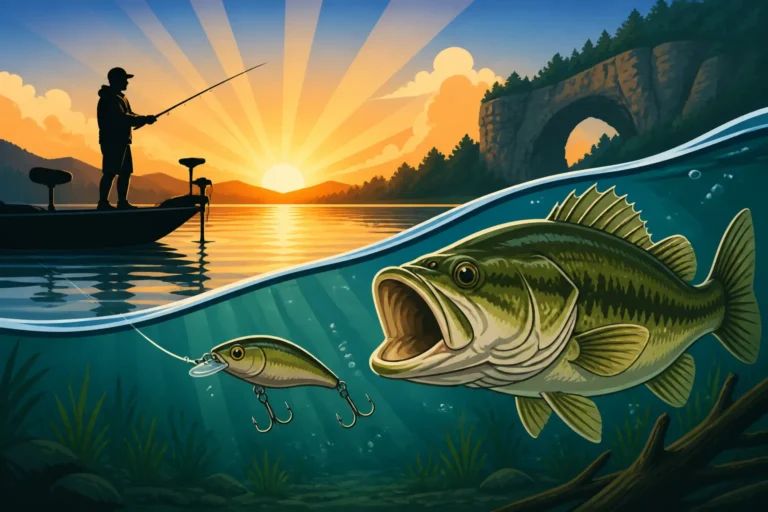
- Pre-Spawn: This is prime time for big bites! Largemouths are gorging themselves. Target major points, creek channel swings, and secondary points leading into spawning coves. Lipless crankbaits like a Bill Lewis Rat-L-Trap in chrome/blue, suspend jerkbaits (Rapala Shadow Rap or Lucky Craft Pointer) in shad patterns, and medium-diving crankbaits (Bandit 200/300 series) are highly effective for covering water and triggering strikes. Jigs (like a Strike King Bitsy Bug) with a craw trailer, slowly dragged or hopped along the bottom, can also entice those larger, slower-moving fish holding tight to structure.
- Spawn: Once the water is in the 60s, focus on shallow, protected flats, pockets, and coves with hard bottom (gravel, sand, rock). Look for visible beds. Soft plastic stick baits (Gary Yamamoto Senko), creature baits, and lizards rigged weightless or with a light Texas rig, pitched directly onto a bed, often provoke a defensive strike. Spinnerbaits (Booyah Blade) in white or chartreuse can also work for cruising fish or those guarding beds in slightly stained water. Remember, some anglers prefer to leave spawning fish undisturbed, especially those actively on a bed.
- Post-Spawn: The fish are scattered and recovering. Target primary points, humps, and the outer edges of spawning coves. Topwater baits like poppers (Rebel Pop-R) or walking baits (Heddon Super Spook Jr.) are excellent in low light. Flukes (Zoom Fluke) or swimbaits (Keitech Swing Impact) can be deadly when retrieved slowly near submerged cover. Deep crankbaits (Strike King 6XD) or Carolina rigs are great for locating those deeper, scattered fish that have retreated to cooler water. Our Best Bait for Bass by Season guide offers a deeper dive into lure choices.
Smallmouth Bass: Clear Water, Rocky Structure, Current
Smallmouth bass, often found in the clearer, rocky waters of the Ozark reservoirs, have similar spring patterns to largemouths but with a stronger affinity for rock and current. In early spring, look for them staging on rocky points and bluffs adjacent to deep water. Tubes (like a Great Lakes Finesse Tube), Ned Rigs, and small crankbaits are excellent. During the spawn, they'll seek out gravelly flats and rocky points in slightly flowing areas. Post-spawn, they might be found on offshore humps and ledges. Small swimbaits and dropshot rigs are very effective for these finicky fighters.
Crappie: Targeting the Timber and Structure
Crappie fishing in spring is often synonymous with large numbers of fish and fast action, but knowing where to look is critical.
- Early Spring: Crappie will start to move up creek channels and into shallower main lake coves, staging in brush piles and submerged timber in 15-25 feet of water. Vertical jigging small 1/16 to 1/8 oz jigs (Bobby Garland Baby Shad) in chartreuse, black/chartreuse, or white, tipped with a minnow or crappie nibbler, is a classic technique. Slow trolling multiple jigs at different depths (spider rigging) is also very effective for locating schools.
- Spawn: As water hits the high 50s and low 60s, crappie move into incredibly shallow water – often less than 5 feet deep. Look for dense cover: submerged timber, cypress trees, boat docks, and brush piles in protected coves. A small jig (1/32 oz to 1/16 oz) under a bobber, fished around this cover, is deadly. Live minnows, fished similarly, are also irresistible. This is an exciting time, but crowded. Remember to check Arkansas Fish Size and Daily Limits for current regulations.
- Post-Spawn: Crappie retreat from the shallow spawning grounds to secondary cover and brush piles, often near creek channel drops or main lake points in 10-20 feet of water. They might be a bit lethargic at first. Spider rigging or slow trolling jigs and minnows over these deeper brush piles are excellent tactics. As summer approaches, they'll often move to deeper offshore structure. For more specific crappie insights, consult our guide to Crappie Fishing in Arkansas: Black and White Crappie Basics. You can find a wide variety of effective crappie jigs and soft plastics on Amazon for all these techniques.
Other Notable Species: Catfish and Striped Bass
While bass and crappie get a lot of attention, spring also offers fantastic opportunities for other species in Arkansas reservoirs.
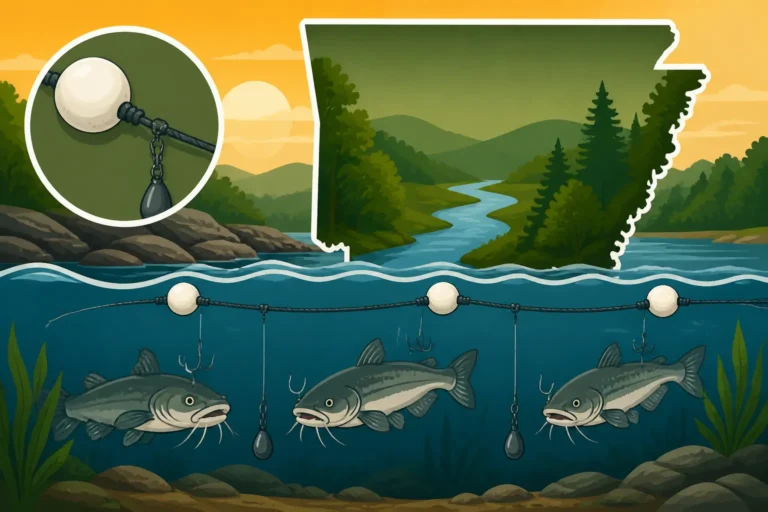
- Catfish: Channel catfish become very active in spring, moving shallower to feed on anything they can find. Cut bait, chicken liver, or prepared stink baits fished on the bottom in creek channels or shallower flats can produce great results. Blue catfish, especially larger ones, will follow schools of baitfish, often found near deep ledges and humps. Flathead catfish prefer live bait and will be found near heavy cover. Their spawn is typically later in the spring and early summer, but they feed aggressively beforehand. Check out our Catfish Species Found in Arkansas guide for more info.
- Striped Bass: Stripers are powerful, aggressive predators, and spring can offer some incredible action, particularly on lakes like Norfork Lake or Lake Hamilton. They follow schools of baitfish (often threadfin shad) and can be found near main lake points, humps, and open water. Trolling large crankbaits, swimbaits, or live bait (like gizzard shad) at various depths is a common tactic. Early morning and late evening can be particularly productive as they push shad to the surface. For deep diving crankbaits, you can find many options from brands like Strike King, Bomber, or Rapala readily available on Amazon. Our article on Striped Bass Fishing in Arkansas provides more specialized advice for chasing these hard-fighting fish.
Essential Gear and Tackle for Spring Fishing
Having the right tools for the job can make a world of difference when conditions are constantly changing. Don't let your gear be the reason you miss out on a great spring bite!
Rods, Reels, and Line Choices
Spring fishing often requires a versatile arsenal due to the variety of techniques employed.
- Rods:
- Medium-Heavy Baitcasting Rods (6'6" to 7'3"): Ideal for throwing heavier jigs, crankbaits, spinnerbaits, and soft plastics for bass. A good all-around choice would be a 7' medium-heavy fast action rod.
- Medium Light to Medium Spinning Rods (6'6" to 7'6"): Perfect for lighter presentations, finesse techniques, crappie jigs, and smaller baits. A 7' medium-light fast action spinning rod is incredibly versatile for crappie and light bass applications.
- Reels:
- Baitcasting Reels: Pair with your medium-heavy rods for bass. Look for a gear ratio in the 6.4:1 to 7.1:1 range for a good balance of power and retrieve speed.
- Spinning Reels: Pair with your lighter rods. Sizes 2500-3000 are excellent choices, offering a smooth drag and good line capacity for fighting fish on lighter lines.
- Line:
- Fluorocarbon (10-17 lb for Bass, 4-8 lb for Crappie): Excellent sensitivity and nearly invisible underwater, making it great for clear water and finesse presentations.
- Monofilament (10-17 lb for Bass, 6-10 lb for Crappie): More forgiving stretch, good knot strength, and floats, making it ideal for topwater baits or fishing around abrasive cover.
- Braided Line (20-50 lb for Bass, 10-20 lb for Crappie): Zero stretch for maximum sensitivity and strength, great for heavy cover and punching mats. Often used with a fluorocarbon or monofilament leader. A solid 7' medium-heavy baitcasting rod and reel combo, pre-spooled with 15lb fluorocarbon, is an excellent choice you can often find on sale on Amazon for about $100-$150.
Must-Have Lures and Baits
A diverse tackle box is your best friend in spring. Here's a quick reference table for essential spring lures and baits:
| Species | Spring Phase | Lure/Bait | Color/Pattern |
|---|---|---|---|
| Bass | Pre-Spawn | Jerkbaits, Lipless Crankbaits, Jigs, Swimbaits | Shad, Crawfish, Chrome/Blue, Chartreuse |
| Spawn | Soft Plastics (Lizards, Senkos, Tubes), Spinnerbaits | Green Pumpkin, Watermelon, White, Chartreuse | |
| Post-Spawn | Topwater (Poppers, Walking Baits), Flukes, Deep Crankbaits | Shad, Bone, Chrome, Bluegill | |
| Crappie | Pre-Spawn/Spawn | Small Jigs (1/16-1/32 oz), Live Minnows, Crappie Tubes | Chartreuse, White, Black/Chartreuse, Blue/Pearl |
| Post-Spawn | Jigs, Live Minnows | Natural, Shad, Pearl | |
| Catfish | All Spring | Cut Bait, Chicken Liver, Worms, Prepared Bait | Natural, Bloody |
| Stripers | All Spring | Live Shad, Large Swimbaits, Trolling Crankbaits | Shad, Chrome, White |
Remember, presentation often trumps color, but having a variety of each can help dial in the bite. For specific recommendations, check out Best Bait for Arkansas Crappie and Best Bait for Bass by Season.
Electronics and Accessories
Modern electronics can give you a significant edge, especially on larger reservoirs.
- Fish Finders/Sonar: Essential for locating structure, baitfish, and game fish, especially during pre-spawn and post-spawn when fish are deeper. Look for units with good down imaging and side imaging capabilities.
- GPS: Helps you mark productive spots, navigate safely, and find your way back to specific structures. Many fish finders include excellent GPS mapping.
- Temperature Gauge: While many fish finders have this built-in, a separate, accurate water thermometer can confirm surface temps, which is invaluable for understanding fish activity.
- Comfort Items: Spring weather can be unpredictable. Pack layers of clothing, a good rain suit, sunscreen, polarized sunglasses, and a wide-brimmed hat. A good cooler for drinks and your catch is also a must-have.
Ethical Angling and Conservation in Spring
As anglers, we have a responsibility to protect our resources. The spring season, particularly during the spawn, highlights the importance of ethical practices to ensure healthy fish populations for generations to come. Arkansas takes its fishing heritage seriously, and so should we.
Respecting the Spawn
The spawning period is a critical time for fish to perpetuate their species. While it offers fantastic fishing opportunities, it also means fish are at their most vulnerable. Here are some ways to be a responsible angler:
- Practice Catch-and-Release for Spawning Fish: Consider releasing fish that are actively on beds, especially larger females. Catching them can stress them, potentially leading to them abandoning their nest, leaving eggs vulnerable to predators. If you do catch a fish from a bed, try to release it quickly and gently to give it the best chance of returning.
- Minimize Handling Time: If you plan to keep legal limits, handle fish minimally. Use wet hands, avoid holding them horizontally by the jaw if they're large, and get them back in the water as quickly as possible.
- Know Your Limits: Always abide by state regulations regarding Arkansas Fish Size and Daily Limits. These limits are put in place to help manage fish populations sustainably.
- Use Appropriate Gear: Don't overstress fish by fighting them on excessively light tackle, especially larger fish.
Protecting Arkansas's Waters
Conservation extends beyond just the fish we catch. It's about preserving the entire ecosystem of our beautiful lakes and rivers.
- Leave No Trace: Pack out everything you pack in. This includes old fishing line, bait containers, and any other trash. Our waterways are not garbage cans.
- Prevent Spread of Aquatic Invasive Species: Always clean, drain, and dry your boat, trailer, and gear after leaving a body of water, especially if you plan to move to another lake. Invasive species like zebra mussels or hydrilla can wreak havoc on ecosystems and are incredibly difficult to eradicate once established.
- Support Conservation Efforts: Consider purchasing an Arkansas Fishing License Rules and Costs even if you're exempt, as the funds directly support the Arkansas Game and Fish Commission's conservation and management programs. Every little bit helps.
By embracing these ethical angling and conservation practices, we ensure that the vibrant spring fishing patterns of Arkansas reservoirs will continue to provide enjoyment for all anglers for many years to come.
Disclaimer
Please remember that fishing regulations, including licensing requirements, size limits, and daily creel limits, can change. Always consult the latest official Arkansas Game and Fish Commission regulations before heading out on the water. This guide is for informational purposes only and does not supersede official state regulations.