Catfish Bottom Fishing Techniques
There's nothing quite as frustrating as heading out to your favorite fishing spot, convinced it's going to be a banner day for catfish, only to spend hours watching your line without so much as a nibble. We've all been there, staring at a still rod tip, wondering if the catfish have packed up and moved to another county. But don't you worry! This guide is going to peel back the layers of mystery surrounding catfish bottom fishing, giving you the insider scoop on techniques that will help you put more of those whiskered beauties in your cooler here in Arkansas.
Understanding Catfish Behavior and Habitat for Bottom Fishing Success
If you want to consistently catch catfish, you first need to think like a catfish. What are they looking for? Where do they feel safe? Understanding their basic instincts and preferred haunts is the absolute foundation of successful bottom fishing. It's not just about tossing a bait out; it's about putting that bait exactly where a hungry catfish expects to find its next meal.
Why Catfish Stick to the Bottom
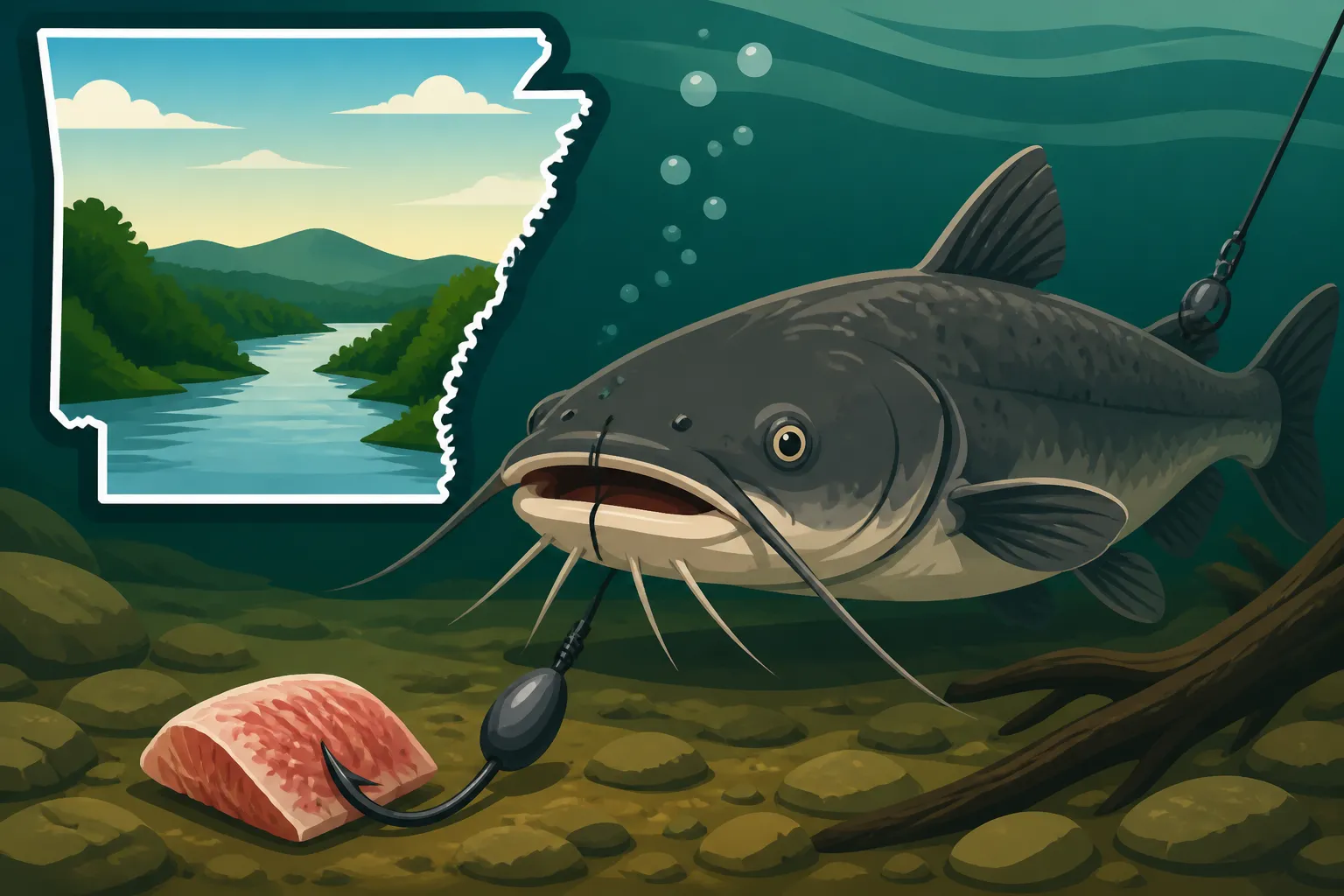
Catfish are primarily bottom feeders, and there's a good reason for this. Their bodies are built for it! They have barbels, those whisker-like appendages, which are packed with taste buds and allow them to detect food in murky water or low light conditions, even without seeing it. Imagine being able to "taste" the water for a delicious morsel! This adaptation makes the bottom of rivers and lakes their natural foraging ground. They're often scavenging for decaying matter, small invertebrates, mussels, or even smaller fish that have succumbed to the currents.
While all catfish species in Arkansas generally prefer the bottom, there are subtle differences. Channel catfish are often found in moderate currents and can be a bit more nomadic, cruising flats and channel edges. You'll find plenty of Channel Catfish in Arkansas Lakes and Rivers. Blue catfish, the behemoths of our waters, are typically found in deeper, swift currents of major rivers and large impoundments, often lurking in the deepest channels. If you're targeting a true trophy, understanding Blue Catfish Fishing in Arkansas is key. Flathead catfish, on the other hand, are ambush predators. They prefer woody cover, rock piles, and undercut banks where they can lie in wait for live prey to swim by. Learning about Flathead Catfish in Arkansas Waters will help you target these elusive fighters. Regardless of the species, their feeding strategies are almost exclusively tied to what’s happening on or near the bottom, making it your primary target zone.
Prime Bottom Structures and Locations
Knowing that catfish hang out on the bottom is one thing; finding where on the bottom they hang out is another challenge entirely. But it's a solvable one! Catfish, like most fish, are drawn to structure. Think of structure as anything that provides cover, current breaks, or food opportunities.
In big rivers like the Arkansas River, the main river channel and its edges are always prime territory. Look for deep holes, especially downstream from bends or where a tributary feeds in. Humps, ledges, and drop-offs are fantastic ambush points where catfish can lurk in deeper water, waiting for food to wash over from shallower areas. Submerged timber, like fallen trees or old stump fields, offers both cover and a buffet of smaller organisms, attracting baitfish and, consequently, catfish. Rock piles and rip-rap areas (those rocky banks you see along bridges or dams) also hold heat and provide shelter for baitfish, which then attract catfish.
On our large reservoirs, like Lake Ouachita or Norfork Lake, the same principles apply. Target the old riverbeds that were flooded when the lake was formed. These old channels, now deep underwater, act as highways for catfish. Creek mouths are excellent, particularly after a rain, as new food sources get washed into the lake. Even seemingly featureless mud flats can hold catfish, especially if there's a subtle depth change or a patch of harder bottom. Don't be afraid to drift across these areas to locate schools. If you’re looking for specific honey holes, our guide on the Best Catfish Spots in Arkansas offers a fantastic starting point. Ultimately, whether you're on a river or a lake, the goal is to think about where a fish would find shelter, food, or a break from strong currents. Sometimes, it’s about learning How to Find Catfish in a Reservoir, which can feel like searching for a needle in a haystack without the right approach.
Essential Gear for Effective Catfish Bottom Fishing
You wouldn't show up to a big carpentry job with a plastic toy hammer, would you? The same goes for serious catfish fishing. You need the right tools for the job. Catfish are powerful, often heavy, and frequently found in snaggy areas. Your gear needs to be robust enough to handle the fight and the environment. Skimping on tackle here is a recipe for heartbreak and lost fish.
Rod, Reel, and Line Selection
Choosing the right rod and reel is paramount when you're targeting catfish from the bottom. These aren't dainty panfish we're talking about; these are powerful, often large, creatures that will test your equipment.
For rods, you're generally looking for something with a medium-heavy to heavy action and a good amount of backbone. This power is essential for muscling big fish out of cover and for casting heavy baits and sinkers. A rod length between 7 and 9 feet is common. Longer rods can aid in casting distance and help keep your line elevated above shoreline snags, which is particularly useful when fishing from the bank. Material-wise, graphite rods offer sensitivity, allowing you to feel subtle bites, while fiberglass rods are incredibly durable and forgiving, often preferred for sheer brute strength against monster cats. Some popular options you might find on Amazon include Ugly Stik Catfish rods or Rippin Lips rods, known for their rugged construction.
When it comes to reels, you have two main choices: baitcasting reels or spinning reels.
- Baitcasting reels (also called conventional reels) are often favored by experienced catfish anglers, especially when targeting larger fish. They offer superior cranking power, handle heavier lines better, and provide excellent control for precise casting once you get the hang of them. They excel at fighting big fish in strong currents.
- Spinning reels are a fantastic choice, especially for beginners or those targeting smaller to medium-sized catfish. They are easier to cast, less prone to backlashing, and generally more user-friendly. Just make sure you choose a robust spinning reel with a good drag system, typically a 4000 to 6000 series size, to handle the stress of a strong catfish.
Line selection is another critical component. You need something tough and abrasion-resistant.
- Monofilament line is a classic choice. It has good stretch, which can act as a shock absorber against powerful runs, and it's relatively inexpensive. For catfish, you'll want to use 15-30 lb test monofilament, depending on the size of the fish you're targeting and the amount of cover in the area.
- Braided line has become incredibly popular for catfish. It has almost no stretch, providing incredible sensitivity, which means you'll feel even the lightest taps. Its thin diameter for its breaking strength allows for longer casts, and it's exceptionally strong and abrasion-resistant, which is a huge advantage around rocks and timber. The downside is it's more visible and can be more expensive. A 30-80 lb test braided line is common for catfish, often paired with a monofilament or fluorocarbon leader to reduce visibility and add a bit of stretch where it counts.
Selecting the right setup is crucial, and you can delve deeper into optimal choices with our guide on the Best Rod Setup for Catfish Bottom Fishing.
Terminal Tackle: Rigs, Hooks, and Sinkers
Now that you've got your rod, reel, and line, let's talk about the business end of your setup: the terminal tackle. This includes your rigs, hooks, and sinkers – the components that present your bait to the catfish. Getting this right is often the difference between a successful outing and a frustrating one.
Popular Bottom Fishing Rigs
There are several tried-and-true rigs for bottom fishing for catfish, each with its own advantages:
- Carolina Rig (or Slip Sinker Rig): This is perhaps the most fundamental and versatile rig. It consists of a slip sinker (usually an egg sinker or a no-roll sinker) threaded onto your main line, followed by a bead (to protect the knot from the sinker), a swivel, and then a leader (12-24 inches) tied to your hook. The beauty of this rig is that the line can slip freely through the sinker, allowing a catfish to pick up the bait and run without feeling the weight of the sinker, leading to more confident bites. This makes it perfect for subtle biters or when using live bait.
- Santee Cooper Rig: This rig is a variation of the Carolina rig, popular for presenting cut bait slightly off the bottom. It's built exactly like a Carolina rig, but a small peg float (or cigar float) is added to the leader, typically a few inches above the hook. This float lifts your bait just off the bottom, making it more visible and keeping it out of snags like hydrilla or patchy mud. It's especially effective in situations where the bottom is a bit messy.
- Three-Way Swivel Rig: This rig is excellent for fishing in current or presenting multiple baits. You tie your main line to one eye of a three-way swivel. To a second eye, you tie a short leader (6-12 inches) with a sinker. To the third eye, you tie a longer leader (18-36 inches) with your hook and bait. This allows the bait to drift naturally in the current while the sinker holds the rig in place. It's great for covering more water if you add multiple hooks or just letting the bait present in a very natural way.
Hook Types
For catfish, circle hooks are almost universally recommended, especially for catch-and-release or for anglers who don't want to worry about aggressive hook sets. The design of a circle hook ensures that when a fish takes the bait and swims away, the hook slides into the corner of its mouth, resulting in a solid, jaw-hooked fish almost every time. This greatly reduces gut-hooking, which improves survival rates. Sizes range from 4/0 to 10/0 or even larger, depending on the bait size and target species.
J-hooks are also used, particularly by those who prefer a traditional, hard hook set. However, they carry a higher risk of gut-hooking if you're not vigilant. If you use J-hooks, be sure to set the hook quickly at the first sign of a bite.
Sinker Types
Your choice of sinker depends heavily on the fishing conditions. You need enough weight to hold your bait on the bottom, especially in current, but not so much that it spooks the fish.
- Egg sinkers are very common for Carolina rigs, as they slide easily on the line.
- Pyramid sinkers and coin sinkers are great for strong currents because their shape digs into the bottom, preventing your rig from rolling.
- No-roll sinkers (also called flat-bottom sinkers) are designed to stay put on the bottom, which is exactly what you want in moving water.
- Disc sinkers are another variant that lies flat and holds well.
Match your sinker weight (from 1/2 ounce up to several ounces) to the current and depth. It's not uncommon to carry an assortment of sinkers, and you can easily find various sinker types and weights on Amazon to build your tackle box.
| Rig Type | Ideal Conditions | Key Features | Pros | Cons |
|---|---|---|---|---|
| Carolina Rig | Still water, light to moderate current, clean bottom | Slip sinker, bead, swivel, leader, hook | Allows fish to take bait without feeling sinker weight; versatile | Can get snagged on very rocky/woody bottoms |
| Santee Cooper Rig | Moderate current, slightly snaggy bottom, muddy bottom | Slip sinker, bead, swivel, leader with float, hook | Lifts bait off bottom to avoid snags and increase visibility; natural presentation | More components than a standard Carolina rig |
| Three-Way Swivel Rig | Strong current, targeting specific structure | Three-way swivel, sinker leader, hook leader | Holds bait in place in heavy current; can fish multiple depths/baits | More prone to twisting; more components to tie |
| Fixed Sinker (Basic) | Light current, calm water, small catfish | Sinker crimped or tied above hook | Simple, quick to tie | Fish feels sinker weight immediately; can spook larger fish |
The Best Baits for Enticing Bottom-Dwelling Catfish
Let's be honest, catfish aren't known for being picky eaters, but that doesn't mean you can just throw anything in the water and expect results. There's a science (and a bit of art) to choosing the right bait, and it often depends on the type of catfish you're after and the water you're fishing. Catfish have an incredible sense of smell, so scent is your secret weapon.
Natural and Live Baits
When it comes to natural presentations, nothing beats the real thing. These baits are the staples for a reason – they consistently produce fish.
- Cut Bait: This is arguably the most popular and effective bait for larger catfish, especially blue catfish and channel catfish. Fresh is always best! Shad, skipjack herring, perch, carp, or even small drum cut into chunks or strips release an irresistible scent trail that catfish can detect from a long distance. For channel cats, smaller chunks work well. For trophy blues, don't be afraid to use larger, palm-sized fillets or whole small baitfish. The oilier the fish, the better. You can catch your own baitfish with a cast net or buy them at many local bait shops. Ensure your cut bait is firm enough to stay on the hook during casting and current. Our guide on Best Cut Bait for Catfish goes into more detail on preparation and selection.
- Live Bait: While cut bait appeals to the scavenger in a catfish, live bait often triggers the predatory instinct, particularly in flatheads and larger blue cats. Small bluegill, goldfish, or large shiners (3-6 inches) are excellent choices. Hook live bait through the back, just above the lateral line, or through the lips, allowing it to swim naturally and attract attention. Flathead catfish, in particular, prefer live, struggling bait. Make sure to check local regulations on using live baitfish, as some species may be prohibited.
- Nightcrawlers and Worms: These are universal fish catchers and work wonders for smaller channel catfish and bullheads. A big wad of nightcrawlers on a hook, creating a juicy, wiggling target, is hard for any bottom-feeding fish to resist. They're easy to find, inexpensive, and readily available at almost any bait shop or even in your backyard after a rain.
When choosing between natural and live baits, consider the size of the fish you're targeting. A small channel cat might gobble up a worm, but a 40-pound blue cat is looking for a more substantial meal. Knowing What Bait Catches the Biggest Catfish in Arkansas? is key to landing those monster fish.
Prepared and Scented Baits
Sometimes, natural bait isn't available, or you need something with an even stronger scent profile to cut through murky water or attract distant fish. That's where prepared and scented baits shine. These are engineered to be irresistible to catfish, often packed with potent odors and flavors.
- Punch Baits: These are notorious for attracting channel catfish. Punch baits get their name because you literally "punch" your treble hook into a thick, gooey container of bait, and the fibers hold it onto the hook. Brands like Sonny's Super Sticky or Rippin Lips are very popular in Arkansas. They have a powerful, cheesy, or blood-based scent that disperses widely in the water, drawing in catfish from afar. They can be a bit messy, but they're incredibly effective, especially in warmer water.
- Dough Baits: Similar to punch baits but often firmer, dough baits come in various forms, from commercially produced nuggets to homemade concoctions of cheese, garlic, and other pungent ingredients. They are designed to stay on the hook for a longer period and slowly release their scent. They are typically best for smaller to medium-sized channel catfish.
- Stink Baits: This category encompasses a wide range of commercially available baits, often in paste, chunk, or dip form. Think brands like Catfish Charlie, Berkley PowerBait Catfish Baits, or Magic Bait. These baits are formulated with powerful, often offensive (to us!) odors like rotten cheese, blood, or fish guts, specifically designed to trigger a catfish's strong sense of smell. You can dip sponges or pre-made dip worms into these baits, or apply pastes directly to the hook. They are fantastic for channel catfish and bullheads, particularly in slower moving or still waters where the scent can really spread. You'll find a massive selection of these potent baits available online, with many anglers stocking up on their favorites on Amazon before heading out.
The beauty of prepared baits is their convenience and consistent scent profile. They might not always fool the biggest flatheads, but for a solid day of catching channel cats, they are hard to beat. Experimentation is key – what works one day might not work the next, and different bodies of water can have different preferences. Always carry a variety to see what the fish are biting on that particular day. Our guide on the Best Bait for Bottom Fishing Catfish offers even more choices and tips for various situations.
Mastering the Techniques of Presenting Bait on the Bottom
Having the right gear and the perfect bait is only half the battle. The other half is knowing how to effectively get that bait in front of a hungry catfish and, crucially, how to react when they finally decide to take a bite. It's about precision, patience, and understanding the subtle cues the fish are giving you.
Casting and Placement Strategies
Simply heaving your bait as far as you can often isn't the most effective strategy for bottom fishing. Thoughtful casting and placement can significantly increase your success rate.
First, target the structure you identified earlier. If you know there's a submerged log or a deep hole, cast your rig slightly upstream of it (if there's current) and let the current carry your bait into the strike zone. This natural drift makes your bait appear more lifelike. When fishing still water, try to cast right onto or just past the desired structure, then slowly reel in any slack until your bait is in position.
Fan casting is a great technique to cover water when you're unsure exactly where the catfish are holding. Cast your rig to one side of your target area, let it sit for 15-20 minutes, then reel in and cast a few yards further over. Repeat this process, fanning out your casts like spokes on a wheel, until you've covered a wide area. This method helps you locate active fish that might be scattered.
Understanding slack line versus tight line is also critical. With a Carolina rig, having a slight amount of slack in your line can be beneficial. This allows the fish to pick up the bait and move off without feeling immediate resistance from your rod or the sinker, leading to a more natural, confident take. However, too much slack makes it hard to detect bites. A good rule of thumb is just enough slack so that your line forms a gentle curve. In strong currents, a tighter line might be necessary to keep your bait in place and to feel bites through the resistance. Using a rod holder is almost mandatory for bottom fishing, allowing you to relax and wait for the bite without having to constantly hold your rod.
Reading Bites and Setting the Hook
This is where the excitement really builds! Catfish bites can range from subtle taps to aggressive rod-bending strikes. Learning to differentiate between a fish bite and something like current nudging your line or debris brushing against it comes with experience.
- Subtle Bites: Often, particularly with larger fish or in colder water, a catfish bite might start as a series of gentle taps on your rod tip. It might look like a very slow, deliberate bend in the rod, or just a slight twitch. This is where the sensitivity of braided line can really shine. If you're using monofilament, you might just see your rod tip gently load up, or your line might slowly move sideways. This is the catfish mouthing the bait, testing it out.
- Aggressive Bites: Sometimes, a catfish will absolutely hammer the bait. Your rod tip will violently lunge towards the water, or the entire rod might be yanked hard in its holder. This is an unmistakable take, and usually means the fish has committed to the bait.
The importance of rod holders cannot be overstated for bottom fishing. They allow you to set multiple rods, cover more water, and prevent your expensive gear from being pulled into the lake by a powerful fish. When a fish bites, the rod holder takes the initial shock, giving you a second to react.
If you're using circle hooks, the technique for setting the hook is surprisingly simple: don't set the hook! Seriously. When you see a bite, slowly pick up your rod and reel in any slack until you feel the weight of the fish. The design of the circle hook will do the work for you, rotating and burying itself in the corner of the fish's mouth as it tries to swim away. A hard, traditional hook set with a circle hook will often pull the hook right out of the fish's mouth.
For J-hooks, a more traditional approach is needed. As soon as you feel a definitive tug or see the rod bend aggressively, reel down any slack and sweep the rod upwards and sideways sharply to drive the hook home. It's a more active process, requiring quicker reflexes to avoid a gut hook. Practice makes perfect, and soon you'll be able to read those bites like a seasoned pro.
Advanced Tips for Maximizing Your Catfish Haul
You've got the basics down, you're catching fish, but you want to take your catfish game to the next level. That's fantastic! There are always ways to refine your approach and adapt to different conditions to truly maximize your time on the water. It’s about being observant and making smart adjustments.
Understanding Water Conditions and Time of Day
Catfish are heavily influenced by their environment, and paying attention to water conditions and the clock can make a huge difference in your success.
- Water Temperature: This is a big one. Catfish are cold-blooded, so their metabolism and activity levels are directly tied to water temperature. In colder months (late fall, winter), catfish become lethargic and will often move to deeper holes where water temperatures are more stable. They'll feed less aggressively, so a subtle presentation and potent, slow-releasing baits are key. As water temperatures warm up in spring and summer, their metabolism increases, and they become much more active, often moving into shallower areas to feed more aggressively.
- Water Clarity: Catfish, with their excellent sense of smell, can thrive in murky or stained water. In fact, highly turbid water often gives them an advantage over sight-feeding prey. In clear water, they might be more wary, and you might need longer leaders or less visible line. After a good rain, especially if it muddies the water, catfish often go on a feeding frenzy as new food washes into the system and their olfactory senses are put to good use. Learn how to adapt your strategy after a downpour by checking out our guide on How to Fish After Heavy Rain.
- Water Flow/Current: This is particularly crucial in rivers. Catfish love current breaks, but they also use current to their advantage, ambushing prey that's washed past. Areas where currents meet, eddy lines, and seams are always productive. Too much current can make it hard to hold bottom, requiring heavier sinkers. Not enough current can make the water stagnant, though catfish are still caught in still lakes.
Best Times to Fish: While catfish can be caught around the clock, there are definitely peak times.
- Dawn and Dusk: These low-light periods are fantastic for catfish activity. Catfish are largely nocturnal or crepuscular (active during twilight), using the fading light to their advantage.
- Night Fishing: Without a doubt, Night Fishing Techniques for Catfish can be incredibly productive, especially for larger fish in warmer months. The biggest catfish often move into shallower areas to feed under the cover of darkness. Many anglers swear by it, and if you’re wondering if Is Night Fishing Good for Catfish?, the answer is almost always a resounding yes!
- Fishing After Cold Fronts: Just like other fish, catfish can be affected by cold fronts, often becoming less active and moving to deeper, more stable water. You might need to slow down your presentation and use smaller, more enticing baits.
Chumming and Attractants
To really draw catfish to your area and get them into a feeding mood, especially if they're scattered, chumming can be an incredibly effective strategy. Chumming involves distributing bait or food items into the water to attract fish.
- Types of Chum:
- Soured Grain: Corn, wheat, or milo soaked in water for several days until it ferments and sours. The smell is incredibly appealing to catfish. Just be sure to check local regulations, as some areas have rules about introducing bait.
- Commercial Catfish Chums: Many bait companies offer pre-made chum mixes designed specifically for catfish. These often contain ingredients like blood meal, fish oils, and other attractants. You can buy these in convenient bags or blocks.
- Chopped Cut Bait: Small pieces of the same cut bait you're fishing with can be tossed into the water regularly. This reinforces the scent trail and gives catfish something to nibble on, keeping them in the area until they find your hooked bait.
- Canned Cat Food: Canned tuna or cat food (especially fish-based varieties) can be punched with holes and sunk to release a potent scent cloud.
The key to chumming is to release a consistent, slow-dispersing scent trail without overfeeding the fish. You want to attract them, not fill them up! A little bit often is better than a lot all at once.
Attractants are another way to boost the appeal of your bait. These are liquid scents or gels that you apply directly to your bait. They come in various flavors and scents, from garlic and anise to crawfish and shad. A quick spray or dip can add that extra burst of aroma that might convince a wary catfish to bite. Many anglers use these on their prepared baits, but they can also add a nice touch to cut bait, especially if it's not super fresh. Brands like Pro-Cure, Dr. Juice, or Smelly Jelly are widely available and can be a great addition to your tackle box, easily found on Amazon.
By combining a deep understanding of catfish behavior, the right gear, irresistible baits, and smart presentation techniques, you'll be well on your way to consistent success on Arkansas's fantastic catfish waters.
Disclaimer
Please remember that fishing regulations in Arkansas, including license requirements, size limits, and creel limits, can change. Always consult the latest regulations from the Arkansas Game and Fish Commission before heading out on your fishing trip. The information provided in this guide is for general informational purposes only.