Best Bait for Bottom Fishing Catfish
There’s nothing quite like the anticipation of a strong tug on your line when you’re bottom fishing for catfish in Arkansas, but sometimes, figuring out the absolute best bait to entice those whiskered fighters can feel like a genuine challenge. You might have tried every trick in the book, from store-bought stink baits to grandma’s secret concoctions, only to be met with lukewarm results. This guide is here to cut through the confusion and give you the real, nitty-gritty details on what baits consistently perform best for bottom fishing catfish across Arkansas's diverse waters, helping you land more of those powerful, delicious fish.
Understanding Catfish Behavior and Why Bottom Fishing Works
Before we even dive into specific baits, it's really helpful to understand the fish you're trying to catch. Catfish aren't like bass that chase down flashy lures or trout that delicately sip dry flies. They operate in a completely different world, and knowing that world is key to selecting the right bait and presentation. It’s all about working with their natural instincts, not against them.
The Catfish's Sensory World
Catfish possess an incredible array of senses that make them perfectly adapted to their often murky, low-light environments. Unlike many other fish, their primary hunting tools aren't sharp eyesight or speed. Instead, they rely heavily on their unparalleled sense of smell and taste, which are distributed across their entire body, not just their mouths. Those prominent whiskers, or barbels, are packed with chemoreceptors, acting like underwater antennae that constantly sample the water for food cues. They can detect incredibly minute particles of food, following a scent trail right to its source. This means that a strong, appealing scent is paramount for any successful catfish bait, far more so than its visual appearance.
They also have a very acute sense of touch and vibration. The lateral line system, common to many fish, allows them to detect movements and pressure changes in the water, helping them locate prey even in complete darkness or when obscured by heavy cover. This isn't usually a primary factor in bait selection, but it does influence where they might be feeding – often near currents, eddies, or areas where struggling prey might be creating vibrations. Understanding this unique sensory profile is why heavily scented baits, those that create a strong "blood trail" or dispersion in the water, are so effective for these bottom-dwelling scavengers.
Why Bottom Dwelling and Feeding Habits Matter
Catfish, particularly the larger species like blue and flathead, are predominantly bottom dwellers. They spend the majority of their time navigating along the lakebed or river bottom, searching for food. Their mouths are designed for scavenging, often facing downward, allowing them to suck up morsels from the sediment. This is why "bottom fishing" isn't just a technique; it's a direct reflection of their natural feeding behavior. You're putting the bait right where they expect to find their next meal.
Their diet is incredibly varied, ranging from insects and crustaceans to smaller fish, mussels, and even plant matter or decaying organic material. This opportunistic feeding habit is fantastic news for anglers because it means a wide range of baits can be effective. They aren't picky eaters in the traditional sense, but they do have preferences that can change based on the season, water temperature, and what's locally abundant. For example, a blue catfish in a large river system might prefer fresh cut bait, mimicking the small fish it naturally preys on, while a channel catfish in a farm pond might readily snatch up a piece of hot dog. This adaptability is part of what makes them such a fun and accessible target for anglers of all skill levels. To learn more about targeting specific species, check out our guide on Channel Catfish in Arkansas Lakes and Rivers.
Prime Locations for Bottom Fishing Success
Knowing where catfish typically hang out on the bottom is just as important as knowing what they like to eat. You can have the perfect bait, but if it's not presented in the right spot, you won't get bites. Catfish love structure and cover. This includes submerged timber, rock piles, ledges, drop-offs, and even bridge pilings. These areas offer them shelter from currents, ambush points for prey, and often harbor abundant food sources. In rivers, look for deeper holes, the downstream side of sandbars, and current seams where slower water meets faster water. The current naturally deposits food in these calmer areas, making them prime feeding grounds.
In lakes and reservoirs, focus on creek channels, submerged humps, points that drop off into deeper water, and areas with standing timber or brush piles. Think about where baitfish might congregate, as catfish won't be far behind. Sometimes, it's also worth looking for areas where tributaries feed into a larger body of water, as these can bring in food and create ideal current breaks. Don't be afraid to use your electronics if you have them, scanning the bottom for irregularities or even large fish arches. Even without a fancy fish finder, paying attention to visible structure along the banks and extrapolating its underwater continuation can lead to productive spots. Our guide on How to Find Catfish in a Reservoir offers more specific advice on locating these prime spots.
Top Natural Baits for Arkansas Catfish
When it comes to catching catfish, often the simplest, most natural baits are the most effective. These are the tried-and-true classics that have been putting catfish in the cooler for generations of anglers. There's something inherently satisfying about using what's readily available or what the fish are already accustomed to eating.
The Allure of Live and Cut Bait
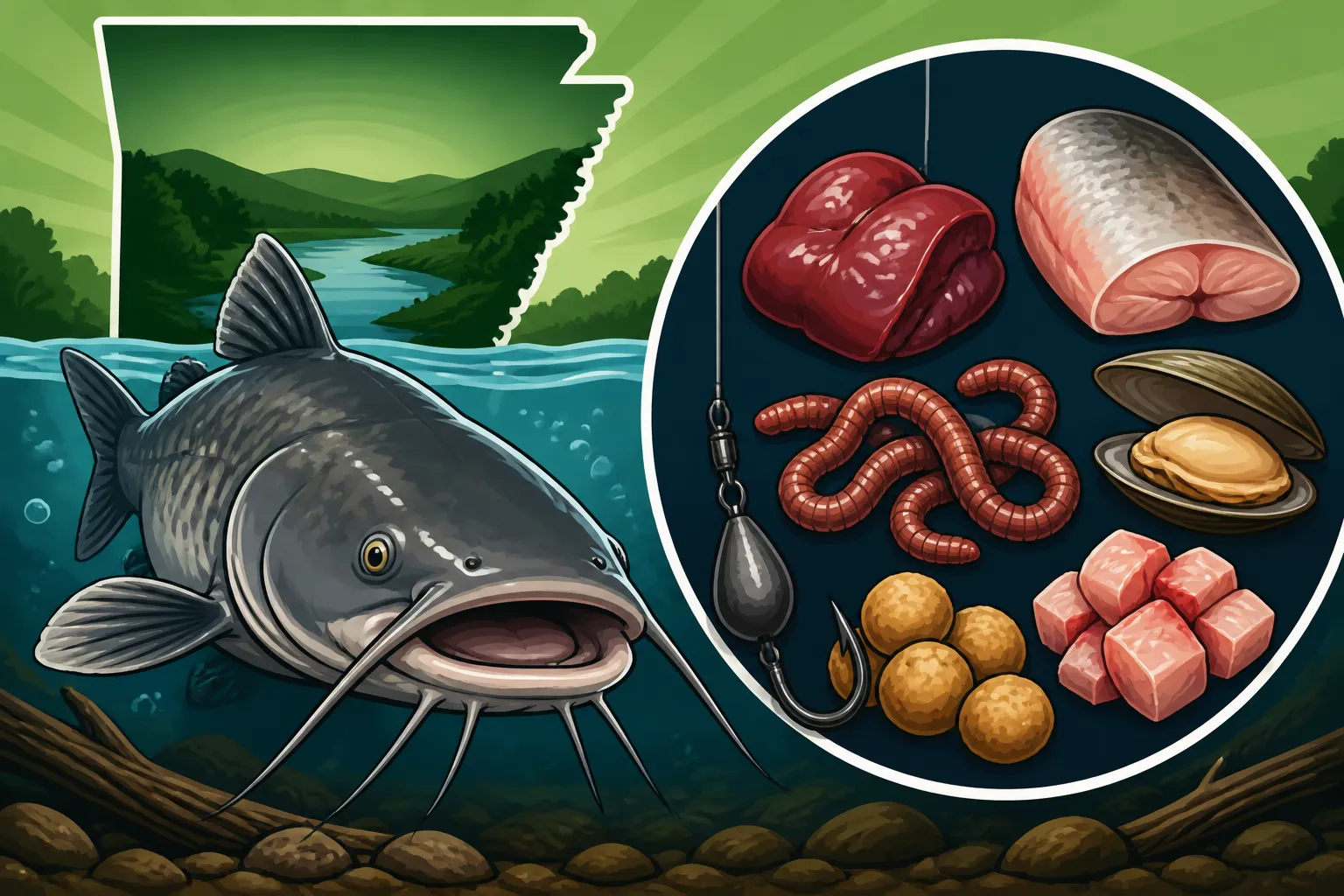
For larger catfish, especially blue and flathead species, live bait or fresh cut bait is often king. Flathead catfish are particularly known for their preference for live bait, preferring to ambush their meals. Smaller live baitfish like shad, sunfish (bluegill or bream), or even small carp can be incredibly effective. The struggling movements of a live baitfish send out vibrations and distress signals that catfish detect from afar, triggering a predatory response. When using live bait, hook it carefully through the back or lips to keep it lively for as long as possible.
Cut bait, on the other hand, excels for blue and channel catfish due to its potent scent trail. Freshly cut pieces of oily fish like shad, herring, or skipjack bleed profusely and release a powerful aroma into the water, mimicking a wounded or dead fish. Even chunks of carp or tougher fillets from other rough fish can work. The key is freshness. Old, freezer-burned cut bait simply won't have the same drawing power. For the biggest blue catfish, using a substantial chunk of cut bait, sometimes even a whole small fish, can make all the difference, attracting those trophy-sized fish that are less interested in smaller offerings. You can read more about targeting these larger species in our guide on What Bait Catches the Biggest Catfish in Arkansas?.
Worms and Insects: Classic Catfish Temptations
Before all the fancy stink baits and commercial concoctions came along, earthworms were likely one of the first baits ever used to catch a catfish. And guess what? They still work incredibly well, especially for channel catfish and smaller blues. A juicy nightcrawler or a squirming handful of red wigglers threaded onto a hook creates a natural, irresistible meal that catfish instinctively recognize. The scent, the movement, the texture – it all screams "food" to a hungry catfish.
Beyond worms, many other insects can also be fantastic baits. Grasshoppers, crickets, and even cicadas (when they’re in season) can be deadly, particularly in shallower waters or around vegetated banks where these insects naturally fall into the water. If you're fishing near an area with a lot of insect activity, consider mimicking that food source. Even grub worms or larvae found under rocks can be surprisingly effective. These baits are easy to find, often free, and require no special preparation, making them a go-to for many anglers, especially if you're fishing with kids or just looking for a simple, effective solution.
Kitchen Scraps and Surprising Delights
This is where catfish fishing really embraces its reputation for being a bit unconventional and budget-friendly. Catfish aren't particularly fussy, and many items you might find in your kitchen or pantry can be highly effective. Chicken livers are a legendary catfish bait for a reason: their potent smell and blood trail are irresistible, especially to channel catfish. The downside is they are notoriously difficult to keep on the hook. Many anglers resort to wrapping them in a piece of netting or pantyhose to keep them secure. However, their effectiveness often outweighs the hassle.
Other surprising baits include hot dogs (especially those soaked in garlic or Kool-Aid), small pieces of raw chicken, or even shrimp. Cheese, whether it's cubes of cheddar or processed cheese food, can also work due to its strong scent and soft texture. Some anglers swear by bread balls or corn, especially in areas where fish are accustomed to being fed these items. The key with these "scrappy" baits is often experimenting and finding what works in your particular fishing spot. What a catfish in a remote river might ignore, a pond catfish accustomed to human offerings might devour. Don't be afraid to try something a little out of the ordinary; sometimes, the weirdest baits catch the biggest fish!
Prepared and Commercial Baits for Bottom Fishing
While natural baits are always a strong contender, the world of prepared and commercial catfish baits offers an incredible array of options designed specifically to exploit a catfish's powerful sense of smell and taste. These baits often come with an extra punch of attractant, promising to draw in fish from a wider area.
Stink Baits and Punch Baits
When people think of commercial catfish bait, "stink bait" is often the first thing that comes to mind, and for good reason! These baits are formulated to have an incredibly strong, often pungent odor that catfish find irresistible. They come in various forms, from thick pastes to dip baits, and are typically applied to a special bait holder, sponge, or treble hook designed to absorb and slowly release the potent scent. The goal is to create a long-lasting scent plume in the water that catfish can track.
Punch baits are a specific type of stink bait, often characterized by their consistency – thick and fibrous enough to be "punched" onto a treble hook, where they adhere firmly. They stay on the hook remarkably well, even in strong currents, making them excellent for casting and leaving your line out for extended periods. Popular brands are often favorites among anglers who target channel catfish in rivers and lakes. You can often find a wide variety of these specialized dough baits and punch baits on retailers like Amazon, offering convenient delivery right to your door. Remember that while these baits are incredibly effective, they can be messy, so it's always a good idea to bring extra towels and maybe even a pair of disposable gloves!
Catfish Chunks and Dough Balls
Beyond the classic stink baits, there's a category of prepared baits that are often overlooked but can be highly effective: commercially made catfish chunks and dough balls. These baits are typically made from a blend of ingredients designed to be appealing to catfish, often with added attractants and binders that help them stay on the hook. They're usually less messy than traditional stink baits, making them a good option for those who prefer a cleaner fishing experience.
Catfish chunks usually have a more solid, often sponge-like texture, which allows them to absorb and slowly release scent, while also being durable enough to withstand casts and nibbling fish. Dough balls are similar but usually have a softer, more pliable consistency, which can be molded around a hook. Many of these baits are infused with scents like garlic, anise, or various fish oils, which are proven attractants for catfish. They offer a convenient, ready-to-use option, perfect for anglers who don't want to mess with live bait or the strong odors of some traditional stink baits. When browsing for these, consider looking at different brands available through online marketplaces like Amazon for variety and competitive pricing.
The Convenience of Commercial Pellets
Commercial fishing pellets, often originally designed for aquaculture or pond feeding, have found a dedicated following among catfish anglers. These pellets are typically packed with protein and fish meal, giving them an inherent attraction for catfish. They are relatively clean to handle, easy to store, and very affordable, especially if you buy them in bulk. The primary challenge with pellets is getting them to stay on a hook. Some anglers will soften them slightly and then compress several onto a hook, while others use special bait-holder hooks or wrap them in fine netting.
The real advantage of pellets lies in their ability to create a "chum" or feeding area. If you're fishing a stationary spot, scattering a handful of pellets around your bait can draw in catfish from a wider area, conditioning them to feed there. This technique is particularly effective for channel catfish in ponds and slower-moving rivers. When purchasing, look for larger, harder pellets that will dissolve slowly, releasing their attractants over time. Many feed stores carry these, but you can also find specific fishing-grade pellets designed to stay on the hook longer, some of which are available from various sellers on Amazon.
Rigging and Presentation Tips for Success
Having the best bait in the world won't do you much good if it's not presented properly. The way you rig your line and present your bait on the bottom can dramatically increase your chances of getting a bite. It’s about making your bait look as natural and accessible as possible to a hungry catfish.
Essential Bottom Rigs for Catfish
For bottom fishing catfish, a few basic rigs stand out for their simplicity and effectiveness. The Carolina Rig is a perennial favorite, especially in situations where you need to cast a good distance or fish in current. It consists of a barrel swivel, an egg sinker (or similar sliding weight), and a leader (typically 12-24 inches) tied to your hook. The sliding weight allows the fish to pick up the bait and move off with it without feeling the full weight of the sinker, often resulting in a more solid hookset. This is particularly effective for wary fish.
Another incredibly popular and straightforward option is the Santee Cooper Rig. This is essentially a Carolina Rig with the addition of a peg float (often a small, cigar-shaped float) inserted on the leader just above the hook. This float lifts your bait slightly off the bottom, presenting it above snags and making it more visible to cruising catfish. It’s fantastic for muddy bottoms or areas with light vegetation. Finally, a simple fish-finder rig (similar to a Carolina but with the weight running freely on the main line) or a basic three-way swivel rig (where one swivel eye goes to the main line, one to a short leader with the hook, and one to a slightly longer leader with a weight) are also highly effective, especially when fishing with multiple lines or in areas with consistent current. Our guide on Best Rod Setup for Catfish Bottom Fishing goes into more detail about these rig components.
Choosing the Right Hook and Line
Your choice of hook and line is just as critical as your bait and rig. For catfish, strong, sharp hooks are non-negotiable. Circle hooks are highly recommended for catfish because they are designed to hook the fish in the corner of the mouth, reducing gut-hooking and making catch-and-release easier and safer for the fish, should you choose to release them. Sizes can vary from 4/0 to 8/0 or even larger, depending on the size of the bait and the target catfish species. Ensure your hooks are made from high-carbon steel and are chemically sharpened for the best penetration.
When it comes to line, you need something durable and strong. Monofilament line in the 15-30 lb test range is a good all-around choice for many situations, offering a good balance of strength, abrasion resistance, and stretch for shock absorption. However, many serious catfishermen prefer braided line for its incredible strength-to-diameter ratio, lack of stretch (which provides excellent sensitivity), and superior abrasion resistance, especially when fishing around heavy cover. For braided line, 30-80 lb test is common. Remember that while braided line is strong, it's also more visible, so a monofilament or fluorocarbon leader is often a good idea, particularly in clearer water. For more information on line choices and how they relate to techniques, check out our guide on Catfish Bottom Fishing Techniques.
Optimizing Your Bait Presentation
Once you have your rig set up and your bait selected, how you present it makes all the difference. The goal is to make your bait irresistible and easily accessible. Cast your rig to the prime locations we discussed earlier: submerged structure, drop-offs, or current seams. If you're using stink baits or cut bait, allow the scent to disperse for a few minutes before expecting a bite. Sometimes, a gentle retrieve or a slight twitch of the rod can help release more scent or give the bait a lifelike movement.
Don't be afraid to experiment with how much bait you use. Sometimes, a smaller, more compact piece of bait is more effective for channel cats, while a large chunk of cut bait is necessary to entice a trophy blue or flathead. If you’re fishing with live bait, ensure it has enough room to move naturally without getting tangled. If you're fishing in current, orient your boat or position yourself on the bank so your bait drifts naturally into a likely holding area. Finally, patience is paramount in catfish fishing. These fish aren't always aggressive biters; sometimes, it's a slow, deliberate take. Give them time to fully commit to the bait before setting the hook. Pay close attention to your rod tip for any subtle nudges or pulls, especially if you’re trying to determine Is Night Fishing Good for Catfish? when visibility is low.
| Bait Type | Pros | Cons | Target Species | Best For |
|---|---|---|---|---|
| Live Bait | Highly attractive to large predatory cats | Can be hard to keep alive; harder to cast | Flathead, Blue Catfish | Trophy hunting, clear water |
| Cut Bait | Strong scent trail, attracts big fish | Can be messy; freshness is key | Blue Catfish, Channel Catfish | Rivers, deep holes, low visibility water |
| Earthworms | Natural, easily accessible, very effective | Smaller bites, can attract panfish | Channel Catfish, smaller Blues | Ponds, slow rivers, general fishing |
| Chicken Livers | Powerful scent, very appealing to Channel | Extremely messy, hard to keep on hook | Channel Catfish | Still water, quick bites, high scent needed |
| Stink Baits | Designed for maximum scent, stays on hook | Very odorous, messy to handle | Channel Catfish | Heavy scent attraction, consistent bites |
| Dough Balls | Less messy than stink bait, easy to use | Scent not as strong as specialized stink baits | Channel Catfish | Cleaner fishing, moderate scent |
| Hot Dogs | Cheap, easy to find, can be customized | May not attract larger fish as consistently | Channel Catfish, smaller Blues | Budget-friendly, family fishing |
Disclaimer
This article is for general informational purposes only and does not constitute professional advice. Laws, prices and regulations vary by location and change over time. Consult a qualified professional for guidance on your specific situation.