Best Rod Setup for Catfish Bottom Fishing
Ever found yourself staring at a wall of fishing rods at the tackle shop, feeling completely overwhelmed by all the choices, especially when all you want to do is set up for some good old-fashioned catfish bottom fishing? It's a common frustration, trying to decipher which rod, reel, and line combination will actually stand up to those hard-fighting Arkansas catfish without breaking your budget or your spirit. This guide is designed to cut through that confusion, giving you a clear, comprehensive breakdown of the best rod setup for catfish bottom fishing, ensuring your next trip to the lake or river is productive and enjoyable.
Understanding the Basics of Catfish Bottom Fishing in Arkansas
When it comes to targeting catfish, especially the bigger ones that lurk in the depths of our beautiful Arkansas waters, bottom fishing is often the most reliable and effective technique. These whiskered beauties are scavengers and predators by nature, spending a good portion of their time near the bottom, searching for an easy meal.
Why Bottom Fishing for Catfish is So Effective
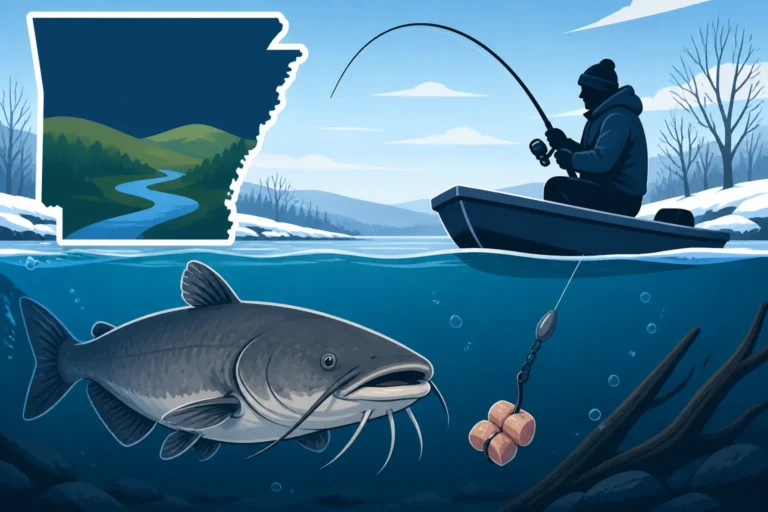
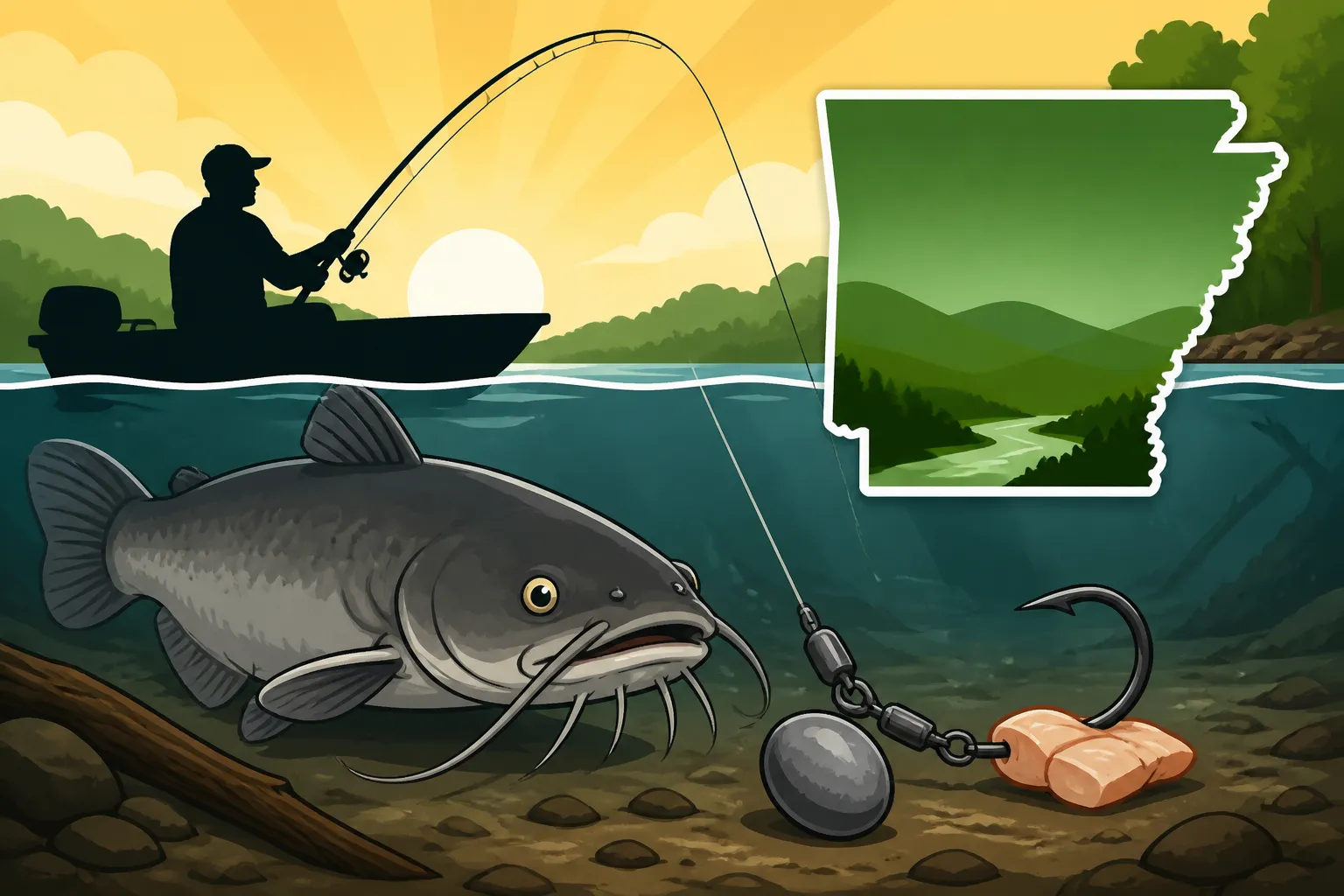
Catfish, whether you're after the feisty channel catfish, the massive blue catfish, or the elusive flathead, have a distinct preference for staying near the bottom of lakes, rivers, and even smaller ponds. This isn't just a quirk; it's deeply ingrained in their biology and feeding habits. They're equipped with highly sensitive barbels (whiskers) that act like taste and smell receptors, allowing them to detect food even in murky water or low light conditions. The bottom of any water body is often a smorgasbord of potential food sources – fallen insects, decaying organic matter, smaller baitfish hiding in structure, or even just the scent trails of previous meals.
By presenting your bait directly on or very near the bottom, you’re putting it right in their strike zone. This technique minimizes the variables of water column depth and makes it easier for the catfish to find your offering, especially in areas with current where scents disperse quickly. Think about it: if you're fishing a strong current on the Arkansas River, a lightweight bait might just drift away, but a well-weighted bottom rig stays put, patiently waiting for a hungry whisker-fish to come along.
Essential Gear Components for Bottom Fishing
Before we dive into the nitty-gritty of specific rod setups, let's quickly outline the core components you’ll need for a successful catfish bottom fishing expedition. Each piece plays a crucial role, working together to get your bait to the fish and, more importantly, to get that fish from the water into your net.
First, there’s the rod, which acts as your primary tool for casting and fighting the fish. It needs to be robust enough to handle the weight of your sinker and bait, as well as the power of a struggling catfish. Then, you have the reel, which stores your fishing line and helps you retrieve it. A good reel will have a smooth drag system, essential for preventing line breaks when a big cat makes a powerful run. The fishing line itself connects everything – your reel to your terminal tackle. Its strength (pound test) and material (monofilament or braid) are critical decisions.
Next, we move to sinkers, which are vital for getting your bait down to the bottom and holding it there against currents or wind. Different shapes and weights are suited for different conditions. Hooks are, of course, where the magic happens, needing to be sharp and strong enough to penetrate and hold firmly. Finally, there's the bait, which is arguably the most important element for attracting catfish. Each of these components needs to be carefully chosen to create a harmonious and effective bottom fishing setup that will serve you well on any Arkansas waterway.
Choosing Your Rod and Reel for Arkansas Catfish
The heart of any good fishing setup is the rod and reel combination. For catfish bottom fishing, you need gear that's built for power and endurance. We're not talking about delicate finesse setups here; we're talking about workhorses that can handle tough conditions and even tougher fish.
Rod Characteristics: Length, Power, and Action
When selecting a rod for catfish, three main characteristics stand out: length, power, and action. Each plays a significant role in how well your rod performs, from casting heavy baits to battling a trophy blue cat.
Length is usually measured in feet and inches, and for bottom fishing, longer is often better, but there's a sweet spot. Rods typically range from 7 to 10 feet. A longer rod, say 8 to 10 feet, gives you more leverage for casting heavier weights farther out, which can be crucial when you're trying to reach deeper channels or opposite banks on wide rivers like the Arkansas River. It also provides better line control, especially when fishing from the bank over obstacles or in areas with current. Shorter rods, around 7 feet, might be easier to manage in tight spaces or for boat fishing, offering a bit more sensitivity for smaller catfish, but they'll limit your casting distance and power. For most general catfishing, an 8-foot rod hits a great balance.
Power refers to the rod's strength or backbone, determining how much pressure it can withstand before bending significantly. For catfish, you'll generally want a medium-heavy (MH) to heavy (H) power rod. A medium-heavy rod is versatile enough for channel cats and smaller blue cats, offering a good fight without feeling overly stiff. A heavy power rod, however, is your go-to for targeting truly massive blue or flathead catfish. It has the strength to pull big fish out of heavy cover and handle substantial sinkers and bait. You don't want a flimsy rod that feels like it's going to snap when you set the hook on a 30-pounder.
Action describes where the rod bends when pressure is applied. A moderate-fast to fast action is ideal for catfishing. A fast action rod bends mostly near the tip, providing excellent sensitivity for detecting subtle bites and quick, powerful hooksets. This is great for channel cats that might peck at the bait. A moderate-fast action rod bends further down, into the middle section, offering a good balance of casting distance, cushioning for powerful runs, and enough tip sensitivity. This slight give in the mid-section can prevent hooks from tearing out of a cat's mouth during a fierce head shake. You can find a wide range of these specialized rods available online on platforms like Amazon, making it convenient to compare different models and features.
Reel Types: Spinning vs. Baitcasting for Catfish
Just as important as your rod is the reel you pair it with. The two main types you'll consider for catfish bottom fishing are spinning reels and baitcasting reels, each with its own set of advantages and disadvantages.
Spinning reels are often recommended for beginners because they are generally easier to cast and less prone to backlashes. They are versatile and can handle a wide range of line sizes, making them a solid choice for channel catfish and smaller blue cats. A good spinning reel for catfishing should be a larger size (around 5000-8000 series), providing ample line capacity for longer runs and strong enough drag to tire out a decent fish. Their open-faced design makes line management straightforward, which is a blessing when you’re dealing with cold hands or less-than-ideal lighting during a night fishing session. Many anglers prefer spinning reels for their simplicity and the ease with which they can cast lighter baits, though for truly heavy weights and monster fish, they can sometimes feel a bit underpowered.
Baitcasting reels, on the other hand, are the choice of many seasoned catfish anglers, especially when targeting trophy-sized blue or flathead catfish. They offer superior power, torque, and line capacity, allowing you to spool up with heavier pound-test lines, both monofilament and braid. While they have a steeper learning curve due to the potential for frustrating backlashes (often called "bird's nests"), once mastered, they provide incredible casting accuracy and control. When a big cat hits, a baitcaster's direct line pull and robust gearing give you maximum leverage during the fight. Look for models with a strong, smooth drag system and durable construction. Many popular brands offer baitcasting reels specifically designed for heavy freshwater fishing, and you can often find competitive prices and reviews on Amazon to help make your decision. When considering gear ratio, a lower ratio (e.g., 4.5:1 to 5.5:1) offers more cranking power, which is ideal for hauling in large fish and heavy rigs from the depths.
Line, Terminal Tackle, and Bait for Success
Even with the perfect rod and reel, your setup won't be complete without the right line, terminal tackle, and, most importantly, the right bait to entice those Arkansas catfish. These components are what truly connect you to the fish.
Selecting the Right Fishing Line
The fishing line is your lifeline to the fish, and choosing the correct type and strength is paramount for catfish bottom fishing. You generally have two main choices: monofilament or braided line.
Monofilament line is a classic choice for many reasons. It's relatively inexpensive, has a good amount of stretch, which acts as a shock absorber during powerful runs, and it's fairly abrasion-resistant. The stretch can be beneficial as it helps prevent hooks from tearing out of a cat's mouth and absorbs the initial shock of a hard strike. However, the stretch can also reduce sensitivity, making it harder to detect subtle bites at long distances. Monofilament is also more visible in water than braid. For channel catfish, a 15-25 pound test monofilament is usually sufficient.
Braided line has become incredibly popular among serious catfishermen, and for good reason. It has almost no stretch, which translates to incredible sensitivity – you'll feel every bump, nibble, and subtle current change. This lack of stretch also means more powerful hooksets, even at extreme casting distances. Braided line is also much thinner than monofilament of equivalent strength, allowing you to spool more line on your reel, which is a huge advantage when a monster blue cat decides to make a long run. However, braided line is typically more expensive, can be prone to wind knots if not cast properly, and its slickness requires specific knots. Its lack of abrasion resistance directly against rough structure can also be a concern. Many anglers mitigate this by adding a monofilament or fluorocarbon leader. For larger catfish like blue cats and flatheads, a 30-80 pound test braid is common.
Regardless of your main line choice, adding a leader is often a wise move. A leader, usually made of monofilament or fluorocarbon, provides a buffer between your main line and your terminal tackle. It offers better abrasion resistance against rocks and logs, and fluorocarbon, being nearly invisible underwater, can sometimes make your bait more appealing to wary fish. Learning strong knots, like the Palomar knot or Uni knot, is essential for securely attaching your hooks and swivels.
Sinkers, Hooks, and Rigs that Work
This is where the rubber meets the road – or rather, where your bait hits the bottom. The right combination of sinkers, hooks, and rigs will keep your bait in the strike zone and ensure a solid hookset.
Sinkers are crucial for getting your bait to the desired depth and keeping it there. The type of sinker you choose often depends on the current and bottom composition.
- Egg sinkers are popular because they allow the line to slide through, meaning a catfish can pick up the bait and move off without immediately feeling the weight of the sinker. This is often used in a Carolina rig setup.
- No-roll sinkers (also called flat sinkers) are excellent for use in strong currents, like those found in the White River or Arkansas River, as their flat shape helps them dig into the bottom and resist rolling.
- Pyramid sinkers are similar to no-rolls, ideal for soft bottoms where they can anchor securely.
- Bank sinkers are tear-drop shaped and versatile for various conditions.
The weight of your sinker will vary based on current and casting distance, but be prepared to use anywhere from 1/2 ounce up to 6 ounces or more for heavy currents or deep water. You can find a wide selection of these weights and styles on Amazon, making it easy to stock up.
Hooks need to be incredibly sharp and strong. For catfish, circle hooks (sizes 4/0 to 10/0) are often preferred, especially when fishing with live or cut bait. Their design is "self-setting" – as the fish swims away, the hook rotates and typically sets itself in the corner of the fish's mouth, minimizing gut-hooking and making catch and release easier. This is also safer for the fish. J-hooks (similar sizes) are also effective, especially for dough baits or worms, but require the angler to set the hook. Ensure your hooks are made of high-carbon steel for strength and sharpness.
For rigs, a few stand out for bottom fishing:
- The Carolina Rig is a classic. It involves threading an egg sinker onto your main line, followed by a bead (to protect the knot), and then tying on a barrel swivel. To the other end of the swivel, you tie a monofilament or fluorocarbon leader (12-24 inches) and finally your hook. This allows the fish to pull the bait without feeling the weight of the sinker.
- The Santee Cooper Rig is a variation of the Carolina rig, adding a peg float or small foam cigar float to the leader, typically 1-3 inches above the hook. This lifts your bait slightly off the bottom, presenting it above snags and making it more visible. This is especially effective in muddy or timber-filled bottoms.
- A simple Three-Way Swivel Rig can also be effective, especially in currents. One eye of the swivel ties to your main line, another to a short leader with a sinker, and the third to a longer leader with your hook and bait. This allows the sinker to tumble along the bottom while your bait drifts enticingly.
Best Baits for Arkansas Catfish Bottom Fishing
No matter how perfect your rod setup, it’s all for naught without the right bait. Catfish are opportunistic feeders, but they do have their preferences. When looking for the Best Cut Bait for Catfish, you'll quickly realize that fresh is often best.
Cut bait is a perennial favorite for blue and flathead catfish. Shad, skipjack herring, or even smaller sunfish cut into chunks release strong scent trails that catfish find irresistible. The oilier the fish, the better. Many anglers swear by fresh-caught shad from the very waters they're fishing.
Chicken livers are a classic for channel catfish, offering a potent smell and soft texture. They can be messy to handle and easily come off the hook, but their effectiveness is undeniable. Consider using a small piece of pantyhose or netting to keep them on the hook better.
Nightcrawlers or large worms are also excellent for channel catfish and can sometimes entice smaller blue cats. They're readily available and easy to use.
Prepared baits and stink baits are engineered to attract catfish with powerful aromas. There are countless varieties, from punch baits to dip baits, often infused with strong cheeses, blood, or fish oils. While effective for channel cats, they rarely tempt the larger blue or flathead catfish.
Flathead catfish are unique in that they overwhelmingly prefer live bait. Sunfish, small carp, or robust shiners are excellent choices for coaxing these solitary predators out of their lairs. They want something actively swimming and struggling. When targeting Blue Catfish Fishing in Arkansas or looking for Flathead Catfish in Arkansas Waters, matching your bait to the species and its natural diet is key. Don't be afraid to experiment to find what works best on a given day, as conditions and preferences can change, just like finding what's Best Bait for Catfish by Season.
Putting It All Together: A Recommended Setup and Practical Tips
Now that we've explored the individual components, let's bring it all together into a cohesive setup. This section will recommend a versatile rig, discuss how to actually deploy it, and offer some specific tips for fishing in Arkansas' diverse waters.
The All-Around Recommended Catfish Bottom Fishing Setup
For a versatile, all-around catfish bottom fishing setup in Arkansas that can handle anything from respectable channel cats to potentially trophy blue cats, I'd suggest the following:
Rod: An 8-foot, medium-heavy to heavy power rod with a moderate-fast action. This length gives you good casting distance from the bank or boat, and the power provides the backbone to manage heavier weights and fight strong fish. The action ensures good hooksets and enough give to prevent line breakage. Rods from Ugly Stik or Berkley often fit this bill perfectly and are widely available, including on Amazon.
Reel: A heavy-duty spinning reel (5000-8000 series) or a robust baitcasting reel (like a Penn Squall or a comparable model). If you're comfortable with a baitcaster, its power and line capacity are unmatched for larger fish. If ease of use is a priority, a large, well-built spinning reel will serve you well. Ensure it has a strong, smooth drag system – that's non-negotiable.
Line: 50-pound test braided main line, paired with a 30-40 pound test monofilament or fluorocarbon leader (2-3 feet long). The braid offers sensitivity and strength, while the mono/fluoro leader provides abrasion resistance and a bit of stretch for shock absorption.
Terminal Tackle: A Carolina rig or Santee Cooper rig. Use an egg sinker (1-4 ounces, depending on current) above a heavy-duty barrel swivel. Attach your leader to the swivel and then a 6/0 to 8/0 circle hook.
Bait: Fresh cut bait (shad or skipjack) for larger blue and flatheads, or chicken livers/large nightcrawlers for channel cats.
This setup offers a fantastic balance of power, sensitivity, and versatility, allowing you to confidently tackle a variety of catfish species in different fishing scenarios across Arkansas. When you're ready to upgrade or replace components, checking online retailers is a great way to compare options; for instance, you can often find competitive deals and detailed product reviews for rods, reels, and lines on Amazon.
| Component | Recommended Type | Why It Works |
|---|---|---|
| Rod | 8 ft, MH-H power, Moderate-Fast action | Versatile, good casting, strong backbone, sensitive tip. |
| Reel | 5000-8000 Spinning or Heavy Baitcaster | Ample line capacity, smooth drag, robust for big fish. |
| Main Line | 50 lb Braided | Max sensitivity, strength, less stretch for solid hooksets. |
| Leader | 30-40 lb Mono/Fluorocarbon (2-3 ft) | Abrasion resistance, some shock absorption, stealth for wary fish. |
| Sinker | Egg, No-Roll, or Pyramid (1-4 oz) | Gets bait to bottom, holds against current, allows fish to run. |
| Hook | 6/0-8/0 Circle Hook | Minimizes gut-hooking, self-setting, strong hold. |
| Rig | Carolina or Santee Cooper | Presents bait naturally, minimizes fish feeling weight. |
Rigging and Casting Techniques for Bottom Fishing
Once you have your gear, knowing how to rig and cast effectively is the next step to success. For a Carolina rig, start by sliding your egg sinker onto your main line, followed by a small bead (this protects your knot from the sinker's repeated impact). Next, tie on your heavy-duty barrel swivel using a strong knot like a Palomar or improved clinch. To the other end of the swivel, tie your leader, and then finally your hook. If you're using a Santee Cooper rig, remember to add that small float to your leader, a few inches above the hook, to keep your bait slightly buoyant.
Casting heavy weights and baits can take some practice, especially with a baitcasting reel. Always make sure your reel's drag is set appropriately and that you have a good grip on the rod. A smooth, deliberate casting motion is more effective than a jerky, powerful one. Once your bait hits the water, let it sink all the way to the bottom. Keep a slight tension on the line, but avoid reeling it in too quickly. You want your bait to sit patiently in the catfish's domain.
When you feel a bite – which can range from a gentle tap to a sudden, rod-bending yank – resist the urge to immediately set the hook aggressively, especially with circle hooks. Instead, slowly reel in the slack until you feel the weight of the fish, then lift the rod tip firmly and begin to fight the fish. With J-hooks, a more traditional aggressive hookset is needed. It's often helpful to use rod holders when bottom fishing, especially if you're fishing multiple rods or simply want to relax and wait for a bite without constantly holding the rod.
Tips for Fishing Different Arkansas Waters
Arkansas boasts an incredible variety of fishing environments, from the wide, flowing depths of the Arkansas River to the expansive reservoirs like Lake Ouachita and the smaller, quieter ponds. Your approach to bottom fishing might need slight adjustments depending on where you are.
When fishing in rivers with strong currents, like the White River below Bull Shoals Dam (though usually known for trout, larger catfish are certainly present further downstream) or sections of the Arkansas River, heavier sinkers are essential to keep your bait from washing downstream. No-roll or pyramid sinkers excel here. Focus on areas with current breaks, such as eddies behind submerged logs, rock piles, or points, where catfish often lie in wait for food to be swept to them. These current seams are prime real estate for active feeders. For more aggressive techniques, some anglers might even consider methods like those detailed in How to Set Up a Trotline for Catfish or Jug Fishing Basics for Catfish.
For lakes and reservoirs, where currents are minimal, lighter sinkers might suffice. Look for submerged structures like old creek channels, humps, ledges, or timber. Catfish will often congregate around these features. Pay attention to depth, as catfish will move deeper or shallower depending on water temperature, time of day, and baitfish location. For instance, understanding How to Find Catfish in a Reservoir is key to success on these larger bodies of water. Remember that these large impoundments are often home to Channel Catfish Fishing Tips for Beginners, but also to impressive blue cats.
No matter the water type, patience is a virtue in catfish bottom fishing. These fish aren't always in a hurry, so sometimes letting your bait soak for extended periods is the most effective strategy. Pay attention to local knowledge and current reports for specific areas, and always be prepared for a fight – because when an Arkansas catfish decides to bite, it rarely gives up easily. For those looking to maximize their chances, consider exploring Best Catfish Spots in Arkansas and even Night Fishing Techniques for Catfish as many catfish species are most active after dark.
Disclaimer
This article is for general informational purposes only and does not constitute professional advice. Laws, prices and regulations vary by location and change over time. Consult a qualified professional for guidance on your specific situation.