Night Fishing Techniques for Catfish
Trying to land a big catfish during the scorching Arkansas summer days can feel like a fool's errand. Those whiskered giants often retreat to cooler, deeper waters, becoming incredibly lethargic and shy. If you've been frustrated by slow daytime bites or too much boat traffic, it's time to consider embracing the darkness. This guide will dive deep into the world of night fishing for catfish, equipping you with the techniques, gear, and safety tips you need to turn those frustrating daytime hours into productive, serene nocturnal adventures on Arkansas's beautiful lakes and rivers.
Why Catfish are Night Owls and Why You Should Be Too
Many anglers assume fishing is a daytime pursuit, but for catfish enthusiasts, the night truly comes alive. Understanding why these whiskered bottom dwellers are more active after dark is the first step to unlocking incredible fishing experiences. It’s not just a preference; it’s rooted deep in their biology and survival instincts.
Understanding Catfish Behavior After Dark
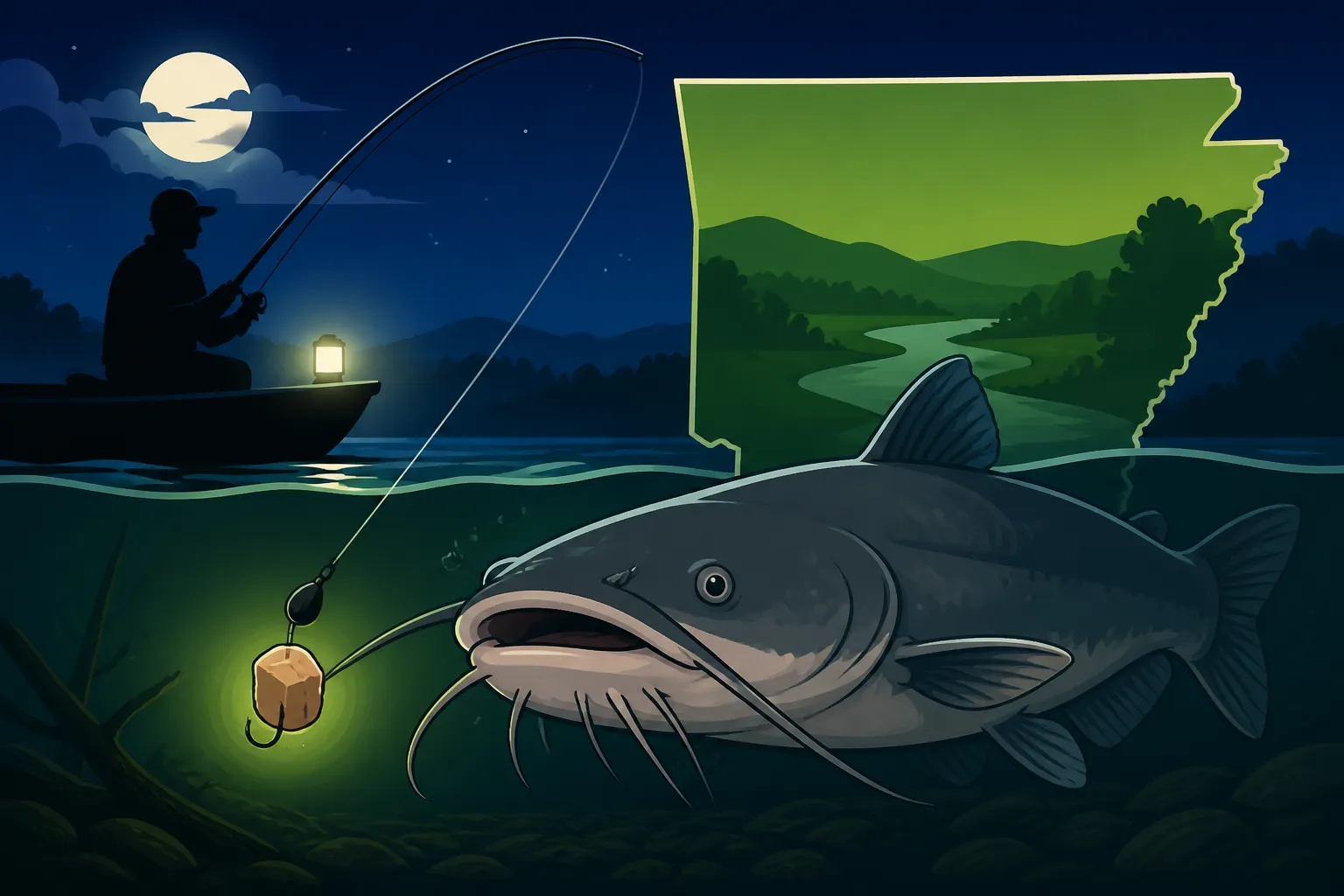
Catfish, particularly the larger blue and flathead species, are overwhelmingly nocturnal predators. Their anatomy is perfectly adapted for low-light conditions. They possess an incredibly sophisticated sense of smell and taste, facilitated by those prominent whiskers (barbels) that are essentially external taste buds. These barbels, coupled with their lateral line system – which detects vibrations and pressure changes in the water – allow them to navigate and hunt effectively in complete darkness. While our human eyes might struggle, a catfish's world illuminates with scents and subtle movements once the sun sets.
During the bright, hot hours of the day, catfish often retreat to the deepest, coolest parts of a lake or river, seeking refuge in thermal stratification, under dense cover like logjams, or within the shadows of steep banks. They conserve energy, often becoming quite lethargic. But as darkness descends, water temperatures stabilize or cool, and the ambient light diminishes, signaling prime hunting time. They will often move out of their deep-water sanctuaries and patrol shallower flats, creek channels, and submerged structures where baitfish and other food sources become more accessible and less wary. This significant behavioral shift is the fundamental reason why night fishing can be so productive.
Advantages of Night Fishing for Catfish
Beyond the undeniable increase in catfish activity, night fishing offers a host of other advantages that can elevate your angling experience. One of the most immediate benefits you'll notice is the dramatic reduction in boat traffic. Those noisy, wake-creating pleasure boats, jet skis, and even many daytime fishing vessels are typically off the water once night falls. This translates to a far more peaceful, undisturbed environment where you can truly focus on the bite without constant interruptions. The water settles, the noise pollution vanishes, and the fish are often much less pressured.
Another huge draw, especially during Arkansas's notoriously hot summers, is the cooler air temperature. From late spring through early fall, daytime fishing can be an endurance test against oppressive heat and humidity. Night fishing provides a welcome reprieve, allowing you to enjoy a comfortable outing focused on strategy and the thrill of the catch, rather than battling heatstroke. Furthermore, there’s an almost magical ambiance to being out on the water under a starry sky, with only the sounds of nature – chirping crickets, croaking frogs, and the gentle lapping of water against your boat – accompanying your pursuit. It’s a serene, almost meditative experience that daytime fishing simply can’t replicate.
Essential Gear for Arkansas Night Catfishing
Stepping into the darkness to chase catfish requires a thoughtful approach to your equipment. You're not just casting a line; you're equipping yourself for a unique environment that demands durability, reliability, and most importantly, safety. Let’s break down what you’ll need to be successful and secure.
Rods, Reels, and Line for Low-Light Conditions
When you're targeting the heavyweights of Arkansas's catfish world—the big blues and flatheads that populate reservoirs like Lake Dardanelle or the vast stretches of the Arkansas River—your gear needs to be up to the task. Leave the finesse setups at home. We're talking about robust, heavy-action rods, typically ranging from 7 to 8 feet in length. These longer rods provide the necessary leverage to effectively fight a powerful fish and steer it away from snags like submerged timber or rocky bottom structure. A good heavy-action rod will have the backbone to absorb powerful runs and the sensitivity to detect subtle bites in the dark. You can find excellent options, often in combo packages, on platforms like Amazon.
Pair these sturdy rods with durable baitcasting reels known for their strong drag systems and high line capacity. Brands such as Abu Garcia, Penn, or Shimano are often favored by serious catfishermen for their proven reliability. For your main line, braided line is a superior choice for night fishing. Its almost zero stretch offers unparalleled sensitivity, allowing you to feel even the faintest tap in the dark, and its incredible strength provides the confidence needed when battling a trophy catfish. Opt for a heavy braided line, typically 50-80 lb test, depending on the average size of catfish in your target waters. If you prefer the shock absorption of monofilament, a 20-40 lb test might be more your speed, though you'll sacrifice some sensitivity.
Lighting and Safety Equipment
Safety is paramount when you're on the water after dark. A reliable headlamp is not just recommended; it's absolutely indispensable. Look for models that offer multiple light settings, including a red light option. Red light preserves your natural night vision much better than white light, allowing your eyes to adjust quickly back to the darkness after tying a knot or re-baiting a hook. You'll need it for everything from rigging tackle to safely moving around your boat or along the bank. Beyond personal lighting, ensure your boat’s navigation lights are fully operational and correctly displayed to comply with regulations and ensure visibility to other (though few) vessels.
In addition to lighting, a comprehensive safety kit is critical. Always have US Coast Guard-approved Personal Flotation Devices (PFDs) for every person aboard, easily accessible and preferably worn. A fully stocked first-aid kit, a loud whistle or air horn, and a fully charged cell phone (stored in a waterproof case!) are non-negotiable items. Consider carrying a powerful handheld spotlight to scan the water for unexpected debris, other boats, or potential hazards that might not be visible with just your navigation lights. Investing in quality safety gear, much of which is available on Amazon, is not an option but a requirement for responsible night fishing.
Terminal Tackle and Bait Essentials
Your terminal tackle must be just as robust as your rod and reel setup to stand up to the powerful runs and rough mouths of catfish. Circle hooks are overwhelmingly recommended for catfish. Their design ensures that they typically hook the fish in the corner of the mouth, which minimizes gut-hooking – a common issue with J-hooks – and significantly improves the chances of a healthy release if you plan to practice catch and release. Common sizes range from 5/0 to 10/0, chosen based on the size of the catfish you're pursuing and the bait you’re presenting.
You'll also need a selection of heavy sinkers to keep your bait firmly on the bottom, especially in areas with current or strong winds. Pyramid, egg, or no-roll sinkers are popular choices, ranging from 1 ounce up to 6 ounces or even more for heavy currents. Don't forget sturdy swivels to prevent line twist, abrasion-resistant leaders (heavy monofilament or fluorocarbon works well), and a stout pair of pliers or a dedicated hook remover. Finally, a large, heavy-duty net or a pair of lip grippers designed for large fish is essential for safely landing a big catfish without injuring yourself or the fish. For more detailed insights into specific rig setups that excel in low-light conditions, explore our guide on Catfish Bottom Fishing Techniques.
Top Night Catfishing Techniques in Arkansas
Once you've got your gear sorted, it's time to talk strategy. Night fishing for catfish isn't just about throwing a line in; it's about understanding how these fish behave and deploying techniques that capitalize on their nocturnal habits. Arkansas offers diverse waters, and each calls for a slightly different approach to maximize your chances.
Bottom Fishing Strategies
Bottom fishing remains the most popular and often most effective method for night catfishing. The concept is straightforward: present your irresistible bait directly on the bottom where catfish are actively foraging. Two common and highly effective rigs are the Carolina rig and the three-way swivel rig. For a Carolina rig, you’ll thread an egg sinker onto your main line, tie on a sturdy swivel, and then attach a 12-to-24-inch leader (heavy monofilament or fluorocarbon) to your circle hook. This allows the fish to pick up the bait without immediately feeling the weight of the sinker, often leading to more solid hookups.
The three-way swivel rig is another excellent choice, particularly if you want to keep your bait slightly elevated off a snaggy bottom. Here, your main line ties to one eye of a three-way swivel, a leader with your hook ties to a second eye, and a shorter leader with a sinker attaches to the third eye. This setup presents your bait a few inches or even a foot off the bottom, making it more visible and less prone to snags. Whether fishing from the bank or a boat, look for deep holes, pronounced channel bends, or the outside curves of rivers where the current naturally carves out scour holes. If you’re boating, use your depth finder to locate similar structures, such as humps, ledges, or submerged timber near creek mouths. Drop your bait, ensure it settles, place your rod in a sturdy holder, and set your drag appropriately. Patience is a virtue, but if you don't get bites within a reasonable time, don't be afraid to relocate.
Jugging and Trotlining with Legal Considerations
For anglers looking to cover larger areas and potentially land multiple fish, jugging and trotlining are incredibly productive nocturnal methods. However, these techniques come with specific regulations in Arkansas that absolutely must be followed. Jug fishing involves deploying multiple baited lines attached to floating jugs or bottles, allowing them to drift with the current across a promising flat or channel. This method lets you target active, cruising catfish over a wide expanse and is often covered in detail within our Jug Fishing Basics for Catfish guide. Imagine setting a dozen or more jugs at dusk and periodically checking them throughout the night – it’s an exciting, hands-on way to fish.
Trotlining, on the other hand, utilizes a main line stretched across a body of water or securely anchored at both ends, with numerous baited hooks attached at regular intervals. This can be especially effective in large river systems like the Arkansas River or wider, slower sections of the White River where massive blue catfish roam. While highly efficient, both jugging and trotlining are subject to strict Arkansas Game and Fish Commission (AGFC) regulations concerning the maximum number of devices, spacing between hooks, required tagging information, and specific waters where they are permitted or prohibited. It is absolutely critical to consult the current Arkansas Fishing Regulations Guide before deploying these methods. Ignoring these rules can lead to severe consequences, including significant Fines for getting caught without a fishing license in Arkansas and confiscation of your gear. These regulations are in place to ensure sustainable fishing practices and angler safety.
Specific Hot Spots and River Systems
Arkansas is truly a catfishing haven, and many of its best spots become even more phenomenal after dark. The mighty Arkansas River, a renowned fishery, offers countless opportunities for trophy blue and flathead catfish. Focus your efforts on deep channels, areas near locks and dams (which concentrate baitfish), and rip-rap banks where currents provide ideal ambush points. Large reservoirs like Lake Ouachita, Lake Conway, and Lake Dardanelle are also fantastic for night catfishing, particularly around submerged brush piles, old roadbeds, and creek channels that funnel baitfish. For specific localized advice, you might find our article on Night Fishing Spots on Lake Ouachita particularly helpful.
The lower sections of the White River and its various tributaries, especially those with slower currents and deeper pools, can also yield excellent results. Target prominent river bends, areas with fallen trees or logjams, and the mouths of smaller feeder creeks. Many seasoned anglers also swear by the quiet coves and expansive flats of the larger Corps of Engineers lakes after sunset, where catfish move out of deeper water to feed on shad. Knowing where to focus your efforts, leveraging your fish finder and mapping tools to identify these structures, is crucial for consistent success. Additionally, a broader overview of the state’s prime locations can be found in our guide on the Best Catfish Spots in Arkansas. Remember, the Arkansas Game and Fish Commission website is your go-to for ensuring you have your Arkansas Fishing License Rules and Costs in order before you head out.
Best Baits and Scents for Nocturnal Catfish
When fishing for catfish at night, your primary weapon isn't your eyesight; it's the fish's highly developed sense of smell and taste. This means bait selection is absolutely critical. You want something that will release a powerful, enticing scent plume that can draw catfish in from a distance, even in murky or flowing water.
Natural Baits That Shine at Night
For many seasoned catfishermen, fresh cut bait is king, especially when targeting larger blue and flathead catfish. Species like shad, skipjack herring, or even smaller panfish (always check local regulations on using game fish as bait) are excellent choices. Cut them into chunks, fillets, or strips to maximize the surface area for scent dispersion. The fresher the bait, the stronger its natural oils and blood will leak into the water, creating an irresistible aroma trail. Live bait, such as small sunfish or shiners, is particularly deadly for flatheads, which often prefer to ambush live prey rather than scavenge.
Other readily available natural options include chicken livers and gizzards, which are notorious for their potent, bloody scent that channel catfish simply can't resist. You can even enhance these with common household items like garlic powder or a few drops of anises oil. For smaller channel catfish, especially after a good rain that washes worms into the water, earthworms and nightcrawlers can be surprisingly effective. The key takeaway here is freshness; avoid stale or previously frozen bait that has lost its potency. For a deeper dive into which natural options consistently deliver results, be sure to check out our detailed guide on the Best Bait for Night Fishing Catfish.
Commercial Baits and Attractants
While natural baits are highly effective, the market also offers a vast array of commercial catfish baits designed for convenience and specific scent profiles. Prepared stink baits, dough baits, and punch baits are formulated with powerful, long-lasting aromas that are particularly effective for channel catfish. Popular brands like Berkley PowerBait Catfish Baits or Sonny's Super Sticky Baits are readily available at most sporting goods stores and, yes, on Amazon. These often come in tubs, meant to be applied to a treble hook, a sponge bait, or a specialized bait holder, slowly dissolving to create a persistent scent cloud.
Beyond the main baits, various attractants and dips can give your natural offerings an extra edge. Dipping cut bait or even artificial lures in concentrated shad oil, garlic spray, or anises oil can significantly enhance their appeal, especially in stained or muddy waters where visual cues are non-existent. Some anglers even utilize commercially available catfish "chum" to establish a scent trail, although this typically requires a separate chum bag or dispenser. The ultimate goal is to create an olfactory beacon that catfish can easily home in on during their nocturnal hunts.
| Bait Type | Target Species | Key Advantage | Best Use Scenario | Where to Get It (Example) |
|---|---|---|---|---|
| Fresh Cut Bait | Blue, Flathead, Channel | Strong, natural scent; highly appealing to big fish | Rivers, deep channels, reservoirs | Local bait shop, catch your own |
| Live Bait | Flathead Catfish | Irresistible to flatheads; realistic movement | Near cover, structure, slower currents | Local bait shop, cast net |
| Chicken Livers | Channel Catfish | Very strong scent; affordable | Softer bottoms, calmer waters, bank fishing | Grocery store, Amazon |
| Stink Bait | Channel Catfish | Concentrated, long-lasting aroma; easy to use | Smaller lakes, ponds, slow currents | Sporting goods stores, Amazon |
| Nightcrawlers | Channel Catfish | Versatile, natural; good for smaller catfish | Any water, effective after rain, light current | Bait shop, garden supply, Amazon |
Navigating Arkansas Waters Safely at Night
The allure of night fishing for catfish is strong, but the reduced visibility inherently introduces additional risks. To ensure a memorable and safe experience, thorough preparation and diligent on-water practices are non-negotiable. Don't let the excitement overshadow the need for caution.
Pre-Trip Planning and Communication
Before you even load your gear, meticulous pre-trip planning is essential for any nocturnal outing. Start by checking the weather forecast rigorously. Pay close attention to wind speeds, potential for thunderstorms, and projected temperature drops, as conditions can change rapidly on Arkansas's large lakes and rivers. A calm evening can quickly turn into a windy, choppy nightmare. Crucially, always inform someone on shore of your float plan: specify your intended fishing location, who is accompanying you, and your estimated return time. This simple communication can be a lifesaver if an unforeseen emergency arises.
Furthermore, if you're venturing into unfamiliar territory, take the time to scout the area during daylight hours. Identify potential hazards such as submerged rock piles, shallow bars, stumps, or wing dams. GPS units, detailed electronic maps on your fish finder, or even charting apps on your smartphone can be invaluable navigational aids. Ensure all your batteries – for your boat's motor, trolling motor, and any electronic devices – are fully charged. Being stranded in the dark with dead electronics is a scenario you absolutely want to avoid. Remember to also review Arkansas Fishing Regulations Guide for any specific night fishing rules for your chosen body of water.
On-Water Safety Practices
Once you're out on the water after sunset, maintaining heightened situational awareness is critical. Operate your boat at a significantly reduced speed compared to daytime. Even with the best navigation lights and headlamps, visibility is limited, and obstacles can appear suddenly. Constantly scan the water ahead for floating debris, unlit buoys, or other vessels. Never, under any circumstances, operate your boat under the influence of alcohol or drugs. Even fatigue can impair your judgment, so consider shorter trips if you're feeling tired.
As previously mentioned, ensure your boat's required navigation lights are fully functional and illuminated. If you anchor, deploy an all-around white anchor light so other (potentially unlit) vessels can see you. Wear your PFD, or at the very least, keep it immediately accessible. If bank fishing, stay on well-known paths, inform someone of your exact location, and avoid venturing into treacherous, unfamiliar terrain. Always bring extra layers of warm clothing, even on seemingly mild nights, as temperatures can drop surprisingly quickly, especially on the water. A thermos filled with a hot beverage can be a welcome comfort as the night progresses. And, as a general reminder, be aware of how your fish storage affects possession limits as outlined in What Counts as a Final Point of Storage for Fish in Arkansas.
Seasonal Considerations for Night Catfishing
While night fishing for catfish can be productive year-round in Arkansas, certain seasons offer unique advantages and demand slightly different strategies. Understanding these seasonal shifts in catfish behavior can significantly increase your success rate.
Summer Night Fishing Sweet Spots
Summer is, without a doubt, the prime season for night catfishing in Arkansas. When the scorching daytime temperatures push water temperatures to their peak, catfish become largely lethargic during the day, seeking out deeper, cooler refuge. But as soon as the sun dips below the horizon, they spring to life. During this season, focus your efforts on areas where baitfish congregate after dark. Shad, a primary food source, often move into shallower coves and flats at night to feed on plankton, and the hungry catfish are right on their tails. Look for these shallower feeding flats, typically 5-15 feet deep, that are adjacent to deeper channels or dense cover.
In large reservoirs like Norfork Lake or Greers Ferry Lake, targeting submerged humps, brush piles, or old river channels can be incredibly productive as catfish use these as highways to shallower feeding grounds. On the mighty Arkansas River, concentrate on the edges of major current breaks, especially behind wing dams or along deep rip-rap banks, which create ideal ambush points for catfish. The hours immediately following sunset and just before sunrise are often the most productive, but consistent action can occur throughout the darkest hours. Summer is also an excellent time to deploy live bait for those trophy flatheads, as they are actively hunting live prey.
Fall and Spring Transition Periods
While summer often steals the spotlight, don't overlook the excellent night catfishing opportunities that spring and fall provide in Arkansas. In spring, as water temperatures begin their gradual ascent, catfish become increasingly active, moving into shallower areas to feed heavily in preparation for the upcoming spawn. During this pre-spawn period, focus on warming flats, areas with newly submerged vegetation, and creek mouths where warmer runoff flows into the main body of water. The bite can be aggressive and consistent as fish seek to pack on calories.
Fall offers a similar scenario, as catfish engage in a furious feeding frenzy to build up fat reserves for the colder winter months. During this time, particularly blue catfish, will often school up, making it possible to catch multiple fish from a single, well-chosen spot. Target deeper main lake points, defined channel edges, and areas where large schools of baitfish are present. The cooler, crisper air temperatures of fall nights make for a truly pleasant fishing experience, often with less competition from other anglers. Just be mindful that as fall progresses, their feeding patterns might shift from the shallower, warmer water of summer to slightly deeper, more temperature-stable zones. Understanding How to Find Catfish in a Reservoir during these transitional periods, when they are moving and actively feeding, can be the key to maximizing your nocturnal success.
Important Disclaimer
Please remember that fishing regulations, costs, and conditions can change. Always check the latest Arkansas Game and Fish Commission (AGFC) regulations before heading out on the water. Safety should always be your top priority on the water, especially at night.