Best Catfish Spots in Arkansas
Trying to figure out where to find those whiskered giants in Arkansas can feel like searching for a needle in a haystack, especially with so many incredible waterways. You've heard tales of monster blues and flatheads, but knowing exactly where to drop your line for the best chance at a trophy catfish or even a mess of eaters is a challenge. This comprehensive guide is here to cut through the noise, revealing Arkansas's top catfish hotspots and equipping you with the knowledge to land your next big catch.
Why Arkansas is a Catfish Paradise
Arkansas isn't called "The Natural State" for nothing, and when it comes to catfish, it truly lives up to its name. The state is blessed with an incredible network of rivers, lakes, and reservoirs, creating diverse and incredibly fertile habitats for various catfish species. Anglers from all over flock here for the chance to tangle with some truly impressive whiskered beasts, and for good reason—the opportunities are simply unparalleled.
Diverse Habitats and Abundant Waters
From the fast-flowing currents of major rivers to the tranquil backwaters of vast reservoirs and even smaller, nutrient-rich oxbow lakes, Arkansas offers a smorgasbord of environments where catfish thrive. This diversity means that whether you prefer bank fishing, jug fishing, or anchoring your boat in a prime spot, there’s a perfect catfish habitat waiting for you. The sheer volume of water also contributes to healthy fish populations, ensuring that anglers consistently find productive spots. These waters are often rich in forage fish and invertebrates, providing an excellent food source that helps catfish grow to impressive sizes, making every cast a potential adventure.
The Big Three Catfish Species
When we talk about catfish in Arkansas, we're primarily focused on the "Big Three": the channel catfish, the blue catfish, and the flathead catfish. Each offers a unique angling experience and can be found in different, though often overlapping, habitats across the state.
- Channel Catfish: These are arguably the most widespread and popular catfish species in Arkansas. They're recognized by their olive-green to gray bodies, often with dark spots (especially when young), deeply forked tails, and barbels. Channel catfish are adaptable, doing well in a variety of environments from small ponds to large rivers. They're known for their excellent table fare and are often the target for anglers looking to fill a cooler with delicious eaters. You can learn more about Channel Catfish in Arkansas Lakes and Rivers. They are feisty fighters on light tackle, making them a blast for anglers of all skill levels.
- Blue Catfish: The true giants of Arkansas catfish, blue cats are characterized by their sleek, bluish-gray bodies, unforked anal fins (unlike channels), and deeply forked tails. They can reach astounding sizes, with state records often pushing well over 100 pounds. Blue catfish prefer large rivers and reservoirs with strong currents and deep holes. They're powerful fighters, demanding stout tackle and a lot of grit to bring to the boat. Anglers targeting trophy catfish almost always have blues in their sights. Delving into Blue Catfish Fishing in Arkansas will give you even more insights into chasing these monsters.
- Flathead Catfish: Distinctive in appearance, flatheads have broad, flattened heads, small eyes, a mottled brown and yellow coloration, and a slightly rounded, non-forked tail. Unlike channels and blues, flatheads are ambush predators, preferring live bait and often lurking in underwater timber or rocky crevices. They are solitary and territorial, making them a challenging but highly rewarding catch. They also grow to very large sizes, often exceeding 50 pounds, and their powerful, dogged fight makes them a favorite among experienced catfishermen. To understand more about Flathead Catfish in Arkansas Waters, explore dedicated resources on their habits.
Understanding the distinct preferences and behaviors of these three species is key to successful catfishing in Arkansas. Whether you're after a quick meal, a tough fight, or a fish of a lifetime, Arkansas's diverse catfish populations have something for every angler.
Premier River Systems for Catfish Hunting
Arkansas's extensive river systems are truly the arteries of its catfishing opportunities, offering some of the most consistent and productive fishing for all three major species. These rivers provide everything a catfish could want: abundant food, diverse structure, and strong currents that distribute bait and oxygen.
The Mighty Arkansas River: A Catfish Powerhouse
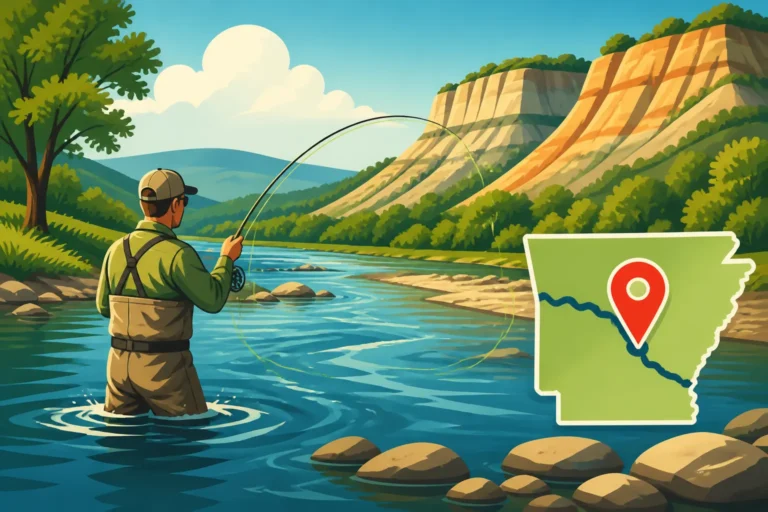
The Arkansas River is, without a doubt, a premier destination for catfishing in the state. From its entry point in the west, winding through the state, and eventually flowing into the Mississippi River, this waterway is a massive ecosystem teeming with catfish. It's particularly renowned for its massive blue catfish, with anglers consistently pulling in fish weighing 50 pounds or more, and the potential for true giants is always present.
The river's navigation pools, created by a series of locks and dams, are incredible hotspots. These pools create areas of slower current, deeper holes, and abundant structure like submerged timber and rock piles, which are perfect catfish hangouts. Areas immediately below the dams are especially productive, as the churning water disorients baitfish and creates rich feeding grounds. Popular stretches include the pools near Little Rock, Pine Bluff, and Fort Smith. Access points are plentiful, with numerous boat ramps and some bank fishing opportunities near public parks. When targeting big blues on the Arkansas River, fresh cut bait (like shad or skipjack herring) presented on heavy-duty bottom rigs is often the most effective approach. The strong currents mean you’ll need heavy sinkers to keep your bait in place, and a sturdy boat is essential for navigating the main channel safely.
White River's Hidden Catfish Gems
While the White River is often celebrated for its world-class trout fishing, particularly in the cold tailwaters below dams like Bull Shoals and Norfork, don't overlook its potential for catfish, especially further downstream where the water warms and the character of the river changes. Below the trout zones, the White River transitions into a slow-moving, meandering river with numerous oxbow lakes, sloughs, and deep bends that are absolute havens for channel and flathead catfish.
These downstream sections, particularly those within the White River National Wildlife Refuge, are phenomenal. The refuge, a vast expanse of bottomland hardwoods and cypress swamps, features many timber-filled lakes and sloughs directly connected to the river. These areas provide incredible cover and forage, making them prime territory for flatheads lurking in sunken trees and channels cruising the deeper sections. Anglers here often use live bait, like bluegill or sunfish, for flatheads, or chicken liver and worms for channels. Access can be a bit more challenging in some of these remote areas, often requiring smaller boats or even kayaks to navigate the sloughs and oxbows. However, the reward of pulling a stout flathead from a secluded cypress grove is well worth the effort. The river's natural flow and diverse ecosystem provide perfect conditions for robust catfish populations, making it a fantastic, often overlooked, spot for whiskers.
The Red River and Other Southern Waterways
Venturing into southern Arkansas, the Red River, forming part of the state's southwestern border, offers another fantastic catfishing experience, particularly for large blue catfish. This river is known for its muddy, nutrient-rich waters and deep channels, which are ideal for large blues to thrive. The Red River's strong currents and numerous bends create excellent ambush points and deep scour holes where trophy catfish congregate. Similar to the Arkansas River, heavy tackle and robust cut bait are the go-to choices here. Anglers often target areas where smaller tributaries feed into the main river, creating concentrations of baitfish and, consequently, catfish.
Beyond the Red, other smaller but equally productive rivers and bayous in southern Arkansas contribute to the state's rich catfishing tapestry. Rivers like the Ouachita River (before it flows into Lake Ouachita) and the Saline River offer more intimate catfishing experiences, with good numbers of channel cats and respectable flatheads. These rivers often have numerous logjams, undercut banks, and slow-moving pools that hold fish. Bank fishing is often more feasible on these smaller rivers, providing accessible options for anglers without a boat. Using a simple slip-sinker rig with stink bait, worms, or small cut bait can be highly effective in these smaller river environments. Understanding the unique characteristics of each river—current speed, bottom composition, and available structure—is key to consistently finding fish.
Top Lakes and Reservoirs for Catfish Anglers
While rivers hold many of the state's trophy catfish, Arkansas's numerous lakes and reservoirs offer incredibly consistent and often more accessible catfishing opportunities. These impoundments provide stable environments where catfish can grow large and are often found in predictable patterns.
Lake Ouachita and the Ouachita River System
Lake Ouachita, often celebrated for its crystal-clear waters and excellent bass fishing, also harbors a strong and often underestimated catfish population. While it might not produce the sheer numbers of 100-pound blues like the Arkansas River, it's an excellent spot for good-sized channel cats and respectable flatheads, particularly in the timbered areas and deeper creek channels.
The lake's many coves, submerged timber, and deep points are prime areas. Look for channel cats congregating around brush piles and natural structure, especially during the warmer months. Night fishing can be particularly productive on Lake Ouachita, as catfish become more active and move into shallower feeding grounds. For flatheads, focusing on the main lake points and creek arms with significant timber or rock structures is a good strategy. Live bait, like small bluegill or perch, fished near these structures is often the most effective method. The Ouachita River system, both above and below the lake, also provides excellent catfishing, with the river's bends and deeper holes holding consistent populations. Checking out areas on the Ouachita River near Camden or directly below the Lake Ouachita dam can yield great results.
The Productive Waters of Lake Conway
If you're looking for a lake that screams "catfish heaven," look no further than Lake Conway near Little Rock. This shallow, nutrient-rich lake is famous for its dense submerged timber and thick vegetation, which provides an ideal habitat for an abundance of channel and flathead catfish. Lake Conway is consistently one of the most productive catfish lakes in the state for both numbers and size.
The timber in Lake Conway is extensive, creating countless hiding spots and ambush points for flatheads. Anglers often fish live bait, such as bream, near these submerged trees. For channel cats, nearly any part of the lake with some depth and structure will hold fish. Stink baits, chicken livers, and nightcrawlers fished on the bottom are highly effective. Due to the shallow nature and heavy timber, patience and careful navigation are key. Many anglers use trotlines or juglines to cover more water effectively, a popular and productive method here. The sheer volume of catfish in Lake Conway makes it an excellent choice for anglers looking to put a good mess of fish in the cooler. It's often busy, but the fish are plentiful enough for everyone to have a good shot at success.
DeGray Lake and Its Deepwater Catfish
DeGray Lake, known for its beautiful scenery and clear waters, is another fantastic, albeit different, catfishing destination. This deeper, clearer reservoir holds excellent populations of blue and channel catfish, particularly in its extensive creek channels and main lake basin. While it might not have the timber density of Lake Conway, its deep structure and abundant forage make it a prime spot for larger fish.
Blue catfish in DeGray often relate to the deeper water, especially around main lake points, submerged humps, and the old river channel. Sonar is incredibly useful here for locating schools of baitfish and the catfish that follow them. Cut bait, particularly shad, is highly effective for these deepwater blues. Channel catfish are more widespread, found in coves, around marinas, and near any submerged brush or rocky areas. Night fishing is also very popular on DeGray, with anglers often setting up lights to attract baitfish, which in turn attract catfish. The numerous boat ramps and campgrounds at DeGray Lake State Park make access easy, and it's a great spot for family fishing trips where everyone can enjoy the beautiful surroundings while targeting catfish.
Here’s a quick overview of some top catfish spots:
| Location | Primary Catfish Species | Key Features | Best Techniques | Recommended Bait |
|---|---|---|---|---|
| Arkansas River | Blue, Channel, Flathead | Deep channels, locks & dams, strong currents | Bottom fishing, heavy tackle, anchored boat | Fresh cut bait (shad, skipjack), liver |
| White River (Lower) | Flathead, Channel | Oxbows, sloughs, submerged timber | Live bait (flatheads), bottom fishing (channels) | Live bream, worms, chicken liver |
| Red River | Blue, Channel | Muddy, deep channels, strong currents | Bottom fishing, heavy tackle, anchored boat | Fresh cut bait (shad), prepared baits |
| Lake Ouachita | Channel, Flathead | Clear water, submerged timber, deep channels | Night fishing, live bait, bottom fishing | Live bream, nightcrawlers, cut bait |
| Lake Conway | Channel, Flathead | Shallow, dense timber, abundant forage | Juglining, trotlining, live bait, bottom fishing | Live bream, stink baits, chicken liver |
| DeGray Lake | Blue, Channel | Deep water, creek channels, main lake basin | Sonar for blues, night fishing, cut bait | Shad, chicken liver, nightcrawlers |
Essential Gear and Techniques for Arkansas Catfish
Getting geared up correctly and knowing the right techniques are crucial for success when chasing Arkansas catfish. These fish can be powerful, and the right setup will make all the difference between landing a lunker and telling a "one that got away" story.
Rods, Reels, and Terminal Tackle
For serious catfishing, especially when targeting blue or flathead catfish in large rivers or deep lakes, you’re going to need robust equipment. Think heavy-duty.
- Rods: Look for medium-heavy to heavy action rods, typically 7 to 10 feet long. Shorter rods (around 7 feet) are good for boat fishing, offering more leverage in tight spaces, while longer rods (8-10 feet) are excellent for casting longer distances from the bank or for managing powerful runs from big fish. Brands like Ugly Stik or Berkley Big Game rods are popular choices because of their durability and backbone.
- Reels: Matching your rod with a strong baitcasting reel is essential. Conventional reels with good line capacity (300+ yards of 20-30 lb test mono or 50-80 lb braid) and a smooth, powerful drag system are ideal for blues and flatheads. For channel cats, a sturdy spinning reel in the 4000-6000 size range will suffice. Companies like Abu Garcia and Penn make excellent catfish-specific reels.
- Line: Braided line (50-80 lb test) is often preferred for its strength, lack of stretch, and sensitivity, allowing you to feel subtle bites even in strong current. However, many anglers still swear by monofilament (20-30 lb test) for its abrasion resistance and shock-absorbing qualities, which can be useful when a big fish makes a sudden run.
- Terminal Tackle:
- Hooks: Circle hooks are highly recommended, especially when fishing for release, as they significantly reduce gut hooking. Sizes 7/0 to 10/0 are good for larger blues and flatheads, while 2/0 to 5/0 work well for channel cats.
- Sinkers: You'll need an assortment of weights. Heavy no-roll sinkers or pyramid sinkers (2-8 ounces, sometimes more) are crucial for holding bottom in strong currents. For lighter applications, egg sinkers or barrel weights (1-3 ounces) are fine.
- Swivels and Leaders: Use heavy-duty barrel swivels (100+ lb test) to prevent line twist and stout monofilament or fluorocarbon leaders (30-80 lb test) to protect your main line from abrasion against teeth or structure.
Best Baits and Rigging Strategies
Choosing the right bait and rig can make or break your catfishing trip. Catfish are opportunistic feeders, but they do have preferences, especially the larger blues and flatheads. For more on this, check out What Bait Catches the Biggest Catfish in Arkansas?.
- Cut Bait: This is king for blue catfish. Fresh cut bait from oily fish like shad, skipjack herring, or carp is incredibly effective. The scent trail it puts out drives blues wild. Cut fish into chunks or strips, ensuring they're large enough to attract big fish but small enough for a hook set.
- Live Bait: Flatheads are almost exclusively predators and prefer live bait. Small bluegill, sunfish, carp, or goldfish (within legal baitfish regulations) fished alive are irresistible to flatheads lurking in submerged timber. Hook them through the back or lips to keep them lively.
- Prepared/Stink Baits: For channel catfish, prepared stink baits (punch baits, dip baits) and natural options like chicken livers, nightcrawlers, and shrimp are extremely effective. The strong odor attracts channels from a distance.
- Rigging Strategies:
- Carolina Rig/Santee Cooper Rig: This is a versatile bottom rig. For a Carolina rig, slide an egg sinker onto your main line, tie on a swivel, then attach a monofilament or fluorocarbon leader (12-24 inches) with your hook. The Santee Cooper rig adds a float (often a peg float or cigar float) to the leader, keeping the bait slightly off the bottom and visible to catfish.
- Three-Way Swivel Rig: Excellent for strong currents. Tie your main line to one eye of a three-way swivel, a short leader with a heavy sinker to another eye, and your hook leader (18-36 inches) to the third. This keeps your bait near the bottom but allows it to drift enticingly in the current.
- Suspension Rigs (for Juglines/Trotlines): These methods involve suspending baits at various depths using floats (juglines) or a main line stretched across a waterway with multiple baited hooks (trotlines). They are highly effective for covering large areas and are often used for harvesting good numbers of catfish. You can find more details on Trotline Fishing Basics and Jug Fishing Basics for Catfish.
Understanding Prime Catfish Times and Conditions
Catfish are generally more active during certain times and under specific conditions. Knowing these patterns can significantly increase your success.
- Time of Day: Catfish, especially flatheads and larger blues, are often most active during low light conditions – dawn, dusk, and throughout the night. Their excellent sense of smell and barbels allow them to navigate and feed effectively in the dark. For channel cats, daytime fishing can still be very productive, especially in cooler, overcast weather. If you're interested in night fishing, you'll want to check out Is Night Fishing Good for Catfish?.
- Season: While catfish can be caught year-round, spring and fall are often considered prime times. In spring, as water temperatures rise, catfish become very active, feeding heavily before and after spawning. In fall, they gorge themselves in preparation for winter. Summer can be excellent, particularly during the cooler nighttime hours or by targeting deeper, cooler water during the day.
- Weather: Overcast days, especially those following a rain shower that stirs up the water and washes in food, can be fantastic. Catfish tend to be less active during bright, sunny, high-pressure days.
- Water Conditions: Catfish love current. On rivers, look for eddies, current breaks, and seams where fast water meets slow water. In lakes, current can be generated by wind or even dam discharges. Muddy or turbid water, especially after a rain, often leads to increased catfishing success because it provides cover and disperses scent more effectively. High water levels can also push fish into new feeding grounds along flooded banks.
By combining the right gear with the best baits, and understanding when and where catfish are most likely to be active, you'll significantly improve your chances of a successful and memorable trip.
Navigating Regulations and Ethical Fishing
Before you even cast a line, understanding and adhering to Arkansas's fishing regulations is not just a suggestion, it's a legal requirement. These rules are in place to ensure healthy fish populations for generations to come, and ignoring them can lead to hefty fines and penalties.
Understanding Arkansas Catfish Limits
Like all game fish, catfish in Arkansas have specific daily creel limits and sometimes size restrictions, which can vary by waterbody. It’s absolutely crucial to check the latest regulations published by the Arkansas Game and Fish Commission (AGFC) before heading out. Generally, statewide daily limits for catfish are quite generous, especially for channel and blue catfish, to encourage harvest and management. However, some specific lakes or river sections might have special regulations to protect trophy fish or manage specific populations.
For example, while the statewide daily limit for channel catfish and blue catfish is often 10 fish in aggregate, with no more than two being 34 inches or longer, specific areas might have more restrictive rules. Flathead catfish generally have stricter limits, often just 5 fish per day. These limits are designed to prevent overfishing and maintain a sustainable fishery. It's not just about what you can catch, but what you should catch. Practicing selective harvest, releasing larger breeding fish, and keeping smaller, younger fish for the table is an excellent way to contribute to conservation. Always measure your fish carefully if there are size limits, and be prepared to release fish safely if they don't meet the criteria. Always make sure to be familiar with Arkansas Fishing Regulations Guide before you head out.
The Importance of a Valid Fishing License
This might seem obvious, but you'd be surprised how many people overlook it or assume they're exempt. With very few exceptions, every angler 16 years of age and older needs a valid Arkansas fishing license. There are different types of licenses available, from annual resident licenses to short-term nonresident options, and even special licenses for seniors. Not having the correct license is a quick way to turn a relaxing day on the water into a stressful encounter with a game warden, complete with fines.
Purchasing a license is easy and can be done online through the AGFC website, at any license vendor (like a sporting goods store), or over the phone. Make sure to carry your license with you while fishing, either as a physical copy or a digital one on your phone. Even if you're on a guided trip, you are still responsible for having your own license. The revenue generated from license sales directly funds conservation efforts, habitat restoration, and enforcement, all of which contribute to the excellent fishing opportunities we enjoy in Arkansas. For detailed information on costs and types, you might want to look into Arkansas Fishing License Rules and Costs. Remember, ignorance of the law is not an excuse, so do your homework!
Beyond the Bait: Maximizing Your Catfish Experience
Catching catfish is a fantastic experience, but a truly great fishing trip is about more than just the fish you land. It's about the planning, the memories, and even how you enjoy the fruits of your labor.
Planning Your Trip and Finding Guides
A well-planned trip starts with research. Decide what kind of catfishing experience you're after: trophy blues, a mess of channel cats for dinner, or the challenge of a big flathead. This will help you narrow down your location choices using the information above. Consider the time of year and the expected weather conditions.
If you're new to the area or looking to maximize your chances, especially for trophy fish, hiring a local fishing guide can be an invaluable investment. Guides know the waters intimately, have specialized equipment, and can put you on fish faster than you could on your own. They can teach you techniques, rig your lines, and even bait your hooks, leaving you free to focus on the fight. Services like FishingBooker can help you find reputable guides across Arkansas, allowing you to compare options, read reviews, and book directly. Just search for "Arkansas catfish guides," and you'll find plenty of experienced pros ready to take you out on the Arkansas River, Lake Conway, or any other prime spot. They often provide all the necessary gear, which saves you the hassle and expense of buying specialized equipment if you're not a regular catfisherman. Many guides will also help clean your catch, making the end of the day even more enjoyable.
Enjoying Your Catch: Cleaning and Cooking Tips
One of the great joys of catfishing is bringing home a fresh meal. Channel catfish, in particular, are renowned for their mild, flaky white meat, making them excellent table fare. Blue catfish also offer delicious meat, especially smaller to medium-sized fish (under 10-15 pounds), while flatheads have a slightly firmer, sweeter flesh.
- Cleaning: The key to good-tasting catfish is proper cleaning. Skinning catfish can be a bit tricky for beginners, but it gets easier with practice. You'll need a sharp fillet knife, a pair of pliers, and ideally a cleaning station. Start by making a cut behind the head, then use pliers to peel the skin away. Once skinned, you can either fillet the fish (removing the meat from the bones) or gut it and leave it whole for frying. Promptly getting your catch on ice after landing it is crucial to maintaining its quality.
- Cooking: Catfish is incredibly versatile.
- Frying: This is the most classic method. Dredge fillets or whole fish in seasoned cornmeal or a fish fry mix and deep-fry until golden brown and flaky. Serve with hushpuppies, coleslaw, and tartar sauce.
- Grilling: Catfish fillets are excellent grilled. Marinate them in lemon juice, herbs, and spices, then grill until cooked through.
- Baking/Broiling: For a healthier option, bake or broil fillets with butter, garlic, and your favorite seasonings.
- Stew/Gumbo: Catfish holds up well in stews, gumbos, or even fish tacos.
No matter how you prepare it, fresh Arkansas catfish is a true culinary delight. Enjoying your catch with friends and family is a perfect way to cap off a successful day on the water, cementing those memories and making you eager for your next adventure.
Disclaimer
Fishing regulations, license requirements, and fish limits in Arkansas are subject to change. Always consult the latest official Arkansas Game and Fish Commission (AGFC) publications or website before your trip to ensure compliance. This guide is for informational purposes only and should not be considered a substitute for official regulations. Stay safe and fish responsibly.