Bass Fishing Techniques for Beginners
For many folks just starting out, bass fishing can feel incredibly overwhelming. You see experienced anglers effortlessly reeling in trophy fish, and it’s easy to get lost in the sheer volume of lures, techniques, and specialized gear. This comprehensive guide is here to cut through the noise, offering beginner-friendly, practical advice to help you confidently catch bass in Arkansas, turning those frustrating blank days into memorable catches.
Understanding Arkansas's Popular Bass Species
Before you even make your first cast, it's really helpful to know a little about the fish you're targeting. In Arkansas, we're blessed with several species of bass, and while they share some common traits, understanding their individual preferences can make a huge difference in your success. It’s like knowing your dinner guests before planning the menu – some like it spicy, others prefer something mild.
Largemouth Bass: The Classic Target
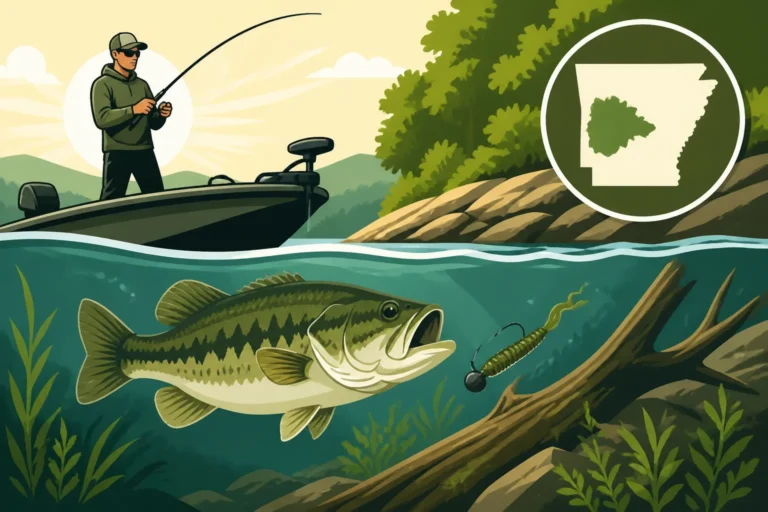
When most people picture "bass fishing," they're probably thinking about the largemouth bass. These guys are the rock stars of many Arkansas lakes and ponds. They're recognized by that tell-tale jawline that extends beyond their eye, and a distinct dark, horizontal stripe running down their side. They tend to prefer warmer, murkier water, and they absolutely love to hide in cover like submerged logs, lily pads, grass beds, and around docks or brush piles.
Think of largemouth bass as ambush predators. They'll often sit and wait, camouflaged in their chosen hideout, ready to explode on anything that swims by their strike zone. This means your fishing strategy needs to focus on presenting your lure right into, or very close to, these dense cover areas. Knowing How to Identify a Largemouth Bass is your first step to understanding their behavior. They're not usually out roaming open water; instead, they're tucked away, patient and cunning.
Smallmouth Bass: The River Fighters
If you're looking for a serious fight and enjoy clearer, cooler water, then the smallmouth bass is your fish. These powerful bronze beauties are abundant in the rockier, moving waters of Arkansas's Ozark streams and some of our larger, deeper lakes like Bull Shoals and Norfork. Their jaw doesn't extend past their eye, and they typically have vertical bars rather than a horizontal stripe. Smallmouth Bass in Arkansas's Ozark Streams are known for their acrobatic jumps and hard pulls, making them a favorite among anglers who love a challenge.
Smallmouth bass prefer rocky bottoms, current breaks, and drop-offs. You'll often find them near submerged boulders, gravel beds, and ledges. Unlike largemouths, they're more open-water oriented, cruising rocky points and submerged humps. Your approach for smallmouths will often involve lures that mimic crawfish or baitfish that dart through rocky structures, or working the edges of current. They're less about ambush from dense cover and more about active pursuit in their preferred rocky domain.
Kentucky Bass: The Spotted Underdog
Often overlooked but certainly not to be underestimated, the Kentucky bass, also known as the spotted bass, is another fantastic sport fish in Arkansas. They're commonly found in many of the same waters as largemouths and smallmouths, sometimes even in the same areas, which can make identification a bit tricky for beginners. The key feature for a Kentucky bass is a patch of rough scales on its tongue – something you won't find on a largemouth or smallmouth. Their jaw extends to the middle of the eye, not past it like the largemouth, and they have more distinct rows of spots on their lower belly.
Kentucky bass tend to school up more than largemouths, especially in open water, and they'll often hold deeper on points, humps, and ledges. They're aggressive eaters and will readily strike a variety of lures. Understanding What Is a Kentucky Bass? can help you appreciate this feisty fish. While they might not grow as large as some of the trophy largemouths, they offer a consistent and spirited fight, making them a great target for beginners learning the ropes. Don't be surprised if you catch a few "Kentuckies" while targeting their larger cousins.
Essential Gear for Beginner Bass Anglers
Getting started in bass fishing doesn't mean you need to empty your wallet or buy every gadget under the sun. The truth is, a few essential pieces of gear will get you out on the water and catching fish. It's about having the right basic tools, not the most expensive ones. Focus on functionality and ease of use, especially when you're just learning.
Rods, Reels, and Line: Your Core Setup
For beginners, a medium-heavy action spinning combo is usually the easiest and most versatile choice. A spinning reel is less prone to backlashes (those dreaded bird's nests of line) than a baitcasting reel, making casting much simpler to learn. A rod between 6'6" and 7' long with a fast action tip will give you enough sensitivity to feel subtle bites and enough backbone to handle a feisty bass. You can find excellent, affordable combos from brands like Shimano or Daiwa that are perfect for learning.
When it comes to fishing line, a good all-around choice for beginners is 8 to 12-pound monofilament line. Monofilament is forgiving, easy to tie knots with, and has a bit of stretch, which can help absorb shock when a bass strikes aggressively. Later, you might explore fluorocarbon or braided lines, but monofilament is the friendliest starting point. Make sure your reel is spooled correctly; a poorly spooled reel can lead to frustrating tangles and shorter casts. You can pick up a quality spool of line on Amazon for a reasonable price.
Tackle Box Essentials: Baits, Hooks, and Weights
You don't need a huge tackle box overflowing with hundreds of lures. Start with a curated selection of proven bass catchers. Here’s a basic list:
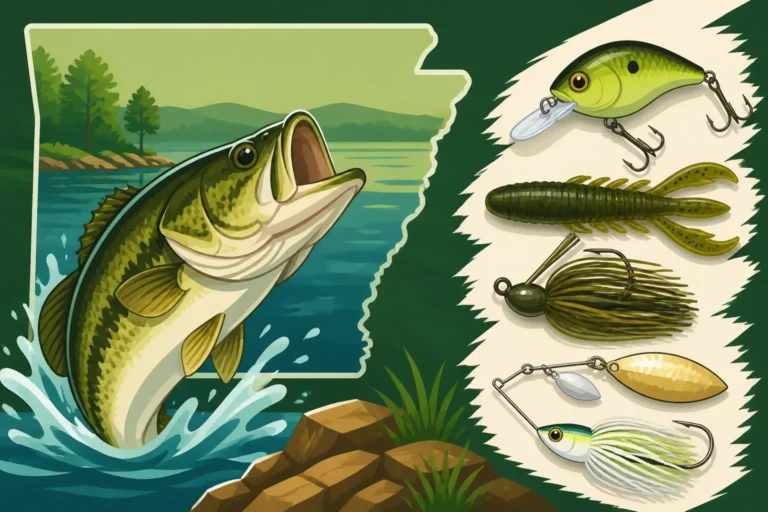
- Soft Plastic Worms and Creature Baits: These are arguably the most versatile and effective bass lures. Get a few packs in natural colors like green pumpkin, junebug, and black/blue. Brands like Zoom and Strike King offer excellent options.
- Worm Hooks: You'll need various sizes (e.g., 3/0, 4/0, 5/0) for rigging your soft plastics. Offset or EWG (Extra Wide Gap) hooks are great for Texas rigging.
- Bullet Weights: A selection of lead or tungsten bullet weights (e.g., 1/8 oz, 1/4 oz, 3/8 oz) for Texas rigging.
- Spinnerbaits: A couple of spinnerbaits in white, chartreuse, or natural baitfish patterns (e.g., 1/4 oz or 3/8 oz). These are excellent search baits.
- Crankbaits: A few shallow to medium-diving crankbaits in shad or crawfish patterns. Look for brands like Rapala or Bandit.
- Topwater Lures: A "popper" or "walking bait" can be incredibly exciting when bass are active on the surface.
- Pliers/Forceps: Essential for removing hooks safely from fish.
- Line Clippers: Small scissors or clippers for cleanly cutting line.
- Small First-Aid Kit: Always a good idea for minor cuts or hook pricks.
Remember, start small and expand as you learn what works in the waters you fish most often.
Basic Boating and Bank Fishing Needs
Whether you're fishing from the bank or a boat, a few additional items will make your trip more comfortable and successful. For bank anglers, a comfortable backpack or tackle bag to carry your essentials, a small cooler for drinks and snacks, and a folding chair can make a world of difference during longer sessions. For boat anglers, always prioritize safety: life vests for everyone onboard, a fully charged battery for your trolling motor (if applicable), and all required safety equipment.
Regardless of where you fish, don't forget sun protection – a wide-brimmed hat, sunglasses, and sunscreen are crucial. A good pair of polarized sunglasses will also help you see through the water better, spotting potential cover or even cruising bass. A measuring tape and a small scale are also nice to have if you want to track your catches, especially if you're practicing catch and release.
Basic Casting and Presentation Techniques
Okay, you've got your gear. Now it's time to learn how to get your lure in the water effectively. Don't worry if you're not casting like a pro on day one; it takes practice, but the basics are quite straightforward. The goal is to cast accurately and present your lure naturally to the fish.
The Overhead Cast: Your Go-To for Distance and Accuracy
The overhead cast is your bread and butter for most bass fishing situations. It's the most common and generally the easiest to learn for beginners using a spinning rod.
- Grip the Rod: Hold the rod comfortably with your dominant hand, thumb on the reel foot, and your index finger extended to grab the line.
- Open the Bail: Flip open the bail on your spinning reel with your non-dominant hand.
- Hold the Line: Use your index finger to lightly hold the fishing line against the rod handle.
- Lure Position: Let your lure hang about 6-12 inches from the rod tip.
- Look at Your Target: This is crucial! Always look where you want the lure to go.
- The Backward Sweep: Bring the rod straight back over your shoulder, stopping when the rod tip is roughly at 1 o'clock. This loads the rod with energy.
- The Forward Cast: Smoothly sweep the rod forward, stopping around 10 or 11 o'clock. As the rod comes forward, release your index finger from the line.
- Follow Through: Point the rod tip at your target as the lure flies.
- Close the Bail: Once the lure hits the water, manually close the bail or give the reel handle a crank.
Practice in an open yard without a lure (use a practice weight) until you feel comfortable. Focus on smooth, fluid motions rather than trying to power the cast.
Pitching and Flipping Basics: Getting Into Tight Cover
Once you've mastered the overhead cast, you'll inevitably encounter situations where bass are hiding deep within dense cover—think thick bushes, submerged trees, or lily pads that you can't reach with a regular cast. This is where pitching and flipping come in handy. These techniques are designed for short, accurate presentations to tight spots, often with minimal splash.
- Pitching: Imagine a pendulum swing. You'll hold the lure in one hand, rod in the other. Lower the rod tip towards the water, swing the lure forward, and release the line with your thumb (or index finger for spinning gear) as it swings towards your target. The lure sails under its own momentum, entering the water quietly. This is excellent for placing a soft plastic worm right next to a dock post or into a small opening in a brush pile.
- Flipping: This is for even closer, more precise presentations. You'll strip out a few feet of line, hold the lure, and use a short, underhand swing to literally "flip" the lure into the cover. It’s almost like a controlled drop, perfect for getting a jig or heavy worm into a tight spot with hardly any disturbance.
These techniques take more practice, but they are absolutely essential for catching those wary bass hiding in prime cover. Mastering them will open up a whole new world of fishing opportunities, especially in waters with a lot of natural or man-made structure.
Retrieving and Setting the Hook: The Critical Connection
Once your lure is in the water, the way you retrieve it is just as important as how you cast it. Different lures have different retrieve styles, but the common goal is to make your bait look as natural and enticing as possible.
- Soft Plastics: These are often fished with a "drag and hop" or "lift and drop" retrieve. Let it sink, then slowly drag it along the bottom a few feet, pausing, then giving a slight hop. Most bites on soft plastics will feel like a slight "thump," a sudden slack in your line, or the line simply moving sideways.
- Spinnerbaits: A simple, steady retrieve is often effective. Vary your retrieve speed to find what the fish prefer. Sometimes a pause or a twitch can trigger a strike.
- Crankbaits: Crank them down to their running depth, then vary your retrieve with pauses and rips. Bumping them off submerged timber or rocks can often trigger reaction strikes.
When you feel a bite, don't just gently pull. You need to "set the hook" firmly and decisively. With a spinning rod, quickly reel up any slack, then sweep the rod up and to the side forcefully. This drives the hook into the bass's tough mouth. If you don't set the hook hard enough, the lure can easily pull out, and you'll be left with a story of "the one that got away." A solid hookset is often the difference between a bite and a fish in the boat!
Top Beginner-Friendly Baits and Lures
Alright, let's talk about what to tie onto the end of your line. As a beginner, you want lures that are easy to use, versatile, and consistently catch fish. Forget the super-specialized stuff for now; we're focusing on the proven workhorses of bass fishing that deliver results without needing a Ph.D. in lureology.
Soft Plastic Worms and Creature Baits: The Universal Choice
If there's one lure type every beginner needs, it's soft plastics. They're incredibly versatile and mimic a wide array of natural forage, from worms and crawfish to baitfish.
- Plastic Worms: The most common way to rig a plastic worm is the Texas Rig. Slide a bullet weight onto your line, tie on an offset or EWG hook, then thread the worm onto the hook so the hook point is buried back into the plastic, making it weedless. This setup is fantastic for fishing in cover like brush piles, grass, or around rocks without snagging. Use a "drag and hop" retrieve, letting the worm slowly sink, dragging it, and letting it fall again. You'll get bites on the fall, on the drag, or during the pause. Colors like green pumpkin, junebug, and black are perennial favorites.
- Creature Baits: These soft plastics come in all sorts of shapes, often resembling crawfish or small critters with flapping appendages. Rig them similarly to plastic worms (Texas Rig or Carolina Rig for deeper water). Their erratic action on the retrieve can be irresistible to bass, especially when they're feeding on crawfish. They're excellent choices for punching through vegetation or flipping into heavy cover. Many anglers swear by creature baits as some of the Best Bait for Bass by Season, adapting colors and sizes to match local forage.
These lures are affordable, easy to rig, and incredibly effective. You can buy a variety pack from Amazon to get a feel for different shapes and sizes.
Spinnerbaits and Crankbaits: Covering Water Effectively
These two lure types are fantastic for "searching" for bass, meaning they allow you to cover a lot of water quickly to locate active fish.
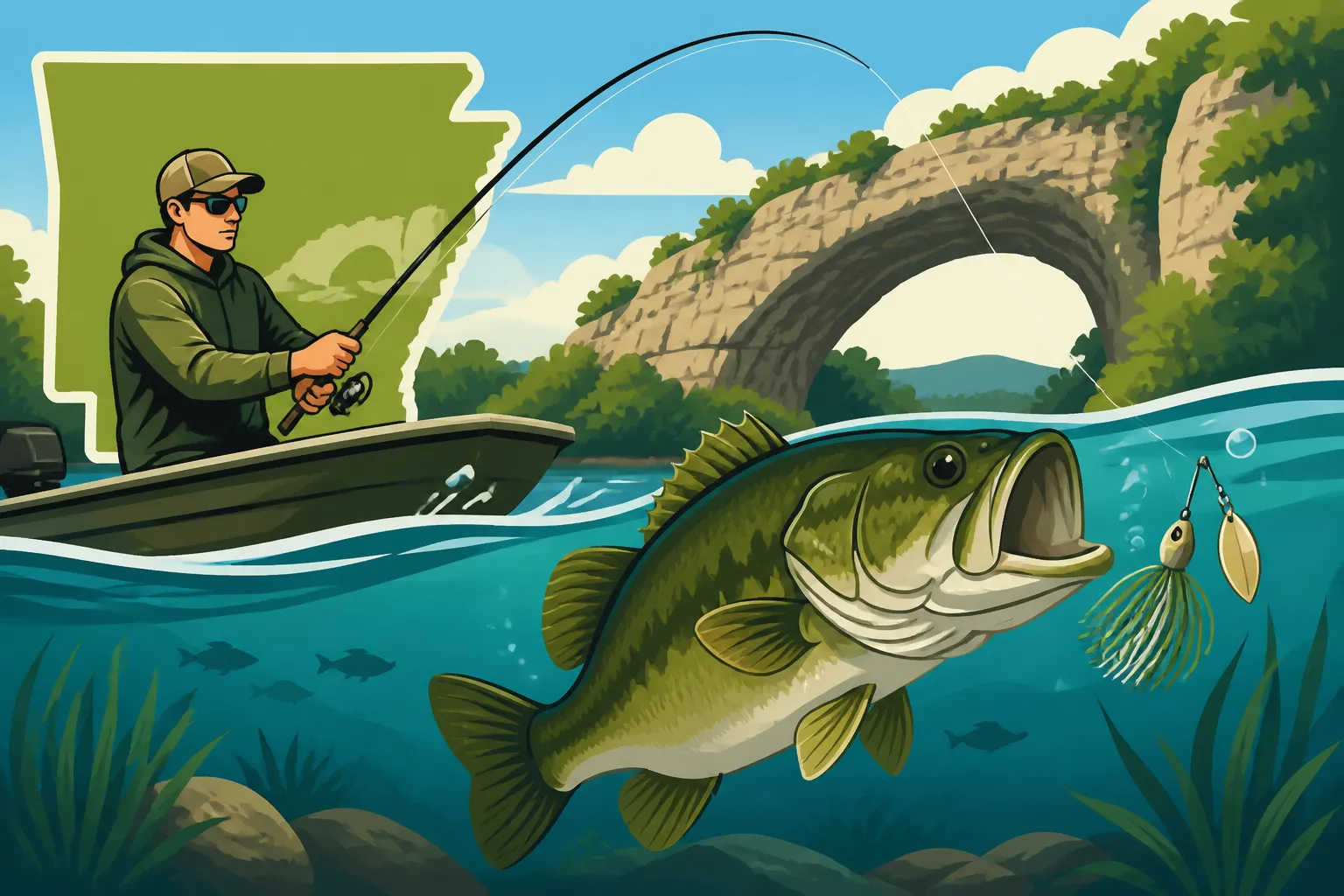
- Spinnerbaits: These lures feature one or more spinning blades that flash and vibrate, mimicking a fleeing baitfish. They're virtually weedless, making them perfect for fishing around submerged timber, rock piles, and grass. A simple, steady retrieve is often all it takes. Vary your retrieve speed and depth, sometimes giving the rod tip a twitch to make the blades flare. White, chartreuse, and white/chartreuse combinations are great starting colors. They're particularly effective in stained or slightly murky water where their vibration and flash can attract bass from a distance. Try throwing a 3/8 oz or 1/2 oz spinnerbait in areas where bass might be chasing shad or smaller prey.
- Crankbaits: These hard-bodied lures dive to various depths when retrieved, imitating baitfish. They have a lip (or bill) that causes them to dive. Shallow divers are great for fishing flats and around sparse cover, while medium to deep divers are excellent for targeting bass along drop-offs, ledges, or submerged structure. The key to crankbait fishing is to "deflect" the lure off cover – banging it into rocks, stumps, or logs can often trigger a reaction strike from a curious bass. Shad patterns (silver/blue) and crawfish patterns (red/orange) are essential. When bass are active, especially during the pre-spawn, a crankbait can be incredibly productive.
Topwater Lures: The Thrill of the Surface Strike
For sheer excitement, nothing beats a topwater strike. These lures float on the surface, creating commotion that draws bass up from below.
- Poppers: These lures have a cupped face that "pops" and sprays water when twitched. Cast them near cover, let them sit for a moment, then give a sharp twitch or two, pause, and repeat. The erratic splash and pause often mimic a struggling baitfish, making them irresistible.
- Walking Baits (e.g., Zara Spook): These cigar-shaped lures require a specific "walk the dog" retrieve where you twitch the rod tip while reeling slack, making the lure zig-zag enticingly across the surface. This retrieve takes some practice but is incredibly rewarding.
- Frogs: Soft plastic frog lures are perfect for fishing over thick lily pads or matted grass where other lures would snag. Reel them steadily or twitch them over the vegetation. When a bass blows up on a frog, wait a second before setting the hook to ensure the fish has the lure.
Topwater action is often best during low light conditions, such as dawn and dusk, or on cloudy days, and is a blast during the warmer months. There's nothing quite like seeing a big bass explode on your lure right on the surface!
Reading the Water and Finding Bass
Knowing where to cast is just as important as what to cast. Bass are creatures of habit, and they relate to their environment in predictable ways. Learning to "read the water" means understanding what different features tell you about where bass might be holding. It's like being a detective, looking for clues.
Structure and Cover: Bass Apartments
Bass love structure and cover. Think of these as their homes, hunting grounds, or hiding spots.
- Structure refers to changes in the lake or river bottom, like humps, points, ledges, drop-offs, and creek channels. These are permanent features that dictate where fish travel and congregate. A deep creek channel running through a flat, for instance, is a major highway for bass. Submerged points extending into the lake are ambush points. Understanding how bass relate to these features is key.
- Cover refers to objects on or in the water, providing shelter or ambush opportunities. This includes things like fallen trees (laydowns), brush piles, rock piles, docks, boat houses, lily pads, grass beds, and submerged stumps. Bass will use cover for shade, protection from predators, and to ambush their prey. You'll often find that the Best Fishing Spots in Arkansas are those with abundant structure and cover.
As a beginner, focus on visible cover first. Cast your Texas-rigged worm or spinnerbait directly to the edges of lily pads, under dock pilings, or alongside fallen trees. Work your lure slowly through these areas, paying close attention to any changes in your line or rod tip that might signal a bite. Remember, a slight pause in your retrieve near a piece of cover can often trigger a strike from a waiting bass.
Water Temperature and Clarity: Key Environmental Factors
Bass are cold-blooded, so water temperature directly impacts their metabolism, activity levels, and where they position themselves.
- Temperature: In colder water (below 50°F), bass are generally sluggish and will hold tight to structure, often deeper. Your presentations need to be slow and deliberate. As the water warms (50-65°F), bass become more active, especially during the spring spawn. This is When Do Bass Spawn in Arkansas Reservoirs becomes highly relevant, as bass move to shallower waters to bed. In hot summer water (above 80°F), bass will seek cooler, deeper water, or shade, often becoming nocturnal. Learning to check water temperature with a simple thermometer is a game-changer.
- Clarity: Water clarity also influences bass behavior and lure choice. In clear water, bass rely heavily on sight, so natural-colored lures and lighter lines are often more effective. They can also be warier, requiring longer casts and more subtle presentations. In murky or stained water, bass rely more on their lateral line (which detects vibrations) and sense of smell. Brighter colored lures, lures with strong vibrations (like spinnerbaits or noisy crankbaits), and jigs with scented trailers can be very productive. Don't be afraid to experiment with bold colors in stained water.
Pay attention to these factors when you're planning your fishing trip and when you're out on the water. They'll tell you a lot about where the fish are likely to be and what kind of presentation they might prefer.
Identifying Feeding Zones: Where the Action Happens
Bass, like all predators, need to eat. Understanding where they feed is paramount. Look for areas where baitfish congregate or where crawfish are abundant.
- Shad and Minnows: If you see schools of baitfish flickering on the surface or showing up on your fish finder, bass are likely nearby. Points, humps, and open water near structure are often prime feeding zones when bass are chasing baitfish. Look for surface activity like schooling baitfish jumping or birds diving – these are tell-tale signs of a feeding frenzy.
- Crawfish: In rocky areas, bass will often feed on crawfish. Jigs and creature baits that mimic crawfish are excellent choices here. Rocky banks, riprap along causeways, and areas with submerged rock piles are classic crawfish habitats.
- Transition Areas: These are spots where different types of bottom or cover meet—for example, where a gravel flat meets a rocky drop-off, or where a weed line ends and open water begins. Bass often patrol these transition zones, using them as highways or ambush points. These "edges" are incredibly productive spots because they offer both cover and access to food. If you're fishing The Top Arkansas Lakes for Bass, Crappie, and Catfish, you'll find these transition zones everywhere.
By combining your understanding of structure, cover, water conditions, and feeding zones, you'll start to develop an intuitive sense of where bass are likely to be. It's a skill that grows with every trip, so pay attention to what works (and what doesn't) each time you cast a line.
Seasonal Bass Fishing Tips for Arkansas
Bass behavior changes dramatically throughout the year, primarily driven by water temperature and their spawning cycle. What works in spring won't necessarily work in winter. Understanding these seasonal patterns is like having a secret calendar for when and where to find the most active bass.
Spring: The Pre-Spawn and Spawn Frenzy
Spring is arguably the most exciting time for bass fishing in Arkansas. As water temperatures rise into the 50s and 60s, bass begin to move from their deep wintering holes into shallower areas.
- Pre-Spawn (Water Temp 45-55°F): Bass are hungry and aggressive, fattening up before the strenuous spawn. They'll stage on points, humps, and secondary creek channels leading into spawning coves. This is an excellent time to use moving baits like crankbaits, spinnerbaits, and even jerkbaits to cover water and find these active fish. They're looking for big meals and are often willing to chase.
- Spawn (Water Temp 55-68°F): Once water temperatures hit the mid-50s and climb, bass move onto shallow flats, protected coves, and pockets to build nests and spawn. Look for visible beds (circular cleared-out areas) in 1-5 feet of water, often near submerged wood, reeds, or docks. Soft plastics like lizards, tubes, or small worms, pitched or flipped onto the bed, can trigger strikes from protective males. Remember that some anglers choose to avoid targeting bedding fish to allow them to successfully reproduce.
- Post-Spawn (Water Temp 68-75°F): After spawning, bass are often exhausted and scattered. Some will remain shallow, guarding fry, while others retreat to nearby deeper cover to recover. This can be a challenging period, but finesse techniques (lighter lines, smaller baits) or topwater lures for bass guarding fry can be effective. Bass Fishing Techniques by Season provides a deeper dive into these periods.
Summer: Deep Water, Shade, and Night Fishing
Summer in Arkansas means warm water, and bass will adjust accordingly. They seek cooler, more oxygenated water.
- Deep Water: During the heat of the day, bass often move to deeper water, congregating on offshore ledges, humps, and brush piles. Carolina rigs, deep-diving crankbaits, and heavy jigs are excellent for targeting these deep-water fish. Many of Arkansas's Best Lakes for Family Fishing Trips offer excellent deep-water structure.
- Shade and Cover: Shallow bass will seek dense shade provided by docks, overhanging trees, or thick vegetation. Flipping and pitching jigs or Texas-rigged soft plastics into these shaded pockets can be very effective.
- Low Light/Night Fishing: Bass become much more active during cooler periods like dawn, dusk, and especially at night. Topwater lures, large dark-colored spinnerbaits, or even noisy crankbaits can produce explosive strikes under the stars. For those long, hot days, Night Fishing Spots on Lake Hamilton and other lakes can offer a fantastic alternative.
Fall: The Feeding Frenzy Before Winter
As water temperatures begin to drop in the fall (60-70°F), bass enter another aggressive feeding period, trying to put on weight for winter.
- Baitfish Migration: Baitfish, particularly shad, begin to school up and move into creek arms and shallower flats. Bass follow them, creating a fantastic opportunity for anglers. Look for schooling activity on the surface.
- Reaction Baits: This is a prime time for fast-moving lures like crankbaits, spinnerbaits, and even topwaters early in the morning. Covering water is key to finding these nomadic schools of feeding bass. Jerkbaits also become highly effective as the water cools further.
- Cooler Temps: As fall progresses and water temps dip into the 50s, bass will start moving toward deeper wintering areas, but they'll often stage on the last remaining shallow structure like rocky points and channel swings. You can find detailed patterns in Fall Fishing Patterns for Bass and Crappie.
Winter: Slow and Deep Presentations
Winter fishing in Arkansas can be challenging, but it can also produce some of the biggest bass, as they often congregate in predictable deep-water locations.
- Deep and Slow: Bass will typically hold in deep creek channels, on submerged ledges, or around deep timber and brush piles. Their metabolism slows, so your presentations need to be agonizingly slow.
- Finesse Tactics: Vertical jigging spoons, shaky head jigs with small worms, and suspending jerkbaits (with very long pauses) are extremely effective. You're trying to coax a bite, not trigger a chase.
- Warmer Days: On warmer, sunny winter days, bass might move up to sun-drenched rock banks or mud flats to absorb heat. These can be prime spots for a slow retrieve. If you can handle the cold, winter fishing can be incredibly rewarding for patient anglers.
Common Mistakes and How to Avoid Them
Even experienced anglers make mistakes, but as a beginner, it's easy to get frustrated and feel like you're doing everything wrong. The good news is, many common beginner pitfalls are easily fixable with a little awareness and patience.
Overcomplicating Things: Keep it Simple, Stupid
One of the biggest mistakes beginners make is thinking they need every lure, every technique, and every piece of specialized gear to catch bass. The internet and tackle shops can be overwhelming!
- The Lure Trap: Don't buy dozens of different lures. Stick to the handful of versatile baits we discussed – Texas-rigged worms, spinnerbaits, a shallow crankbait, and maybe a topwater. Learn to fish these well in various situations before expanding your arsenal. Mastering one lure is far more effective than being mediocre with twenty.
- Technique Paralysis: Similarly, don't try to master flipping, pitching, drop-shotting, and shaky-heading all in one day. Focus on learning a solid overhead cast, and then how to effectively retrieve your chosen beginner lures. Confidence in a few basic presentations will lead to more fish than struggling with too many advanced techniques.
- Gear Overload: You don't need the most expensive rod and reel. A good quality, medium-heavy spinning combo is perfectly adequate. Focus on learning the basics with reliable, functional gear. You can always upgrade later as your skills and passion grow.
Remember the "K.I.S.S." principle: Keep It Simple, Stupid. Start with the basics, build your confidence, and then gradually explore more advanced options.
Not Adapting: The "One Trick Pony" Problem
It's natural to find one lure or one spot that works for you, and then stick with it. However, bass fishing is rarely that simple. Conditions change, bass move, and what worked yesterday might not work today. This is the "one trick pony" problem.
- Vary Your Retrieve: If you're not getting bites, don't just keep reeling at the same speed. Speed up, slow down, add pauses, give twitches. Bass often strike out of reaction, and a change in cadence can trigger that strike.
- Change Lure Color or Size: If the bass aren't biting your green pumpkin worm, try a junebug. If a big spinnerbait isn't working, try a smaller one. Water clarity and sunlight can dramatically affect lure visibility, so a simple color change can sometimes be the magic bullet.
- Move Around: Don't get stuck in one spot. If you've fished an area thoroughly and haven't gotten any bites, move to another promising spot. Bass are often found in schools, and if you're not getting bit, you might not be on them. Try different types of cover or structure. If the shallows are dead, try a nearby drop-off.
- Check Conditions: Has the weather changed? Did a cold front move in? Did the water level drop? Any of these factors can completely change where bass are holding and how they're feeding. Weather and Water Temperature Fishing Tips are invaluable here. Being observant and willing to try something new is crucial for consistent success.
Ignoring the Basics: Overlooking the Fundamentals
Sometimes, in the quest for the "secret" to bass fishing, beginners (and even experienced anglers) overlook the most fundamental aspects that really make a difference.
- Sharp Hooks: This sounds trivial, but dull hooks lose fish. A sharp hook penetrates the bass's tough mouth much easier, leading to a better hookset. Carry a small hook sharpener and use it regularly. Many good hooks, even from a brand like Mustad or Gamakatsu that you can find on Amazon, benefit from a quick touch-up.
- Good Knots: Your knot is the weakest link between you and the fish. Learn one or two strong, reliable knots (like the improved clinch knot or Palomar knot) and tie them carefully and correctly every time. Practice at home until you can tie them quickly and confidently.
- Paying Attention: The most successful anglers are often the most observant. Watch your line for subtle twitches or movement. Pay attention to how your lure feels as it moves through the water. Notice where baitfish are, what the water temperature is, and what kind of cover is present. Every cast is an opportunity to learn something new. The more you pay attention, the faster you'll improve your skills and understanding of bass behavior.
Safety and Etiquette on the Water
Fishing is a fantastic way to relax and connect with nature, but it's important to remember safety and show respect for other anglers and the environment. These are not just rules; they're common courtesy and good practice.
Personal Safety: Prioritize Your Well-being
Your safety should always come first, whether you're fishing from the bank or a boat.
- Wear a Life Vest (PFD): If you're in a boat, especially if it's moving, wear your life vest. Even strong swimmers can get into trouble quickly. Many states require children to wear them at all times.
- Know Your Limits: Don't venture into water that's too deep or currents that are too strong for your skill level. If you're wade fishing, use a wading staff to test depth and footing.
- Sun Protection: As mentioned before, sunscreen, a wide-brimmed hat, and polarized sunglasses are non-negotiables, especially during long days on the water.
- Stay Hydrated and Fed: Bring plenty of water and snacks. Dehydration and low blood sugar can sneak up on you, impairing judgment and enjoyment.
- First-Aid: Always carry a basic first-aid kit for minor cuts, scrapes, or unexpected hook injuries.
- Buddy System: Whenever possible, especially if you're exploring new or remote areas, fish with a buddy.
Respecting Other Anglers: Share the Water
Our lakes and rivers are for everyone to enjoy. Being a courteous angler ensures a pleasant experience for all.
- Give Space: If another angler is already fishing a spot, give them plenty of room. Don't cast too close, especially if they're in a boat or wading. A good rule of thumb is to stay far enough away that your cast won't interfere with their fishing.
- Minimize Noise: Loud music, shouting, or banging around in your boat can scare fish and disturb other anglers. Be mindful of your noise levels.
- Don't Cut Off: If you're in a boat, don't drive between another boat and the bank they're fishing. Take a wide berth. If you're looking for Remote Fishing Coves on Lake Ouachita, you might have less company, but the principles still apply.
- Be Mindful of Wake: If you're passing other boats or bank anglers, slow down to avoid creating a large wake that could swamp them or disrupt their fishing.
Leave No Trace: Protecting Our Natural Resources
We're all stewards of our natural environment. Let's keep our fishing spots clean and healthy for generations to come.
- Pack It In, Pack It Out: Whatever you bring with you, take it back home. This includes all trash, old fishing line, bait containers, and food wrappers. Nothing ruins a beautiful fishing spot faster than litter.
- Proper Fish Handling: If you're practicing catch and release, handle fish gently. Minimize their time out of the water, support their body weight, and release them carefully. Wet your hands before touching them to protect their protective slime coat.
- Follow Regulations: Always know and follow Arkansas Fishing Regulations Guide regarding size limits, daily limits, and species-specific rules. These regulations are in place to ensure healthy fish populations for the future.
- Be Respectful of Wildlife: Enjoy the natural beauty around you, but don't disturb wildlife. Keep a safe distance and observe quietly.
By following these simple guidelines, you not only ensure your own safety and enjoyment but also contribute to a positive fishing community and help preserve Arkansas's incredible natural resources for everyone. Tight lines, and happy fishing!
Disclaimer
Please remember that fishing regulations, costs, and availability of licenses can change. Always consult the official Arkansas Game and Fish Commission (AGFC) website or contact them directly for the most current and accurate information before planning your fishing trip. This guide is for informational purposes only and should not be considered a substitute for official regulations.