Catfish Fishing Techniques Guide
For many anglers, the thought of landing a massive catfish is the stuff of dreams – but the reality of consistently finding and hooking these whiskered giants can feel like an impossible puzzle, especially when you're just starting out or trying to improve your game in Arkansas's diverse waters. It’s tough to know which bait to use, where to cast, or even what kind of catfish you’re truly after. This comprehensive guide will unravel the mysteries of catfish fishing, equipping you with the techniques, gear, and local knowledge you need to confidently target and catch catfish across the Natural State.
Understanding Arkansas Catfish Species
Before you even think about casting a line, it's incredibly helpful to know who you're fishing for. Arkansas is blessed with a fantastic population of various catfish species, each with its own quirks and preferences. Knowing their characteristics and habits is your first step toward success, helping you tailor your approach to what they're truly looking for.
Channel Catfish Characteristics and Habits
Channel catfish are arguably the most widespread and commonly targeted catfish in Arkansas, and for good reason. They're found in nearly every lake, river, and pond across the state, from the smallest farm ponds to the mighty Arkansas River. These adaptable fish are easily recognized by their dark, olive-brown to slate-gray bodies, often adorned with scattered black spots (though these spots can fade in larger, older fish). They have a deeply forked tail, which helps differentiate them from other catfish species.
Channels are opportunistic feeders, meaning they'll eat just about anything they can get their mouths on. This makes them relatively easy to catch for beginners and seasoned anglers alike. Their diet includes insects, crustaceans, small fish, and even decaying organic matter. They have an incredible sense of smell and taste, which is why stink baits, cut baits, and punch baits are often so effective. You'll typically find Channel Catfish in warmer, slower-moving waters, often congregating around submerged timber, brush piles, and along the edges of channels and flats. They are particularly active during low-light conditions, like dawn, dusk, and throughout the night, but can be caught all day long. For more in-depth knowledge on these popular fish, check out our guide on Channel Catfish in Arkansas Lakes and Rivers.
Blue Catfish Characteristics and Habits
Now, if you're chasing truly massive catfish, the Blue Catfish is likely your quarry. Arkansas is home to some incredible trophy Blue Cats, particularly in larger river systems like the Arkansas River, White River, and Ouachita River, as well as big reservoirs like Lake Ouachita and Norfork Lake. Blue Catfish are generally larger than channels, with a more pronounced humped back and a steely blue-gray coloration. Their tails are also deeply forked, but their overall body shape is more streamlined and robust.
Unlike the omnivorous Channel Catfish, Blue Catfish are primarily piscivores, meaning they prefer to eat other fish. This makes fresh cut bait, live bait, and even large chunks of shad or other forage fish incredibly effective. They are often found in deeper, cooler waters, preferring strong currents and vast open water. Look for them in river main channels, deep holes, tributary mouths, and around structure in large reservoirs. Blues are notorious for their powerful fights, and landing a big one is an experience you won't soon forget. You can dive deeper into catching these magnificent fish with our Blue Catfish Fishing in Arkansas article.
Flathead Catfish Characteristics and Habits
The Flathead Catfish is a unique and often elusive species, a true predator that demands a different approach. Unlike the scavenging habits of channels and blues, flatheads are almost exclusively live bait hunters. They have a distinctly flattened head (hence the name), a protruding lower jaw, and a square or slightly rounded tail, which is a key identifying feature – no fork here! Their coloration is typically mottled brown and yellow, offering excellent camouflage in their preferred habitats.
Flatheads are ambush predators. They love heavy cover, like log jams, root wads, rock piles, and submerged timber in rivers and large creeks. They’re less common in open-water reservoirs unless there’s significant standing timber or rocky structure. They are primarily nocturnal, often venturing out from their daytime lairs to hunt under the cover of darkness. Successfully catching a Flathead usually involves presenting live bait, such as sunfish, carp, or large shiners, right into their stronghold. Patience and persistence are key when targeting these powerful, solitary fish. Understanding how to differentiate between the species can also be very helpful; our guide on How to Tell Channel, Blue, and Flathead Catfish Apart is a fantastic resource.
Essential Gear for Catfish Anglers in Arkansas
Having the right equipment is non-negotiable when you’re serious about catching catfish in Arkansas. Trying to land a hefty blue cat on light panfish tackle is a recipe for disaster and heartbreak. From the rods and reels to the smallest hook, each piece of gear plays a crucial role in your success. Investing in quality gear, which you can find a wide array of options on Amazon, will pay dividends in landed fish and enjoyable fishing experiences.
Rods, Reels, and Line for Different Catfish
The ideal rod and reel setup largely depends on the size of catfish you're targeting. For smaller Channel Catfish in ponds or smaller rivers, a medium to medium-heavy action spinning or baitcasting rod, typically 6 to 7 feet long, will suffice. Pair this with a reel spooled with 15-25 pound test monofilament or braided line. The medium action offers enough sensitivity to detect lighter bites but still has backbone for a good fight.
When pursuing larger Blue Catfish and Flathead Catfish, especially in strong currents or deep reservoirs, you'll need to step up your game significantly. Heavy to extra-heavy action rods, often 7 to 9 feet in length, are preferred. These rods need serious power to handle heavy weights, strong currents, and the sheer brute force of a trophy cat. Baitcasting reels are often favored for big cats due to their superior cranking power and line capacity, spooled with 30-80 pound test braided line or heavy monofilament. Braided line offers excellent sensitivity and strength-to-diameter ratio, while heavy mono provides some stretch and abrasion resistance. Remember, a bigger fish means bigger demands on your gear.
Terminal Tackle Essentials Hooks, Weights, Swivels
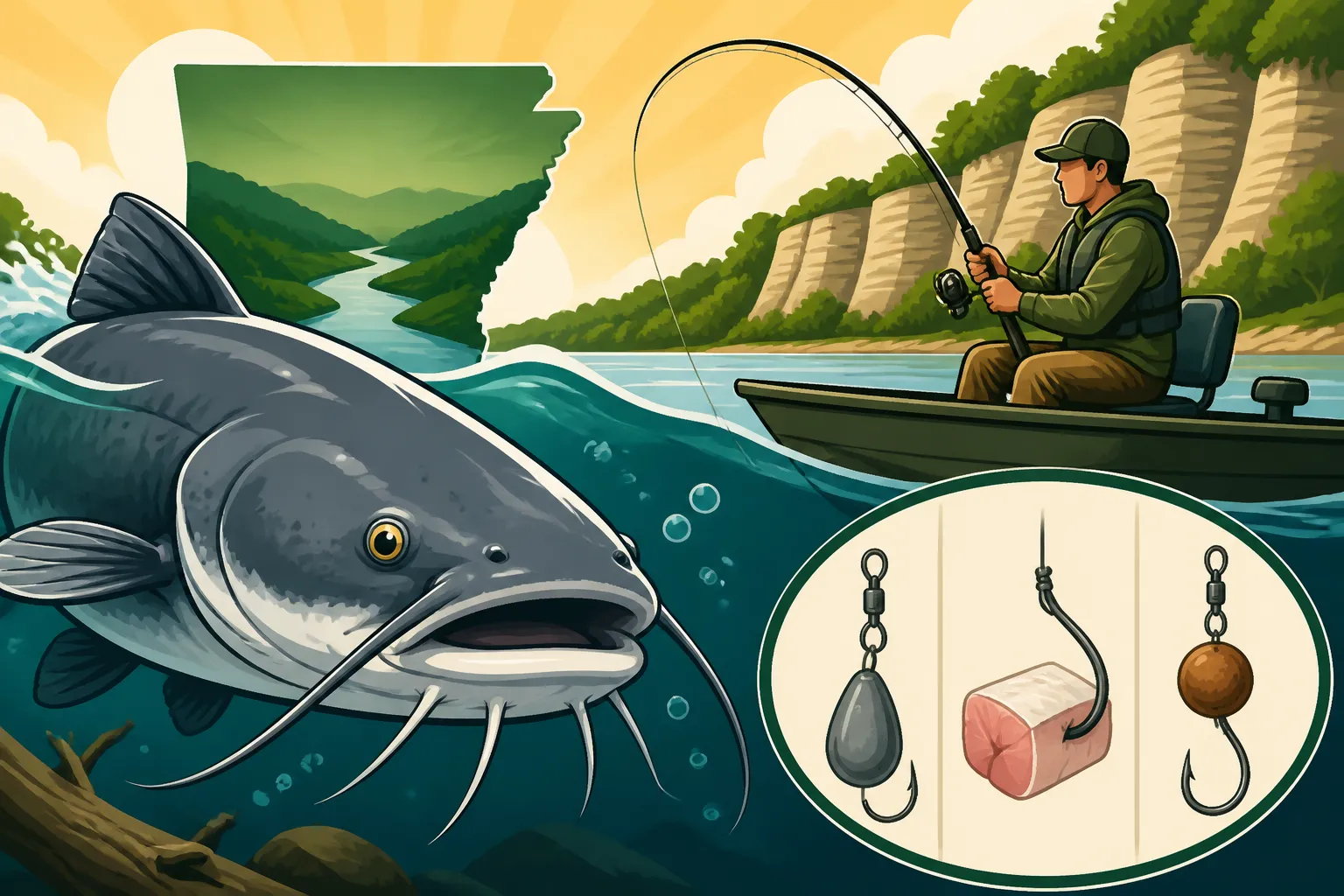
Terminal tackle is where the business happens – the direct connection to the fish. For Channel Catfish, a range of hook sizes from 1/0 to 5/0 is common, often circle hooks or J-hooks. Circle hooks are fantastic for catfishing because they typically hook the fish in the corner of the mouth, making for easier release and less gut-hooking. Weights will vary, from 1/2 ounce to 2 ounces, depending on current and depth. Egg sinkers or no-roll sinkers are popular choices. A quality barrel swivel or three-way swivel is essential to prevent line twist and connect your main line to your leader.
For Blue and Flathead Catfish, you'll need much larger and stronger terminal tackle. Hooks in the 6/0 to 10/0 range are standard, with heavy-duty circle hooks being the top choice for their effectiveness and fish-friendly nature. Weights can range from 3 ounces up to 8 ounces or more, especially when fishing in heavy current or trying to hold bottom in deep water. Pyramid sinkers, flat sinkers, or no-roll sinkers are excellent for staying put. Use heavy-duty swivels, rated for 50 pounds or more, to ensure they don't fail under the strain of a monster cat. Fluorocarbon or heavy monofilament leaders (30-80 lb test) can also be beneficial for abrasion resistance against structure.
Specialized Equipment for Catfish Rod Holders, Boats, Electronics
While you can certainly catch catfish from the bank with basic gear, certain specialized equipment can significantly improve your odds and comfort. Robust rod holders are crucial for keeping your rods secure, especially when using multiple rods or fishing for large cats that can yank a rod clean out of your hands. These can be simple spike-style holders for bank fishing or heavy-duty clamp-on holders for boats.
For accessing prime catfish real estate, a boat opens up a world of possibilities. Jon boats, pontoon boats, or even larger bass boats can be rigged for catfishing. Essential boat accessories include a powerful trolling motor for precise positioning, particularly when drift fishing, and a good anchor system to hold steady in current. Electronics, specifically a quality fish finder or sonar unit, can be a game-changer. Units from brands like Humminbird or Garmin allow you to identify channel breaks, deep holes, submerged timber, and even locate schools of baitfish or individual catfish, greatly increasing your efficiency. Many modern units also feature GPS, which is invaluable for marking productive spots and navigating safely.
Best Baits and Scents for Arkansas Catfish
When it comes to catfish, what you put on your hook is just as important as where you put it. Catfish are primarily scavengers (especially channels and blues) and predators (flatheads), so understanding their dietary preferences is key to selecting the most effective bait. Arkansas's waters offer a smorgasbord of natural bait options, and there are plenty of commercial choices to explore too.
Natural Baits for Channel and Blue Catfish
For Channel Catfish, natural baits that emit a strong odor are often irresistible. Cut bait, made from shad, skipjack, sunfish, or even common carp, is a perennial favorite. The oil and blood released from cut bait travel far downstream, drawing catfish in. Simply cut your chosen baitfish into chunks or strips. Chicken livers are another classic, though they can be messy and tend to come off the hook easily; using a small piece of pantyhose or fine mesh can help them stay on longer. Hot dogs, cut into pieces, can also work surprisingly well, especially for smaller channels.
Blue Catfish, being more predatory, often prefer fresh cut bait, and the fresher, the better. Skipjack herring are considered gold by many trophy blue cat anglers, especially on the Arkansas River. Shad, whether gizzard shad or threadfin shad, are also highly effective. Large chunks or even whole smaller baitfish are often used. If you can catch your own baitfish using a cast net, you'll always have the freshest offering. Some anglers will even use pieces of carp or drum for blues. The key is to have bait that has recently been alive, maximizing its scent trail in the water. For more specific bait recommendations, refer to our article on What Bait Catches the Biggest Catfish in Arkansas?.
Live Baits for Flathead Catfish
As we discussed, Flathead Catfish are almost exclusively live bait hunters, making them a distinct challenge. The rule of thumb for flatheads is simple: if it's alive and wiggling, they're interested. Small sunfish (bluegill, green sunfish), small carp, large shiners, or even bullheads are excellent choices. The size of your live bait should match the size of the flathead you're hoping to catch – don't be afraid to use a baitfish that's 5-8 inches long if you're targeting big flatheads.
The presentation of live bait is critical. Hook your live bait through the back, just behind the dorsal fin, or through the lips. This allows the bait to swim naturally and attract attention. Ensure your hook is large enough to secure the bait but not so large that it impedes its movement. Keep your live bait in a well-aerated baitwell or bucket to ensure they stay lively until they hit the water. A struggling, fresh live bait is far more enticing to a hungry flathead than a sluggish one.
Commercial Baits and Attractants
Beyond natural and live baits, the market is full of commercial options that can be highly effective, especially for Channel Catfish. Stink baits come in various forms – dip baits, punch baits, and pre-formed dough baits. Brands like Catfish Charlie, Sonny's, and Rippin' Lips are popular choices among Arkansas anglers. These baits are designed to release powerful odors that catfish find irresistible. Dip baits typically require a bait holder or a sponge to apply, while punch baits are pushed onto a treble hook with a stick or tool.
Scent attractants, often in spray or liquid form, can also be used to enhance natural or artificial baits. These can add an extra layer of allure, especially in murky waters where visibility is low. Some anglers swear by adding a few drops of garlic oil, anise, or even food-grade flavors to their homemade baits. While not always necessary, these commercial options provide a convenient and effective alternative, particularly for anglers who don't have easy access to fresh bait.
Top Catfish Fishing Techniques
Catching catfish isn't a one-size-fits-all endeavor. Different situations call for different techniques, and mastering a few key methods will greatly expand your success. Whether you're casting from the bank, drifting across a reservoir, or setting lines overnight, there's a technique suited for every angler and every catfish species in Arkansas.
Bottom Fishing Still Fishing
Bottom fishing, often called "still fishing," is arguably the most common and accessible technique for catfish, especially for Channel Catfish. It's simple: cast your bait out, let it sink to the bottom, and wait. The basic setup involves a weight (egg sinker, no-roll sinker) above a swivel, with a leader (12-24 inches) tied to a hook. The weight keeps your bait anchored in place, while the leader allows the bait to move naturally near the bottom, where catfish typically feed.
This technique is effective from both boats and the bank. When fishing from a boat, you can anchor strategically near structure, channel breaks, or drop-offs. From the bank, target deeper holes, bends in rivers, or areas near submerged cover. It's crucial to use enough weight to hold your bait in place, especially in current. A sensitive rod tip or an electronic bite alarm can help detect subtle bites. Patience is key with bottom fishing; sometimes it takes a while for a catfish to find your offering, but once they do, the fight is on! For a deeper dive into this classic method, check out our Catfish Bottom Fishing Techniques guide.
Drift Fishing and Trolling
Drift fishing and trolling are dynamic techniques that allow you to cover more water and present your bait to a wider range of catfish. Drift fishing involves allowing your boat to drift naturally with the wind or current, dragging your bait along the bottom. This is particularly effective in large reservoirs or wide river sections where catfish might be scattered. Use a "controlled drift" by occasionally bumping your trolling motor to adjust speed and direction, ensuring your bait stays in the most productive zones.
Trolling is similar but uses an engine (either main or trolling motor) to propel the boat at a very slow speed, typically dragging multiple lines behind. This is a favorite method for targeting suspended Blue Catfish in large open waters, often using specialized planer boards or downriggers to get baits to specific depths. Both drift fishing and trolling require a good understanding of the local topography and catfish habits. Your fish finder will be invaluable here, helping you identify structure and baitfish schools that indicate prime catfishing grounds.
Jug Fishing and Trotlining
For anglers looking to cover vast areas and increase their chances, jug fishing and trotlining are traditional and highly effective methods for catching multiple catfish. Jug fishing involves deploying numerous lines, each tied to a floating device (like a plastic jug or noodle), with a baited hook suspended below. The jugs are set adrift, covering a large area as they move with the current. When a catfish bites, the jug starts to dance, signaling a strike. This method is incredibly fun and efficient, especially for Channel and Blue Catfish in large lakes and slow-moving rivers. Our Jug Fishing Basics for Catfish article can get you started.
Trotlining is a more stationary method that uses a main line anchored between two points (often shore to shore, or between two heavy weights in a large body of water), with multiple baited hooks attached at intervals along its length. Trotlines are excellent for targeting areas known to hold significant numbers of catfish, such as deep channels or river bends. Both jug fishing and trotlining require specific regulations in Arkansas, including proper labeling with your name and fishing license number, and adherence to hook limits. Always check the latest Arkansas Fishing Regulations Guide to ensure compliance. You can learn more about this method with our Trotline Fishing Basics article.
Bank Fishing Strategies
Don't have a boat? No problem! Bank fishing for catfish in Arkansas can be incredibly productive and rewarding. The key is to select good locations and understand how catfish relate to shorelines. Look for areas with natural cover like submerged trees, brush, rock piles, or undercut banks where catfish might hide. River bends, tributary mouths, and creek channels that run close to the bank are also prime targets.
Strategic casting is important. Instead of just casting straight out, try to fan your casts to cover different depths and structures. If you're using multiple rods, spread them out along the bank. Pay attention to changes in depth – a sudden drop-off near the bank can be a hotspot. Night fishing from the bank is particularly effective for catfish, as they often move into shallower areas to feed after dark. Bring comfortable chairs, good lighting, and sturdy rod holders. Many state parks and public access points along major rivers and lakes offer excellent bank fishing opportunities.
Finding Catfish Hotspots in Arkansas Waters
You can have the best bait and the fanciest gear, but if you're not putting your offerings in front of catfish, you won't catch them. Locating productive spots is a critical skill for any successful angler. Arkansas offers a vast and varied landscape, from sprawling reservoirs to winding rivers, each with its own unique catfish habitat.
River Systems and Deep Holes
Arkansas's river systems, particularly the mighty Arkansas River, White River, and Ouachita River, are prime grounds for all three major catfish species. In rivers, current is a major factor. Catfish often position themselves just out of the main current, in seams and eddies, waiting for food to be swept past them. Look for deep holes, often found on the outside bends of rivers, where the current has scoured out the bottom. These holes provide depth, cover, and a consistent food source.
Also pay attention to tributary mouths where smaller creeks or rivers flow into the main stem. These areas often bring in baitfish, nutrients, and create current breaks that catfish love. Submerged log jams, root wads, and rock piles along riverbanks provide excellent cover for Flatheads. For Blues and Channels, open stretches with a deep channel are excellent for drift fishing or setting trotlines. The key is to read the river, understanding how the water flow creates holding areas for fish. For general ideas on where to start, our guide to the Best Catfish Spots in Arkansas might offer some local insights.
Lake Structure and Cover
In Arkansas's many lakes and reservoirs, from the large TVA lakes like Bull Shoals and Norfork to smaller community ponds, catfish relate heavily to structure and cover. Channel catfish will often patrol shallow flats and points, especially during low-light hours, but retreat to deeper water during the day. Look for submerged brush piles, standing timber, rock formations, and old roadbeds or creek channels.
For Blue Catfish in large reservoirs, focus on the main lake basin, especially around deep-water humps, underwater points, and the edges of the original river channel. These fish will often suspend in the water column or relate to deep structure. Their movements can be influenced by baitfish schools, so finding concentrations of shad with your electronics is often a good indicator of where the blues will be. Flathead catfish in lakes will primarily be found in areas with heavy standing timber, fallen trees, or rocky ledges where they can ambush prey.
Seasonal Movements and Feeding Patterns
Catfish behavior is heavily influenced by the seasons, and understanding these patterns will help you predict where they'll be and what they'll be biting. In spring, as water temperatures rise, catfish become more active and begin moving into shallower areas to feed and eventually spawn. This is an excellent time for bank fishing and targeting points and flats.
Summer often sees catfish (especially channels and blues) move to deeper, cooler waters during the day, though they'll push into the shallows to feed at night. Flatheads remain in their heavy cover. Look for them around channel breaks, deep humps, and thermoclines in lakes. Fall is a fantastic time for trophy catfish, as they feed heavily to bulk up for winter. They can be found in a variety of depths, often following baitfish concentrations.
In winter, catfish activity slows down significantly, and they often congregate in deep holes or channels, becoming more lethargic. While challenging, winter can offer opportunities for big fish if you can find their deep-water haunts and present slow, subtle baits. Adapt your techniques and locations with the seasons, and you'll find consistent success. Our resource on Best Time to Catch Catfish in Cold Water could also be helpful.
Mastering the Art of Landing and Handling Catfish
Hooking a big catfish is exhilarating, but the battle isn't over until the fish is safely in your boat or on the bank. Landing and handling these powerful fish requires skill, care, and an understanding of how to protect both yourself and the fish.
Setting the Hook and Fighting Big Catfish
Once you get a bite, knowing when and how to set the hook is crucial. With J-hooks, a firm, sweeping hookset is usually necessary. However, with popular circle hooks, the technique is different: resist the urge to violently yank the rod. Instead, simply reel down until your line is tight, and then lift the rod smoothly. The circle hook is designed to rotate and catch in the corner of the fish's mouth as pressure is applied, virtually setting itself.
Once hooked, be prepared for a fight. Large catfish, especially blues and flatheads, are incredibly strong and will make powerful runs. Keep your rod tip up, maintain steady pressure, and let the drag on your reel do its job. Don't try to horse the fish in too quickly, as this can lead to pulled hooks or broken lines. Pump the rod by lifting it to gain line, then reeling down as you drop the tip. Be patient, let the fish tire itself out, and guide it steadily towards your landing net or the bank.
Safely Landing and Releasing Catfish
Landing a catfish, particularly a large one, requires a strategy. A large, sturdy landing net is invaluable for scooping up big cats, especially from a boat. Make sure the net is big enough for the fish you're targeting. If you're on the bank and don't have a net, carefully slide the fish onto the bank, away from sharp rocks or debris.
Catfish have pectoral and dorsal fins with sharp, stiff rays that can deliver painful pokes, sometimes even containing a mild venom (though not generally dangerous, it's unpleasant). Always handle catfish with caution. For smaller fish, you can safely grip them behind the pectoral fins, avoiding the spines. For larger fish, a heavy-duty fish gripper or gloves can provide a secure hold. If you plan to release the fish, minimize its time out of water. Hold it horizontally, supporting its belly, and gently remove the hook with pliers or a dehooking tool. If it's a big fish, keep it in the water as much as possible for photos. Releasing fish responsibly ensures future generations of trophy cats.
Cleaning and Preparing Your Catch
For those who enjoy a delicious catfish dinner, cleaning and preparing your catch is the final step. Channel Catfish, in particular, are renowned for their excellent table fare. The easiest way to clean a catfish is to skin it. You can do this by making an incision behind the head, cutting through the skin all the way around, and then using pliers or a skinning tool to peel the skin off. Many anglers prefer to fillet catfish, removing the meat from the bones.
Once filleted, trim off any dark red meat or fatty areas, as these can impart a "muddy" flavor. Rinse the fillets in cold water and pat them dry. Catfish meat is versatile and can be fried, baked, grilled, or even smoked. For frying, a simple cornmeal-based breading is a classic choice. Remember to keep your catch on ice to maintain freshness until you're ready to clean and cook it. This is particularly important on hot Arkansas days.
Advanced Catfishing Tips and Tricks
Once you've mastered the basics, there are always ways to refine your techniques and increase your success rate. Advanced catfishing often involves leveraging specific conditions, technology, and a deeper understanding of fish behavior.
Night Fishing for Catfish
Night fishing is arguably one of the most effective times to target catfish, especially in the warmer months. Catfish, being primarily nocturnal feeders, become much more active after sunset, moving into shallower waters where they might be hesitant to venture during bright daylight. The cooler water temperatures and reduced light make them feel safer and more inclined to hunt.
When fishing at night, safety and preparation are paramount. Bring plenty of light sources – headlamps, lanterns, and even glow sticks for your rod tips. Be extra cautious when navigating by boat. Use baits with strong scents, as catfish rely heavily on their sense of smell in the dark. Many anglers use light-up bobbers or electronic bite alarms on their rods to detect strikes. During warm summer nights, fishing deep holes near shallow flats or channel bends can be incredibly productive. Our detailed guide on Night Fishing Techniques for Catfish offers more tips for after-dark success.
Fishing During Changing Weather Conditions
Catfish, like most fish, are influenced by weather patterns. Understanding how they react to changes can give you an edge. Just before a cold front or a storm, a "pre-front bite" often occurs, where fish feed aggressively. This can be a prime time to hit the water. However, after a strong cold front passes, fishing can become tough. Catfish may move to deeper water and become less active. In these conditions, slowing down your presentation and using subtle baits can sometimes coax a bite.
Rainy weather, especially a gentle, warm rain, can often be excellent for catfishing. The rain washes terrestrial insects and nutrients into the water, and the reduced light penetration can make catfish more comfortable feeding in shallower areas. Heavily stained or muddy water can actually be beneficial for catfish, as their reliance on smell and taste gives them an advantage over sight-feeding fish. Focus on areas where fresher, clearer water might be entering, or where scent trails are concentrated.
Utilizing Sonar and GPS for Catfish
Modern electronics have revolutionized catfishing, turning guesswork into informed decisions. A good fish finder (sonar) allows you to "see" underwater structures, such as old river channels, humps, submerged timber, and brush piles, which are prime catfish habitats. You can also identify schools of baitfish, which are often a precursor to finding predatory Blue Catfish. Learning to interpret the sonar readings to distinguish between baitfish, game fish, and even individual large catfish is a skill that takes practice but pays off immensely.
GPS (Global Positioning System) is equally valuable. It allows you to mark productive fishing spots (waypoints) and return to them with precision. If you catch a big fish in a specific area, or identify a promising piece of structure on your sonar, mark it! GPS also helps with navigation, especially in large, unfamiliar waters or when fishing at night. Many fish finders come integrated with GPS, offering a powerful toolset for serious catfishermen. With technology, finding fish and understanding the underwater landscape becomes much more accessible.
Arkansas Catfish Regulations You Need to Know
Fishing in Arkansas is a privilege that comes with responsibilities, and chief among them is understanding and adhering to the state's fishing regulations. These rules are in place to protect fish populations and ensure healthy fisheries for generations to come. Ignoring them can lead to significant penalties, so it's always best to be informed.
Statewide Daily and Possession Limits
The Arkansas Game and Fish Commission (AGFC) sets specific daily and possession limits for various fish species, including catfish. These limits can change, so always consult the most current AGFC fishing guide before you head out. Generally, for Channel and Blue Catfish, there is often a combined daily limit, and then sometimes specific limits for trophy-sized fish. Flathead Catfish often have more restrictive limits due to their slower growth rates and specific habitats.
It's critical to understand the difference between daily and possession limits. A daily limit is the maximum number of fish you can catch and keep in a single day. A possession limit is the maximum number of fish you can have in your possession at any given time, including those at your home or in transit. While Arkansas has recently eliminated statewide possession limits for many species for the 2026-27 season, daily creel limits still apply. This means you no longer need to count fish at home, but you still can't exceed the daily limit on the water. Make sure to stay updated on Arkansas Fish Size and Daily Limits.
Specific Lake and River Rules
While statewide regulations provide a baseline, many specific lakes and river sections in Arkansas have their own unique regulations that supersede the general rules. These special regulations are often implemented to manage specific fisheries, protect trophy fish, or address unique ecological conditions. For example, a certain lake might have a slot limit for Blue Catfish, meaning fish within a specific size range must be immediately released, while smaller or larger fish can be kept.
Before fishing any particular body of water, always check the AGFC fishing guide for that specific location. You can usually find a section dedicated to "Special Regulations" or "Community Fishing Lakes" within the guide. These localized rules might pertain to size limits, daily limits, bait restrictions, or even tackle restrictions. Ignorance of the law is not an excuse, and game wardens actively enforce these site-specific rules.
Fishing License Requirements
Unless you fall under very specific exemptions, you will need a valid Arkansas fishing license to fish for catfish in the state. This applies to both residents and non-residents, and the revenue from license sales directly supports fisheries management and conservation efforts in Arkansas. Licenses can be purchased online through the AGFC website, at most sporting goods stores like Bass Pro Shops or Walmart, or at authorized license vendors across the state.
There are different types of licenses available, including annual licenses, 3-day trip licenses for non-residents, and special licenses for seniors or those with disabilities. Make sure you have the correct license for your situation. Children under a certain age (currently 16) are generally exempt from needing a license, but it's always wise to confirm the exact age requirements. Fishing without a license can result in fines and legal trouble. Always carry your license with you while fishing. You can learn more about this by reading our Arkansas Fishing License Rules and Costs guide.
Disclaimer
Please be aware that fishing regulations, including daily limits, possession limits, and license requirements, are subject to change by the Arkansas Game and Fish Commission. It is the responsibility of each angler to consult the most current official AGFC Fishing Guidebook or website before engaging in any fishing activities to ensure compliance with all applicable laws and regulations. This guide provides general information and should not be considered a substitute for official legal documents.