What Is a Kentucky Bass?
There's a common dilemma many anglers face when they reel in a bass from Arkansas waters: "Is that a largemouth? A smallmouth? Or… something else?" This confusion is especially prevalent when you encounter the often-misidentified Kentucky Bass, sometimes called a spotted bass. This guide is here to clear up that mystery, helping you confidently identify this feisty fish and understand where and how to catch it in the Natural State.
Unmasking the Kentucky Bass: More Than Just a "Spotted" Imposter
The Kentucky Bass, or spotted bass as it's officially known, is a fantastic game fish that often gets overshadowed by its more famous cousins, the largemouth and smallmouth. But once you learn to recognize its unique characteristics and appreciate its fighting spirit, you'll be thrilled to encounter one on the end of your line. Don't let the name fool you – while they're called Kentucky Bass, they're definitely at home in many Arkansas lakes and rivers.
The Distinctive Features of a Kentucky Bass
Let's talk about what makes a Kentucky Bass stand out from the crowd. When you've got one in hand, the first thing you'll probably notice is its overall sleek, somewhat torpedo-shaped body, which is usually a dark olive green on the back, fading to lighter green or silver on the sides, and a white belly. But the real tell-tale signs are in the details.
Look closely at the horizontal row of small, dark spots below the lateral line, especially towards the belly. These spots are what give it the "spotted bass" moniker and are typically much more pronounced than any subtle markings you might see on a largemouth. You'll also notice a patch of small teeth on its tongue—a characteristic largely absent in largemouths and smallmouths. If you feel that rough patch with your finger, you're almost certainly holding a Kentucky Bass.
Another key identifier is the jawline. Unlike the largemouth, whose upper jaw extends well past the back of its eye when its mouth is closed, the Kentucky Bass's jaw typically aligns with the middle or the back of the eye, but rarely extends beyond it. This might seem like a minor detail, but it's incredibly helpful for accurate identification. Their dorsal fins are also typically more distinctly separated than a largemouth's, almost looking like two separate fins rather than a continuous one. This combination of features paints a clear picture once you know what to look for.
Where Kentucky Bass Thrive in Arkansas Waters
Kentucky Bass are adaptable creatures, but they definitely have their preferred haunts. You'll often find them favoring clearer, rockier waters that might be a little too warm for smallmouths but perhaps a bit too deep or current-laden for largemouths. They love structure, whether it's submerged timber, rocky points, humps, or bluff walls. You can read more about various bass species and their habitats in Bass Fishing in Arkansas: Largemouth, Smallmouth, and Kentucky Bass Explained.
In Arkansas, some of the best places to encounter Kentucky Bass are the state's large reservoirs, especially those with clear water and abundant rock. Think about lakes like Bull Shoals Lake or Greers Ferry Lake. These lakes offer the perfect mix of deep, cool water, current when generation is happening, and plenty of rocky cover that Kentucky Bass adore. Rivers like the Arkansas River also hold good populations, particularly in stretches with good current and rock formations.
They tend to prefer deeper water than largemouths, especially as water temperatures rise, often holding in 15 to 40 feet of water. However, you can find them shallower during low-light conditions or when actively feeding. Their preference for current makes them a blast to catch in tailwaters or rivers, where they'll often hold behind submerged rocks or other features, waiting to ambush baitfish being swept downstream. Finding them often means looking for those subtle current breaks or deep structures that larger bass might overlook.
The Battle of the Bass: Kentucky vs. Its Cousins
It's easy to get confused when you're trying to distinguish between the three main black bass species in Arkansas. They all share similar body shapes and can be found in overlapping habitats, but knowing the subtle differences can greatly improve your fishing strategy and help you adhere to specific regulations. Let's break down how the Kentucky Bass stacks up against its more common relatives.
Kentucky Bass Compared to Largemouth Bass
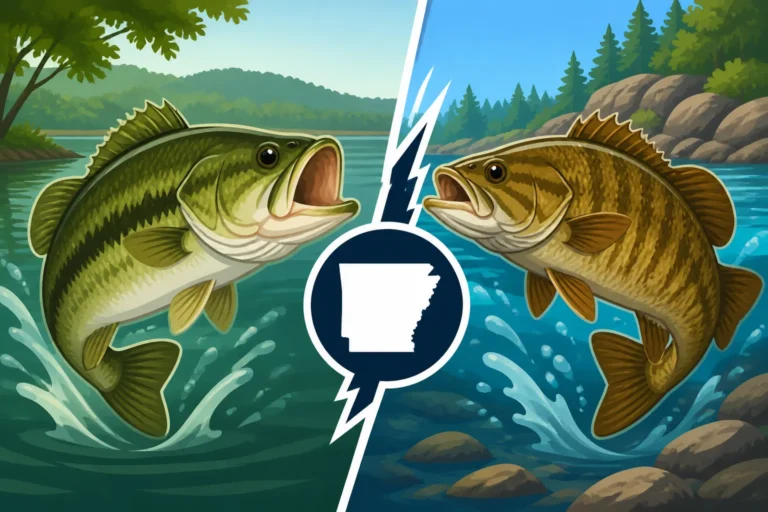
The largemouth bass is probably the most iconic game fish in Arkansas, and it's often the first fish people mistake a Kentucky Bass for. However, there are a few key ways to tell them apart, beyond just the spotted belly. The most reliable difference lies in the jawline: a largemouth's upper jaw extends distinctly behind the eye when the mouth is closed, while a Kentucky Bass's jaw typically does not go past the middle or rear of the eye. This is a crucial distinction.
Another major identifier is that rough patch of teeth on the Kentucky Bass's tongue, which is usually smooth on a largemouth. Furthermore, while largemouths have a dark, often broken, lateral line, the Kentucky Bass typically has a more distinct, continuous lateral line with those prominent spotted scales below it. Largemouths tend to prefer shallower, weedier, and timber-filled areas, while Kentuckys gravitate towards deeper, rockier environments. Their fight also differs; largemouths are known for explosive topwater strikes and aerial acrobatics, while Kentucky Bass tend to be strong, bulldog-like fighters that pull hard and deep. If you want a deeper dive into the differences, check out How to Tell a Kentucky Bass from a Largemouth or Largemouth Bass vs Smallmouth Bass: What's the Difference?.
Kentucky Bass Compared to Smallmouth Bass
Distinguishing a Kentucky Bass from a smallmouth bass can be even trickier, especially in rivers where both species thrive and often share similar appearances. Both prefer clear, cool, rocky waters, and both are known for their powerful, hard-fighting nature. However, there are still reliable ways to tell them apart.
Smallmouth bass typically have vertical bars or stripes on their sides, rather than the horizontal spotted pattern of the Kentucky Bass. Their coloration is also usually browner or more bronze, often with reddish eyes, while Kentucky Bass tend to be greener. The mouth size is also a good indicator: a smallmouth's jaw won't extend past the middle of its eye, making it slightly smaller than a Kentucky's. And, of course, the tongue patch is your secret weapon—smallmouths also lack the distinctive rough patch on their tongue that Kentucky Bass possess. Understanding these nuances helps you appreciate the diversity of bass in our waters. Many of Arkansas's Ozark streams are renowned for Smallmouth Bass in Arkansas's Ozark Streams, and it's in these waters that confusion can sometimes arise.
Here's a quick comparison table to help you identify these fantastic fish:
| Feature | Largemouth Bass | Smallmouth Bass | Kentucky Bass (Spotted Bass) |
|---|---|---|---|
| Upper Jaw | Extends well past the eye | Does not extend past the middle of the eye | Extends to middle or just past the eye |
| Tongue | Smooth | Smooth | Has a rough patch of teeth |
| Lateral Line | Dark, often broken; no spots below it | Vertical bars, no spots below | Distinct, often with distinct spots below |
| Coloration | Dark green back, white belly, dark stripe | Brown to bronze, vertical bars, red eyes | Olive green, white belly, distinct spots |
| Dorsal Fin | Deep notch, almost separated | Continuous, subtle notch | More distinctly separated than largemouth |
| Preferred Habitat | Shallow, weedy, timber-filled lakes/ponds | Clear, rocky, cooler streams/lakes | Clear, rocky, deep lakes, moderate current |
Angling for Kentucky Bass: Tips and Techniques
Kentucky Bass are often overlooked, but they offer an incredibly rewarding fishing experience. They're hard fighters, willing biters, and can be a consistent target when other bass species are being finicky. Understanding their habits and preferred presentation can make all the difference in having a successful day on the water.
Best Baits and Lures for Kentucky Bass
Because Kentucky Bass often inhabit deeper, rockier water, your tackle box should reflect this. Soft plastics are a consistent winner. Think finesse worms, shaky head jigs, and small creature baits. A Texas rig or Carolina rig crawled slowly along the bottom can be deadly, especially in deeper water where the fish are holding close to structure. The key is often to maintain contact with the bottom, mimicking crawfish or small baitfish. You can also get some great ideas from Best Bait for Spotted Bass.
Moving baits like crankbaits, especially those designed to dive to moderate depths, are also incredibly effective. Colors that mimic shad, crawfish, or bluegill are usually a safe bet. Lipless crankbaits can also draw aggressive strikes when ripped through submerged grass or rocky areas. In terms of jigging, a football jig with a craw trailer bounced along rocky bottom can be irresistible. Don't be afraid to experiment with different sizes and colors, as fish preferences can change throughout the day and with varying water conditions. For early morning or late evening bites, or even when they're chasing schooling baitfish, topwater poppers or walking baits can also produce exciting strikes, though they typically prefer slightly subsurface presentations. Remember to use quality line, as they often hug abrasive rock. You can find a good selection of fishing gear, including various lures and lines, on Amazon.
Preferred Habitats and Fishing Strategies
As we've touched on, Kentucky Bass love current and rock. When fishing reservoirs, target rocky points that drop off into deep water, humps, ledges, and bluff walls. If there's a current generated by a dam, look for eddies and current seams where baitfish might congregate and bass can ambush them. On rivers, focus on anything that breaks the current, such as large boulders, log jams, or changes in depth.
When you're fishing these areas, precise casting and presentation are crucial. For deep-water structure, using your electronics to locate fish and then dropshotting or vertical jigging can be incredibly effective. For shallower rock fields, casting crankbaits or spinnerbaits parallel to the bank or across points can provoke strikes. Don't be afraid to fish slowly, especially if the water is cold or the bite is tough. Kentucky Bass will often just "tick" your bait, so pay close attention to subtle changes in line tension or feel. They can be found during any season, but understanding Arkansas Fishing Seasons Guide will help you know when their bite is typically most active.
The Culinary and Sporting Appeal of Kentucky Bass
While often overshadowed by the largemouth, the Kentucky Bass holds its own both on the line and on the dinner plate. They are a fantastic addition to any angler's catch, providing excellent sport and delicious table fare.
Are Kentucky Bass Good to Eat?
Absolutely! Kentucky Bass are widely considered excellent eating. Their flesh is typically white, flaky, and firm, much like a smallmouth bass, and often less "muddy" tasting than largemouths caught from warm, murky waters. This makes them a popular choice for frying, baking, or grilling. Many anglers actually prefer the taste of Kentucky Bass to largemouth, especially if they're caught from clear, cool water.
When preparing your catch, treat them as you would any other freshwater game fish. Fillet them, remove the skin and any darker meat along the lateral line, and you'll have some fantastic fillets ready for your favorite recipe. Just remember to always check Arkansas Fish Size and Daily Limits before you decide to keep any fish, as regulations are in place to ensure healthy fish populations for years to come. For more culinary insights, be sure to read Do Kentucky Bass Taste Good?.
Sporting Value and Record Potential
The Kentucky Bass is a powerful fighter, punching well above its weight. They are known for their strong, relentless dives and head shakes, often staying deep rather than jumping like a largemouth. This makes them incredibly fun to catch, especially on lighter tackle. Many anglers mistake them for smallmouths because of their similar fighting style and preferred habitats.
While they don't typically reach the gargantuan sizes of trophy largemouths or some blue catfish, Kentucky Bass can still grow to respectable sizes. A 3-5 pound Kentucky Bass is a truly impressive catch and will give you a fight you won't soon forget. Arkansas has some fantastic fisheries for these fish, and while state records aren't as often pursued as those for largemouths, the potential for a personal best is always there. You can explore Kentucky Bass Size Records in Arkansas to see just how big these fish can get in the Natural State. The thrill of feeling that hard pull on the line, wondering if it's a smallmouth or a Kentucky, is part of what makes fishing for them so exciting.
Disclaimer
This article is for general informational purposes only and does not constitute professional advice. Laws, prices and regulations vary by location and change over time. Consult a qualified professional for guidance on your specific situation.