How to Identify a Flathead Catfish
You've just hooked into something big, and your rod is screaming! As you fight the fish to the boat or shore, one question often pops into your head: "What kind of catfish is this?" It’s a common moment of truth for many anglers, especially when trying to differentiate between the various catfish species that call Arkansas waters home. Knowing exactly what you've caught isn't just about bragging rights; it's crucial for understanding regulations, best fishing practices, and even what to expect on your dinner plate. This comprehensive guide is here to take the guesswork out of identifying that powerful, whiskered specimen at the end of your line, focusing specifically on how to definitively spot a flathead catfish.
The Tell-Tale Signs: What Makes a Flathead a Flathead?
Flathead catfish are truly distinct creatures, and once you know what to look for, you'll rarely confuse them with their channel or blue catfish cousins. They have a rugged, almost prehistoric appearance that sets them apart. Forget those quick glances; let's dive into the specifics that make a flathead unmistakable.
Head and Mouth: Unmistakable Features
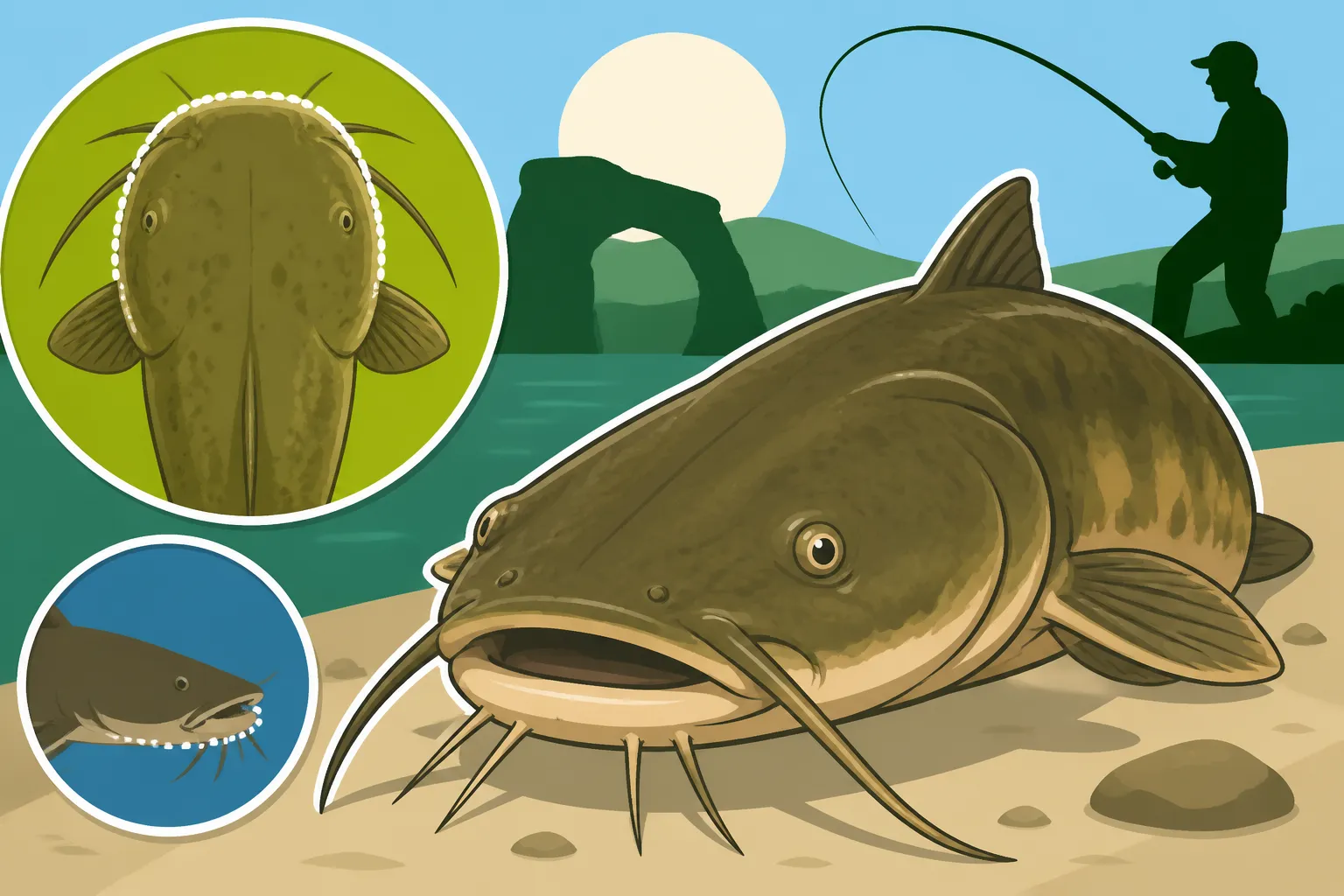
The most obvious clue, and the one that gives this fish its name, is its head. Flatheads truly live up to their moniker. Their head is noticeably broad and flattened, especially when viewed from above or directly from the front. It's not rounded like a channel cat, nor does it have the high, humped profile that a large blue cat might exhibit. Instead, imagine a broad, flat expanse that tapers towards the body.
Beyond the shape of the head, pay close attention to the mouth. A flathead catfish has a distinctive, strongly protruding lower jaw. This means if you look at the fish from the side, its lower lip and jaw extend out further than its upper jaw, giving it a permanent "underbite." This unique mouth structure is perfectly adapted for its predatory lifestyle, allowing it to gulp down prey. Their eyes are relatively small compared to their massive head size and are often set high on the head, another characteristic that differs from other catfish. When you’re examining the mouth, you'll also notice patches of tiny, file-like teeth on the roof of its mouth. While all catfish have these villiform teeth, the way they're arranged can be subtly different.
Body and Tail: Patterns and Shape
Moving past the head, the body of a flathead catfish is generally stout and robust, especially in larger specimens. They are built like a torpedo, designed for power. One of the absolute biggest differentiators, and one that trips up many new anglers, is the shape of its tail fin. A flathead catfish has a tail that is either square-cut or only very slightly notched (emarginate). It is never deeply forked. This is a critical point of identification. If you catch a catfish with a deeply forked tail, you can immediately rule out it being a flathead. The tail's robust, solid appearance is a signature feature.
Another subtle but important characteristic is the presence of an adipose fin. This small, fleshy, rayless fin is located on the back between the dorsal fin and the tail fin. While most catfish species have one, its presence, combined with other features, helps confirm your identification. Their body itself typically lacks the slender grace of a channel cat or the massive, powerful build of a truly giant blue cat, instead striking a balance that's uniquely "flathead."
Coloration: Nature's Camouflage
Flathead catfish are masters of camouflage, and their coloration reflects their ambush predator lifestyle. Their bodies are usually a mottled, blotchy pattern of yellowish-brown to olive green on their backs and sides, fading to a creamy white or pale yellow on their belly. This mottled pattern, which resembles camouflage, helps them blend in perfectly with submerged timber, rocky bottoms, and muddy banks where they love to hide and ambush prey.
The dark blotches are irregular and often merge, creating a somewhat "dirty" or "marbled" look. This is a stark contrast to the often uniform gray or silvery coloration of many channel cats, especially the younger, spotty ones, or the bluish-gray hue of blue catfish. The specific shade can vary depending on the water clarity and substrate of their particular habitat in Arkansas, but the blotchy pattern is a constant. Remember, a clean, unblemished, or uniformly colored catfish is less likely to be a flathead. You might see a range of shades from a dark, muddy brown in river systems to a more olive or greenish tint in clearer lake waters.
Comparing Catfish: Flathead vs. Its Arkansas Cousins
Arkansas is blessed with incredible catfish fishing, and it’s not uncommon to catch all three major species – flathead, channel, and blue – in the same body of water. Because they share habitats, understanding their differences is paramount. Knowing How to Tell Channel, Blue, and Flathead Catfish Apart is a valuable skill for any angler.
Flathead vs. Channel Catfish
This is probably the most common mix-up, especially for anglers new to the world of catfish. Here's a quick comparison:
| Feature | Flathead Catfish | Channel Catfish |
|---|---|---|
| Head Shape | Broad, flattened | Smaller, more rounded, less prominent jaw |
| Lower Jaw | Strongly protruding (underbite) | Upper jaw slightly longer or equal to lower jaw |
| Tail Fin | Square or very slightly notched (never deeply forked) | Deeply forked |
| Coloration | Mottled, blotchy, yellowish-brown to olive green | Silvery-gray to olive, often with distinct spots (especially when young) |
| Body Shape | Robust, powerful, thick | More slender, streamlined |
| Diet | Primarily live fish (as adults) | Omnivorous (insects, small fish, vegetation, carrion) |
Imagine pulling in a fish, and the first thing you notice is its deeply forked tail. That's almost certainly a channel cat, even if it has some blotches (though typically less distinct than a flathead's). The spots on a channel cat are usually round and well-defined, not the irregular, camouflaged blotches of a flathead. Also, channel catfish rarely grow to the immense sizes that flatheads can achieve, though a large channel cat is still a formidable fight! You can find Channel Catfish in Arkansas Lakes and Rivers in almost every body of water.
Flathead vs. Blue Catfish
Blue catfish are another trophy species in Arkansas, known for their incredible size and fighting power. While they can grow to be truly massive, they have several key differences from flatheads. The biggest identifier, again, is the tail. Blue catfish have a deeply forked tail, much like a channel cat, but typically even more pronounced. This alone can quickly rule out a flathead.
Secondly, blue catfish generally have a sleek, bluish-gray coloration, often described as steel gray or slate blue, with a white belly. They rarely exhibit the mottled, blotchy patterns of a flathead. Large blue cats might also develop a noticeable hump or rise in front of their dorsal fin, giving them a distinct profile that flatheads lack. Their head, while still large, doesn't have the distinctively flat, broad top and protruding lower jaw of a flathead. Instead, their head is more uniformly rounded, and their jaws typically meet evenly or the upper jaw slightly protrudes. For those chasing truly monster fish, understanding the differences is key, especially since Blue Catfish Fishing in Arkansas is such a popular pursuit for trophy anglers. The record for Arkansas's State-Record Blue Catfish Weighed 116 Pounds, showcasing just how immense these fish can become.
Beyond Appearance: Habitat and Behavior
While visual identification is crucial, understanding the habitat and behavior of flathead catfish can also give you strong clues as to whether you've hooked one. These powerful predators have specific preferences that differentiate them from other catfish. Knowing where and how they live can even help you predict what you'll catch.
Where Flatheads Hide
Flathead catfish are creatures of structure. They aren't typically found in open water cruising like some blue or channel cats might. Instead, they prefer to lay in wait, ambushing their prey. This means you'll find them in places offering cover and ambush points. Think about deep holes, especially those with current breaks, large log jams, fallen trees, undercut banks, rock piles, and submerged brush. They love slow-moving sections of rivers and larger creeks, as well as the deeper, timber-laden areas of large reservoirs.
If you're fishing a river system in Arkansas, target areas below dams, around bridge pilings, or in oxbow lakes filled with woody debris. In lakes like Lake Ouachita or Norfork Lake, look for old creek channels, flooded timber, or deep bluff lines where they can find sanctuary and wait for an unsuspecting meal to swim by. This preference for heavy cover and structure is a key behavioral trait. When you’re fishing these types of spots, especially with the right bait, your chances of encountering a flathead skyrocket. For information on where to find big catfish, check out Best Lakes in Arkansas for Trophy Catfish.
What Flatheads Eat
This is another huge behavioral clue: flathead catfish are almost exclusively piscivores as adults, meaning they primarily eat live fish. While young flatheads might consume insects or crayfish, as they grow, their diet shifts dramatically to live bait. They are opportunistic predators that will lie in wait and ambush whatever swims too close. Their favorite meals include sunfish, shad, small carp, suckers, and even other smaller catfish.
This diet preference has a direct impact on fishing techniques. Unlike channel cats that will readily take cut bait, stink baits, or even dough balls, a flathead is much more discerning. To catch them, you generally need to present a live baitfish. This is why techniques like Catfish Bottom Fishing Techniques with robust live bait, or using Jug Fishing Basics for Catfish with live offerings, are so effective for flatheads. When anglers talk about What Bait Catches the Biggest Catfish in Arkansas?, live bait is almost always the answer when flatheads are the target. If you're using a shrimp or a chicken liver and catching plenty of catfish, chances are you're primarily hooking channel cats, not flatheads.
Why Proper Identification is Crucial for Anglers
Beyond the satisfaction of knowing your catch, correctly identifying a flathead catfish holds significant practical importance for any angler in Arkansas. It impacts everything from obeying the law to improving your fishing success and even understanding the quality of your meal.
Following Regulations
Arkansas has specific fishing regulations that often differ by species, size, and sometimes even by specific bodies of water. While many regulations apply broadly to "catfish," there can be nuances. For instance, a particular lake might have a slot limit or a daily creel limit that applies differently to flathead catfish than to channel catfish or blue catfish. Without knowing what you've caught, you run the risk of inadvertently violating these rules.
Ignorance of the law is never an excuse, and game wardens are diligent in ensuring anglers adhere to the regulations. If you're found with an illegally kept fish, the penalties can range from hefty fines to the confiscation of your gear and even your fishing license. This is why taking the time to learn the distinguishing features of each catfish species is not just a suggestion, but a necessity for responsible angling. Always consult the latest Arkansas Fishing Regulations Guide before you head out, and make sure you understand the rules for specific species in your chosen fishing spot. Don't forget that you also need to have a valid Arkansas Fishing License Rules and Costs before casting a line.
Targeting Your Catch
Understanding how to identify a flathead also makes you a more effective and strategic angler. If you specifically want to target these powerful predators, knowing their identifying features helps you confirm that your techniques, baits, and fishing spots are actually working for flatheads, not just any catfish. If you're consistently catching channel cats but you're aiming for flatheads, a quick check of your catch can tell you that you need to adjust your approach.
For instance, if you're trying to land a truly large specimen, and you know that How Big Do Flathead Catfish Get in Arkansas? means they can reach impressive sizes, you'll gear up accordingly. You'll use heavier tackle, stronger lines (many anglers find quality braided line on Amazon to be indispensable for strength and sensitivity), and larger live baits. You'll also focus your efforts on the specific types of structure and habitat that flatheads prefer, rather than just casting anywhere. Knowing your target helps you refine your strategy, leading to more successful and rewarding fishing trips.
Furthermore, if you're thinking about dinner, knowing your catch helps. Many anglers believe that flathead catfish, especially those from clean waters, are incredibly delicious, often described as having a firm, white, flaky meat with a mild flavor, superior to other catfish. But Is Flathead Catfish Good to Eat? universally true? Taste is subjective, but many will tell you yes, absolutely. Being able to correctly identify it ensures you're bringing home the fish you intended for your meal, and not something else that might not live up to your culinary expectations.
Disclaimer
This article is for general informational purposes only and does not constitute professional advice. Laws, prices and regulations vary by location and change over time. Consult a qualified professional for guidance on your specific situation.