Trophy Striped Bass Records at Lake Hamilton
For many anglers, the dream isn't just about catching fish; it's about reeling in that one magnificent specimen, the kind of fish that tells a story for years to come. When it comes to striped bass in Arkansas, Lake Hamilton often sparks whispers of these legendary catches. But what truly constitutes a "trophy" striped bass from Lake Hamilton, and what's the real story behind its celebrated records? This guide will dive deep into what makes Lake Hamilton a premier destination for these powerful fish, what anglers have achieved there, and how you can pursue your own personal best.
Understanding What "Trophy" Means for Lake Hamilton Stripers
The term "trophy" gets thrown around a lot in fishing, but when we're talking about striped bass, especially in a place like Lake Hamilton, it implies something truly special. These aren't just big fish; they're giants that test your gear, your endurance, and your resolve.
Defining a Trophy Striped Bass in Arkansas
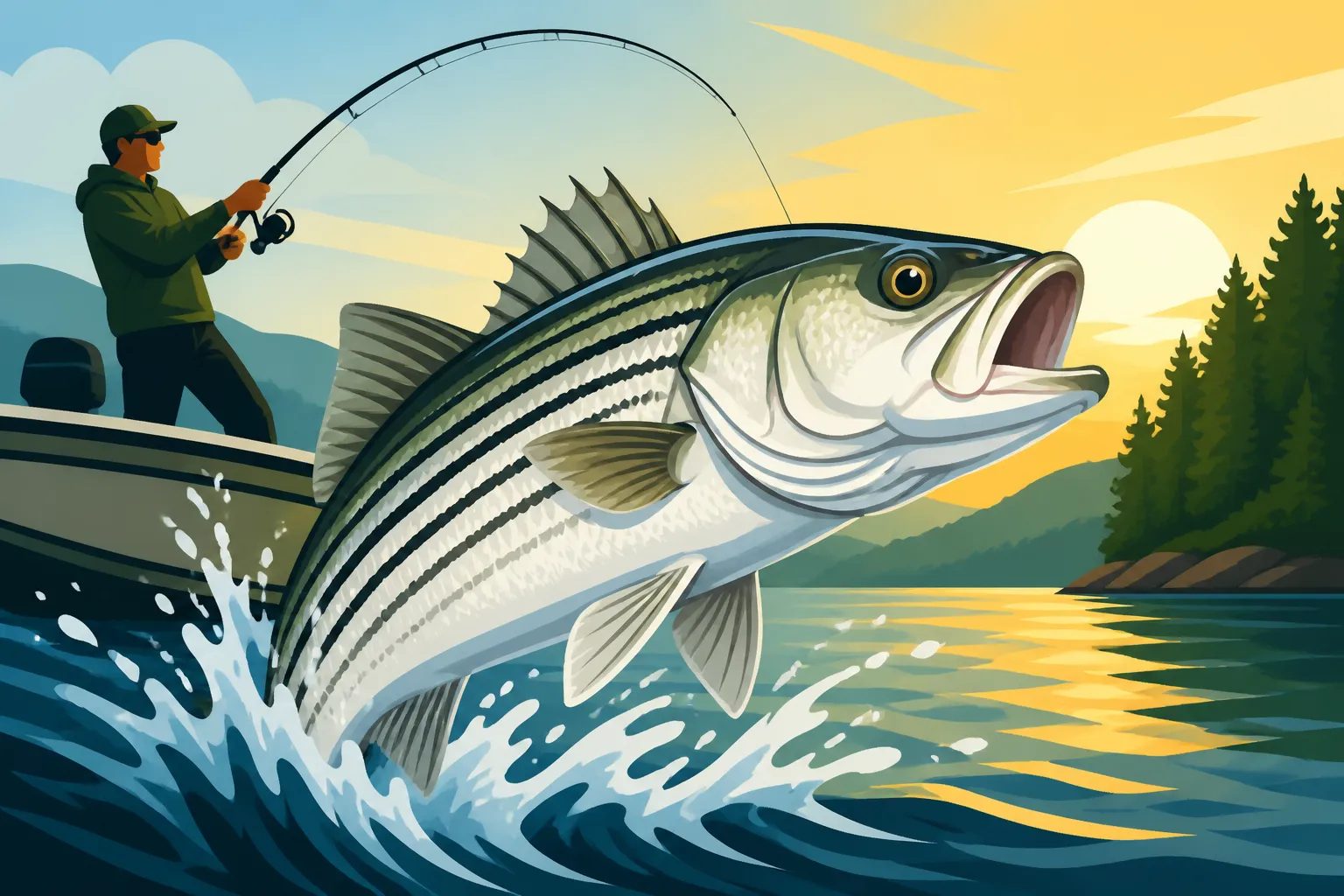
In the world of striped bass, a "trophy" often means a fish that dramatically surpasses the average size. While official state records are held by the Arkansas Game and Fish Commission (AGFC) and represent the absolute pinnacle, any angler who lands a striper pushing well into the double-digit pound range, or perhaps even breaking the twenty, thirty, or forty-pound mark, will tell you they've caught a trophy. These fish are typically older, wiser, and incredibly powerful, offering a fight that can be both exhilarating and exhausting. They demand respect, and bringing one to the boat is a badge of honor in the angling community. It's not just about the weight; it's about the sheer power and size that commands admiration.
Historical Context of Striped Bass in Lake Hamilton
Lake Hamilton has a storied history as a premier striped bass fishery in Arkansas. These incredible fish aren't native to landlocked Arkansas; they were introduced to several of the state's large reservoirs decades ago to create exciting new sportfishing opportunities. Lake Hamilton, with its deep, clear waters and abundant forage base, quickly proved to be an ideal habitat. The lake's structure, with its numerous coves, main lake points, and open water areas, provides ample hunting grounds for these pelagic predators. Over the years, consistent stocking programs by the AGFC have helped sustain and enhance the striper population, ensuring that anglers continue to have a chance at hooking into a true monster. The success of these programs, combined with the lake's natural characteristics, cemented Lake Hamilton's reputation as a top-tier striper destination, drawing anglers from all over who dream of that record-breaking catch. For more on specific local hotspots, check out Striper Fishing on Lake Hamilton in Hot Springs, Arkansas.
Notable Striped Bass Records and Catches from Lake Hamilton
While every angler dreams of setting a new state record, the truth is, many phenomenal catches from Lake Hamilton contribute to its legend without ever making it into an official record book. It's the consistent production of truly large fish that solidifies its reputation.
The Elusive Nature of Official Records
It's important to understand that an "official record" typically refers to the state-recognized biggest fish of a species. These records are held by the Arkansas Game and Fish Commission and require specific verification processes, usually involving certified scales and expert identification. While Lake Hamilton has undoubtedly produced fish that could contend for such honors over the years, official records often represent extraordinary, once-in-a-lifetime captures. Many anglers land "trophy" stripers that are personal bests, local legends, or simply too much trouble to officially certify, given the logistics involved. The beauty of Lake Hamilton is its consistent ability to grow stripers of truly impressive size, making almost any large catch a memorable "record" for the individual angler. If you're serious about the official numbers, always consult the AGFC's most current records for exact figures and requirements.
Factors Contributing to Lake Hamilton's Big Stripers
What is it about Lake Hamilton that allows striped bass to reach such monumental sizes? Several key ecological factors play a significant role. Primarily, Lake Hamilton boasts an incredibly rich and stable forage base, dominated by threadfin and gizzard shad. These baitfish are the primary food source for stripers, and their abundance allows the stripers to grow rapidly and reach impressive weights. Healthy shad populations mean healthy, growing stripers.
Furthermore, the lake's water quality and unique thermal characteristics are crucial. Striped bass are cool-water fish, and while Lake Hamilton can get warm in the summer, its deep sections provide essential thermal refuges where stripers can escape the heat and remain active. These deeper, cooler waters are vital for their survival and growth, especially during the warmer months. Access to these refuges, combined with a plentiful food supply and generally good water quality, creates an optimal environment for stripers to not just survive, but to thrive and grow to incredible sizes. The careful management of the lake's ecosystem by state agencies also plays a part in maintaining this balance. You can learn more about general striper fishing in Arkansas by reading Striped Bass Fishing in Arkansas.
Strategies for Targeting Trophy Striped Bass on Lake Hamilton
Catching a trophy striped bass from Lake Hamilton isn't just luck; it's often the result of meticulous planning, understanding striper behavior, and having the right gear and techniques. These powerful fish demand a thoughtful approach.
Prime Times and Locations for Big Stripers
Timing and location are absolutely crucial when you're hunting for trophy stripers on Lake Hamilton. While stripers can be caught year-round, certain seasons offer better odds for truly big fish. Spring and fall are often considered prime times, as water temperatures are in their ideal range, and stripers are actively feeding. During these periods, you'll often find them cruising main lake points, humps, and submerged islands. Early mornings and late evenings are typically the most productive times of day, especially on clear days.
In the warmer summer months, trophy stripers will retreat to the deeper, cooler sections of the lake, often congregating around the dam area or deep channels where oxygenated, cooler water can be found. Locating the thermocline (the layer where water temperature changes rapidly) is key during this season. Conversely, in winter, they might be found in deep pockets or suspended over deep water, often near schools of baitfish. Look for areas with current or significant depth changes, as these spots tend to concentrate bait and, consequently, big stripers. For more insights on seasonal patterns, consider Arkansas Fishing Seasons Guide.
Essential Gear and Techniques
Landing a trophy striper requires robust gear that can withstand an incredible fight. You'll want heavy-duty conventional or spinning setups with strong, reliable reels capable of holding a substantial amount of heavy monofilament or braided line. Many anglers prefer lines in the 20-30 pound test range, or even higher when going after truly massive fish. A stout rod with a strong backbone is non-negotiable for muscling in a big striper.
For bait, live bait is often king when targeting trophy stripers. Gizzard shad, threadfin shad, or even large bluegill are irresistible to big stripers. These can be fished on large circle hooks with minimal weight, or freelined near bait schools. Artificials, however, can also be highly effective. Large swimbaits, bucktail jigs, and oversized crankbaits are popular choices. Trolling these baits at various depths is a common tactic, especially for covering large areas and finding active fish. Vertical jigging spoons or heavy bucktails over deep-water structure can also entice strikes from suspended giants. You can find a fantastic selection of heavy-duty rods, reels, and a variety of lures on Amazon to get you started. For more specific bait recommendations, check out Best Bait for Striped Bass in Arkansas.
| Season | Preferred Locations | Recommended Techniques | Key Bait/Lures |
|---|---|---|---|
| Spring | Main lake points, creek channels, coves | Trolling, casting, live lining bait | Live shad, large swimbaits, crankbaits, bucktail jigs |
| Summer | Deep water, thermocline, dam area | Downrigging, vertical jigging, live lining deep | Live shad, heavy jigs, spoons, deep-diving crankbaits |
| Fall | Main lake points, humps, open water | Trolling, casting, chasing surface boils | Live shad, topwater lures, spoons, large soft plastics |
| Winter | Deep channels, suspended over deep water | Slow trolling, vertical jigging, dead sticking | Live shad, Alabama rigs, heavy jigs, spoons |
Reading the Water and Electronics
In today's world of striper fishing, advanced electronics are not just a luxury; they're almost a necessity for consistently locating trophy fish. A high-quality sonar or fish finder is invaluable for identifying bait balls, which are essentially giant dinner bells for stripers, as well as marking individual fish or schools of stripers suspended at various depths. Understanding how to read your electronics to differentiate between baitfish and larger game fish is a skill that comes with practice.
GPS mapping features are also incredibly helpful for marking productive spots, tracking your trolling paths, and navigating safely. Look for units that offer detailed contour maps of Lake Hamilton. Having a portable depth finder or a quality marine electronics unit, many of which are readily available on Amazon, can make all the difference in finding those elusive trophy fish. Paying attention to surface activity like diving birds or schooling bait can also give away the presence of feeding stripers. Combine your electronics with observation of environmental factors, such as water temperature, clarity, and even barometric pressure, to develop a comprehensive understanding of where the fish are and what they're doing. These deep-water strategies are vital and you can read more in Deep Water Striper Fishing Techniques.
The Thrill of the Hunt and Conservation
There's something uniquely captivating about pursuing a trophy striped bass. It's a blend of challenge, anticipation, and the pure exhilaration of the catch. But with great sport comes great responsibility, especially when targeting such magnificent fish.
The Challenge and Reward of Trophy Striper Fishing
Let's be honest, trophy striped bass fishing isn't for the faint of heart. It requires dedication, often involving early mornings, long hours on the water, and the patience to endure periods without a bite. These fish are powerful, unpredictable, and often elusive. They'll test your tackle to its limits, challenge your angling skills, and sometimes, they'll simply outsmart you. There will be days when you feel like you've done everything right, only to come up empty-handed. That's the challenge.
But when that rod bends over, and the drag starts screaming, all those frustrations melt away. The sheer power of a large striper on the end of your line is an unforgettable experience—a relentless tug-of-war that can last minutes, leaving your arms aching and your heart pounding. The reward isn't just the photo opportunity with a truly massive fish; it's the culmination of your efforts, the successful execution of your strategy, and the profound satisfaction of connecting with such a formidable creature. It’s a primal thrill that keeps anglers coming back to Lake Hamilton, chasing that next record-breaking fight.
Practicing Responsible Angling
With the pursuit of trophy fish comes a heightened responsibility to ensure the sustainability of the fishery. When you're lucky enough to hook into a genuinely large striped bass, consider practicing responsible catch and release, especially for the very largest, oldest fish. These big breeders are crucial to the genetic health and future populations of Lake Hamilton's stripers. If you do plan to harvest a fish for consumption, always be mindful of Arkansas Fish Size and Daily Limits.
Proper handling of these powerful fish is paramount for their survival if released. Minimize their time out of water, use wet hands when handling, support their body weight horizontally, and use appropriate tools like dehookers or pliers to remove hooks quickly and cleanly. Avoid dragging them on rough surfaces. Releasing a trophy striper thoughtfully ensures that other anglers, and future generations, have the chance to experience that same incredible fight. Always make sure to verify the most current regulations with the Arkansas Game and Fish Commission before heading out, as rules can change. By prioritizing conservation, we help keep Lake Hamilton a fantastic place for trophy striper fishing for years to come.
Disclaimer
This article is for general informational purposes only and does not constitute professional advice. Laws, prices and regulations vary by location and change over time. Consult a qualified professional for guidance on your specific situation.