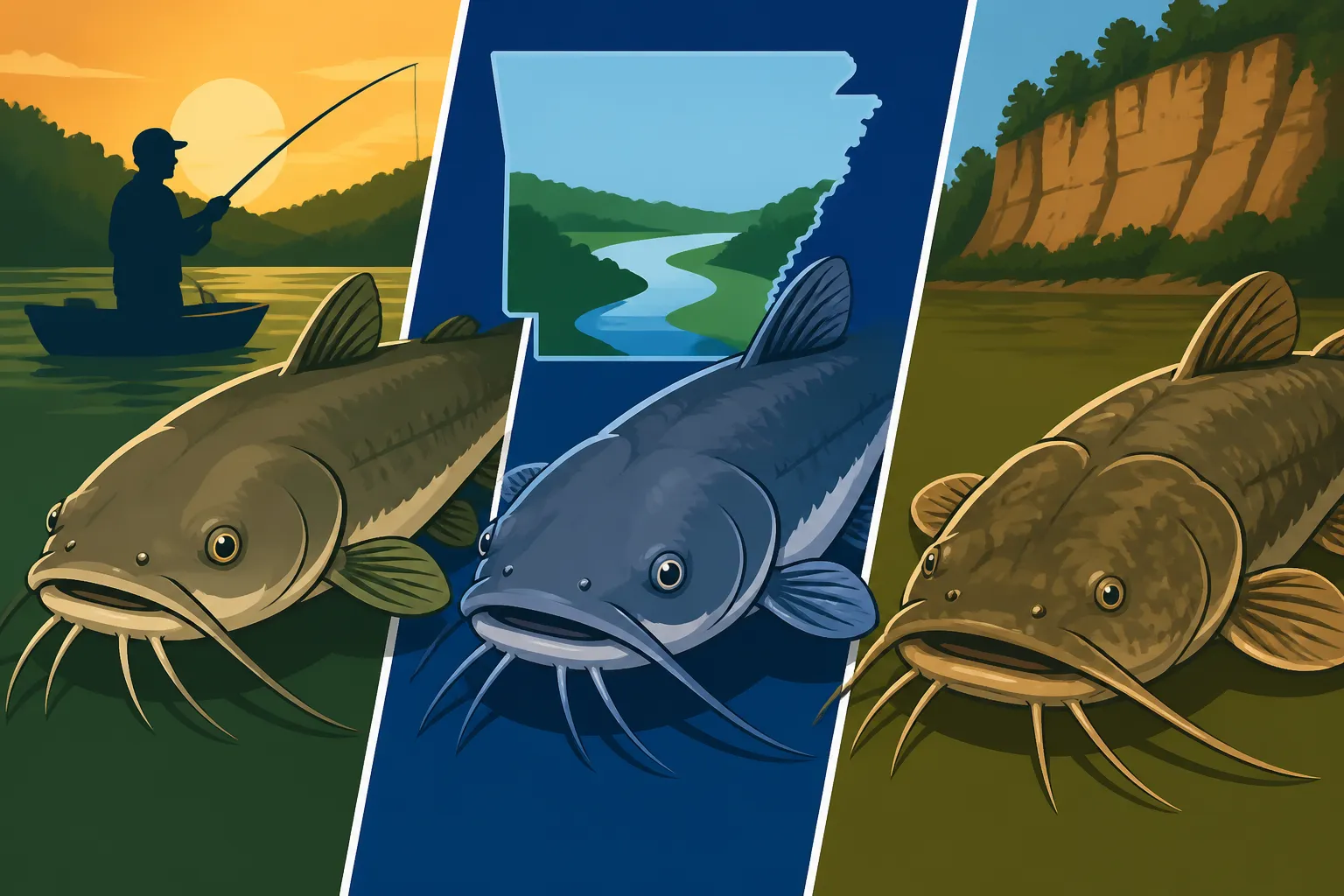
How to Tell Channel, Blue, and Flathead Catfish Apart
Have you ever reeled in a big, whiskered fish from one of Arkansas's beautiful lakes or rivers, felt that undeniable thrill, only to scratch your head and wonder, "Is this a Channel? A Blue? Or a Flathead?" It's a common dilemma, even for seasoned anglers. These three popular catfish species are often confused, but knowing the distinct differences can genuinely enhance your fishing experience and ensure you're following regulations. This guide is here to untangle that confusion, giving you the confidence to identify your catch every time.
The Challenge of Catfish Identification in Arkansas Waters
Arkansas is blessed with incredible freshwater fishing, and our catfish population is certainly a big part of that appeal. From the mighty Mississippi to the smaller creeks and reservoirs, catfish are everywhere. But with their similar whiskered faces and generally robust bodies, telling the difference between a Channel, a Blue, and a Flathead can feel like trying to solve a riddle without all the clues. You're not alone in this struggle; it's a frustration many anglers face.
Why It's So Easy to Get Them Mixed Up
One of the main reasons for the confusion lies in their general appearance. All three are bottom-dwellers, often inhabiting similar stretches of water, and they all sport those characteristic barbels around their mouths. Juveniles of these species can look especially alike, and even environmental factors can sometimes influence their coloration, making a definitive ID even trickier. Imagine catching a small, pale catfish from a muddy river – it might not have the classic markings you'd expect, leading to more head-scratching. Plus, the sheer excitement of landing a good fish can sometimes make us less observant than we should be!
We often think of catfish as just "catfish," a broad category. But just like telling apart a largemouth bass from a smallmouth, there are crucial nuances. Their habits, diets, and preferred structures differ, and knowing which species you're targeting or have caught can really help you refine your techniques. For a deeper dive into all the aquatic residents, check out Arkansas Fish Species: A Complete Guide to What's Swimming in Your Waters.
The Importance of Correct Identification
Beyond simply satisfying your curiosity, there are some very practical reasons why accurate catfish identification matters. For starters, regulations often vary by species. While daily limits might be fairly generous for Channel Catfish in many areas, specific size or creel limits could apply to trophy-sized Blue or Flathead Catfish in certain waterways. Misidentifying your catch could lead to unintentional violations, which no angler wants.
Furthermore, understanding the species you've caught informs your future fishing strategies. If you're consistently catching Channel Cats, but you're really aiming for a monster Blue, knowing the subtle differences will guide your choice of bait, tackle, and even fishing location. It helps you become a more effective and knowledgeable angler. Correct identification also contributes to valuable data for wildlife agencies, helping them manage fish populations more effectively. It’s all part of being a responsible steward of Arkansas's natural resources.
Decoding the Channel Catfish: The Angler's Familiar Friend
The Channel Catfish is arguably the most recognizable and widespread catfish species across Arkansas. It’s the one you’re most likely to catch whether you’re fishing a local pond, a larger reservoir, or a slow-moving river. They're often the first catfish species that beginner anglers successfully target, making them a true "friendly" fish.
Key Physical Characteristics of Channel Catfish
When you pull a Channel Catfish out of the water, several features should immediately jump out at you. First, look for those dark spots on their body, especially on younger fish. These spots can fade as the fish gets older and larger, but they're a hallmark. Their tail fin is deeply forked, almost like a V-shape, which is a very distinctive characteristic compared to the other two species we'll discuss.
Their body shape is generally slender and streamlined. They have eight barbels around their mouth: two on the upper jaw, four on the chin, and one at each corner of the mouth. The dorsal fin (the one on their back) has a stiff, sharp spine at the front. The anal fin (on the belly, behind the vent) is rounded and has 24-29 rays. This count is a bit technical, but a generally rounded appearance is a good visual cue. Their overall coloration can vary from olive-green to gray on the back, fading to silvery-white on the belly, often influenced by the water clarity and bottom composition of their habitat.
Where You'll Most Likely Find Channel Cats
Channel Catfish are incredibly adaptable, which is why you can find them in almost any body of water in Arkansas. They thrive in everything from large rivers like the Arkansas River to smaller streams, impoundments, and even private ponds. They prefer areas with some current but will also settle into slack water. You'll often find them cruising over sand or gravel bottoms, especially near structures like submerged logs, weed beds, or rock piles. They are opportunistic feeders, willing to eat a wide variety of baits.
When targeting Channel Cats, consider fishing near creek channels, along river bends, or in deeper holes within lakes. They're quite active, particularly during the warmer months, and respond well to various natural baits. Whether you’re using chicken livers, cut bait, or even a good old nightcrawler, a Channel Cat is often waiting to oblige. These are a staple catch for many, and you can learn more about how to find them in Channel Catfish in Arkansas Lakes and Rivers.
Common Misconceptions About Channel Catfish
One common misconception is that all catfish with spots are Channel Cats, or that all large catfish are not. While spots are a strong indicator, as mentioned, they can fade on older, larger fish. It's important to look at the other features, especially that deeply forked tail. Another myth is that Channel Cats don't get very big. While they typically don't reach the immense sizes of Blue or Flathead Catfish, they can still grow to impressive weights. Fish over 20 pounds are certainly possible, offering a fantastic fight.
Some anglers also believe they're strictly bottom feeders, but Channel Cats will readily rise in the water column to strike baits, especially when current is present or insects are hatching near the surface. Don't be afraid to suspend your baits or try drifting methods; you might be surprised by how they react. Their willingness to bite makes them a great target for beginners, offering consistent action.
Understanding the Blue Catfish: Arkansas's Big River Dweller
If you're dreaming of a truly massive catfish, the Blue Catfish is likely the species you're after in Arkansas. These incredible fish are known for their immense size and powerful fights, making them a prized catch for many dedicated anglers. They are truly titans of our deeper rivers and reservoirs.
Distinctive Features of Blue Catfish
The most defining feature of a Blue Catfish is its deeply forked tail, very similar to the Channel Catfish. However, the key differentiator is its lack of spots. Blue Catfish have a uniform, slate-blue or silvery-gray coloration on their back and sides, fading to white on the belly. Their head is relatively small in proportion to their body, which can become quite robust and thick, especially on larger specimens.
Another significant ID marker is their anal fin, which is very long and straight-edged, containing 30-35 rays. This straight edge is a crucial difference from the rounded anal fin of a Channel Catfish. Their upper jaw often protrudes slightly beyond the lower jaw, a subtle but helpful clue. Like Channel Cats, they have eight barbels around their mouth. If you catch a large, uniformly colored catfish with a deeply forked tail and a long, straight-edged anal fin, you've likely got a Blue.
Preferred Habitats and Behavior of Blue Cats
Blue Catfish are primarily inhabitants of large rivers and deep impoundments with strong current. Think of places like the Arkansas River, the lower White River, or major reservoirs such as Norfork Lake and Bull Shoals Lake. They prefer deep channels, scour holes, and areas downstream from dams where there's significant water flow. They are rarely found in small creeks or shallow ponds.
Unlike the more omnivorous Channel Cat, Blue Catfish are largely piscivorous, meaning they prefer to eat other fish. They are often found in large schools, especially when pursuing baitfish. This schooling behavior can lead to incredible fishing action when you locate a productive area. They are often targeted using cut bait from shad, carp, or drum, fished on the bottom in deep areas. Learning the ins and outs of where these giants live is key to success, and Blue Catfish Fishing in Arkansas offers more detailed advice.
Growth Potential and Trophy Status
This is where the Blue Catfish truly shines. They are the largest species of catfish in North America and hold many state and world records. In Arkansas, it's not uncommon for anglers to land Blue Cats weighing in the 50-80 pound range, and fish over 100 pounds are caught regularly. This immense growth potential is what makes them such a draw for trophy hunters. Imagine battling a fish that can easily outweigh a small person—that’s the kind of thrill a big Blue Cat provides.
Their size means they are incredibly strong fighters, often making long, powerful runs. Landing one requires stout tackle and a lot of patience. Many dedicated catfish anglers spend years pursuing a true trophy Blue. If you’re ever wondering What Is the Biggest Fish Ever Caught in Arkansas?, chances are good it was a Blue Catfish. The satisfaction of finally landing one of these river monsters is unmatched.
Identifying the Flathead Catfish: The Solitary Ambush Predator
The Flathead Catfish stands apart from its Channel and Blue cousins in both appearance and behavior. It’s a species that commands respect, not just for its size, but for its unique predatory nature. Often found lurking in secluded spots, the Flathead is an angler's ultimate test of patience and presentation.
Unique Markers of the Flathead Catfish
The Flathead Catfish is probably the easiest of the three to identify once you know what to look for. Its name gives away its most prominent feature: a distinctly flat and broad head. This is a stark contrast to the more rounded heads of Channel and Blue Cats. Their mouth is also very wide, extending back beyond the eye. Their eyes are relatively small, set high on that flat head.
Another key identifier is their tail fin, which is square or slightly emarginate (barely notched), not forked at all. This is a dead giveaway. Their body coloration tends to be mottled, a patchwork of yellow, brown, and olive, often giving them a camouflaged appearance against timber or muddy bottoms. They lack spots. The anal fin is short and rounded, similar to a Channel Cat, but with fewer rays (14-17). Their lower jaw often protrudes past the upper jaw. And unlike the other two, their barbels are quite stiff and short.
Where Flatheads Lie in Wait
Flathead Catfish are true ambush predators, and their habitat reflects this. They prefer slow-moving or stagnant waters within larger rivers and reservoirs, but always associated with heavy cover. Think logjams, submerged trees, rock piles, brush piles, and undercut banks. They'll find a secluded spot within this structure and wait for prey to come to them. They are less tolerant of high turbidity or pollution than Channel Cats and often prefer clearer, deeper water within their preferred cover.
You won't typically find Flatheads in open water or schooling like Blue Cats. They are solitary and territorial. Anglers often target them by patiently presenting live bait directly into or very near these dense cover areas. It's a game of precision and persistence, and you'll often need heavy gear to pull them out of their snag-infested lairs. For more specific habitat information, look up Flathead Catfish in Arkansas Waters.
Flathead's Diet and Fishing Strategy Implications
The Flathead Catfish is almost exclusively a predator of live fish. Unlike Channel or Blue Catfish, they generally do not respond well to cut bait, stink baits, or other dead offerings. Their diet consists of sunfish, carp, shad, and other live finfish. This dictates a very specific fishing strategy: live bait is king for Flatheads. Large live bluegill, sunfish, or even small carp are often used to entice these wary predators.
Because they are ambush predators that rely on scent and vibration, presenting a lively bait near their hideout is crucial. Anglers often use trotlines or juglines set with live bait in prime Flathead habitat, or simply fish with heavy rod and reel setups from a boat directly into snags. The fight from a large Flathead is raw power, often characterized by a strong, stubborn pull and a determined effort to return to cover. Successfully landing one often means a tug-of-war with a fish that truly doesn't want to leave its home.
Side-by-Side Comparison: Channel, Blue, and Flathead Catfish
Now that we've broken down each species individually, let's put them all together. When you’ve got a fish on the line, especially if it’s a good one, time is of the essence. You need to make a quick yet accurate assessment to ensure you’re handling it correctly and adhering to any specific regulations. This quick comparison table should become your go-to reference.
A Quick Reference Table for Key Differences
Here’s a snapshot of the most crucial identification markers for Channel, Blue, and Flathead Catfish in Arkansas:
| Feature | Channel Catfish | Blue Catfish | Flathead Catfish |
|---|---|---|---|
| Tail Fin | Deeply forked (V-shaped) | Deeply forked (V-shaped) | Square or slightly emarginate (not forked) |
| Body Coloration | Olive-green/gray, often with dark spots (especially juveniles) | Uniform slate-blue/silvery-gray, no spots | Mottled yellow/brown/olive, often camouflaged |
| Head Shape | Rounded | Rounded, relatively small for body size | Very flat and broad, wide mouth |
| Anal Fin | Rounded, 24-29 rays | Long and straight-edged, 30-35 rays | Short and rounded, 14-17 rays |
| Jaw | Jaws typically even | Upper jaw often protrudes slightly | Lower jaw protrudes beyond upper jaw |
| Diet Preference | Omnivorous (cut bait, worms, stink bait) | Piscivorous (cut bait, live bait) | Exclusively live fish (live bait) |
| Habitat | Diverse: rivers, lakes, ponds, prefers current | Large rivers, deep impoundments, strong current | Sluggish rivers, deep pools, heavy cover/snags |
| Avg. Size | 1-10 lbs, up to 20+ lbs | 10-50 lbs, often 100+ lbs | 5-30 lbs, often 50+ lbs |
This table is your quick checklist. Print it out or save it to your phone! While browsing for new tackle on Amazon, you might even find laminated fish identification cards that can be incredibly handy to keep in your tackle box for quick reference on the water.
Nuances and Exceptions to the Rules
It's important to remember that nature isn't always perfectly uniform. There can be nuances and exceptions. For instance, the spots on a Channel Catfish can be completely absent on very large or older individuals, or in certain water conditions. This is where looking at multiple characteristics, especially the tail fin and anal fin, becomes critical.
Similarly, juvenile Blue Catfish might not exhibit the massive, robust body shape of their adult counterparts, making their resemblance to Channel Cats even stronger. In these cases, focus on the lack of spots and the sheer number of rays in that long, straight anal fin. Flatheads are usually the easiest to distinguish because their flat head and square tail are so unique, but even their coloration can vary based on the specific water body. Always cross-reference a few key features before making your final ID.
Practical Tips for On-the-Water Identification
Even with all the knowledge in the world, identifying a fish quickly when it's flopping around in your hands can be a challenge. Here are some practical, real-world tips to help you make an accurate ID right there on the bank or in the boat.
What to Look for When You Land a Catfish
The moment you land a catfish, before you do anything else, take a breath and observe.
- Tail Fin First: This is often the quickest and most definitive visual clue. Is it deeply forked (Channel/Blue) or square/barely notched (Flathead)? This will immediately narrow it down to two groups.
- Check for Spots: If the tail is deeply forked, look for spots. If it has distinct dark spots, you likely have a Channel Cat. If it's uniformly colored, proceed to the next step.
- Examine the Anal Fin: For deeply forked, unspotted fish, look at the anal fin. Is it long and straight-edged (Blue) or shorter and rounded (Channel)? This is the clincher between Channel and Blue.
- Head Shape: If the tail is square, then confirm the flat, broad head and protruding lower jaw for a Flathead. There's usually no mistaking a Flathead's unique head.
- Barbels and Jaws: While more subtle, comparing the barbels (length, stiffness) and jaw protrusion (upper vs. lower) can offer further confirmation, especially for the Flathead.
- Overall Body Shape and Color: Consider the fish's build. Is it slender (young Channel), robust and deep (large Blue), or stout and mottled (Flathead)?
Practice makes perfect! The more catfish you catch and examine, the quicker and more confident you'll become.
Resources to Help You Identify Your Catch
Don't feel like you have to be a fish biologist overnight. There are plenty of tools and resources at your disposal.
- Field Guides: Many excellent field guides to freshwater fish species are available. You can find them at local sporting goods stores or easily order them from online retailers like Amazon. Having a physical book or a digital version on your phone with clear illustrations can be invaluable.
- Smartphone Apps: There are numerous fishing and fish identification apps out there. Many allow you to take a photo of your catch and get an immediate, often accurate, identification suggestion. While not foolproof, they're a great starting point.
- Wildlife Agency Websites: The Arkansas Game and Fish Commission website is an authoritative source. They provide detailed information, images, and regulations for all fish species found in the state. Always check their site for the most up-to-date information regarding limits and exceptions, like those for New Possession Limit Rule for Arkansas Anglers or Statewide Creel Limits Versus Possession Limits in Arkansas.
- Experienced Anglers: Never underestimate the power of local knowledge. Talk to other anglers at the boat ramp, bait shop, or online forums. They often have years of experience and can quickly identify a fish, sometimes even from a photo. Just be sure to cross-reference their advice with official sources.
- Fishing Forums and Communities: Online fishing communities are fantastic places to share photos of your catch and ask for identification help. Just be sure to include clear, well-lit photos from multiple angles for the best assistance.
Equipping yourself with these resources, whether it's a physical guide you picked up from Amazon or an app on your phone, will empower you to become a more informed and confident angler. Happy fishing, and may your next catch be easily identifiable!
Disclaimer
This article is for general informational purposes only and does not constitute professional advice. Laws, prices and regulations vary by location and change over time. Consult a qualified professional for guidance on your specific situation.