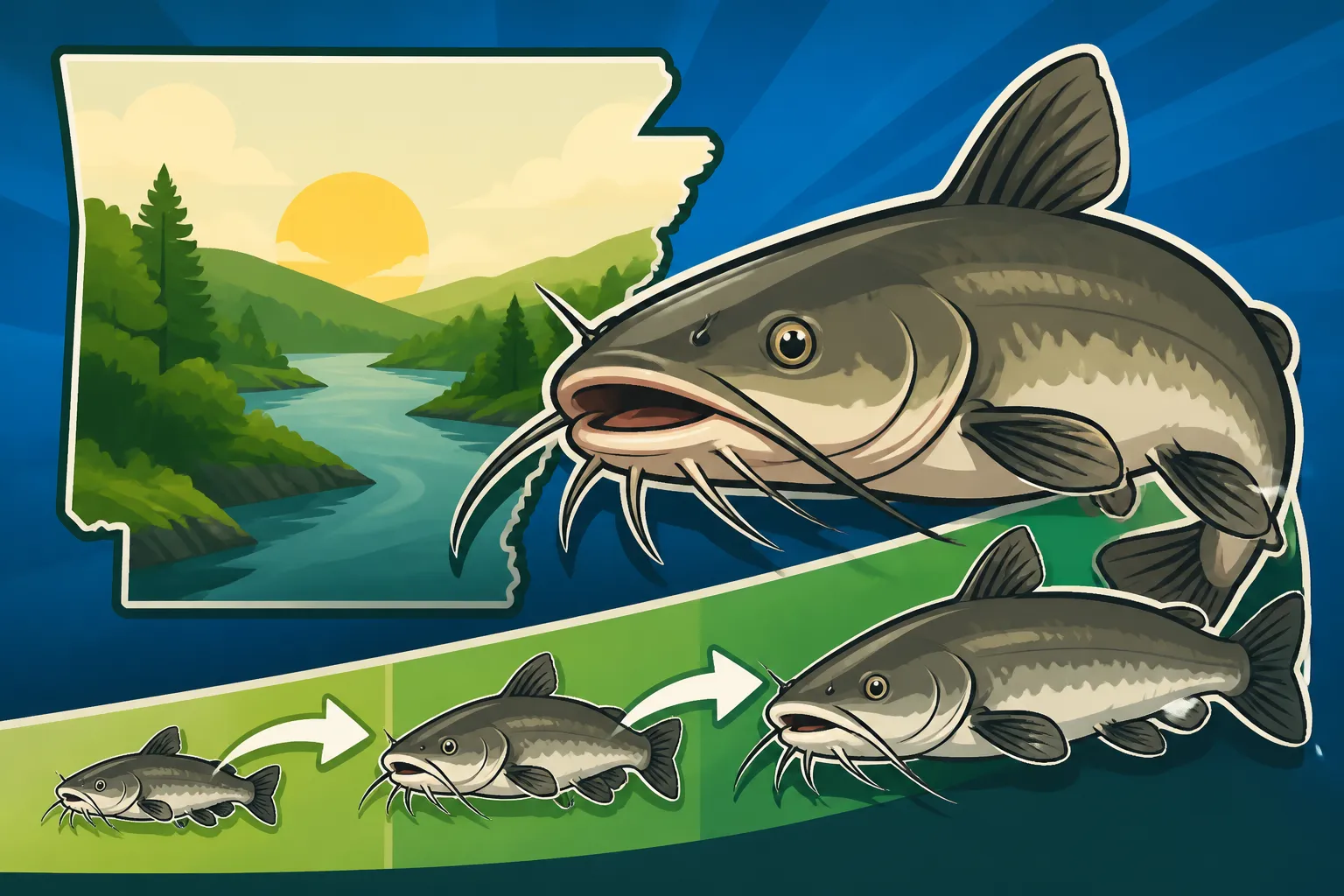
Channel Catfish Size and Growth Rates
Every angler who's ever pulled a feisty channel catfish from an Arkansas lake or river has probably wondered the same thing: just how big do these whiskered wonders actually get, and how long does it take them to reach those impressive sizes? It's a question rooted in both curiosity and the practical desire to know what kind of fight you're in for. This guide will take a deep dive into the fascinating world of channel catfish growth rates and typical sizes across the diverse waters of Arkansas, helping you understand what to expect and maybe even how to target those bigger, more elusive specimens.
The Average Arkansas Channel Catfish: What to Expect
When you're out on the water, whether it's the mighty Arkansas River or a smaller farm pond, the channel catfish you're most likely to encounter isn't going to be a record-breaker every time. Most of the channel cats that make it to your hook are going to fall within a pretty common size range. These are the fish that provide consistent action and are often perfect for a fish fry. They're a staple for a reason: they're abundant, relatively easy to catch, and put up a respectable scrap. Understanding the average size helps manage expectations and appreciate the ecosystem you're fishing in.
The typical channel catfish you'll catch in Arkansas often weighs between 1 and 5 pounds, and measures anywhere from 12 to 24 inches in length. Think of them as the "bread and butter" of catfishing. These fish are usually a few years old, having successfully navigated the early stages of their lives. They're active feeders, which makes them a prime target for anglers using a variety of baits and techniques. Many anglers actually prefer these smaller to medium-sized channel cats for their table fare, as their meat tends to be firmer and milder compared to much larger, older fish.
These average-sized fish are also incredibly resilient and adaptable, thriving in a wide range of habitats from slow-moving rivers and oxbow lakes to vast reservoirs. Their presence is a good indicator of a healthy aquatic environment, rich with the smaller fish, insects, and crustaceans that make up their diet. So, while you might dream of a monster, the steady stream of these common-sized channel cats is what truly makes catfishing in Arkansas such a consistent and enjoyable pursuit.
Factors Influencing Growth
Just like people, not all channel catfish grow at the same rate, even within the same body of water. There are several critical factors that play a huge role in how quickly a channel cat packs on the pounds and stretches out in length. It's a delicate balance of environmental conditions and genetic predisposition, all working together to determine the ultimate size and vitality of a fish. Understanding these elements can give you a better insight into why some lakes consistently produce bigger fish than others, or why a fish from a particular river section might be a lean, mean fighting machine.
One of the biggest factors is water temperature. Catfish are cold-blooded, meaning their metabolism is directly affected by the temperature of their surroundings. In warmer waters, especially during the long, hot Arkansas summers, channel catfish can eat and digest food at a much faster rate, leading to accelerated growth. Conversely, in colder months, their metabolism slows down, and their growth essentially grinds to a halt. This is why you'll often see bursts of growth during the spring and summer, when food is abundant and temperatures are ideal for active feeding.
Another crucial element is the food supply. A lake or river rich in forage, such as shad, crawfish, or even other smaller fish, will naturally support a healthier population of larger channel cats. When food is scarce, fish have to expend more energy searching for meals, which means less energy is available for growth. Genetics also play a part; some catfish are simply predisposed to grow larger and faster than others. While you can't control the genetics of the fish you're catching, you can certainly choose fishing spots known for their abundant food sources. This is why places like the Arkansas River or sprawling reservoirs often hold impressive numbers of large channel catfish—they've got the buffet line always open!
Typical Length and Weight Ranges
Let's get down to the brass tacks of what you can realistically expect to see when you pull a channel catfish out of the water here in Arkansas. While state records are certainly exciting, they are the exception, not the rule. The vast majority of channel cats you encounter will fall into a predictable range, and knowing this helps you identify a healthy, growing fish from a potential trophy.
For a typical channel catfish, a length of 12 to 18 inches is very common, especially in waters with moderate fishing pressure. These fish often weigh between 1 and 3 pounds and are usually around 2 to 4 years old. They're incredibly feisty at this size and offer excellent sport. As they grow a bit larger, say into the 18 to 24-inch range, you're looking at fish that might tip the scales at 3 to 7 pounds. These are still very common catches and represent a mature, healthy fish that has had good access to food and favorable conditions.
Beyond that, fish in the 24 to 30-inch range, weighing 8 to 15 pounds, start to feel like a significant catch for most anglers. These are typically older fish, perhaps 5 to 10 years old, that have managed to avoid predators and anglers for a longer period. It's important to remember that these are general guidelines, and growth rates can vary dramatically. A channel catfish in a nutrient-rich private pond with little competition might reach these sizes much faster than one in a heavily fished public reservoir with dense populations. These bigger cats are often sought after for the sheer thrill of the fight, providing memorable angling experiences. You'll often find these larger specimens dwelling in deeper holes or around submerged structures.
Here’s a general overview of typical size ranges you might encounter:
| Age (Years) | Typical Length (Inches) | Typical Weight (Pounds) | Notes |
|---|---|---|---|
| 1-2 | 6-12 | <1 | Fast initial growth, often stocked |
| 2-4 | 12-18 | 1-3 | Common keepers, good table fare |
| 4-6 | 18-24 | 3-7 | More mature fish, strong fighters |
| 6-10 | 24-30 | 8-15 | Significant catches, often found in deeper waters |
| 10+ | 30+ | 15-30+ | Trophy potential, less common |
Understanding Channel Catfish Growth Rates in Arkansas Waters
The journey of a channel catfish from a tiny fry to a respectable fighter is a fascinating one, and it largely depends on the specific aquatic environment it calls home. Arkansas is blessed with an incredible variety of fishing grounds, from the fast-flowing trout streams to the vast, warm-water impoundments, and each of these unique habitats influences how fast—or slow—a channel catfish will grow. It's not just about how much they eat, but also about the consistency of that food supply, the density of their population, and the overall health of the water.
In optimal conditions, with plenty of food and warm water, channel catfish can experience quite rapid growth in their early years. They are opportunistic feeders, willing to snack on just about anything, which helps them pack on mass quickly. However, this early boom often slows down as they age, especially if they are in overcrowded waters or environments where competition for food is high. A catfish in an uncrowded, productive pond might hit 10 pounds in just a few years, while a sibling in a large, overpopulated public lake might take twice as long to reach the same size.
Anglers often discuss "fast-growing" lakes or "slow-growing" rivers, and this isn't just anecdotal. Fisheries biologists actually study these growth rates to manage populations effectively. They look at factors like the condition of the fish (how fat or thin they are for their length) and their age structure to determine if a body of water is supporting healthy growth. This scientific approach helps ensure that future generations of anglers will continue to find plenty of robust channel catfish in Arkansas.
Age vs. Size: A Closer Look
It's tempting to think that a bigger fish is always an older fish, and while there's a general correlation, it's not a strict rule. Just like in any species, there's a range of individual variation. Two channel catfish born in the same year, in the same lake, could end up being vastly different sizes due to a multitude of factors, including genetics, access to preferred feeding grounds, and even sheer luck in avoiding predators and fishing hooks.
Typically, channel catfish can live a good long life, often 10 to 15 years, and some even longer in ideal conditions. During their first few years, growth is usually quite rapid, with fish adding significant length and weight annually. For instance, a one-year-old channel cat might be around 6-8 inches, while a two-year-old could easily be in the 12-14 inch range. By the time they reach 5 or 6 years old, they are often mature and can be found in the 5-10 pound range, putting them squarely in the "good eating" category for many Arkansas anglers.
However, as they age further, their growth rate tends to slow down. An 8-pound fish that is 6 years old might only gain another 2-3 pounds over the next few years, rather than doubling its size. This is often because they've reached a certain physiological maturity, and the energy expenditure for maintaining their large bodies and reproducing takes precedence over rapid growth. So, while a 20-pound channel catfish is definitely an old fish, a 10-pounder might be anywhere from 6 to 10 years old depending on where it grew up and what kind of life it led.
The Role of Environment: Lakes vs. Rivers
The type of water body a channel catfish inhabits plays a huge role in its growth trajectory. Arkansas offers a fantastic mix of sprawling reservoirs, natural oxbow lakes, and dynamic river systems, each presenting unique challenges and opportunities for growing catfish.
In large reservoirs like Lake Ouachita or DeGray Lake, channel catfish often benefit from vast expanses of water and diverse forage bases. These impoundments can hold incredible numbers of baitfish, which provides a consistent, high-protein diet. Coupled with warmer water temperatures in the summer, this can lead to faster growth rates, especially for fish in less competitive areas. However, reservoirs can also experience "stunting" if there's an overabundance of catfish and not enough food to go around, leading to many smaller fish rather than a few large ones. Fisheries management in these large lakes often involves careful monitoring to ensure healthy populations. Crappie Size and Daily Limit in Arkansas are also carefully managed in these lakes to maintain balance.
Rivers, on the other hand, present a different set of conditions. The constant current in places like the Arkansas River Fishing for Bass and Catfish provides a continuous flow of nutrients and can concentrate food sources, but it also requires fish to expend more energy to maintain their position. This often means river channel cats can be leaner and more muscular, built for the fight against the current. Growth rates might be slightly slower than in the most productive lakes, but the fish are often incredibly strong and robust. Moreover, river systems can offer more varied habitats, from deep holes to submerged timber, giving larger fish more places to hide and grow undisturbed. Knowing these differences helps anglers tailor their Catfish Bottom Fishing Techniques and bait choices to the specific environment.
Chasing Trophy Channel Cats: Beyond the Average
While the average channel catfish provides plenty of angling enjoyment, there's an undeniable allure to landing a true trophy. These are the fish that break into the double digits, often pushing 20, 30, or even more pounds, and they represent a significant accomplishment for any angler. Catching a trophy channel cat in Arkansas isn't just about luck; it's often the culmination of understanding their habits, knowing where to look, and having the right gear and patience.
These larger fish are typically older and have become incredibly cunning. They've learned to avoid dangers and have staked out prime feeding and resting spots. Their diets might shift slightly as they get bigger, often consuming larger prey items like whole baitfish, rather than just worms or small insects. Targeting them requires a different mindset and approach compared to simply catching smaller, more numerous fish. It's a game of persistence, often involving longer waits and heavier tackle.
The thrill of a trophy channel cat pulling drag from your reel is an experience that keeps anglers coming back year after year. It's not just about the size of the fish, but the story behind it—the early mornings, the late nights, and the careful planning that finally paid off. Arkansas has a rich history of producing monster catfish, and with the right strategy, you too can join the ranks of those who have landed one of these impressive specimens.
Arkansas State Records and Trophy Potential
Arkansas has a well-deserved reputation for producing some truly enormous channel catfish. The state record stands as a testament to the incredible growth potential of these fish in our waters. While I can't give you the exact current record weight or year it was caught (you'll want to check the latest AGFC records for that!), I can tell you that it's an impressive number that inspires many anglers to pursue their own personal bests. These record-setting fish aren't flukes; they come from waters that consistently offer the perfect combination of abundant food, suitable habitat, and longevity.
Bodies of water known for their trophy potential often have stable, nutrient-rich environments. Large reservoirs and major river systems are typically the places where these giants are found. These areas provide the expansive territories and deep, complex structures that big catfish need to thrive without too much pressure. For instance, the main stem of the Arkansas River and some of its larger impoundments are frequently mentioned when discussing trophy channel catfish. Other lakes, too, have earned their stripes, offering anglers a shot at a true monster.
While breaking the state record is a monumental task, catching a channel catfish that weighs 15, 20, or even 30 pounds is certainly within the realm of possibility for dedicated anglers in Arkansas. These fish are genuine trophies and are far beyond the "average" size. They represent years of growth and survival, and landing one is a significant achievement. It often means you've tapped into a particularly healthy population, or perhaps discovered a secluded honey hole where these giants feel safe to grow to their full potential.
Strategies for Targeting Larger Catfish
To consistently hook into those bigger channel catfish, you really need to shift your approach from simply fishing for "anything that bites." Trophy channel cats are not as ubiquitous as their smaller counterparts, and they require a more thoughtful, targeted strategy. It's less about quantity and more about quality, demanding patience and a bit of detective work.
First and foremost, bigger fish often require bigger bait. While small channel cats will readily take worms or small pieces of cut bait, the giants are looking for a more substantial meal. Think about using larger chunks of shad, bluegill, or other oily cut baits. Some anglers even use whole small fish, like a substantial perch or bream, fished on heavy-duty circle hooks. The key is to offer something that makes it worth their while to move from their comfortable hiding spot. You can often find a good selection of specialized bait and tackle on sites like Amazon, ready to be delivered to your door.
Secondly, you need to think about where these larger fish are likely to hang out. They prefer deeper water, often near structural elements like submerged timber, rock piles, drop-offs, or channel edges. These spots provide cover, ambush points for feeding, and a sense of security from predators (including humans). Night fishing can also be incredibly productive for bigger channel cats, as they tend to be more active and less wary after dark. Night Fishing Techniques for Catfish often involve soaking baits in known hotspots and waiting for that tell-tale slow, deliberate pull. Heavy-action rods, strong braided line, and robust reels are absolutely essential when you're going after these heavyweights; your standard panfish setup just won't cut it.
Practical Considerations for Anglers
Understanding channel catfish size and growth rates isn't just about satisfying curiosity; it also has practical implications for how we fish and interact with the aquatic environment. From deciding whether to keep a fish for dinner or release it to grow bigger, to choosing the right gear for the job, this knowledge directly impacts your angling experience and your contribution to healthy fisheries. Being a responsible angler means thinking about the long-term sustainability of our resources, and channel catfish, being such a popular species, deserve our careful consideration.
It's also about maximizing your own enjoyment. Knowing what kind of fight to expect from a 5-pound versus a 15-pound channel cat allows you to prepare adequately and appreciate the challenge. It influences everything from the type of rod and reel you select to the strength of your line and hooks. The more informed you are, the more successful and ethical your fishing trips will be, ensuring that the next generation of anglers can also experience the joy of catching these fantastic fish in Arkansas waters.
Catch and Release for Sustainable Growth
For many anglers, especially those targeting larger fish, catch and release is a crucial practice. While channel catfish are excellent table fare, releasing larger, older fish can significantly contribute to the health and sustainability of the fishery. These mature fish are often the prime breeders, contributing their genetics to the next generation. By releasing them, you're helping ensure a robust and diverse catfish population for years to come. New Possession Limit Rule for Arkansas Anglers means we have even more responsibility to manage our catches wisely.
When practicing catch and release, handle the fish carefully. Try to minimize its time out of water, support its body weight, and if possible, use a net with rubberized mesh to protect its slime coat. If a fish is deeply hooked, it's often best to cut the line as close to the hook as possible rather than trying to remove it, especially if the hook is stainless steel and will eventually corrode. Taking a quick photo is fine, but prioritize getting the fish back into the water swiftly and gently.
This practice doesn't mean you can't keep any fish. Many anglers choose to keep the "mid-sized" channel cats, perhaps those in the 1-5 pound range, for eating, as they are often more numerous and still provide excellent meat. Releasing the smaller fish allows them to grow, and releasing the largest fish helps maintain the breeding stock. It's a balanced approach that respects the resource while still allowing anglers to enjoy their catch. Considering a Resident Annual Fishing License Cost in Arkansas or even a Nonresident Annual Fishing License Cost in Arkansas supports these conservation efforts.
Equipment Considerations
When you're chasing channel catfish, especially those larger specimens, having the right equipment makes all the difference. You don't want to be caught off guard by a hard-fighting 15-pounder with gear meant for panfish. Investing in appropriate tackle not only increases your chances of landing the fish but also ensures a more enjoyable and less frustrating experience.
For the average 1-5 pound channel cats, a medium to medium-heavy spinning or baitcasting rod, around 6.5 to 7.5 feet long, paired with a reel spooled with 10-20 pound test monofilament or braided line, is usually sufficient. This setup offers enough backbone for the fight while still being sensitive enough to detect subtle bites. For those targeting trophy channel cats, however, you'll need to beef things up considerably. A heavy-action rod, 7.5 to 9 feet in length, combined with a robust baitcasting reel (often a conventional style) spooled with 30-60 pound braided line is more appropriate. This kind of setup can handle the powerful runs and heavy head shakes of a truly big fish. You can find a vast selection of these specialized rods, reels, and lines on platforms like Amazon, making it easy to outfit yourself for any catfishing adventure.
Don't forget the terminal tackle! Heavy-duty circle hooks, sized appropriately for your bait (often 5/0 to 8/0 for bigger fish), strong swivels, and lead weights suitable for holding your bait on the bottom in current or wind are essential. A good quality pair of pliers for hook removal, a sturdy landing net with a wide hoop, and perhaps a pair of heavy-duty gloves to handle a toothy catfish safely are also highly recommended. Having everything you need, from bait to a reliable fillet knife for processing your catch, ensures you're ready for whatever the waters of Arkansas throw your way.
Disclaimer
This article is for general informational purposes only and does not constitute professional advice. Laws, prices and regulations vary by location and change over time. Consult a qualified professional for guidance on your specific situation.