Arkansas Crappie Spring Spawn Pattern
There's nothing quite as frustrating as showing up to your favorite Arkansas lake, rods in hand, only to realize you've missed the peak crappie spawn. That golden window of opportunity, when crappie are aggressive and shallow, can be incredibly narrow and tough to predict if you don't know the signs. This comprehensive guide will pull back the curtain on the Arkansas crappie spring spawn pattern, helping you understand when, where, and how to find these delicious panfish during this exciting time, turning those frustrating misses into triumphant catches.
Understanding the Crappie Spring Spawn in Arkansas
The crappie spring spawn is a pivotal time for anglers across Arkansas. It's when these fish, driven by ancient instincts, move from their deeper wintering grounds into shallower waters to reproduce. Understanding this cycle isn't just about catching more fish; it's about appreciating the delicate balance of nature and how every environmental cue influences fish behavior. It’s a fantastic experience, but also one that requires respect for the resource to ensure future generations of crappie and anglers alike.
Why the Crappie Spawn is So Crucial
For both the crappie population and us anglers, the spawn is a critical event. For the fish, it's their annual chance to ensure the continuation of their species. They become highly concentrated in specific areas, making them more accessible and predictable targets for fishing. This concentration is precisely why so many anglers flock to our lakes and rivers during spring. It offers an unparalleled opportunity to fill a cooler and create lasting memories, especially when you know what you're looking for.
However, with this increased accessibility comes a responsibility. During the spawn, crappie are often focused solely on reproduction, making them vulnerable. Catch-and-release is always a good practice, especially for larger breeding females, to help sustain healthy populations. Knowing when and where to find them is only part of the equation; understanding their role in the ecosystem is equally important.
Key Environmental Triggers
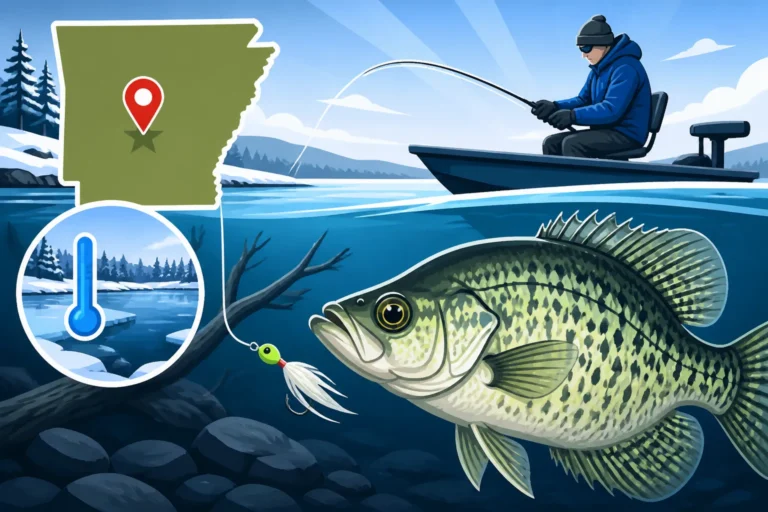
Crappie, like many fish species, are highly sensitive to environmental changes, and temperature is the absolute king when it comes to spawning cues. While the exact timing can shift a bit year to year based on weather patterns, the consistent driving force is water temperature. Black crappie typically start their movement to the shallows when water temperatures hit the mid-50s Fahrenheit, with peak spawning occurring between 60-68 degrees. White crappie follow a similar pattern, often just a touch later or at slightly higher temperatures, perhaps from the high 50s to low 70s.
Beyond temperature, other factors play a role. Increasing daylight hours signal the approach of spring, preparing fish for the upcoming biological event. Stable weather conditions – meaning a few consecutive days without major cold fronts or drastic temperature drops – are also crucial. A sudden cold snap can cause crappie to pull back to deeper water, essentially putting the spawn on pause until conditions stabilize again. This is why watching weather forecasts and water temperatures carefully is paramount for predicting the When Do Crappie Spawn in Arkansas accurately each season.
Different Crappie Species and Their Timing
Arkansas is home to both black crappie and white crappie, and while their spawning habits are quite similar, there are subtle differences in their preferences and timing that can make a big impact on your fishing success. Understanding these nuances is key, as one species might be actively spawning while the other is still in pre-spawn or post-spawn mode in the same body of water.
Black crappie, with their darker, speckled bodies, generally prefer clearer water with more vegetation and structure. They tend to spawn a little earlier than white crappie, often kicking off when water temperatures are in the low 60s. White crappie, distinguished by their more silvery color and vertical bars, are often found in murkier water and are more tolerant of turbid conditions. Their peak spawn usually happens when the water is slightly warmer, typically in the mid to high 60s. Knowing these distinctions, which you can dive into further with our guide on Black Crappie vs White Crappie in Arkansas, helps you adjust your location and tactics to target the most active fish.
Pre-Spawn Behavior and Where to Find Them
Before the full-blown spawning frenzy begins, crappie enter a "pre-spawn" phase. This is a period of transition where they're actively feeding and moving towards their eventual spawning grounds, but aren't quite committed to the shallows yet. This can be one of the most exciting times to fish, as the crappie are often aggressive and eager to pack on calories before the rigors of spawning. Missing this phase means missing some serious action.
Transition Zones and Staging Areas
During the pre-spawn, crappie don't just magically appear in the shallows; they make a gradual pilgrimage. They'll typically move from their deeper wintering holes – think main lake channels, deep creek beds, or submerged timber – into what we call "staging areas." These are usually transitional zones, like the mouths of creeks, secondary points, or humps leading into bays and coves. They'll hold here, feeding heavily and waiting for those water temperatures to hit their sweet spot.
These staging areas offer a combination of deeper water access for security and nearby shallower water for quick dashes to feed. Look for areas where a deep creek channel swings close to a prominent point or a flat that eventually leads into a protected spawning cove. Crappie will often be suspended in these areas, perhaps 10-20 feet deep over 30 feet of water, making them a prime target for anglers using vertical jigging or slow trolling techniques.
Ideal Water Depths and Cover
In the pre-spawn, crappie aren't quite ready for the extreme shallows, but they're definitely shallower than their winter haunts. You'll typically find them in depths ranging from 8 to 20 feet, often relating to some form of cover. Think brush piles, submerged timber, rock piles, or even boat docks and marinas. These structures provide protection from predators and act as ambush points for feeding on baitfish.
As the water warms incrementally, they'll gradually push shallower within these staging zones, sometimes moving up to 5-10 feet deep, especially on sunny days that warm the upper water column. Don't be afraid to experiment with different depths around these types of cover. Use your electronics to mark baitfish and crappie schools, and pay attention to what depth your bites are coming from. The fish will tell you exactly where they want to be.
Early Spring Lures and Techniques
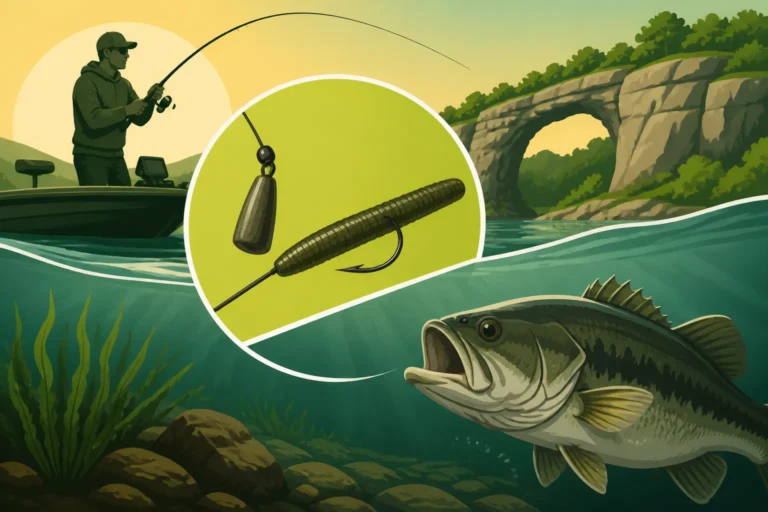
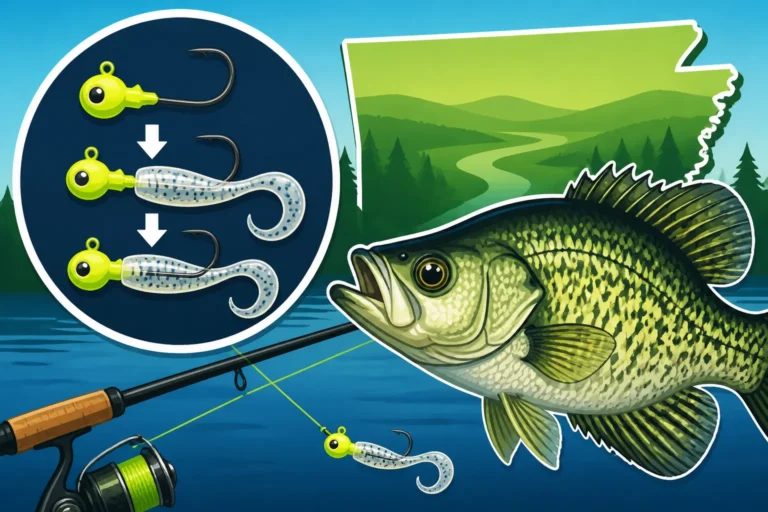
During the pre-spawn, crappie are often feeding aggressively, so presentation can be a bit more varied. Small jigs, typically 1/16 to 1/8 ounce, are fantastic. Classic colors like chartreuse, white, and black/chartreuse are always good bets, but don't hesitate to experiment with brighter colors on cloudy days or in stained water. Soft plastic bodies, such as tube jigs, grub tails, or minnow imitations, are highly effective. You can find a huge variety of these jig types and colors on Amazon, allowing you to stock up for any water condition.
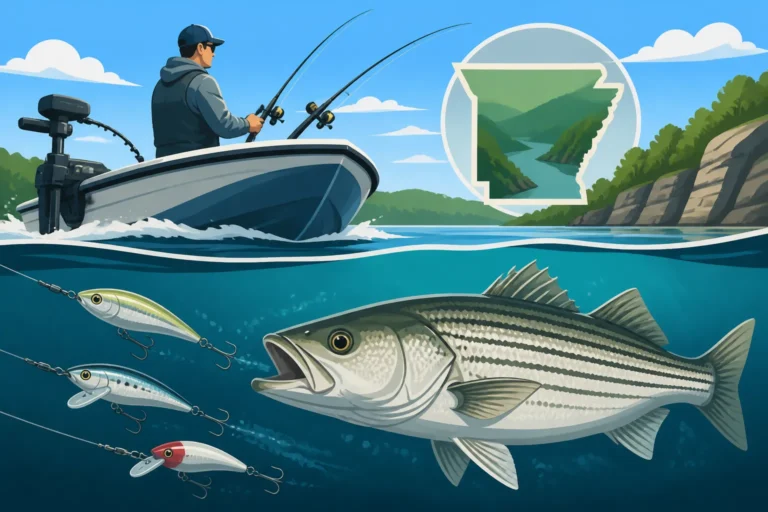
Slow trolling with multiple rods (check your state regulations for the number of rods allowed!) equipped with jigs or small crankbaits can be deadly for covering water in these staging areas. Spider rigging, where you deploy several long rods from the front of the boat, allows you to present baits at various depths and speeds simultaneously. Another effective method is tight-lining or vertical jigging directly over submerged brush piles or timber that you've marked on your fish finder. A sensitive rod is key to detecting those subtle pre-spawn bites. For those looking to refine their skills, our guide on Crappie Jigging Basics for Beginners offers some great starting points.
Peak Spawn Activity and Prime Locations
This is what every crappie angler dreams of – the peak of the spring spawn! When the water temperatures hit that magical window, typically from 60 to 68 degrees Fahrenheit, crappie become singularly focused on reproduction. They move from their deeper staging areas right into the shallows, making them highly accessible and often incredibly cooperative. This is the time when you can often catch them in numbers, sometimes sight-fishing for them directly on their beds.
Nesting Habits and Preferred Bottoms
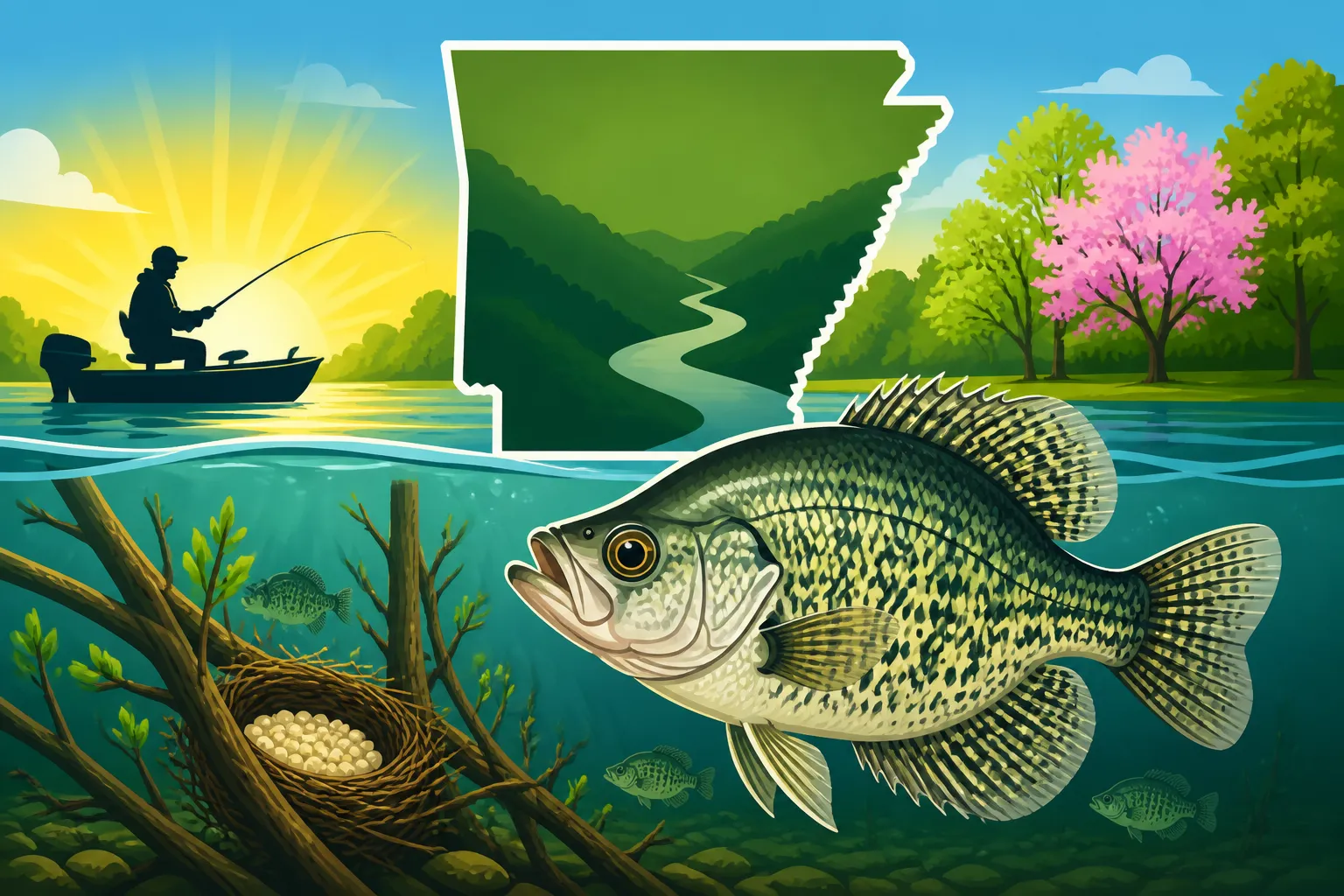
During peak spawn, both black and white crappie seek out specific types of bottom to build their nests. They prefer hard bottom areas, such as sand, gravel, or firm mud, especially those with some kind of cover nearby. Male crappie will fan out a saucer-shaped nest, typically in water ranging from just a few inches to about 5 feet deep. They'll fiercely guard these nests, which is why they become so aggressive towards anything that comes too close.
Look for areas protected from strong winds and currents, as these calm spots provide ideal conditions for eggs to develop. Sunken logs, stumps, brush piles, cypress trees, or even the bases of boat docks often provide the perfect sanctuary for these spawning fish. The males will patrol these areas, waiting for females to arrive, lay eggs, and then guarding the eggs until they hatch. This territorial behavior is what makes them so catchable during this period.
Shallow Water Hotspots
When the crappie are on their beds, they are truly in the skinny water. You'll want to focus your efforts on shallow, protected coves, creek arms, and backwater areas that warm up quickly. Any structure that reaches into the water can hold spawning crappie:
- Flooded timber and brush piles: These are classic crappie magnets. The intricate branches provide cover, shade, and security for nesting fish.
- Docks and piers: The shaded undersides and vertical structure of docks are ideal. Crappie will often nest around the pilings or under the pontoons.
- Lily pads and emergent vegetation: The stems and leaves offer camouflage and protection. Fish the edges and any open pockets within the pads.
- Shallow points and pockets: Areas where a point extends into a shallow flat, or small pockets within a larger bay, can be prime locations, especially if they have some woody cover.
Many of Arkansas's Best Crappie Lakes in Arkansas, like Lake Ouachita, DeGray Lake, and Lake Conway, are famous for their abundant shallow cover, making them crappie havens during the spawn. You might be surprised how shallow you find them, sometimes in less than a foot of water.
Effective Baits and Presentation during Peak Spawn
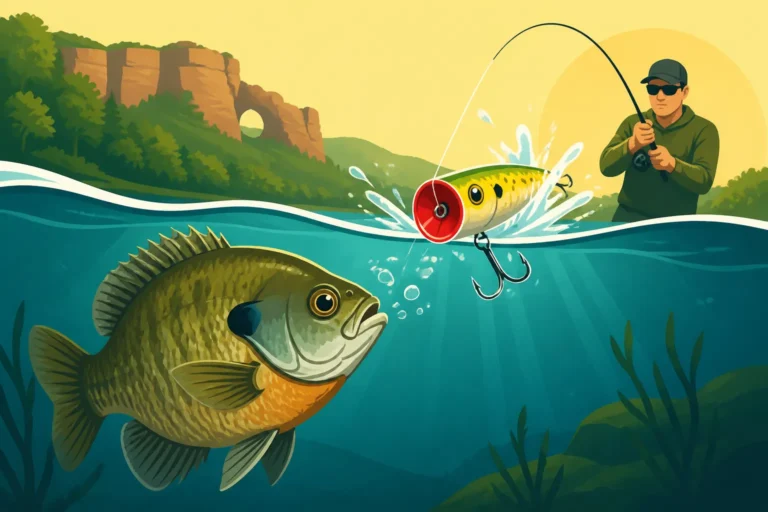
During the peak spawn, crappie can be incredibly aggressive, but also finicky. Sometimes they'll hit anything; other times, a precise presentation is critical. The most consistently effective baits are small jigs, typically 1/32 to 1/16 ounce. Soft plastic bodies that mimic small minnows or insects work wonders. Colors are important, but often a subtle, natural hue like clear with silver flake, or a dull chartreuse, can outperform brighter options in clear water.
Live minnows are also highly effective, especially when fished under a bobber just above the cover or nest. A small, lightweight bobber that barely floats the minnow will prevent spooking the fish. When fishing jigs, a slow, deliberate presentation is usually best. Cast beyond the cover and slowly retrieve, letting the jig fall naturally into the strike zone. Sometimes a subtle twitch is all it takes to trigger a bite. In some highly pressured lakes, a tiny hair jig can be incredibly effective when everything else fails. Remember, Crappie must be 9 inches or longer to keep in Arkansas, so always be mindful of local regulations.
Post-Spawn Recovery and Summer Transition
Just as quickly as the crappie move into the shallows for the spawn, they begin their transition back to deeper water once their reproductive duties are complete. This "post-spawn" phase can be a bit trickier for anglers because the fish are often dispersed and recovering, rather than concentrated and aggressive. However, it's not impossible to catch them; it just requires a shift in strategy and a deeper understanding of their behavior.
Moving to Deeper Water and Structure
After the exhausting process of spawning, crappie will slowly begin to migrate away from the extreme shallows. They won't usually make a direct bee-line for their deep wintering holes, but rather transition to slightly deeper, yet still accessible, structure. Think about the first drop-offs outside spawning coves, submerged creek channels, main lake points, or deeper brush piles that sit in 10-25 feet of water. They're looking for areas that offer a bit more security from predators and direct sunlight, but still provide easy access to food.
These fish are often recovering, so they might not be as active as during the pre-spawn or peak spawn. They'll relate tightly to cover, using it as a resting spot and an ambush point. Your electronics become even more vital now to locate these dispersed schools. Keep an eye out for submerged timber, deep ledges, or man-made fish attractors in these moderate depths.
Feeding Patterns After Spawning
Post-spawn crappie are often hungry, but they might not be as eager to chase down baits. Their primary goal is to replenish their energy reserves, so they'll feed, but often in a more lethargic manner. They'll still primarily target baitfish like shad and minnows, along with small crustaceans and insects. The key is to present your bait in a way that requires minimal effort from the fish to strike.
Instead of fast-moving retrieves, think slow and subtle. Vertical jigging or slow trolling with live bait or very small jigs are often the most productive methods. Pay close attention to subtle bites, as crappie might just "mouth" the bait rather than aggressively strike it. Fishing during low-light conditions, like early morning or late evening, can also improve your chances as fish may move a bit shallower to feed more actively during these times.
Lures and Strategies for Post-Spawn Crappie
For post-spawn crappie, downsizing your baits is often a good strategy. Tiny 1/32 or even 1/64 ounce jigs with soft plastic bodies, like micro-grubs or hair jigs, are excellent choices. Subtle colors that mimic natural baitfish are usually preferred. Live minnows, again, are hard to beat, fished either suspended under a small bobber or tight-lined directly over structure. You can find a wide range of these ultralight jig heads and tiny plastics on Amazon, perfect for a subtle presentation.
A particularly effective strategy is "long lining" or slow trolling small jigs or crankbaits well behind the boat, often without any added weight, allowing them to run at a specific depth determined by line length and boat speed. This covers a lot of water and lets you find those scattered fish. Another technique is to locate deep brush piles or submerged trees and vertically present a jig or minnow directly into the cover, working it slowly through different depths until you find where the crappie are holding. Remember, the Statewide crappie daily limit is 20 fish in most Arkansas waters, but always double-check for specific lake exceptions.
Regional Variations Across Arkansas Waters
Arkansas is a diverse state, boasting a wide array of lakes and rivers, and this diversity means that the crappie spawn pattern isn't a one-size-fits-all event. While the core environmental triggers remain the same, local conditions, water body size, depth, and even geographical location can significantly influence when and where the crappie spawn. Understanding these regional differences can be the secret sauce to consistent spring crappie success, whether you're fishing the mountainous north or the delta in the south.
Northern Arkansas Lakes (e.g., Bull Shoals, Norfork, Beaver)
The large, clear, and often deeper lakes of Northern Arkansas, like Bull Shoals, Norfork, and Beaver Lake, tend to experience a crappie spawn that often starts a bit later than their southern counterparts and can sometimes last longer. These lakes are typically slower to warm up due to their depth and often higher elevation. The crappie here often relate to rockier structures, bluff ends, and standing timber.
Anglers on these lakes should pay very close attention to creek arms and shallow, protected coves that have ample brush or cedar trees. The water clarity also plays a role, sometimes pushing crappie slightly deeper for their nests compared to murkier water, or making them more skittish. Look for fish staging on secondary points near deep water before moving into those prime shallow spots. The spawn window can sometimes extend into May in these cooler, deeper waters, providing excellent opportunities.
Central and Southern Arkansas Lakes (e.g., Lake Ouachita, DeGray, Conway, Monticello)
Moving to Central and Southern Arkansas, lakes such as Lake Ouachita, DeGray Lake, Lake Conway, and Lake Monticello generally see an earlier crappie spawn. These lakes are often shallower, stainier, and warm up much faster in the spring sunshine. Lake Conway, for instance, known for its vast amount of cypress trees and submerged timber, can have crappie in the shallows as early as late March or early April if conditions are right.
For these lakes, focus on those classic shallow cover elements: flooded timber, cypress trees, laydowns, and dense brush. The fish will be right up in it. For instance, Lake Monticello crappie limit drops to 15 fish per day, a stark difference from statewide limits, which illustrates the importance of checking local rules. These lakes are often easier to fish from the bank or with smaller boats, as the crappie will be very accessible close to shore.
River Systems and Reservoirs (e.g., Arkansas River, White River National Wildlife Refuge)
River systems and associated oxbow lakes, along with areas like the White River National Wildlife Refuge, present unique crappie spawning conditions. River levels and current play a much larger role here, often influencing when and where crappie decide to spawn. Stable or slowly falling water levels are typically best, as rapidly rising or falling water can disorient fish and destroy nests.
In these systems, look for crappie to move into sloughs, backwaters, and oxbows off the main channel, seeking calmer water and plenty of cover. The White River National Wildlife Refuge, with its network of timber-filled lakes and sloughs, is a prime example where crappie will migrate from the river into these protected areas to spawn. This is a great area to explore for crappie, as detailed in our specific guide on Crappie Fishing at Arkansas's White River National Wildlife Refuge. The spawn in these areas can sometimes coincide with later timing due to cooler river water, or earlier in shallow, isolated oxbows that heat up quickly.
Here's a quick comparison of typical crappie spawn characteristics across different Arkansas regions:
| Region/Lake Type | Typical Spawn Timing | Key Water Characteristics | Preferred Cover Types | Notes on Behavior |
|---|---|---|---|---|
| Northern Lakes | Late March – Mid-May | Deeper, Clearer, Slower to Warm | Rock ledges, Bluff ends, Standing timber, Cedar trees | Often deeper nesting, more sensitive to cold fronts |
| (Bull Shoals, Norfork) | (Avg. 60-68°F) | |||
| Central/Southern Lakes | Late March – Early May | Shallower, Stainer, Quicker to Warm | Flooded timber, Cypress trees, Laydowns, Brush piles | Highly concentrated in dense shallow cover, earlier spawn |
| (Ouachita, DeGray, Conway) | (Avg. 62-70°F) | |||
| River/Refuge Systems | Early April – Mid-May | Variable Depth/Clarity, Current | Sloughs, Oxbows, Backwater timber, Log jams | Influenced by river levels, seek calm protected areas |
| (Arkansas River, White River Refuge) | (Avg. 60-68°F) |
It's absolutely crucial to remember that these are general guidelines. Every year is a little different, and paying attention to current local conditions is always your best bet. Always confirm specific regulations, especially regarding daily limits as they can vary, for example, Are crappie limits different at Lake Monticello and Lake Cargile?.
Essential Gear for Spring Crappie Fishing
Having the right gear for spring crappie fishing in Arkansas can make a world of difference. It's not just about having a rod and reel; it's about having the right kind of rod and reel, tailored to the finesse and sensitivity required for detecting those sometimes-subtle crappie bites, especially when they're in their spawning phase. Don't let inadequate equipment be the reason you miss out on a fantastic day on the water.
Rods, Reels, and Line Choices
When it comes to crappie fishing, finesse is the name of the game. You'll want a lightweight, sensitive setup that allows you to feel even the slightest tap.
- Rods: Look for spinning rods in the 5'6" to 7'0" range, with a light to ultralight power and a fast or extra-fast action. This combination provides the backbone to fight fish while retaining the sensitive tip needed to detect light bites and accurately cast small jigs. Longer rods (8-12 feet) are also popular for "spider rigging" or "tight-lining" multiple baits from a boat, allowing you to present baits farther from the boat and cover more water.
- Reels: Pair your rod with a small, lightweight spinning reel (sizes 500-1000). A smooth drag system is far more important than a high retrieve speed, as crappie rarely make long, blistering runs.
- Line: Light line is paramount. 4 to 6-pound test monofilament or fluorocarbon is ideal for main line. Monofilament offers a bit more stretch for forgiveness, while fluorocarbon is nearly invisible underwater and has better sensitivity. Many anglers also use 6-10 pound braided line as a main line for its incredible sensitivity and castability, often tying a short 2-4 foot leader of 4-6 pound fluorocarbon to the end for stealth. You can find excellent options for all these line types from brands like Berkley or Stren readily available on Amazon.
Terminal Tackle and Jig Selection
The beauty of crappie fishing is the simplicity of the terminal tackle, yet the options for jigs are endless.
- Jig Heads: Stock up on 1/32, 1/16, and 1/8 ounce jig heads. These are the workhorses for crappie fishing. Some even prefer tiny 1/64 ounce heads for very light bites or clear water. Ensure they have sharp, strong hooks.
- Soft Plastics: This is where you can go wild. Grub tails (single or double tail), tube jigs, minnow profiles, and spider grubs are all highly effective. Keep a variety of colors: chartreuse, white, black, green, pink, and natural baitfish patterns. Often, a combination of a bright tail and a darker body works wonders in stained water.
- Live Bait: Don't forget live minnows! A small #4 or #6 Aberdeen hook is perfect for lip-hooking a minnow. If fishing minnows under a bobber, use small, sensitive bobbers that offer little resistance to a biting fish.
- Bobbers: Small slip bobbers or fixed bobbers (clip-on) are essential for controlling depth, especially when fishing around submerged cover.
Electronics and Boat Setup
While you can absolutely catch crappie from the bank or a kayak, a boat equipped with some basic electronics can significantly increase your success, especially during the pre- and post-spawn phases when fish are deeper and more scattered.
- Fish Finder/Depth Finder: This is your eyes underwater. A good fish finder will help you locate brush piles, submerged timber, creek channels, and even schools of crappie or baitfish. Brands like Humminbird or Lowrance offer excellent models suitable for crappie anglers, and these are easily found on Amazon.
- Trolling Motor: A quiet electric trolling motor is invaluable for slowly maneuvering around cover or precisely controlling your drift or troll speed. A foot-controlled model allows you to keep your hands free for fishing.
- Rod Holders: If you're spider rigging or slow trolling, multiple rod holders are a must. They keep your rods organized and allow you to cover different depths and presentations simultaneously.
- Anchor or Spot-Lock: Whether it's a traditional anchor or a GPS-enabled "Spot-Lock" feature on your trolling motor, the ability to hold your boat precisely over a productive piece of cover is incredibly beneficial.
Having a well-organized tackle box with various jig sizes, colors, and a good supply of live bait (if you choose to use it) will ensure you're ready for whatever the Arkansas crappie spawn throws at you. Don't forget your measuring device to ensure your crappie meet the minimum length requirements!
Disclaimer
Fishing regulations, including license requirements, size limits, and daily creel limits, can change. Always consult the latest Arkansas Game and Fish Commission (AGFC) regulations before heading out on the water to ensure compliance. This guide is for informational purposes only and does not replace official state regulations.