Minimum length for smallmouth bass on flowing waters in Arkansas
Navigating fishing regulations can feel like trying to untangle a fishing line after a particularly rough cast – frustrating, confusing, and sometimes you just want to give up and buy a new spool. One of the most common questions I hear from fellow anglers, especially those new to exploring Arkansas’s beautiful rivers and streams, is about the specific rules for smallmouth bass. This guide is here to untangle that knot, specifically focusing on the minimum length requirements for smallmouth bass caught in the state's flowing waters, ensuring you stay legal and help conserve our precious fisheries.
Understanding Arkansas Smallmouth Bass Regulations
Arkansas is renowned for its incredible smallmouth bass fishing, particularly in the clear, cool waters of its Ozark and Ouachita Mountain streams. These feisty fighters are a joy to catch, but knowing the rules is crucial not just for avoiding a penalty, but for protecting these vital populations for future generations.
Why Length Limits Exist for Smallmouth Bass
When you're out on the water, reeling in a beautiful smallmouth, it's easy to get caught up in the moment. But the reason we have length limits isn't to make things harder for us; it’s all about sound fisheries management. Smallmouth bass, like many other game fish, need to reach a certain size to mature and successfully reproduce. By establishing a minimum length, wildlife agencies like the Arkansas Game and Fish Commission (AGFC) ensure that enough fish survive to spawn at least once, contributing to a healthy and sustainable population.
Think of it this way: if everyone kept every small bass they caught, the gene pool would eventually shrink, and the average size and number of fish would decline significantly. These regulations help maintain a robust population structure, allowing larger, more dominant fish to thrive and pass on their strong genetics. It's a long-term investment in our angling future, ensuring that those fantastic smallmouth bass fishing memories aren't just a thing of the past. It's part of the broader framework of Arkansas Fishing Regulations Guide designed to protect our natural resources.
The Specific Statewide Minimum Length Rule
Now, let's get down to brass tacks: what's the actual rule? For smallmouth bass caught in the flowing waters of Arkansas, there is a clear and consistent statewide minimum length limit of 12 inches. This means that if you catch a smallmouth bass shorter than 12 inches from the tip of its nose to the tip of its tail, you must release it immediately and unharmed.
This 12-inch rule is firmly in place across the state's rivers and streams where smallmouth bass thrive. It's not a suggestion; it's a mandatory regulation. This specific length limit helps protect younger fish, giving them a chance to grow into larger, more desirable catches and, more importantly, to reproduce. This rule works in conjunction with the daily creel limit, which, on flowing waters, is often restricted to Smallmouth bass limit on Arkansas's moving waters is 2 fish. It's a two-pronged approach to ensure sustainability.
Navigating Specific Waterways and Exceptions
While the 12-inch rule for smallmouth bass on flowing waters is a solid baseline, it's important to understand what "flowing waters" truly means and to be aware of any potential exceptions that might apply to specific bodies of water. The beauty of Arkansas fishing is its diversity, and with that diversity comes some nuanced regulations.
Identifying "Flowing Waters" in Arkansas
When the Arkansas Game and Fish Commission (AGFC) refers to "flowing waters," they are generally talking about rivers, streams, and specific tailwaters below dams, where the current is a dominant feature. These are the natural habitats where smallmouth bass typically thrive, preferring rocky bottoms, clear water, and moving currents. Classic examples include the Buffalo River, Crooked Creek, the White River (in its non-tailwater sections where smallmouth are present), and the Little Red River.
It's crucial to distinguish these from impoundments, which are the state's larger lakes and reservoirs like Lake Ouachita, Bull Shoals Lake, or Greers Ferry Lake. While smallmouth bass can certainly be found in some impoundments, the regulations, including length limits, for these larger bodies of water may differ or even be absent for smallmouth bass. Always consult the current AGFC fishing guide for the specific body of water you plan to fish. Understanding these distinctions is key to staying within the law and ensuring you're protecting the right populations in the right places. Many of the Arkansas's Best Rivers for Trout, Bass, and Catfish are prime examples of these flowing waters.
Key Exceptions and Special Regulations
Now, for the curveballs – though thankfully, for smallmouth bass in flowing waters, the 12-inch statewide minimum is quite consistent. However, as any seasoned angler knows, regulations can sometimes have area-specific nuances. While the AGFC's general rule of a 12-inch minimum on flowing waters holds strong, there are always waters with special regulations.
For instance, certain areas might be designated as "catch-and-release only" zones, where no fish can be kept regardless of size. These are usually indicated by clear signage at access points or specific rules detailed in the AGFC fishing guide. Other specific streams might have unique slot limits or different minimums if they are part of a special management plan for a particular species or population. This is less common for smallmouth bass on flowing waters, where the 12-inch minimum is the prevailing rule.
The most reliable way to confirm you're compliant is to always check the latest AGFC fishing regulations for the specific river or stream you intend to fish. These guides are updated annually and are available online or at most sporting goods stores. It's a small investment of time that can save you a hefty fine and ensure you're fishing responsibly. The AGFC publishes a comprehensive guide that details Arkansas Fish Size and Daily Limits for all species, including any exceptions.
Practical Tips for Measuring and Releasing Smallmouth Bass
Catching a smallmouth bass is an exciting moment, but sometimes the celebration is cut short by the need to measure and, if undersized, quickly release the fish. Doing this correctly not only keeps you legal but, more importantly, significantly increases the fish's chances of survival.
Proper Measuring Techniques
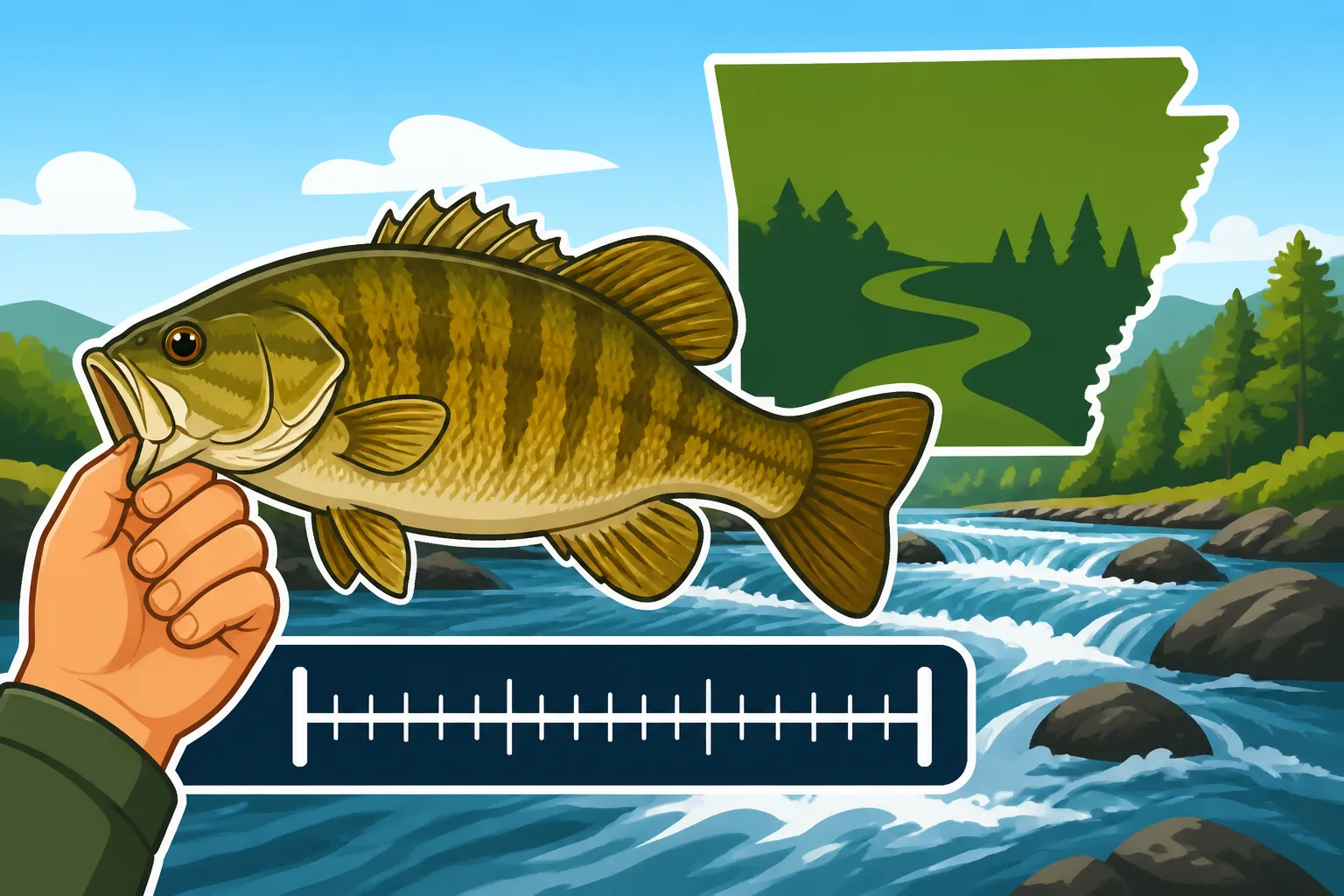
So, you've just landed a beautiful smallmouth, and now it's time to measure. Don't just eyeball it! A few inches can make all the difference between a legal catch and a violation. You need a reliable measuring device – a plastic or metal ruler, a measuring board, or even a sticker on your boat deck will work, as long as it’s accurate and clearly marked. I often recommend a good quality bump board, which you can easily find on Amazon, as it ensures the fish's nose is against a fixed point for consistent measurement.
Here’s the step-by-step:
- Wet Your Hands: Before you even touch the fish, wet your hands. This protects the fish's slime coat, which is its primary defense against disease and infection.
- Position the Fish: Gently place the fish on its side on your measuring device. Make sure its mouth is closed and its nose is against the starting point (zero mark) of your ruler or bump board.
- Extend the Tail: Carefully pinch the tail fin together to get the longest possible measurement. The measurement is taken from the tip of the jaw to the end of the tail.
- Read the Measurement: Read the measurement quickly and accurately. If it's 12 inches or greater, and you've decided to keep it, you're good to go (assuming you're within your daily limit). If it's even a fraction under 12 inches, it needs to go back into the water. Remember, when in doubt, it’s always better to release.
Best Practices for Catch-and-Release
Even if your smallmouth is undersized and needs to be released, or if you're practicing catch-and-release by choice, how you handle that fish can determine whether it swims away healthy or succumbs to stress later. Our goal is to ensure that Why smallmouth bass must be over 12 inches to keep is fulfilled by allowing these fish to mature.
Here are some best practices for minimizing harm:
- Minimize Air Exposure: Fish can't breathe air. Keep them in the water as much as possible. If you need a photo, get your camera ready, quickly lift the fish, snap a shot, and get it back in the water within seconds.
- Gentle Handling: Support the fish horizontally with both hands. Avoid holding it vertically by the jaw, as this can damage its internal organs or jawbone, especially with larger fish. If you must grip the jaw, do so gently and support its body weight with your other hand.
- De-hook Quickly: Use needle-nose pliers or a de-hooking tool to remove the hook as quickly as possible. If the fish is deeply hooked and the hook can't be removed easily, it's often best to cut the line as close to the hook as possible. Studies show that a swallowed hook can dissolve or be shed, giving the fish a better chance than excessive handling. You can find excellent de-hooking tools on Amazon that make this process much smoother.
- Revive If Necessary: If the fish seems stunned or sluggish upon release, gently hold it in the water, facing into the current, allowing water to flow over its gills until it regains strength and swims away on its own. Never throw a fish back into the water; always release it gently. This is especially important when fishing Smallmouth Bass Fishing in Arkansas's Ozark Streams, where the current can be strong.
| Tip Category | Best Practice | Why it Matters |
|---|---|---|
| Measuring Tool | Use a rigid measuring board with clear markings | Ensures accurate, consistent measurement |
| Hand Prep | Wet hands before touching fish | Protects fish's protective slime coat |
| Handling | Support fish horizontally, minimize air time | Reduces internal injury and stress |
| De-hooking | Use pliers/de-hooker, cut line if deeply hooked | Faster release, less tissue damage |
| Release | Gently release, revive if needed | Maximizes survival rates post-release |
Penalties and Compliance
Understanding fishing regulations isn't just about being a good steward of our natural resources; it's also about avoiding legal trouble. The Arkansas Game and Fish Commission takes its regulations seriously, and ignorance of the law is rarely an acceptable defense.
Consequences of Violating Length Limits
Getting caught with an undersized smallmouth bass in Arkansas's flowing waters can lead to some unpleasant consequences. Game wardens regularly patrol popular fishing spots, including the scenic rivers and streams known for smallmouth, and they are adept at checking for compliance. If you're found to be in possession of a smallmouth bass under the 12-inch minimum length, you could face:
- Fines: The most common penalty is a monetary fine. These can vary depending on the severity and frequency of the offense, but they are never cheap.
- Confiscation of Fish: Any illegally kept fish will be confiscated.
- Court Appearance: In some cases, especially for repeat offenders or egregious violations, you might be required to appear in court.
- License Revocation: Severe or multiple violations could even lead to the suspension or revocation of your Arkansas Fishing License Rules and Costs, preventing you from fishing legally in Arkansas for a period.
It’s just not worth the risk. A few extra minutes to measure properly, or the momentary disappointment of releasing an undersized fish, is far better than dealing with the legal and financial headaches of a citation. For more detailed information, you can always refer to the Arkansas Fishing License Penalties and Requirements.
The Importance of Knowing Your Regulations
The vast majority of anglers want to do the right thing. Nobody wants to unintentionally break the law or harm a fishery. This is why being proactive about knowing the regulations for every water body you fish is so incredibly important. The AGFC makes its regulations easily accessible. You can pick up a physical copy of the current fishing regulations guide at any bait shop, many sporting goods stores, or AGFC offices. Even easier, you can download the complete guide directly from the AGFC website to your phone, ensuring you always have the most up-to-date information right in your pocket.
Before any fishing trip, especially to a new-to-you river or stream, take a few moments to review the specific regulations for that location. This includes not just length limits for smallmouth bass, but also daily creel limits, season dates, and any other special rules. This simple step ensures you're a responsible, ethical angler and helps protect the fantastic fishing opportunities that Arkansas offers. Whether you’re a seasoned local or an out-of-state visitor planning to How to Buy an Arkansas Fishing License Online, being informed is your best catch!
Disclaimer
The information provided in this guide is intended for general informational purposes only and may not reflect the most current regulations. Fishing regulations are subject to change. Always consult the official Arkansas Game and Fish Commission (AGFC) regulations guide or website before heading out to fish to ensure compliance with all applicable laws and rules.