Smallmouth bass limit on Arkansas’s moving waters is 2 fish
Trying to figure out the specific fishing rules for a particular species in a particular type of water in Arkansas can feel like navigating a maze. It’s easy to get confused, especially with statewide regulations and then a whole host of special exceptions. This guide is here to untangle the smallmouth bass limits on Arkansas's moving waters, helping you fish legally and responsibly so you can focus on the thrill of the catch, not the worry of a fine.
Understanding Smallmouth Bass Regulations in Arkansas's Moving Waters
Arkansas is blessed with incredible moving waters, from swift mountain streams to winding rivers, and many of them are prime habitat for smallmouth bass. These feisty fish are a favorite among anglers for their powerful fights and beautiful bronze coloring. However, to ensure these populations thrive for generations to come, the Arkansas Game and Fish Commission (AGFC) has put specific regulations in place. It's crucial for every angler, whether you're a seasoned veteran or just starting out, to understand these rules clearly.
The Statewide Daily Creel Limit for Smallmouth Bass
Across most of Arkansas's moving waters, the statewide daily creel limit for smallmouth bass is 2 fish. This means that in a 24-hour period, from midnight to midnight, you are legally allowed to harvest and keep no more than two smallmouth bass from any stream or river that is considered "moving water." This limit isn't just an arbitrary number; it's a carefully determined measure based on biological studies of smallmouth bass populations, their reproductive rates, and the fishing pressure they face. The goal is simple: to allow anglers to enjoy harvesting a few fish while safeguarding the overall health and abundance of the species.
Imagine you're floating down the Buffalo National River, having an incredible day. You've already caught and kept two beautiful smallmouth bass, both well within the legal size. As you round a bend, you hook into another magnificent smallmouth. What do you do? Because you've already reached your daily limit of 2 fish, that third fish, no matter how tempting, must be immediately and carefully released. Attempting to keep it, even if you put one of your previously kept fish back, would constitute a violation. It’s about conservation, making sure there are plenty of these fantastic fish for everyone to enjoy, today and tomorrow. For a broader overview of all fishing rules, make sure to check out the Arkansas Fishing Regulations Guide.
Identifying "Moving Waters" in Arkansas
When we talk about "moving waters" in Arkansas, we're generally referring to rivers, streams, and creeks. This distinction is vital because smallmouth bass regulations can differ significantly between these flowing environments and still-water lakes or reservoirs. For instance, while a lake might have a more generous daily limit, the rivers that feed into it, or flow out of it, will likely adhere to the stricter moving water rules for smallmouth.
Some of the most iconic moving waters for smallmouth bass in Arkansas include sections of the White River system, the Buffalo River, Crooked Creek, the Little Missouri River, and various streams in the Ozark and Ouachita Mountains. These environments offer the rocky bottoms, clear currents, and abundant insect life that smallmouth bass thrive in. However, it's not always as simple as "if it flows, it's moving water." Some impounded sections of rivers might have regulations closer to lake rules, so always consult the latest AGFC fishing guide for specific water bodies you plan to fish. Understanding the difference is key to staying legal, especially when planning a trip that might span different types of water bodies. For those curious about where else to cast a line, our guide on Arkansas's Best Rivers for Trout, Bass, and Catfish offers a fantastic overview.
Navigating Size Restrictions for Smallmouth Bass in Arkansas
Beyond the daily creel limit, smallmouth bass in Arkansas's moving waters are also subject to minimum length requirements. These size limits are just as critical as the daily bag limit and are designed to protect younger fish, allowing them to grow to maturity and reproduce at least once before being harvested. This helps sustain healthy populations and ensures that future generations of anglers have plenty of fish to catch.
The Crucial 12-Inch Minimum Length Rule
For the majority of Arkansas's moving waters, smallmouth bass must be at least 12 inches in length to be legally kept. If you catch a smallmouth bass that measures anything less than 12 inches, it must be immediately released unharmed. This rule applies statewide to most rivers and streams and is a cornerstone of responsible smallmouth bass management.
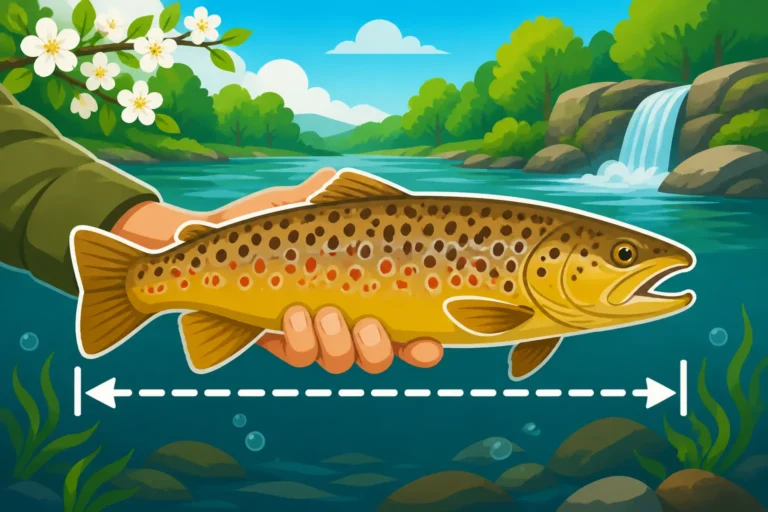
Accurate measurement is paramount. When you catch a fish, lay it on a flat measuring board, often called a "bump board," or use a flexible tape measure. Ensure the fish's mouth is closed and pressed against the measuring device's stop (if using a bump board) and measure to the tip of the tail. Don't "pinch" the tail to gain extra length; simply measure to the natural end of the caudal fin. Even a quarter-inch difference can lead to a violation if a game warden measures your fish and finds it undersized. If you're ever in doubt about a fish's length, it's always best to err on the side of caution and release it. This 12-inch rule is so important, we dedicated a whole piece to explaining Why smallmouth bass must be over 12 inches to keep.
Special Regulations and Catch-and-Release Zones
While the 12-inch minimum and 2-fish daily limit apply to most moving waters, Arkansas has several crucial exceptions that anglers must be aware of. These special regulations are often implemented on specific stretches of rivers or creeks due to unique environmental factors, heavy fishing pressure, or targeted conservation efforts for trophy fish. Ignoring these localized rules is a common mistake that can lead to significant penalties.
Let's look at some notable examples:
- Crooked Creek: This popular smallmouth stream in north-central Arkansas has a much stricter limit: 18-inch minimum length and a daily limit of 1 fish. This is a prime example of a regulation designed to foster trophy smallmouth opportunities.
- Illinois River, War Eagle Creek, Richland Creek, Reverie Creek (Newton County), and Bear Creek (Newton County), and the Little Buffalo River: These waters have a 14-inch minimum length, with a daily limit of 2 fish. Still a bit more restrictive than the statewide rule, promoting slightly larger fish.
- Caddo River (above DeGray Lake), Ouachita River (above Lake Ouachita), and the Saline River (in Saline, Grant, Ashley, and Bradley Counties): These areas are designated as catch-and-release only for smallmouth bass. This means no smallmouth bass can be kept, regardless of size. This is a critical rule to remember if you plan to fish these rivers.
It's clear that you can't just assume the general rule applies everywhere. Before you head out, specifically check the AGFC regulations for the exact river or stream segment you plan to fish. A few minutes of research can save you a lot of trouble and contribute to better conservation. For a detailed breakdown of these specific smallmouth rules, our article on Smallmouth Bass Rules on Arkansas's Moving Waters Statewide is a must-read.
Here's a quick summary of the smallmouth bass regulations on Arkansas's moving waters:
| Water Body Type | Daily Limit | Minimum Length | Notes |
|---|---|---|---|
| Most Moving Waters (Statewide) | 2 fish | 12 inches | Standard regulation for most rivers and streams. |
| Crooked Creek | 1 fish | 18 inches | Special regulation for trophy management. |
| Illinois River, War Eagle Creek, Richland Creek, Reverie Creek, Bear Creek (Newton Co.), Little Buffalo River | 2 fish | 14 inches | Enhanced protection for quality smallmouth. |
| Caddo River (above DeGray Lake), Ouachita River (above Lake Ouachita), Saline River (specific counties) | Catch & Release | N/A | All smallmouth bass must be immediately released. |
Always consult the current Arkansas Game and Fish Commission Fishing Guidebook for the most up-to-date and comprehensive regulations, as rules can change annually.
Practical Tips for Responsible Smallmouth Bass Fishing
Responsible angling goes beyond just knowing the rules; it's about practicing techniques that ensure the health and survival of the fish, especially those you plan to release. Smallmouth bass are resilient, but proper handling can make all the difference to their post-release survival.
Essential Gear for Accurate Measurement and Release
Having the right tools on hand can significantly improve your fishing experience and ensure you comply with regulations. You don't need a massive tackle box, but a few key items are invaluable for smallmouth bass fishing on moving waters.
First, invest in a reliable measuring device. A good bump board is ideal, as it provides a flat, stable surface for quick and accurate measurement. Many fishing brands, like Rapala or Berkley, offer excellent options that are clearly marked and easy to use in a boat or even while wading. You can find a wide variety of these on Amazon, along with other essential fishing accessories. A flexible, waterproof tape measure is a decent alternative if you're on a budget. Make sure the markings are clear and easy to read, especially if you're trying to measure a lively fish.
Second, consider your release tools. A pair of long-nosed pliers or a dedicated hook remover is crucial for quickly and safely extracting hooks, minimizing stress and injury to the fish. Barbless hooks are also an excellent choice, making hook removal even easier. A rubber-coated landing net is another fantastic tool; it protects the fish's slime coat and fins far better than a knotty nylon net, which can abrade their delicate skin. When shopping for these items, look for durable, rust-resistant options that can withstand the rigors of frequent use in wet conditions. Remember, you'll also need to have your current Arkansas Fishing License Rules and Costs squared away before you even cast a line.
Best Practices for Catch-and-Release Anglers
Since many smallmouth bass you catch will either be undersized or part of an area's catch-and-release mandate, mastering proper catch-and-release techniques is essential. Your goal is to get the fish back into the water as quickly and healthily as possible.
- Minimize Air Exposure: Fish cannot breathe air. Every second out of water is stressful. Have your measuring device and camera ready before you even bring the fish into the boat or onto the bank. Try to keep the fish submerged as much as possible, especially during hook removal.
- Wet Your Hands: Always wet your hands before touching a fish. Dry hands can remove the protective slime coat, leaving the fish vulnerable to infection.
- Support the Fish: When handling, support the fish horizontally, especially larger smallmouth. Avoid holding them vertically by the jaw, which can dislocate their jaw or damage internal organs. If you need to lift them for a quick photo, support their belly with your other hand.
- Quick Hook Removal: Use your pliers or hook remover to quickly back out the hook. If the fish is deeply hooked and removing the hook would cause significant damage, it's often better to cut the line as close to the hook as possible. The hook will usually corrode and fall out over time, giving the fish a better chance of survival.
- Revive If Necessary: If a fish seems sluggish or stressed after being caught, gently hold it upright in the water, facing into the current. Move it back and forth slightly to push oxygenated water over its gills until it regains strength and can swim away on its own.
- Be Aware of Water Temperature: In very warm summer months, water oxygen levels can be low, and fish are more susceptible to stress. Consider targeting smallmouth during cooler parts of the day or in cooler waters, or simply practice catch-and-release more strictly when conditions are tough.
By following these simple practices, you not only increase the survival rate of released fish but also contribute directly to the quality of the smallmouth bass fishery in Arkansas.
Penalties and Enforcement for Violating Smallmouth Bass Limits
While we all strive to be responsible anglers, mistakes can happen, or unfortunately, some individuals knowingly disregard regulations. It's important to understand that violating fishing regulations in Arkansas carries real consequences. The AGFC takes these rules seriously, and their dedicated team of game wardens is out on the water to ensure compliance and protect the state's natural resources.
What Happens if You Break the Rules
Getting caught with undersized smallmouth bass, or more than the daily limit, can lead to a range of penalties. The exact consequences can vary depending on the severity of the offense, the number of fish involved, and whether it's a repeat offense, but generally, you can expect:
- Fines: These can range from moderate to substantial, easily running into hundreds of dollars. The cost of a fine will far outweigh any perceived benefit of keeping an illegal fish.
- Confiscation of Fish and Gear: Game wardens have the authority to confiscate any illegally taken fish, and in some cases, your fishing gear (rods, reels, tackle, even boats) might also be seized.
- Loss of Fishing Privileges: This is often the most impactful penalty for avid anglers. Depending on the offense, your Arkansas fishing license could be suspended or even revoked for a period, meaning you won't be able to fish legally in the state. For non-residents, this could impact your ability to get a license in other states through reciprocity agreements. Our article on Penalties for Fishing Without a License in Arkansas gives a good idea of how seriously these infractions are treated.
- Court Appearances: More serious violations might require a mandatory court appearance, adding legal fees and time to the consequences.
It's a stark reminder that these rules aren't just suggestions; they are laws designed to protect a shared natural resource. A game warden's job isn't to ruin your day, but to enforce these laws for the benefit of all.
Staying Informed with AGFC Resources
The best defense against unintentional violations is proactive education. The Arkansas Game and Fish Commission is diligent about publishing and distributing its annual fishing regulations.
- Official AGFC Fishing Guidebook: This is your bible. Available annually, it details all statewide and specific waterbody regulations, including those for smallmouth bass on moving waters and all Arkansas Fish Size and Daily Limits. You can pick up a physical copy at sporting goods stores across the state (like Academy Sports + Outdoors or Bass Pro Shops, or even some local bait shops), AGFC offices, or view it online on the official AGFC website.
- AGFC Website and App: The AGFC website (www.agfc.com) is a treasure trove of information. You can often find interactive maps, special regulation alerts, and the full downloadable guidebook. They also have a mobile app that can put the regulations right in your pocket, making it easy to reference while you're on the water.
- Signage at Access Points: Many popular fishing access points, especially those with special regulations, will have signs posted detailing the rules for that specific area. Always take a moment to read these signs.
Before every fishing trip, especially to a new body of water or if you haven't fished in a while, take a few minutes to review the current regulations. Rules can change from year to year, and staying informed is entirely your responsibility as an angler. This diligence helps protect both you from legal trouble and the valuable smallmouth bass populations that make fishing in Arkansas's moving waters so rewarding.
Disclaimer
The information provided in this guide is for general informational purposes only and is based on publicly available regulations at the time of writing. Fishing regulations are subject to change. It is the angler's sole responsibility to consult the most current official Arkansas Game and Fish Commission (AGFC) fishing guide and local regulations before engaging in any fishing activities. Failure to do so may result in fines or penalties.