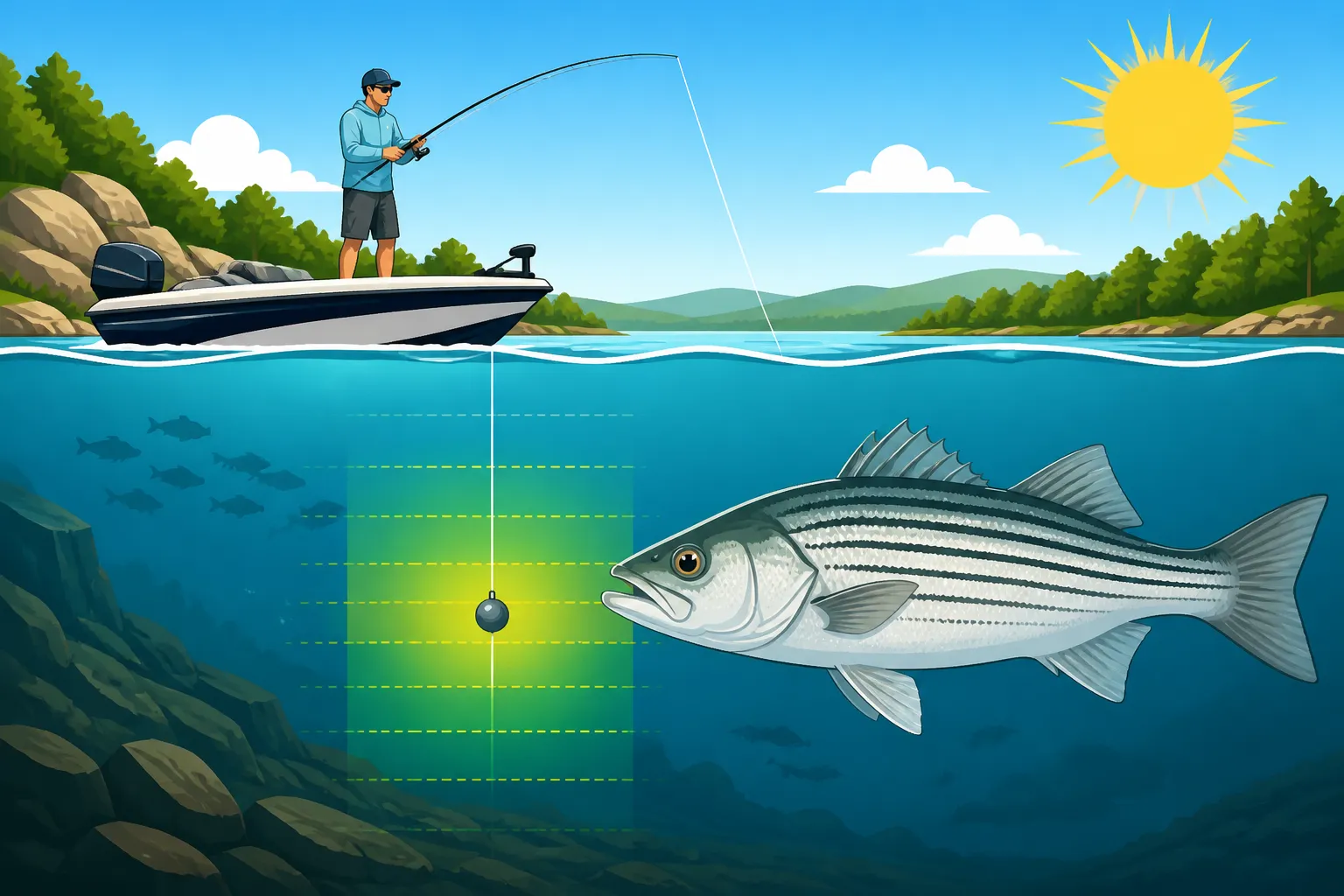
Best Depth for Striped Bass During Summer
The scorching Arkansas summer sun can be a real head-scratcher when you're after those hard-fighting striped bass. You might spend hours casting near the surface, only to come up empty-handed, leaving you frustrated and wondering where those big fish vanish to when the mercury soars. This comprehensive guide is here to shed light on the mystery, revealing the critical depths where striped bass seek refuge during the warmest months and how you can effectively target them.
The Summer Striper Conundrum: Why Depth Matters So Much
When summer truly kicks in across Arkansas, the lakes undergo a significant transformation. The surface waters heat up dramatically, becoming uncomfortable and, more importantly, less oxygenated for many of our favorite game fish. Striped bass, being a cold-water species at heart, don't just tolerate the heat; they actively seek out specific zones where conditions are more to their liking. Understanding this seasonal migration and the science behind it is your first step to consistent success.
Understanding Thermoclines and Oxygen Levels
Imagine our Arkansas lakes, like the vast Norfork Lake or the sprawling Lake Ouachita, stratifying into distinct layers during summer. The sun-warmed upper layer, known as the epilimnion, is where most recreational activities happen and where you'll find plenty of smaller, more heat-tolerant fish. Below this, there's often a sharp temperature drop called the thermocline. This is a critical zone, a narrow band where the water temperature changes rapidly, acting like a natural barrier. Below the thermocline lies the hypolimnion, the deeper, cooler water.
Now, here's the kicker: while the hypolimnion is cool, it often becomes depleted of oxygen as summer progresses, especially in deeper, stagnant areas. This creates a challenging situation for striped bass. They need that cool water, but they also need enough oxygen to breathe. This forces them into a very specific comfort zone – usually just above or within the thermocline, or in areas where cooler water flows in, bringing fresh oxygen. Pinpointing this "sweet spot" is key, and it's rarely at the surface when temperatures consistently hit the 90s. Many anglers overlook this crucial detail, which is why their summer fishing efforts can feel like a guessing game.
Striped Bass Behavior in Summer Heat
During the oppressive heat of July and August, striped bass change their patterns dramatically. Gone are the days of aggressive topwater blow-ups during midday, which might be common in spring or fall. Instead, these powerful fish become much more lethargic in their movements, conserving energy in the cooler, deeper water. They'll often school tightly, shadowing large baitfish schools, primarily threadfin and gizzard shad, which are also seeking comfortable conditions.
Their feeding windows can also become much narrower, often occurring during low light periods – early mornings, late evenings, or even at night. However, when you do locate a school in their preferred summer depth, they can still be incredibly aggressive, especially if you present a bait or lure correctly. The challenge isn't that they won't bite, but rather finding them in the vastness of the lake. It's not uncommon for stripers to suspend anywhere from 30 to 70 feet deep, sometimes even deeper depending on the lake's thermal characteristics and oxygen profile. This is why techniques for Deep Water Striper Fishing Techniques are so important.
Pinpointing the Best Depths for Summer Stripers
Forget "guessing and chucking" your lures. Successfully finding summer striped bass is a science, heavily reliant on understanding their habits and, most importantly, leveraging your electronics. The "best depth" isn't a fixed number printed on a map; it's a dynamic zone you need to actively locate.
Seasonal Movements and Preferred Zones
As the seasons progress from spring to summer, striped bass move from shallower spawning areas into the deeper, more stable environments of our large reservoirs. In Arkansas, premier striper lakes like Norfork Lake: One of Arkansas's Best Striped Bass Fisheries and Striper Fishing on Lake Hamilton in Hot Springs, Arkansas are prime examples where this deep-water pattern plays out. The stripers will often congregate near main lake channels, bluff walls, deep points, and submerged timber, all structures that offer access to deeper water.
Their preferred depth is a function of water temperature and oxygen. Generally, you're looking for water that's in the mid-60s to low-70s Fahrenheit. Depending on the specific lake and current weather conditions, this could mean anywhere from 25 feet to 80 feet. On a typically hot Arkansas day, the upper limit of that range might be early morning or late evening, while midday often pushes them much deeper. Keep an eye on the water temperatures your fish finder reports. If your surface temperature is 90 degrees, you can bet the stripers are not hanging out there. They're seeking that cooler, more stable environment below.
Reading Your Electronics for Success
This is where the magic happens. Your boat's electronics – primarily your fish finder or sonar – are your most valuable tools for finding deep summer stripers. Without them, you're essentially fishing blind.
Here's how to use them effectively:
- Identify the Thermocline: Most modern fish finders will display a visible line on your screen where the thermocline sits. It often appears as a denser, sometimes fuzzy, line separating the warmer upper water from the cooler lower water. Pay close attention to its depth. This is your starting point.
- Locate Baitfish Schools: Striped bass are almost always where the bait is. Look for dense schools of shad, often appearing as large clouds or arcs on your screen. If you find baitfish congregating at a certain depth, especially around the thermocline, the stripers are likely nearby, either below, in, or just above that school. Sometimes, you'll even see larger, distinct arcs (your stripers!) directly underneath or adjacent to the bait ball.
- Target Structure in Deep Water: Use your GPS and mapping features to identify deep points, humps, ledges, and channels. Drive over these areas slowly, meticulously scanning your sonar. Stripers love to relate to structure, using it as ambush points or simply places to congregate in comfort. If your boat has side-imaging or down-imaging, use it to scan wide areas and pinpoint schools off to the sides or directly below. Many anglers find great success researching these units on platforms like Amazon before making a purchase, ensuring they get the right tool for their specific needs.
- Experiment with Depths: Once you've identified the thermocline and potential baitfish, don't be afraid to experiment. Start presenting your baits or lures at the depth of the thermocline, and then try a bit shallower and a bit deeper. Conditions can change throughout the day, influencing the exact depth where the stripers are most active.
Strategies for Targeting Deep Summer Stripers
Once you've honed in on those deeper striper hangouts, the next step is presenting your offerings in a way that entices them to bite. This often requires specialized techniques and gear, moving away from conventional shallow-water approaches.
Effective Trolling Techniques
Trolling is undeniably one of the most effective ways to cover water and present baits at consistent depths for summer stripers. This is particularly true on big bodies of water like Lake Ouachita or Norfork, where stripers can be spread out or constantly moving with baitfish.
- Downriggers are Your Best Friend: If you're serious about deep summer stripers, downriggers are a game-changer. These devices allow you to precisely control the depth of your lures or live baits, putting them right in the strike zone. You can run multiple lines at different depths, allowing you to quickly find the sweet spot identified by your electronics. Many different models of downriggers are available on Amazon, from manual to electric, allowing you to choose what best fits your budget and fishing style.
- Lead Core Line: Another excellent method for deep trolling, especially without downriggers, is using lead core line. This specialized line sinks at a predictable rate based on your trolling speed and how many "colors" (sections of colored line, usually 10 yards each) you let out. It's a fantastic way to get lures like deep-diving crankbaits or bucktail jigs down to fish suspended at 30-50 feet. Mastering Striped Bass Trolling Techniques will definitely up your game.
- Bait Selection: For deep trolling, live bait often reigns supreme. Large gizzard shad or threadfin shad, if legal and available, are irresistible to stripers. If live bait isn't an option, large deep-diving crankbaits (like those from Norman Lures or Bomber Lures, easily found at sporting goods stores or online at Amazon), bucktail jigs, or even umbrella rigs are excellent choices. Remember to keep an eye on Best Lures for Trolling Striped Bass articles for the latest hot baits.
- Trolling Speed: Pay attention to your trolling speed. Stripers in deep, cooler water often prefer a slower, more deliberate presentation. Experiment with speeds between 2.0 and 3.5 mph until you find what triggers bites.
Vertical Jigging and Downriggers
While trolling covers horizontal ground, sometimes the stripers are tightly schooled over specific pieces of structure or bait balls, making vertical presentations more effective.
- Vertical Jigging Spoons: When you mark a dense school of stripers directly beneath your boat, dropping a heavy jigging spoon is a classic tactic. Heavy spoons (1 oz to 3 oz or more) in silver, white, or chartreuse can mimic dying baitfish. Drop the spoon directly into the school, letting it fall to the bottom, then snap it up with a sharp rod tip movement, letting it flutter back down on a semi-slack line. This erratic action often triggers a reaction strike from otherwise passive fish. This is a common technique used on many Arkansas lakes.
- Live Bait on Downriggers: As mentioned, downriggers are fantastic for trolling, but they're also invaluable for presenting live bait vertically. You can use a downrigger to send a lively shad or other baitfish directly into the depth you're marking stripers. Once the bait is at the desired depth, you can motor slowly, or even just hold your position over the school. The natural frantic swimming of the baitfish is often all it takes to draw a strike. Don't forget to check out Best Live Bait for Striped Bass for tips on selection and rigging.
- Consider a Guide: If you're new to deep-water striper fishing or visiting a new lake, booking a guided trip can fast-track your learning curve. Guides who specialize in Summer Striper Fishing at Norfork Lake Arkansas or other local hotspots have intimate knowledge of the lake's thermocline, baitfish patterns, and the specific depths where fish are holding. They often have all the specialized gear, like downriggers and powerful electronics, making your trip much more efficient.
Local Arkansas Hotspots and Conditions
While the principles of deep summer striper fishing apply broadly, understanding some of the specific nuances of Arkansas's premier striper lakes can give you an edge. Each lake has its own personality, influencing where and how these fish will stack up.
Norfork Lake: A Prime Example
Norfork Lake, straddling the Arkansas-Missouri border, is legendary for its Norfork Lake: One of Arkansas's Best Striped Bass Fisheries, especially for trophy-sized fish. During summer, finding stripers here is all about depth. The lake stratifies beautifully, and the main lake channels and deep coves become prime real estate. You'll often find baitfish and stripers suspending in the 40-70 foot range, sometimes even deeper near the dam or over the deep river channel.
Anglers here frequently employ downriggers, trolling live shad or large plugs. Early mornings are crucial, as fish may push shallower for a brief feeding frenzy before retreating to the depths. Pay close attention to current reports from local bait shops and guides; they can often tell you the exact depths where schools are being marked. Knowing the Norfork Lake Striped Bass Season and patterns can really boost your chances of landing one of those giants that push How Big Do Striped Bass Get at Norfork Lake?.
Lake Ouachita and Lake Hamilton Insights
Further south, lakes like Lake Ouachita: Arkansas's Largest Lake for Bass and Crappie Fishing and Lake Hamilton also offer fantastic summer striper opportunities. Lake Ouachita, with its incredibly clear water, often means stripers will hold even deeper than in more turbid lakes, sometimes pushing past 80 feet in search of both cool water and refuge from bright sunlight. Trolling with downriggers becomes almost essential here to reach those extreme depths. Look for them around its numerous islands, submerged humps, and the main lake channel.
Lake Hamilton, while smaller and more developed, still holds a strong striper population, especially for those looking to experience Striper Fishing on Lake Hamilton in Hot Springs, Arkansas. Its stripers tend to follow similar deep-water patterns, congregating around the main river channel and deeper structure. Night fishing can be incredibly effective on Lake Hamilton during the summer, as stripers will often move up to slightly shallower depths (but still much deeper than surface) under the cover of darkness, making them more accessible to anglers using lights to attract bait. In all these lakes, successful summer striper fishing hinges on that willingness to go deep and be precise.
Summer Striper Depth Quick Reference
| Condition | Typical Depth Range (Feet) | Best Approach | Key Considerations |
|---|---|---|---|
| Early Morning | 20-50 | Trolling, Live Bait | Fish may be higher before sun penetrates |
| Midday Sun | 40-80+ | Downriggers, Heavy Jigs | Thermocline and oxygen are critical |
| Late Evening/Dusk | 30-60 | Trolling, Live Bait, Jigging | Fish may rise slightly, but still deep |
| Night Fishing | 25-50 | Lights for bait, Vertical Jigging | Stripers follow bait attracted by lights |
| Post-Cold Front | Deeper (50-100+) | Slow presentations, Live Bait | Fish are often sluggish and seek ultimate comfort |
| Clear Water Lakes | Deeper | Longer leaders, subtle colors | Clear water pushes fish deeper for cover |
This table provides general guidelines. Always cross-reference with your fish finder and local conditions!
Wrapping Things Up on Summer Striper Depths
Hunting for striped bass in the heat of an Arkansas summer is a challenging, but ultimately rewarding, pursuit. The key takeaway here is that summer stripers are deep stripers. They are driven by an instinctual need for cooler, oxygen-rich water, and understanding the role of the thermocline is paramount. Don't be afraid to embrace technology – your fish finder is your eyes below the surface, guiding you to those hidden schools. Equip yourself with the right gear, whether it's downriggers, lead core line, or heavy jigging spoons, and be prepared to spend time exploring the deeper reaches of our beautiful lakes. With patience and persistence, you'll soon be enjoying the thrill of a hard-fighting striper, even when the sun is blazing high above.
Disclaimer
Fishing conditions and regulations in Arkansas can change. Always consult the latest regulations from the Arkansas Game and Fish Commission before heading out on the water. This guide is for informational purposes only and should not be considered a substitute for official rules and advisories.