How to Tell Largemouth, Smallmouth, and Kentucky Bass Apart
It can be incredibly frustrating to land a beautiful bass in Arkansas, only to stare at it and wonder, "Is this a largemouth, a smallmouth, or a Kentucky bass?" These three popular game fish often share the same waters and can look surprisingly similar to the untrained eye, leading to confusion about regulations or even just bragging rights. This comprehensive guide is here to clear up that confusion, providing you with clear, actionable identification tips so you can confidently tell these incredible sport fish apart every time you reel one in.
The Largemouth Bass: A Green Giant Among Equals
The largemouth bass, Micropterus salmoides, is arguably the most iconic freshwater game fish in North America, and it certainly holds a special place in the hearts of Arkansas anglers. Known for its aggressive strikes and powerful fights, the largemouth is often the target species for many fishing excursions. But how do you definitively know it's a largemouth in your hand?
Distinctive Jawline and Lateral Line
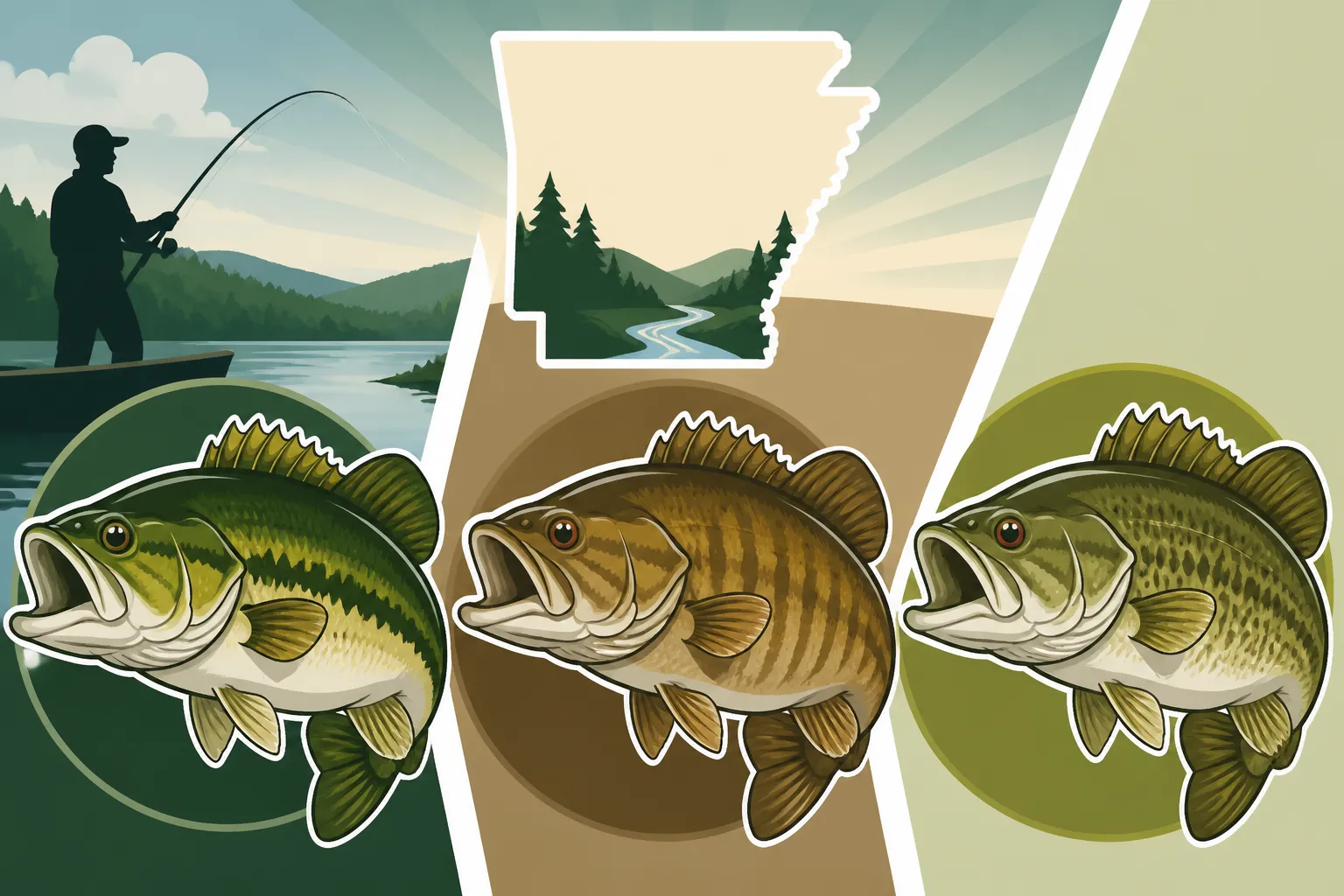
The most tell-tale sign of a largemouth bass is its impressive maw. When you close the fish's mouth, pay close attention to where the upper jaw (specifically, the maxilla) extends in relation to the eye. For a largemouth, that jaw will distinctly extend past the rear margin of the eye. It's a significant indicator that, once you learn to spot it, makes identification much easier. Imagine drawing an imaginary vertical line down from the back of the eye; if the jaw goes beyond that line, you've got yourself a largemouth.
Beyond the jaw, the largemouth also typically features a prominent, often broken, dark horizontal stripe running along its side. This "lateral line" can sometimes appear as a series of blotches or diamonds, rather than a solid line, but it’s always there and usually quite noticeable against its typically olive green to dark green body. The overall coloration of a largemouth can vary wildly depending on the water clarity and bottom composition of its specific habitat. Fish from clear, sandy lakes might be lighter, while those from stained, vegetated waters can be almost black-green. The belly is usually white to yellowish.
Habitat and Behavior Clues
Largemouth bass are true masters of camouflage and ambush, thriving in environments that offer plenty of cover. Think shallow, warm, and often somewhat murky waters with an abundance of submerged vegetation, fallen trees, brush piles, docks, and lily pads. These structures provide perfect hiding spots for them to lie in wait for unsuspecting prey. They're less likely to be found in fast-moving currents or extremely clear, rocky environments.
In Arkansas, you'll find largemouth bass absolutely dominating the scene in many of our best lakes, from the timber-filled coves of Lake Ouachita to the lily pad fields of Lake Conway. They are true apex predators in these ecosystems, preying on smaller fish, crawfish, frogs, and even small birds or rodents that fall into the water. Their behavior often involves sudden, explosive strikes from cover, making for an exciting fight for any angler. If you're fishing a weedy point or a brush pile, chances are high you're targeting a largemouth. You can learn more about where to find these fish in The Top Arkansas Lakes for Bass, Crappie, and Catfish.
The Dorsal Fin Gap
Another key feature to look for on a largemouth bass is the pronounced separation in its dorsal fin. The dorsal fin, which runs along the fish's back, is actually composed of two distinct parts: a spiny anterior section and a soft-rayed posterior section. On a largemouth bass, there's a very clear and deep notch, almost a complete division, between these two parts. It looks like two separate fins that are barely connected at their base. If you can easily fit your finger into the gap between the spiny and soft sections, you've likely got a largemouth on your line. This characteristic provides a handy visual cue when trying to differentiate it from its cousins.
The Smallmouth Bass: Bronze Beauty of Clear Waters
Stepping away from the largemouth, we encounter its equally popular, but distinctly different, cousin: the smallmouth bass, Micropterus dolomieu. Often revered for its acrobatic fights and preference for challenging, wilder waters, the smallmouth is a prized catch for many anglers, especially those who appreciate a tough battle. Identifying a smallmouth means knowing what sets it apart from the largemouth and the spotted bass.
Jaw and Lateral Line Differences
The most immediate difference you'll notice with a smallmouth bass is its jawline. Unlike the largemouth, the smallmouth's upper jaw will not extend past the rear margin of its eye when its mouth is closed. It typically stops directly under the center of the eye or, at most, at the front edge of the eye's pupil. This "smaller" mouth is where it gets its name and is a crucial, easy-to-spot identifier.
The lateral line on a smallmouth is usually much less pronounced than on a largemouth. Instead of a bold, broken stripe, you'll often see a more subtle, sometimes continuous, darker line. What often stands out more on a smallmouth's flanks are vertical bars or blotches, sometimes described as "tiger stripes" or "bands," especially noticeable on younger fish or those from clearer waters. Its coloration is typically a beautiful bronze, golden brown, or olive green, often with a paler belly. This bronze hue is how it earned its affectionate nickname, "bronzeback," among anglers. These vertical markings are a great way to confirm your catch.
Preferred Haunts and Temperament
Smallmouth bass are particular about their living arrangements. They much prefer cool, clear, flowing water, making them a staple in the rocky rivers and deeper, cooler sections of lakes, particularly in the Ozark region of Arkansas. Unlike the largemouth's love for weeds, smallmouth gravitate towards rocky bottoms, gravel shoals, current seams, and submerged timber, but not usually thick vegetation. They are constantly on the move, chasing down baitfish and crawfish in the open water or around structure, rather than ambushing from dense cover.
The fighting spirit of a smallmouth is legendary. They are known for their powerful runs, explosive jumps, and relentless tugs, often described as fighting "pound for pound" harder than a largemouth. Anglers seeking a truly exhilarating battle often specifically target smallmouth in Arkansas's famous rivers like the White River's tributaries or the clear waters of Bull Shoals Lake. Smallmouth Bass Fishing in Arkansas's Ozark Rivers details some prime locations. Their preference for specific habitats means that if you're fishing a clear, rocky river with a good current, your chances of hooking a smallmouth are significantly higher than catching a largemouth.
Connected Dorsal Fins
Just like the jawline, the dorsal fin also provides a clear distinction. On a smallmouth bass, the spiny and soft-rayed sections of the dorsal fin are much more connected than on a largemouth. While there might be a slight notch, it's not a deep separation; the two sections appear to flow almost seamlessly into one another, often looking like a single, continuous fin. You wouldn't be able to easily insert your finger into any gap. This subtle but consistent difference is another excellent visual cue for accurate identification on the water.
The Kentucky Bass (Spotted Bass): The Overlooked Fighter
Often mistaken for both largemouth and smallmouth bass, the Kentucky bass, or spotted bass (Micropterus punctulatus), is a unique and formidable game fish in its own right. It combines characteristics of both its famous cousins, making it a tricky one to identify, but once you know the key features, you'll be able to spot it with confidence.
The Tooth Patch and Tongue
This is, hands down, the most reliable and definitive way to identify a Kentucky bass. If you can gently open the fish's mouth and run your finger across its tongue, you will feel a distinct patch of teeth (sometimes described as a "raspy" area) right in the center. Neither largemouth nor smallmouth bass have this tooth patch on their tongue. This single feature makes identification foolproof once you know to check for it.
Beyond the tongue, the jawline of a Kentucky bass generally falls somewhere between a largemouth and a smallmouth. When the mouth is closed, the upper jaw typically extends to, or slightly past, the center of the eye, but rarely beyond the back edge of the eye. This can be ambiguous, which is why the tongue patch is so critical. Coloration-wise, Kentucky bass usually have a green or olive-green back and sides, with a white belly. What truly sets them apart visually, besides the jaw, are the distinct rows of dark spots below the lateral line, especially towards the belly. These spots can be quite prominent and often resemble tiny, individual specks, giving the fish its "spotted" name.
Habitat Overlap and Preference
Kentucky bass are incredibly adaptable, and this can be part of the identification challenge. They often thrive in habitats that are transitional, bridging the gap between the classic largemouth and smallmouth territories. You'll find them in reservoirs and rivers, frequently associating with current-prone areas, rocky points, bluff walls, and submerged timber. They can tolerate warmer, more turbid waters than smallmouth, but they also appreciate clearer, rockier environments more than largemouth.
In Arkansas, this means you might catch Kentucky bass alongside largemouth in a reservoir or in the same river sections as smallmouth. Their adaptability allows them to colonize a wide range of aquatic environments, often outcompeting smallmouth in impoundments due to their tolerance for a broader set of conditions. They are aggressive feeders and put up an excellent fight, often described as a strong, deep pull similar to a smallmouth but without as many aerial acrobatics. If you're fishing areas with both current and structure, keep an eye out for these spirited fighters. What Is a Kentucky Bass? delves deeper into this often-misunderstood species.
Fin Features and Body Shape
Like the smallmouth, the Kentucky bass has dorsal fins that are connected, with only a slight notch between the spiny and soft-rayed sections. This feature helps distinguish it from the deeply notched dorsal fin of the largemouth. However, the notch on a Kentucky bass might be slightly more pronounced than on a smallmouth, but it's still far from the distinct separation seen in a largemouth.
In terms of body shape, the Kentucky bass tends to be more streamlined and football-shaped than the largemouth, but often slightly more robust than a smallmouth. They typically have smaller scales on their cheeks compared to largemouth, a subtle feature that experienced anglers might notice. The rows of spots below the lateral line are usually the most striking visual cue, making them look quite distinct from the mottled or blotchy patterns of a largemouth or the vertical bars of a smallmouth.
Side-by-Side Comparison: Spotting the Nuances
When you're out on the water, sometimes you only get a quick glance at your catch before it's time to release or put it on the stringer. Having a quick mental checklist can make all the difference. Let's break down the key visual cues in a concise way that makes on-the-spot identification much easier.
Key Visual Cues at a Glance
The following table summarizes the primary differences in jaw, lateral line, dorsal fin, coloration, and the crucial tongue patch. This can be an incredibly useful tool to quickly reference when you're holding a fish and need to make a fast identification. Consider printing a copy or saving it to your phone for quick access while fishing.
| Feature | Largemouth Bass | Smallmouth Bass | Kentucky Bass (Spotted Bass) |
|---|---|---|---|
| Jaw Extends | Well past rear margin of eye | To or slightly before rear margin of eye | To or slightly before rear margin of eye |
| Lateral Line | Distinct, often broken, horizontal stripe/blotches | Less distinct, subtle, often vertical bars/blotches | Prominent rows of spots below lateral line |
| Dorsal Fin | Deep, pronounced separation (nearly 2 fins) | Shallow notch, appears continuous | Shallow notch, appears continuous |
| Tongue Patch | Absent | Absent | Present (rough patch of teeth) |
| Body Color/Pattern | Olive green to dark green, pale belly; horizontal stripe | Bronze to golden brown, lighter belly; vertical bars | Olive green, pale belly; distinct rows of spots below lateral line |
| Typical Habitat | Warm, shallow, vegetated, murky water | Cool, clear, rocky, flowing water | Adaptable; rocky, current areas in reservoirs/rivers |
This table provides a snapshot of the most important distinguishing characteristics. By focusing on these few key features, particularly the jaw, dorsal fin, and the invaluable tongue patch, you'll be able to tell these bass species apart with confidence. Practice makes perfect, and the more bass you examine, the more intuitive these distinctions will become.
Practical Tips for Anglers on the Water
Identifying fish on the water can be challenging, especially if you're excited about a catch! Here are a few practical tips to help you make accurate identifications safely and efficiently:
- Wet Your Hands or Use a Gripper: Always wet your hands thoroughly before handling any fish you plan to release. This helps protect their protective slime coat. Alternatively, a fish gripper (available on sites like Amazon) can help you hold the fish securely without touching its body.
- Gentle Handling: Support the fish horizontally, especially larger ones, to avoid damaging its internal organs or jaw. Don't squeeze the body or hold it vertically by the jaw for extended periods.
- Check the Jaw First: This is often the easiest and quickest visual check. Gently close the fish's mouth and see where the upper jaw ends relative to the eye. This alone can often eliminate one or two species.
- Look for the Spots: If the jaw is ambiguous (stopping around the middle of the eye), immediately look for distinct rows of spots below the lateral line. If they are there, you're likely holding a Kentucky bass.
- Feel for the Tongue Patch: If you suspect it's a Kentucky bass, or if you're still unsure, gently and quickly open the fish's mouth and run a clean, wet finger across its tongue. If you feel that sandpaper-like patch, it’s a Kentucky bass, no doubt about it.
- Examine the Dorsal Fin: Take a moment to look at the dorsal fin for the depth of the notch. This helps confirm whether it's a largemouth (deep notch) or a smallmouth/Kentucky bass (shallow notch).
- Take a Photo: If you're still unsure, snap a clear photo of the fish, especially its head, lateral line, and dorsal fin area. You can identify it later, or even ask experienced anglers online for help. Just be sure to release the fish quickly if you intend to do so.
Remember, the goal is to be able to quickly and accurately identify your catch, ensuring its health if you're releasing it, and adhering to regulations if you're keeping it.
Why Identification Matters: Beyond Bragging Rights
You might be thinking, "What's the big deal? A bass is a bass, right?" While all three are fantastic fighting fish, correctly identifying them goes far beyond just knowing what species you've caught. It impacts everything from following regulations to improving your fishing strategies.
Regulatory Compliance and Daily Limits
One of the most critical reasons to know your bass species is for compliance with fishing regulations. In Arkansas, like many other states, different species of bass often have varying size limits and daily creel limits, sometimes even within the same body of water. For example, Largemouth bass daily limit statewide is 5 fish is a common rule, but specific lakes might have slot limits or exceptions. Similarly, Smallmouth Bass Rules on Arkansas's Moving Waters Statewide may impose different length and daily possession limits.
Imagine catching what you think is a largemouth, only to later realize it was a smallmouth or Kentucky bass, and you've inadvertently violated a specific regulation for that species. This can lead to fines and penalties, which nobody wants. Game wardens are highly skilled at identifying fish, and ignorance of the law is never an excuse. Always consult the latest Arkansas Fishing Regulations Guide to ensure you're aware of the specific rules for each bass species in the waters you're fishing. Being able to identify your catch confidently means you can make informed decisions about whether to keep or release it, and how many to keep, staying on the right side of the law.
Tailoring Your Techniques
Knowing which species of bass you're targeting or have just caught can dramatically improve your fishing success. Each bass species has its own preferred habitat, foraging behaviors, and reactions to different lures and presentations.
For instance, if you're specifically targeting largemouth, you'd likely focus on areas with heavy cover, using weedless jigs, Texas-rigged worms, or topwater frogs to pull them out of the vegetation. For smallmouth, on the other hand, you'd lean towards clearer, rockier areas, using crankbaits, tubes, or finesse worms to mimic crawfish or baitfish around rocky structures. Kentucky bass, being adaptable, might respond well to both these techniques depending on the specific environment, but often excel with presentations that mimic baitfish in current.
If you mistakenly identify a smallmouth as a largemouth, you might spend hours fishing the wrong type of cover with the wrong lures. Conversely, understanding the subtle differences in their behavior means you can adapt your approach on the fly. For a deep dive into how to choose your gear, consider Best Bait and Lures for Arkansas Bass. Furthermore, learning Bass Fishing Techniques for Beginners becomes much more effective when you can apply species-specific knowledge. Being a skilled identifier allows you to be a more versatile and effective angler, choosing the right tools for the right fish in the right location.
Where to Find These Bass Species in Arkansas
Arkansas is a fantastic state for bass fishing, offering diverse habitats that cater to all three species. Knowing where each species typically thrives can significantly increase your chances of a successful outing.
Largemouth Hotspots
When you're chasing largemouth bass in Arkansas, think big, diverse impoundments with plenty of cover. These fish love their hidey-holes and often congregate in areas where they can ambush prey.
One of the premier spots is Lake Ouachita, Arkansas's largest lake, known for its clear water but also its vast timber and diverse structure. The numerous coves and standing timber provide excellent cover for largemouth to thrive, making it a dream destination for many anglers. Lake Ouachita: Arkansas's Largest Lake for Bass and Crappie Fishing offers a deep dive into this incredible fishery. Another fantastic option is Lake Conway, especially for those near Little Rock. While it’s a shallower, sometimes murkier lake, its abundant submerged vegetation and lily pads create ideal largemouth habitat. It's truly a classic largemouth fishery, often yielding impressive catches. For more specific local information, check out Lake Conway Bass Fishing Near Little Rock, Arkansas. Other notable largemouth lakes include DeGray Lake, Greers Ferry Lake, and parts of the Arkansas River.
Smallmouth Sanctuaries
If the bronze beauty of the smallmouth bass is what you're after, you'll want to head to Arkansas's cooler, clearer waters, particularly its famous Ozark streams and large, deep reservoirs.
The Ozark region is truly a smallmouth paradise. Rivers like the White River's tributaries, the Buffalo River, and sections of the Little Missouri River offer prime smallmouth habitat with their rocky bottoms, clear currents, and abundant crawfish populations. Wade fishing or floating these rivers can be an incredible experience. For detailed insights into these waters, consult Smallmouth Bass Fishing in Arkansas's Ozark Rivers. In terms of lakes, Bull Shoals Lake stands out as a top-tier smallmouth destination. Its deep, clear, rocky waters provide the perfect environment for these powerful fighters to grow large and plentiful. Anglers often target its bluff walls, points, and deep structure. You can learn more about fishing this lake in Bull Shoals Lake Fishing Guide for Bass and Crappie. Norfork Lake is another excellent choice for smallmouth, especially in its deeper, rocky sections.
Kentucky Bass Overlap Zones
Kentucky bass are the ultimate generalists, meaning you'll often find them in areas that overlap with both largemouth and smallmouth, but they do have a particular affinity for certain types of water.
Many of Arkansas's major reservoirs, particularly those with significant rocky structure and some current, will hold healthy populations of Kentucky bass. They adapt well to the diverse conditions found in these impoundments. You'll frequently encounter them around dam structures, rocky points that drop off into deeper water, and areas with submerged timber or bluff walls in lakes like Greers Ferry, Beaver Lake, and Lake Ouachita. While largemouth might be in the very shallow, thick cover, and smallmouth in the deepest, clearest rocks, Kentucky bass often occupy that middle ground or areas where current is more prevalent. Rivers with a mix of clear and slightly stained water, and a combination of rock and some woody debris, are also prime targets. Basically, if you're fishing an area that doesn't scream "largemouth" or "smallmouth" but feels like a blend, there's a good chance you'll encounter a Kentucky bass. Remember, the tongue patch is your ultimate identifier for these adaptable fish.
Disclaimer
This article is for general informational purposes only and does not constitute professional advice. Laws, prices and regulations vary by location and change over time. Consult a qualified professional for guidance on your specific situation.