Kentucky Bass Size Records in Arkansas
It's incredibly exciting to think about the fish swimming in Arkansas waters, especially when you're targeting a specific species like the Kentucky bass. So many anglers get out on the water hoping to land a personal best, and maybe, just maybe, even a state record. But often, the challenge isn't just catching the fish; it's knowing exactly what you've got on the end of your line and understanding the process to make that dream catch official. This guide is all about diving deep into what makes a Kentucky bass a true trophy in Arkansas and how those impressive size records are recognized.
Understanding Kentucky Bass in Arkansas Waters
The Kentucky bass, often affectionately called the "spotted bass" by locals, is a fantastic game fish that sometimes gets overlooked in the shadow of its larger cousins, the largemouth and smallmouth bass. However, anyone who has hooked into a feisty Kentucky bass knows they punch well above their weight, offering an incredibly spirited fight that can test even seasoned anglers. Understanding where these fish live, what makes them unique, and how to tell them apart from other black bass is the first step in appreciating their potential for record-breaking sizes.
The Elusive Nature of "Spotted Bass"
For many years, and even today, identifying the "spotted bass" can be a bit of a challenge for the uninitiated. They often inhabit similar waters to largemouths and smallmouths, leading to confusion, especially for new anglers or those visiting from out of state. This can be frustrating when you're trying to figure out if that big bass you just landed is truly a Kentucky bass or a different species. This fish earned its "spotted" nickname due to the distinct rows of dark spots along its lower side, which can be a key identifier.
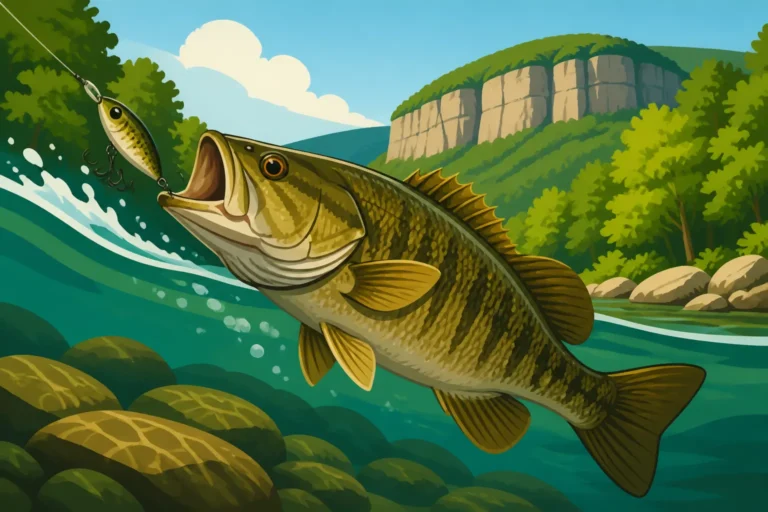
Kentucky bass, scientifically known as Micropterus punctulatus, are known for their deep, muscular bodies and generally smaller mouths compared to largemouths. They're built for action, often thriving in waters with some current or rocky structures where they can ambush prey. Their aggressive nature and powerful runs make them a favorite target for many, and it's this feistiness that can sometimes make them feel bigger than they actually are, adding to the thrill. If you're keen to learn more about the diverse fish swimming in our state, check out Arkansas Fish Species: A Complete Guide to What's Swimming in Your Waters.
Where Kentucky Bass Thrive
In Arkansas, Kentucky bass tend to favor clear, rocky streams, rivers, and the lower sections of some reservoirs. They love areas with good current, gravel beds, and submerged timber or rock piles where they can hide and ambush prey. Unlike largemouths that prefer weedy, slower-moving water, or smallmouths that stick strictly to cooler, fast-moving streams, Kentucky bass often find a comfortable niche between the two. You'll find strong populations in many of the state's major impoundments and river systems, particularly those with a good mix of habitat.
Think about the clear-water reservoirs in the Ozarks or the rocky stretches of rivers flowing through the highlands. These are prime Kentucky bass territory. Their adaptability allows them to flourish in diverse environments, making them accessible to a wide range of anglers. Their preference for certain habitats means that if you're specifically targeting a trophy Kentucky bass, you'll want to focus your efforts on these types of areas, paying close attention to structure and current breaks.
Identifying Your Catch: Kentucky Bass vs. Other Black Bass
Proper identification is absolutely critical when you're talking about state records. Imagine catching what you think is a record Kentucky bass, only to find out it's actually a smallmouth or largemouth. It happens! The key is knowing the tell-tale signs. Here's a breakdown to help you distinguish a Kentucky bass:
- Mouth Size: The most reliable indicator. If you close its mouth, the upper jaw (maxillary) of a Kentucky bass typically does not extend beyond the back of its eye. A largemouth's jaw extends past the eye, and a smallmouth's typically stops directly under the eye.
- Dorsal Fin: The dorsal fin (the one on its back) of a Kentucky bass is usually connected, appearing as one continuous fin with a slight dip. A largemouth bass has a more distinct, deep separation between the spiny and soft-rayed parts of its dorsal fin.
- Tongue Patch: This is a classic identifier. Gently open the fish's mouth and feel the tongue. If there's a small, rough patch of teeth on the tongue, it's almost certainly a Kentucky bass. Largemouths and smallmouths typically do not have this patch.
- Lateral Line & Spots: Kentucky bass have a distinct, often broken lateral line (the stripe along its side) made up of dark spots. Below this lateral line, you'll see those characteristic rows of dark spots that give them their "spotted" nickname. Largemouths have a more solid, often darker lateral line, and smallmouths have vertical bars or blotches instead of clear spots.
Here's a quick comparison table:
| Feature | Largemouth Bass | Smallmouth Bass | Kentucky (Spotted) Bass |
|---|---|---|---|
| Upper Jaw | Extends past the back of the eye | Typically ends directly under the eye | Typically does not extend past the back of the eye |
| Dorsal Fin | Deep notch, almost two separate fins | Connected, shallow notch | Connected, shallow dip |
| Tongue | Smooth, no tooth patch | Smooth, no tooth patch | Rough patch of teeth often present |
| Body Markings | Solid, dark lateral stripe; no distinct spots below | Vertical bars or blotches; no distinct spots below | Broken lateral line; distinct rows of spots below |
Understanding these differences is crucial not just for record keeping, but for appreciating the unique characteristics of each species. If you want to delve deeper into identifying specific bass species, take a look at How to Tell Largemouth, Smallmouth, and Kentucky Bass Apart.
Arkansas State Records: The Quest for the Largest Kentucky Bass
Every angler dreams of catching "the big one," and for those who pursue Kentucky bass, that means setting their sights on the state record. Arkansas has a rich history of impressive catches across all species, and the Kentucky bass record stands as a testament to the quality of our waters and the skill of our anglers. The pursuit of such a record requires patience, knowledge, and a little bit of luck.
The Official Record Keepers
In Arkansas, the official keeper of all state fish records is the Arkansas Game and Fish Commission (AGFC). They are the governing body that verifies, recognizes, and maintains the list of state-record fish. Their rigorous process ensures that every record is legitimate, giving proper credit to the angler and solidifying the catch in state history. When you catch a fish that you believe could be a state record, the AGFC is the first point of contact for official verification.
It’s not just a matter of saying "I caught a big one." There's a specific protocol to follow, including having the fish weighed on certified scales, often found at grocery stores or official weigh stations, and measured by an AGFC representative. This meticulous attention to detail is what makes an Arkansas state record so prestigious.
What Makes a Record-Breaking Fish?
A record-breaking fish isn't just about its size, though that's certainly the main component. For a Kentucky bass to be considered for a state record, it needs to meet several criteria set by the AGFC:
- Weight: The primary factor. The fish must be weighed on a certified scale, typically those inspected and sealed by a Weights and Measures authority, to ensure accuracy. This usually means a trip to a local grocery store or a certified bait shop that has such scales.
- Species Identification: As we discussed, correctly identifying the species is paramount. An AGFC biologist or qualified representative must positively identify the fish as a Kentucky bass.
- Measurement: While weight is king, length and girth measurements are also usually taken and recorded. This helps paint a complete picture of the fish's size.
- Proof: This often includes photographs of the angler with the fish, the fish on the scale, and clear shots for identification purposes. The location and date of the catch are also important.
- Ethical Catch: The fish must be legally caught by rod and reel according to Arkansas fishing regulations. There are rules against snagging, spearfishing, or other non-traditional methods for record consideration.
The moment of realizing you might have a record is often a mixture of excitement and sheer panic. You want to preserve the fish, get it weighed, and get it identified, all while trying to contain your adrenaline. It's a true angler's journey, culminating in a moment of state recognition.
Historic Catches and Legendary Anglers
Arkansas has produced some truly monumental catches, and the Kentucky bass record is a prime example of the incredible fish that swim in our waters. The state record Kentucky bass stands as a testament to the dedication of anglers and the health of our fisheries. While specific historical names and dates can change, the essence of these achievements remains constant: they represent a peak fishing accomplishment. These catches inspire other anglers to keep casting, to explore new waters, and to hone their skills in the hopes of one day joining that elite group.
The stories behind these record fish are often legendary—tales of relentless pursuit, unexpected giants, or perfect conditions aligning for a truly special catch. Each record holder has a unique journey, and it's these narratives that make the pursuit of a state record so captivating. It’s about more than just numbers; it’s about the unforgettable experience and the enduring legacy.
Techniques and Gear for Targeting Big Kentucky Bass
Landing a truly large Kentucky bass, let alone a state record, isn't typically an accident. It requires specific techniques and the right gear to entice these strong, structure-oriented fish. While they might not reach the massive sizes of some largemouths, their powerful fight demands respect and preparation.
Lures and Baits That Get Attention
Kentucky bass are aggressive predators, and they respond well to a variety of lures and baits that mimic their natural prey like shad, crawfish, and smaller fish. When you're trying to coax out a trophy-sized specimen, presentation and choice of bait become even more critical.
- Jigs: Often tipped with a plastic trailer (like a crawfish imitation or a creature bait), jigs are incredibly effective. They can be worked slowly along the bottom, mimicking a crawfish, or hopped through submerged timber. The versatility of jigs makes them a staple for serious Kentucky bass anglers. You can find a huge variety of jig styles and colors on platforms like Amazon, allowing you to experiment and find what works best in your local waters.
- Crankbaits: Deep-diving crankbaits are excellent for covering water and targeting fish holding on ledges, points, and deep structure. Colors that mimic shad or crawfish are often highly productive. The erratic action of a crankbait can trigger reaction strikes from bigger, more cautious bass.
- Soft Plastics: Texas-rigged worms, creature baits, and swimbaits are fantastic for working through heavy cover without snagging. Weightless presentations can also be deadly in shallower water, mimicking injured baitfish. The subtle action of a soft plastic often entices strikes when other lures fail.
- Spinnerbaits and Chatterbaits: These provide flash and vibration, making them great for stained water or when fish are actively feeding. They can be retrieved quickly or slowly rolled along the bottom, appealing to the Kentucky bass's aggressive instincts.
- Live Bait: Shiners, shad, or even crawfish can be incredibly effective, especially when artificial lures aren't producing. A large live bait, presented naturally, can often be the ticket to catching that record-caliber fish.
Experimentation is key. What works one day might not work the next, so having a diverse tackle box and being willing to change tactics will increase your chances of success.
Rods, Reels, and Line for the Fight
Given their strong fighting nature, selecting the right gear is crucial. You need equipment that can handle powerful runs and still offer the sensitivity required to detect subtle bites.
- Rods: A medium-heavy to heavy power casting rod, typically 6'6" to 7'6" in length, is ideal. The stiffer backbone allows for solid hooksets and better control over larger fish in heavy cover, while a fast or extra-fast action tip provides the sensitivity to feel light bites. For finesse techniques, a medium power spinning rod might be preferred.
- Reels: A high-quality baitcasting reel with a smooth drag system is generally recommended for casting heavier lures and fighting larger fish. A gear ratio around 7.1:1 or 8.1:1 offers a good balance for various techniques, allowing for quick line retrieval. For lighter presentations, a reliable spinning reel with a smooth drag is essential.
- Line: Fluorocarbon line, ranging from 12-20 lb test, is a popular choice for Kentucky bass. Its low visibility and excellent abrasion resistance make it perfect for clear, rocky waters. Braided line (20-40 lb test) can be used for its strength and sensitivity, often with a fluorocarbon leader for stealth. Monofilament (10-17 lb test) is a good all-around option, especially for topwater or crankbait applications due to its stretch. Searching for specific lines or leader material on Amazon can help you find exactly what you need.
Remember, a strong drag system is your best friend when a big Kentucky bass decides to make a run for cover. Regularly check your line for nicks and abrasions, especially after fishing around rocks or timber, to avoid heartbreak.
Locating Trophy-Sized Kentucky Bass
Finding any Kentucky bass is one thing, but pinpointing those elusive trophy-sized individuals requires a deeper understanding of their preferred habitats and behaviors. Big fish are often solitary and hold in specific areas.
- Deep Structure: Large Kentucky bass often relate to deep structure such as submerged points, ledges, humps, and channel swings. They use these areas as ambush points for schools of baitfish moving through. Electronics like sonar and side-imaging are invaluable for locating these hidden features.
- Current Breaks: In rivers and areas with current, look for anything that breaks the flow, creating slack water where bass can rest and wait for food. This includes rock piles, fallen trees, eddies behind islands, or even bridge pilings.
- Rocky Areas: Kentucky bass are lovers of rocky bottom, riprap, and bluffs. These areas provide excellent cover, abundant crawfish, and cooler water temperatures.
- Baitfish Presence: Ultimately, big bass will be where the food is. Look for schooling baitfish on your electronics, or observe signs of active feeding like birds diving or fish busting the surface.
Targeting these areas with patience and precision, perhaps slowly working a jig or a deep crankbait, will significantly increase your odds of connecting with a record-worthy Kentucky bass. Always be mindful of the conditions—water temperature, clarity, and recent weather patterns can all influence where these fish decide to hold.
The Future of Kentucky Bass Records in Arkansas
The pursuit of state records isn't just about individual glory; it's also a reflection of the health of our fisheries and the success of conservation efforts. As anglers, we all play a role in ensuring that future generations have the same opportunities to pursue trophy fish, including the magnificent Kentucky bass.
Conservation and Sustainable Practices
The Arkansas Game and Fish Commission works tirelessly to manage fish populations and habitat, ensuring sustainable fishing for all species. For anglers chasing record-sized fish, embracing catch-and-release practices for these larger, often older, breeding fish is incredibly important. While a state record requires keeping the fish for certification, careful handling and a quick process can minimize stress if the fish is to be released afterward.
Practicing responsible angling, such as using appropriate tackle to reduce fight time, landing fish quickly, and handling them minimally and gently, helps ensure these valuable genetic specimens can continue to contribute to the population. Our collective efforts in conservation directly impact the potential for future record-breaking catches.
The Next Generation of Record Breakers
Every generation of anglers brings new techniques, new technologies, and a renewed passion for the sport. The current state record for Kentucky bass in Arkansas might seem daunting, but it's a target that will undoubtedly be challenged. As fishing technology improves and our understanding of fish behavior deepens, new records will be set.
Encouraging younger anglers to learn about different fish species, responsible fishing practices, and the thrill of the chase will ensure a vibrant future for sport fishing in Arkansas. Whether it's a state record or a personal best, every big fish caught ethically and appreciated is a win for conservation and the angler. Learning Bass Fishing Techniques for Beginners is a great start for anyone hoping to one day challenge a record.
Beyond the Record: The Joy of the Catch
While the allure of a state record Kentucky bass is powerful, it's essential to remember that fishing is about so much more than just numbers. It's about the peaceful mornings on the water, the challenge of outsmarting a cunning fish, the camaraderie with fellow anglers, and the profound connection to nature. Every cast holds the potential for excitement, and every fish, regardless of its size, offers a moment of triumph.
The pursuit of a state record can add an extra layer of dedication and focus to your fishing, pushing you to refine your skills and deepen your knowledge of the species. But whether you're chasing the next big record or simply enjoying a quiet day on the lake, the true reward of fishing in Arkansas lies in the experience itself. So, get out there, enjoy the beauty of our waters, and who knows, that next cast might just be the one that puts you in the record books for Kentucky Bass Size Records in Arkansas!
Disclaimer
This article is for general informational purposes only and does not constitute professional advice. Laws, prices and regulations vary by location and change over time. Consult a qualified professional for guidance on your specific situation.