The Most Popular Game Fish in Arkansas
Oh, the sheer joy, and sometimes the delightful frustration, of fishing in Arkansas! If you've ever stood on the bank of a pristine lake or waded into a swift-moving stream and wondered, "What exactly is swimming down there? And how do I catch it?" then you're in the right place. Arkansas is a true angler's paradise, boasting an incredible array of game fish that offer everything from a relaxing afternoon catch to a heart-pounding battle with a trophy. This guide is all about demystifying the most popular game fish in our beautiful state, helping you identify them, understand their habits, and ultimately, put more fish in your net (or release them to fight another day!).
Why Arkansas is a Game Fish Paradise
Arkansas isn't called "The Natural State" for nothing, and its waters are a testament to that nickname. From the towering peaks of the Ozarks down to the sprawling flatlands of the Delta, you'll find an incredible diversity of aquatic environments. This means that whether you're a seasoned angler chasing record-breakers or a family looking for a fun day out, there's a fish—and a fishing spot—just waiting for you. It's truly a unique blend of geographical features that makes our state a prime destination for freshwater fishing enthusiasts.
Diverse Habitats and Waters
Think about it: where else can you find gin-clear, cold-water trout streams fed by dams, alongside vast, timber-filled reservoirs brimming with bass and crappie, and then transition to slow-moving, muddy rivers holding monstrous catfish, all within a day's drive? This ecological variety is the secret sauce behind Arkansas's incredible fishing scene. Our lakes, like Bull Shoals Lake and Lake Ouachita, are massive impoundments that offer endless coves, points, and deep channels for a multitude of species. Then you have the legendary White River system, where cold water released from dams creates world-class trout fisheries. And let's not forget the smaller, wilder streams of the Ozarks, perfect for finding feisty smallmouth bass. This patchwork of environments ensures that whatever your preferred species or fishing style, you'll find a welcoming home here. Arkansas Fishing Rules for Lakes, Rivers and Tailwaters are designed to protect this incredible diversity.
The Thrill of the Catch
There's something universally exhilarating about feeling that tug on your line, isn't there? It's the anticipation, the sudden shock, and then the pure adrenaline of the fight. In Arkansas, that thrill comes in many forms. It could be the explosive topwater strike of a largemouth bass at dawn, the subtle tap of a crappie gently taking your jig, the steady, powerful pull of a big blue catfish, or the acrobatic leaps of a rainbow trout in a mountain stream. Each species offers a distinct challenge and a unique reward, making every fishing trip an adventure. This variety is precisely why so many anglers flock to our state year after year—they know they're in for a good time, no matter what they're targeting. The sheer diversity of fighting styles and habitats keeps things fresh and exciting, proving that there's always something new to learn or a new personal best to chase.
The Reigning King: Largemouth Bass
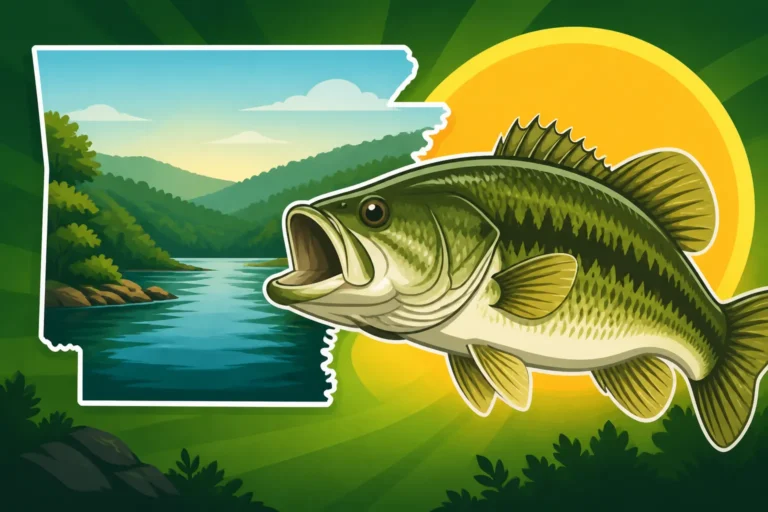
When most folks think of freshwater fishing, especially in the South, their mind immediately goes to the largemouth bass. And for good reason! This iconic game fish is arguably the most popular species in Arkansas, known for its aggressive strikes, powerful fights, and impressive size. If you've spent any time on our lakes, you've undoubtedly seen someone proudly holding up a chunky largemouth.
Identifying Largemouth Bass
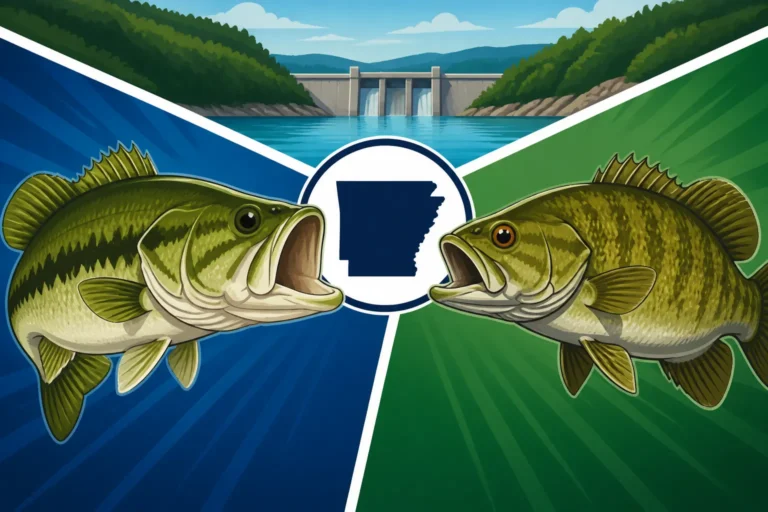
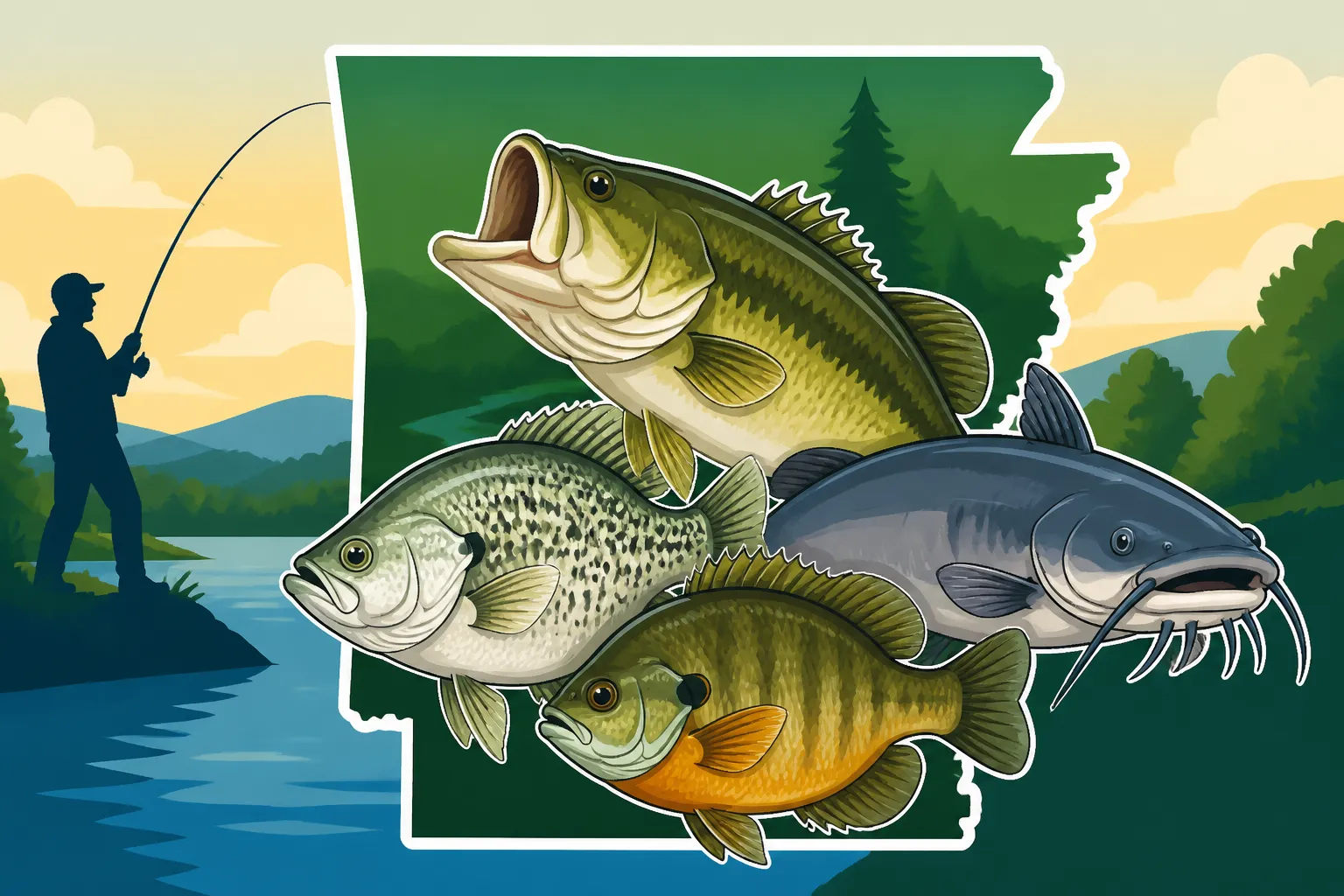
The largemouth bass ( Micropterus salmoides) is pretty easy to spot once you know what to look for. Its most distinguishing feature, as its name suggests, is its large mouth! If you gently close its mouth, the hinge of the jaw will extend noticeably past the back of its eye. They typically have a prominent, dark, horizontal stripe or a series of blotches running down the side of their greenish body, though this can vary from almost black to a very subtle, broken line depending on the water clarity and bottom composition. Their belly is usually white or cream-colored. The dorsal fin is deeply notched, almost appearing like two separate fins. When you pull one of these beauties out of the water, you'll notice their robust, muscular body built for explosive power.
Where to Find Them and Their Habits
Largemouth bass are habitat generalists but have a strong preference for cover. They love to hang out in areas with submerged vegetation (like hydrilla or lily pads), standing timber, brush piles, rock piles, boat docks, and even subtle changes in bottom contour. They are ambush predators, meaning they'll lie in wait, perfectly camouflaged, ready to explode on unsuspecting prey like minnows, crawfish, frogs, and even small birds or rodents. You'll find them in nearly every lake, pond, and slow-moving river section across Arkansas.
In spring, you'll often find them shallower as they move up to spawn, making nests on hard bottoms in protected coves. As summer heats up, they'll often move to deeper, cooler waters or seek dense overhead cover. During fall, they become more active, feeding heavily as they prepare for winter. Lakes like Lake Ouachita: Arkansas's Largest Lake for Bass and Crappie Fishing and Bull Shoals Lake Fishing Guide for Bass and Crappie are legendary for their largemouth populations, but even smaller community ponds can hold giants. Understanding these seasonal movements and preferred structures is key to consistently catching largemouth bass.
Top Techniques for Catching Largemouth
There's a dizzying array of lures and techniques for largemouth bass, which is part of what makes them so much fun to chase. For those explosive topwater bites, buzzbaits, poppers, and walking baits fished over grass beds or near shoreline cover during low light hours are incredibly effective. When the fish are holding tighter to cover or deeper, plastic worms rigged Texas-style, jigs, or creature baits pitched into timber or brush piles can be irresistible. You can often find a huge selection of these specific baits and fishing lines on Amazon, ready for your next trip.
Crankbaits are fantastic for covering water and targeting specific depths, especially around points and submerged humps. Spinnerbaits and chatterbaits are excellent search baits, particularly around grass lines or dingy water. For a more subtle approach, a shaky head worm or a Ned rig can coax bites from finicky fish. Experimentation is key, but generally, largemouth are aggressive, so don't be afraid to try flashy, noisy baits to draw them out. The key is to match your presentation to the conditions and the fish's mood.
The Finesse Fighter: Smallmouth Bass
While the largemouth might be the undisputed king in many waters, the smallmouth bass holds a special place in the hearts of many Arkansas anglers. Known for its incredible fighting ability, acrobatic jumps, and preference for clear, flowing water, the smallmouth bass is a true freshwater gem. They might not always reach the sheer weight of a largemouth, but they more than make up for it with their tenacious spirit.
Smallmouth Characteristics and Habitat
The smallmouth bass ( Micropterus dolomieu) shares some similarities with its largemouth cousin but has distinct features. Its mouth is noticeably smaller, with the jaw hinge typically extending only to about the middle of its eye, not past it. Their body coloration tends to be more bronze or golden-brown, often with dark vertical bars or blotches on their sides rather than a solid lateral line. Their eyes are often reddish, and their body is generally more streamlined, built for battling currents.
Smallmouth bass thrive in cooler, clearer water, especially in rocky environments. You'll primarily find them in the pristine rivers and streams of the Ozark and Ouachita mountains, such as the Crooked Creek, the upper sections of the Buffalo River, and certain tailwaters below dams. They love current, rocky bottom, gravel beds, boulders, and undercut banks. In lakes, they'll often gravitate towards rocky points, ledges, and deep structure, preferring areas with less vegetation than largemouth. Smallmouth Bass Rules on Arkansas's Moving Waters Statewide are in place to protect these precious populations.
Targeting Smallmouth in Rivers and Lakes
Chasing smallmouth often means a more active, dynamic approach. In rivers, wading and casting to current seams, eddies behind boulders, and gravel bars can be incredibly productive. For lake smallmouth, focus on deep rocky points, humps, and submerged timber. They're often found in slightly deeper water than largemouth, especially during warmer months.
Finesse presentations often shine for smallmouth. Small tube jigs, grub-tailed jigs, hair jigs, and inline spinners are classic smallmouth baits. Light line and a sensitive spinning rod are often preferred to detect their subtle bites. Small crankbaits and jerkbaits that mimic minnows can also be deadly when retrieved through rocky areas. During cooler weather, suspending jerkbaits fished slowly around deep structure can be particularly effective. Remember, smallmouth are powerful fighters for their size, so be ready for a spirited battle when you hook into one! Finding quality smallmouth specific gear is easy, and a quick search on Amazon will show you a wealth of options.
The Feisty Relative: Kentucky (Spotted) Bass
Often overlooked or even misidentified, the Kentucky bass, also known as the spotted bass, is another popular game fish in Arkansas. While not as large as the largemouth or as famous as the smallmouth, the Kentucky bass offers a unique challenge and can provide incredible action, especially for anglers familiar with their habits. They are a tenacious fighter, often surprising anglers with their strength on the line.
How Kentucky Bass Differ
The Kentucky bass ( Micropterus punctulatus) is sometimes confused with both largemouth and smallmouth, but it has distinct features. Its jaw extends to about the middle of the eye, similar to a smallmouth, but it generally has a less pronounced lateral line than a largemouth. The most reliable identifier is the patch of small teeth on its tongue (a feature absent in largemouth and smallmouth). Additionally, their belly often has distinct rows of spots, giving them the "spotted bass" moniker. Their body shape is usually more elongated than a largemouth, and they tend to be a darker green or olive color.
Unlike largemouth, Kentucky bass prefer slightly clearer, rocky waters, but they are also quite tolerant of turbid conditions and can thrive in areas with moderate current. They often inhabit deeper water than largemouth, especially during the summer, and can be found in rocky reservoirs and medium-to-large rivers across the state. They also tend to school more tightly than largemouth.
Best Spots and Baits for Spotted Bass
Kentucky bass are structure-oriented, much like their cousins, but they favor deeper structure. Look for them on steep rocky banks, bluff walls, deep points, main lake humps, and around bridge pilings and submerged timber in deeper water. In rivers, they'll hold in current breaks, eddies, and deeper pools. They're particularly prevalent in larger reservoirs like Bull Shoals Lake and Greers Ferry Lake.
Because they often inhabit deeper waters and school, vertical presentations can be very effective. Drop-shot rigs, shaky head jigs, and small jigging spoons are excellent choices. Small crankbaits, especially those that dive deep and deflect off rocky bottom, can also entice bites. When they're shallower, small swimbaits and topwater poppers can work. Don't be afraid to fish deeper than you might for largemouth; these fish love to suspend over deep water or hug contours. They are aggressive feeders, and once you locate a school, the action can be non-stop.
Cool Water Champions: Arkansas Trout (Rainbow & Brown)
Arkansas is renowned for its world-class trout fisheries, thanks to the cool, oxygen-rich waters released from hydroelectric dams across the state. The White River system, in particular, has gained international fame for its incredible trout populations. For many anglers, the pursuit of these cold-water beauties, whether it's the feisty rainbow or the elusive brown, is a passionate endeavor.
Rainbow Trout: The Stocked Favorite
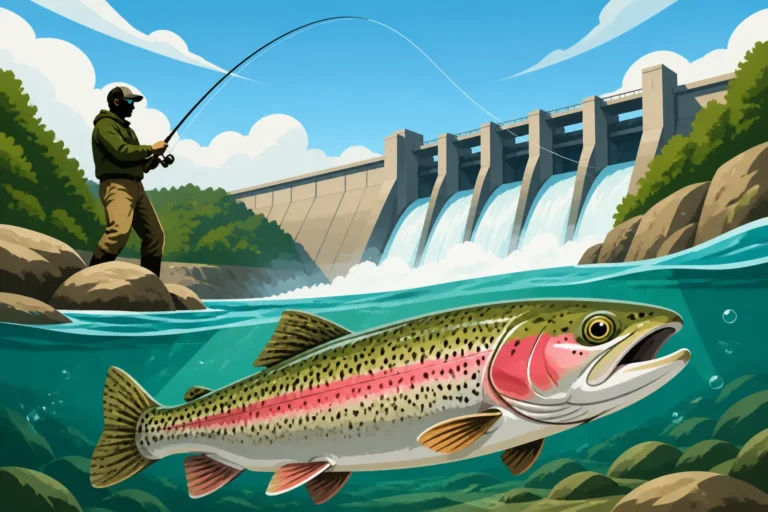
The rainbow trout ( Oncorhynchus mykiss) is arguably the most common and accessible trout species in Arkansas. These beautiful fish are easily identified by their iridescent, silvery bodies and the distinct pink or red stripe running horizontally along their sides, especially prominent during spawning. Their backs are typically olive green, speckled with numerous small, dark spots that extend into their dorsal and caudal (tail) fins. They have a relatively square or slightly forked tail.
Rainbow trout are primarily found in the cold tailwater sections below dams, such as the White River below Bull Shoals Dam, the Norfork Tailwater, and the Little Red River below Greers Ferry Dam. They are regularly stocked by the Arkansas Game and Fish Commission, ensuring a healthy and consistent population for anglers. They are typically very willing biters, making them an excellent target for beginners and seasoned anglers alike. Trout Limits on the Norfork Tailwater in Arkansas are specific and important to know.
Brown Trout: The Elusive Trophy
For many Arkansas trout anglers, the brown trout ( Salmo trutta) represents the ultimate challenge and a true trophy. Brown trout are identifiable by their olive-brown backs that fade to yellowish-brown or golden sides, often with distinctive dark spots surrounded by lighter halos, and reddish or orange spots along their sides. They typically have a more prominent, slightly forked tail than rainbows. What really sets them apart is their incredible size potential and their often elusive, wary nature.
Brown trout are also found in the cold tailwaters of Arkansas, often coexisting with rainbows. However, they tend to be more solitary, territorial, and prefer deeper, more oxygenated water with plenty of cover, such as undercut banks, log jams, and large boulders. They are known for their intelligence and often require more patience and finesse to catch. Large brown trout are primarily piscivorous, meaning they eat other fish, and can grow to truly enormous sizes in Arkansas's rich tailwaters. The Spring River Brown Trout Minimum Length in Arkansas highlights the management efforts for this prized species.
Essential Trout Fishing Gear
When targeting trout in Arkansas, the right gear can make all the difference. Light spinning tackle, often a 6-foot ultralight to light-action rod paired with a small spinning reel spooled with 4-6 lb test monofilament or fluorocarbon, is perfect for casting small lures and detecting subtle bites. Fly fishing is also incredibly popular, especially on the White River, requiring specific fly rods, reels, and lines.
For bait fishing, popular choices include PowerBait (in various colors and forms), corn, and live worms or red wigglers. Lure anglers find success with small inline spinners, spoons, and tiny crankbaits that mimic baitfish. For fly fishing, a vast array of nymphs, dry flies, and streamers are used depending on the hatch and water conditions. You can find a huge selection of all these trout fishing essentials, from flies to PowerBait, on Amazon, making it easy to replenish your tackle box before a trip. Remember to always check current regulations, as special tackle or bait restrictions may apply in certain trout waters.
| Species | Key Identification | Typical Habitat | Common Baits/Lures |
|---|---|---|---|
| Largemouth Bass | Jaw past eye, dark lateral line | Weeds, timber, structure, warm lakes & rivers | Spinnerbaits, worms, crankbaits |
| Smallmouth Bass | Jaw to middle of eye, vertical bars | Clear, rocky rivers, open water, cooler lakes | Jigs, tubes, inline spinners |
| Kentucky Bass | Jaw to middle of eye, spotted belly, teeth on tongue | Deep structure, open water, reservoirs, moderate current | Crankbaits, jigging spoons, shaky heads |
| Rainbow Trout | Pink stripe, dark spots, squarish tail | Cold tailwaters, stocked lakes | PowerBait, worms, small spinners |
| Brown Trout | Dark spots with halos, red spots, forked tail | Clear, cold rivers, deep cover | Streamers, large spoons, live bait |
| Black Crappie | 7-8 dorsal spines, scattered spots | Timber, brush piles, docks, calm water | Jigs, minnows, tiny crankbaits |
| White Crappie | 5-6 dorsal spines, vertical bars | Open water structure, timber, slightly turbid water | Jigs, minnows, tiny crankbaits |
| Channel Catfish | Forked tail, dark spots (young), smaller head | Rivers, lakes, ponds, varied bottoms | Stink baits, cut bait, worms |
| Blue Catfish | Forked tail, sloped head, no spots, large | Large rivers, reservoirs, deep channels | Cut bait, live bait |
| Flathead Catfish | Square tail, flattened head, mottled, large | River snags, deep holes, timber, muddy bottoms | Live bait (sunfish, minnows) |
| Striped Bass | Seven distinct dark stripes, muscular body | Large reservoirs, open water, deep channels | Live shad, large plugs, trolling lures |
Panfish Powerhouses: Crappie (Black & White)
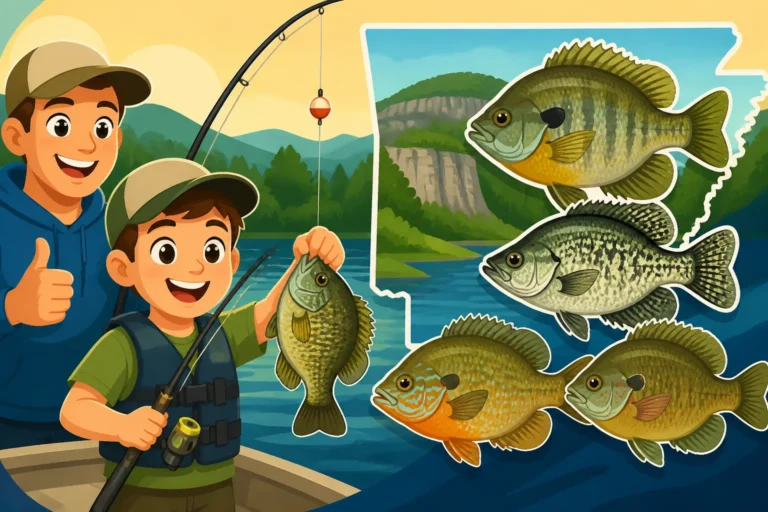
If you're looking for a delicious meal, consistent action, and a great way to introduce kids to fishing, look no further than crappie. These popular panfish, both black and white varieties, are abundant in Arkansas waters and provide countless hours of angling enjoyment. They might not be the biggest fish in the lake, but they more than make up for it with their numbers and willingness to bite.
Distinguishing Black and White Crappie
While both black crappie (Pomoxis nigromaculatus) and white crappie (Pomoxis annularis) are fantastic fish to catch, they do have subtle differences that can help you tell them apart. The easiest way is to count the spines in their dorsal (top) fin:
- Black Crappie: Typically have 7 or 8 dorsal spines. Their bodies are usually darker, with a more mottled or speckled pattern of irregular black spots all over, giving them a "peppered" look. They tend to have a slightly deeper, more rounded body shape.
- White Crappie: Usually have 5 or 6 dorsal spines. Their bodies are generally lighter, with distinct vertical bars (often 7-9) running down their sides. They tend to have a more elongated body shape than black crappie.
Both species are excellent table fare, with delicate white meat, making them highly sought after by anglers who enjoy eating their catch.
Crappie Hotspots and Seasonal Patterns
Crappie are schooling fish, and finding one often means finding many. They love structure, especially submerged timber, brush piles, rock piles, bridge pilings, and boat docks. In lakes, they'll often relate to creek channels and ledges.
In spring, crappie move into shallower waters (often 2-10 feet deep) to spawn when water temperatures reach the upper 50s to low 60s. This is prime time for catching them near the bank in protected coves. After the spawn, they'll gradually move to deeper submerged cover. During summer, they often suspend in open water over creek channels or relate to deep brush piles and timber, seeking cooler temperatures. Fall sees them becoming more active again, feeding heavily as they prepare for winter, often moving back to brush piles or main lake points. In winter, they can be found schooled tightly in deep water, often over structure. Lakes like Lake Conway Bass Fishing Near Little Rock, Arkansas, Lake Monticello Bass and Crappie Exceptions, and Lake Cargile Crappie Limit Rules are well-known crappie havens.
Jigs (small, soft plastics on a lead head) and live minnows are the go-to baits for crappie. Tipping a jig with a minnow is often a deadly combination. Small spinnerbaits and tiny crankbaits can also be effective. Techniques vary from vertical jigging over structure, casting and retrieving, or even trolling multiple lines with spider rigging. The key is to find the depth where the fish are holding and present your bait directly to them.
Deep Water Giants: Catfish (Channel, Blue, Flathead)
For anglers who appreciate a powerful fight and a delicious meal, Arkansas's catfish populations are hard to beat. Our state is home to three main species of catfish: channel, blue, and flathead, each offering a unique angling experience and the potential for truly massive fish. Nothing quite compares to the steady, strong pull of a big cat at the end of your line.
The Different Catfish Species
Understanding the differences between the three main species will help you target them more effectively:
-
Channel Catfish (Ictalurus punctatus): These are the most widespread and common catfish in Arkansas. They are easily identified by their deeply forked tail, a relatively small, slender head, and an olive-brown to slate-gray body. Younger channel cats often have distinct dark spots, which fade as they mature. They are omnivorous scavengers and can be found in a wide variety of habitats, from small ponds to large rivers and lakes. They generally don't reach the immense sizes of blue or flathead cats but can still grow quite large.
-
Blue Catfish (Ictalurus furcatus): The largest species of catfish in North America, blue cats are built for power. They have a distinctly forked tail, a bluish-gray body (without spots), and a prominent hump or slope behind their head. Their heads are usually larger and broader than a channel cat's. Blue cats prefer large rivers and deep, open reservoirs with strong currents and plenty of food. They are primarily piscivorous, feeding on other fish, and are capable of growing to truly astonishing sizes in Arkansas waters, with some exceeding 100 pounds!
-
Flathead Catfish (Pylodictis olivaris): These are truly unique among the catfish. Flatheads have a distinctively flattened head, a lower jaw that protrudes past the upper jaw, and a nearly square or slightly rounded tail (not forked like channels or blues). Their coloration is typically mottled brown and yellow, offering excellent camouflage in woody debris. Flatheads are solitary, ambush predators that prefer deep holes, log jams, and snags in rivers and large reservoirs. Unlike the other two, they primarily feed on live fish, making them a challenging and rewarding catch for those who target them specifically.
Best Baits and Techniques for Catfish
Catfishing techniques vary greatly depending on the species you're after:
-
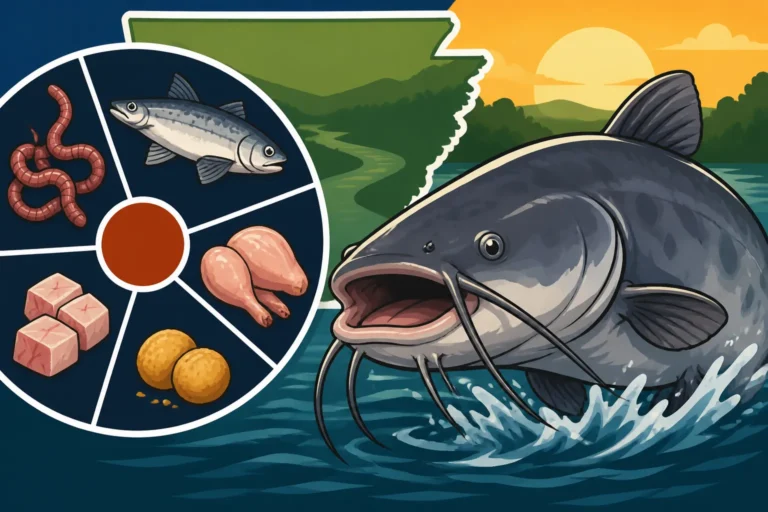
Channel Catfish: These opportunistic eaters respond well to a wide variety of baits. Stink baits (both prepared and homemade), chicken livers, nightcrawlers, shrimp, and cut bait are all highly effective. Bottom fishing with a weight to hold your bait on the bottom, often in conjunction with a slip sinker rig, is the most common technique. Targeting them in natural depressions, along creek channels, or in areas with moderate current will yield results. You can easily find a range of specialized catfish baits and heavy-duty hooks on Amazon to get ready for your next outing.
-
Blue Catfish: Given their size and piscivorous diet, blue cats respond best to fresh cut bait (shad, herring, carp) or live bait. Large chunks of cut bait fished on the bottom in deep river channels, along major creek beds in reservoirs, or near dams are excellent strategies. Jug fishing and trotline fishing are also very popular and effective methods for targeting blue cats, especially for those looking to harvest a good quantity of fish. They often school, so if you find one, others are likely nearby. Jug Fishing Basics for Catfish can give you a head start.
-
Flathead Catfish: The flathead's preference for live bait means that techniques often involve presenting a lively sunfish, bluegill, or other baitfish near their preferred structure. Heavy tackle is a must, as these fish often tangle you in their woody homes. Setting lines on the bottom near large snags, fallen trees, or deep rock piles in rivers and reservoirs is key. Patience is also critical, as flatheads are known for their slow, deliberate bites.
Regardless of the species, heavy-duty rods and reels, strong line, and stout hooks are essential when catfishing in Arkansas.
The Freshwater Torpedo: Striped Bass
Imagine a fish with the power of an ocean predator, now imagine catching it in a freshwater lake! That's the striped bass experience in Arkansas. These incredible fish, originally native to saltwater, have been successfully introduced into several of our larger reservoirs, where they thrive and grow to immense sizes, providing an unparalleled big-game fishing opportunity.
Striped Bass: Power and Size
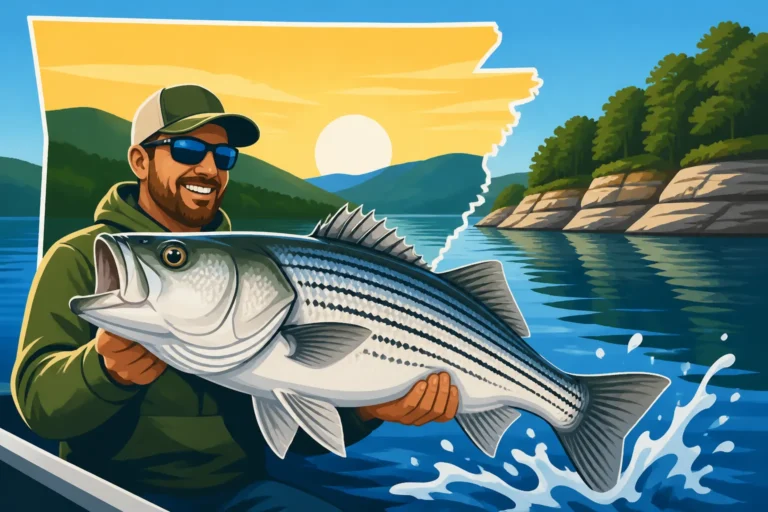
The striped bass (Morone saxatilis), often simply called "stripers," are true freshwater torpedoes. They are easily recognized by their streamlined, silvery bodies adorned with seven or eight distinct horizontal dark stripes running from gills to tail. They have a powerful, deeply forked tail, indicating their strength and speed. Unlike their anadromous (ocean-dwelling) cousins, these landlocked stripers complete their entire life cycle in the freshwater lakes.
What truly sets stripers apart is their sheer power and size. They are one of the hardest-fighting freshwater fish you can encounter in Arkansas, known for long, drag-screaming runs. They are also capable of growing to truly colossal proportions, with many fish exceeding 40 pounds and some pushing even higher in our trophy lakes. They are highly migratory within the lakes, often schooling in open water and chasing baitfish.
Targeting Stripers in Arkansas Reservoirs
While they are powerful, stripers can be challenging to locate due to their nomadic nature. They are found primarily in large, deep, clear reservoirs that can sustain populations of their primary forage fish, threadfin and gizzard shad. Norfork Lake: One of Arkansas's Best Striped Bass Fisheries and Striper Fishing on Lake Hamilton in Hot Springs, Arkansas are legendary destinations for trophy striped bass.
Techniques for stripers often revolve around locating schools of baitfish, as the stripers will be close behind. Trolling large plugs, swimbaits, or live bait (like shad) at various depths is a very popular and effective method for covering water. Downriggers and planer boards are often used to present baits at specific depths and away from the boat.
When stripers push schools of shad to the surface, creating "boils," it's an exciting time for topwater action. Casting large plugs or spoons into these frenzies can lead to explosive strikes. During warmer months, stripers often retreat to deeper, cooler water, and anglers use electronics to locate them suspending over main lake channels or deep humps, then drop live bait or jigging spoons directly into the school. Given their strength and the size of their prey, heavy-duty tackle, including stout rods, large capacity reels, and strong lines, are absolutely essential for successfully battling these freshwater giants.
Disclaimer
This article is for general informational purposes only and does not constitute professional advice. Laws, prices and regulations vary by location and change over time. Consult a qualified professional for guidance on your specific situation.