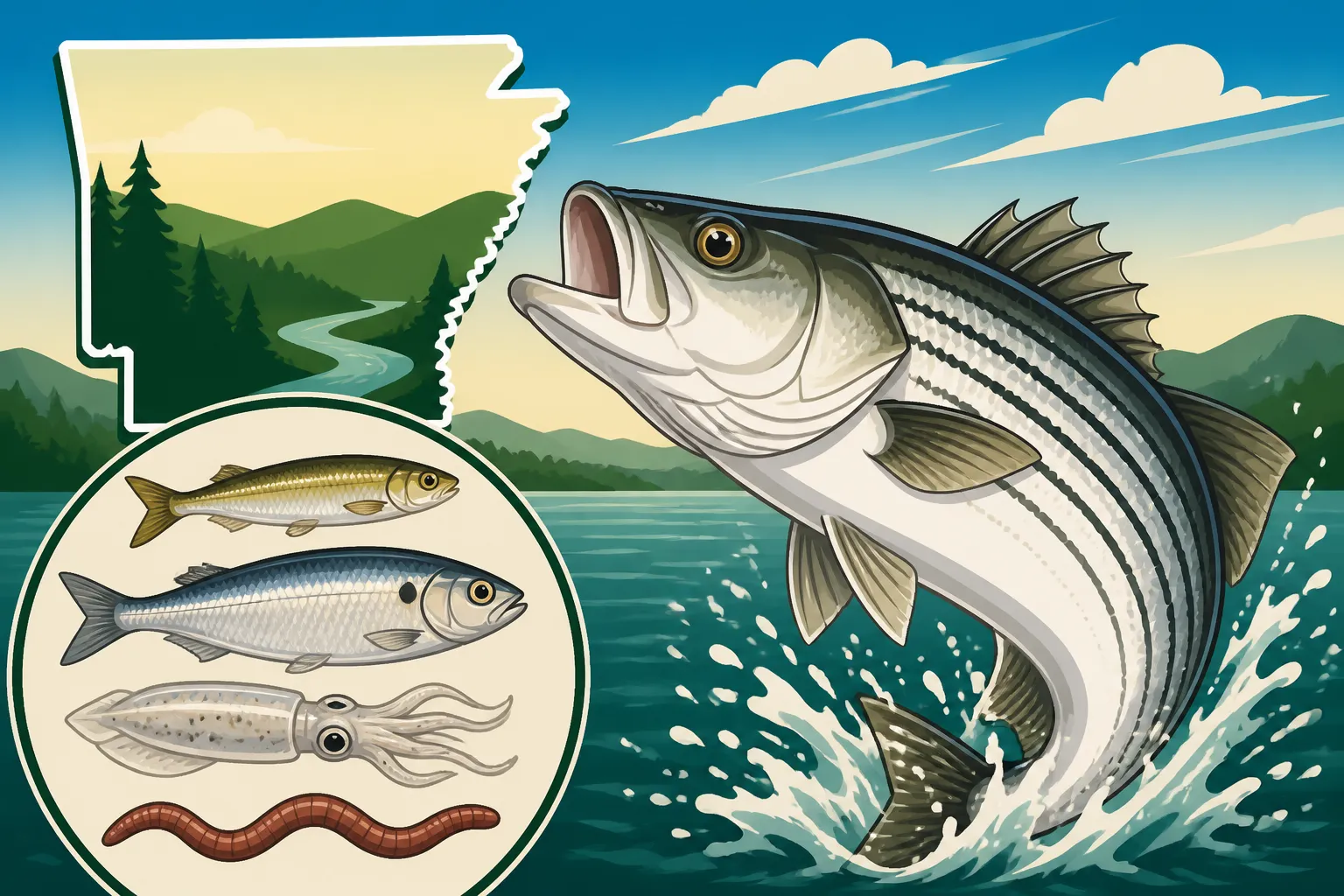
Best Live Bait for Striped Bass
For anglers chasing the thrill of a hard-fighting striped bass in Arkansas, there's often nothing more frustrating than spending hours on the water with artificial lures and coming up empty. Stripers are powerful, often picky predators, and when they're not actively smashing topwater or chasing schooling bait, getting them to bite can feel like a mystery. This comprehensive guide will pull back the curtain on the best live baits for striped bass, detailing not just what to use, but how to source, keep, and present these baits effectively to turn those slow days into memorable catches on our beautiful Arkansas lakes and rivers.
Understanding Striped Bass and Their Forage Preferences
Catching striped bass consistently often boils down to understanding their natural instincts and what they're truly looking for in a meal. These fish aren't just hungry; they're wired to hunt, and when it comes to a guaranteed strike, live bait often holds the trump card.
Why Live Bait Reigns Supreme for Stripers
Striped bass are apex predators in the freshwater systems of Arkansas. They're built for speed and power, designed to chase down and engulf other fish. This inherent nature is precisely why live bait is so incredibly effective. An artificial lure, no matter how realistic, can only imitate life. A live baitfish, however, is life. It swims, it struggles, it flickers its tail, it emits natural vibrations, and it releases scent into the water that no plastic or metal mimic can truly replicate.
Think about it from the striper's perspective. It's patrolling the depths or cruising near a thermocline, and suddenly, a real, vulnerable baitfish appears. That's an irresistible call to action. The erratic movements of a slightly stressed baitfish, the flash of its scales, and the actual biological scent it gives off create a perfect storm of stimuli that triggers a striper's predatory response. This isn't just about food; it's about an instinctual drive to hunt and consume what is clearly an easy target. When you're trying to entice a larger, more wary striped bass, especially in deep, clear waters, nothing beats the authenticity of live bait.
Common Forage Fish in Arkansas Striped Bass Waters
To truly excel at live bait fishing for stripers, you need to "match the hatch," so to speak. Understanding what stripers are naturally eating in a particular lake or river is your biggest advantage. In Arkansas, our major striper fisheries, like Norfork Lake and Lake Hamilton, are teeming with specific forage species that form the backbone of the striped bass diet.
The undisputed kings of striper forage in these waters are shad – both gizzard shad and threadfin shad. These silvery, schooling fish are abundant and make up a significant portion of what a striper eats day-to-day. Gizzard shad tend to be larger and hardier, while threadfin shad are smaller and more delicate. Stripers are constantly on the hunt for these baitfish, often herding them into tight balls before striking.
Beyond shad, other local baitfish can also be highly effective. In some lakes, alewives might be a prevalent food source. Smaller bream (like bluegill) or even certain minnow species can also be on the menu, especially for larger, more opportunistic stripers looking for a substantial meal. By using bait that closely resembles what the stripers are already accustomed to feeding on, you increase your chances of getting a bite exponentially. This is the foundation of successful live bait fishing for Striped Bass Fishing in Arkansas.
Top Live Baits for Arkansas Striped Bass
When it comes to putting a trophy striped bass in your boat, the choice of live bait is paramount. While many options exist, a few stand head and shoulders above the rest due to their natural appeal and effectiveness in Arkansas waters.
Gizzard Shad and Threadfin Shad: The Kings of Striper Bait
There's a reason why seasoned striper anglers often spend as much time catching bait as they do fishing for stripers themselves – it's because gizzard and threadfin shad are simply the best. These native baitfish are the primary food source for striped bass across many of Arkansas's premier lakes, making them the ultimate natural presentation.
Gizzard shad are generally larger, often ranging from 4 to 8 inches, though they can grow much bigger. Their size makes them ideal for targeting bigger, more aggressive striped bass. However, gizzard shad are notoriously delicate and require careful handling and robust livewell systems to keep them alive. Threadfin shad are smaller, typically 2 to 5 inches, and while still somewhat fragile, they tend to be a bit hardier than gizzard shad in a livewell. Their smaller size makes them perfect for catching stripers of all sizes and can be particularly effective when stripers are focused on smaller bait schools.
To get your hands on shad, a good cast net is indispensable. You'll want one with a mesh size appropriate for the size of shad you're targeting – usually 1/4 to 3/8 inch for threadfin and 3/8 to 1/2 inch for gizzard. Once caught, immediately transfer them to a well-aerated livewell with clean, cool water. Rigging them is key: you can nose-hook them through both nostrils for freelinning or light trolling, or gently hook them through the dorsal fin for downlining or suspension rigs. Both methods allow the shad to swim naturally and attract attention. Understanding Norfork Lake Striped Bass Season can help you determine the best times to target both the stripers and their forage.
Alewives and Other Smaller Baitfish
While shad are king, alewives are another fantastic option for live bait, particularly in certain Arkansas lakes where they are abundant. Alewives are slender, silvery fish, similar in appearance to shad but often a bit hardier, making them easier to keep alive for longer periods. Their energetic swimming action makes them highly attractive to patrolling stripers. Like shad, they can be caught with a cast net or sometimes with small sabiki rigs.
When shad or alewives are scarce, or if you're targeting slightly smaller stripers or even hybrid stripers, other smaller baitfish can prove quite effective. Golden shiners and fathead minnows, often available at local bait shops, are hardy and provide good action. While they may not have the same "trophy potential" as a large gizzard shad, they can certainly trigger bites when stripers are less aggressive or when fishing conditions are challenging. These smaller baits are typically nose-hooked or lip-hooked and can be fished under a bobber, freeline, or lightly weighted. Remember to check local regulations, as some areas may have restrictions on transporting live bait.
Bluegill and Perch: When Big Baits Mean Big Fish
For the dedicated angler dreaming of a true trophy striped bass, sometimes you need to think big with your bait. This is where larger, hardier species like bluegill or small perch come into play. While not always the primary forage, stripers are opportunistic and will absolutely devour a struggling bluegill or perch that presents an easy meal. This tactic is especially effective for targeting giant stripers that have grown accustomed to larger prey items.
Using bigger baits requires a shift in approach. You'll need heavier rods, stronger reels, and larger, sturdier hooks – often 6/0 to 9/0 circle hooks are preferred. Bluegill and perch are much tougher than shad, making them easier to keep alive and less prone to coming off the hook during a powerful cast or a striper's initial strike.
The challenge lies in their presentation. Larger baits are less subtle and are typically used for specific techniques like deep-water trolling or suspending them near known striper haunts. When trolling, a large bluegill can be nose-hooked and pulled behind a planer board or downrigger to get it to the desired depth. For suspended fish, rigging a bluegill under a large float or balloon, letting it swim freely at a set depth, can be deadly. Always ensure the baitfish you're using are within legal size limits if you've caught them yourself, and check that it's permissible to use these species as bait in your chosen body of water. Targeting these larger fish often involves Deep Water Striper Fishing Techniques.
Techniques for Presenting Live Bait to Striped Bass
Once you have your prime live bait, the next crucial step is knowing how to present it effectively. Striped bass can be found at various depths and in different moods, so having a repertoire of presentation techniques is key to consistent success.
Downlining and Freelinning: Classic and Effective Methods
These two techniques are the bread and butter for many successful striper anglers in Arkansas, offering versatility for different fishing scenarios.
Downlining is your go-to method when stripers are holding deep, either near the bottom, suspended over structure, or holding along a thermocline. Imagine a large school of stripers showing up on your fish finder at 30 feet over a 60-foot deep channel. This is the perfect time for downlining. You'll typically use a heavy sinker (often 1-3 ounces, depending on current and depth) to quickly get your live bait down to the desired depth. The bait is usually hooked through the dorsal fin, allowing it to swim naturally in a confined space. This setup usually involves a Carolina rig style, with the sinker above a swivel and a leader (often 3-6 feet of fluorocarbon) extending to a circle hook. The goal is to keep your bait directly in the strike zone, often just above the fish you're marking. Downlining is highly effective in Norfork Lake: One of Arkansas's Best Striped Bass Fisheries during the warmer months when fish seek cooler, deeper water.
Freelinning, on the other hand, is ideal for stripers that are actively feeding closer to the surface, chasing bait balls, or holding in shallower water. With this technique, you simply nose-hook your live bait (often a shad or alewife) and cast it out with little to no weight. The bait is allowed to swim freely, creating natural commotion and attracting stripers. This is particularly exciting when you see stripers busting the surface, as you can cast directly into the action. Freelinning can also be effective when drifting over shallow humps or points, letting the bait explore the area naturally. Both techniques require a sensitive rod (often 7-8 feet in length with a medium-heavy action), a baitcasting or spinning reel spooled with strong monofilament or braid, and a patient hand to let the striper take the bait before setting the hook.
Trolling Live Bait: Covering Water for Active Fish
When stripers are scattered across a large area, or when you're simply trying to locate active schools, trolling live bait can be incredibly efficient. This method allows you to cover vast amounts of water, presenting your bait at various depths until you find where the fish are holding.
Trolling live bait often involves slightly larger baits like gizzard shad or even small bluegill, as they can withstand the movement better. To get your baits to precise depths, you can employ several tools:
- Planer Boards: These boards spread your lines out wide from the boat, preventing tangles and allowing you to present multiple baits at different distances from your path. This is great for covering a wide swath of water near the surface or in shallower areas.
- Downriggers: For targeting deep-holding stripers, downriggers are indispensable. They allow you to precisely lower your bait to specific depths (e.g., 20, 40, or even 60 feet down) and hold it there while you troll. Once a fish strikes, the line releases from the downrigger clip, allowing you to fight the fish directly.
- Lead Core Line: This specialized line changes color every 10 yards, with each color typically equating to about 5 feet of depth at a certain trolling speed. It's a simpler way to get baits down without extra hardware, though less precise than a downrigger.
Trolling speeds are critical. You want to move just fast enough for your bait to swim naturally and erratically, but not so fast that it's simply being dragged. Experiment with speeds from 0.8 to 2.0 mph, paying attention to how your bait is behaving behind the boat. This technique is a cornerstone of Arkansas Striped Bass Fishing Techniques, especially on large reservoirs like Lake Hamilton.
Jug Fishing and Suspension Rigs: Targeting Suspended Stripers
While "jug fishing" is most commonly associated with catfish, the concept of suspending bait at a specific depth is highly applicable and incredibly effective for targeting striped bass that are suspended in the water column. Instead of relying on a buoyant jug, striper anglers use specialized suspension rigs to achieve this.
Stripers often suspend themselves at certain depths – perhaps along a thermocline where cooler, oxygenated water meets warmer water, or over deep structure. They might be waiting to ambush baitfish, or simply conserving energy. Traditional suspension rigs for stripers often involve large slip bobbers or even balloons.
A slip bobber rig is excellent for keeping your live bait at a predetermined depth, allowing the baitfish to swim freely within that range. You set a bobber stop on your main line to the desired depth, then slide a large slip bobber onto the line, followed by a bead, and then tie on your swivel, leader, and hook. The baitfish, typically nose-hooked, can swim naturally below the bobber. This is particularly useful when fishing over brush piles or humps where you want to keep your bait just above the snags.
Balloon rigs are another effective way to suspend bait. You simply tie a balloon to your main line a set distance above your bait, or use a specialized balloon clip. The balloon acts as a giant bobber, keeping your bait at a desired depth and allowing it to drift with the wind or current. This is fantastic for covering open water when stripers are suspended high in the water column and you want your bait to wander a bit. Both methods are great for targeting the elusive suspended striper, especially during periods when they aren't actively chasing surface bait.
Sourcing, Caring for, and Rigging Your Live Bait
Mastering the art of live bait fishing for striped bass isn't just about throwing a minnow on a hook; it's a holistic approach that starts long before your bait ever hits the water. The quality of your bait, its health, and how it's presented are all interconnected for success.
Catching Your Own Bait vs. Buying from a Shop
The decision to catch your own bait or buy it depends on a few factors: time, resources, and local availability.
Catching your own bait, particularly shad, offers several undeniable advantages. First, it's cost-effective. While there's an initial investment in a quality cast net, aerated livewell, and possibly a bait tank, these tools will pay for themselves quickly compared to continually buying dozens of baitfish. Second, and perhaps most importantly, your bait will be incredibly fresh. Shad caught just hours before fishing are generally healthier, more energetic, and more appealing to stripers than bait that has been transported multiple times. The process of catching bait with a cast net can also be a fun and educational part of your fishing trip, often providing insights into where the local forage fish are holding. For those just starting out, finding reliable cast nets and livewell accessories can be done conveniently online. Many anglers find durable, effective cast nets and aerators on platforms like Amazon, making the initial setup much easier to acquire.
However, catching bait requires time, effort, and skill with a cast net. It also means having the right equipment to keep them alive. For those with limited time or who are unfamiliar with cast netting, buying bait from a local tackle or bait shop is a convenient and often reliable alternative. Bait shops usually stock common forage like golden shiners, fathead minnows, or sometimes even shad or alewives, depending on the region. The downside is the ongoing cost, and the bait's freshness can sometimes be questionable depending on how long they've been in the shop's tanks. Always inspect the bait carefully before buying – look for lively, uninjured fish with no signs of disease.
Keeping Live Bait Alive and Healthy
A dead baitfish is just dead weight on your hook; a struggling, lively baitfish is a striper magnet. Therefore, the ability to keep your live bait alive and kicking is paramount.
The cornerstone of bait preservation is a well-designed livewell system. This includes a sufficiently sized tank (the more water volume per fish, the better), a powerful aerator or pump that circulates and oxygenates the water, and ideally, a filtration system to remove ammonia and other waste products. Many anglers find high-quality aerators, filters, and even portable bait tanks on Amazon, ensuring their bait stays lively even during long trips.
Water quality and temperature are also critical. Shad, especially, are sensitive to temperature fluctuations. Aim to keep the livewell water at a similar temperature to the lake water you'll be fishing in. This means frequently changing water, or slowly adding ice (made from non-chlorinated water) to cool it down on hot days. Adding non-iodized salt (specific bait shop salt mixes are ideal) can help reduce stress and replenish electrolytes in the baitfish. Commercial bait conditioners are also available and can make a noticeable difference in bait longevity. Overcrowding your livewell is a common mistake; fewer, healthier baitfish are always better than a tank full of stressed, dying ones.
Essential Rigging Techniques for Different Baits
Proper rigging ensures your bait performs naturally and stays securely on the hook, maximizing your chances of a successful hook-up.
- Nose-Hooking: This is a versatile method, especially for freelinning and light trolling. Gently pass the hook through both nostrils of the baitfish. This allows the bait to swim forward naturally and minimizes injury, keeping it lively. It's less prone to spinning when trolled slowly.
- Dorsal Fin Hooking: Ideal for downlining or suspension rigs, this method involves gently inserting the hook just beneath the dorsal fin, being careful not to hit the spine. This allows the bait to swim horizontally and provides an enticing profile. It's great for keeping the bait at a specific depth while it struggles.
- Tail Hooking: For a more erratic, "wounded" bait action, you can lightly hook the baitfish just above the tail. This makes the bait swim in a frantic, circular pattern, which can be irresistible to an aggressive striper. However, it can tire the bait out faster.
For all methods, circle hooks are highly recommended for striped bass. They are designed to hook fish in the corner of the mouth, reducing gut hooking and making catch-and-release much safer for the fish. When a striper bites, simply reel tight – resist the urge to set the hook aggressively, as the circle hook will do its job. Match your hook size to your bait size; too small, and the bait might swallow it, too large, and it will impede the bait's action. Remember to consult the Arkansas Fishing Regulations Guide to ensure you're compliant with all rules for bait usage and tackle.
| Bait Species | Primary Use | Catching Method | Pros | Cons |
|---|---|---|---|---|
| Gizzard Shad | Trophy stripers, deep water | Cast net | Highly natural, strong scent | Fragile, harder to keep alive |
| Threadfin Shad | All sizes, general fishing | Cast net | Excellent action, natural | Smaller than gizzard, still somewhat fragile |
| Alewives | Versatile, open water | Cast net, sabiki rigs | Hardy, good action | Not available in all lakes |
| Bluegill/Perch | Trophy stripers, aggressive | Rod & reel, traps | Very hardy, attracts big fish | Harder to hook, can be too large for smaller |
| Golden Shiners | General fishing, smaller | Cast net, minnow traps | Readily available, hardy | May not attract largest stripers |
Disclaimer
This article is for general informational purposes only and does not constitute professional advice. Laws, prices and regulations vary by location and change over time. Consult a qualified professional for guidance on your specific situation.