Best Lures for Summer Bass Fishing
The scorching heat of an Arkansas summer often brings with it a unique set of challenges for bass anglers. The fish seem to vanish, retreating to deeper, cooler waters, leaving many of us scratching our heads and wondering if it's even worth casting a line. But don't despair! With the right approach and the perfect arsenal of lures, you can absolutely turn those tough summer days into unforgettable fishing adventures. This comprehensive guide will arm you with the knowledge and specific lure recommendations to conquer summer bass fishing in the Natural State.
Understanding Summer Bass Behavior in Arkansas
To truly unlock success in summer bass fishing, you've got to think like a bass. As water temperatures climb, especially in large reservoirs and lakes across Arkansas, bass undergo significant behavioral changes. They're not just lounging around; they're actively seeking comfort and sustenance, just in different places.
Why Summer Fishing is Challenging
The primary culprit behind challenging summer fishing is, of course, the heat. Surface water temperatures on many Arkansas lakes, like Lake Hamilton or Greers Ferry Lake, can soar into the 80s and even 90s Fahrenheit. This isn't just uncomfortable for us; it's physiologically stressful for bass.
Firstly, high water temperatures lead to lower dissolved oxygen levels, particularly in shallow water. Bass, being cold-blooded, need oxygen, and they'll move to areas where it's more abundant. Secondly, the intense sunlight penetrates clear water more deeply, making bass shy away from open, exposed areas. They're not keen on being easy targets for predators or having to work harder in the bright sun. Lastly, their metabolism changes. While they still need to eat, they might become less aggressive or feed more opportunistically, often during cooler parts of the day. Understanding these factors is the first step in adapting your approach.
Key Locations for Summer Bass
Knowing why bass behave the way they do in summer helps us pinpoint where to find them. Generally, summer bass will gravitate towards four main types of areas:
- Deep Water Structures: This is the bread and butter of summer bass fishing. Bass will seek out cooler, oxygen-rich water in deeper sections of lakes. Look for ledges, humps, points, submerged roadbeds, creek channels, and brush piles in 15-30 feet of water, sometimes even deeper. These structural elements act like underwater highways and neighborhoods for bass. For a deeper dive into finding these spots, check out our guide on How to Find Bass in Summer Heat.
- Shade and Overhangs: Even in shallow water, a sliver of shade can be a magnet. Overhanging trees, docks, bridges, or even thick mats of vegetation create crucial shaded areas where bass can ambush prey without being exposed to direct sunlight. This is particularly true in the early morning or late evening.
- Current: Moving water, whether from an inflowing creek, a dam generation schedule (like on the White River below Bull Shoals Dam), or even wind-driven currents, can be a major draw. Current brings in fresh oxygen and often positions baitfish in predictable ways, creating prime ambush points for bass.
- Thermocline: This is a crucial concept. In many deep lakes, a thermocline forms a distinct layer where the water temperature rapidly changes. Above it, the water is warm and often oxygen-depleted. Below it, the water is cool but can also be oxygen-depleted if it's too deep. Bass will typically suspend or hold just above or within this thermocline, finding their ideal comfort zone. Your electronics are your best friend for locating this invisible but vital zone.
Top Lures for Targeting Deep Summer Bass
When the sun is high and the bass are hunkered down, you need lures that can get to them and entice a bite. These aren't necessarily the flashiest baits, but they are consistently effective for putting fish in the boat during the dog days of summer.
Deep Diving Crankbaits
Deep diving crankbaits are absolute workhorses for summer bass. They're designed to plunge to significant depths, mimicking fleeing baitfish or crawfish, and triggering reaction strikes.
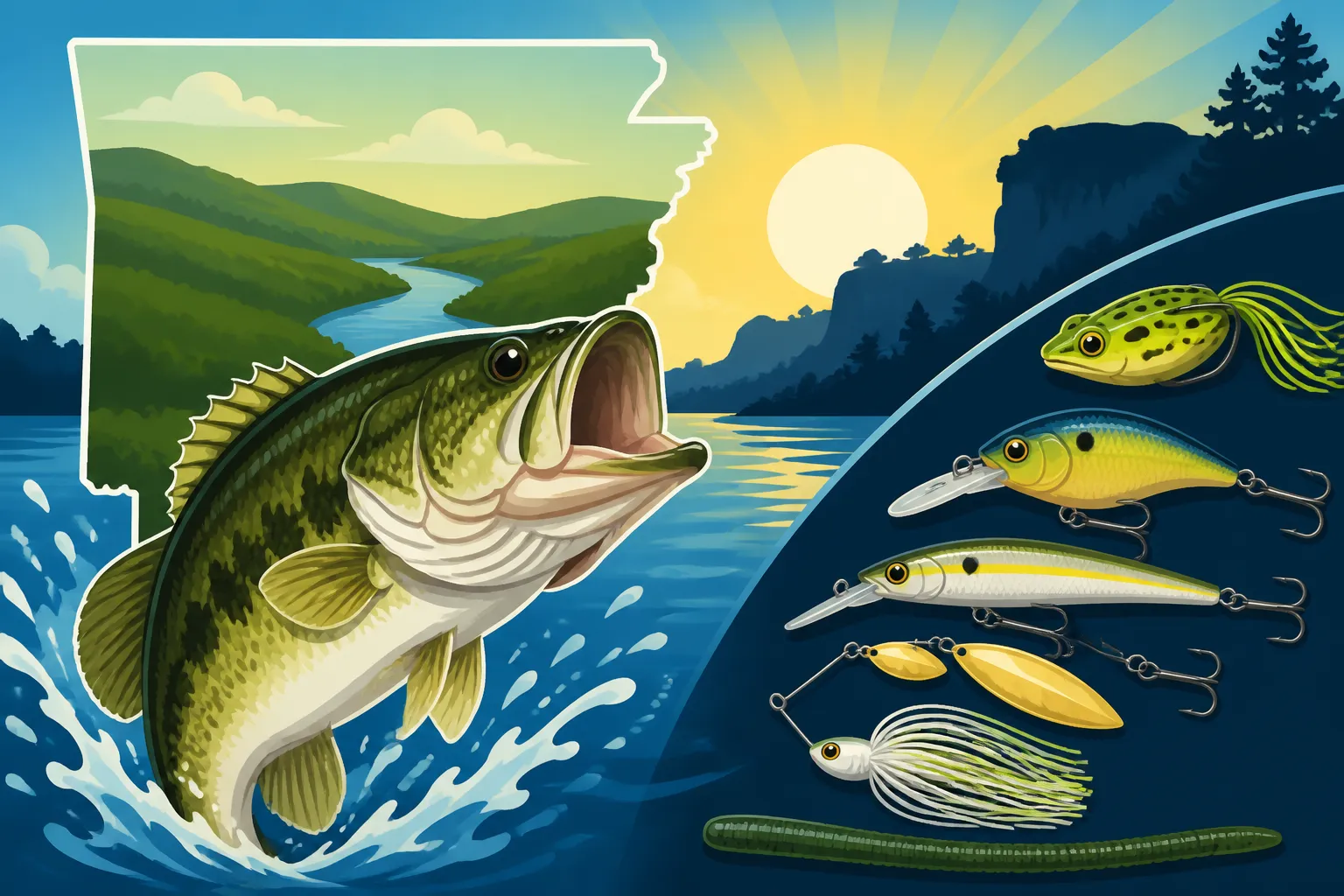
The key to success with these lures is choosing the right dive depth. You want a crankbait that can reach the depth where the bass are holding, or even better, occasionally "bang" off the bottom or structure. For ledges and humps in 15-20 feet, look for crankbaits rated for those depths. Popular brands like Strike King, Rapala, and Berkley offer models that can dive 15, 20, or even 25+ feet.
When fishing deep diving crankbaits, make long casts parallel to ledges or across points. The retrieve is critical: a steady retrieve that allows the bait to dig into the bottom or crash into submerged brush will often draw the most aggressive strikes. Experiment with stop-and-go retrieves, or short pauses, as well. Color choices should generally mimic local forage. Shad patterns (chrome/blue, ghost shad) are great in clear water, while crawfish patterns (reds, browns, oranges) excel when bass are feeding on crustaceans around rocky bottoms. You can often find a wide selection of these versatile lures on Amazon, making it easy to prepare for your next trip. Our guide on How to Fish a Crankbait for Bass offers more in-depth strategies.
Carolina Rigs and Football Jigs
When bass are lethargic or highly pressured, finesse can win the day, but sometimes you need to get down and dirty. This is where Carolina rigs and football jigs shine. These presentations are fantastic for systematically working deep structure.
A Carolina rig is a bottom-bouncing rig that presents a soft plastic bait a foot or two behind a heavy weight (usually 1/2 to 1 ounce) and a swivel. The weight keeps the rig on the bottom while the bait floats or wiggles enticingly behind it. This rig is ideal for covering large areas of deep flats, ledges, and points. The separation of the weight and the bait gives the lure a very natural, subtle action that can be irresistible to finicky bass. Popular baits for a Carolina rig include lizards, French fry worms, and straight-tail worms. Dragging the rig slowly along the bottom, feeling for changes in structure, is the most effective retrieve.
Football jigs, typically ranging from 1/2 to 1 ounce, are designed with a unique head shape that helps them crawl over rocky bottoms and through brush piles without snagging. They're often paired with a bulky soft plastic trailer that mimics a crawfish. The beauty of a football jig is its versatility; you can drag it, hop it, or even swim it along deep structure. The bulk and weight allow for excellent bottom contact and sensitivity, letting you feel every rock and stick. Look for jigs in darker colors like black and blue, green pumpkin, or brown, especially when paired with a matching trailer. You might even find some excellent bundle deals for both jigs and trailers on Amazon. For a deeper dive, check out our article on How to Fish a Carolina Rig for Bass.
Heavy Jigs and Worms
When bass are tucked into dense cover, whether it's submerged timber, brush piles, or thick grass, heavy jigs and worms are your best bet. These presentations are all about getting into the strike zone and extracting those cover-loving bass.
Flipping and Pitching Jigs: These jigs typically range from 3/8 to 1 ounce and have a compact, weedless design that allows them to penetrate heavy cover. Paired with a creature bait or craw trailer, they present a dense, attractive meal. The technique involves "flipping" or "pitching" the jig into small openings in cover, letting it fall vertically to the bottom, and then subtly hopping or shaking it. This vertical presentation is incredibly effective because it gets the bait to where the bass are hiding with minimal disturbance. Black and blue, green pumpkin, and brown are perennial favorites for jig colors.
Texas-Rigged Worms: The Texas rig is a classic for a reason – it's incredibly weedless and versatile. For summer bass in heavy cover, rig a large, straight-tail or ribbon-tail worm (7 to 12 inches) with a heavy bullet weight (3/8 to 1 ounce). This heavy weight helps the worm quickly punch through vegetation or fall rapidly into timber. Once on the bottom, you can drag, hop, or shake the worm to entice a bite. The large profile of these worms often appeals to bigger, more aggressive bass that are looking for a substantial meal. You can find robust hooks and various worm styles suitable for this technique easily on Amazon. For more detailed instructions, consider reading How to Fish a Texas Rig for Bass.
Lures for Active Summer Bass (Early Morning/Late Evening)
While the midday sun drives bass deep, the cooler temperatures and lower light conditions of dawn and dusk often bring bass shallower and make them more aggressive. This is prime time for active presentations.
Topwater Lures
There's nothing quite like the explosive strike of a bass on a topwater lure. These baits are designed to stay on the surface, creating commotion that draws bass up from below.
Frogs: Soft plastic frogs are fantastic for fishing over heavy vegetation mats or lily pads, especially in lakes like Lake Conway. Their weedless design allows them to glide effortlessly over cover where other lures would snag. Work them with short twitches and pauses, mimicking a frog swimming or resting on the surface. The key is patience; often, bass will "boil" on the lure before committing to a full strike. Our guide on Best Lures for Topwater Bass Fishing provides more tips.
Poppers and Chuggers: These lures have a cupped face that "pops" or "chugs" water when retrieved, creating a distinct sound and splash. They're excellent for targeting bass around docks, shoreline cover, or open water during low light. Vary your retrieve from short, aggressive pops to long, slow chugs with extended pauses.
Walking Baits (Zaraspooks, Whopper Ploppers): These stickbaits are designed to "walk the dog" – a side-to-side gliding action that is incredibly enticing. They are great for covering open water, points, or working parallel to boat docks. Whopper Ploppers, with their rotating tail, create a unique gurgling sound that can draw strikes from a distance. The commotion these baits create makes them ideal for stimulating strikes from active bass during dawn and dusk. For more insights on when to pursue these times, check out Best Time of Day to Catch Bass.
Spinnerbaits and Chatterbaits
These moving baits are fantastic search lures and can be incredibly effective when bass are slightly more active, even if they're still relating to cover.
Spinnerbaits: With their flashing blades and pulsating skirt, spinnerbaits create a lot of vibration and visual appeal. While often associated with spring, smaller, lighter spinnerbaits (3/8 to 1/2 ounce) can still be deadly in summer, especially in low light conditions or around submerged vegetation and timber edges. They excel at "blitzing" the edges of weed lines or fallen trees. Try tandem Colorado or willow leaf blades for different flash and vibration profiles. White, chartreuse, and baitfish patterns are go-to colors.
Chatterbaits (Bladed Jigs): These hybrids combine the flash and vibration of a spinnerbait with the jig's compact profile. The oscillating blade creates an intense shimmy and vibration that bass can't resist. Chatterbaits are excellent for fishing around grass lines, sparse cover, and even open water. They excel when retrieved with a steady retrieve, perhaps with occasional short twitches or pauses. Like spinnerbaits, they are great for covering water quickly and locating active fish. Green pumpkin, black and blue, and shad patterns are popular. You'll find many reputable brands like Z-Man on Amazon offering a variety of blade jigs to add to your tackle box.
Specialized Lures for Tough Summer Conditions
Sometimes, even the best deep-diving lures or early morning topwaters don't cut it. When bass are highly pressured, extremely lethargic, or suspending in open water, you need to turn to specialized techniques that offer a more subtle presentation.
Drop Shots and Ned Rigs
These finesse techniques are game-changers when bass are finicky, especially in clear water or under intense fishing pressure.
Drop Shot Rig: This rig features a weight tied to the end of your line, with a hook tied a foot or two above the weight. This allows your soft plastic bait to suspend horizontally in the water column, directly at the fish's eye level, even when the weight is resting on the bottom. It's incredibly effective for targeting suspended bass over deep structure, vertical bluff walls, or even open water schools. Small, straight-tail worms, fluke-style baits, or creature baits are excellent choices for a drop shot. The beauty of the drop shot is that you can impart subtle action to the bait with minimal rod movement, making it appear very natural. This is a must-have technique for pressured fish.
Ned Rig: Hailing from the Midwest, the Ned rig has taken the bass world by storm due to its simplicity and effectiveness. It consists of a small mushroom-head jig (1/16 to 1/8 ounce) paired with a small, buoyant soft plastic stick bait (typically 2.5-3 inches). The buoyancy of the plastic, combined with the light jig head, causes the bait to stand straight up on the bottom, mimicking a foraging minnow or crawfish. It's fantastic for highly pressured fish, smallmouth bass on Arkansas's moving waters like the Little Missouri River, or when bass are just not biting anything else. Cast it out, let it sink, and slowly drag or hop it along the bottom. The subtle action is often all it takes.
Swimbaits and Umbrella Rigs
When bass are actively feeding on large schools of baitfish, or when you're targeting true trophy-sized fish, larger profile baits that mimic substantial prey can be incredibly effective.
Swimbaits: Soft plastic swimbaits, particularly those with a paddle tail, are designed to imitate natural baitfish like shad or sunfish. They can be rigged on a weighted swimbait hook, an open jig head, or as a trailer on an A-rig. In summer, larger swimbaits (4-8 inches) can be deadly when bass are chasing schools of baitfish in open water or along deep ledges. A steady retrieve often works best, but experimenting with short pauses can also trigger strikes. Look for natural shad or sunfish colors. For specific information about the forage available, our guide on Arkansas Fish Species: A Complete Guide to What's Swimming in Your Waters can be very helpful.
Umbrella Rigs (A-Rigs): Also known as Alabama rigs, these rigs allow you to present multiple swimbaits simultaneously, creating the illusion of a small school of baitfish. While often associated with colder water, they can be highly effective in summer when bass are schooling on deep humps or points, or when chasing open-water schools. Rig them with small (3-4 inch) paddle tail swimbaits on jig heads, making sure to comply with local regulations on the number of hooks allowed. The umbrella rig is a fantastic way to cover water and present a large profile that can entice aggressive strikes from larger bass. However, be mindful of the weight, as continuously casting a fully loaded A-rig can be quite a workout!
Here's a quick overview of some of the best lures for summer bass fishing in Arkansas:
| Lure Type | Ideal Conditions | Best Presentation | Target Depth | Key Advantages |
|---|---|---|---|---|
| Deep Diving Crankbait | High sun, deep structure (ledges, humps) | Steady retrieve, "banging" bottom/structure | 15-25+ feet | Covers water quickly, triggers reaction strikes |
| Carolina Rig | Deep flats, points, when bass are sluggish | Slow drag along bottom, occasional pauses | 15-30 feet | Natural presentation, covers large areas |
| Football Jig | Rocky bottoms, deep brush piles | Drag, hop, or slow swim along structure | 15-30 feet | Excellent bottom contact, weedless in rocky cover |
| Flipping/Pitching Jig | Dense cover (timber, brush, grass mats) | Vertical fall, subtle hops/shakes within cover | Shallow to Mid-depth | Penetrates heavy cover, compact profile |
| Texas-Rigged Worm | Heavy vegetation, timber, sparse cover | Drag, hop, shake on bottom, through cover | Shallow to Deep | Highly weedless, versatile, appealing profile |
| Topwater Frog | Over heavy vegetation (pads, mats) | Walk-the-dog, twitch-and-pause | Surface | Exciting strikes, weedless over thick cover |
| Popper/Chugger | Docks, open water, low light | Pop/chug with pauses, varied retrieve | Surface | Creates surface commotion, draws attention |
| Walking Bait | Open water, points, dock lines, low light | Consistent walk-the-dog, varied speed | Surface | Covers water, enticing gliding action |
| Spinnerbait | Low light, sparse cover, grass edges | Steady retrieve, slow roll, burning | Shallow to Mid-depth | Flash and vibration, good search bait |
| Chatterbait (Bladed Jig) | Grass lines, sparse cover, open water | Steady retrieve, occasional twitches/pauses | Shallow to Mid-depth | Intense vibration, unique shimmy |
| Drop Shot Rig | Suspended fish, clear water, pressured bass | Subtle shakes, dead sticking, very slow retrieve | Mid-depth to Deep | Finesse presentation, keeps bait at eye level |
| Ned Rig | Finesse conditions, pressured fish, rocky areas | Slow drag, subtle hops, dead sticking | Shallow to Mid-depth | Extremely natural, stands up on bottom |
| Swimbait | Schooling baitfish, open water, deep ledges | Steady retrieve, occasional pauses, jigging | Mid-depth to Deep | Mimics natural baitfish, targets larger fish |
| Umbrella Rig (A-Rig) | Schooling fish, open water, deep humps/points | Steady retrieve, jigging, varied depths | Mid-depth to Deep | Mimics a school of bait, covers large area |
No matter which of Arkansas's fantastic fishing spots you choose – be it the sprawling Lake Ouachita: Arkansas's Largest Lake for Bass and Crappie Fishing, the renowned Bull Shoals Lake Fishing Guide for Bass and Crappie, or any other prime location – understanding these lure categories and techniques will significantly boost your summer bass fishing success. Remember to also consider seasonal changes, as outlined in our Arkansas Fishing Seasons Guide, to maximize your chances year-round.
Disclaimer
Fishing conditions and regulations in Arkansas can change. Always consult the latest Arkansas Game and Fish Commission (AGFC) regulations before heading out. This guide is for informational purposes only and should not replace official guidelines.