How to Fish a Carolina Rig for Bass
There’s nothing quite like the frustration of knowing bass are in an area, but they’re just not hitting your usual baits. Maybe they’re hunkered down in deeper water, shy after a cold front, or just ignoring topwater and shallow cranks. That’s precisely when the Carolina rig steps in as your secret weapon, allowing you to effectively present a bait at a distance from your weight, covering structure and enticing those finicky fish. This guide is all about helping you understand, set up, and master the Carolina rig for incredible bass fishing success here in Arkansas.
Understanding the Carolina Rig: Why It's a Bass Angler's Secret Weapon
The Carolina rig might look a little complicated at first glance, but it's actually one of the most versatile and effective presentations you can use for bass, especially when they’re not actively chasing. What makes it so special is how it separates the weight from the bait, giving your lure a natural, unencumbered presentation that's hard for a bass to resist. Instead of the weight dragging your bait down directly, the Carolina rig allows your soft plastic to float or glide tantalizingly behind the weight, mimicking a fleeing or foraging creature.
Think about those times you’re fishing a lake like Beaver Lake or Lake Ouachita, and you’re marking fish on your sonar in deeper water, perhaps near submerged timber or a rocky point. Trying to get a Texas-rigged worm down there can be slow, and it might not have the natural action you want. A Carolina rig, however, lets you quickly get your bait to the bottom, and then that free-moving soft plastic has an incredibly enticing "swimming" action as you retrieve it, triggering bites from bass that might otherwise ignore your offerings. It’s a fantastic option for searching large areas quickly and effectively.
The Anatomy of a Carolina Rig
Before we dive into rigging, let's break down the individual components that make a Carolina rig tick. Understanding each part is key to appreciating how they work together to create such an effective presentation.
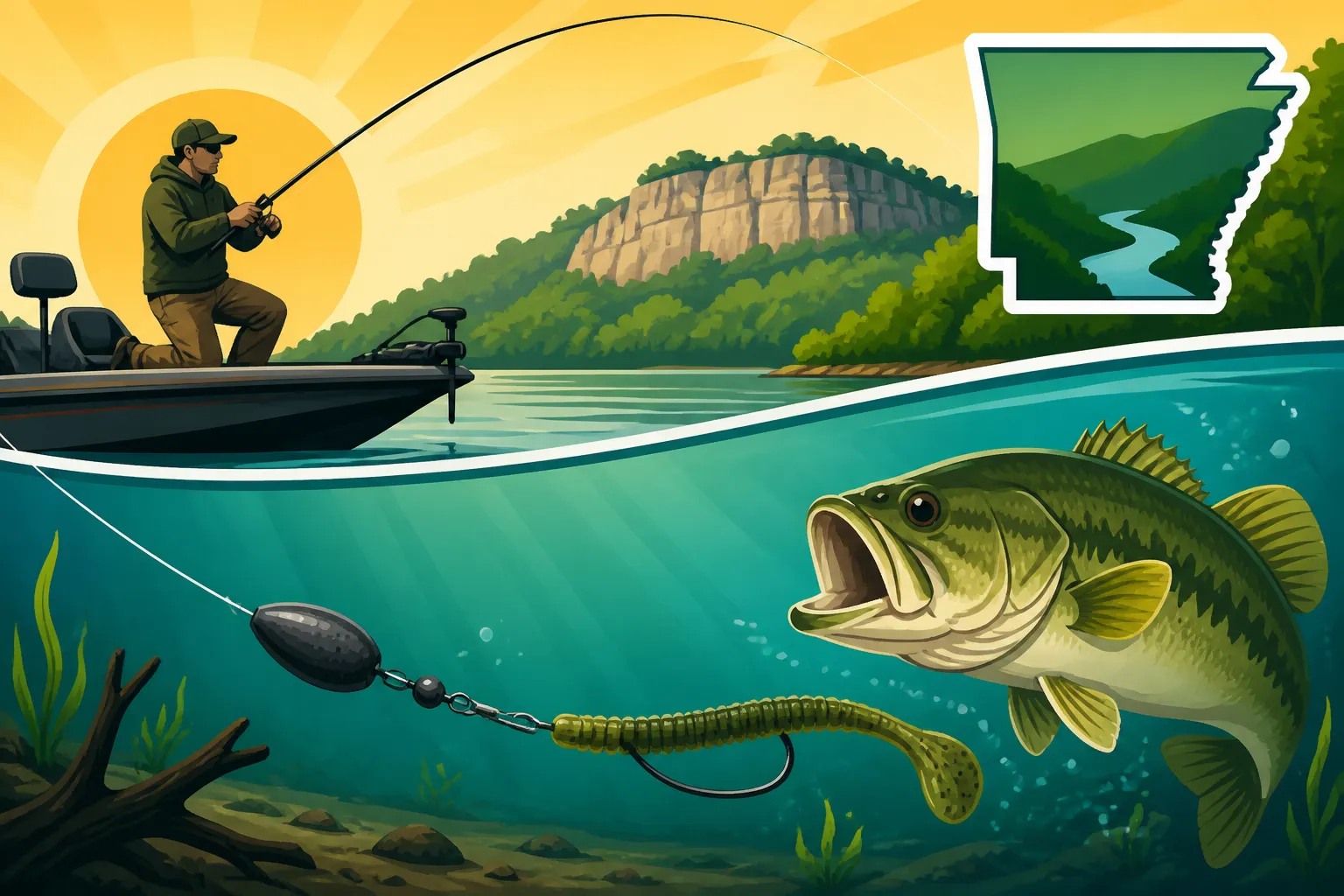
First, you have your main line, which runs from your reel down to your weight. Next comes the weight itself, usually a bullet weight or an egg sinker, which is threaded directly onto your main line. Immediately following the weight, you’ll add a bead. This isn't just for decoration; it protects your knot from the weight constantly banging against it. After the bead, you tie on a swivel. The swivel is absolutely crucial because it prevents line twist, which can be a real headache, especially when dragging the rig across the bottom. Finally, from the other end of the swivel, you tie on a leader line, typically monofilament or fluorocarbon, and at the very end of that leader is your hook and soft plastic bait. This setup creates that critical separation, allowing your bait to dance independently of the weight.
Advantages Over Other Bass Rigs
So, why choose a Carolina rig over a Texas rig, a jig, or a crankbait? The primary advantage lies in its ability to cover water effectively while presenting a bait in a truly unique way. When you're trying to locate fish over vast, featureless flats or along long channel swings, a Carolina rig excels. The heavy weight allows for long casts, and you can drag it across the bottom, feeling every little change in contour, every rock, and every piece of cover.
Compared to a Texas rig, the Carolina rig offers a much more natural, floating presentation because the bait isn't weighed down directly. This is especially good for suspended or neutral fish. For bass holding tight to deep cover, it allows the bait to slowly fall into their strike zone after the weight has bumped into the obstruction. It's less prone to snagging in certain types of cover than a crankbait, and it presents a softer, more subtle target than many jigs. This blend of castability, weedlessness, and natural presentation makes it an indispensable tool, particularly when you're exploring for How to Find Bass in Summer Heat or trying to tempt them during tough conditions.
Assembling Your Carolina Rig: Gear, Knots, and Essential Components
Getting your Carolina rig assembled correctly is paramount for its effectiveness. It’s not just about tying a few knots; it’s about choosing the right components and understanding how they interact under the water. The good news is, once you’ve done it a few times, it becomes second nature, and you’ll be rigging up in minutes, ready to tackle any Arkansas bass.
Choosing the Right Rod, Reel, and Line
For Carolina rigging, you really want a setup that offers sensitivity and backbone. A medium-heavy to heavy action rod, typically 7 to 7.5 feet long, is ideal. This length helps with those long casts and provides leverage to move fish hooked at a distance. The fast tip on such a rod helps you detect those subtle bites, while the powerful butt section ensures you can set the hook cleanly and pull big bass out of cover. When browsing rods, look for ones specifically marketed for "heavy-duty bottom contact" or "Carolina rig" techniques.
For reels, a baitcasting reel with a high retrieve ratio (like 7.1:1 or higher) is excellent. This helps you quickly take up slack line, which is crucial for staying in contact with your bait and setting the hook, especially after a long drag. As for line, many anglers prefer fluorocarbon for their main line due to its low stretch and excellent sensitivity, allowing you to feel every bump and tick. A 15-20 pound test fluorocarbon main line is a great starting point, though some prefer a heavier braid for the main line (like 30-50 pound test) with a fluorocarbon leader for maximum sensitivity and strength. You can find quality options for all these components readily available on platforms like Amazon.
Essential Components and How to Rig Them
Now for the hands-on part! Here’s a step-by-step breakdown of how to put your Carolina rig together:
- Thread Your Weight: Start by threading your weight onto your main line. Tungsten weights are generally preferred over lead because they are denser, smaller, and transmit vibrations much better, helping you feel the bottom more acutely. They do cost a bit more, but the enhanced feel is often worth it.
- Add Your Bead: Immediately after the weight, slide on a glass or ceramic bead. This bead acts as a buffer between the weight and your knot, protecting it from repeated impacts. It also creates a distinctive "clacking" sound against the weight, which some anglers believe attracts curious bass.
- Tie Your Swivel: Now, tie your swivel to your main line. A good, strong barrel swivel or ball bearing swivel is important here to prevent line twist. A Palomar knot is a fantastic choice for its strength and reliability when tying to a swivel.
- Attach Your Leader: From the other side of the swivel, tie on your fluorocarbon leader. The leader length can vary greatly, from 18 inches to as long as 6 feet. A good starting point is a 3-foot leader of 10-17 pound test fluorocarbon. A shorter leader offers more control and sensitivity, while a longer leader gives your bait a more natural, subtle presentation. Experimentation is key here to find what works best for the specific conditions you're facing.
- Tie Your Hook: Finally, tie your hook to the end of your leader. A 3/0 to 5/0 Extra Wide Gap (EWG) hook is commonly used, allowing you to Texas-rig your soft plastic bait weedless.
Here's a quick reference table for common Carolina rig setups:
| Depth/Cover Type | Weight Size (oz) | Leader Length (ft) | Line Test (lbs) |
|---|---|---|---|
| Shallow (<10 ft), Light Cover | 1/2 | 1.5 – 2 | 10-12 |
| Mid-Depth (10-25 ft), Moderate Cover | 3/4 | 2 – 4 | 12-15 |
| Deep (>25 ft), Heavy Cover | 1 | 3 – 5 | 15-20 |
| Very Deep, Searching | 1.5 – 2 | 4 – 6 | 20 |
Remember, these are starting points. Conditions like current, wind, and the type of bottom you're fishing will influence your optimal setup.
Knots for Strength and Reliability
For your Carolina rig to perform reliably, you need to use strong, dependable knots. For tying your main line to the swivel, a Palomar knot is an excellent choice. It's incredibly strong and relatively easy to tie, even with fluorocarbon. When attaching your leader to the other end of the swivel, you'll use the same knot. For tying your hook to the leader, another Palomar knot is perfectly fine, or a snell knot if you prefer, especially with heavier fluorocarbon lines.
Practice these knots at home until you can tie them quickly and correctly, even in low light or with cold hands. A poorly tied knot is the weakest link in your entire setup, and nothing is more frustrating than losing a trophy bass because of a preventable knot failure. You can find instructional videos for these knots online or in fishing guides, and practicing with spare line will build your confidence out on the water.
Mastering the Presentation: Casting, Retrieving, and Detecting Bites with a Carolina Rig
Once your Carolina rig is perfectly tied, the real fun begins: learning how to fish it effectively. It's a technique that rewards patience and feel, but with a bit of practice, you'll be able to discern subtle bites and bring more bass to the boat.
The Art of the Cast and Drag
Carolina rigs are designed for long casts, which is essential for covering expansive areas like those found in the vast open waters of Bull Shoals Lake or Greers Ferry Lake. Use a smooth, sweeping motion to cast, letting the weight carry your bait a good distance. Once your rig hits the water, let it sink on a semi-slack line. It’s important to let both the weight and the bait settle to the bottom.
Now comes the "drag." Instead of reeling, you'll use your rod to slowly sweep the rig across the bottom. Point your rod tip towards the water, and then make a long, slow sweep to the side (like from 9 o'clock to 11 o'clock). This pulls the weight and then allows the leader and bait to follow, fluttering naturally. As you sweep, you’re not just moving the bait; you’re feeling the bottom. You’ll feel rocks, gravel, mud, and even the subtle resistance of submerged grass or timber. Once you complete your sweep, reel down the slack line created by the sweep, bringing your rod tip back to the starting position, and repeat. This slow, deliberate dragging motion is what makes the Carolina rig so effective. It keeps your bait in the strike zone for an extended period and allows it to "swim" enticingly behind the weight.
Reading the Bites and Setting the Hook
Detecting bites on a Carolina rig can be a bit different from other techniques. Sometimes, a bass will absolutely hammer it, and there’s no mistaking the strike. But often, especially when fish are lethargic, the bite can be incredibly subtle. You might feel a slight "tick," a sudden heaviness, or simply a feeling of slack line when there shouldn't be any. It could even just feel like your bait has gotten "mushy" or bogged down in the grass. This is where your sensitive rod and fluorocarbon line really earn their keep.
When you feel anything out of the ordinary, even a tiny change in pressure or vibration, don't hesitate. Drop your rod tip slightly towards the fish, reel in any slack quickly, and then execute a strong, sweeping hookset. Don't yank straight up; a powerful side sweep often gets better penetration, especially with a long cast and heavier line. The key is to be attentive and react quickly. Many anglers miss subtle bites because they assume it's just bottom contact. When in doubt, set the hook!
Common Mistakes to Avoid
Even seasoned anglers can make mistakes with a Carolina rig. One of the most common is using too light of a weight for the conditions. If you can't feel the bottom, you can't feel the bites, and your bait isn't staying where it needs to be. Don't be afraid to go up in weight if the wind, current, or depth demands it.
Another frequent error is using too short of a leader. A very short leader (under 18 inches) defeats the purpose of the Carolina rig's separated presentation. The beauty of this rig is that the bait follows the weight, giving it an unweighted, natural look. If your leader is too short, your bait acts almost like a Texas rig directly on the bottom. Conversely, a leader that is too long can make it difficult to cast accurately and feel bites. Stick to the 2-5 foot range for most situations, adjusting as needed. Finally, neglecting line maintenance is a mistake; continually check your knots and leader for abrasions, especially after fishing around sharp cover. You want every part of your setup to be as robust as possible.
When and Where to Deploy Your Carolina Rig for Bass in Arkansas
The beauty of the Carolina rig is its adaptability. It's not just a deep-water technique; it can be incredibly effective in a variety of situations and across different seasons, making it a staple for anyone fishing for Arkansas Fish Species: A Complete Guide to What's Swimming in Your Waters. Knowing when and where to tie one on will significantly increase your chances of success.
Seasonal Considerations for Arkansas Bass
The Carolina rig really shines through much of the year in Arkansas.
- Pre-Spawn: During the pre-spawn, as bass begin to move from their deep wintering holes towards shallower spawning areas, they often stage on points, humps, and channel swings. The Carolina rig is exceptional for locating these staging fish, allowing you to cover these transition zones thoroughly. This is a prime time to be dragging a big lizard or a creature bait. You can read more about these patterns in our guide on Pre-Spawn Bass Fishing Patterns.
- Summer: Summer is arguably the Carolina rig's peak season. As water temperatures rise, bass often retreat to deeper, cooler water. They'll hold on offshore structure like ledges, humps, deep points, and submerged timber. A Carolina rig is perfect for presenting a bait effectively in these deep-water haunts. You can use it to pinpoint schools of bass or individual fish relating to specific pieces of cover. Our article on Summer Bass Fishing Patterns offers more insights into this productive period.
- Fall: In the fall, as baitfish move into creeks and coves, bass follow. While other techniques might dominate, a Carolina rig can still be fantastic for targeting fish on deep channel swings or around isolated cover along their migration routes. It's also great for those cooler, post-front days when bass can be a bit finicky.
- Winter: Even in winter, a Carolina rig has its place. When bass are lethargic and tightly schooled in deep pockets or main lake points, a slowly dragged Carolina rig with a small, subtle bait can entice strikes from otherwise dormant fish.
Ideal Structures and Depths in Arkansas Waters
The Carolina rig is designed for contact, so it thrives when dragged across defined structures.
- Ledges and Drop-offs: These are classic Carolina rig spots. Bass will position themselves along the edges of ledges, waiting to ambush baitfish. Dragging your rig parallel to these ledges or slowly working it down the face of a drop-off can be incredibly productive.
- Humps and Points: Submerged humps and points that extend into deeper water are often magnets for bass. The change in depth and contour provides ambush points. Work your rig over the tops of these humps and down their slopes.
- Shell Beds and Rock Piles: Hard bottom areas like shell beds and rock piles are prime feeding grounds. The tungsten weight will transmit every change in bottom composition, allowing you to pinpoint these productive areas. The "clacking" of the weight and bead against the hard bottom can also draw attention.
- Submerged Timber and Brush Piles: While you might think a Carolina rig would snag, its Texas-rigged soft plastic makes it surprisingly weedless. You can often drag it through the branches of submerged timber or over brush piles, allowing the bait to flutter down into the cover where bass are hiding. Just be prepared for potential snags and have a line-thrasher tool handy.
- Flats and Grass Beds: On expansive deep flats, particularly those with scattered grass or subtle depth changes, the Carolina rig is excellent for searching for roaming bass. The long casts cover a lot of water, and the rig’s action helps detect the presence of fish. This is especially true on large reservoirs like Lake Ouachita: Arkansas's Largest Lake for Bass and Crappie Fishing or Bull Shoals Lake Fishing Guide for Bass and Crappie.
Pairing Baits with Your Carolina Rig
The versatility of the Carolina rig extends to the types of baits you can use. While soft plastics are the most common, different styles offer unique advantages.
- Lizards and Creature Baits: These are arguably the most classic Carolina rig baits. Their appendages provide plenty of action as the rig is dragged, mimicking crawfish or other aquatic creatures. Zoom Lizards or a variety of creature baits found on Amazon are popular choices.
- Soft Plastic Worms: Long, straight-tail worms (like trick worms or ribbon tail worms) are also excellent. A 6-inch to 10-inch worm can provide a subtle, snaking action that entices bass. The length allows for a natural glide behind the weight.
- Flukes and Swimbaits: For a more erratic or dying baitfish presentation, a fluke or a small swimbait can be incredibly effective on a Carolina rig. The weight drags it down, and the bait darts and glides on the pause, especially good for suspending fish.
- Soft Plastic Jerkbaits: Rigging a soft plastic jerkbait, such as a Zoom Super Fluke, on a Carolina rig can provide an incredible lifelike swimming action, particularly with a longer leader. It's a great option for targeting aggressive bass or those reacting to a quicker presentation.
- Choosing Colors: As with any bass fishing, bait color depends on water clarity and forage. Green pumpkin, watermelon red, and junebug are perennial favorites in Arkansas. In clearer waters, natural tones often excel, while darker or brighter colors can be better in stained or muddy water. Always consider the local forage. For more details on what works, check out our guide on Best Bait and Lures for Arkansas Bass.
The Carolina rig might seem like a niche technique, but for Arkansas anglers, it’s a powerhouse for targeting bass when other methods fall short. By understanding its components, mastering the presentation, and knowing when and where to deploy it, you’ll unlock a whole new level of success on our beautiful lakes and rivers. So next time the bite gets tough, don’t hesitate to tie on a Carolina rig and experience its effectiveness firsthand!
Disclaimer
This article is for general informational purposes only and does not constitute professional advice. Laws, prices and regulations vary by location and change over time. Consult a qualified professional for guidance on your specific situation.