Which Catfish Species Is Most Common in Arkansas Rivers?
If you've ever cast a line into one of Arkansas's many beautiful rivers, you've probably wondered which whisker-faced fish is most likely to end up on your hook. With several species of catfish calling our waters home, it can sometimes feel a bit like a guessing game, especially when you're just looking for a good time and perhaps some fresh fillets for dinner. This guide will help clear up the mystery, revealing which catfish species is overwhelmingly common in Arkansas rivers and how to confidently identify it, along with its equally impressive cousins.
The Ubiquitous Channel Catfish: Arkansas's River Staple
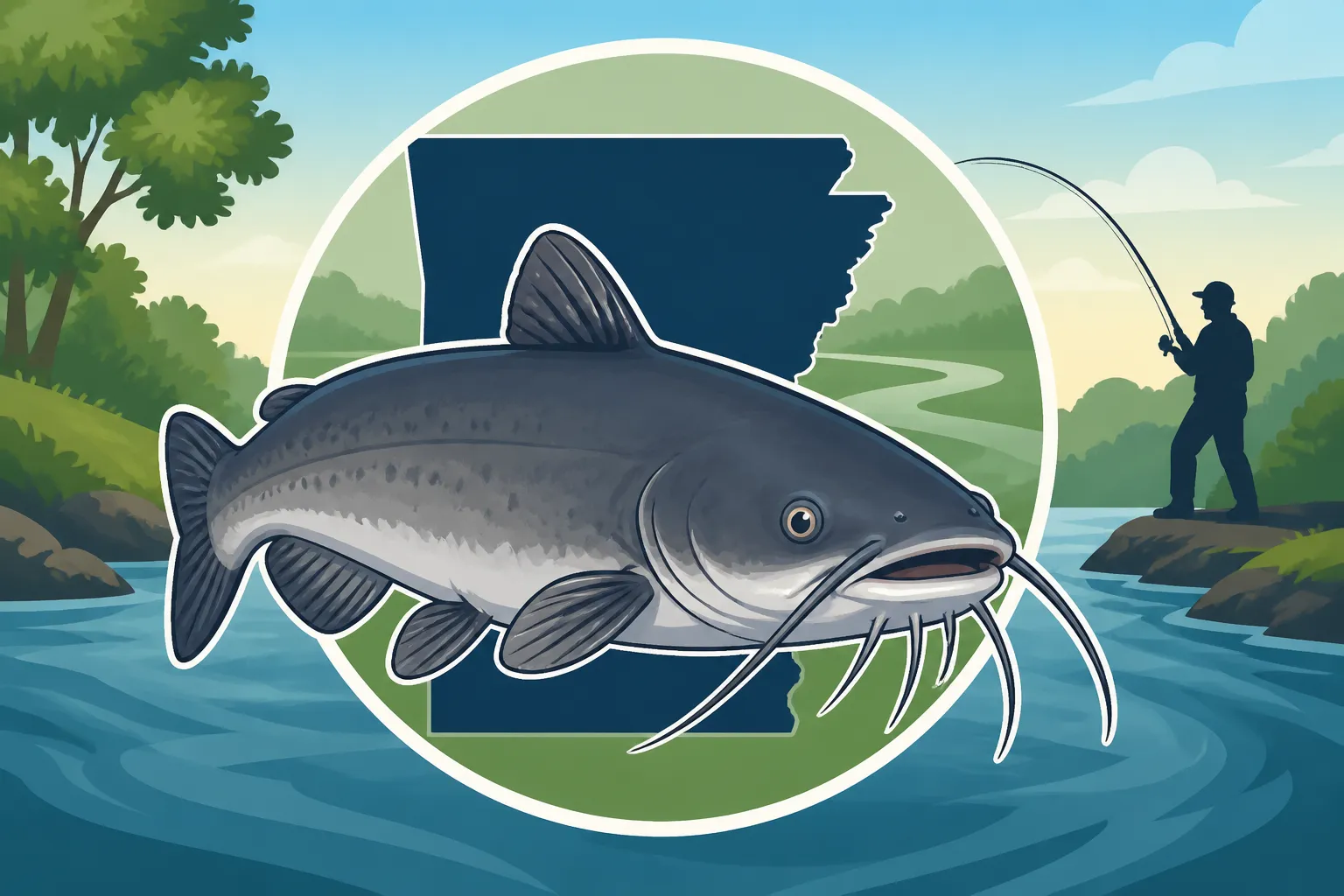
When it comes to the most common catfish species found in Arkansas's rivers, the undisputed champion is the Channel Catfish. These adaptable, prolific, and surprisingly feisty fish thrive in nearly every type of freshwater habitat across the state, from slow-moving muddy bayous to faster-flowing river sections. They are the bread and butter of many anglers, providing consistent action and excellent table fare. Whether you're fishing the mighty Arkansas River or a smaller tributary, you're almost certainly in Channel Catfish territory.
Their widespread presence isn't just a fluke; it's a testament to their incredible resilience and adaptability. Channel catfish are highly tolerant of varying water conditions, from clear to turbid, and can withstand a broader range of temperatures than some of their more particular relatives. This flexibility allows them to populate virtually every river system in Arkansas, making them the most frequently encountered catfish for both casual bank anglers and serious boat fishermen alike.
Where Channel Cats Love to Live and How They Look
Channel Catfish are truly at home in a diverse range of river environments. You'll find them congregating in deeper holes, around submerged logs and brush piles, under rocky outcroppings, and along the edges of current seams. They appreciate structure that offers both cover from predators and ambush points for prey, making undercut banks and fallen trees prime spots. In rivers, they often follow the deeper channels, as their name suggests, but aren't afraid to venture into shallower, food-rich areas, especially during dawn and dusk.
Visually, the Channel Catfish has a distinct look that, once you know what to spot, makes them easy to identify. They typically have a slender, somewhat streamlined body with a deeply forked tail, which is a key differentiator from other catfish species. Their coloration can vary, usually ranging from olive-green to bluish-grey on their backs, fading to silvery-white on their bellies. Younger fish often display small, dark spots along their sides, which tend to fade as they mature. They also possess barbels, or "whiskers," around their mouths, which are crucial sensory organs for locating food in murky waters.
Feeding Habits and Why They're So Abundant
The diet of a Channel Catfish is about as varied as their habitat, contributing greatly to their abundance. These opportunistic omnivores will eat almost anything they can find, which is why so many different baits work for them. Their menu includes insects, crustaceans like crawfish, small fish, aquatic plants, and even fruits or berries that fall into the water. They are particularly keen on anything with a strong scent, relying heavily on their sense of smell and those sensitive barbels to find food.
This non-picky eating habit means they can exploit a wide range of food sources available in different river sections throughout the year. They aren't limited to a specific type of forage, making them less susceptible to population dips due to the scarcity of one particular food item. Furthermore, Channel Catfish have a relatively high reproductive rate, laying thousands of eggs per spawn, which further bolsters their numbers. It's truly a perfect storm of environmental adaptability, broad diet, and robust reproduction that solidifies their status as the most common catfish in Arkansas rivers. If you're looking to consistently catch something, learning about Channel Catfish in Arkansas Lakes and Rivers is a great first step.
Beyond the Channel: Other Major Catfish Contenders in Arkansas Rivers
While the Channel Catfish certainly dominates the population charts in Arkansas rivers, it's far from the only game in town. The state's diverse waterways also support healthy populations of two other impressive catfish species: the Blue Catfish and the Flathead Catfish. These species, though perhaps not as universally distributed or abundant as the Channel Cat, are highly sought after by anglers for their size, fighting prowess, and unique characteristics. Understanding these differences can really enhance your fishing experience and help you target specific species.
Both Blue Catfish and Flathead Catfish offer a different kind of challenge and reward. The Blue Catfish is known for its incredible growth potential and schooling behavior, often found in large, deep river systems. The Flathead, on the other hand, is a solitary, predatory fish that prefers to ambush its prey from heavy cover. Knowing what makes each species tick is key to finding them, and to appreciate the rich diversity of our Arkansas river systems.
The Mighty Blue Catfish: A River Monster
Blue Catfish are the true giants of Arkansas's rivers, particularly in the larger, deeper systems like the Arkansas River itself, or the lower White River. These fish can grow to astounding sizes, with state records often pushing past the 100-pound mark. Unlike the Channel Catfish, which is widespread, Blue Catfish tend to concentrate in major river channels and large reservoirs, where they have ample deep water and a rich forage base of smaller fish. They prefer strong currents and can often be found in deep holes, scour depressions, and along bluff walls where current funnels food to them.
Their appearance is distinct from the Channel Cat. Blue Catfish have a slate blue to silvery-grey body with a white belly, lacking the dark spots often seen on juvenile Channel Cats. Their most prominent feature is a relatively straight-edged or slightly notched tail, not deeply forked like the Channel Cat. They also have a noticeable "hump" on their back just behind the head, especially in larger specimens. Blue Cats are primarily piscivorous, meaning they mostly eat other fish, though they'll also consume crawfish and other invertebrates. Their powerful build and fighting spirit make them a favorite target for trophy hunters. If you're specifically after these giants, exploring Blue Catfish Fishing in Arkansas will give you a significant edge.
The Ambush Predator: Flathead Catfish Characteristics
The Flathead Catfish presents yet another unique profile among Arkansas river cats. While they don't typically grow as large as the biggest Blue Cats, they can still reach very impressive sizes, often exceeding 50 pounds. What truly sets them apart is their predatory nature and their preferred habitat. Flatheads are solitary ambush predators, preferring to hide in heavy cover like log jams, sunken trees, root wads, and deep rocky holes, from which they can dart out and snatch unsuspecting prey. You won't often find them in wide-open current; instead, look for them tucked away in the thickest cover the river has to offer.
Their appearance is also quite distinct. Flatheads have a broad, flattened head (hence the name) and a lower jaw that protrudes beyond the upper jaw. Their coloration is mottled, a patchwork of yellow, brown, and olive, providing excellent camouflage against timber and rocky bottoms. Their tail is square or only very slightly notched, another clear departure from the deeply forked tail of a Channel Cat. Unlike Channel and Blue Catfish, which are largely omnivorous or piscivorous scavengers, Flatheads are almost exclusively piscivorous, preferring live fish. This makes them a challenging and exciting target for anglers who enjoy using live bait. For those intrigued by these solitary hunters, there's more to learn about Flathead Catfish in Arkansas Waters.
Distinguishing Your Catfish Catch: A Quick Guide
Trying to identify a catfish on the bank can sometimes lead to friendly (or not-so-friendly) debates among fishing buddies. While all three major species – Channel, Blue, and Flathead – share the characteristic barbels and lack of scales, there are several key visual cues that make identification straightforward once you know what to look for. Properly identifying your catch isn't just about bragging rights; it's also important for adhering to specific regulations, as some waters might have different size or creel limits for certain species.
Beyond just looking at the fish, understanding their typical behavior and preferred haunts can also give you valuable clues. Was it caught in a fast current over a clean bottom, or pulled from a tangled mess of logs? Did it bite on a piece of chicken liver, or a lively sunfish? These contextual details often reinforce what your eyes are telling you.
Key Visual Cues for Identification
Let's break down the primary visual features you can use to differentiate between Channel, Blue, and Flathead Catfish. Pay close attention to these elements the next time you land a whiskered wonder:
-
Tail Shape: This is perhaps the easiest and most reliable differentiator.
- Channel Catfish: Deeply forked tail, almost like a swallow's tail. This is their hallmark.
- Blue Catfish: Slightly notched or straight-edged tail. It's much less pronounced than the Channel Cat's fork.
- Flathead Catfish: Square or very slightly rounded tail. It's almost blunt.
-
Head Shape and Jaw:
- Channel Catfish: Moderately sized head, upper jaw typically slightly protrudes or is even with the lower jaw.
- Blue Catfish: Larger head, sometimes with a distinctive hump behind it in mature fish. Upper jaw typically slightly protrudes.
- Flathead Catfish: Broad, flattened head. The lower jaw distinctly protrudes beyond the upper jaw, giving it an "underbite."
-
Body Coloration and Spots:
- Channel Catfish: Olive-green to bluish-grey on the back, lighter on the sides, white belly. Younger fish (under 18-20 inches) often have small, dark spots on their sides. These spots typically fade as the fish grows older.
- Blue Catfish: Uniform slate blue or silvery-grey on the back, fading to white on the belly. No spots at any life stage.
- Flathead Catfish: Mottled pattern of yellow, brown, and olive, providing excellent camouflage. Their bodies can look somewhat marbled.
-
Anal Fin: While subtle, the shape and number of rays in the anal fin (the fin on the underside of the fish, closer to the tail) can also be a helpful clue if you're really stumped.
- Channel Catfish: Rounded anal fin with 24-29 rays.
- Blue Catfish: Straight-edged anal fin with 30-36 rays.
- Flathead Catfish: Shorter, rounded anal fin with 14-17 rays.
To make it even easier, here's a quick comparison table:
| Feature | Channel Catfish | Blue Catfish | Flathead Catfish |
|---|---|---|---|
| Tail Shape | Deeply forked | Slightly notched or straight | Square or slightly rounded |
| Head Shape | Moderate, conical | Large, often with a "hump" | Broad, flattened, distinct underbite |
| Body Color | Olive/blue-grey, spotted (young) | Uniform slate-blue/silver | Mottled yellow, brown, olive |
| Anal Fin Rays | 24-29, rounded | 30-36, straight | 14-17, rounded |
| Jaw | Upper jaw slightly longer/equal | Upper jaw slightly longer/equal | Lower jaw protrudes |
This table provides a great visual checklist for when you're trying to quickly identify your catch. For an even deeper dive into the specifics, check out How to Tell Channel, Blue, and Flathead Catfish Apart.
Habitat and Dietary Clues for Species ID
Beyond physical appearance, the circumstances of your catch can provide crucial clues about the species you've landed. Catfish, like all fish, tend to stick to habitats that suit their physiology and provide their preferred food sources.
If you hooked a catfish in a deep, relatively swift-moving channel of a major river, especially if you were using cut bait or large prepared baits, there's a good chance it's a Blue Catfish. They love those deep runs and strong currents where their primary food (other fish) is abundant. Conversely, if you pulled a fish from a tangled log jam or a deep hole right next to a brush pile, and it hit a live sunfish, you're likely looking at a Flathead Catfish. Their ambush predator style means they are almost always found in the thickest cover.
The Channel Catfish, being the most adaptable, might be found in either scenario, but they are particularly prevalent in areas with moderate current, around smaller structures, and in less extreme environments. If your bait was chicken liver, shrimp, or a commercially prepared stink bait, and you caught it in a medium-sized river or even a creek, the odds are heavily in favor of it being a Channel Cat. Their omnivorous diet makes them susceptible to a wider variety of baits.
Thinking about what kind of bait you're using can also guide your expectations. If you're using fresh cut bait or live bait like shad or sunfish, you're more likely to attract Blues and Flatheads respectively. For instance, if you're specifically targeting the larger blue cats, understanding Best Bait for Blue Catfish in Arkansas can significantly improve your odds. If you're using worms, chicken livers, or dough balls, you're predominantly in Channel Catfish territory. These subtle differences in bait choice and fishing location are often as informative as the fish's physical features.
Fishing for Each Species in Arkansas Rivers
Now that you know how to identify Arkansas's main river catfish species, let's talk about catching them! While there's a lot of overlap in general catfish tactics, tailoring your approach to each species can dramatically increase your success rate and make your time on the water even more rewarding. It's about understanding their habits and preferences, and then presenting what they want, where they want it.
Whether you're after a mess of pan-sized Channel Cats for a fish fry or a monster Blue or Flathead for that trophy photo, Arkansas's rivers offer fantastic opportunities. The key is often patience and a willingness to adapt your strategy. And don't forget to have all your gear ready. Checking a reputable online retailer like Amazon for specific hooks, weights, or specialized rods can save you a trip to a tackle shop, especially if you know exactly what you need.
Tips for Landing a Channel Cat
Channel Catfish are, thankfully, one of the easiest and most forgiving species to target, making them perfect for beginners or a relaxing day on the river. Their omnivorous diet means a wide array of baits will work. Classic choices like chicken livers, nightcrawlers, shrimp, or even hot dogs cut into pieces are incredibly effective. Pre-made stink baits, available at most tackle shops and on Amazon, are also fantastic, as Channel Cats rely heavily on scent to feed.
For rigging, a simple bottom rig works wonders. This typically involves a sinker (like an egg sinker or pyramid sinker) above a swivel, with a 12-24 inch leader tied to a single hook. Use hooks appropriate for your bait size, usually a circle hook in sizes from 1/0 to 4/0. Catfish Bottom Fishing Techniques are perfect for these fish. Cast your bait into deeper holes, current breaks, or around submerged structure. Since Channel Cats are often found in groups, if you catch one, keep fishing the same spot; there are likely more. Early morning and late evening are prime times, but they'll bite throughout the day, especially if it's overcast.
Tactics for Tangling with Trophy Blues and Flatheads
Targeting Blue Catfish and Flathead Catfish requires a slightly different approach, focusing on their larger size, predatory nature, and specific habitat preferences. These aren't typically caught on random casts with dough bait; you need to be more deliberate.
For Blue Catfish:
Blues love strong currents and deep water in major river channels. They are primarily piscivorous, so fresh cut bait is king. Shad, skipjack herring, carp, or even small chunks of perch are excellent choices. The fresher the bait, the better. Use heavy-duty gear: a sturdy rod, a reel spooled with strong braided line (50-80 pound test), and large circle hooks (8/0 to 12/0). A Santee Cooper rig or a three-way swivel rig are popular choices for presenting cut bait on the bottom in current. Position your boat (if you have one) directly upstream of deep holes, submerged humps, or channel edges, and drop your bait down, allowing the current to carry the scent. Fishing at night can be especially productive for big Blues, and you can find specialized glow-in-the-dark tackle on Amazon that might give you an edge in the dark. Don't be surprised if a big Blue takes off with a powerful, sustained run – they fight hard! This is where you might need to combine Catfish Fishing Techniques Guide with knowledge specific to larger species.
For Flathead Catfish:
Flatheads are unique because they overwhelmingly prefer live bait. A lively sunfish, bluegill, or carp (check local regulations for baitfish use) is your best bet. Because they are ambush predators, you need to place your bait right in their living room: deep, heavy cover like log jams, root wads, and rocky crevices. This often means fishing tight to structure, which can lead to snags, so be prepared with strong line (60-100 pound braided or heavy mono) and heavy-duty hooks (8/0-12/0). A simple Carolina rig or a three-way swivel rig with a stout leader can work. You'll often need to anchor your boat precisely or even fish from shore where you can get close to heavy cover. Night fishing is also fantastic for Flatheads, as they become more active hunters under the cover of darkness. They hit hard and try to drag you back into the cover, so be ready to muscle them out. To really get into the specifics of catching these nocturnal hunters, consider diving into Night Fishing Techniques for Catfish.
No matter which species you're chasing, remember that fishing is as much about the experience as it is about the catch. Enjoy the peace of Arkansas's rivers, the thrill of the bite, and the satisfaction of reeling in a true river dweller. And always remember to consult the latest regulations from the Arkansas Game and Fish Commission before heading out.
Disclaimer
This article is for general informational purposes only and does not constitute professional advice. Laws, prices and regulations vary by location and change over time. Consult a qualified professional for guidance on your specific situation.