Best Bait for Spotted Bass
One of the most frustrating things as an angler, especially when you're targeting a specific species, is throwing everything you have at the water and getting absolutely no bites. You know the fish are there, but they just aren't interested in what you're offering. This guide is all about helping you cut through that frustration when it comes to spotted bass in Arkansas, diving deep into the very best baits and strategies to make sure your efforts are rewarded.
Understanding the Elusive Spotted Bass in Arkansas
Spotted bass, often affectionately called "Spots" or "Kentucky bass" by many anglers, are a fantastic game fish that sometimes get overshadowed by their larger cousin, the largemouth. But let me tell you, underestimating a spotted bass is a rookie mistake! These fish are feisty, they pull hard, and they often school up, making for some incredibly exciting fishing once you figure out their preferences. They're a common sight across many of Arkansas's rivers and reservoirs, thriving in clearer, rockier waters that might be a bit too deep or swift for largemouth.
One of the key things to remember about spotted bass is their preference for structure. While largemouth might hang out in thick aquatic vegetation or shallow brush, spots often hug deeper rock piles, ledges, bluff walls, and standing timber in open water. They're true opportunists, always on the lookout for an easy meal, which means understanding their natural forage is paramount to picking the right bait. This isn't just about throwing something shiny; it's about mimicking what they naturally eat in their environment.
These fish are highly adaptable, and you'll find them in a variety of habitats, from the clear, cool waters of the Ozarks' streams to the larger, deeper reservoirs like Beaver Lake or Bull Shoals Lake. Their behavior can shift with the seasons, water temperature, and forage availability, which means your bait selection often needs to adapt right along with them. If you're wondering What Is a Kentucky Bass?, it's important to note that "Kentucky bass" is another common name for spotted bass, especially in this region, and learning their distinct characteristics is the first step to success.
Identifying Your Target: Spotted Bass vs. Other Bass Species
Before we even talk about bait, it's crucial to be able to tell a spotted bass from a largemouth or smallmouth. It might sound basic, but misidentifying your target can lead you down the wrong path with bait selection and fishing techniques. While all three are undeniably "bass," their habits and preferred meals can differ significantly.
A spotted bass often shares traits with both largemouth and smallmouth, which can make identification tricky, especially for newcomers. They have a more streamlined body than a largemouth but aren't as bronze or distinctly marked as a smallmouth. The most reliable visual cue for a spotted bass is the patch of teeth on its tongue. Yes, you read that right – their tongue! Gently run your finger across the tongue (carefully, of course) or look for the rough, sandpaper-like patch. This is absent in largemouth and smallmouth. Another good indicator is the jawline. For a spotted bass, when its mouth is closed, the corner of its jaw typically aligns with or extends slightly before the eye, whereas a largemouth's jaw extends well past the eye.
Their color can vary, but generally, spotted bass have a dark lateral stripe running along their sides, which often breaks up into distinct spots below the midline – hence the name "spotted bass." Their scales above this line usually have small dark spots, giving them a "spotted" appearance. Knowing How to Tell a Kentucky Bass from a Largemouth at Bull Shoals can be particularly useful, as these two species often coexist in the same waters, and understanding their differences will help you refine your approach. If you're fishing a deep bluff wall on Bull Shoals and getting bites, knowing which bass you're targeting can help you fine-tune your bait and presentation for more consistent success.
Preferred Habitats and Forage of Arkansas Spots
Spotted bass aren't just any bass; they have very specific preferences when it comes to where they hang out and what they like to munch on. Unlike largemouth that love to burrow in dense vegetation or lily pads, spotted bass gravitate towards clearer, deeper water with rocky bottoms, gravel, and submerged timber. Think of creek channels, bluff walls, points, and humps in reservoirs. They love current, too, which is why they thrive in many of Arkansas's rivers and tailwaters.
Their diet is typically composed of crayfish, shad, minnows, small sunfish, and insects. In many of Arkansas's larger reservoirs, shad are a predominant forage, making any bait that imitates a shad a hot commodity. In clearer rivers, crayfish and smaller baitfish become more important. They are opportunistic feeders, meaning if something looks like an easy meal passing by, they're likely to strike. This understanding directly informs our bait choices: we want to present something that looks, acts, or smells like their natural prey. When you're fishing Smallmouth Bass Fishing on Bull Shoals Lake, you'll notice some overlap in habitat preferences with spotted bass, but the smallmouth tend to favor even colder, faster-moving waters, and their diets, while similar, might lean more heavily on crayfish. Keeping these subtle differences in mind can help you dial in your approach.
The Best Baits for Spotted Bass: A Detailed Breakdown
Alright, let's get down to the brass tacks: what should you actually tie on your line? The "best" bait isn't a single item; it's a dynamic choice based on conditions, time of year, and the specific water you're fishing. However, there are certainly some consistent performers that every angler targeting spotted bass in Arkansas should have in their tackle box. We're talking about baits that consistently produce strikes because they perfectly mimic the natural forage of these hard-fighting fish.
When you're out there, whether it's on a deep clear reservoir or a rocky stream, you'll want to have options. Sometimes they want something subtle and slow, other times they crave something fast and erratic. Don't be afraid to experiment, and always pay attention to what the fish are telling you. A little trial and error will go a long way in finding that sweet spot. Remember that versatility is key, and having a good selection means you're prepared for whatever mood the spots are in that day.
Soft Plastics: Versatility is Key
Soft plastics are an absolute must-have for spotted bass anglers. Their versatility is unmatched, allowing you to mimic everything from baitfish to crawfish with incredible realism. The key to success with soft plastics for spots is choosing the right size, color, and presentation to match the forage and mood of the fish.
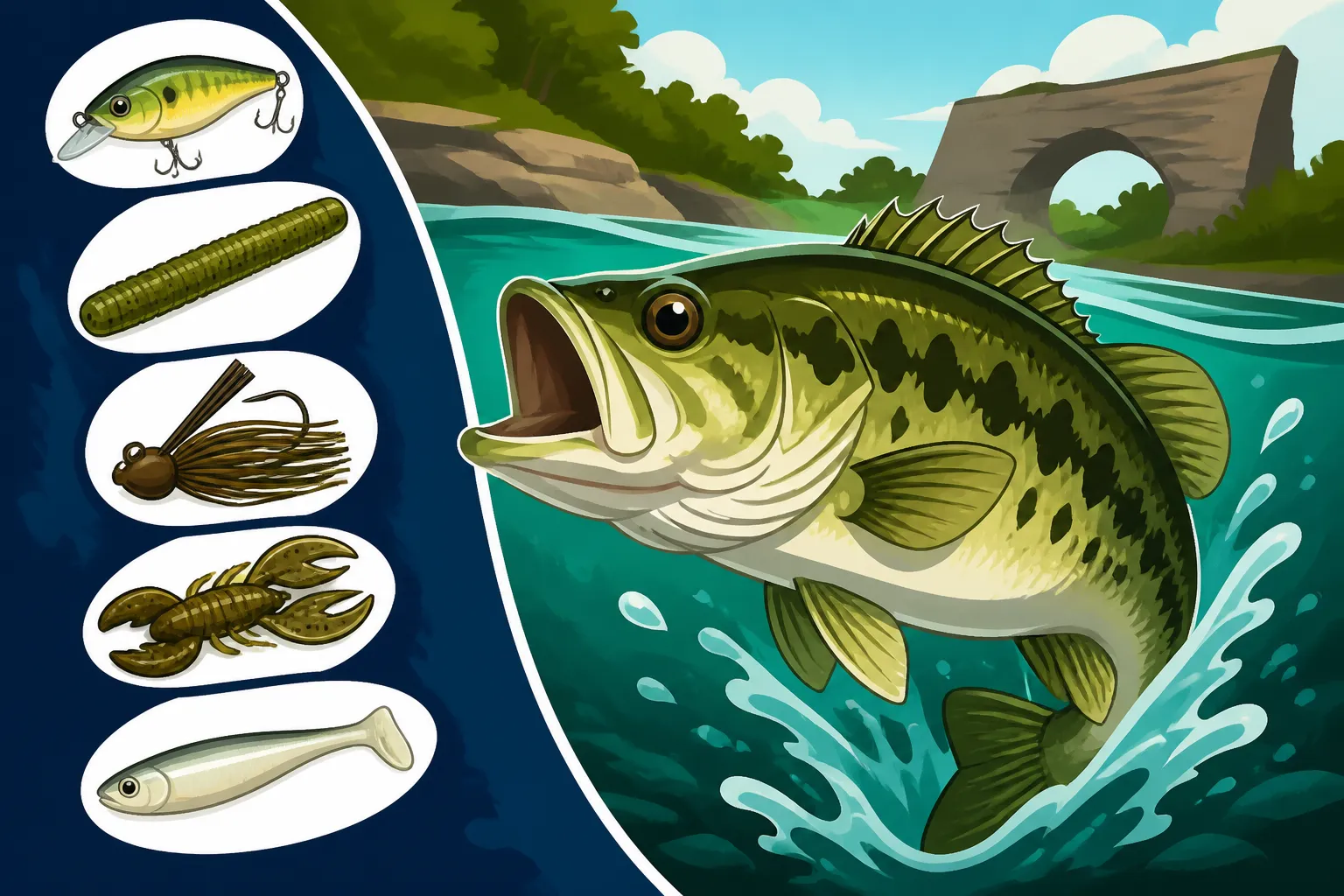
- Grubs and Swimbaits: Small grubs (2-4 inches) on a light jig head are deadly, especially when fish are feeding on small baitfish. Think chartreuse, white, or shad patterns. Swimbaits, particularly those with a paddle tail, excel at imitating shad. Rigged on an appropriate jig head, they can be cast and retrieved, or even fished vertically in deeper water. They offer a subtle action that can tempt even finicky fish. You can find a huge variety of these, often in multi-packs, on Amazon, making it easy to stock up on different sizes and colors.
- Real-life scenario: Picture yourself on Beaver Lake, working a deep point in late summer. The fish are suspending around bait schools. A 3-inch shad-colored swimbait, slowly retrieved through the school, can be absolutely lights out. The subtle kick of the tail is just enough to trigger a strike without overpowering the fish.
- Worms and Craws: Texas-rigged worms (4-6 inches) or creature baits that imitate crayfish are fantastic for fishing around rocky bottom structure, ledges, and submerged timber. Colors like green pumpkin, watermelon, or brown are excellent choices. Spotted bass love to root around rocks for crawfish, so a slow drag or hop of a craw imitation can be incredibly effective.
- Real-life scenario: It's a slightly overcast spring day on a section of the White River known for its rocky banks. You pitch a green pumpkin colored creature bait rigged on a ¼ oz Texas rig weight into a seam where the current slows down near some boulders. Let it sink, then slowly drag it along the bottom, feeling for subtle taps. That sudden thump you feel is often a hungry spotted bass ambushing its prey. Learning How to Fish a Texas Rig for Bass is invaluable for this scenario.
- Drop Shots and Finesse Rigs: When the bite gets tough, or fish are highly pressured, finesse presentations become essential. A drop shot rig with a small worm (4 inches or less) or a tiny swimbait can be incredibly effective for spotted bass suspended over deep structure. The bait hovers enticingly off the bottom, making it an easy target. Ned rigs, with their mushroom-shaped jig head and short, buoyant worm, are another fantastic finesse option that stands up off the bottom.
- Real-life scenario: You're on a calm, clear day at Lake Ouachita, and the bass are holding tight to deep timber. A small, dark-colored finesse worm on a drop shot rig, gently shaken in place right above the tops of the submerged trees, can draw strikes when nothing else will. The minimal movement and natural look are hard for a wary spotted bass to ignore.
Hard Baits: Making a Scene
Sometimes, you need to create a little commotion to get the spotted bass's attention, and that's where hard baits shine. These lures are designed to be retrieved and worked in specific ways to imitate fleeing baitfish, wounded prey, or aggressive predators.
- Crankbaits: Medium-diving crankbaits (diving 6-12 feet) in shad patterns, chrome, or even crawfish colors can be extremely effective, especially when fished along points, ledges, and creek channels. The erratic wobble and vibration of a crankbait mimic a fleeing baitfish, often triggering a reaction strike. Deeper diving models can also reach those spots holding fish in 15-20 feet.
- Real-life scenario: It's early summer, and the shad are schooling up in the main lake basins of Norfork Lake. You cast a silver and blue crankbait parallel to a long, sloping point, cranking it down until it occasionally deflects off the rocks. That sudden deflection often triggers a vicious strike from a spotted bass waiting in ambush. This is a classic tactic for Best Lures for Summer Bass Fishing.
- Jerkbaits: Long, slender jerkbaits are exceptional at imitating dying or wounded baitfish. Their erratic, darting action when twitched and paused is irresistible to spotted bass, especially in colder water or when fish are lethargic. Suspending models are particularly effective as they can be paused right in the strike zone for extended periods.
- Real-life scenario: During the pre-spawn in early spring, the water is still chilly, and the fish aren't super active. You're fishing a bluff wall on Beaver Lake. You cast a suspending jerkbait, twitch it two or three times, then let it sit perfectly still for five to ten seconds. Often, the strike comes on the pause, a subtle tick on the line that you have to be ready for.
- Topwater Lures: While less common than for largemouth, topwater baits can still be effective for spotted bass, particularly during low-light conditions or when they are actively schooling and busting bait on the surface. Walking baits, poppers, and even small prop baits can draw explosive strikes.
- Real-life scenario: Dawn breaks over Greers Ferry Lake, and you see splashes in the distance – spotted bass are schooling on shad near the surface. You quickly cast a bone-colored walking bait into the melee, working it with a "walk-the-dog" retrieve. The frantic action often draws multiple fish to the surface, eager to smash anything that looks like a panicked shad.
Live Bait: The Natural Advantage
When all else fails, or when you just want to guarantee some action, live bait can be incredibly effective for spotted bass. Nothing quite beats the natural scent and action of a live critter.
- Shad and Minnows: Live shad or shiners are perhaps the ultimate live bait for spotted bass, especially in reservoirs where shad are abundant. Rigged on a plain hook with or without a small sinker, they can be free-lined, drifted, or fished under a bobber. The natural swimming action is often too much for a spotted bass to resist.
- Real-life scenario: You're drifting over a deep creek channel on Lake Ouachita, and your fishfinder is showing bait balls and some arches underneath. You drop a frisky live shad down on a weighted hook, letting it swim naturally. The rod tip suddenly buries – it's often a big spot. Many local bait shops, and even Amazon for some tackle accessories, can help you get set up for live bait.
- Crayfish: In rocky rivers and streams, live crayfish are a prime meal for spotted bass. Hooked through the tail, they can be fished on the bottom with a simple Texas rig or even free-lined in current. The natural defensive posture and movement of the crayfish are a huge draw.
- Real-life scenario: Wading a small Ozark stream, you flip a live crayfish into a deep pool behind a large boulder. Let it settle, and then impart very subtle twitches to make it move naturally. This can be dynamite for those river-dwelling spots.
| Bait Type | Description | Pros | Cons | Best Use Scenarios |
|---|---|---|---|---|
| Soft Plastics | ||||
| Grubs/Swimbrats | Small, artificial baitfish/insect imitations | Versatile, realistic, subtle action | Can be fragile, require different jig heads | Finesse fishing, schooling fish, clear water, any depth |
| Worms/Cranws | Imitate worms or crayfish | Excellent for bottom contact, weedless options | Less flash/vibration than hard baits | Rocky bottom, timber, ledges, heavy cover |
| Drop Shot/Ned | Small, buoyant plastics on specialized rigs | Extreme finesse, good for pressured fish | Light tackle required, slower fishing | Deep water, clear water, tough bites, suspended fish |
| Hard Baits | ||||
| Crankbaits | Diving lures with wobble and vibration | Cover water quickly, provoke reaction strikes | Can get snagged easily, depth specific | Points, ledges, creek channels, schooling fish, stained water |
| Jerkbaits | Slender, darting lures with erratic action | Mimic wounded baitfish, effective in cold water | Requires active rod work, often slow | Clear water, suspended fish, pre-spawn, bluff walls |
| Topwater | Float on surface, create commotion | Exciting visual strikes, cover shallow flats | Limited to calm conditions, low light | Schooling fish, shallow flats, dawn/dusk |
| Live Bait | ||||
| Shad/Minnows | Live baitfish | Natural scent/action, highly effective | Require special care, can be expensive | Any time, especially when fish are finicky or deep |
| Crayfish | Live crustaceans | Natural attraction, good for bottom feeders | Harder to find/keep, can be fragile | Rocky rivers/streams, near rocky cover |
Presentation is Everything: Techniques for Spotted Bass
Having the best bait in your tackle box is only half the battle; knowing how to present it effectively is the other, equally important half. Spotted bass are smart, and they often hold in specific ambush points. Your presentation needs to be natural, enticing, and put the bait right in their strike zone. This isn't just about casting and reeling; it's about understanding how the fish perceive your bait and reacting accordingly.
Think about the environment. Is there current? What is the water clarity? What kind of structure are the fish holding on? All of these factors will influence how you should present your chosen bait. Don't be afraid to experiment with retrieve speeds, pauses, and different jigging actions. Sometimes a subtle change is all it takes to turn a slow day into a banner one. This attention to detail is what separates a consistent angler from someone who just gets lucky.
Matching the Hatch and Understanding Water Conditions
"Matching the hatch" is a term often used by fly anglers, but it applies perfectly to spotted bass fishing with any type of bait. It means choosing a bait that closely resembles the size, color, and behavior of the natural forage available to the fish at that specific time and place.
- Forage Identification: Pay attention to what's in the water. Are there schools of shad flickering near the surface? Are you seeing crayfish scurrying along the bank? Or perhaps smaller sunfish darting around cover? If shad are abundant, then a silver or white swimbait, crankbait, or jerkbait is a strong choice. If you're fishing a rocky river known for crayfish, then a brown or green pumpkin creature bait or jig is ideal. Knowing what the fish are eating at any given moment is your biggest clue.
- Water Clarity: This is a huge factor. In extremely clear water, spotted bass can be very wary. You'll want more natural, subtle colors and smaller baits. Finesse techniques like drop shots or Ned rigs with natural colors excel here. In stained or slightly dingy water, you can get away with brighter colors (like chartreuse or orange in craw patterns) and baits with more vibration or flash to help the fish locate them.
- Water Temperature: As you explore Arkansas Fishing Seasons Guide and Best Time of Year to Fish in Arkansas, you'll learn that water temperature significantly impacts bass activity and metabolism. In colder water (say, below 50 degrees Fahrenheit), fish are slower, and you'll want to present baits very slowly, often with long pauses. Jerkbaits, jigs, and slow-moving soft plastics are great. As the water warms up, fish become more active, and you can speed up your retrieve, often favoring faster-moving baits like crankbaits or even topwater lures. Learning How to Read Water Temperature for Bass Fishing can give you a significant advantage.
Retrieval Techniques and Presentation Styles
Once you've got your bait chosen and matched to the conditions, it's all about how you make it move. Spotted bass often react to specific presentations, and a little finesse can make a huge difference.
- Slow Rolling and Dragging: For jigs and soft plastics, a slow, deliberate retrieve is often key. This involves casting your bait out, letting it sink to the bottom (or desired depth), and then slowly reeling it in while occasionally lifting or dragging your rod tip. This mimics a bottom-feeding creature like a crawfish or a lethargic baitfish. This is particularly effective around rock piles and ledges, which are prime spots for spotted bass.
- Real-life scenario: You're fishing a deep point on Bull Shoals Lake. You cast a football head jig with a craw trailer, let it hit the bottom, and then slowly drag it down the slope, feeling every rock and bump. A sharp "thump" usually signals a bite, and you set the hook instantly. Targeting Best Bass Fishing Spots on Bull Shoals Lake with this method can be very productive.
- Twitching and Pausing: Jerkbaits and some soft plastics truly shine with a twitch-and-pause retrieve. Cast the lure, reel up the slack, and then twitch your rod tip sharply a couple of times, followed by a pause. The length of the pause is critical and often needs to be experimented with. Sometimes a short 1-2 second pause is enough; other times, a 5-10 second pause is what it takes to tempt a finicky spot. The sudden darting action followed by stillness is irresistible to predatory fish.
- Varying Retrieve Speed: This applies particularly to crankbaits and swimbaits. Don't just reel at a constant speed. Experiment with bursts of speed, sudden stops, or even bumping the bait into submerged cover (like rocks or timber). These erratic movements can often trigger a reaction strike from a fish that might otherwise ignore a steady retrieve.
- Real-life scenario: You're casting a medium-diving crankbait along a bluff wall. You reel it steadily, then suddenly speed up for a few cranks, then slow down. That change in pace can often be enough to make a following spotted bass commit. Sometimes you'll even buy baits from Amazon that come with instructions on varying retrieval.
Fishing Structure and Targeting Ambush Points
Spotted bass are structure-oriented fish, meaning they relate strongly to changes in the bottom, cover, or contour of the lake or riverbed. Knowing where to cast and how to present your bait in these key areas is paramount.
- Points and Ledges: These are classic spotted bass holding areas, especially those that extend out into deeper water. Fish both the shallow and deep sides of the point, as well as the transition areas on the ledge. Spotted bass will often position themselves along the drops, waiting for baitfish to pass by.
- Bluff Walls and Rock Piles: Vertical bluff walls offer deep-water access and plenty of shade, which spotted bass love. Fish your baits close to the wall, letting them fall naturally. Rock piles on humps or in creek channels are also prime targets, offering both cover and ambush points. In these areas, learning Arkansas Fishing Techniques for Beginners can include lessons on proper jigging or slow-rolling baits to avoid snags.
- Submerged Timber and Brush: While largemouth love dense cover, spotted bass will often relate to scattered submerged timber or brush, especially where it meets a channel or drop-off. A weedless presentation, like a Texas-rigged soft plastic or a jig, is essential here to avoid snags.
- River Channels and Current Seams: In rivers, spotted bass will hold in areas where the current breaks, like behind large boulders, in eddies, or along seams where faster water meets slower water. These are natural ambush points where they can conserve energy while waiting for food to drift by. Knowing this can help you strategize when looking for Best Trout Fishing Spots on the White River Below Bull Shoals Dam, as trout also relate strongly to current.
Remember, fishing for spotted bass is an ongoing learning experience. Conditions change, fish moods shift, and new baits and techniques emerge. The most successful anglers are those who are constantly observing, experimenting, and adapting. Keep a diverse selection of baits on hand, pay close attention to the water, and don't be afraid to try something different. The reward is often a hard-fighting spotted bass that will make your day! You'll often find that the very same tactics and gear you get from places like Amazon for bass fishing can also apply to other species as you expand your fishing horizons across Arkansas Fish Species: A Complete Guide to What's Swimming in Your Waters.
Disclaimer
This article is for general informational purposes only and does not constitute professional advice. Laws, prices and regulations vary by location and change over time. Consult a qualified professional for guidance on your specific situation.