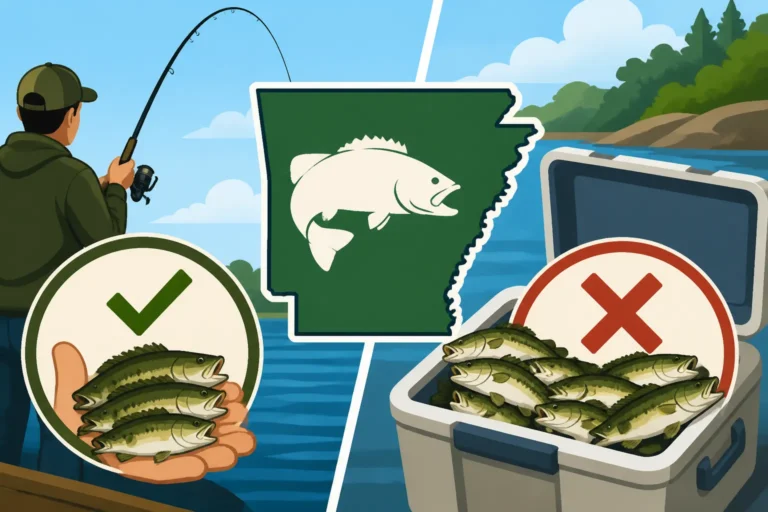
What Counts as a Final Point of Storage for Fish in Arkansas
For many of us who love to cast a line in Arkansas's incredible waters, there's always been a nagging worry in the back of our minds: are we really in compliance with the fishing regulations once we've left the lake? Specifically, that old, confusing "possession limit" rule used to make multi-day trips or even just bringing home a cooler full of fillets feel like walking a legal tightrope. Well, good news, fellow anglers! Things have changed, and this guide is here to clear up exactly what "final point of storage" means for your hard-earned catch in Arkansas.
Understanding the Shift in Arkansas's Possession Limits
Fishing regulations, let's be honest, can sometimes feel like a labyrinth of arcane rules designed to trip up even the most seasoned angler. The concept of a "possession limit" was one of those areas that often left folks scratching their heads. It used to be that you couldn't just adhere to the daily creel limit; you also had to ensure the total number of fish you had anywhere, including your home freezer, didn't exceed a certain statewide possession limit. This led to frustrating situations and genuine confusion for many.
Out with the Old: The Era of Statewide Possession Limits
Imagine this: you've had a fantastic weekend fishing on Lake Ouachita, bringing home your daily limit of crappie each day. You carefully fillet and freeze them, perhaps labeling them by date. A few weeks later, you head out to Bull Shoals Lake for some trout fishing. You catch your daily limit, bring them home, and put them in the freezer. Suddenly, you're looking at a freezer full of fish from different trips, and the old statewide possession limit started to become a real headache. You might have legally caught every single fish within the daily limits, but if the total number in your possession (meaning, at your house, in your freezer, in your car, etc.) exceeded the statewide possession limit, you could be in violation. It didn't matter if they were from different species or caught weeks apart; it was a blanket rule. This was a particular pain point for dedicated anglers who fish frequently or like to stock up their freezer for the winter. The question "What changed with Arkansas's fishing possession limits in 2026-27?" is one many people are asking, and for good reason. It was an antiquated system that often punished responsible anglers just trying to enjoy their sport.
In with the New: Daily Creel is King
Thankfully, Arkansas wildlife officials recognized this issue and made a significant and welcome change for the 2026-27 fishing season. They've simplified things immensely by eliminating the statewide possession limit. This is huge! Now, the focus is almost entirely on the daily creel limit. This means that once you've reached your final point of storage, those fish are no longer counted against any overarching possession limit. You can literally have a freezer full of fish from multiple successful trips, as long as each day's catch adhered to the daily creel limits. This change is a breath of fresh air for many, allowing anglers to focus more on fishing and less on complex calculations once they're off the water. The core takeaway here is that "Arkansas eliminated statewide possession limits for the 2026-27 season", but it's absolutely crucial to remember that "Daily creel limits still apply even without a possession limit in Arkansas". You still can't take more than your legal daily limit of, say, largemouth bass – which is typically 5 fish statewide – on any single day you're fishing. The distinction is paramount: daily limits regulate what you can take from the water on a given day, while the old possession limit tried to regulate what you could accumulate over time. Now, that accumulation aspect is gone.
Deciphering "Final Point of Storage" in Detail
So, with the statewide possession limit gone, the term "final point of storage" has become the critical pivot point in understanding Arkansas's new fishing regulations. It's not just a fancy phrase; it defines the moment your fish officially exit the realm of "in possession" and enter the safe zone of "stored." This distinction is incredibly important for avoiding any potential misunderstandings or violations. Essentially, it's the point where your fish are no longer considered part of your active daily catch or in transit, but rather are put away for later use.
More Than Just a Freezer: What Qualifies
When we talk about a "final point of storage," most people immediately think of their home freezer, and you wouldn't be wrong. Your freezer at home, where you meticulously bag and label your fillets, is indeed a primary example. But the definition is actually a bit broader and more nuanced. It could also include a commercial fish processor, for instance. If you take your daily limit of crappie to a local fish market or processing facility to be filleted, cleaned, and vacuum-sealed, then the moment those fish are officially checked in and accepted by the processor, they've reached their final point of storage from your perspective as the angler. Another less obvious example could be a freezer at a remote hunting or fishing camp that you own or lease, where you might store fish for weeks or months. The key is that it's a place where the fish are kept long-term, out of active transport or immediate consumption. It’s not just any container; it's a dedicated place for long-term preservation.
The Journey from Water to Storage: When the Rules Apply
Understanding the journey from the water to this "final point of storage" is where many anglers might still feel a bit unsure. Let's trace it. When you're actively fishing on a lake like Greers Ferry Lake, and you've got your catch in a livewell or a cooler on your boat, those fish are clearly still part of your daily catch and are subject to the daily creel limits. You can't exceed that limit while they are in your livewell. As you leave the boat ramp and head home, those fish in your cooler, perhaps on ice in the back of your truck or SUV, are still considered "in possession" and are still linked to that day's fishing trip and its daily limits. They have not reached their final point of storage yet. Even if you stop at a friend's house to show off your catch, they are still "in transit." The "final point of storage" only occurs when those fish are permanently removed from the immediate travel/consumption cycle and put into a long-term holding place. This means that when you get home, you take them out of the cooler, clean them, and then either cook them immediately or put them into your home freezer. At that point, they have officially reached their final point of storage. This transition is crucial because it's the moment the fish are no longer counted against your daily creel limit for future fishing excursions. This distinction is precisely "What counts as a fish's final point of storage in Arkansas?" and it simplifies things greatly.
Practical Scenarios: When and Where Does the Rule Apply?
The new rules, particularly the elimination of the statewide possession limit, significantly impact how we plan and execute our fishing trips, especially those that last more than a single day. Let's dive into some common scenarios to make this perfectly clear, removing any lingering doubt about when and where these new regulations apply. This is where the rubber meets the road, so to speak, for everyday anglers.
Multi-Day Trips and the New Rule
This is perhaps the biggest win for anglers under the new regulations. Before, if you were planning a week-long fishing vacation to a prime spot like the White River for trout or Norfork Lake for stripers, you had to be extremely careful. You might catch your daily limit on Monday, fillet and freeze them, then catch another daily limit on Tuesday. Under the old rules, your Monday catch still counted against your overall possession limit, making it difficult, if not impossible, to legally harvest your daily limit for more than a few days without running afoul of the law. You'd often have to consume or give away fish before you could catch more.
Now, with the statewide possession limit gone, "How the new possession rule affects multi-day fishing trips" is profoundly positive. You can fish for several days, catching your daily limit each day, and as long as those fish reach a "final point of storage" at the end of each fishing day (or trip segment), they no longer count towards an aggregate total. So, if you're staying at a cabin with a freezer, you can catch five trout on Monday, freeze them, and then catch five more trout on Tuesday, freeze those, and so on. Your freezer at the cabin becomes a final point of storage for those specific daily catches. This freedom means you can truly maximize your fishing experience without the constant worry of exceeding an invisible possession limit that accumulated over time.
Sharing Your Catch and Gifting Fish
Another common scenario involves sharing your bounty. You've had a banner day on Beaver Lake, pulling in a fantastic limit of crappie. You get home, clean them up, and decide to share some with your elderly neighbor, your cousin, or a friend who couldn't make it out on the water. When do those gifted fish cease to be part of your possession and become theirs, especially under the new "final point of storage" rule?
The moment you physically transfer those fish to another individual, and they take possession of them at their own residence or designated storage location (like their own freezer), they have reached a final point of storage for you. From that moment on, those fish are no longer considered part of your catch for regulatory purposes. It's crucial, however, that the recipient also understands their responsibility. If they are just holding them in a cooler for a few hours before processing, they are still "in transit" for them. The spirit of the rule is about the long-term, stationary storage. It emphasizes personal accountability for daily limits, but once you've genuinely transferred ownership and the fish are destined for someone else's permanent storage, you've met your obligation.
Commercial Processing and Restaurant Sales
While most recreational anglers aren't typically selling their catch, it's worth understanding how commercial processing fits into the "final point of storage" framework. If you, as a recreational angler, take your legal daily limit of fish to a commercial processor – perhaps a local facility that cleans, fillets, and vacuum-seals fish for a fee – the moment those fish are accepted by the facility for processing, they have reached their final point of storage. This is because they are now out of your direct possession and into a commercial chain of custody for transformation into a stored product.
This table provides a quick overview of how the key regulatory concepts have changed in Arkansas:
| Feature | Old Rule (Pre-2026/27) | New Rule (2026/27 Onward) | Implication for Anglers |
|---|---|---|---|
| Statewide Possession Limit | Existed, often 2-3 times the daily limit (e.g., 10-15 bass) | Eliminated | No need to count fish in your home freezer from previous trips. |
| Daily Creel Limit | Still applied (e.g., 5 largemouth bass) | Still applies strictly (e.g., 5 largemouth bass) | Crucial for each day's catch; violation still carries penalties. |
| "Final Point of Storage" | Less emphasized, as statewide possession was the main concern | Critical concept for when fish exit daily limit accounting | Once fish are in long-term storage (e.g., freezer), they don't count for future daily limits. |
| Multi-Day Trips | Highly restrictive; difficult to keep daily limit each day | Much more flexible; can keep daily limit each day if stored. | Enjoy longer trips with consistent harvest without worrying about accumulation. |
| Angler Responsibility | Track daily and cumulative possession limits | Primarily track daily creel limits and ensure proper storage. | Simplified compliance, reduced anxiety. |
This change simplifies things for recreational anglers immensely. Just remember, this isn't a license to overfish your daily limits; it's simply a recognition that once fish are properly stored, they no longer need to be part of an ongoing, confusing tally.
Why This Rule Change Matters to Anglers
The elimination of the statewide possession limit and the clearer definition of "final point of storage" might seem like minor regulatory tweaks to an outsider, but for Arkansas anglers, these changes are incredibly significant. They address long-standing frustrations, streamline the fishing experience, and ultimately foster a greater sense of enjoyment and compliance among the fishing community. This is more than just bureaucracy; it's a practical improvement that impacts every trip to the water.
Streamlining Enforcement and Angler Experience
One of the primary benefits of this rule change is how much it simplifies things for everyone involved – both the anglers and the Arkansas Game and Fish Commission (AGFC) wildlife officers. Before, imagine a scenario where a game warden might visit an angler's home (though rare, it was possible if violations were suspected) and find several bags of filleted fish in the freezer. The warden would then have to try and ascertain if those fish were caught in accordance with the daily limits and if the total count exceeded the statewide possession limit. This process was cumbersome, difficult to enforce fairly, and often led to misunderstandings. It put a burden on anglers to meticulously document every single fish and date, which wasn't always practical or realistic. The question, "Why anglers no longer need to count fish at home in Arkansas", truly highlights the relief this brings.
Now, enforcement can focus squarely on daily limits, which are much easier to verify on the water or immediately after a trip. If an angler is checked at the boat ramp or during a traffic stop immediately after fishing, the focus is solely on whether the fish in their livewell or cooler adhere to that day's creel limits and size restrictions. Once those fish are processed and moved to a final point of storage, they are essentially "off the books" for future possession limit checks. This creates a more transparent and manageable system, reducing anxiety for law-abiding anglers and allowing wardens to concentrate their efforts more effectively on preventing actual overharvesting in the field.
Focusing on Sustainability
Some might wonder if eliminating the possession limit could lead to overfishing. This is a valid concern, but the key lies in the unwavering enforcement of daily creel limits and size restrictions. These daily limits are scientifically determined to ensure the sustainability of fish populations in Arkansas's diverse waters, from the trout streams to the bass lakes. Whether it's the "Largemouth bass daily limit statewide is 5 fish" or the rule that "Crappie must be 9 inches or longer to keep in Arkansas", these specific daily and size limits are the bedrock of conservation efforts.
By removing the statewide possession limit, the AGFC is essentially saying, "We trust anglers to abide by the daily limits, and once those fish are legally caught and properly stored, they are no longer a conservation concern." The focus remains firmly on preventing anglers from taking too many fish from the water on any given day. This approach acknowledges that responsible harvest and home consumption are part of the angling tradition, while still prioritizing the long-term health of the fisheries. It’s a smart move that balances angler freedom with ecological responsibility.
Common Misconceptions and Clarifications
Even with the best intentions and the clearest regulations, misconceptions can arise. The shift in Arkansas's possession limit rules is a significant change, and it's natural to have questions or misinterpret certain aspects. Let's tackle some of the most common misunderstandings to ensure everyone is on the same page and enjoying their fishing responsibly.
The Cooler Conundrum: When is a Cooler a "Final Point"?
This is perhaps one of the most persistent areas of confusion. Many anglers load their catch into a high-quality cooler, like those from Yeti or RTIC (easily found on Amazon), add plenty of ice, and consider them stored. However, a cooler, even a top-of-the-line one, is almost never considered a "final point of storage" in the eyes of the law.
Why? Because a cooler's primary purpose is temporary transport and preservation. If you've just come off the water, and your fish are in a cooler in your truck or even in your garage, they are still considered "in possession" and are still linked to that day's fishing trip. Let's say you catch your limit on Saturday, put them on ice in a cooler, and decide you'll clean them Sunday morning. If a game warden were to check your cooler late Saturday evening or early Sunday before cleaning, those fish are still counted against Saturday's daily limit. You couldn't, for example, go fishing again on Sunday and catch another limit while Saturday's fish were still unprocessed in your cooler, claiming they were "stored." The fish are only at their final point of storage once they are cleaned, processed, and placed into a long-term preservation system like a freezer, or given away, or dropped off at a commercial processor. Simply leaving them on ice in a cooler, no matter how good the cooler, does not qualify as a final point of storage. This is a critical distinction that "What happens to extra fish once you get home from an Arkansas trip?" aims to clarify. They must be moved beyond temporary transport.
Documenting Your Catch and Transparency
With the statewide possession limit gone, you might think the need for meticulous record-keeping has vanished entirely. While it's true that you no longer need to worry about a cumulative count of fish in your freezer, maintaining some level of transparency and good practice can still be beneficial, especially if you're an avid angler. The AGFC is focused on daily creel limits, but if you're fishing multiple days in a row or frequently, good habits ensure you never inadvertently violate the rules.
Consider labeling your freezer bags with the date and species caught, and maybe even the body of water. This isn't legally required anymore for possession limit purposes, but it's excellent practice for your own organization and can be a lifesaver if, for some reason, questions ever arise. For instance, if you have a unique species with specific size or bag limits, a clear label helps. A simple permanent marker (like those available on Amazon) and freezer tape can go a long way. This isn't about proving your innocence, but about simplifying your own management of your harvest and demonstrating responsible angling practices. The beauty of the new rule is that this documentation is for your peace of mind and organization, not a legal mandate for cumulative counts.
Tips for Compliance and Enjoying Your Trip
Understanding the letter of the law is one thing, but applying it practically while maximizing your enjoyment on the water is another. These changes are designed to make your life easier, not more complicated. By embracing the new "final point of storage" concept and keeping a few practical tips in mind, you can fish Arkansas's beautiful waters with confidence and peace of mind.
Planning Ahead for Storage
One of the best things you can do is to plan your storage before you even hit the water. If you're going on a multi-day trip, especially to a remote area, consider your options for getting your fish to a final point of storage each day. Are you staying at a cabin with a working freezer? Perfect. That can serve as your interim final storage point for each day's catch. If you're camping, you might need to think about a larger, dedicated cooler just for processed fillets that will be taken to a freezer at home or a local processor at the end of your trip. The goal is to always have a clear pathway for your fish to reach that "final point" as efficiently as possible, thus clearing your daily creel count for subsequent fishing days.
This is particularly important for those extended trips where you might be hitting up different lakes or rivers over several days. For instance, after a few days of trying your luck on Lake Hamilton for bass, you might decide to try the Little Missouri River for trout. Knowing where and how you'll store your bass before moving on is key to being able to legally catch your limit of trout without having any "in transit" fish contributing to potential over-limit issues for that day.
Essential Gear for Responsible Fish Storage
Having the right gear makes adhering to the "final point of storage" concept effortless. You don't want to get home after a long day of fishing only to realize you don't have the means to properly process and store your catch.
- High-Quality Coolers: While not a "final point" themselves, excellent coolers are crucial for transporting your fish from the water to your home or processor. Brands like YETI, RTIC, or even Igloo MaxCold (all widely available on Amazon) are excellent investments. They keep your catch fresh and safe until it can be properly handled. Remember to pre-chill your cooler and use plenty of ice or ice packs.
- Fillet Knives and Cleaning Tools: A sharp fillet knife (many great options from brands like Rapala or Bubba Blade on Amazon), a sturdy cutting board, and a pair of fish-cleaning gloves are non-negotiable. Efficient and clean processing means your fish will taste better and store longer.
- Vacuum Sealers: For truly long-term storage in your freezer, a vacuum sealer is a game-changer. It removes air, preventing freezer burn and extending the life of your fish significantly. Brands like FoodSaver offer various models, and you can easily find them and their compatible bags on Amazon. This step turns your cleaned fish into a truly "stored" product, ready for future meals.
- Freezer Bags and Labels: If a vacuum sealer isn't in your budget, heavy-duty freezer bags are the next best option. Make sure they are specifically designed for freezing to prevent punctures and freezer burn. Always, always, always label your bags with the date and species. This not only helps you track your oldest fish for consumption but also aligns with the spirit of transparent and responsible angling. You can find excellent freezer labels and permanent markers on Amazon.
By investing in these tools, you're not just buying equipment; you're investing in the quality of your catch, the ease of your post-fishing routine, and your continued compliance with Arkansas's sensible new fishing regulations. This approach empowers you to fully embrace the freedom provided by the elimination of the statewide possession limit.
Disclaimer
This article is for general informational purposes only and does not constitute professional advice. Laws, prices and regulations vary by location and change over time. Consult a qualified professional for guidance on your specific situation.