Fines for getting caught without a fishing license in Arkansas
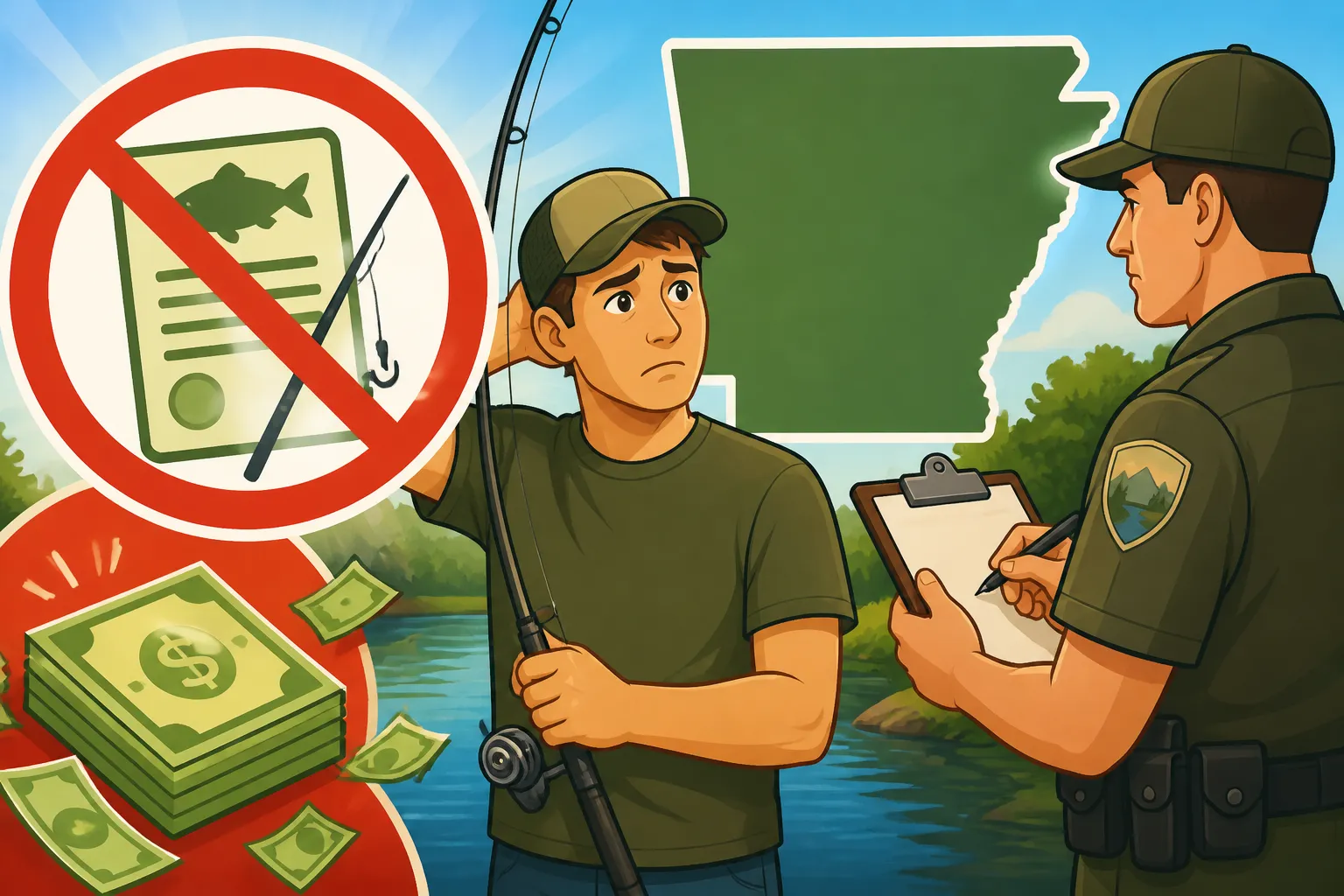
It's an angler's worst nightmare: you're out on a beautiful Arkansas lake or river, enjoying the peace and quiet, maybe even reeling in a nice catch, when suddenly a game warden approaches. Your heart sinks as they ask for your fishing license, and you realize with a jolt that you either forgot it, it expired, or you simply never got one. This guide is here to walk you through exactly what happens next in Arkansas, detailing the fines, legal ramifications, and long-term impacts of getting caught without a valid fishing license, so you can understand the situation fully and avoid it in the future.
The Serious Ramifications of Fishing Without a License in Arkansas
Getting caught fishing without a license in Arkansas isn't just a slap on the wrist; it's a legitimate legal issue with real financial and potential criminal consequences. Many anglers, especially those new to the sport or visiting from out of state, might not fully grasp the severity of this oversight until they're facing a court date and a hefty bill. It’s easy to think, "What's the big deal? I'm just fishing!" but the Arkansas Game and Fish Commission (AGFC) takes these regulations seriously to protect our natural resources and ensure everyone is contributing their fair share.
Understanding the Legal Consequences
In Arkansas, fishing without a valid license is classified as a misdemeanor offense. Now, when people hear "misdemeanor," they sometimes think it's not a big deal, like a parking ticket. But that's a dangerous misconception. A misdemeanor is a criminal offense, and it means you'll likely have a court appearance, formal charges, and potentially a permanent mark on your record if convicted. It's not just a fine you pay and forget about; it can involve showing up in district court, facing a judge, and navigating the legal system. This isn't the relaxing day on the water you envisioned, is it? The state outlines these penalties specifically to deter people from circumventing the system and to underscore the importance of proper licensing. For a full breakdown of the various permits, you might want to look into Arkansas Fishing License Types Explained.
Breaking Down the Fines and Court Costs
The actual monetary penalty for fishing without a license can vary, but it's typically set by the Arkansas Game and Fish Commission. Currently, the fine for this specific violation generally starts around $100. However, that's just the baseline AGFC fine. What often catches people by surprise are the additional court costs and fees that get tacked on. These aren't insignificant. Depending on the county and jurisdiction, these administrative fees, prosecutor fees, and court costs can easily add another $100 to $200, if not more, to your total bill. So, a $100 AGFC fine quickly escalates into a $200-$300 (or higher) expense.
Imagine you're driving home from a weekend trip to Lake Ouachita, feeling good about the fish you caught, only to receive a summons in the mail for a simple oversight. Now you have to take a day off work, drive back to the county seat, and potentially pay hundreds of dollars. It's a frustrating situation that’s entirely preventable. These costs aren't just for the license itself – which, for a resident annual license, is only $10.50 for an Arkansas resident annual fishing license – but for the legal process involved in prosecuting the violation.
Let's break down a typical scenario:
| Violation Category | Estimated Base Cost | Additional Fees/Costs (e.g., Court, Admin) | Total Estimated Cost |
|---|---|---|---|
| Fishing Without License | $100 – $250 | $100 – $300 | $200 – $550+ |
| Misdemeanor Court Appearance | N/A | Varies by county, could be more | N/A |
| Failure to Appear (FTA) | Add. Fines, Warrant | Significant legal issues | Exponentially higher |
This table illustrates that the "fine" is rarely just one number. It's a combination of several charges, making a seemingly minor violation quite costly. And this doesn't even account for the time lost, potential legal fees if you choose to hire an attorney, or the sheer stress of the situation.
Potential Jail Time and Other Sanctions
While most first-time offenders caught fishing without a license won't face immediate jail time, it is a possibility because it's a misdemeanor. Arkansas law allows for up to 30 days in jail for some misdemeanor offenses, and while rarely applied for a simple license violation, it underscores the seriousness. More commonly, other sanctions might include:
- Community Service: Instead of jail time, a judge might order you to perform a certain number of hours of community service. This means dedicating your personal time to unpaid work, often in public service roles, which can be an inconvenience and a reminder of your mistake.
- Suspension of Fishing Privileges: This is a particularly painful consequence for avid anglers. The AGFC has the authority to suspend your fishing and hunting privileges for a period, meaning you won't be able to legally purchase a license or participate in fishing activities in Arkansas, or potentially other states if part of an interstate compact. This can last for months or even years, depending on the severity and any prior offenses.
- Probation: You might be placed on probation, requiring you to report to a probation officer, adhere to certain conditions (like not fishing without a license!), and potentially pay additional probationary fees.
It's clear that the consequences extend far beyond just the initial financial hit. If you're wondering about the broad spectrum of regulations, you'll find comprehensive details in the Arkansas Fishing Regulations Guide.
Beyond the Immediate Fine: Long-Term Impacts and Aggravating Factors
The ripples of getting caught without a fishing license can extend well past the initial interaction with the game warden and the court date. Many people don't consider the lasting effects a misdemeanor conviction can have, or how easily other violations can escalate the situation.
Building a Criminal Record
This is perhaps the most overlooked consequence. A misdemeanor conviction for fishing without a license goes on your criminal record. What does that mean in real life?
- Employment: Many employers conduct background checks, especially for positions requiring trust or responsibility. A criminal record, even for a misdemeanor, could potentially impact your ability to get certain jobs or promotions. It raises questions about your adherence to rules and laws.
- Housing: Some landlords also run background checks, and a criminal record could make it harder to secure housing, particularly in competitive markets.
- Professional Licenses: If you hold professional licenses (e.g., for healthcare, real estate, finance), a criminal conviction, even a minor one, could be subject to review by your licensing board, potentially affecting your ability to practice.
- Travel: While less common for a simple fishing violation, any criminal record can sometimes cause issues with international travel, particularly to certain countries with stricter entry requirements.
It's not to say that a fishing license violation will derail your entire life, but it's a piece of information that becomes part of your public record and can pop up in unexpected ways. It's a completely avoidable complication that adds unnecessary stress to your life.
Enhanced Penalties for Repeat Offenders
If you've been caught fishing without a license before, the AGFC and the courts will likely treat a subsequent offense much more harshly. They keep records, and a pattern of non-compliance indicates a disregard for the law.
- Higher Fines: Expect the base fine to be significantly higher for a second or third offense. What started at $100 could easily jump to $250 or more, plus all those pesky court costs.
- Longer Suspensions of Privileges: Your fishing and hunting privileges could be suspended for a longer duration, perhaps even multiple years. This is a common punitive measure designed to prevent habitual offenders from continuing to violate regulations.
- Increased Likelihood of Jail Time: While still rare for this specific offense, repeat violations increase the chances that a judge might impose some jail time, even if it's just a few days, to send a strong message.
- Mandatory Education Courses: You might be required to attend mandatory angler education or conservation courses, often at your own expense and on your own time.
The system is designed to give a break to first-time, honest mistakes, but it gets much less forgiving with repeat offenders. It’s crucial to understand Arkansas Fishing License Penalties and Requirements fully to grasp the escalating consequences.
Additional Charges for Other Violations
Here’s where a seemingly minor license issue can spiral out of control. When a game warden stops you for fishing without a license, they're not just checking for that one thing. They're also checking for adherence to all other fishing regulations. If they discover other violations during their interaction, those will result in additional charges and fines.
Common co-occurring violations include:
- Exceeding Daily Creel Limits: If you've caught more fish than the legal daily limit for a species, that's another fine. This is especially relevant if you didn't have a license and thus weren't tracking limits. For example, if you snagged more than your five largemouth bass, that's another violation. Details on specific limits can be found in Arkansas Fish Size and Daily Limits.
- Keeping Undersized Fish: Many species have minimum length requirements. If you've kept fish that are too small, that's another charge.
- Fishing in a Closed Area: Certain areas, especially during spawning seasons or for conservation efforts, might be temporarily or permanently closed to fishing.
- Using Illegal Gear: Using unapproved nets, traps, or other prohibited fishing methods will result in separate charges.
- No Trout Permit: If you're fishing in designated trout waters, like the White River tailwaters, and keeping trout, you need a separate Arkansas Trout Permit Rules in addition to your general fishing license. Getting caught without both can mean two separate sets of fines.
- Resisting Arrest or Obstruction: This is a very serious charge. If you don't cooperate with a game warden or attempt to flee, the situation escalates dramatically from a simple fishing offense to a much more severe criminal matter.
Each of these additional violations comes with its own set of fines and potential legal consequences, adding to the financial burden and the complexity of your legal situation. What started as a simple oversight could quickly turn into multiple charges, hundreds or even thousands of dollars in fines, and serious legal headaches.
Avoiding the Headache: How to Ensure You're Always Legal on Arkansas Waters
Prevention is, without a doubt, the best medicine when it comes to fishing licenses. It's so much simpler and cheaper to be prepared than to deal with the aftermath of a violation.
Easy Ways to Purchase Your Arkansas Fishing License
The AGFC has made it incredibly easy to get your fishing license, so there's really no excuse for not having one.
- Online: This is by far the most convenient method. You can purchase your license 24/7 from the official Arkansas Game and Fish Commission website. It only takes a few minutes, and you can usually print a temporary copy immediately or even carry a digital version on your phone. This is often the quickest way to get an Arkansas Fishing License Rules and Costs.
- Phone: You can also call the AGFC's license purchasing hotline during business hours. They can process your information and get your license issued over the phone.
- Physical Vendors: Most sporting goods stores across the state, like Academy Sports + Outdoors or many local bait and tackle shops, are authorized vendors for AGFC licenses. This is a great option if you prefer an in-person transaction or are already picking up bait and tackle. Even big box stores like Walmart often have a customer service desk where you can purchase licenses.
- AGFC Offices: You can visit an Arkansas Game and Fish Commission regional office during business hours to purchase a license.
Remember that there are different license types for residents and non-residents, and various durations (annual, 3-day). For visitors, knowing the Nonresident Fishing License Rules for Arkansas is essential, and considering a Arkansas Nonresident 3-Day Trip License might be a cost-effective option for a short visit. Don't forget, if you're targeting trout, you'll need that additional trout permit!
Keeping Your License Accessible and Valid
Once you have your license, you need to make sure it's always with you and that you know its expiration date.
- Physical Copy: If you prefer a physical license, make sure it's laminated or kept in a waterproof holder. You can find durable, waterproof pouches and lanyards on Amazon or at any sporting goods store that will protect your license from water damage and keep it securely attached to your vest or tackle box. This makes it easy to present to a game warden if asked.
- Digital Copy: Many anglers now carry a digital copy on their smartphone. Just make sure your phone is charged! The AGFC allows for digital display of your license, but always have a backup plan in case your phone dies or gets wet.
- Check Expiration Dates: Most annual licenses expire at the end of the calendar year or a year from the purchase date. Mark it on your calendar, set a reminder on your phone, or simply make it a habit to check before your first outing of the year. There's nothing worse than realizing your license expired last month after you've already cast your line. Fortunately, Renewing an Arkansas Fishing License online is a breeze.
- Special Circumstances: Remember, even if you’re a senior resident aged 65 or older, while you might be exempt from the general fishing license, you still need to carry proof of age and residency, and a trout permit is still required if you intend to keep trout. Also, children under 16 generally don't need a license, but it's good to confirm the exact age requirements, which are covered in Do Kids Need a Fishing License in Arkansas?.
The Importance of Knowing the Rules and Regulations
Having a license is just the first step. You also need to know and follow all the specific fishing regulations for the waters you're on. These rules exist to protect fish populations, maintain healthy ecosystems, and ensure fair sport for everyone.
- Specific Waterbody Rules: Lakes and rivers in Arkansas often have unique regulations that differ from statewide limits. For example, some lakes might have special slot limits for bass or different crappie size restrictions. What's allowed on Lake Ouachita might be different from Lake Conway. Always check the AGFC's current fishing guide for the specific body of water you're fishing.
- Species-Specific Limits: Understand the daily creel limits and size restrictions for each species you plan to target. Don't assume. A quick check can save you a lot of trouble.
- Method Restrictions: Be aware of any restrictions on fishing methods or gear. Certain types of fishing might be prohibited in particular areas or during specific seasons.
- Catch and Release vs. Keep: If you're practicing catch and release, ensure you're doing so in a way that minimizes harm to the fish. If you plan to keep fish, verify they meet all legal requirements.
Staying informed about the rules is just as important as having your license. The AGFC website is your best friend here, offering up-to-date information on all regulations.
What to Do if You Are Caught Without a License
Even with the best intentions, mistakes happen. If you find yourself in the unfortunate situation of being caught without a license, knowing how to react can significantly impact the outcome.
Cooperating with Game Wardens
The absolute most important thing you can do is to remain calm, respectful, and cooperative. Game wardens are law enforcement officers, and treating them with disrespect or arguing will only make your situation worse.
- Be Polite: Greet the warden respectfully.
- Provide Identification: When asked, provide your identification promptly and without argument.
- Explain Your Situation Honestly: If you genuinely forgot your license, or it expired, explain that calmly. Don't make up elaborate stories or try to deceive them; they've heard it all before.
- Do Not Resist: Never, under any circumstances, resist their instructions or attempt to flee. This will elevate the charge to a much more serious criminal offense, potentially leading to arrest and jail time.
- Do Not Destroy Evidence: Don't try to hide fish, throw illegal fish back into the water, or discard illegal gear.
Your cooperation can sometimes influence how a warden handles the situation, though they are obligated to enforce the law. A calm and respectful interaction can prevent an already bad situation from becoming much, much worse. This is a common piece of advice for avoiding What's the penalty for fishing without a license in Arkansas?
Understanding Your Rights and Options
While cooperation is key, you also have rights.
- Right to Remain Silent: You have the right to remain silent regarding questions that might incriminate you, beyond providing your identity and license information. However, exercise this right politely.
- Right to Legal Counsel: If you receive a citation and summons to court, you have the right to seek legal counsel. For a misdemeanor charge, consulting with an attorney familiar with Arkansas game and fish laws can be beneficial, especially if there are complicating factors or if you are a repeat offender. They can help you understand the charges, potential defenses, and navigate the court process.
- Payment Options: If you are issued a ticket with a set fine, you'll usually have options for how to pay it, whether online, by mail, or in person at the clerk's office. Ensure you understand the deadline for payment or court appearance to avoid additional penalties like a "failure to appear," which can result in warrants for your arrest and further fines.
- Appealing a Decision: In some cases, if you believe you were wrongly cited, you may have the option to appeal the decision in court. An attorney can advise you on the viability of such an appeal.
Ultimately, being prepared with a valid license and a clear understanding of the rules is the simplest path to a stress-free day on the water. The joy of fishing in Arkansas's beautiful natural settings is truly priceless, and it's well worth the small effort to ensure you're enjoying it legally and responsibly.
Disclaimer
The information provided in this guide is for general informational purposes only and does not constitute legal advice. Fishing regulations and penalties can change, and interpretations of laws can vary. It is always recommended to consult the most current official Arkansas Game and Fish Commission regulations and, if facing legal issues, to seek advice from a qualified legal professional.