How to Catch Catfish in Cold Water
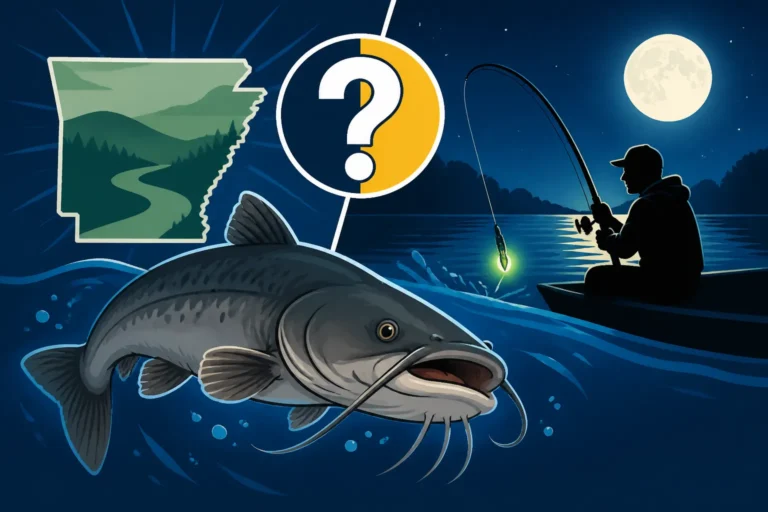
Many anglers hang up their fishing rods once the chilly embrace of winter settles over Arkansas, mistakenly believing that catfish simply vanish or become completely uncatchable. It's a common frustration, feeling like your favorite fishing hole has gone completely barren until spring. But I'm here to tell you that nothing could be further from the truth! While catfish certainly alter their behavior in cold water, they absolutely remain active and available for those who know where to look and how to adapt their tactics. This guide is all about equipping you with the specialized knowledge to keep those lines tight and enjoy productive catfishing throughout the colder months in Arkansas.
Understanding Cold Water Catfish Behavior
When the water temperatures drop, fish, including our beloved catfish, undergo significant physiological changes. Their world slows down, and as anglers, understanding these changes is the first step to continued success in winter. It’s not about finding fish that are just as active as they are in August; it's about finding fish that are conserving energy and presenting them with an irresistible, easy meal.
Catfish Metabolism and Movement in Winter
Think about how you feel on a cold, dreary day – you're probably less inclined to run a marathon and more likely to curl up on the couch. Catfish are much the same! Their metabolism, which dictates how quickly they digest food and how much energy they expend, slows down considerably when water temperatures plummet. This means they're not chasing bait across vast areas of the lake or river like they might in warmer months. Instead, they become much more lethargic.
Their feeding frequency decreases significantly. Where they might feed multiple times a day in summer, in winter, they might only feed every few days, or even less frequently. This isn't because they don't need to eat; it's because their energy needs are lower, and they're conserving what they have. You won't typically find them actively "foraging" in the same way. Instead, they're looking for an easy meal that requires minimal effort to consume. Understanding these subtle shifts is key to your approach. We have a detailed guide on Channel Catfish in Arkansas Lakes and Rivers that delves into their general behavior, but winter brings a whole new set of rules. Similarly, the powerful Blue Catfish Fishing in Arkansas and the more solitary Flathead Catfish in Arkansas Waters also adopt this slower, more energy-efficient lifestyle when cold water sets in, though their preferred habitats might vary slightly.
Depth and Structure Preferences in Cold Water
With their metabolism slowed, catfish seek out locations that offer thermal stability and protection. They are essentially looking for comfortable wintering grounds. This almost always means deeper water. Deep holes, the main river channels, steep ledges, and areas with significant submerged structure like large timber or rock piles become prime real estate.
Why these spots? Because deeper water, especially in large bodies of water, maintains a more stable temperature than shallower areas. While the surface might freeze or hover just above freezing, the bottom of a deep channel can remain several degrees warmer, offering a crucial thermal refuge. These areas also provide shelter from current in rivers and protection from severe weather. Catfish will often congregate in these deep pockets, forming large schools that hunker down for the winter.
Imagine you're on a crisp December morning, scanning the Arkansas River near Little Rock. Instead of focusing on the shallow banks, you'd be looking for those pronounced bends in the river that carve out deep holes, perhaps with some old, sunken barges or massive log jams providing extra cover. That's where you'll find those lethargic but hungry catfish huddled together, waiting for a meal to drift by. Knowing how to interpret your sonar to find these deep-water havens is invaluable during this time of year.
Essential Gear and Bait for Cold Water Catfishing
Fishing for cold-water catfish demands a different set of tools and baits than you might use during the summer swelter. Because their bites are incredibly subtle and their appetites more discerning, sensitivity in your gear and the right kind of scent in your bait become paramount.
Rods, Reels, and Line for Sensitivity
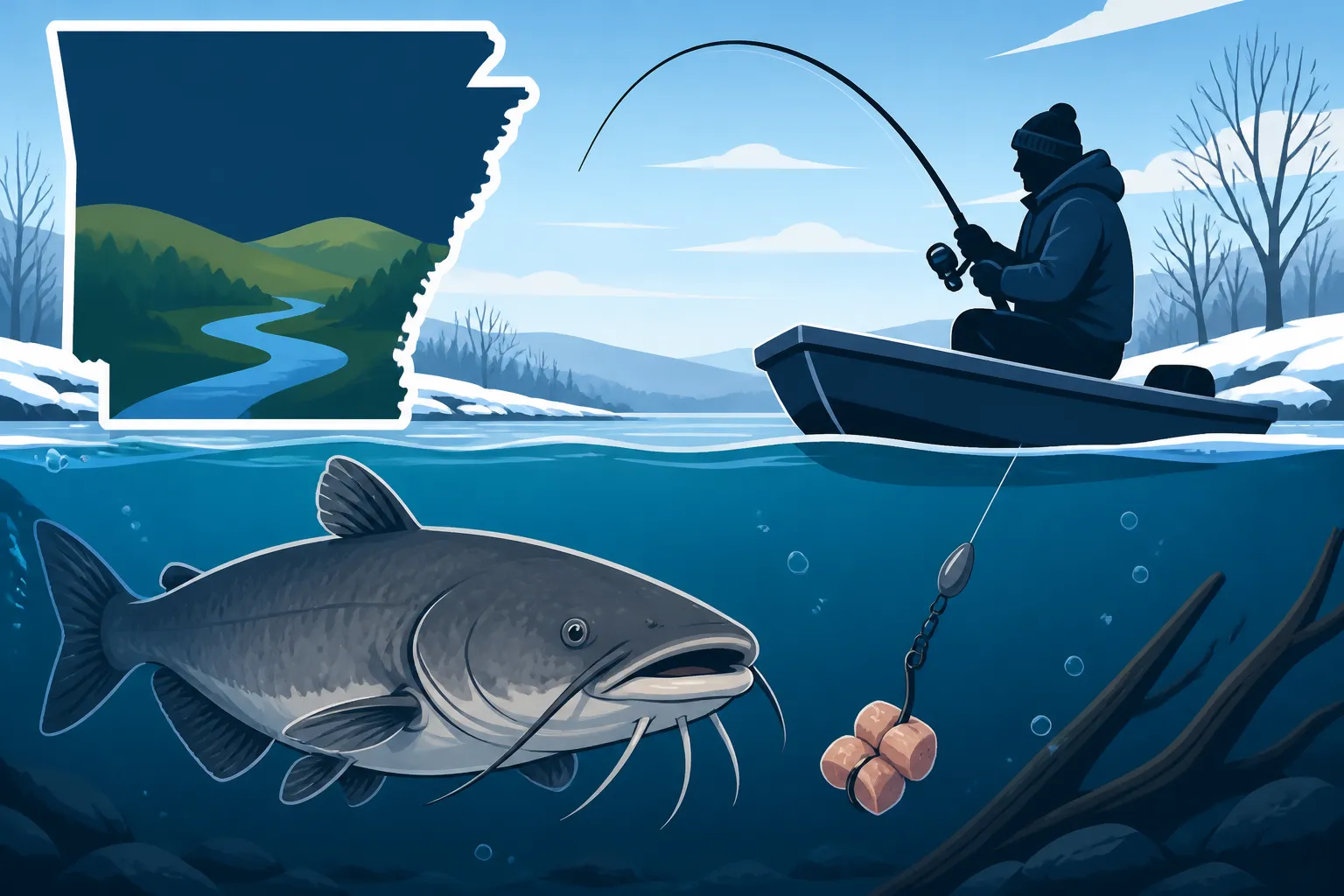
When a catfish in 40-degree water decides to eat, it's rarely an aggressive, rod-bending strike. You're more likely to feel a slight "thump," a subtle quiver, or just a bit of added weight on your line. To detect these ghost-like bites, your rod's sensitivity is crucial. I highly recommend a medium-heavy to heavy power rod with a fast action tip. This combination gives you enough backbone to handle a big fish once it's hooked but still allows the tip to telegraph even the faintest of bites.
Your reel should have a smooth, reliable drag system, as even sluggish big catfish can make powerful, short runs. As for line, many anglers swear by braided line for cold water because of its zero-stretch properties. This means you feel everything happening at the end of your line, which is a huge advantage for detecting those subtle winter bites. However, some prefer the forgiving stretch of monofilament, especially if fishing with a lighter leader in very clear water. If you're outfitting your setup, checking out the diverse range of rods, reels, and lines available on Amazon can help you find equipment that balances sensitivity with strength for those cold water giants.
The Right Bait for Sluggish Appetites
This is where many anglers go wrong in winter: they use the same stinky, doughy baits that work wonders in summer. In cold water, those heavily scented prepared baits are often far less effective. Why? Because the colder water slows down the dispersion of scent molecules, making it harder for lethargic catfish to locate your bait.
Instead, you need baits that are either super fresh, have a natural, strong scent, or are live and active enough to tempt a sluggish fish. Fresh cut bait is often king. Shad, skipjack herring, or even chunks of carp or sunfish are excellent choices. The blood and oils from these fresh baits create a localized scent trail that can entice a cold catfish. For more specific advice, our guide on Best Cut Bait for Catfish offers excellent options, and remember that freshness is even more critical in winter.
Live bait, such as small minnows or shiners, can also be incredibly effective, especially for flatheads that prefer live prey year-round. However, their activity needs to be tempered; you don't want a frantic baitfish. Smaller presentations are generally better, as a cold catfish is unlikely to want to expend much energy on a huge meal. Even worms, like jumbo nightcrawlers, can work, but consider scaling down your presentation to make it as easy as possible for the fish to swallow. Our comprehensive Best Bait for Catfish by Season article provides a broader overview, but for winter, lean into fresh, natural, and potent scents.
Terminal Tackle and Rigging for Deep Water
Reaching and staying on the bottom in deep river channels or lake basins requires appropriately weighted terminal tackle. Heavy sinkers are your friend. Slip sinkers, like an egg or bullet sinker, are excellent for a Carolina rig, allowing the fish to pick up the bait without feeling immediate resistance. Bell sinkers or pyramid sinkers are good for static bottom rigs in current. You'll need enough weight to quickly get your bait down and keep it from drifting too far, especially in rivers.
Hook choice is also important. Circle hooks are often favored because they typically hook fish in the corner of the mouth, making for easier release and less harm if you plan to let them go. A size 5/0 to 8/0 circle hook is a good starting point for most Arkansas catfish. If you prefer J-hooks, make sure they are strong and sharp. Leader length can vary; sometimes a shorter 12-18 inch leader is preferred to keep the bait close to the weight and on the bottom, where the fish are.
The Carolina rig remains a highly effective setup for deep-water catfishing. It consists of a weight (usually a slip sinker) above a swivel, followed by a leader and your hook. This allows the bait to drift slightly off the bottom while the weight holds the line in place. For river fishing, a three-way swivel rig with one line to your sinker and another to your hook can also be very effective for keeping your bait presented directly in the strike zone. If you need a variety of weights, hooks, and swivels to experiment with, Amazon is a convenient place to stock up, ensuring you're ready for any cold-water scenario.
Prime Locations for Winter Catfishing in Arkansas
Knowing where to find cold-water catfish is arguably more important than any other factor. In winter, they are less spread out and tend to congregate in specific areas, making them easier to target if you know their haunts.
Major Rivers and Tailwaters
Arkansas is blessed with incredible river systems, and these are often excellent spots for winter catfishing. The Arkansas River, with its extensive system of locks and dams, creates numerous deep holes, scour pits, and channel bends that become winter sanctuaries for substantial populations of blue and channel catfish, and even flatheads. The consistent flow, even if reduced, helps concentrate baitfish, which in turn draws in the catfish. You'll want to focus on the deepest parts of the main channel, especially where it sweeps around a bend or drops off sharply. For a broader overview of opportunities here, check out our guide on Fishing the Arkansas River for Bass and Catfish.
While the White River is predominantly famous for its incredible trout fishing – a truly world-class fishery detailed in The Best Trout Fishing Spots in Arkansas – don't overlook its deeper sections, particularly below dams. Tailwaters, like those below Bull Shoals Dam or Norfork Dam, have consistent, cold flows that can create unique environments. While the immediate outflows are often too cold for prime catfishing, slightly downstream, where the water might warm a degree or two and deep scour holes are present, can hold wintering catfish. These areas are often overlooked by trout anglers, leaving them wide open for you.
Deep Lakes and Reservoirs
Arkansas's large, deep reservoirs are also fantastic cold-water catfishing destinations. Lakes like Ouachita, Norfork, and Bull Shoals Lake offer vast expanses of deep water where catfish will hold. In these lakes, you'll want to target the main lake channels, deep points that drop off quickly into abysses, submerged timber stands, and the old creek beds that were flooded when the lake was formed.
During winter, the thermal stratification (layers of different temperature water) that is so pronounced in summer tends to break down, but the deepest areas still offer the most consistent and stable temperatures. Catfish will often school up tightly in these deeper sections, sometimes in truly massive numbers. This is where a good fish finder or sonar unit becomes an absolutely invaluable tool. You'll be looking for bait balls and distinct arches on your screen, indicating schools of fish hugging the bottom in 30, 40, or even 60+ feet of water. Targeting these deeper parts of the lake is crucial to understanding the Best Catfish Spots in Arkansas during the colder months. Our article How to Find Catfish in a Reservoir provides more techniques that can be adapted for winter.
Adapting Your Strategy: Tips for Success
Catching catfish in cold water requires more than just finding them; it demands a refined approach to how you fish. Patience, precise presentation, and awareness of conditions are paramount.
Patience and Presentation
When fishing for cold-water catfish, patience isn't just a virtue; it's a necessity. Bites are often incredibly subtle and infrequent compared to warmer months. You might sit for an hour, or even longer, without a single nibble, and then suddenly feel that slight "thump." Resist the urge to constantly check your bait or move your lines. A cold catfish is not going to chase down a bait that's quickly pulled away. They want an easy meal.
This leads to the importance of presentation. Your bait needs to be directly on the bottom, in the strike zone where these sluggish fish are hunkered down. They're not going to swim up several feet to grab your offering. Use enough weight to ensure your bait stays put and is nestled right among them. Longer soak times are essential; sometimes leaving your bait in place for 30 minutes to an hour is not uncommon. Think of it as waiting for the delivery service to bring food to their doorstep. Minimize any boat noise or unnecessary disturbances on the bank, as these fish are highly sensitive to their environment, especially when conserving energy.
Timing and Conditions
Even in winter, some days are better than others. Mid-day, when the sun is highest, can often be the most productive time. While the overall water temperature remains cold, a few hours of direct sunlight can slightly warm shallower areas, sometimes triggering a brief feeding window. If there's a warm spell, even a few consecutive days above freezing, it can also spur a bit more activity.
Stable weather patterns are generally preferable to sudden cold fronts. A sharp drop in air temperature or a brutal cold front can shut down fishing even further. On days like these, you'll need even more patience and possibly have to fish deeper than usual. In rivers, understanding current flow is also vital. Catfish typically won't fight a strong current in winter; they'll position themselves just out of the main flow, in current breaks or eddies, where they can ambush passing food without expending too much energy. Our article on How to Fish After a Cold Front offers insights that, while broader, can be very helpful in adapting to these challenging conditions for catfish as well.
Safety First in Cold Weather
Cold water fishing in Arkansas, while rewarding, carries inherent risks. Your safety, and the safety of anyone fishing with you, should always be your top priority. Dress in multiple layers, making sure your base layer wicks away moisture, and your outer layers are waterproof and windproof. A good quality pair of insulated, waterproof gloves, a warm hat, and insulated boots are non-negotiable. Hypothermia is a serious danger when out on the water or exposed to the elements for extended periods.
Always let someone know where you're going and when you expect to return. If you're on a boat, ensure all safety equipment, including life vests, is easily accessible and in good working order. Consider bringing a thermos of hot coffee, tea, or cocoa to help keep warm. Even if you're just bank fishing, a portable heater or a small campfire (where permitted) can make a huge difference in comfort. Before heading out, ensure your cold-weather gear is up to snuff; looking for reliable, insulated clothing options on Amazon can be a smart move.
Cold Water Catfishing: Key Differences
To help you visualize the shift in approach, here's a quick comparison of tactics between warm and cold water catfishing:
| Factor | Warm Water Catfishing | Cold Water Catfishing |
|---|---|---|
| Metabolism | High, active foraging | Low, sluggish, conserve energy |
| Depth | Shallow flats, creek mouths, timber | Deep channels, holes, main lake structure |
| Bite | Aggressive tugs, strong runs, line rips | Subtle thumps, light taps, added weight |
| Bait | Variety: cut bait, stink bait, live, prepared | Primarily fresh cut bait, live bait (less active) |
| Soak Time | Shorter, active repositioning | Longer, patient waiting, minimal checks |
| Gear | General purpose, less sensitivity focus | Sensitive rod, precise terminal tackle for deep water |
Catching catfish in the cold waters of Arkansas is a rewarding challenge that many anglers overlook. By understanding their winter behavior, choosing the right gear and bait, targeting their deep-water sanctuaries, and exercising patience, you can extend your fishing season and enjoy some truly memorable catches. Don't let the dropping temperatures deter you; some of the biggest catfish are caught by anglers who brave the chill.
Disclaimer
This article is for general informational purposes only and does not constitute professional advice. Laws, prices and regulations vary by location and change over time. Consult a qualified professional for guidance on your specific situation.