Bank Fishing Techniques for Beginners
Feeling the urge to cast a line but don't own a fancy boat, kayak, or even a canoe? It’s a common frustration, especially when you see all those epic fishing videos on social media. But here’s a secret: some of the most enjoyable and productive fishing in Arkansas happens right from the bank! This comprehensive guide will walk you through everything you need to know to get started, from basic gear to finding those hidden shore fishing hotspots and catching some fantastic fish without ever launching a vessel.
Why Bank Fishing is Your Go-To in Arkansas
There’s a certain charm and accessibility to bank fishing that makes it incredibly appealing, especially for beginners or those simply looking for a relaxed outing. Arkansas offers a plethora of opportunities to enjoy this simple yet rewarding pastime.
Accessibility and Cost-Effectiveness
Let's be real, owning a boat is a significant investment, both in money and maintenance. The beauty of bank fishing is that you can skip all that overhead. You don't need a truck to tow a trailer, nor a slip fee or extensive maintenance. All you need is your gear and a place to stand. This makes it incredibly cost-effective. Public access points are abundant across Arkansas, from sprawling state parks to city lakes and winding riverbanks. You can literally walk up to a promising spot, set up, and start fishing. For many, it's the simplest way to introduce themselves or their families to the joy of angling without breaking the bank. Just remember, even for bank fishing, you’ll typically need an Arkansas Fishing License Rules and Costs, so make sure you're properly licensed before heading out.
Understanding Your Bankside Environment
Fishing from the bank forces you to sharpen your observational skills. Unlike boat anglers who can cover vast amounts of water, you’re often limited to what you can reach with a cast. This means learning to "read the water" becomes paramount. Look for tell-tale signs:
- Cover: Fallen trees, submerged brush, rock piles, lily pads, and even old tires provide crucial ambush points and shelter for fish. Cast near these structures.
- Depth Changes: Observe how the bank slopes into the water. A sudden drop-off or a channel running parallel to the shore can hold fish, especially during hotter months when they seek cooler, deeper water.
- Current Breaks: On rivers, look for eddies behind large rocks or logs where the current slows. Fish expend less energy in these spots and wait for food to drift by.
- Shade: During sunny days, shaded areas under overhanging trees or bridges offer respite for fish from direct sunlight, making them prime targets.
Developing this keen eye for potential fish hideouts will significantly improve your success rate from shore.
Essential Gear for the Bank Angler
You don't need a boatload of expensive equipment to be a successful bank angler. In fact, one of the biggest appeals of shore fishing is its minimalist approach. However, having the right basic gear can make all the difference.
Rods, Reels, and Lines for Shore Fishing
When you're starting out, versatility is key. You'll want a setup that can handle various species and techniques.
- Spinning Combo: A medium-action spinning rod, typically 6 to 7 feet long, paired with a matching spinning reel (sized 2500-3000) is an excellent choice. This setup offers enough backbone to fight larger fish like bass or catfish, while still being sensitive enough for crappie and panfish. The length helps with longer casts, which is often crucial when fishing from shore to reach deeper water or distant cover.
- Line: For beginners, a good quality monofilament line in the 8-12 pound test range is forgiving and easy to tie knots with. It has a bit of stretch, which helps absorb shock when a fish strikes. Fluorocarbon or braided lines have their advantages (sensitivity, strength), but mono is a reliable starting point. Consider buying a spool of line on Amazon for convenience and value before your trip. The most important thing is that your line is fresh and free of nicks!
- Portability: Remember, you'll be carrying this gear, potentially walking a bit to your spot. Look for rods that break down into two pieces for easier transport.
Tackle Box Must-Haves
Think lean and mean for your bank fishing tackle. A small backpack or a shoulder sling tackle bag is often more practical than a large, heavy tackle box.
- Hooks: A variety of hook sizes (e.g., #4 to 1/0 for general use, smaller #8 for panfish, larger 2/0 for catfish) will cover most scenarios. J-hooks are standard, but consider some circle hooks if you plan on targeting catfish or practicing catch-and-release to minimize gut-hooking.
- Weights: Keep an assortment of split shots (small, pinch-on weights for bobber rigs) and bullet weights (for Texas rigs or Carolina rigs) handy. For bottom fishing, pyramid or egg sinkers are good choices.
- Bobbers: Both slip bobbers and fixed bobbers are useful. Fixed bobbers are great for shallow water, while slip bobbers allow you to fish deeper water without needing an excessively long rod.
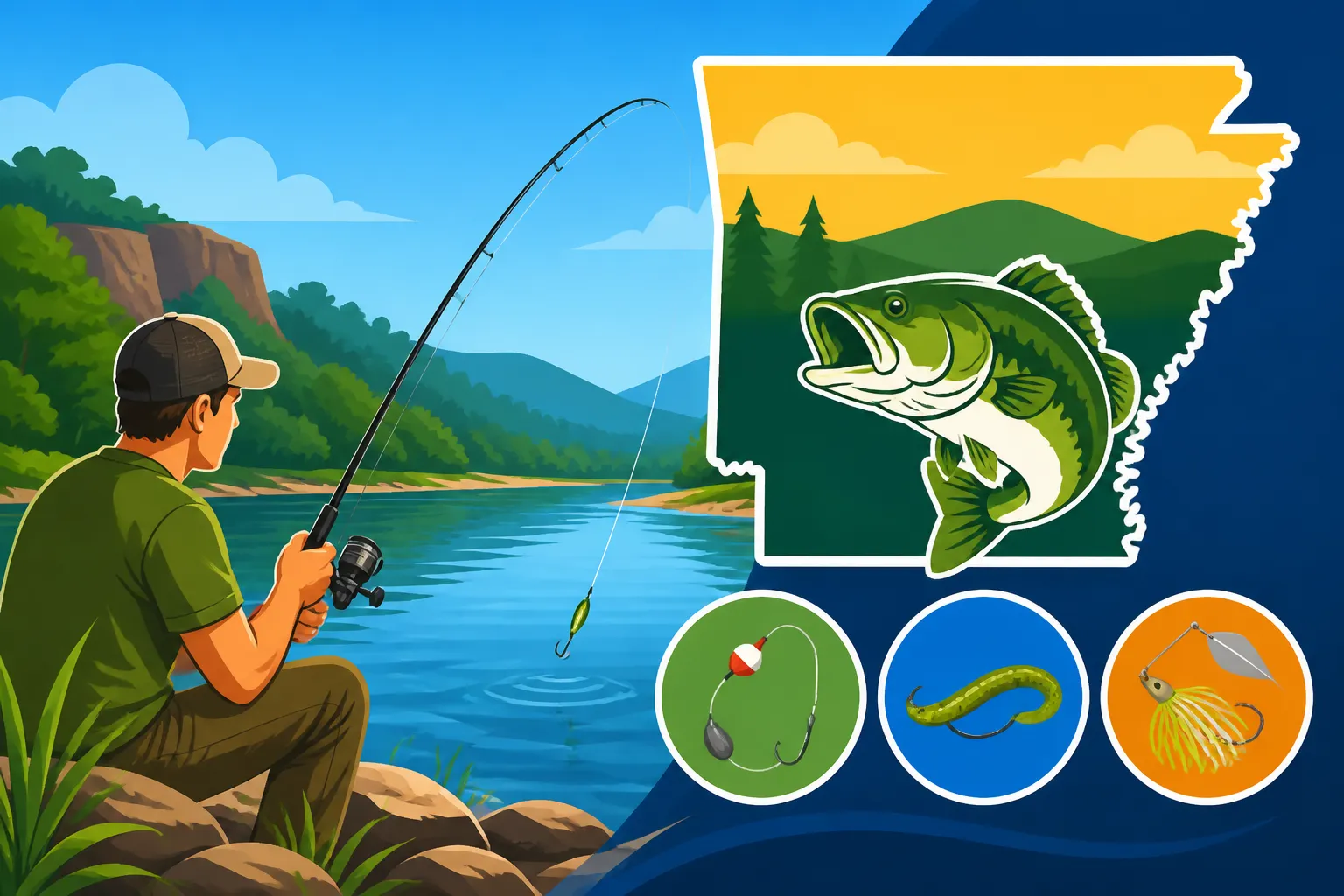
- Lures: Start with a few versatile options. Small inline spinners (like Mepps or Rooster Tail), a couple of small crankbaits that dive to different depths, and a pack of soft plastic worms or grubs with jig heads are excellent for bass and crappie. You can often find starter kits with a good assortment on Amazon.
- Bait: Live bait like worms (nightcrawlers or red wigglers), crickets, or small minnows are often irresistible to a wide range of fish and are easy to obtain from local bait shops.
Comfort and Safety Gear
While fishing is relaxing, being prepared ensures a more enjoyable and safe experience.
- Sun Protection: A wide-brimmed hat, sunglasses, and sunscreen are non-negotiable, especially during Arkansas's long, sunny days.
- Insect Repellent: Depending on the season and location, mosquitoes and ticks can be a nuisance. A good bug spray can save your sanity.
- Footwear: Comfortable, closed-toe shoes with good grip are essential, as you might be walking on uneven terrain or slippery banks.
- First-Aid Kit: A small kit with bandages, antiseptic wipes, pain relievers, and any personal medications is always a smart addition.
- Chair/Bucket: A lightweight folding chair or a five-gallon bucket (which can also double as gear storage or a livewell) can make a long day on the bank much more comfortable.
- Water and Snacks: Stay hydrated, especially in warmer weather.
- Pliers/Forceps: For hook removal, especially if a fish swallows the hook.
- Stringer or Cooler: If you plan on keeping fish, a stringer to keep them alive in the water or a cooler with ice is necessary. Make sure to consult Arkansas Fish Size and Daily Limits before keeping any fish.
Mastering Basic Bank Fishing Techniques
Getting a lure or bait into the water is only the first step. Understanding how to present it effectively and attract fish is where the real fun begins.
Casting and Presentation
A good cast isn't just about distance; it's about accuracy and stealth.
- Overhead Cast: This is the most common and generally the easiest to learn. Stand facing your target, bring the rod back to about 1 o'clock, then smoothly propel it forward, releasing the line as the rod reaches 10 o'clock. Practice in an open area until you can consistently hit your target.
- Sidearm Cast: Useful when there are overhanging branches or obstacles behind you. It involves swinging the rod out to your side, parallel to the ground, and releasing the line.
- Accuracy: Focus on landing your bait softly near cover, like a fallen log or a patch of lily pads, without spooking the fish. If your lure splashes down loudly, wait a few seconds for the ripples to dissipate before beginning your retrieve.
- Retrieve: Most lures have a recommended retrieve speed, but often, a slow, steady retrieve with occasional pauses works wonders. For soft plastics, a "lift and drop" or "drag and pause" can imitate a foraging critter. Remember, the goal is to make your bait look as natural and enticing as possible to a hungry fish.
Baiting Up and Rigging Simplified
You don't need complex rigs for bank fishing success. Simple, effective setups are often best.
- Bobber Rig: Perfect for panfish and even smaller bass. Attach a bobber a foot or two above a small hook (size #6 or #8) baited with a worm, cricket, or corn. Add a small split shot weight a few inches above the hook to help it sink. The bobber signals a bite when it dips or moves. This is a classic setup for any Family-Friendly Fishing Spots at DeGray Lake State Park or local pond.
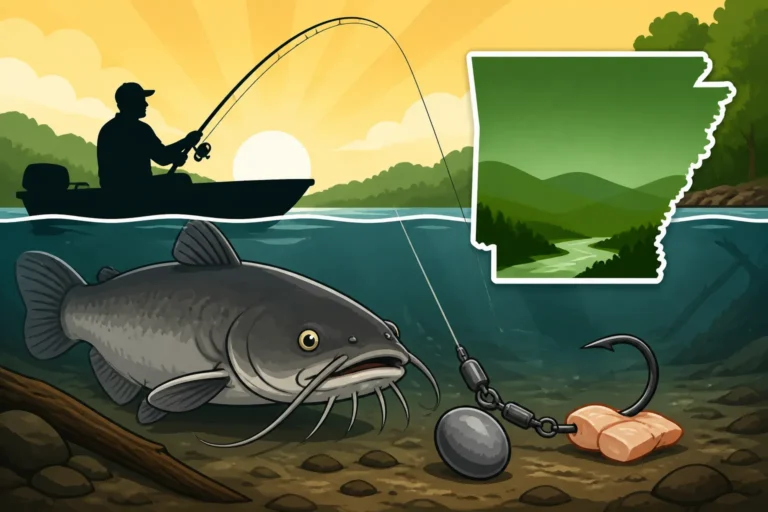
- Bottom Rig: Great for catfish, carp, and even bass. Tie a barrel swivel to your main line. On one end of a leader (about 1-2 feet long) tied to the other side of the swivel, attach your hook. Above the swivel on your main line, thread an egg sinker (allowing the line to run freely through it). The fish can take the bait without immediately feeling the weight of the sinker. Bait with cut bait, stink bait, or a large nightcrawler.
- Carolina Rig (Light Version): For targeting bass near the bottom. Thread a small bullet weight onto your main line, followed by a glass bead (optional, but creates noise), then tie on a barrel swivel. To the other end of the swivel, tie a 1-2 foot fluorocarbon leader, and then your hook. Texas-rig a soft plastic worm or creature bait onto the hook. This rig allows the bait to float freely above the weight, appearing more natural.
No matter the rig, ensure your knots are strong and secure.
Reading the Water and Locating Fish from Shore
From the bank, your "reach" is limited, so identifying high-percentage areas is crucial.
- Structure: Always prioritize casting near visible structures. Docks, fallen trees, brush piles, rock formations, and even old tires provide cover, shade, and ambush points for fish. Fish often hold tight to these features.
- Depth Transitions: Fish will often hold where shallow water meets deeper water. Look for gradual slopes or sudden drop-offs. These transitions are feeding highways.
- Current Seams: In rivers, strong currents push baitfish and insects around. Find the "seam" where fast-moving water meets slower water (like behind a large rock or a point). Fish will sit in the slower water, waiting for food to be delivered to them by the current.
- Shade: As mentioned, fish seek shade on bright days. Cast under overhanging trees, bridges, or steep banks.
- Points and Coves: Points that extend into the water concentrate baitfish and can be excellent ambush spots for predators. Coves offer calmer, often warmer water, which can be great for spawning fish or baitfish seeking refuge.
By actively observing these environmental cues, you'll dramatically increase your chances of finding fish right from where you stand.
Targeting Popular Arkansas Species from the Bank
Arkansas is home to an incredible diversity of fish, and many of the most popular species are readily catchable from the bank. Knowing a few specific tactics for each can turn a slow day into a memorable one.
Bass and Crappie Strategies
These two species are mainstays of Arkansas fishing and can be incredibly fun to catch from shore.
- Bass (Largemouth, Smallmouth, Spotted): When targeting bass from the bank, think ambush predators. They love cover. Cast parallel to the shoreline, especially along seawalls, riprap, or any structure like fallen timber. Use soft plastic worms (Texas-rigged), small spinnerbaits, or shallow-diving crankbaits. The key is to retrieve your lure right through potential ambush points. If you're fishing a lake known for bass, like Lake Conway Bass Fishing Near Little Rock, Arkansas, focus on areas with submerged vegetation or visible structure close to shore. Sometimes, the biggest bass are closer than you think.
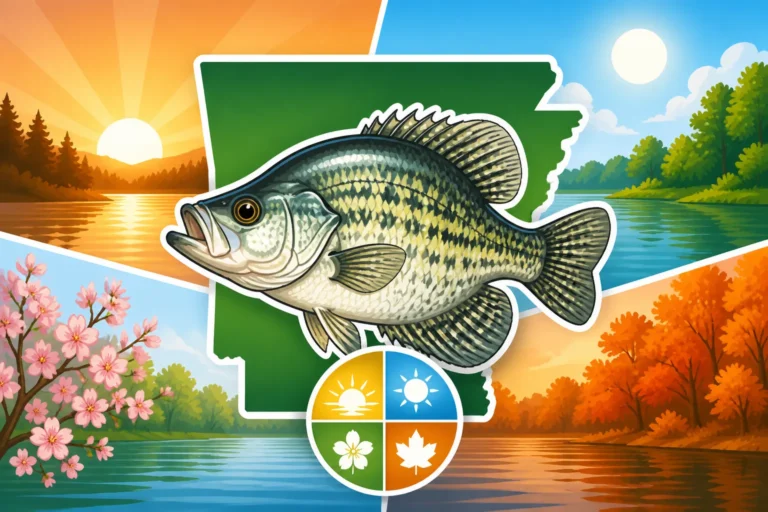
- Crappie (Black and White): Crappie are often found schooling around submerged brush piles, docks, and standing timber. From the bank, your best bet is to use small jigs (1/32 to 1/8 oz) tipped with a small soft plastic (like a Bobby Garland crappie jig) or a live minnow under a slip bobber. Adjust the bobber stop to fish at various depths until you find where the crappie are holding. A slow, subtle jigging motion is usually all it takes. Check the Arkansas Crappie Fishing Season Guide to know the best times to target these tasty panfish.
Catfish and Panfish Approaches
For consistent action and great table fare, catfish and panfish are hard to beat from the bank.
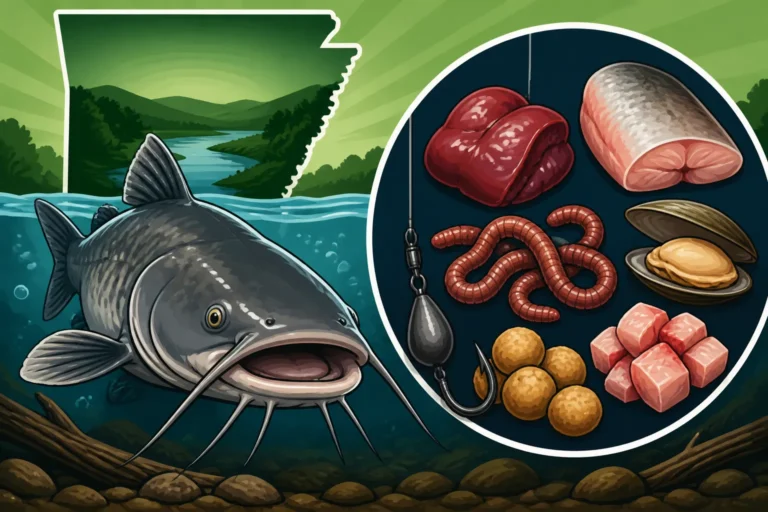
- Catfish (Channel, Blue, Flathead): Catfish are excellent targets for bank anglers because they are often found in deeper holes or along current breaks near the bottom. The easiest way to catch them is with a simple bottom rig using a heavy sinker to hold your bait in place. Use strong-smelling baits like chicken livers, stink bait, cut bait, or even chunks of hot dogs. Cast your bait out, let it sink to the bottom, and wait. Catfish bites can range from a gentle nibble to a rod-bending yank. Early mornings, evenings, and night are often prime times for catfishing. For more in-depth knowledge, refer to our Catfish Fishing Techniques Guide.
- Panfish (Bluegill, Sunfish, Perch): These are the perfect species for beginners and kids, offering consistent action. They are typically found in shallower water, around docks, lily pads, and submerged vegetation. A simple bobber rig with a small hook (size #8 or #10) baited with a piece of worm, a cricket, or even a kernel of corn is incredibly effective. Look for areas with light cover and cast your bobber rig nearby. The instant a bluegill bites, that bobber will dance! This is often the best way to get new anglers hooked on fishing. Don’t forget to check if Do Kids Need a Fishing License in Arkansas? before taking them out.
Dealing with Different Water Conditions
Water conditions play a huge role in fish behavior, and knowing how to adapt can save your day.
- Clear Water: In very clear water, fish can be spooky. Use lighter line (8lb test or less), smaller baits, and make longer casts to avoid spooking them. Natural bait colors (greens, browns, clear) often work best. Fish during low light conditions (dawn, dusk) or on overcast days when visibility is reduced.
- Muddy Water: After heavy rains, water can become murky. Fish rely more on scent and vibration in these conditions. Use larger, brightly colored lures (chartreuse, orange, white) that create a lot of vibration. Scented soft plastics or live baits are also excellent. Fish closer to the bank, as fish may move into shallower, slightly clearer areas.
- Moving Water (Rivers/Streams): In rivers, focus on current seams, eddies, and behind obstacles. Fish will face upstream, waiting for food. Cast upstream and let your bait drift naturally with the current, retrieving slowly as it passes through prime holding spots. Heavier weights might be needed to keep your bait on the bottom in stronger currents.
Finding Your Perfect Bank Fishing Spot in Arkansas
Arkansas is truly the "Natural State," offering countless beautiful and accessible places to wet a line from shore. Knowing where to look can make all the difference.
Public Access Points and State Parks
The Arkansas Game and Fish Commission (AGFC) and the Arkansas State Parks system maintain numerous public access points that are fantastic for bank fishing.
- State Parks: Many state parks feature lakes, rivers, and ponds with designated fishing piers, bank access, and picnic areas, making them ideal for a family outing. Places like Lake Ouachita State Park or DeGray Lake Resort State Park offer excellent bank access and a chance to catch a variety of species. You can explore more options in our guide to Arkansas State Parks with the Best Fishing Access.
- AGFC Access Areas: These are typically boat ramps but often include generous bank access, particularly on rivers and larger lakes. Websites like AGFC's interactive map can pinpoint these locations for you.
- Corps of Engineers Lakes: Major reservoirs like Greers Ferry Lake, Beaver Lake, or Bull Shoals Lake, managed by the U.S. Army Corps of Engineers, often have extensive shorelines open to public fishing. Look for day-use areas, dam sites, or campground access points.
Before heading out, a quick online search for "public fishing access Arkansas" or checking the AGFC website will yield a wealth of information.
Urban Ponds and Community Fishing Lakes
You don't always have to drive far to find great bank fishing. Many cities and towns across Arkansas have community ponds that are regularly stocked with fish.
- Family-Friendly: These often feature paved paths, picnic tables, and accessible fishing piers, making them perfect for beginners, children, or those with mobility challenges. They are generally well-maintained and offer a high chance of catching panfish, catfish, and sometimes even bass.
- Stocked Waters: The AGFC frequently stocks these urban lakes with catfish and trout during cooler months, providing excellent opportunities. Check the AGFC stocking schedule for your area. These spots are fantastic for a quick trip after work or school, or for introducing someone to fishing without the long drive.
Respecting Property and Regulations
While public access is abundant, it's crucial to be a responsible angler.
- Private Property: Always be aware of your surroundings and respect private property. Look for "No Trespassing" signs. If you're unsure, it's best to find another spot. Fishing from someone's private land without permission is illegal.
- Regulations: Familiarize yourself with the Arkansas Fishing Regulations Guide. These rules cover everything from daily limits and size restrictions to specific tackle requirements in certain waters. Regulations can change, so it's good practice to review the current guide each year. This also includes understanding where and when you might need a Do you need a trout permit to keep trout in Arkansas? if you're targeting those cold-water species.
- Leave No Trace: Always pack out everything you pack in, and perhaps even a little extra litter you find. Leaving your fishing spot cleaner than you found it ensures that these precious resources remain beautiful and accessible for everyone to enjoy for years to come.
Troubleshooting Common Bank Fishing Challenges
Every angler, from seasoned veterans to absolute beginners, faces challenges. Bank fishing has its own unique set of hurdles, but with a little foresight and know-how, you can overcome them and still have a successful day on the water.
Dealing with Snags and Lost Lures
This is perhaps the most frustrating aspect of bank fishing, especially when you're casting near prime fish-holding cover. Losing lures or breaking off lines can quickly empty your tackle bag and dampen your spirits.
- Prevention is Key: Before you cast, take a moment to assess the area. Are there submerged logs, thick brush, or rocky bottom structures where your lure might get hung up? If so, try to cast just past the structure and retrieve your lure over it, rather than directly into it.
- Lure Selection: In snaggy areas, consider using weedless hooks (like a Texas rig for soft plastics) or topwater lures that stay above the snags.
- Retrieve Techniques: If you feel your lure bumping something on the bottom, often a quick, sharp snap of the rod tip can dislodge it before it gets truly stuck. If using a crankbait that dives deep, try to keep your rod tip high to reduce its diving depth near snags.
- Retrieval Tools: A lure retriever tool, available on Amazon or at most tackle shops, can sometimes save those expensive lures. It’s essentially a weighted chain or wire that you slide down your line to snag and pull your stuck lure free. Always carry extra hooks, weights, and a few basic lures to avoid cutting your trip short.
Managing Crowds and Limited Space
Popular bank fishing spots, especially in urban areas or well-known public parks, can sometimes get crowded. This can lead to tangled lines or difficulty finding a good spot.
- Timing is Everything: Try to fish during off-peak hours. Early mornings (just after dawn) or late evenings (approaching dusk) are often less crowded and can also be prime feeding times for many fish species. Weekdays are generally less busy than weekends.
- Explore Less Obvious Spots: Don't be afraid to walk a little further. Sometimes, the best spots are just a short hike away from the main parking area. Look for trails that lead to quieter sections of the bank.
- Be Courteous: If you find yourself in a crowded area, give other anglers ample space. Avoid casting over their lines or getting too close. A friendly nod or greeting goes a long way in maintaining a pleasant atmosphere. If you're consistently running into crowds, consider researching some of The Best Remote and Less-Crowded Fishing Spots in Arkansas.
Adapting to Weather Changes
Arkansas weather can be unpredictable, and a sudden change can impact both your comfort and fishing success.
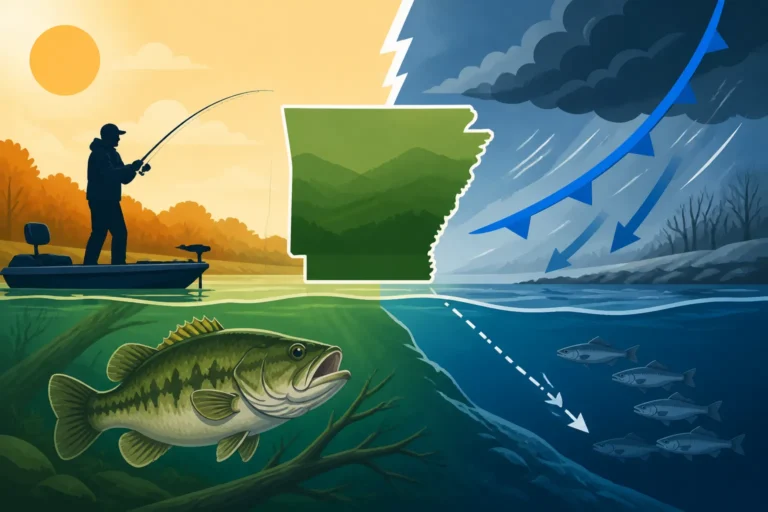
- Rain: A light rain can often turn on the bite, especially for bass and crappie. However, heavy rain can muddy the water and make fishing challenging. Always pack lightweight rain gear (a waterproof jacket and pants) in your bag, just in case.
- Temperature: Dress in layers so you can adjust to changing temperatures throughout the day. In summer, focus on staying cool and hydrated. In cooler months, proper insulation is key. Fish behavior changes with temperature; colder water often means fish are deeper and less active, while warmer water can bring them to the shallows.
- Wind: Wind can make casting difficult and make it hard to feel subtle bites. Try to find a sheltered cove or a bank that offers some protection from the wind. If the wind is strong, you might need to use heavier weights to keep your bait in place or switch to lures that are less affected by wind resistance.
By being prepared for these common challenges, you can minimize frustration and maximize your enjoyment, ensuring your bank fishing trips in Arkansas are always successful, no matter what nature throws your way.
Disclaimer
Fishing involves inherent risks, including but not limited to injuries from hooks, slippery surfaces, and wildlife encounters. Always exercise caution, be aware of your surroundings, and prioritize safety. This guide provides general information and recommendations; local regulations, conditions, and best practices may vary. Consult the latest Arkansas Game and Fish Commission regulations before any fishing trip.