How to Read Water Temperature for Bass Fishing
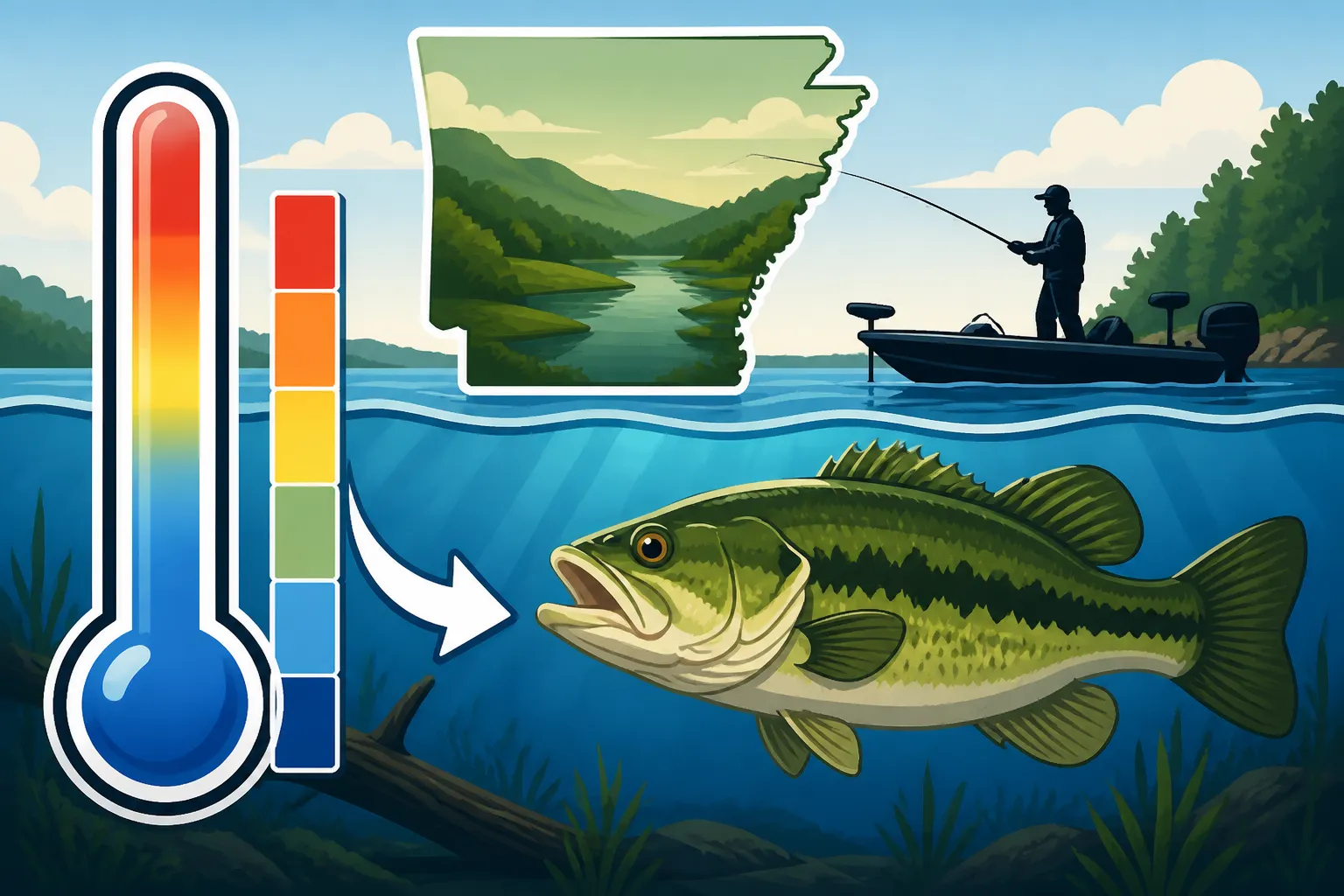
Oh, the age-old question that keeps us bass anglers up at night: "Why aren't they biting?" More often than not, the answer boils down to something you can't see but can definitely feel: water temperature. If you've ever felt frustrated by unproductive outings, this guide is here to help you crack the code on how to read water temperature for bass fishing in Arkansas, transforming those blank days into memorable catches.
Why Water Temperature Matters So Much for Bass
Understanding water temperature isn't just a fancy scientific detail; it's the fundamental key to unlocking bass behavior. Think of it like a thermostat for fish. Bass, being cold-blooded creatures, have their entire metabolism dictated by the temperature of their surroundings. This isn't just about comfort; it impacts everything from how often they need to eat to when they decide to spawn. Ignoring this crucial factor means you're often fishing in the wrong place, with the wrong lure, at the wrong time.
Metabolism and Activity Levels
Imagine yourself in a sauna versus an ice bath. Your body reacts very differently in each, right? Bass are no different. In warmer waters, their metabolism kicks into high gear. They digest food faster, need to eat more frequently, and are generally more active. This means they're burning more energy, making them more aggressive and willing to chase down a meal. Conversely, in colder water, their metabolism slows way down. They conserve energy, move sluggishly, and don't need to feed as often. A bass in 40-degree water might only eat once every few days, compared to a bass in 75-degree water that might feed several times a day. Knowing this helps you gauge their overall mood and how much effort they're willing to expend to bite your lure.
Spawning Triggers and Timing
Water temperature is the ultimate alarm clock for the bass spawn. It's not just a suggestion; it's the primary signal that tells male and female bass it's time to reproduce. In Arkansas, you'll find that the magic numbers typically fall within a specific range, and you can dive deeper into that with our Arkansas Bass Spawn Fishing Guide. As the water gradually warms in spring, bass begin to migrate from deeper wintering holes to shallower spawning grounds. Missing this window, or misinterpreting the temperature cues, can mean missing out on some of the most exciting and productive fishing of the year. When the water hits that sweet spot, bass are focused on bedding, protecting eggs, and often, aggressively striking anything that gets too close.
Forage and Habitat Preference
Temperature doesn't just affect the bass; it affects everything they interact with. Their prey—like shad, sunfish, and crawfish—also have preferred temperature ranges. If the baitfish are uncomfortable and deep, the bass will follow. If the crawfish are active on rocky banks, the bass will be there too. This extends to vegetation as well; certain types of weeds thrive in warmer water and die back in colder conditions, directly impacting where bass can find cover and ambush points. Understanding these interconnected relationships, driven by temperature, allows you to predict where both the bass and their food will be holding, leading you to prime fishing spots.
Understanding Bass Behavior at Different Temperatures
Since water temperature dictates everything for bass, it stands to reason that their behavior changes dramatically as the mercury rises and falls. Knowing what to expect in each range is like having a secret playbook for every season. This insight is critical for anglers looking to adapt their tactics throughout the year, from the frigid days of winter to the scorching heat of summer.
Cold Water (Below 50°F / 10°C)
When the water dips below 50 degrees Fahrenheit, bass are in full-on winter mode. They're sluggish, their metabolism is slow, and they're conserving energy. You won't find them chasing fast-moving baits or actively cruising shallow flats. Instead, they tend to congregate in deeper, more stable water where temperatures are slightly warmer and more consistent. Think deep channels, humps, creek beds, or around submerged timber and rock piles.
In these conditions, patience is your greatest virtue. Bass bites will be subtle, often feeling like just a little extra weight on your line. Your presentation needs to be painfully slow, almost teasing them into biting. Jigging spoons, blade baits, or suspending jerkbaits that you can let sit motionless for several seconds are excellent choices. Don't be afraid to leave your lure in the strike zone for a long, long time. Remember, they're not actively hunting; they're reacting to an easy meal that practically bumps them on the nose.
Pre-Spawn (50-60°F / 10-15.5°C)
This is perhaps one of the most exciting times of the year for bass fishing in Arkansas! As the water climbs into the 50s, bass shake off their winter lethargy and start thinking about the spawn. This period, often covered in detail in guides like Pre-Spawn Bass Fishing Patterns, sees them migrating from deep wintering areas toward shallower flats and staging points near future spawning grounds. They're still somewhat deep, but they're making their move and beginning to feed heavily to build up energy for the arduous spawning process.
You'll often find them suspended over humps, points, and channel swings, or cruising the edges of flats where they can ambush baitfish. This is a time for power fishing and slower presentations. Crankbaits, spinnerbaits, chatterbaits, and lipless crankbaits can be incredibly effective as bass are willing to chase a meal. If the water is on the lower end of this range (50-55°F), suspending jerkbaits are still a killer, allowing you to pause them in the strike zone where bass are staging. As temperatures creep higher, faster moving baits become more effective. They're hungry, aggressive, and on the move!
Spawn (60-70°F / 15.5-21°C)
The spawn is when bass are fully focused on reproduction. Once the water consistently hits the 60-degree mark, you'll find bass, particularly the males, preparing beds in shallow, protected areas. This is where they lay and guard their eggs. For more on this critical period, check out our Best Water Temperature for Bass Spawn in Arkansas guide. While bass are protective, they're not necessarily actively feeding in the traditional sense. They're reacting to intruders.
Sight fishing becomes a popular technique if conditions allow. Look for light-colored circular patches on the bottom in shallow coves, points, and protected flats. Presenting soft plastics like lizards, tubes, or creature baits directly onto a bed can trigger a territorial strike. Males will often nudge the lure off the bed, but if you keep putting it back, they'll eventually pick it up to remove it entirely, leading to a bite. Females will be nearby, often in slightly deeper water adjacent to the beds, and can be caught on swim jigs or small crankbaits.
Post-Spawn & Summer (70-85°F+ / 21-29°C+)
Immediately after the spawn, bass enter a brief recovery period. They're exhausted from spawning and may be lethargic for a week or two, often holding in slightly deeper water adjacent to the spawning flats. This can be a tricky time, but as they recover, and as water temperatures continue to climb into the summer range, their hunger returns with a vengeance. For more on summer strategies, see our guide on Summer Bass Fishing Patterns.
In the heat of summer, bass often revert to a deep-water pattern during the day, seeking cooler, oxygen-rich water. Look for them on offshore humps, ledges, brush piles, and points, often relating to thermoclines (layers of water with different temperatures). Early mornings, late evenings, and cloudy days can bring them shallower to feed. Topwater lures are fantastic during these low-light periods. During the day, deep-diving crankbaits, heavy jigs, Texas-rigged worms, and Carolina rigs are go-to choices for probing deep structure. You'll want to employ tactics to How to Find Bass in Summer Heat.
Fall Turnover (55-65°F / 13-18°C)
Fall fishing can be phenomenal, but it often starts with a period of "turnover" when surface waters cool and sink, mixing with deeper layers. This can disorient fish for a short time. Once the lake "sets up" again, and the water temperatures stabilize in the 55-65°F range, bass enter a major feeding frenzy to fatten up for winter. Our Fall Fishing Patterns for Bass and Crappie goes into more detail.
They'll often chase schools of baitfish in open water, along points, and in creek channels. Spinnerbaits, buzzbaits, squarebill crankbaits, and swimbaits are excellent for covering water and finding active schools. Don't forget about jigging spoons or dropshots for bass suspending off points as they follow bait. The key is to find the bait, and you'll often find the bass gorging themselves.
Here's a quick summary table of bass behavior and recommended approaches based on water temperature:
| Water Temperature Range | Bass Behavior | Key Locations | Recommended Lures/Techniques |
|---|---|---|---|
| Below 50°F (Winter) | Sluggish, conserving energy, subtle bites | Deepest holes, creek channels, timber | Jigging spoons, blade baits, suspending jerkbaits (slow) |
| 50-60°F (Pre-Spawn) | Migrating, feeding heavily, aggressive | Staging points, deeper flats, channel swings | Crankbaits, spinnerbaits, lipless crankbaits, jerkbaits (medium-fast) |
| 60-70°F (Spawn) | Focused on reproduction, territorial | Shallow coves, protected flats, beds | Soft plastics (lizards, tubes) on beds, swim jigs, small crankbaits |
| 70-85°F+ (Summer) | Deep during day, shallow at low light | Offshore humps, ledges, brush piles, thermoclines | Deep crankbaits, jigs, Texas/Carolina rigs, topwater (low light) |
| 55-65°F (Fall) | Feeding frenzy, chasing baitfish | Points, creek channels, open water | Spinnerbaits, buzzbaits, squarebill crankbaits, swimbaits (fast) |
Tools and Techniques for Measuring Water Temperature
You can't effectively adapt your strategy to water temperature if you don't know what it is! Luckily, there are several reliable ways to get this crucial data, from high-tech gadgets to simple, reliable tools you can pick up on Amazon. Don't guess; measure!
On-Boat Electronics Fishfinders/GPS Combos
For those serious about their bass fishing, modern marine electronics are invaluable. Most quality fishfinders and GPS chartplotter combos, like those from popular brands, come equipped with built-in water temperature sensors. These sensors are typically mounted on the transom or within the trolling motor, providing real-time surface temperature readings. Some advanced units even offer water column temperature profiles, showing you temperature changes at different depths—a game-changer for finding thermoclines in summer.
The beauty of these units is the continuous feedback. As you move around the lake, you'll see the temperature fluctuate, allowing you to instantly identify warmer pockets in spring or cooler areas in summer. You can mark these temperature breaks as waypoints, building a valuable database of productive areas. Getting a good grasp on the water temperature is vital for knowing when to hit up specific areas on a lake or river, helping you plan your Arkansas Fishing Seasons Guide more effectively. Investing in a good unit provides not only depth and structure information but also the temperature insights that can literally put fish in your boat.
Handheld Thermometers
You don't need a fancy boat full of electronics to get accurate temperature readings. A simple, reliable handheld water thermometer is an inexpensive and essential tool for any angler. Many models are available, from basic floating designs to more robust digital options with a probe on a cord, which you can find readily on Amazon. These are particularly useful for bank anglers, kayakers, or those who want to confirm the readings from their boat electronics.
To use one, simply submerge the probe or the entire thermometer into the water for a minute or two, allowing it to acclimate to the water temperature. For surface readings, dipping it a few inches below the surface is usually sufficient. If you want to check temperatures at different depths, you can tie a small weight to the thermometer (if it's not designed to sink) and lower it down, letting it sit for a few minutes before reeling it back up quickly to get a reading before it changes too much. This method is fantastic for scouting out subtle temperature changes in shallow coves or identifying that crucial temperature break where bass might be holding.
Reading the Environment Indirect Clues
Sometimes, your eyes and intuition are your best tools, especially when combined with a little knowledge about your environment. While not as precise as a thermometer, these indirect clues can help you narrow down areas before you even drop a line.
Look for areas with different sun exposure. A shallow, dark-bottomed cove that receives direct sunlight all day will warm up faster in the spring than a deep, shaded channel. Conversely, in summer, shaded areas or those with current will often be cooler. Pay attention to inflows: a creek dumping cooler spring water into a main lake can create a temperature break, attracting bass. Outflows from dams, like the White River below Bull Shoals Dam, are known for their consistently cold water, creating ideal trout habitats but also drawing bass seeking cooler temperatures during hot months. Even the presence of active baitfish on the surface can tell you something about the water temperature and the comfort level of the food chain. Reading these subtle cues, along with information from our Best Time of Year to Fish in Arkansas guide, enhances your ability to predict where bass might be holding, even without a direct thermometer reading.
Putting It All Together: Seasonal Strategies by Temperature
Knowing the temperature is one thing, but knowing how to use that information to make strategic decisions is where you become a truly effective angler. It's about combining your temperature data with your understanding of bass behavior and applying it to your lure selection, depth targeting, and overall approach.
Applying Temperature Knowledge for Lure Selection
This is where the rubber meets the road. Once you know the water temperature, you can select lures that match the bass's activity level and preferred forage. For instance, if the water is cold (below 50°F), bass are lethargic. A fast-moving crankbait or a topwater lure will likely be ignored. Instead, a jig-and-pig, a suspending jerkbait, or a slowly dragged soft plastic will be much more effective because it presents an easy, non-threatening meal. You can find more specific advice in our guide on how to catch bass in cold water.
As the water warms into the pre-spawn range (50-60°F), bass become more active and aggressive. This is when lipless crankbaits, spinnerbaits, and medium-diving crankbaits shine, allowing you to cover water and trigger reaction bites. The bass are actively feeding, so they're more willing to chase. In the peak of summer (75°F+), when bass are deep during the day, large deep-diving crankbaits, heavy jigs, and Carolina rigs are your best friends. At dawn or dusk, when they might push shallower, topwater baits or buzzbaits are excellent. Each temperature range suggests a particular speed and action for your lure, optimizing your chances of a strike. You can even find guides on Best Lures for Summer Bass Fishing to help you refine your tackle box.
Targeting Specific Depths and Structures
Water temperature doesn't just tell you what kind of lure to use; it also tells you where to cast it. In colder water, bass often gravitate to the deepest parts of the lake—creek channels, river bends, and main lake points where the water is most stable and a few degrees warmer than the frigid shallows. They might be hugging the bottom or suspended in deep water.
During the pre-spawn, they'll start moving shallower, but often stage on the first break line outside of potential spawning coves. This means you might find them 10-15 feet deep, rather than 20-30 feet. When the water hits the spawn zone, you're looking for ultra-shallow, protected areas: backs of coves, shallow pockets, and flats with hard bottoms. In the hot summer, bass will seek cooler water, often deep humps, ledges, or brush piles, or they might suspend over deep water near a thermocline. Using a How to Fish Deep Structure for Bass approach will be key. Understanding the interplay between temperature and available structure allows you to pinpoint precisely where the fish should be, rather than just casting blindly.
Adapting to Daily Fluctuations
It's important to remember that water temperature isn't static. It changes throughout the day, especially in shallower areas. A sunny spring morning might see a shallow cove warm up a few degrees by midday, drawing bass up from slightly deeper water. A cloudy, windy day might keep the surface temperatures cooler. Being aware of these minor, daily fluctuations and how they impact Bass Fishing Techniques by Season can give you a significant edge.
This means being flexible. If you start your morning fishing deep, slow baits in 48°F water, but by noon, that shallow, sunny flat has climbed to 53°F, it might be time to pick up a crankbait and start targeting those warmer, shallower areas where bass are starting to feed more actively. Pay attention to how the sun angle, cloud cover, and wind affect the surface temperature readings on your fishfinder. These micro-changes can trigger short feeding windows or push bass into different areas, and the angler who adapts fastest is usually the one who catches more fish.
Disclaimer
This article is for general informational purposes only and does not constitute professional advice. Laws, prices and regulations vary by location and change over time. Consult a qualified professional for guidance on your specific situation.