Best Fly Patterns for Tailwater Trout
Navigating the ever-changing flows and unique ecosystems of Arkansas's tailwater fisheries can feel like trying to solve a complex puzzle, especially when it comes to choosing the right fly patterns. Many anglers, even experienced ones, find themselves staring at their fly box, wondering which tiny imitation will unlock the day's bite. The truth is, the trout in our renowned tailwaters, like the White River and Norfork River, can be incredibly selective, demanding precise imitations to match their natural food sources. This comprehensive guide will break down the best fly patterns for tailwater trout in Arkansas, helping you build a versatile fly box and understand how to choose the perfect fly for any given condition.
Decoding Arkansas Tailwaters: The Canvas for Your Fly Selection
Arkansas is blessed with some of the finest tailwater trout fisheries in the country, primarily thanks to the releases from the major dams on the White River system. These include the world-famous White River below Bull Shoals Dam, the Norfork River below Norfork Dam, and the Little Red River below Greers Ferry Dam. What makes these waters so unique, and subsequently, challenging for fly anglers, is the constant fluctuation in water levels, temperatures, and clarity due to hydropower generation.
These tailwaters create a cold, nutrient-rich environment that supports an incredible density of aquatic insects and baitfish, leading to thriving trout populations, including rainbow, brown, cutthroat, and brook trout. However, the trout in these waters become highly accustomed to specific food items that are prevalent at different times and water conditions. Successfully matching these abundant food sources is the cornerstone of effective fly fishing here. Understanding what creatures are naturally present in these cold, clear waters is your first step to choosing the right fly patterns. From tiny midges to larger scuds and various baitfish, the menu is diverse, and your fly box needs to reflect that variety.
When you're out on the water, whether it's the legendary stretch of the White River Below Bull Shoals Dam on the White River or the fertile Norfork Tailwater, pay close attention to the water conditions. Is the water low and clear? Are the generators running, creating high flows? Is there any turbidity after a recent rain? These factors drastically impact what the trout are feeding on and how accessible those food sources are. A high, fast current might dislodge larger insects, while low, slow water often means the trout are focused on tiny, emerging midges.
The Essential Nymph Arsenal: Going Deep for Arkansas Trout
Nymphs are undeniably the bread and butter of tailwater trout fishing in Arkansas. Trout spend the vast majority of their lives feeding subsurface, and these tiny larval and pupal insect imitations are often the most productive fly patterns. You simply cannot head to the White or Norfork without a well-stocked box of nymphs. The key to success is not just having them, but understanding when and how to present them.
Micro Midges and Zebra Midges: The Unsung Heroes
If there's one fly pattern that consistently produces on Arkansas tailwaters, it's the midge. Midges are small, two-winged insects that are present year-round in these cold, stable environments, representing a constant food source for trout. They hatch in staggering numbers, and trout become highly conditioned to feed on their larval and pupal stages.
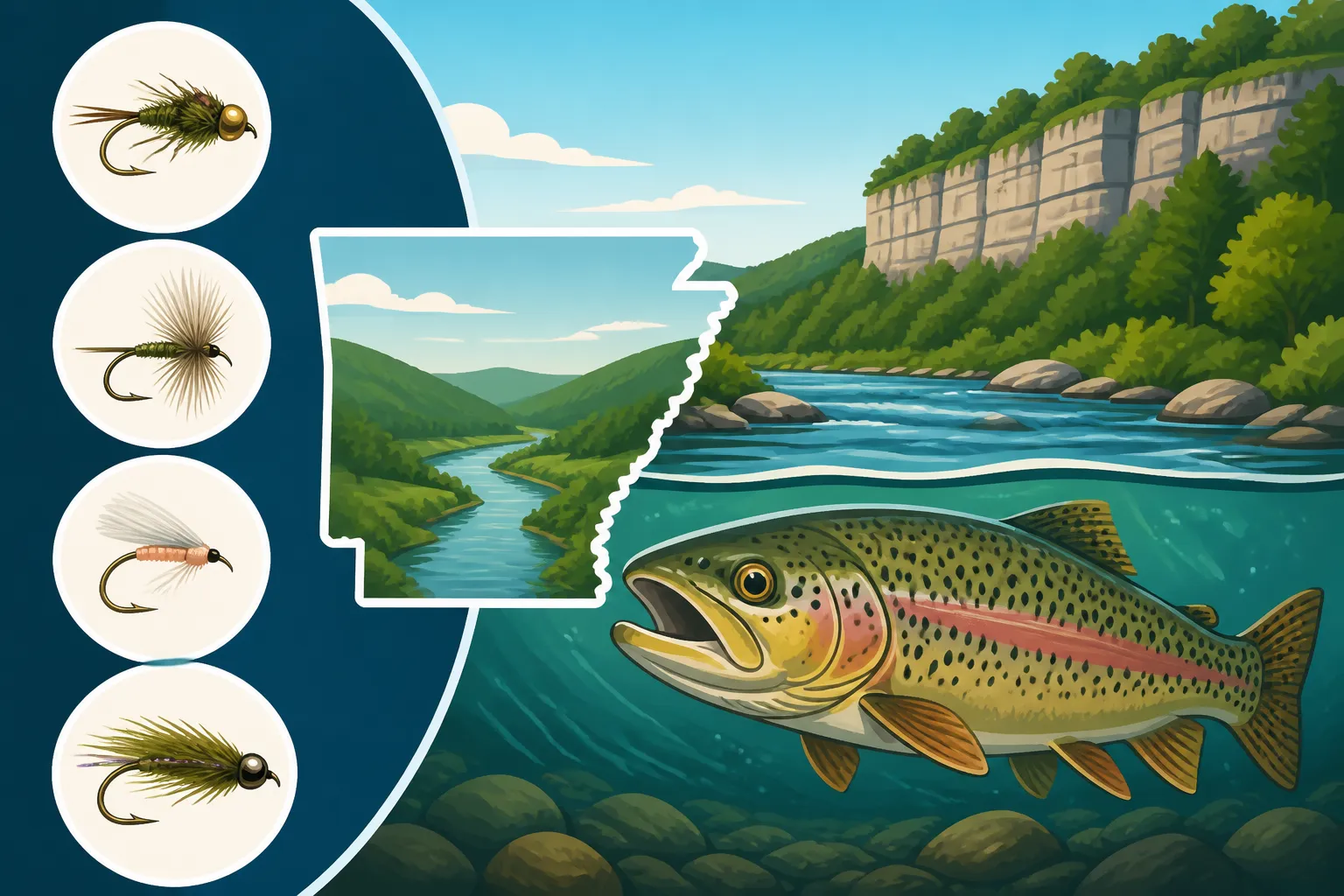
The Zebra Midge is probably the most iconic and essential midge pattern. Typically tied on a size #18 to #22 hook with a tungsten bead head, it mimics the pupal stage of a midge perfectly. The segmented body, often wrapped in fine wire (black, red, green, or silver are popular), provides just enough flash and realism. When you see trout subtly sipping or "porpoising" in slow water, often they're feeding on emerging midges in the water column or just below the surface. A Zebra Midge drifted under a small strike indicator or as a dropper off a larger nymph can be deadly. You can often find multi-packs of these versatile flies on Amazon, which is a great way to stock up on different colors and sizes.
Beyond the Zebra Midge, having a selection of other micro-midge patterns is crucial. Think about basic black, cream, red, and olive midge larvae imitations (often just a simple thread body with a fine wire rib) in sizes down to #24 or even #26. These are fished similarly to Zebra Midges and are indispensable during periods of low, clear water when trout are at their most selective.
Caddis Larva and Pupa Imitations: More Than Just a Hatch
Caddisflies are another incredibly important food source in Arkansas's tailwaters. While anglers often associate caddis with explosive dry fly hatches, their larval and pupal stages are available to trout throughout the year. Caddis larvae often build protective cases of sand, gravel, or bits of vegetation, while the pupae emerge from these cases to ascend to the surface.
Patterns like the Psycho Caddis or LaFontaine's Sparkle Pupa are fantastic imitations of the emerging caddis pupa, with their characteristic air bubble trapped under their shuck. These patterns often incorporate an antron shuck or sparkly dubbing to mimic this effect. They are typically fished in sizes #14 to #18 and are particularly effective when generators are running, dislodging these insects, or when you notice adult caddis flying around, indicating a potential subsurface migration. Other patterns like a simple Green Rock Worm (a caddis larva imitation) can be very productive fished along the bottom, especially in faster currents where natural larvae are tumbled.
Mayfly Nymphs: The Classic Tailwater Staples
Mayflies, with their classic upright wings, are a cornerstone of any trout stream, and Arkansas's tailwaters are no exception. Various species of mayflies inhabit these rivers, and trout feed heavily on their nymphal stages. Having a good selection of mayfly nymphs is non-negotiable.
The Pheasant Tail Nymph is a universally effective pattern that mimics a wide range of mayfly species. It's subtle, realistic, and highly versatile. Available in sizes #12 to #20, with and without bead heads, it should be a staple in your box. The bead-head version is excellent for getting down quickly in current, while the non-bead-head version can be effective as a dropper in slower water.
Similarly, the Hare's Ear Nymph is another time-tested pattern that imitates a variety of crawling and swimming mayfly nymphs. Its buggy, shaggy appearance is highly attractive to trout. I like to carry them in natural and olive colors, again from #12 to #20. These patterns, like the Pheasant Tail, are incredibly reliable throughout the year. When nymphing for trout, a common tactic is to use a heavier nymph like a tungsten bead Hare's Ear as your lead fly and then trail a smaller pattern, like a Zebra Midge, behind it.
Scuds and Sowbugs: The Freshwater Shrimp Buffet
One of the defining characteristics of many productive tailwaters, including the White and Norfork, is the abundance of scuds (freshwater shrimp) and sowbugs (aquatic isopods). These crustaceans thrive in the cold, calcium-rich waters and form a significant portion of a trout's diet, particularly for larger fish. Neglecting these patterns is a huge mistake when Arkansas Fishing Regulations Guide or the latest Arkansas Fishing License Rules and Costs are out of the way and you're ready to fish.
Scud patterns should be tied in olive, gray, tan, and pink, ranging from sizes #12 to #18. They have a characteristic curved, shrimp-like profile. They are incredibly effective when fished near the bottom, especially when the water is slightly off-color or after a generation event, which dislodges them from the substrate. Look for patterns with a bit of flash or ribbing to catch the light.
Sowbug patterns are typically grayer and have a flatter profile, mimicking these bottom-dwelling invertebrates. Patterns like the Ray Charles or a simple Gray Sowbug tied with dubbing are essential. Sizes #14 to #20 are standard. Trout can become absolutely fixated on these creatures, and a well-presented sowbug can often fool even the most educated fish. Don't be afraid to fish these directly on the bottom, sometimes with a little weight to ensure they tumble along naturally.
Streamers and Dries: When to Go Big or Go Surface
While nymphs dominate the subsurface game, there are definitely times and conditions in Arkansas's tailwaters when a more aggressive approach with streamers or a delicate presentation with a dry fly will outperform everything else. Having a selection of these patterns ready can turn a slow day into a memorable one.
The Power of Streamers: Triggering Aggression
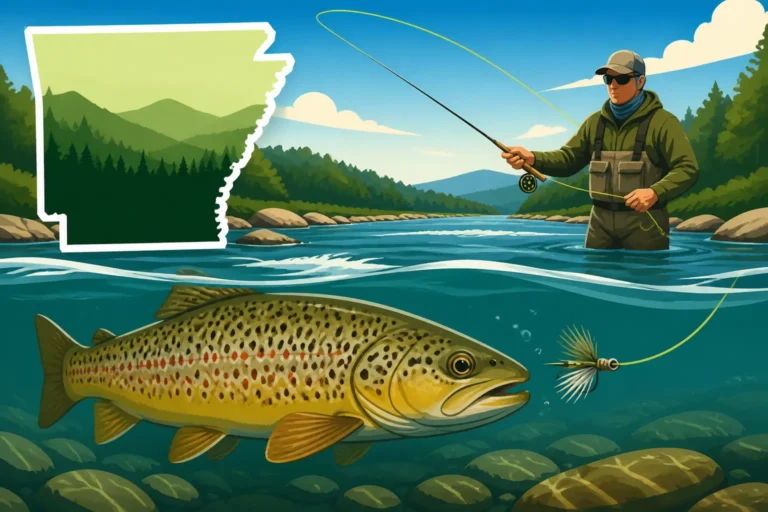
Streamers are designed to imitate baitfish, sculpins, or larger aquatic organisms. They appeal to the predatory instincts of trout, especially larger brown trout. If you're targeting a trophy, streamers are often your best bet, particularly on the White River, known for its monster browns.
The Woolly Bugger is a classic, versatile streamer that every angler should have. It can imitate anything from a leeches to a small baitfish. I carry them in black, olive, brown, and white, in sizes #4 to #10. Fished with a sink-tip line or weighted heavily, they can be stripped aggressively, swung across currents, or even dead-drifted like a nymph. For a little extra flash, the Krystal Bugger, which incorporates krystal flash into the tail and body, is an excellent choice. Many guides who fish below the Bull Shoals Dam on the White River swear by them.
Sculpin imitations, such as the Sculpzilla or Dally's Lap Dancer, are excellent for mimicking the bottom-dwelling sculpins that trout love to ambush. These flies often have a flattened head and a bulky profile. They are best fished on heavier tippet, close to the bottom, with erratic strips to imitate a fleeing baitfish. Larger articulated streamers, which have multiple segments for enhanced movement, can also be incredibly effective for enticing the largest trout in the system, especially when the water is high and slightly off-color. A quick search on Amazon reveals many great options for these more specialized patterns, often bundled for convenience.
Dry Flies: The Magic of Surface Takes
While tailwater trout are often thought of as primarily subsurface feeders, there are definitely times when the surface bite turns on, and a well-presented dry fly can lead to exhilarating takes. This is often during specific insect hatches or when conditions are just right.
Small mayflies, like the Blue-Winged Olive (BWO), are perhaps the most reliable dry fly hatch on Arkansas tailwaters, especially in cooler weather during the spring and fall. These tiny dark olives typically hatch on cloudy or overcast days, creating a feeding frenzy. Having BWOs in sizes #18 to #22, both parachute and standard dun patterns, is crucial. If you see trout rising gently and consistently, particularly in slicks or slower eddies, chances are they're on BWOs.
Caddis hatches can be prolific, especially in the warmer months. Patterns like the Elk Hair Caddis or a simple Grannom Caddis in sizes #12 to #16 are excellent choices. These flies float well and have a buggy profile that drives trout wild. Look for caddis hatches in the late afternoon or evening, particularly on rivers like the Norfork Tailwater, which can have very strong caddis populations.
Finally, don't overlook terrestrials during the summer and early fall. Grasshoppers, ants, and beetles often fall into the water, providing a substantial meal for opportunistic trout. Carrying patterns like a Dave's Hopper, a simple Ant imitation, or a Beetle pattern in various sizes can be incredibly effective when fished along grassy banks or under overhanging vegetation. These can often be found in good quality from reputable sellers on Amazon, especially if you're looking for variety.
Mastering the Hatch: When, Where, and How to Choose Your Fly
Knowing which fly patterns to have is only half the battle. The real art of tailwater fly fishing lies in understanding when and where to deploy them. It's about matching the hatch and conditions to present the most appealing meal to the trout. This is where your observation skills really come into play, and why seasoned anglers are always scanning the water and banks. For more insights into the yearly rhythm, check out our White River Fly Fishing Season Guide for Arkansas Anglers.
Reading Water Levels and Clarity
The single biggest factor influencing fly choice on Arkansas tailwaters is the generation schedule and subsequent water level. The Army Corps of Engineers manages the dams, and their releases dictate the river's flow.
- Low, Clear Water: When the generators are off and the water is low and clear, trout become extremely wary and selective. This is when tiny midges, small sowbugs, and micro-mayfly nymphs (size #20 and smaller) really shine. Your presentation needs to be immaculate, using light tippet (5x, 6x, or even 7x fluorocarbon) and longer leaders. Dry fly fishing for Brown Trout on the White River or Rainbow Trout Fishing Below Bull Shoals Dam can be phenomenal during these times if a hatch is occurring.
- High, Fast Water: When the generators are running and the water is high and swift, trout move to softer currents, eddies, and seams. They are less selective and more opportunistic, as larger food items are dislodged. This is prime time for heavier nymphs like larger scuds, Pheasant Tails, and Hare's Ears (often in tandem). Streamers, especially those imitating baitfish, can also be very effective for aggressive trout looking for a substantial meal. You might need to add split shot or use heavier tungsten bead flies to get your nymphs down to the feeding zone quickly.
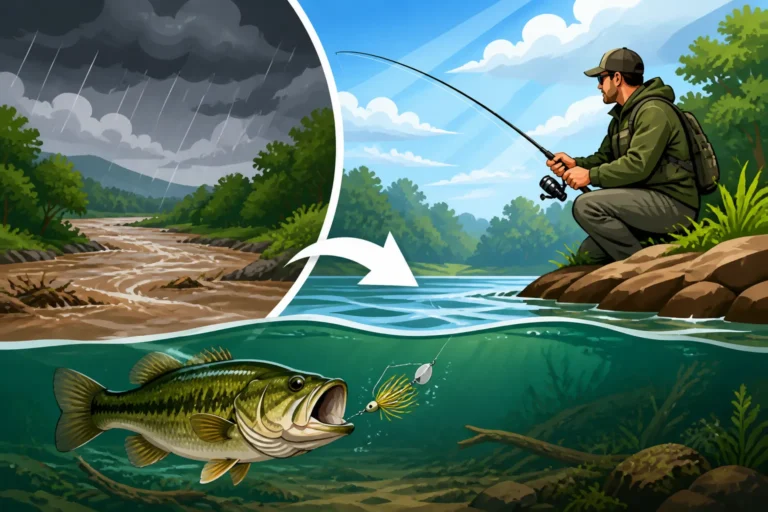
- Off-Color or Stained Water: After heavy rains, the river might become slightly stained. While not as common in the tailwaters (due to filtration through the lake), it can happen. In these conditions, brighter or darker, more contrasting patterns tend to stand out. Larger, flashier nymphs or streamers in black, olive, or even chartreuse can draw attention. A slightly larger profile can also be advantageous.
Seasonal Considerations for Fly Selection
Arkansas's tailwaters offer year-round fishing, but the optimal fly patterns will shift with the seasons.
- Spring: As water temperatures begin to rise slightly, insect activity picks up. BWO hatches can be strong, leading to good dry fly opportunities. Caddis hatches also start to appear. Nymphing with midges, scuds, and various mayfly nymphs remains highly productive. This is also a fantastic time for aggressive brown trout with streamers, especially if spring rains bring higher flows.
- Summer: Warmer temperatures mean stronger caddis hatches, and terrestrial patterns (hoppers, ants, beetles) become very effective along the banks. Trout will still feed on midges and small nymphs in deeper, cooler pockets. Early morning and late evening often provide the best dry fly action, while mid-day might require deeper nymphing. When figuring out Best Time to Fish the White River in Arkansas for Trout, summer mornings are often great for surface action.
- Fall: Many anglers consider fall to be prime time for trout fishing in Arkansas. BWO hatches return with a vengeance, offering incredible dry fly fishing. Streamer fishing for large, aggressive brown trout, particularly those preparing to spawn, can be exceptional. Nymphing with a variety of patterns, including midges, scuds, and mayfly nymphs, is consistently productive.
- Winter: Don't let the cold deter you! Winter fishing can be superb, though often more challenging. Midges are the dominant food source, so tiny midge larvae and pupae (Zebra Midges in black or red) are your primary weapons. Slow, deep nymphing is key, and trout will be concentrated in deeper, slower pools. Streamers can still entice larger fish, especially on warmer winter days. Knowing Trout Fly Fishing Basics for Tailwaters can really pay off during these quieter months.
Essential Fly Box Setup for Beginners
If you're just starting your journey into fly fishing Arkansas's tailwaters, it can be overwhelming to know what to carry. Here's a simplified table of essential fly patterns to get you started:
| Fly Pattern Type | Specific Patterns (Colors) | Sizes | Primary Conditions / Season | Where to Find |
|---|---|---|---|---|
| Midges (Nymphs) | Zebra Midge (Black, Red, Olive, Silver) | #18 – #24 | Year-round, especially low/clear water | Local fly shops, online retailers like Amazon |
| Mayfly Nymphs | Pheasant Tail Nymph (Natural, Bead Head) | #14 – #20 | Year-round, all flows | Local fly shops, online retailers like Amazon |
| Hare's Ear Nymph (Natural, Olive, Bead Head) | #14 – #20 | Year-round, all flows | Local fly shops, online retailers like Amazon | |
| Caddis Nymphs | Psycho Caddis (Tan, Green) | #14 – #18 | Year-round, especially during hatches | Specialty fly shops, some online |
| Crustaceans | Scud (Olive, Tan, Pink, Grey) | #12 – #18 | Year-round, higher flows, cloudy water | Local fly shops, online retailers like Amazon |
| Sowbug (Grey, Tan, Pink) | #14 – #20 | Year-round, especially low/clear water | Local fly shops, online retailers | |
| Streamers | Woolly Bugger (Black, Olive, Brown, White) | #4 – #10 | Year-round, higher flows, aggressive fish | Local fly shops, online retailers like Amazon |
| Dry Flies | Blue-Winged Olive (BWO) (Dun, Parachute) | #18 – #22 | Spring/Fall, overcast days | Local fly shops, specialized online retailers |
| Elk Hair Caddis (Natural, Olive) | #12 – #16 | Spring/Summer, evening hatches | Local fly shops, online retailers | |
| Dave's Hopper / Ant / Beetle (Various) | #10 – #14 | Summer/Fall, along banks | Local fly shops, online retailers like Amazon |
This table provides a solid foundation. Remember, a dozen of each of the core nymph patterns in a couple of sizes and colors will serve you well. Don't forget your Arkansas Fishing License Types Explained before you hit the water!
Disclaimer
Fishing conditions and regulations in Arkansas can change. Always consult the latest regulations from the Arkansas Game and Fish Commission before heading out. The information provided here is for general guidance and educational purposes only.