Summer Bass Fishing Patterns
Summer bass fishing in Arkansas can be a real head-scratcher. The scorching sun, the lack of wind, and those infamous bluebird skies often send bass diving for cover, making them elusive and frustratingly hard to catch for many anglers. If you've ever found yourself casting endlessly into seemingly barren waters during the dog days of summer, only to come up empty-handed, you're not alone. This comprehensive guide is here to unravel the mysteries of summer bass behavior and equip you with the patterns, tactics, and knowledge you need to consistently put fish in the boat or from the bank, even when the mercury is soaring.
Understanding Arkansas Summer Bass Behavior
When the heat really starts to bake Arkansas, the entire underwater world shifts, and bass are no exception. They're cold-blooded creatures, which means their body temperature directly correlates with the water around them. Just like us, they seek comfort and optimal conditions, and during summer, that usually means cooler, more stable environments. Understanding these fundamental shifts is the first step to unlocking successful summer bass fishing.
The Impact of Water Temperature on Bass
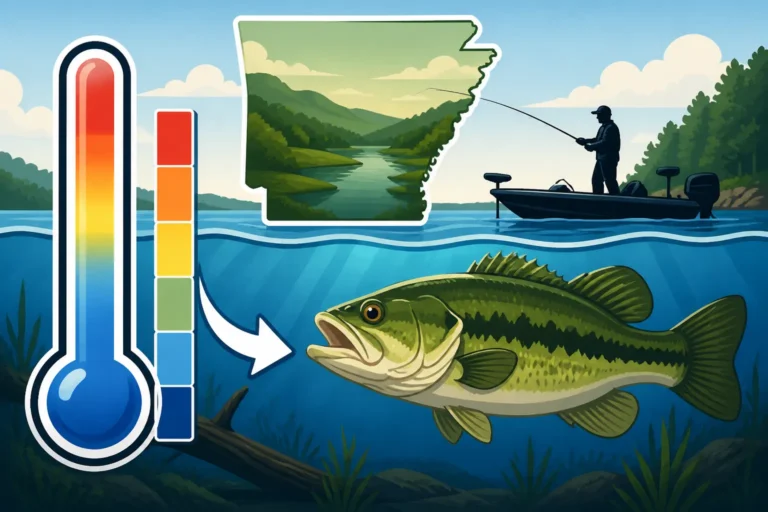
Arkansas summers are notoriously hot, and lake temperatures can climb well into the 80s, sometimes even pushing into the 90s in shallower areas. This isn't just uncomfortable for bass; it profoundly affects their metabolism and oxygen requirements. When water temperatures get too high, bass become lethargic and less active, spending more energy just to survive. Their digestive process slows down, and their need to feed aggressively diminishes.
You'll notice bass moving away from shallow, sun-drenched flats and into deeper, cooler zones where they can regulate their body temperature more effectively. This is a critical pattern to recognize. Forget trying to catch them in that 2-foot water unless it's first light or last light, or there's some serious overhead cover providing shade. Instead, start thinking about temperature breaks and how to find those sweet spots where the water is just right for an active bite. The Arkansas Game and Fish Commission often shares data that highlights these temperature shifts in various lakes, underscoring their importance.
Deep Water Retreats and Thermoclines
As surface temperatures rise, a phenomenon called a thermocline develops in many of Arkansas's deeper lakes, especially the larger reservoirs like Beaver Lake or Lake Ouachita. A thermocline is essentially a distinct layer within the lake where the water temperature changes rapidly with depth. Above the thermocline, the water is warmer and well-oxygenated. Below it, the water is much colder, but often has significantly less oxygen, especially in the lowest depths.
Bass, along with their primary forage fish, will often suspend or hold just above or within this thermocline. This becomes their comfort zone – cool enough to be comfortable, but with enough oxygen to be active. They're not going to be on the very bottom in 40 feet if there's no oxygen, but they'll use the available oxygenated water just above that dead zone. Identifying the depth of this thermocline is crucial for successful deep-water summer fishing. Modern fish finders are invaluable for this, often showing a distinct band on the screen where the temperature changes. These deep-water retreats are where you'll find the schools of bigger bass hunkered down, waiting for an easy meal to swim by. This behavior contrasts sharply with the activity seen during the active Arkansas Bass Spawn Fishing Guide periods earlier in the year.
Nocturnal Feeding Habits
The oppressive daytime heat drives many bass into a nocturnal feeding pattern during the summer months. Just as the sun sets and the surface water begins to cool, baitfish become more active, moving into shallower areas. This brings the bass with them, transforming them from sluggish, deep-water dwellers into opportunistic predators under the cover of darkness.
Night fishing for bass in Arkansas can be incredibly productive, especially on lakes with good populations of shad or other baitfish that school up. The reduced light also lessens fishing pressure, making the bass less wary. You'll find them moving into areas they wouldn't dare approach during the day, such as shallow points, humps, and even docks. Think about those areas that are normally bustling with boats during the day; at night, they become prime hunting grounds for bass. It's a completely different game, requiring different techniques and a good headlamp, but the rewards can be substantial, often yielding some of the biggest fish of the season. Many anglers find the Best Time of Day to Catch Bass to be either early morning or late evening, but for consistent summer success, nighttime can't be beat.
Early Morning and Late Evening Strategies for Summer Bass
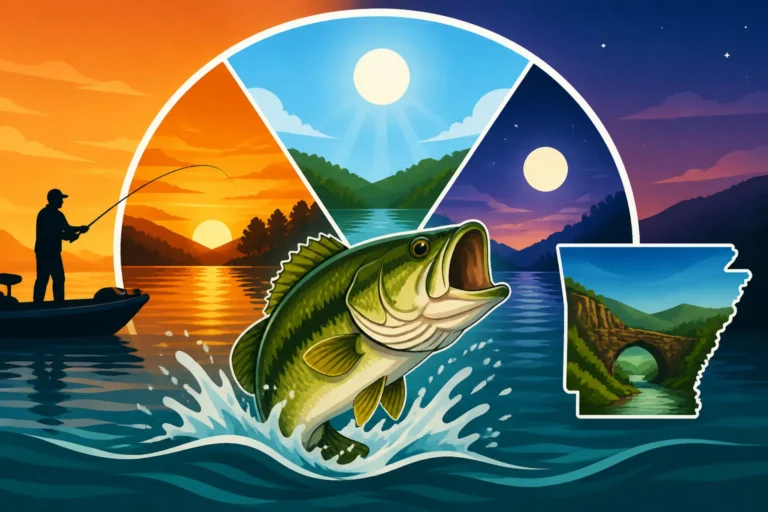
Fishing in the brutal midday summer sun can be tough, even for the most seasoned angler. That's why smart bass fishermen in Arkansas often focus their efforts on the "golden hours"—the periods around sunrise and sunset. These windows offer significantly better conditions for both fish and fisherman, capitalizing on cooler temperatures and lower light.
Topwater Action During Low Light
When the sun is just peeking over the horizon, or dipping below it, the low light conditions provide bass with a distinct advantage over their prey. This is prime time for topwater lures. The water is often at its coolest point of the day, and baitfish are frequently moving shallower, creating the perfect storm for explosive surface strikes.
Think about waking up on a crisp summer morning on Lake Conway. You hear the sounds of nature, and suddenly, a bass explodes on the surface, chasing shad. That's the cue! Zara Spooks, Pop-Rs, Whopper Ploppers, and Buzzbaits are absolute killers in these conditions. Focus your casts around visible cover like lily pads, submerged timber, or the edges of grass lines. Don't be afraid to throw these noisy baits in relatively shallow water, even 1-3 feet deep, especially if there's any kind of shade or current nearby. The key is to get out there before the sun fully clears the treeline and start working those baits aggressively. For specific tackle recommendations, you might find a good selection on platforms like Amazon.
Targeting Shallow Cover at Dawn and Dusk
While bass generally retreat to deeper water during the day, those cooler, low-light periods allow them to venture back into the shallows to feed. During these times, they'll often hold tight to any available cover that offers both ambush points and protection. This could be anything from submerged brush piles and docks to thick stands of hydrilla or even laydowns.
On lakes like Lake Ouachita, targeting isolated brush piles in 5-10 feet of water near a deeper channel can be incredibly effective right at dawn or dusk. Similarly, flipping jigs or Texas-rigged worms into the dense shade under boat docks on Lake Hamilton can produce some surprising bites. The bass are there to ambush, so presentations that mimic an easy meal—slow, methodical, and accurate—are usually best. Remember that these fish are often actively hunting, so be ready for that strike as soon as your bait hits the water or moves past a piece of cover.
The Importance of Shady Areas
Shade isn't just a comfort for us; it's a vital refuge for bass during the summer, even during the early morning and late evening hours. As the sun climbs, even slightly, it creates pockets of shade under docks, overhanging trees, bridge pilings, and especially around floating debris or thick vegetation. These shaded spots offer a cooler, darker environment where bass can escape direct sunlight and position themselves for ambush.
When you're out on the water, always keep an eye out for shade lines. A subtle change in boat positioning that allows you to cast into a shadowed area can make all the difference. For example, if you're fishing a long point, the side of that point that's currently in shade will almost always be more productive than the sun-baked side. Even a small patch of shade cast by a single cypress tree can hold a quality bass. This emphasis on shade holds true across different Arkansas Fishing Seasons Guide but becomes paramount in summer. These spots are crucial throughout the day, but especially as the morning progresses and the evening winds down, providing that last bit of comfort before the full heat or dark settles in.
Midday and Deep-Water Tactics for Hot Summer Days
When the sun is high and blazing, and the shallow bite has completely shut down, it's time to shift gears and go deep. This is where many anglers struggle, feeling like the fish have just vanished. But rest assured, those bass are still there; they've just moved to their comfortable, cool, and often oxygenated deep-water haunts. Learning to effectively target them in these conditions can turn a tough day into a triumph.
Finesse Fishing Deep Structure
Midday on a sweltering Arkansas summer day calls for a finesse approach when targeting deep-water bass. Aggressive power fishing often won't cut it. Bass in deep water are typically more sluggish and less willing to chase. They're looking for an easy meal, and a subtle, slow presentation can be incredibly effective. This is where techniques like the drop shot, Ned rig, and shaky head really shine.
Imagine you're fishing a deep breakline or a submerged roadbed on Greers Ferry Lake. Instead of throwing a big crankbait, tie on a small soft plastic bait on a drop shot rig. Let it sit motionless just above the bottom, occasionally twitching your rod tip to impart a subtle quiver. The key is to keep your bait in the strike zone for an extended period, tempting those lethargic bass into biting. These techniques often require lighter line, sensitive rods, and a patient hand, but they consistently produce bites when nothing else will. Understanding how to adapt to these conditions is a cornerstone of Bass Fishing Techniques by Season.
Vertical Jigging and Drop-Shotting
When bass are schooled up tightly on deep structure – think submerged humps, brush piles, or river channel edges – vertical jigging and drop-shotting become incredibly potent tools. These techniques allow you to precisely present your bait directly to the fish you see on your sonar, minimizing wasted casts and maximizing efficiency.
Let's say you're on Beaver Lake and your fish finder shows a school of bass congregated around a brush pile in 25 feet of water. With vertical jigging, you'd drop a heavy jigging spoon or a weighted soft plastic straight down into the school, lifting and dropping it to mimic a wounded baitfish. For drop-shotting, you position your boat directly over the fish, drop your weight to the bottom, and suspend a small worm or creature bait a foot or two above them. This puts the bait right at their eye level, even if they're hugging the bottom or suspended off it. Both techniques require good boat control to stay positioned over the fish, but they are unmatched for pinpoint accuracy in deep water. This is especially useful on large bodies of water, as highlighted in guides like A Complete Guide to Fishing Arkansas's Best Lakes and Rivers.
Spooning and Carolina Rigging
Beyond finesse, two other deep-water techniques that really shine for summer bass in Arkansas are spooning and Carolina rigging. These offer slightly different presentations that can trigger bites from even the most stubborn deep-dwelling bass.
Spoon fishing involves dropping a heavy metal spoon – often resembling a dying shad – down to the bottom or through suspended schools of fish. Once it hits the desired depth, you rip it up sharply, letting it flutter back down on a semi-slack line. The erratic, dying baitfish action is often irresistible to predatory bass. Brands like Hopkins and Johnson make classic jigging spoons that are very effective.
Carolina rigging, on the other hand, is a fantastic way to cover deep structure effectively. It uses a heavy weight, typically a ½ to 1-ounce egg or barrel sinker, followed by a swivel, a bead, and then a long leader (2-5 feet) to a hook with a soft plastic bait. The heavy weight drags along the bottom, kicking up sediment and attracting attention, while the bait "floats" above it, mimicking a foraging creature. This allows the bait to move more naturally and freely. It's particularly effective for targeting deep points, humps, and ledges, allowing you to drag your bait across a wide area of potential holding spots. You can easily find various weights, beads, and soft plastics for Carolina rigging on Amazon. These tactics are prime examples of How to Find Bass in Summer Heat.
Prime Baits and Lures for Arkansas Summer Bass
Choosing the right bait can make or break your summer bass fishing trip. While bass might be sluggish in the heat, they're still predators, and matching your lure to their mood and location is key. Arkansas offers a fantastic variety of forage, and understanding which lures best imitate those natural meals is essential.
Topwater Lures for Low-Light Bites
As we touched on earlier, topwater action is phenomenal during the low-light hours of summer. These baits are designed to create commotion on the surface, drawing strikes from aggressive bass looking for an easy meal.
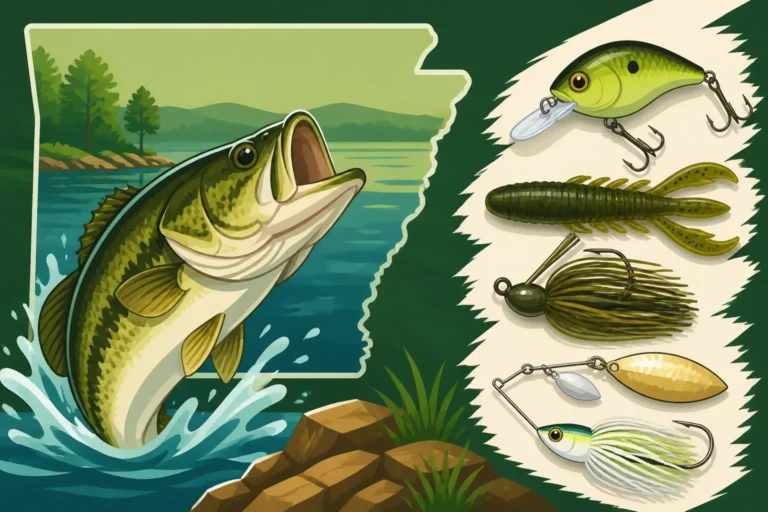
- Walking Baits (e.g., Heddon Zara Spook): These lures glide side-to-side across the surface with a "walk-the-dog" retrieve. They mimic a struggling baitfish and are incredibly effective for drawing strikes from larger, wary bass. The key is to find a cadence that the fish respond to – sometimes fast, sometimes slow and deliberate.
- Poppers (e.g., Rebel Pop-R): Poppers create a "chugging" or "popping" sound as you twitch them, pushing water and mimicking a feeding or injured baitfish. They're great for targeting specific pieces of cover like lily pads or overhanging trees. Experiment with different pause durations; sometimes a long pause is what triggers the strike.
- Buzzbaits: These noisy lures feature a propellor that churns the water, creating a distinct buzzing sound and a surface wake. They are excellent for covering water quickly and drawing reaction strikes, especially around shallow grass or wood cover. Try different blade colors and skirt combinations to find what the fish prefer.
The explosiveness of a topwater bite at dawn or dusk is truly one of the most exciting aspects of Arkansas Fishing in the summer.
Soft Plastics for Deep Water
When bass are holding deep, soft plastics are your bread and butter. Their versatility allows you to imitate a wide range of forage and present baits subtly.
- Worms (e.g., Zoom Trick Worm, Berkley Power Worm): From finesse worms on a drop shot to larger ribbon-tail worms on a Texas rig, plastic worms are universally effective. Colors like green pumpkin, junebug, and plum are staples in Arkansas waters. The Texas rig is particularly good for fishing through heavy cover without snagging, while a shaky head jig allows for subtle presentations on rocky bottoms.
- Creature Baits (e.g., Zoom Brush Hog, Strike King Rage Craw): These baits, with their flapping appendages, mimic crawfish or other aquatic critters. They're fantastic on a Texas rig or Carolina rig, especially when bass are feeding on crayfish, which they often do in rocky, deeper areas.
- Finesse Baits (e.g., Z-Man Finesse TRD, Strike King Dream Shot): For tough bites or pressured fish, tiny soft plastics on a Ned rig or drop shot can be irresistible. These small profiles and subtle actions often entice bites from bass that ignore larger, more aggressive presentations. Many anglers rely on these for How to Fish Deep Structure for Bass.
The beauty of soft plastics is in their endless variations and how they can be adapted to almost any deep-water scenario.
Crankbaits and Jigs for Structure
No summer bass arsenal is complete without a selection of crankbaits and jigs, especially when targeting specific types of structure.
- Deep-Diving Crankbaits (e.g., Strike King 6XD, Rapala DT Series): These lures are designed to dive quickly to specific depths, allowing you to effectively "crank" them down to deep ledges, humps, and points. The deflections off structure often trigger savage reaction strikes. Choose colors that mimic shad or crawfish, depending on the forage in the lake you're fishing. The vibration and flash are key attractants for deep, active bass.
- Football Jigs: Named for their head shape, football jigs are perfect for dragging over rocky bottoms, shell beds, and gravel points. They rarely get snagged and their bulky profile, dressed with a crawfish-style trailer, is a perfect imitation of a crawfish. Work them slowly, maintaining bottom contact, and feel for that subtle "thump" of a bite.
- Bladed Jigs (e.g., Z-Man Chatterbait): While not exclusively deep-water baits, bladed jigs can be incredibly effective when bass are feeding actively around deeper grass beds or brush. The unique vibration and flash they produce often trigger violent strikes. They're a great alternative to spinnerbaits in some situations.
When planning your tackle box for a trip, consider checking Amazon for a wide selection of these essential summer bass lures.
Locating Summer Bass in Arkansas's Diverse Waters
Arkansas is blessed with an incredible variety of fishing environments, from vast reservoirs to winding rivers. Each type of water body presents its own unique challenges and opportunities for finding summer bass. Understanding these distinctions is crucial for adapting your strategy and finding fish consistently.
Reservoirs: Points, Humps, and River Channels
Arkansas's large Corps of Engineers reservoirs, like Bull Shoals Lake and Norfork Lake, are prime destinations for summer bass. In these vast bodies of water, bass will often relate to specific geological features.
- Points: Long, tapering points that extend into deeper water are classic bass holding areas. Bass will position themselves along the sides or on top of these points, especially if they have access to a nearby deep-water channel or a thermocline. Pay attention to points that have rock piles, brush, or other irregular features, as these offer ambush cover.
- Humps and Ridges: Submerged humps (underwater hills) and ridges (underwater spines) in the main lake basin are goldmines. Bass will school up on top or around the edges of these structures, often following baitfish schools. Using your electronics to locate these features and identify any associated cover (like brush piles) is critical.
- River Channels: The old river and creek channels that wind through these impoundments are highways for bass. During summer, many bass will hold along the drops or inside bends of these channels, especially where there's standing timber or other cover. The deepest parts of the channel provide refuge, while the ledges and bends offer feeding opportunities. The Top Arkansas Lakes for Bass, Crappie, and Catfish are often defined by these very features.
Rivers and Flowing Waters: Current Breaks and Eddies
While many focus on lakes, Arkansas's rivers and flowing waters also offer fantastic summer bass fishing, with a different set of patterns. Rivers like the Arkansas River or the White River (in its lower, warmer sections) maintain some current, which can actually be a blessing in the heat.
- Current Breaks: Bass in rivers love to get out of the main current flow while still being close enough to ambush prey swept by. Look for current breaks created by large rocks, submerged logs, wing dams, bridge pilings, or even subtle changes in the riverbed. The slack water just behind these obstructions is where bass will stage.
- Eddies: Eddies are circular currents that form behind larger obstructions or in bends of the river. These areas often concentrate baitfish and provide a resting spot for bass. Casting into and through the edges of these eddies can be very productive.
- Confluence Points: Where smaller creeks or streams enter a larger river, especially if they're bringing cooler, more oxygenated water, can be hotspots. These confluence points often attract baitfish and, subsequently, bass. Always consult the Arkansas Fishing Regulations Guide for specific rules on rivers you plan to fish.
Timber and Hydrilla: The Ultimate Bass Magnets
Regardless of whether you're on a lake or river, two types of cover consistently attract and hold summer bass: timber and hydrilla.
- Standing Timber: Many Arkansas reservoirs, especially those with flooded forests, are full of standing timber. These submerged trees provide shade, cover, and structure that bass absolutely love. Target the deeper trees, especially those near a channel or drop-off. Flipping jigs, Texas-rigged plastics, or even vertically jigging spoons around the trunks and limbs can be incredibly effective.
- Hydrilla and Other Grass Beds: Thick mats of hydrilla, coontail, or other aquatic vegetation are oxygen factories and baitfish havens. Bass will hold in and around these grass beds, especially on the deeper edges or in holes within the mat. Punching heavy jigs or Texas rigs through the thickest parts of the mats can be a very exciting and productive way to catch large bass that are tucked away in the cool, shady cover. For those looking to fish Lake Conway Bass Fishing Near Little Rock, Arkansas, extensive hydrilla beds are a key feature to master.
Essential Gear and Tips for Summer Bass Anglers
Successful summer bass fishing isn't just about knowing where to cast or what lure to use; it's also about having the right gear and taking care of yourself in the challenging conditions. A little preparation goes a long way in making your trip productive and enjoyable.
Rod, Reel, and Line Considerations
Summer bass fishing often means a mix of techniques, so a versatile setup, or a few specialized ones, is crucial.
- Rods: For deep-water techniques like Carolina rigging or spooning, a longer (7' to 7'6"), medium-heavy to heavy power rod with a fast action is ideal. This gives you the leverage for long casts, powerful hooksets, and control over bigger fish. For finesse techniques like drop-shotting or shaky heads, a medium-light to medium power spinning rod around 6'8" to 7'2" with a fast action provides the sensitivity needed to detect subtle bites.
- Reels: For baitcasting setups used with heavier lures, a reel with a moderate to fast gear ratio (6.1:1 to 7.1:1) is generally versatile. For topwater or burning spinnerbaits, a faster reel (7.5:1 or higher) can be beneficial. For finesse spinning setups, a 2500 or 3000 series reel offers a good balance of line capacity and drag power.
- Line: Line choice is critical. For heavy cover and power fishing, 15-20 lb fluorocarbon or even braided line (30-50 lb) can be advantageous. Fluorocarbon is less visible and has good abrasion resistance for fishing around timber or rocks. Braid offers incredible strength and sensitivity, and many anglers will tie a fluorocarbon leader to it. For finesse techniques, 8-12 lb fluorocarbon or a light braid (10-15 lb) with a fluorocarbon leader is standard. Choosing the right line can greatly improve your success with Best Bait and Lures for Arkansas Bass.
Sun Protection and Hydration
This isn't just about comfort; it's about safety. Arkansas summer heat and sun can be dangerous if you're not prepared.
- Sun Protection: Wear long-sleeved, lightweight, breathable shirts with UPF (Ultraviolet Protection Factor) ratings. A wide-brimmed hat is a must, along with a good pair of polarized sunglasses to reduce glare and help you spot fish and structure. Don't forget high-SPF sunscreen, and reapply it frequently, especially after sweating. A buff or neck gaiter can protect your face and neck.
- Hydration: Bring plenty of water, and then bring some more. Dehydration can creep up on you quickly. Electrolyte drinks or sports drinks can also be beneficial. Avoid sugary sodas or excessive caffeine, as they can contribute to dehydration. Consider bringing a cooler packed with ice and drinks to keep everything chilled throughout the day.
- Timing: As mentioned, consider fishing during the cooler parts of the day – early morning, late evening, or even at night – to avoid the most intense sun and heat. This can significantly reduce your risk of heat-related illnesses and make for a much more pleasant experience.
Electronic Aids: Sonar and GPS
Modern fishing electronics are game-changers for summer bass fishing, especially when targeting deep water.
- Sonar (Fish Finder): A good quality sonar unit is essential for finding bass holding deep. Look for features like Down Imaging and Side Imaging, which provide photo-like views of the bottom and structure. Use your sonar to identify submerged humps, ledges, brush piles, standing timber, and most importantly, the presence of baitfish and bass. Pay attention to the thermocline (often visible as a distinct layer on higher-end units) and target fish holding just above it. Brands like Garmin, Lowrance, and Humminbird offer a range of excellent units for every budget.
- GPS (Global Positioning System): Integrated into most modern fish finders, GPS allows you to mark waypoints of productive spots, navigate safely, and return to those fish-holding areas with precision. If you find a school of bass on a deep hump, mark it! You can then make repeated, accurate casts or drops to that exact spot. Many units also come preloaded with high-definition mapping of Arkansas's major lakes, showing contours, depths, and submerged features, which is invaluable for planning your approach. While you can find robust units at sporting goods stores, Amazon also carries a good selection of these critical electronics.
By combining an understanding of bass behavior, precise techniques, the right tackle, personal safety, and leveraging modern technology, you'll significantly increase your chances of success during the challenging but rewarding summer bass fishing season in Arkansas.
Disclaimer
Fishing conditions and regulations in Arkansas can change. Always consult the latest regulations from the Arkansas Game and Fish Commission before heading out on the water. This guide provides general advice and should not replace official rules and guidelines.