How to Identify a Rainbow Trout
There's nothing quite like the thrill of reeling in a beautiful trout in the clear, cold waters of Arkansas. But sometimes, especially for newer anglers, it can be a bit tricky to tell exactly what kind of trout you've just landed. This guide is here to clear up that confusion, focusing specifically on how to definitively identify a rainbow trout so you can confidently know your catch, understand the regulations, and appreciate the unique beauty of these fish.
The Distinctive Look of a Rainbow Trout
When you pull a rainbow trout out of the water, there are several key visual cues that immediately set them apart. It's not just about a single feature; it's about a combination of characteristics that paint a clear picture. Think of it like recognizing an old friend – you notice the overall appearance before you zero in on one specific trait.
Iridescent Coloring and the Signature Stripe
The name "rainbow" isn't just for show; it truly reflects the stunning, often vibrant coloration of these fish. While the exact shades can vary quite a bit depending on their specific habitat, diet, and even their mood, a few general rules apply.
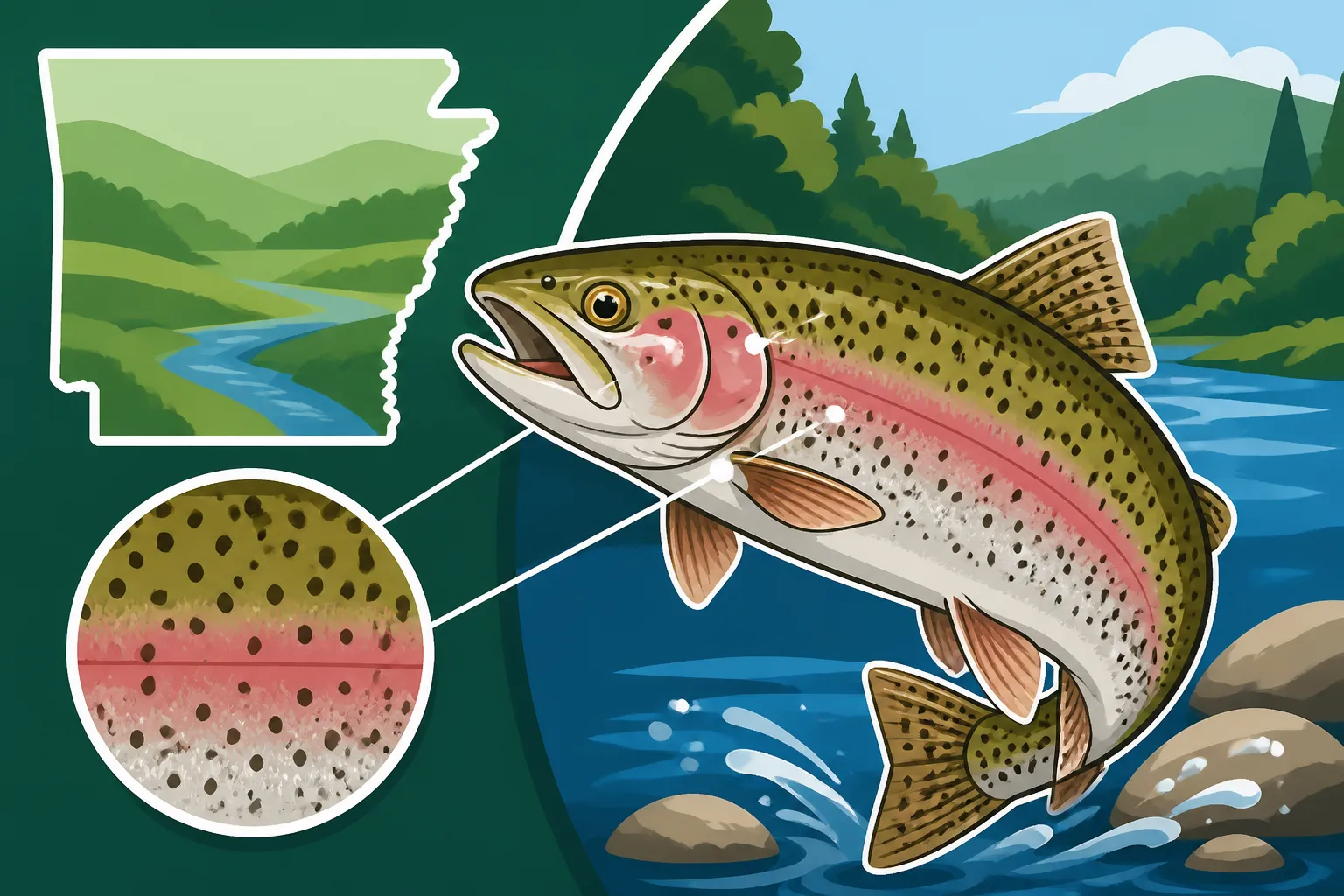
You'll typically see a blend of greenish-blue on their backs, fading into silvery sides, and a white or cream-colored belly. This iridescent quality means the colors can seem to shift and shimmer in different lights, especially when the fish is fresh out of the water. It’s like a living gem, reflecting the light around it. The most defining feature, the one that truly gives them their name, is often a prominent, reddish-pink band that runs horizontally along their lateral line, from their gill plate all the way to their tail. This stripe can range from a subtle, pale pink to a vivid, almost neon red, especially on spawning males. In some very cold, clear waters, or on hatchery-raised fish, this stripe might be less pronounced, even appearing as a faint blush. But more often than not, it's a clear giveaway. If you're comparing a fish from the White River to one from a small mountain stream, you might notice subtle differences in how bold or muted this stripe appears, but its presence is a strong indicator.
Spotting Patterns on Body and Fins
Beyond the vibrant stripe, rainbow trout are adorned with a constellation of small, dark spots. These aren't just scattered haphazardly; they typically form a distinct pattern that is a reliable identifier.
These spots are usually quite numerous and evenly distributed across their back, sides, and importantly, on their dorsal fin and caudal (tail) fin. The spots tend to be smaller and more concentrated on the upper half of their body, becoming sparser or even disappearing towards their belly. On the tail, these spots often create parallel rows on both lobes, extending well into the fin itself. This is a crucial detail to remember, as it's one of the primary ways to differentiate them from other trout species that might share Arkansas's waters. Imagine looking at a fish and seeing that consistent speckling all the way down its tail – that's a classic rainbow trout trait. For a closer look at where you might find these beautiful fish, check out Where to Catch Rainbow Trout in Arkansas.
Fin Shape and Mouth Structure
While perhaps less flashy than color or spots, the shape of a rainbow trout's fins and mouth also provide telling clues.
Their dorsal fin, located on their back, is typically soft-rayed and somewhat rounded, often covered in those tell-tale spots. The adipose fin, a small, fleshy fin found between the dorsal fin and the tail fin, is a characteristic of all salmonids (the family trout belong to). It's small, without rays, and usually blends in with the body color. Their caudal fin, or tail, is often slightly forked, though it can appear almost squared off in younger fish or those in faster currents. As for their mouth, rainbow trout have a relatively small mouth that typically does not extend past the back edge of their eye. Their jaws have small, sharp teeth that are perfect for grasping insects and small baitfish. While you might not want to stick your finger in there, observing the mouth's size in relation to the eye can be helpful.
Habitat, Behavior, and Diet Clues
Identifying a rainbow trout isn't just about what they look like; it's also about where you find them and how they behave. Understanding their preferred environment in Arkansas can significantly narrow down the possibilities, especially when you're casting your line in specific rivers or tailwaters.
Cold, Oxygen-Rich Water Preferences
Rainbow trout thrive in cold, clean, and well-oxygenated water. This is why you'll primarily find them in specific environments throughout Arkansas, particularly the famed tailwaters below large dams.
The waters released from the bottom of dams like Bull Shoals and Norfork are consistently cold, even in the heat of summer, providing the ideal habitat. These environments also tend to be highly oxygenated due to the current and the churning water. You won't typically find healthy, reproducing rainbow trout populations in warm, stagnant ponds or sluggish, muddy rivers. When you're fishing these prime trout waters, like those below Bull Shoals Dam, the likelihood of hooking a rainbow increases dramatically. This strong preference for specific water conditions is a key ecological identifier. If you're interested in the nuances of these prime fishing grounds, you can delve into Bull Shoals Tailwater Trout Rules in Arkansas and Norfork Tailwater Trout Rules and Season.
Feeding Habits and Activity Patterns
Rainbow trout are opportunistic feeders, meaning they'll eat a wide variety of things depending on what's available in their environment. This flexibility in diet influences what bait and lures work best, and observing their feeding behavior can help confirm your identification.
They primarily consume aquatic insects in their larval and adult stages (like caddisflies, mayflies, and midges), small crustaceans, and even smaller baitfish. Larger rainbows aren't shy about chasing down a minnow or a leech. You'll often see them actively feeding near the surface, rising to snatch insects, or darting through the water column to intercept nymphs and baitfish. They tend to be most active during cooler parts of the day, such as early morning and late evening, especially during warmer months. During the cooler seasons, their activity might extend throughout the day. If you're casting a small spinner or a fly pattern, and you're getting consistent strikes from fish exhibiting this active feeding behavior, chances are you're on a good rainbow bite. For tips on what to use, check out Best Bait for Rainbow Trout Below Bull Shoals Dam. Many anglers find excellent trout fishing accessories, including specialized lures and tackle, on platforms like Amazon.
Where You'll Find Them in Arkansas
In Arkansas, the story of the rainbow trout is largely centered around its incredible tailwater fisheries. These man-made habitats have created some of the best trout fishing opportunities in the South.
The most famous is undoubtedly the White River, particularly the stretch below Bull Shoals Dam down through Cotter and beyond. This river system is renowned for its abundant rainbow trout population, many of which are stocked regularly to maintain a robust fishery. Similarly, the Norfork River, flowing from Norfork Dam, is another premier rainbow trout destination. These rivers offer incredible opportunities for both fly anglers and spin fishermen. While some smaller, spring-fed streams might hold wild populations, the vast majority of rainbow trout you encounter in Arkansas will be from these major river systems. Understanding these geographical hotbeds makes identification easier; if you're fishing a different, warmer body of water in Arkansas, the fish you catch is less likely to be a rainbow trout, unless it's a specific put-and-take pond. You can find more detail on one of the most popular spots in Rainbow Trout Fishing on Arkansas's White River.
Differentiating Rainbow Trout from Other Species
In Arkansas, the most common identification challenge for rainbow trout usually involves distinguishing them from their brown trout cousins. These two species often share the same cold water habitats, and while they have distinct features, they can look similar at a glance, especially to an inexperienced eye.
Rainbow Trout vs. Brown Trout
This is the big one. Many anglers new to trout fishing will catch a beautiful fish and wonder if it's a rainbow or a brown. The key is to look at a few specific features side-by-side.
| Feature | Rainbow Trout | Brown Trout |
|---|---|---|
| Lateral Stripe | Prominent, often vivid pink or red stripe along the lateral line. | Usually absent, or very faint, if present. |
| Body Spots | Numerous small, dark spots (black or dark brown) scattered over the back, sides, dorsal, and caudal (tail) fins. | Dark spots (black) and often red/orange spots with pale halos, primarily on the back and sides. Few to no spots on the caudal fin. |
| Caudal Fin | Typically has many spots, often in parallel rows, extending to the edges. | Usually unspotted or has very few spots on the fin itself. |
| Overall Color | Greenish-blue back, silvery sides, white belly; iridescent. | Golden-brown to olive-brown back, yellowish or creamy belly; less iridescent. |
| Mouth | Maxillary (upper jaw) generally does not extend past the back of the eye. | Maxillary often extends well past the back of the eye, giving a more aggressive profile. |
The spots on the tail are your biggest clue. If the tail fin is heavily spotted, it's almost certainly a rainbow. If the tail is mostly clear of spots, or has just a few faint ones, you're likely holding a brown trout. Also, brown trout often have distinctive red or orange spots with pale halos (like a target) mixed in with their dark spots, a feature rarely seen on rainbows. For a deeper dive into this comparison, be sure to read How to Tell Rainbow Trout from Brown Trout. These details are critical, not just for bragging rights, but for adhering to different regulations that might apply to each species.
Rainbow Trout vs. Cutthroat Trout (Less Common in AR)
While cutthroat trout are native to western North America and not commonly found in Arkansas, it's worth a brief mention in case you encounter a unique stocking or a misidentification.
The defining characteristic of a cutthroat trout is the distinct red or orange slash marks found in the fold of skin under their jaw, resembling a "cut throat." These marks are usually very clear. Like rainbows, they also have dark spots, but these tend to be more concentrated towards the tail end of the body. Given Arkansas's primary trout species, you're highly unlikely to mistake a rainbow for a cutthroat here, but it's good to know for general trout knowledge.
Rainbow Trout vs. Brook Trout (Even Less Common in AR)
Brook trout are another species less common in Arkansas's main trout fisheries, preferring even colder, pristine headwater streams, usually much further north. However, if you were to ever encounter one, they are quite distinct.
Brook trout are actually a char, not a true trout, and have very distinctive worm-like markings (vermiculation) on their backs, and lighter spots (often red with blue halos) on their sides. Their lower fins (pectoral, pelvic, and anal) often have a white leading edge, followed by a black strip, and then orange or red. Their tail is typically squared or only very slightly forked. Again, highly unlikely to be confused with a rainbow in typical Arkansas waters, but a good distinction to know.
Why Accurate Identification Matters for Anglers
Knowing exactly what kind of fish you've caught isn't just about showing off your angling prowess to your buddies (though that's certainly part of the fun!). It's actually incredibly important for a few very practical reasons, especially when you're fishing in Arkansas's diverse and regulated waters. Overlooking these details can lead to unintended consequences, so paying attention to identification is a critical part of being a responsible angler.
Adhering to Fishing Regulations
This is arguably the most crucial reason for proper identification. Arkansas has specific regulations for different species of fish, and trout are no exception. These rules can vary by species, location, and even the time of year.
For instance, the daily creel limit for rainbow trout might be different from that of brown trout in the same stretch of river. There might be specific length limits that apply to one species but not the other, or certain zones where catch-and-release is mandatory for particular trout. Imagine you're fishing the White River, and you've had a fantastic day, catching several trout. If you're not absolutely sure whether a fish is a rainbow or a brown, you could unknowingly keep a fish that's under the legal length for its species, or exceed the daily limit for a specific type of trout. This isn't just a minor infraction; it can lead to fines and penalties. Game wardens in Arkansas are diligent, and "I didn't know what it was" isn't a valid excuse. Having a small, laminated fish identification guide, perhaps one you ordered from Amazon, can be a lifesaver in these situations. Always consult the latest Arkansas Fishing Regulations Guide before you hit the water.
Conservation and Population Management
Beyond personal adherence to regulations, accurate identification plays a vital role in the broader conservation efforts and population management programs conducted by the Arkansas Game and Fish Commission.
When anglers accurately report their catches (even informally, through observation and proper release practices), it provides valuable data. Knowing the relative abundance of rainbow trout versus brown trout, for example, helps fisheries biologists understand the health of the population, assess stocking success, and make informed decisions about future management strategies. If everyone misidentifies their catch, that data becomes skewed, potentially leading to less effective conservation measures. When you confidently identify and release an undersized brown trout, for instance, you're directly contributing to the long-term health of that species. It’s about being a steward of the environment, not just a harvester.
Personal Satisfaction and Knowledge
Let's be honest, there's a deep personal satisfaction that comes from truly knowing the fish you're targeting and catching. It enhances your entire fishing experience.
When you can confidently say, "I just landed a beautiful rainbow trout," it reflects a deeper understanding and appreciation of the natural world. It allows you to learn more about their specific habits, the best techniques to catch them, and even what makes them good (or not so good) for eating. Knowing your species also lets you connect with other anglers on a more informed level, sharing tips and stories about specific types of fish. This knowledge turns fishing from a simple act of casting a line into a rich, engaging hobby with continuous learning. For example, understanding that Is Rainbow Trout Good to Eat? and how they differ from other species can inform your decision to keep or release your catch.
Planning Future Fishing Trips and Techniques
Finally, knowing how to identify rainbow trout impacts how you plan your future fishing adventures and what techniques you employ.
If you consistently catch rainbows in a certain spot, you'll know that particular area likely has the cold, clear water they prefer, and you can focus your efforts there. If you're targeting large brown trout, but keep catching rainbows, it might prompt you to adjust your lures, bait, or presentation to better appeal to the browns. Different species react to different presentations; for example, a rainbow might readily hit a small, flashy spinner, while a trophy brown might prefer a larger baitfish imitation. Your tackle box, which you might have stocked with various lures from Amazon, becomes a tool kit tailored to the specific fish you're pursuing. Being able to distinguish between trout species also helps you refine your skills and become a more effective and knowledgeable angler. Knowing the best seasons for different species, like Best Time of Year for Rainbow Trout Fishing in Arkansas, empowers you to plan your trips for maximum success.
Disclaimer
This article is for general informational purposes only and does not constitute professional advice. Laws, prices and regulations vary by location and change over time. Consult a qualified professional for guidance on your specific situation.