Black Crappie vs White Crappie: How to Tell Them Apart
One of the most common questions I get from fellow anglers hitting the beautiful waters of Arkansas is about crappie. Specifically, how do you really tell the difference between a black crappie and a white crappie? It can be genuinely perplexing sometimes, especially when you're out on the lake and just want to know what you've caught. This guide is here to cut through that confusion and give you the definitive lowdown on identifying these two beloved panfish.
The Distinctive Traits of Black Crappie
When you're reeling in a crappie and trying to figure out if it's black or white, the black crappie often presents itself with a particular set of characteristics that, once you know them, become quite clear. They're a favorite among many for their feisty fight and delicious taste, and knowing exactly what you've hooked can certainly add to the satisfaction of your day on the water.
Body Shape and Coloration
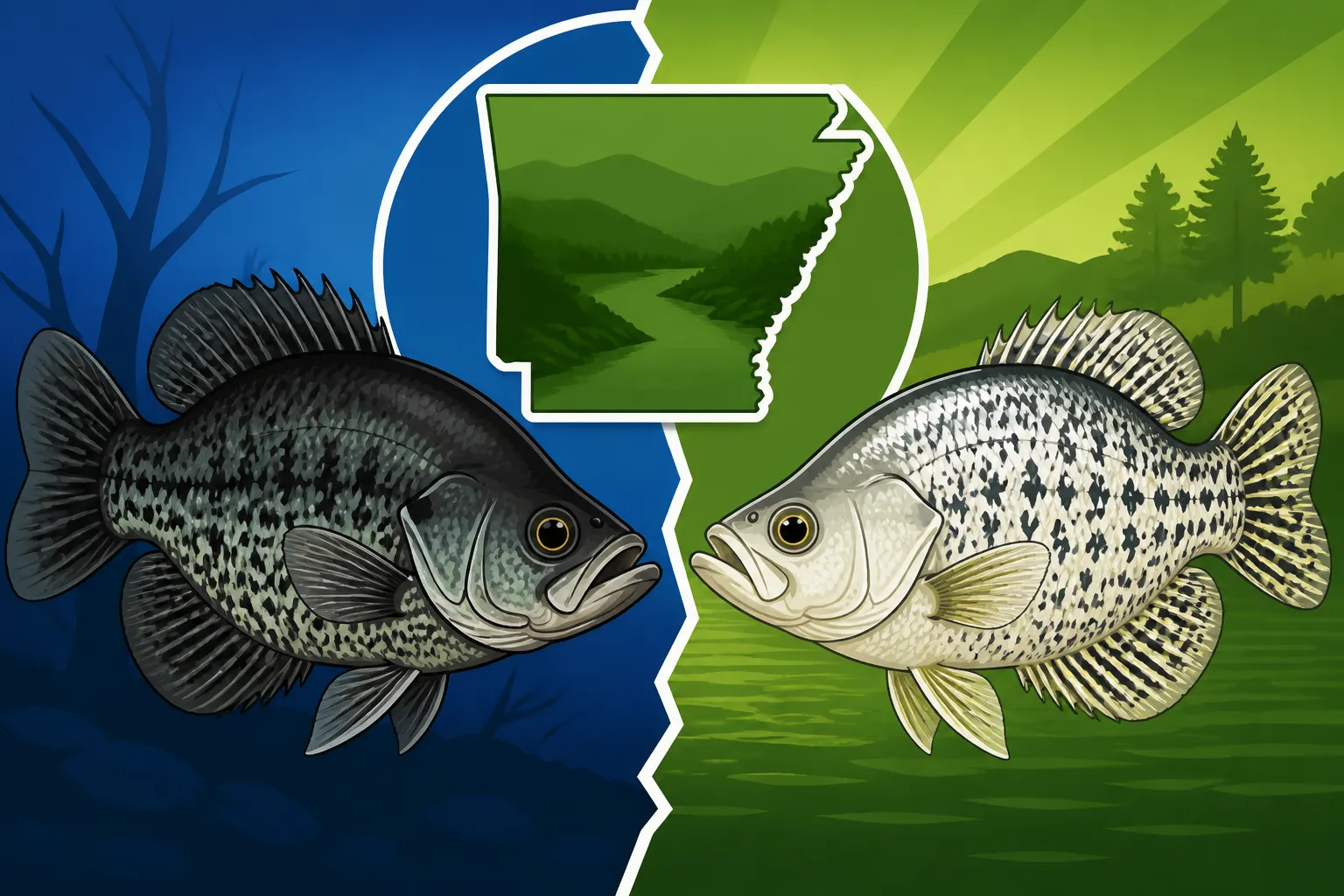
Black crappie, or Pomoxis nigromaculatus as the scientists call them, typically have a much deeper, more compressed body shape compared to their white crappie cousins. Imagine a dinner plate – that's often the kind of round, pancake-like profile you're looking for. Their overall coloration can vary quite a bit depending on the water clarity and their specific habitat, but they usually appear darker.
What really gives them away, though, is their pattern. Black crappie are usually covered in irregular, mottled dark spots that are scattered haphazardly across their sides. These spots don't form any kind of distinct pattern or stripe; they're more like someone took a pepper shaker and dusted them randomly. Sometimes these spots are incredibly prominent, other times they're a bit faded, but they're rarely organized. If you're fishing in clear water with lots of vegetation, you might notice their colors are even more vibrant and the spots more defined, offering excellent camouflage.
Dorsal Fin Spines
This is arguably the most reliable and foolproof way to tell a black crappie from a white crappie, and it’s a detail every serious angler should know. When you look at the dorsal fin – that's the one on top of the fish's back – on a black crappie, you'll consistently find seven or eight sharp, bony spines. It’s important to count them carefully, as this is your golden ticket to correct identification.
These spines feel rigid and can be quite sharp, so always handle your catch with care. To count them, gently spread the dorsal fin and run your finger lightly across the leading edges of the hard rays. You'll feel each individual spine. Mastering this quick count will save you a lot of guesswork and help you correctly identify your catch every single time. It's a simple trick, but incredibly effective, especially when the fish's coloration might be misleading due to environmental factors.
Mouth and Head Features
While not as definitive as the dorsal fin count, a black crappie's mouth and head can offer additional clues. Generally, black crappie tend to have a slightly smaller mouth compared to white crappie, and their upper jaw doesn't extend as far back towards the eye. It's a more proportionate, almost "cute" mouth for their head size, if you will.
Their head profile also seems a little more compact, without the elongated appearance that you might find in their white crappie counterparts. These subtle differences become more apparent once you've seen a few of each species side-by-side. Many anglers find that picking up a good field guide, perhaps even one ordered conveniently from Amazon, can provide detailed illustrations that make these visual distinctions even clearer.
Unveiling the White Crappie's Identity
Now, let's talk about the white crappie. Often found swimming in the same waters as black crappie, the white crappie (Pomoxis annularis) has its own set of characteristics that help it stand out. While they share the same genus, their physical traits and even some behavioral tendencies are distinct enough to warrant a closer look.
Body Shape and Pattern
In contrast to the black crappie's more rounded profile, white crappie typically have a more elongated, slender body. Think of them as being a bit more oval or football-shaped, rather than circular. They often appear lighter in color overall, though again, this can vary wildly based on the water they inhabit. In murky or stained water, a white crappie might actually appear quite dark!
The most striking visual identifier for a white crappie is the presence of distinct, often vertical, bars or stripes along their sides. These aren't random spots; they usually form a series of six to nine dark bands running from their back down towards their belly. While these bars can sometimes be faint, they tend to be much more organized and linear than the scattered spots of a black crappie. If you see a crappie with clear, vertical stripes, you've almost certainly got a white crappie on your hands.
Dorsal Fin Spines
Just like with the black crappie, the dorsal fin spines are your absolute best friend for positive identification when it comes to white crappie. A white crappie will reliably have five or six dorsal fin spines. This count is consistently fewer than the black crappie, making it the most accurate distinguishing feature.
Practicing this count on every crappie you catch will solidify your identification skills. Just remember, a lower number of spines often points to a white crappie. This critical difference is often highlighted in detailed guides and resources, making it easier for anglers to adhere to specific regulations, even though Crappie Size and Daily Limit in Arkansas generally applies to both species uniformly.
Mouth and Head Features
White crappie tend to have a larger mouth compared to black crappie. You'll notice that the upper jaw of a white crappie often extends further back, sometimes reaching past the middle of the eye. This larger mouth is adapted to their feeding habits, which can include a slightly different diet or method of ambushing prey.
Their head also often appears a bit more pointed or "snub-nosed" in profile, contributing to that more elongated appearance overall. While these aren't as definitive as the dorsal fin count, when combined with the body pattern, they definitely help paint a clearer picture. Keep an eye on these characteristics, and soon you'll be identifying them almost instinctively.
Key Differences and Practical Identification Tips
Distinguishing between black and white crappie might seem like a small detail, but it's a fundamental skill for any serious angler in Arkansas. Not only does it deepen your understanding of the fish you pursue, but it can also sometimes be important for following local regulations, should specific rules for one species ever be implemented in particular waters. Let's break down the most effective ways to tell them apart.
Spotting the Spines: Your First Clue
Without a doubt, the dorsal fin spine count is the most reliable method for differentiating black and white crappie. This isn't just a suggestion; it's a scientific fact. Imagine you've just landed a beautiful crappie, gleaming in the Arkansas sun. Before you even think about putting it on the stringer, your eyes should dart to that dorsal fin.
If you count 7 or 8 spines, you're holding a black crappie. If you count 5 or 6 spines, you've got a white crappie. It's that simple and consistent. This method is particularly useful when the fish's coloration is ambiguous due to the water conditions or time of year. Don't rely solely on color or pattern, as these can be deceiving; the spines are the truth-tellers.
Pattern Recognition: Spots vs. Bars
While not as infallible as the spine count, the body pattern is a quick visual cue that often works. Black crappie, as we discussed, have those irregular, scattered dark spots – like pepper flakes across their body. There's no real order to them.
White crappie, conversely, display distinct vertical bars or stripes running down their sides. These bands are usually quite noticeable and provide a clear, organized pattern. Think of it this way: "Spots for Black, Stripes for White." This mnemonic can be a handy way to remember the visual difference when you're making a quick identification on the boat or bank. You might even consider a waterproof fish identification card, readily available on Amazon, to keep handy in your tackle box for quick reference.
Habitat Hints: Where They Prefer to Live
While both species can often be found in the same bodies of water, they do have slight preferences in habitat that can sometimes offer a hint as to what you've caught. Black crappie tend to prefer clearer, cooler waters with abundant aquatic vegetation or submerged timber. They like to hide out in cover, ambushing their prey. This often makes them a prime target for anglers exploring Crappie Fishing Tips for Arkansas Timber Lakes.
White crappie, on the other hand, are often more tolerant of turbid or murky water and are frequently found in more open water, sometimes near deeper brush piles, ledges, or man-made structures. They can thrive in large reservoirs and slow-moving rivers. Understanding these preferences can give you a better idea of what you might pull out of a specific type of cover or area. However, always confirm with the spine count!
Here's a quick comparison table to help you keep these key differences straight:
| Feature | Black Crappie | White Crappie |
|---|---|---|
| Dorsal Fin Spines | 7-8 spines | 5-6 spines |
| Body Shape | Deeper, more compressed (round) | More elongated, slender (oval) |
| Color/Pattern | Irregular dark spots (peppered) | Distinct vertical bars/stripes |
| Mouth Size | Slightly smaller, jaw not past eye | Larger, jaw often past middle of eye |
| Habitat Pref. | Clearer water, dense vegetation | Murkier water, open areas, structures |
Why Identification Matters for Arkansas Anglers
You might be thinking, "A crappie is a crappie, right?" And while both black and white crappie are fantastic sport fish and even better table fare, knowing the specific species you've caught goes beyond simple curiosity. It's about respecting the fishery, improving your skills, and generally becoming a more informed angler in the great state of Arkansas.
Regulations and Daily Limits
While the statewide Crappie Size and Daily Limit in Arkansas generally applies to both black and white crappie without distinction, there are always nuances to fishing regulations. In some specific bodies of water, or for other species, separate regulations might exist for similar-looking fish. By consistently practicing proper identification, you'll be well-prepared if any future regulations introduce distinctions between the two crappie species in certain areas. It's about being proactive and always knowing the rules, regardless of whether you're targeting Where to Catch Crappie in Arkansas in a well-known lake or a lesser-fished stream.
Proper identification also ensures you're correctly documenting your catches if you participate in any fishing tournaments or citizen science efforts. Knowing exactly what you've landed is just good angling etiquette and helps maintain accurate data for fisheries management.
Tailoring Your Techniques
Understanding the subtle behavioral and habitat differences between black and white crappie can give you a significant edge in your fishing success. If you know, for example, that black crappie prefer denser cover in clearer water, you might adjust your lure selection to something that's less prone to snagging, or target brush piles in different depths. For Best Time of Year for Crappie Fishing, knowing which species is more active in certain conditions can further refine your approach.
Conversely, if you're out on a lake that's known to be a strong white crappie fishery, you might focus your efforts on trolling open water or casting around bridge pilings and deeper structures, knowing that white crappie often suspend more in those areas. This nuanced approach helps you put more fish in the boat or on the bank. Even small gear adjustments, like choosing the right jig colors or trying different lines, which you can easily research and purchase on Amazon, can make a difference when you're dialed into a specific crappie species.
Understanding Their Behavior
The more you learn about a fish, the better you become at catching it. Knowing whether you're consistently catching black or white crappie from a particular spot provides valuable intel. It helps you understand what kind of structure, depth, or water clarity those fish are currently favoring. This insight allows you to replicate your success by finding similar spots on the lake.
For example, if you consistently catch black crappie in shallow, weedy coves, you'll start looking for other coves with similar characteristics. If white crappie are biting well on deep points, you'll seek out other deep points. This accumulated knowledge, refined through correct identification, builds your overall angling intuition and makes you a much more versatile and successful angler. It's all part of the continuous learning process that makes fishing such a rewarding pursuit.
Disclaimer
This article is for general informational purposes only and does not constitute professional advice. Laws, prices and regulations vary by location and change over time. Consult a qualified professional for guidance on your specific situation.