Statewide crappie daily limit is 20 fish in most Arkansas waters
It can be incredibly frustrating to hit the water, enjoy a fantastic day of crappie fishing, and then second-guess yourself about whether you've actually stayed within the legal limits. With so many rules and potential exceptions, it's easy to get confused. This comprehensive guide is here to clear up all the guesswork, ensuring you understand the statewide crappie daily limit in Arkansas and how to navigate those crucial lake-specific exceptions.
Understanding Arkansas's Statewide Crappie Daily Limit
Crappie fishing in Arkansas is a beloved pastime, offering some fantastic opportunities to fill your cooler with delicious fish. But before you cast your line, it's absolutely vital to understand the rules. The statewide daily limit for crappie is a cornerstone of responsible angling in the Natural State, designed to help maintain healthy fish populations for years to come.
The 20-Fish Rule: What It Means for Anglers
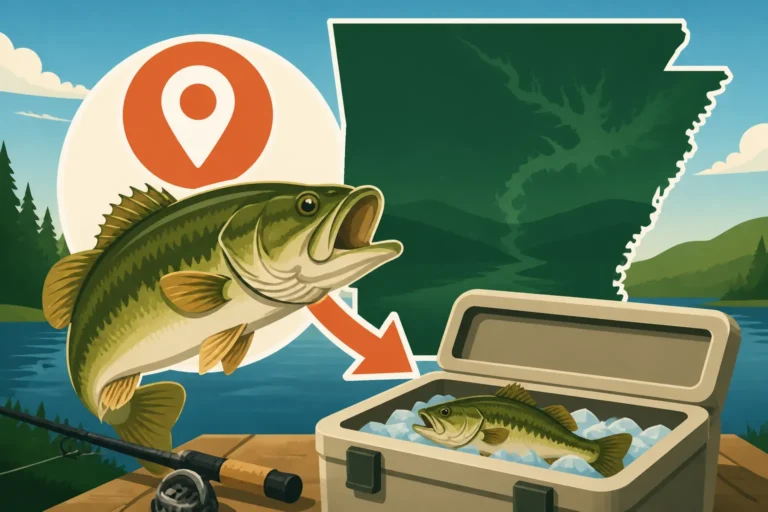
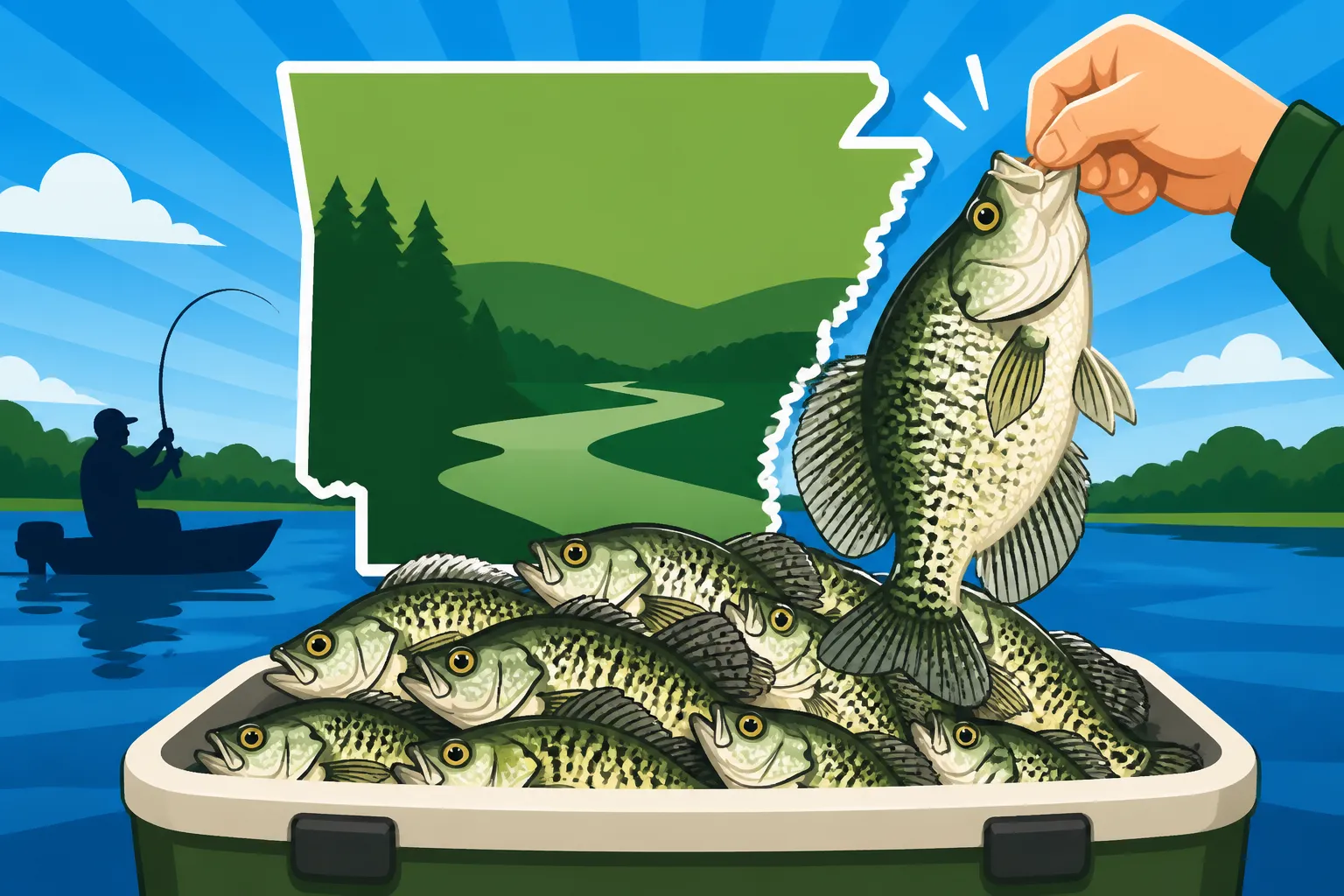
For the vast majority of Arkansas's beautiful lakes and rivers, the daily limit for crappie is 20 fish per angler. This means that in any 24-hour period, from midnight to midnight, you are legally allowed to harvest up to 20 crappie. It's a generous limit that allows for a good day on the water, whether you're fishing for a family meal or stocking up your freezer.
Now, here's a crucial point that often trips people up: Arkansas recently made significant changes to its fishing regulations. For the 2026-27 season and beyond, the state Arkansas eliminated statewide possession limits for the 2026-27 season for most species, including crappie. This is a game-changer! Previously, you might have had a "possession limit" that restricted how many fish you could have at home or in your cooler after multiple days of fishing. That's largely gone now. The focus is strictly on the "daily limit."
So, what does this mean for your multi-day trip? If you're staying at a cabin on Lake Conway and fish on Friday, catching 20 crappie, you can take them back, clean them, and store them in your freezer or cooler. Then, on Saturday, you can head back out and catch another 20 crappie, provided you haven't exceeded your daily limit for that specific day. The intent of the New Possession Limit Rule for Arkansas Anglers is to simplify things and allow anglers to accumulate their daily catches without worrying about an overarching possession cap once the fish are processed and at their "final point of storage." However, you still can't have more than 20 live crappie in your boat or on your person at any given time if you're out actively fishing.
Minimum Length Requirements for Crappie
Beyond the number of fish you can keep, there's another important regulation to remember: the minimum length requirement. In Arkansas, crappie generally Crappie must be 9 inches or longer to keep in Arkansas. This means that any crappie you catch must measure at least nine inches from the tip of its snout to the tip of its tail (with the tail compressed) before you can legally put it in your livewell or on your stringer.
This minimum length isn't just an arbitrary rule; it's a vital conservation measure. By allowing crappie to reach at least nine inches, the Arkansas Game and Fish Commission (AGFC) ensures that fish have had a chance to mature and spawn at least once, contributing to the overall health and sustainability of the crappie population. It helps prevent overharvesting of juvenile fish, which could severely impact future fishing success. If you catch a crappie that's shorter than nine inches, you must immediately and carefully release it back into the water. Make sure you have a reliable measuring device on your boat or in your tackle box – a simple tape measure or a marked fishing rod works perfectly.
Why "Most Waters" Matters: Understanding Exceptions
While the 20-fish daily limit and 9-inch minimum length apply statewide, the phrase "most Arkansas waters" is incredibly important. Arkansas is home to a diverse array of lakes and rivers, each with its own unique ecosystem and management challenges. Because of this, the AGFC implements specific, localized regulations on certain bodies of water to address particular population dynamics, habitat conditions, or conservation goals.
Ignoring these exceptions can lead to significant penalties, including fines and even the loss of your fishing privileges. It's always your responsibility as an angler to know the rules for the specific body of water you're fishing. Think of it like driving: there's a general speed limit, but school zones and construction areas have their own, more restrictive limits that you absolutely need to obey. The same principle applies here. Always double-check the current Arkansas Fishing Regulations Guide before you head out, especially if you're visiting a new spot or haven't fished there in a while.
Navigating Specific Crappie Limit Exceptions in Arkansas Waters
As we just touched on, "most waters" is key. There are specific places in Arkansas where the general crappie limits don't apply. These exceptions are put in place for very good reasons, usually to protect local fish populations or to enhance fishing opportunities for trophy-sized fish. Knowing these specific rules is crucial for staying legal and contributing to conservation efforts.
Lake Monticello: A Different Crappie Story
One of the most well-known exceptions to the statewide crappie limit is found at Lake Monticello. This lake, renowned for its excellent crappie fishing, has a unique set of rules. Instead of the typical 20-fish daily limit, anglers at Lake Monticello are restricted to a daily creel limit of 15 crappie. Furthermore, there's often a stipulation on size, with only one crappie 16 inches or longer allowed within that 15-fish limit.
Why the difference? Lake Monticello is intensively managed by the AGFC to maintain a high-quality crappie fishery. Sometimes, reducing the daily limit helps spread the harvest among more anglers or allows more fish to reach larger sizes, creating a better overall fishing experience. The rule regarding larger crappie is often designed to protect larger, breeding-size fish to ensure future generations thrive. It's a nuanced approach to management that directly impacts your fishing plans. So, if you're planning a trip to this gem of a lake, make sure you know that the Lake Monticello crappie limit drops to 15 fish per day, differing significantly from the general rules.
Lake Cargile: Unique Size and Bag Limits
Another important crappie exception can be found at Lake Cargile. This smaller, yet productive, lake also deviates from the statewide standard, and its rules are even more specific. At Lake Cargile, the daily crappie limit is 15 fish, similar to Monticello. However, there's an additional layer of regulation: only 7 of those 15 crappie can be 12 inches or longer.
This kind of regulation, where you have a total limit and a sub-limit on larger fish, is a common conservation strategy. It's designed to protect the "breeder" fish – those larger, more mature individuals that are vital for sustaining the population. By limiting the number of big fish that can be harvested, the AGFC ensures that there are always plenty of healthy adults left to spawn. It's a smart way to manage the fishery for long-term health and impressive future catches. Anglers need to be extra diligent with their measuring tape when fishing Lake Cargile, ensuring they understand that Only 7 of your 15 Lake Cargile crappie can be 12 inches or longer. This particular rule shows How the Lake Monticello crappie rule differs from statewide limits even though both share a 15-fish daily bag; the size structure is distinct.
Other Potential Local Variations and How to Check
It's absolutely critical to understand that Lake Monticello and Lake Cargile are just two prominent examples. While they illustrate the type of exceptions you might encounter, other lakes or even specific sections of rivers could also have their own localized rules for crappie or other species. The AGFC is constantly monitoring fish populations and may introduce new regulations or modify existing ones to respond to biological needs or environmental changes.
The golden rule of fishing in Arkansas is this: always, always check the current year's fishing regulations guide before you go. You can find the official Arkansas Fishing License Rules and Costs and regulations online on the Arkansas Game and Fish Commission website, often in a downloadable PDF format. Many sporting goods stores, like your local Bass Pro Shops or Academy Sports + Outdoors, also provide free physical copies of the regulations guide when you purchase your Arkansas Fishing License Types Explained or other gear. Taking a few minutes to read through the specific section for the body of water you're targeting can save you a lot of headache and potential legal trouble. For instance, knowing if Do Kids Need a Fishing License in Arkansas? is important, as is understanding all the local size and creel limits.
Remember, ignorance of the law is not an excuse. Game wardens are out there to protect our natural resources, and they regularly check for compliance. If you're unsure, it's always better to err on the side of caution or even ask a local tackle shop owner or guide for clarification.
Here's a quick summary table for crappie limits in Arkansas:
| Water Body | Daily Limit (Crappie) | Minimum Length (Crappie) | Special Conditions |
|---|---|---|---|
| Most Arkansas Waters | 20 Fish | 9 Inches | No possession limit (for 2026-27 and beyond) |
| Lake Monticello | 15 Fish | 9 Inches | Only one crappie 16 inches or longer allowed within 15 |
| Lake Cargile | 15 Fish | 9 Inches | Only 7 of the 15 crappie can be 12 inches or longer |
Crappie Conservation and Responsible Angling Practices
Understanding daily limits and exceptions isn't just about avoiding a fine; it's about being a responsible steward of Arkansas's incredible natural resources. Crappie populations, while generally robust, depend on thoughtful management and ethical angling practices to thrive for future generations.
The Role of Daily Limits in Sustainable Fishing
Daily limits are fundamental to sustainable fishing. They are scientifically determined by fisheries biologists who study crappie populations, growth rates, spawning success, and the overall health of the ecosystem. Without these limits, it would be far too easy for anglers to overharvest, depleting populations faster than they can reproduce. This could lead to fewer and smaller fish, ultimately harming the quality of fishing for everyone.
Think of it this way: every crappie caught and kept contributes to the overall harvest. By setting a reasonable daily limit, the AGFC ensures that enough fish remain in the water to continue the natural cycle. This means more successful spawning events, more young fish growing up, and a healthy, vibrant fishery that will continue to provide enjoyment for years to come. When you adhere to the Crappie Size and Daily Limit in Arkansas, you're directly contributing to the long-term health of our lakes and rivers, making sure that future trips to some of the Best Crappie Lakes in Arkansas are just as rewarding.
Best Practices for Catch-and-Release
Even with generous daily limits, there will be times when you need to release crappie. This might be because they are undersized, or perhaps you've already reached your daily limit and are just enjoying some catch-and-release fishing. Proper catch-and-release techniques are crucial for ensuring these fish survive and contribute to the fishery.
Here are some tips for responsible crappie catch-and-release:
- Minimize Fight Time: Bring the fish in quickly to reduce stress and exhaustion.
- Handle with Care: Wet your hands before touching the fish to protect its slime coat, which is vital for its immune system. Avoid squeezing its body or gills.
- Use Barbless Hooks (if possible): Barbless hooks are much easier to remove, minimizing damage to the fish's mouth. If you don't have barbless hooks, you can crimp down the barb on a regular hook with pliers.
- Dehook Gently: Use needle-nose pliers or a dehooking tool to remove the hook quickly and cleanly. If the hook is deeply swallowed, it's often best to cut the line as close to the hook as possible rather than trying to rip it out, which can cause fatal internal damage.
- Revive Properly: If a fish seems sluggish, hold it gently in the water, facing into the current (if any), and move it back and forth to force water over its gills until it regains its strength and can swim away on its own.
- Avoid Air Exposure: Keep the fish out of the water for the absolute minimum time possible. Even a few seconds of air exposure can be detrimental, especially in warm weather.
Practicing these techniques ensures that the crappie you release has the best possible chance of survival, allowing it to grow larger and potentially be caught again, or more importantly, to contribute to the next generation of fish.
Reporting Violations and Supporting Conservation
As anglers, we're all part of the conservation solution. If you observe someone violating fishing regulations – whether it's exceeding the daily limit, keeping undersized fish, or fishing without a valid license – it's important to report it. The Arkansas Game and Fish Commission relies on the public's help to enforce regulations and protect our resources. You can typically report violations through their dedicated hotline or online portal. This isn't about "tattling"; it's about safeguarding the fishing opportunities we all cherish. Understanding the Penalties for Fishing Without a License in Arkansas underscores the importance of every angler doing their part to uphold these rules. By actively participating in and supporting responsible angling practices, we ensure that Arkansas's incredible crappie fishing remains a vibrant tradition for generations to come.
Disclaimer
The information provided in this guide is for general informational purposes only and is based on publicly available regulations at the time of writing. Fishing regulations, including daily limits and size restrictions, are subject to change by the Arkansas Game and Fish Commission (AGFC). It is the responsibility of every angler to consult the most current and official AGFC fishing regulations guide before engaging in any fishing activity. Failure to comply with current regulations may result in fines or penalties.