Crappie must be 9 inches or longer to keep in Arkansas
There’s nothing quite like the thrill of reeling in a beautiful crappie, especially when you’re hoping to take it home for a delicious meal. But before you get too excited and drop it in the cooler, you absolutely need to know the rules. Many anglers, new and experienced, often wonder about the minimum size requirements, and that’s a completely valid concern! No one wants to accidentally break a regulation. This guide will walk you through Arkansas's crappie length requirements, ensuring you’re confident and legal when fishing for these popular panfish.
Understanding Arkansas's Crappie Size Limit
Arkansas takes its crappie populations seriously, and for good reason! These popular panfish are a favorite target for anglers across the state, and regulations are in place to ensure they remain plentiful for generations to come. The primary rule that trips up many folks is the minimum length requirement.
The Statewide 9-Inch Minimum Rule
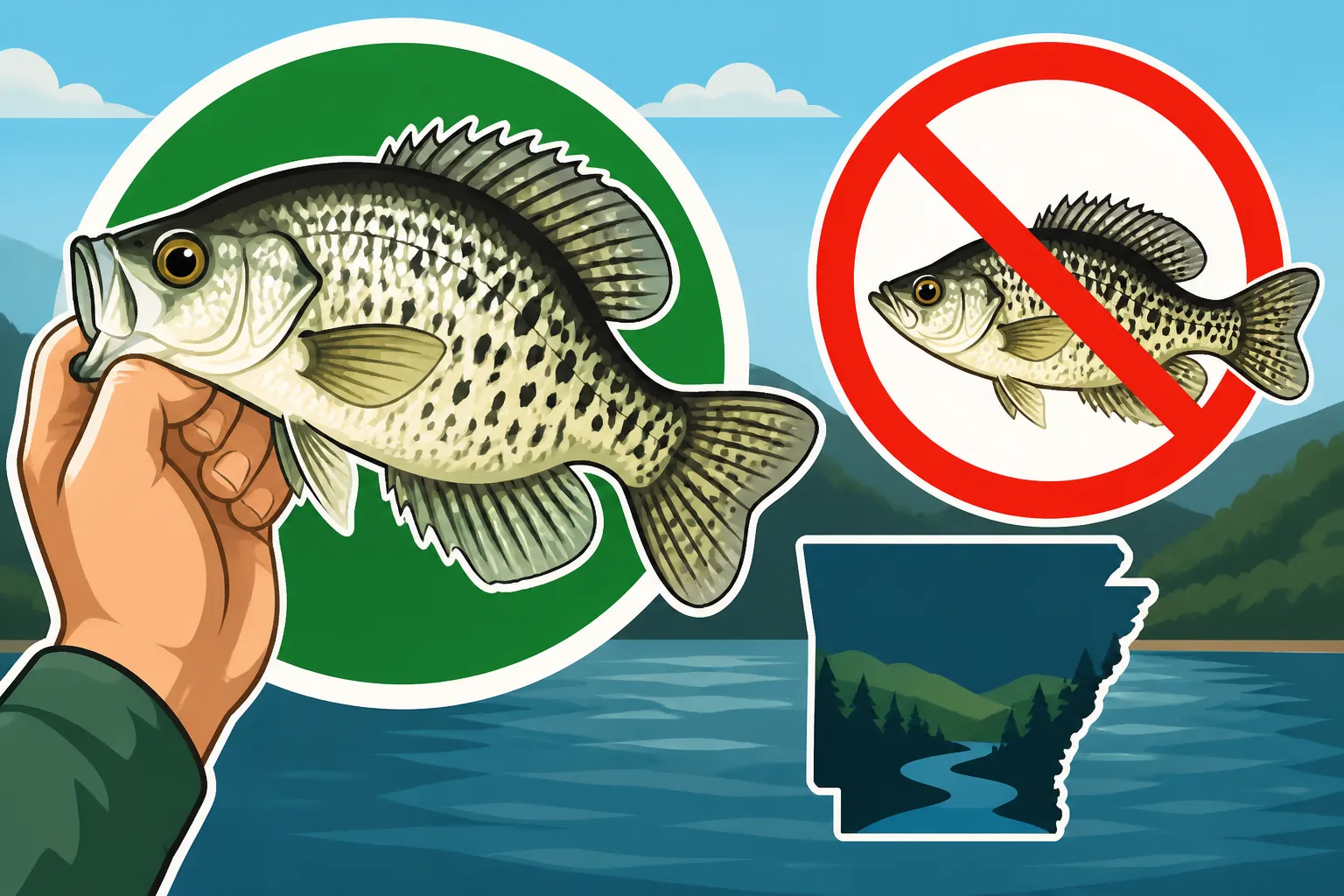
Across the vast majority of Arkansas's lakes and rivers, if you catch a crappie, whether it's a black crappie or a white crappie, it must measure at least 9 inches from the tip of its nose to the end of its tail (with the tail compressed) before you can legally keep it. This 9-inch rule is not arbitrary; it's a carefully considered conservation measure. The Arkansas Game and Fish Commission (AGFC) implements this to give crappie a chance to reach sexual maturity and spawn at least once, sometimes even twice, before they're harvested. It’s all about maintaining a healthy, self-sustaining population, preventing overfishing of smaller, younger fish that haven't had a chance to reproduce. So, when you're out on a lake like Lake Ouachita or Greers Ferry Lake, this 9-inch standard is what you need to remember. Understanding these fundamental rules is part of knowing your Arkansas Fishing Regulations Guide.
How to Measure Your Crappie Correctly
Accurate measurement is crucial to avoid any missteps with the law. It’s not just about guessing! Here's the correct way to measure your crappie:
- Lay it Flat: Gently lay the fish on its side on a flat surface, such as a measuring board or a ruler. Many anglers keep a simple measuring tape or a specialized fish ruler, often available from brands like Amazon, right in their tackle box or boat.
- Nose to Tail: Position the fish so its nose is against the zero mark of your measuring device.
- Compress the Tail: Gently squeeze the tail lobes together so they form a straight line. This is what "total length" means in Arkansas regulations. Don't measure along the curve of the body, and don't assume the tail spread out counts.
- Read the Measurement: The measurement at the furthest point of the compressed tail is your crappie's legal length. If it's 9 inches or more, and you haven't exceeded your daily limit, it's a keeper! If it’s even a hair under, it goes back into the water immediately. This practice ensures you're compliant with the Crappie Size and Daily Limit in Arkansas rules.
Many state game wardens will be measuring your catch this exact way, so getting into the habit yourself is smart. It also reduces the stress on the fish if you handle it quickly and release it gently.
Why Size Limits Matter for Crappie Populations
You might wonder why we have to be so precise about fish length. Isn't fishing just about catching as many as you can? Well, not anymore, and for good reason! Modern fisheries management understands that responsible harvesting keeps the sport alive for everyone.
Promoting Sustainable Fisheries
The 9-inch minimum length for crappie is a cornerstone of sustainable fisheries management in Arkansas. It's designed to ensure that most crappie have the chance to reach sexual maturity and reproduce before they are harvested. Think of it like this: if anglers were allowed to keep every crappie they caught, regardless of size, there would be a significant risk of removing too many young fish from the population before they ever had a chance to contribute to the next generation. Over time, this could lead to fewer and smaller fish in our lakes and rivers, making fishing trips far less productive and enjoyable. By imposing a size limit, the AGFC helps maintain a healthy age structure within the crappie population, leading to more robust and resilient fisheries. This approach is vital for all game fish and is a key part of the broader Arkansas Fishing Regulations Guide.
Protecting Future Generations of Crappie
Crappie typically reach sexual maturity around 6 to 8 inches in length, depending on water conditions, food availability, and genetics. By setting the minimum length at 9 inches, the AGFC gives these fish a buffer. This means that a crappie caught at 9 inches has likely spawned at least once, and in many cases, multiple times. This contributes significantly to the population's ability to replenish itself. It's a long-term strategy that protects not just the crappie you might catch today, but also the crappie your grandchildren might be reeling in decades from now. This kind of forward-thinking conservation ensures that the beautiful fishing opportunities we enjoy in Arkansas, from the fertile waters of Lake Conway to the deep coves of Norfork Lake, remain vibrant and productive for all who wish to experience them. It's a small regulation that makes a huge difference in the grand scheme of things, ensuring a strong future for our Arkansas Fish Species: A Complete Guide to What's Swimming in Your Waters.
Specific Lake Exceptions to the 9-Inch Rule
While the 9-inch minimum length is a statewide staple, it's incredibly important to remember that some specific bodies of water in Arkansas have their own unique rules. These exceptions are put in place by the AGFC to manage particular fisheries more effectively, often due to unique ecological conditions, fishing pressure, or historical management practices. Always double-check the current regulations for the specific lake you're fishing!
Lake Monticello Crappie Limit Differences
Lake Monticello, located in southeast Arkansas, is a fantastic spot for crappie fishing, but it has its own set of rules that deviate slightly from the statewide norms. While the 9-inch minimum length still applies to every crappie you intend to keep, the daily creel limit is different. For crappie at Lake Monticello, the daily limit is 15 fish per angler. This is a noticeable reduction from the general statewide daily limit of 20 crappie. This specific regulation is designed to manage the crappie population in Lake Monticello more intensively, likely to ensure trophy potential or maintain a balanced fishery given its unique characteristics and fishing pressure. So, while your measuring tape still needs to hit 9 inches, your cooler can only hold 15 legal crappie from this particular lake. It's one of those specific rules you'll find when exploring Lake Monticello Bass and Crappie Exceptions.
Lake Cargile Crappie Rule Explained
Another important exception to be aware of is Lake Cargile, a popular fishing destination in southwest Arkansas near the city of Nashville. Similar to Lake Monticello, the 9-inch minimum length rule for crappie is still very much in effect. You cannot keep any crappie shorter than 9 inches. However, Lake Cargile introduces an additional layer of complexity to its crappie regulations, primarily aimed at managing the size structure of the kept fish. The daily limit at Lake Cargile is also 15 crappie, matching Lake Monticello's reduced creel limit compared to the statewide 20. But here's the twist: out of those 15 crappie, no more than 7 of them can be 12 inches or longer. This means you could keep 15 crappie, all between 9 and 11.9 inches, or you could keep 7 crappie at 12 inches or longer, and the remaining 8 crappie would have to be between 9 and 11.9 inches. This "slot limit" essentially encourages anglers to keep some smaller fish (within the 9-inch minimum) while also restricting the harvest of larger, potentially more productive breeding-size fish. This ensures a broad range of crappie sizes remain in the lake. It's a specific, nuanced rule that highlights why always checking the local regulations is paramount. You can dive deeper into these specifics with guides like Lake Cargile Crappie Limit Rules.
Practical Tips for Anglers on Crappie Size Limits
Navigating fishing regulations can sometimes feel like a puzzle, but with a few simple habits and the right tools, you can ensure every trip is fun and compliant. It's all about being prepared and knowing where to find the most current information.
Essential Gear for Measuring and Releasing
Having the right tools on hand can make all the difference in quickly and accurately assessing your catch. Fumbling for a measurement or struggling with an undersized fish can stress both you and the fish, so smooth execution is key.
- Measuring Device: A dedicated fish measuring board is ideal because it has a fixed end to push the fish's nose against, ensuring accuracy every time. Plastic rulers or flexible tape measures can also work, but always make sure they're clearly marked and easy to read. Many anglers attach these directly to their boat or tackle box for quick access. You can find a variety of reliable options on Amazon.
- Needle-Nose Pliers or Hemostats: These are invaluable for easily removing hooks, especially from smaller fish or those that are deeply hooked. Minimizing handling time is crucial for the survival of released fish.
- Gloves: Latex or nitryl gloves can help protect the fish's slime coat, which is vital for its immune system. Wetting your hands before handling a fish is also important, as dry hands can strip away that protective layer.
- Dehooker Tool: For those extra-deeply hooked fish, a dehooker can help extract the hook with minimal damage, allowing for a much better chance of survival upon release.
Practicing a quick catch-and-release technique for undersized fish is just as important as knowing how to measure. If a fish is too small, get it back in the water gently and quickly. Every second counts. These practices contribute to sustainable fishing, a topic often covered in Arkansas Fishing Regulations Guide.
Checking Local Regulations Before You Go
This cannot be stressed enough: always, always, always check the most current regulations before heading out for your fishing trip. Fishing regulations, especially for specific lakes or species, can and do change. What was true last year might be different this season.
- Arkansas Game and Fish Commission (AGFC) Website: The official AGFC website is your go-to source. They publish an annual fishing guide that details all statewide and specific lake regulations, including daily limits and size restrictions for crappie, bass, catfish, and trout. You can often download a PDF version or browse the rules online.
- AGFC App: Many state agencies, including the AGFC, offer mobile apps that provide instant access to regulations, license purchasing, and even reporting capabilities. This is incredibly convenient while you're on the water.
- Local Bait Shops and Marinas: These establishments are often excellent local resources. The folks who run them usually know the specific nuances of the local waters and can provide printed copies of the regulations or point you to where they’re posted.
- Official Signage: Many boat ramps and public access points will have signs detailing the local fishing regulations. Take a moment to read them before launching your boat or casting your line.
Remember that ignorance of the law is not an excuse. A game warden will expect you to know the rules for the water you are fishing. Taking a few minutes to confirm the regulations can save you a potential fine, which can be significant, as detailed in Arkansas Fishing License Penalties and Requirements. Plus, staying informed helps you contribute to the conservation efforts that make Arkansas a premier fishing destination. This diligence is especially important if you're exploring Arkansas's Best Lakes for Bass, Crappie, and Catfish where rules can vary.
Here's a quick overview of Arkansas crappie limits:
| Water Body | Minimum Length | Daily Limit | Special Rules |
|---|---|---|---|
| Statewide | 9 inches | 20 fish | Applies to most public waters |
| Lake Monticello | 9 inches | 15 fish | Reduced daily limit |
| Lake Cargile | 9 inches | 15 fish | Only 7 of the 15 can be 12 inches or longer |
Disclaimer
The information provided in this guide is intended for general informational purposes only and is subject to change. While we strive to offer accurate and up-to-date content, fishing regulations, license requirements, and other rules are set by the Arkansas Game and Fish Commission (AGFC) and can be modified at any time. It is the angler's responsibility to consult the official AGFC website or current printed regulations guide before fishing. Always verify the most current rules and regulations for the specific body of water you plan to fish to ensure compliance.