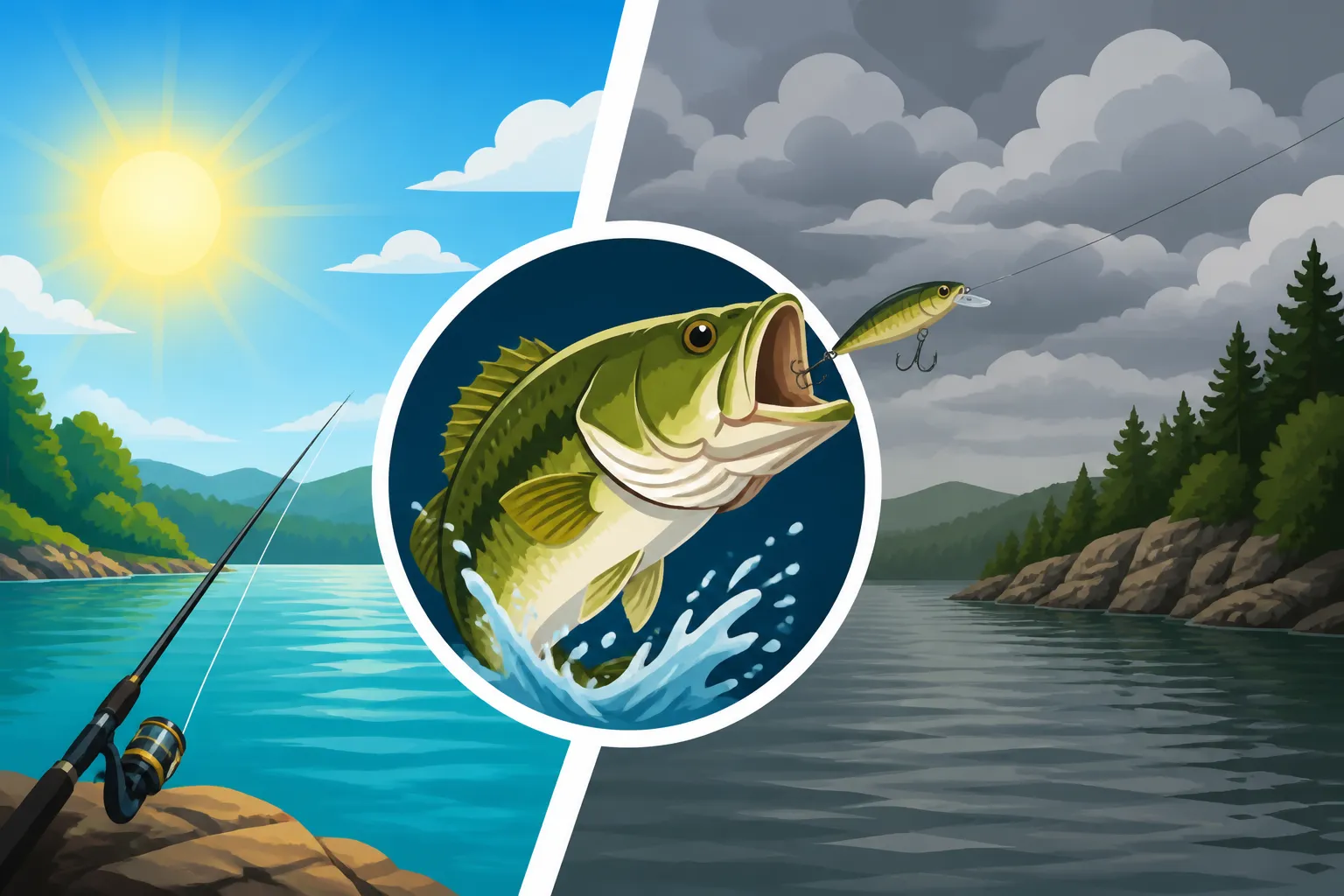
Do Fish Bite Better on Cloudy Days?
Every angler has stood at the water's edge, gazing at a sky full of clouds and wondering, "Is today the day? Will these clouds make the fish bite, or will they just make for a dreary day?" It's a common dilemma, and one that often leads to spirited debates among fishing buddies. The truth is, cloudy conditions can absolutely influence fish behavior, often in ways that work to our advantage, but it's not always a guaranteed silver bullet. This guide will dive deep into how cloud cover affects fish and what you can do to maximize your chances on those overcast days on Arkansas's beautiful lakes and rivers.
Understanding Fish Behavior in Different Light Conditions
To truly grasp why cloudy days can be beneficial, we first need to understand how fish perceive their environment, especially in relation to light. Think about it from their perspective: they live in a watery world where light penetration changes constantly.
The Impact of Sunlight on Fish Vision
On bright, sunny days, especially when the sun is high overhead, the water can be intensely bright. This might sound nice for humans enjoying a day on Lake Ouachita, but for many fish, particularly those predatory species like bass and crappie, it can be a bit overwhelming. Direct sunlight penetrates deeper, creating strong shadows and making it harder for fish to ambush prey effectively. Their eyes, adapted for a dimmer, more subdued environment, can be sensitive to this harsh glare.
When the sun is beaming down, many fish tend to retreat to deeper waters, seek shade under docks, submerged timber, or thick aquatic vegetation. This isn't just about comfort; it's a survival mechanism. Being out in the open, highly visible water makes them vulnerable to larger predators, including birds of prey and even bigger fish. They become more cautious, often less willing to actively chase baits that stand out too starkly in the bright light. Imagine trying to hunt in a blinding spotlight – it's tough! That's why understanding Dawn and Dusk Fishing Patterns can be so crucial, as these times naturally offer lower light.
How Cloud Cover Changes Water Conditions
Now, introduce a blanket of clouds. Suddenly, that intense glare is gone. The sunlight is diffused, scattered, and much softer as it hits the water. This subtle change has a profound effect on the underwater world. The water appears dimmer overall, and the shadows are less distinct.
This diffused light creates a more comfortable and less threatening environment for fish. They feel less exposed, which can make them bolder and more inclined to move out from their hiding spots. It also changes how they perceive baits and lures. Without sharp shadows and direct glare, a lure might appear more natural, less threatening, and easier to track. Furthermore, cloud cover often means a slight drop in surface water temperature, which can also trigger increased activity, especially during warmer months. It's like flipping a switch for some species, encouraging them to roam and feed more actively.
Why Cloudy Days Can Be a Game Changer for Anglers
For many species and in many scenarios, cloud cover genuinely seems to kick-start feeding activity and make fish more accessible. It's one of those weather conditions that often brings a sigh of relief to anglers preparing for a day on the water.
Increased Feeding Activity
One of the primary reasons fish bite better on cloudy days is a boost in their feeding confidence. When the sun's glare is reduced, many fish that are usually deep or hidden will move into shallower waters or more open areas to forage. This is particularly true for light-sensitive species. Think about those big largemouth bass lurking in the shade of a cypress tree during midday sun – on a cloudy day, they might be cruising the weed lines or shallow flats, actively hunting.
The subdued light also allows predators to hunt more effectively without being easily seen by their prey. Baitfish might feel a bit safer from aerial predators, but they become more vulnerable to the fish lurking below the surface. This creates a chain reaction: more active baitfish mean more active predatory fish. This shift can turn a slow, frustrating day into an exhilarating one, with fish actively pursuing your offerings. This concept ties into understanding Best Time of Day to Catch Bass, as low-light conditions often parallel productive times.
Broader Distribution of Fish
On bright days, fish are often concentrated in specific cover areas – deep drops, heavy brush piles, or under dense docks. This can make them predictable, but also hard to reach without precision casting. Cloudy days, however, can disperse fish across a wider range of habitats. They might still use cover, but they're more likely to explore adjacent open waters, shallower flats, and even move higher in the water column.
This broader distribution means you don't necessarily have to pinpoint exact cover every time. Fish might be more spread out along a lengthy weed edge, a rocky bank, or a submerged timber field, making it easier to cover water and find active biters. For example, if you're fishing for crappie on Lake Cargile, on a sunny day they might be tight to a brush pile in 15 feet of water. On a cloudy day, they might be scattered from 8 to 12 feet, moving along a break line, and much more willing to chase. This wider range of opportunities means you can experiment with different presentations and areas.
Adapting Your Fishing Strategy for Cloudy Days
Knowing that cloudy days can be good is one thing; knowing how to capitalize on them is another. A cloudy sky isn't a license to just throw anything out there; it's an invitation to fine-tune your approach.
Lure and Bait Selection
With less intense light, fish might rely more on vibration, profile, and contrasting colors rather than just flash. This means you have an opportunity to use lures that might not perform as well on sunny days.
- Colors: Brighter, more contrasting colors can be highly effective. Think chartreuse, bright oranges, or even glow-in-the-dark options in deeper or murkier water. Darker colors like black and blue can also create a strong silhouette against the dimmer sky, making them stand out. Sometimes, natural patterns with a bit more pop, like a green pumpkin with a chartreuse tail, can be irresistible. You might find a great selection of these on Amazon. Consider consulting a guide to Best Lure Colors for Cloudy Days for specific recommendations.
- Action & Vibration: Lures with a strong thumping or vibrating action, like a spinnerbait with large blades or a lipless crankbait, can be excellent. The low light reduces visibility, so fish rely on their lateral lines to detect movement. Spinnerbaits, chatterbaits, and crankbaits that displace a lot of water become more effective tools.
- Topwater Lures: Cloudy days, especially during periods of low wind, can be prime time for topwater action. The fish are often shallower and more aggressive, and the subdued light makes them less wary of a bait on the surface. Poppers, walk-the-dog baits, and buzzbaits can draw explosive strikes. For those looking to optimize their gear, a wide range of topwater options can be found on Amazon.
Fishing Locations and Presentation
As mentioned, fish tend to spread out on cloudy days. This means you might want to adjust where and how you present your baits.
- Shallower Water: Don't be afraid to target shallower areas that would be too exposed on a sunny day. Weed beds, lily pad fields, and shallow points can hold active fish.
- Open Water Edges: Instead of hugging tight to dense cover, explore the edges of cover or transition zones. Fish might be cruising these areas more freely. If you're targeting bass on Beaver Lake near Fayetteville, instead of casting directly into the thickest brush, try working the perimeter.
- Faster Retrieve: With increased activity and reduced wariness, a faster retrieve can often provoke reaction strikes. Don't be afraid to speed up your crankbait or spinnerbait.
- Vertical Presentations: If fish are still deeper due to other factors (like a recent Cold Front Fishing Techniques or post-frontal conditions), vertical jigging can still be effective, especially if you’re using jigs with good vibration or scent.
Here’s a quick comparison of strategies for different light conditions:
| Feature/Condition | Sunny Days | Cloudy Days |
|---|---|---|
| Fish Location | Deep, tight to cover, shade, drop-offs | Shallower, spread out, cruising open areas |
| Fish Activity | Often lethargic, cautious, selective | More active, aggressive, roaming |
| Lure Colors | Natural, translucent, subtle, sometimes flashier | Brighter, contrasting, dark silhouettes, sometimes natural with pop |
| Lure Action | Finesse, slow, subtle presentations | More aggressive, vibrating, noisy, topwater |
| Retrieval Speed | Slow, methodical | Moderate to fast, reaction strikes |
| Best Lure Types | Jigs, soft plastics, drop shot, deep cranks | Spinnerbaits, crankbaits, topwater, chatterbaits |
| Target Depths | Deeper water | Shallower to moderate depths |
When Cloudy Days Might Not Be Ideal
While cloud cover is often a boon for anglers, it’s important to remember that it's just one piece of the puzzle. Fishing is a complex equation, and other factors can override the benefits of an overcast sky.
Factors Beyond Just Cloud Cover
It's tempting to think that "cloudy = good fishing," but nature rarely follows such simple rules. Other environmental conditions can significantly influence fish behavior, even on a cloudy day.
- Barometric Pressure: A rapidly falling barometer, often associated with an approaching storm front, can actually make fish uncomfortable and less inclined to bite, even if it's cloudy. Conversely, a stable or slowly rising barometer can mean excellent fishing, regardless of the cloud cover. Understanding Weather and Water Temperature Fishing Tips is key.
- Water Temperature: If the water is too cold (like during Winter Fishing Patterns on Arkansas Reservoirs) or too hot, even cloudy skies might not spur fish into a feeding frenzy. Extreme temperatures can make fish lethargic and less active, regardless of light conditions.
- Wind: Wind can be a double-edged sword. A gentle chop on a cloudy day can be fantastic, breaking up the surface and making fish feel even more secure. However, excessively strong winds can make boat control difficult, stir up sediment, and make presentations challenging, potentially turning off fish.
- Water Clarity: In extremely clear waters, even subtle cloud cover might not make a huge difference in how fish react to lures, as they can still see very well. In stained or murky waters, however, cloud cover can further reduce visibility, making noisy or vibrating lures even more crucial.
Cold Fronts and Other Weather Systems
This is a critical distinction: a cloudy day is not the same as a day immediately following a major cold front. While cloud cover generally enhances fishing, the aftermath of a strong cold front is often characterized by clear skies, high pressure, and a significant drop in temperature – conditions that typically shut down the bite. Even if that post-front day starts cloudy, the underlying high pressure and temperature drop can make fish incredibly difficult to catch.
Sometimes, a cloudy day is simply a prelude to a significant weather change. Do Bass Bite Better Before a Storm? often depends on when the cloudy conditions arrive relative to the front. The hours leading up to a storm, with falling pressure and increasing cloudiness, can be incredibly productive, as fish feed aggressively in anticipation of the change. But once the front passes, even if the clouds linger, the bite can die. Always consider the larger weather pattern, not just the current sky conditions. Keeping an eye on weather apps or a barometer you might find on Amazon can help you predict these shifts and plan your trips to lakes like Norfork or Bull Shoals accordingly.
Ultimately, while cloudy days often present fantastic opportunities for anglers in Arkansas, they're not a guaranteed success. It's about combining that knowledge with an understanding of other environmental factors and adjusting your techniques accordingly. The more you observe and adapt, the more successful you'll be, no matter what the sky throws at you.
Disclaimer
This article is for general informational purposes only and does not constitute professional advice. Laws, prices and regulations vary by location and change over time. Consult a qualified professional for guidance on your specific situation.